

Synopsis
Covers the whole plot, including the ending.
- Difficulty
- Medium
- Pacing
- Moderate
- Mood
- Gritty, Atmospheric, Suspenseful, Dark, Violent
- Read it if
- You enjoy gritty, atmospheric thrillers with a strong sense of place and a morally complex protagonist.
- Skip it if
- You prefer lighthearted mysteries or are sensitive to graphic violence and dark themes.
A Morning for Flamingos Plot Summary
Covers the whole plot, including the ending.
The Ill-Fated Transport
Dave Robicheaux, a detective with the New Iberia Sheriff's Department, transports two death-row prisoners, the gang leader Jimmie Lee Weems and his associate, from Angola Prison to their execution in New Orleans. His partner, Cletus Purcel, and another deputy are with him. At a gas station, masked assailants ambush their vehicle, freeing Weems and killing Purcel in a brutal shootout. Dave is severely wounded by a shotgun blast to the chest and leg, barely surviving. The incident leaves him with deep physical and psychological scars, fueling a desire for revenge against Weems and those responsible for Cletus's death.
A DEA Proposition
While recovering, Dave is approached by DEA agent Helen Soileau. She reveals that Jimmie Lee Weems is connected to a major Mafia drug operation run by Tony Cardo in New Orleans. Soileau suggests Dave go undercover, using his reputation as a tough, wounded cop seeking revenge, to infiltrate Cardo's organization. Dave, still affected by Purcel's death and the trauma of the ambush, is hesitant but sees this as his best chance to get close to Weems and get his vengeance. He agrees to the dangerous assignment, driven by loss and a need for justice.
Entering the Underworld
Dave moves to New Orleans, adopting a new persona as a disillusioned, hard-drinking former cop. He establishes a base in a rundown apartment and begins frequenting bars connected with Cardo's crew, making himself visible and cultivating a reputation. His goal is to appear vulnerable enough to be useful but tough enough to be respected. He makes initial contact with low-level associates, slowly starting to navigate the complex social hierarchy and dangerous dynamics of the city's criminal underworld. The city's oppressive heat and sense of decay mirror his own internal turmoil.
Encounters with Tony Cardo
Through calculated moves and some luck, Dave gains the attention of Tony Cardo, the sophisticated and ruthless Mafia don. Cardo, always looking for new talent and wary of outsiders, tests Dave's loyalty and capabilities. Dave's past as a cop and his apparent thirst for revenge make him an intriguing figure to Cardo. He is drawn into Cardo's opulent yet menacing world, attending lavish parties and witnessing the don's casual cruelty. Dave quickly learns that Cardo is a master manipulator, and the stakes of his undercover operation are far higher than he initially anticipated.
The Voodoo Connection
As Dave goes deeper into Cardo's organization, he discovers that the Mafia's operations are not solely about drugs and money. Cajun voodoo and occult practices influence many of Cardo's associates, including a mysterious voodoo priestess named Miss Tee. This element adds another layer of danger and surrealism to Dave's mission, as he encounters rituals, superstitions, and a belief in dark magic. He realizes that Cardo uses these beliefs to maintain control and intimidate his enemies, making the criminal network even more formidable and unpredictable.
Jimmie Lee Weems Reappears
Dave's patience pays off when Jimmie Lee Weems, the man responsible for Cletus Purcel's death, reappears within Cardo's orbit. Weems now works directly for Cardo, enjoying his freedom and continuing his violent ways. The reunion is tense, as Dave struggles to maintain his cover while facing the man he despises. He must suppress his desire for immediate retribution to gather evidence and complete his mission for the DEA. This close proximity to Weems forces Dave to confront his own demons and the ethical compromises he's making.
Escalating Violence and Moral Compromises
As Dave becomes more involved in Cardo's world, he is pressured to participate in the organization's violent activities to maintain his credibility. He witnesses brutal beatings, drug deals gone wrong, and murders, all while trying to gather intelligence for Helen Soileau. The line between his undercover persona and his true self begins to blur, causing immense psychological strain. He questions his own morality and the effectiveness of his mission, fearing he is losing himself in the darkness of the criminal underworld. The constant threat to his life and the lives of those around him intensifies.
The DEA's Demands and Dave's Doubts
Helen Soileau, growing impatient, begins to pressure Dave for more concrete evidence and a quicker resolution. She urges him to take greater risks, which further increases Dave's internal conflict. He feels isolated, caught between the DEA's demands and the deadly reality of Cardo's world. Dave begins to doubt the DEA's ultimate goals and wonders if he is merely a pawn in a larger, more cynical game. The emotional toll of the mission, coupled with his lingering injuries, pushes him to his breaking point.
The Betrayal and the Climax
Dave eventually uncovers a shocking truth: the ambush that killed Cletus Purcel was not just about freeing Jimmie Lee Weems, but was orchestrated with the help of individuals higher up, possibly within law enforcement, to serve Cardo's interests. This revelation questions his entire understanding of the initial event. The story's climax sees Dave confronting Cardo, Weems, and their associates in a violent showdown. The lines of allegiance are blurred, and Dave must fight not only for justice for Cletus but also for his own survival against powerful and ruthless enemies.
Aftermath and Lingering Scars
Dave Robicheaux, against all odds, survives the confrontation, though with further physical and emotional scars. While he gets some justice for Cletus Purcel and significantly disrupts Cardo's operations, the experience changes him. The mission exposes the deep corruption within institutions and the evil that can exist even in plain sight. He returns to New Iberia, forever marked by the violence and moral ambiguities he encountered in New Orleans, carrying the weight of his actions and the ghosts of his past. The fight against darkness, he realizes, is never truly over.
Principal Figures
Dave Robicheaux
Protagonist
A New Iberia detective haunted by loss and driven by a quest for justice and revenge.
Dave Robicheaux is a complex and morally conflicted detective with the New Iberia Sheriff's Department. He is deeply principled but prone to fits of violence and self-destructive behavior, often battling alcoholism and the demons of his past. The brutal murder of his partner, Cletus Purcel, and his own near-fatal injuries ignite a burning desire for vengeance, which he channels into an undercover operation for the DEA. He possesses a strong sense of justice but is willing to bend the rules to achieve it, leading him into morally ambiguous situations. He is observant, intuitive, and possesses a street-smart toughness that allows him to navigate dangerous environments.
Relationships: Cletus Purcel (Best friend and partner, whose death fuels Dave's quest for revenge.); Helen Soileau (DEA handler, a complex and manipulative ally.); Tony Cardo (Arch-nemesis and target of the undercover operation.); Jimmie Lee Weems (Primary target, the man who killed Cletus.)
Cletus Purcel
Supporting/Catalyst
Dave's partner, whose murder sets the plot in motion.
Cletus Purcel is Dave Robicheaux's loyal and boisterous partner. Though he doesn't have a large physical presence in the narrative, his brutal death in the opening pages serves as the primary catalyst for Dave's entire journey. Cletus is portrayed as a good-natured, albeit sometimes reckless, lawman who shares a deep bond with Dave. His memory haunts Dave throughout the book, representing the innocence and camaraderie lost, and fueling Dave's relentless pursuit of justice. His death is a profound personal tragedy for Dave, transforming his quest from a mere assignment into a deeply personal vendetta.
Relationships: Dave Robicheaux (Best friend and partner, a bond of deep loyalty.)
Tony Cardo
Antagonist
A charismatic and ruthless Mafia don controlling a vast criminal enterprise in New Orleans.
Tony Cardo is the sophisticated and utterly ruthless Mafia don who controls a significant portion of New Orleans' criminal underworld. He presents himself as a cultured businessman, living in opulent surroundings, but beneath the veneer lies a cold, calculating killer. Cardo is a master manipulator, using charm, intimidation, and violence in equal measure to maintain his power. He is deeply superstitious, often consulting voodoo practitioners, and exploits the beliefs of others to his advantage. He represents the systemic corruption and deep-seated evil that Dave must confront, a truly formidable adversary.
Relationships: Dave Robicheaux (Unwitting infiltrator and eventual nemesis.); Jimmie Lee Weems (Employee and enforcer.); Miss Tee (Voodoo priestess and spiritual advisor, whom he uses for influence.)
Jimmie Lee Weems
Antagonist
A violent, psychopathic gang leader who murders Cletus Purcel.
Jimmie Lee Weems is a brutal and unrepentant psychopath, a gang leader whose escape from death row and the murder of Cletus Purcel ignite Dave Robicheaux's quest for revenge. Weems is characterized by his casual cruelty, his lack of empathy, and his cunning. He is a key enforcer for Tony Cardo, embodying the raw, unbridled violence of the criminal underworld. Dave's personal vendetta against Weems is a central driving force of the plot, representing the face of the evil that Dave is determined to eliminate. Weems is a constant, tangible threat, a reminder of Dave's loss and the corruption he battles.
Relationships: Dave Robicheaux (His nemesis, seeking retribution for Cletus's death.); Tony Cardo (His employer and protector.)
Helen Soileau
Supporting
A calculating DEA agent who recruits and manages Dave's undercover operation.
Helen Soileau is a sharp, ambitious, and somewhat enigmatic DEA agent. She is the one who approaches Dave Robicheaux with the proposal to go undercover, recognizing his unique blend of toughness and vulnerability as perfect for infiltrating Tony Cardo's organization. Soileau is pragmatic and goal-oriented, often pushing Dave to take greater risks for the sake of the mission. While she appears to be on the side of justice, her methods and motivations can sometimes be unclear, leaving Dave to question whether he is being manipulated. She represents the institutional side of the law, which can be as cold and demanding as the criminals it pursues.
Relationships: Dave Robicheaux (His handler and strategic partner in the undercover operation.)
Miss Tee
Supporting
A powerful and mysterious voodoo priestess connected to Cardo's organization.
Miss Tee is a formidable and enigmatic voodoo priestess who wields significant influence within the New Orleans underworld, particularly among Tony Cardo's associates. She embodies the mystical and spiritual undercurrents of the city, representing a force that is both ancient and deeply ingrained in the local culture. Her presence adds a layer of supernatural dread and cultural complexity to the narrative. She is not overtly evil, but her power is used and manipulated by Cardo, making her a morally ambiguous figure. Dave's interactions with her highlight the clash between rational investigation and the pervasive belief in dark magic.
Relationships: Tony Cardo (Spiritual advisor/consultant, whose influence Cardo exploits.)
Bootsie Robicheaux
Supporting
Dave's wife, a source of stability and concern for him.
Bootsie Robicheaux is Dave's wife, a quiet but strong presence who provides a grounding force in his turbulent life. She is deeply concerned about Dave's well-being, especially after his near-fatal injuries and his decision to go undercover. Bootsie represents the normal life and emotional stability that Dave risks losing by immersing himself in the criminal underworld. Her love and concern are a constant reminder of what he is fighting for, and what he stands to lose. She understands the darkness that often consumes Dave but remains a steadfast source of support and worry.
Relationships: Dave Robicheaux (Wife, providing emotional support and a connection to a normal life.)
Themes & Insights
The Nature of Justice and Revenge
The novel explores the line between seeking justice and wanting revenge. Dave Robicheaux's initial motivation for going undercover is vengeful after Cletus Purcel's murder. As the story progresses, he grapples with the moral compromises required, questioning whether his actions are truly serving justice or merely satisfying a primal urge. The story suggests that while revenge can be a powerful motivator, it often blurs ethical boundaries, forcing the protagonist to confront the darkness within himself. This is evident when Dave is compelled to participate in violent acts to maintain his cover, making him question his own morality.
“Revenge is a mug's game, but it's the only game I know how to play right now.”
Corruption and Moral Decay
Corruption runs through every layer of the narrative, from the obvious criminality of the Mafia to the subtle compromises within law enforcement. New Orleans is depicted as a city steeped in moral decay, where power and money can buy almost anything. Tony Cardo's influence reaches far beyond his criminal enterprise, hinting at complicity in high places. Dave's mission exposes how easily institutions can be compromised and how difficult it is to remain unblemished when surrounded by such pervasive rot. The initial ambush, it's revealed, was not just a random act but a calculated move within a larger corrupt scheme.
“The city was like an old woman, beautiful and seductive on the outside, but full of rot and disease underneath.”
Identity and Transformation
Dave Robicheaux changes as he sheds his identity as a lawman to become 'one of them' in the criminal underworld. The novel explores the psychological toll of living a lie, the blurring of lines between his true self and his undercover persona. Dave struggles to maintain his moral compass while adopting the behaviors and mindset of those he is investigating. This internal conflict highlights the fragility of identity and the ease with which one can be consumed by the darkness they fight against. His physical scars are mirrored by the deeper, unseen changes to his soul.
“Sometimes I couldn't tell where Dave Robicheaux ended and the man I was pretending to be began.”
The Influence of the Past
The past, both personal and collective, influences the story. Dave is haunted by the memory of Cletus Purcel and the trauma of the ambush, which constantly shapes his decisions. The historical and cultural past of New Orleans, particularly its connection to voodoo and its history of crime, also plays a role. The city's atmosphere is heavy with the weight of its past, affecting the characters' beliefs and actions. This theme suggests that individuals and places are shaped by what has come before, making it difficult to escape their legacies.
“The past wasn't dead, it wasn't even past. It was right there, breathing down your neck.”
Plot Devices & Literary Techniques
Undercover Operation
A classic thriller device where the protagonist assumes a false identity to infiltrate a criminal organization.
The undercover operation is central to the plot, forcing Dave Robicheaux into a morally ambiguous world where his identity is constantly challenged. This device creates inherent tension as Dave must balance his true mission with the need to maintain his cover, often by participating in illicit activities. It allows for deep exploration of the criminal underworld from an intimate perspective, showcasing the psychological toll on the protagonist and creating opportunities for close calls and betrayals. It also serves to blur the lines between good and evil, as Dave's character is tested and transformed by his experiences.
Personal Vendetta
The protagonist's deeply personal quest for revenge drives the narrative.
Dave Robicheaux's personal vendetta for the murder of his partner, Cletus Purcel, is the primary emotional engine of the story. This device provides a powerful, relatable motivation for Dave's actions, making his journey more than just a professional assignment. It intensifies the stakes, as every encounter with Jimmie Lee Weems and Tony Cardo becomes a deeply personal confrontation. The vendetta also fuels Dave's willingness to make moral compromises, pushing him into darker territory than a purely professional investigation might, and blurring the line between justice and personal retribution.
Voodoo and Occult Elements
The incorporation of local supernatural beliefs and practices adds a unique, atmospheric layer of dread and cultural depth.
The inclusion of voodoo and occult practices, particularly through the character of Miss Tee and Tony Cardo's use of these beliefs, serves multiple functions. It grounds the story firmly in its New Orleans setting, leveraging the city's rich cultural mystique. This device adds an element of the unknown and the uncanny, creating a sense of pervasive dread and suggesting forces beyond conventional understanding. It also highlights the superstitious nature of some of the characters and how these beliefs can be exploited for power and control, adding a unique, unsettling dimension to the criminal underworld Dave infiltrates.
The Wounded Hero
The protagonist carries significant physical and psychological scars from past trauma, influencing his actions.
Dave Robicheaux embodies the archetype of the wounded hero. His severe physical injuries from the ambush, combined with the profound psychological trauma of Cletus Purcel's death, constantly affect his physical capabilities and mental state. This device makes Dave a more vulnerable and relatable character, while also explaining his raw intensity and sometimes reckless behavior. His physical pain serves as a constant reminder of his mission, and his internal battles with alcoholism and PTSD add layers of complexity, showing how past wounds continue to shape his present struggle for justice.
A Morning for Flamingos Quotes
“The wind was blowing out of the west, off the Gulf, carrying the smell of salt and dead fish and the faint, sweet odor of oleander.”
“There are some wounds that never heal, no matter how much time passes, and sometimes the best you can do is learn to live with the pain.”
“Evil isn't a force; it's a choice. And sometimes, it's the easiest choice to make.”
“The past is a living thing, always breathing down your neck, always waiting to remind you of what you've done or what's been done to you.”
“You can never really escape where you come from. It's in your blood, in the way you see the world.”
“Justice is a sometimes thing, and often it wears the face of the devil.”
“Sometimes the truth is a hard thing to swallow, especially when it tastes like ashes.”
“The rich get richer, and the poor get the shaft. It's the way of the world, son, and don't you ever forget it.”
“There's a fine line between courage and stupidity, and I've crossed it more times than I can count.”
“The silence in the swamp was never truly silent; it was always full of the sounds of things living and dying.”
“Fear is a powerful motivator, and it can make good men do terrible things.”
“Every man has his breaking point, and sometimes you don't know where it is until you've already gone past it.”
“The taste of whiskey and regret was a familiar one.”
“Some men are born to trouble, and some men go looking for it. I guess I'm a little bit of both.”
Quiz
10 questions on the plot and the characters. Each answer comes with a short explanation.
Question 1
What was Dave Robicheaux's initial assignment that went fatally wrong?
- Investigating a drug trafficking ring in New Orleans.
- Providing security for a high-profile witness.
- Transporting two death-row prisoners for their executions.
- Undercover work infiltrating a voodoo cult.
Show answer
C. Transporting two death-row prisoners for their executions. The book opens with Dave Robicheaux and his partner transporting two death-row prisoners, an assignment that goes awry.
Question 2
What happens to Dave Robicheaux's partner during the initial botched assignment?
- He is severely wounded but survives.
- He is killed.
- He escapes unharmed.
- He is taken hostage by the escaped prisoners.
Show answer
B. He is killed. The synopsis clearly states that Dave's partner is killed during the initial incident, fueling Dave's desire for revenge.
Question 3
Which government agency persuades Dave Robicheaux to go undercover?
- FBI
- CIA
- DEA
- Louisiana State Police
Show answer
C. DEA The DEA convinces Dave to go undercover into the New Orleans underworld.
Question 4
What is the primary criminal activity Dave Robicheaux is investigating while undercover in New Orleans?
- Arms dealing
- Human trafficking
- Mafia drug-running
- Illegal gambling operations
Show answer
C. Mafia drug-running Dave goes undercover into a 'volatile world of Mafia drug-running and Cajun voodoo magic'.
Question 5
Who is the Mafia don that Dave Robicheaux becomes 'irrevocably snarled' with?
- Angelo Bruno
- Frank Costello
- Tony Cardo
- Al Capone
Show answer
C. Tony Cardo The synopsis explicitly names Mafia don Tony Cardo as the central antagonist Dave becomes entangled with.
Question 6
What cultural element, besides Mafia activities, is prominent in the New Orleans setting for Dave's undercover work?
- Jazz music festivals
- Cajun voodoo magic
- Mardi Gras celebrations
- French Quarter tourism
Show answer
B. Cajun voodoo magic The synopsis mentions 'Cajun voodoo magic' as part of the 'torrid sleepy depths of New Orleans' Dave enters.
Question 7
What is Dave Robicheaux's primary motivation for taking the undercover assignment, beyond his professional duty?
- To clear his name after the botched transport.
- To seek revenge for his partner's death and his own wounding.
- To escape personal problems in his regular life.
- To gain a promotion within his law enforcement agency.
Show answer
B. To seek revenge for his partner's death and his own wounding. Dave is 'obsessed with revenge' after the initial incident, which is a key driver for him accepting the undercover role.
Question 8
How is Dave Robicheaux described as being affected by the initial incident involving the prisoners?
- He is mentally traumatized but physically unharmed.
- He is brutally wounded and his partner is dead.
- He receives minor injuries but recovers quickly.
- He is unharmed but suffers from survivor's guilt.
Show answer
B. He is brutally wounded and his partner is dead. The synopsis states Dave is 'brutally wounded and his partner dead', highlighting the severe consequences of the failed assignment.
Question 9
What personal challenge does Dave Robicheaux face in order to survive his undercover mission?
- He must learn to speak French fluently.
- He must overcome his own worst fears.
- He must master the art of voodoo magic.
- He must gain the trust of rival criminal organizations.
Show answer
B. He must overcome his own worst fears. The synopsis concludes by stating he 'must put himself against his own worst fears in order to survive,' indicating a deep internal struggle.
Question 10
The setting of New Orleans is described with specific adjectives. Which pair best captures its atmosphere in the context of the story?
- Vibrant and celebratory
- Ancient and mystical
- Torrid and sleepy
- Modern and bustling
Show answer
C. Torrid and sleepy The description uses 'torrid sleepy depths of New Orleans' to characterize the setting Dave enters for his undercover work.
A Morning for Flamingos FAQ
What is the central premise of 'A Morning for Flamingos'?
The novel centers on Dave Robicheaux's mission to avenge his partner's death and his own near-fatal injury during a prisoner transport. He goes undercover for the DEA into the New Orleans underworld, targeting Mafia don Tony Cardo, while grappling with his personal demons and the city's dark influences.
Who is Tony Cardo and what role does he play in Robicheaux's mission?
Tony Cardo is a powerful Mafia don in New Orleans, deeply involved in drug-running and other illicit activities. Robicheaux's undercover assignment by the DEA specifically targets Cardo, believing him to be the key to dismantling the criminal enterprise responsible for the initial ambush.
What event triggers Robicheaux's journey into the New Orleans underworld?
Robicheaux's journey is triggered by a brutal ambush during a routine prisoner transport, where two death-row inmates were being moved. His partner is killed, and Robicheaux himself is severely wounded, fueling his desire for revenge and leading him to accept the DEA's undercover offer.
How does Cajun voodoo magic influence the narrative?
Cajun voodoo magic is a pervasive, atmospheric element in the novel, adding to the exotic and dangerous ambiance of New Orleans. It subtly influences character perceptions, foreshadows events, and contributes to the sense of an ancient, mystical darkness underlying the city's criminal activities, particularly in Robicheaux's encounters with characters like the seer.
What is Robicheaux's primary motivation throughout the book?
Robicheaux's primary motivation is a deep-seated desire for revenge for the murder of his partner and the trauma he endured during the ambush. This personal vendetta is intertwined with his professional duty, driving him to infiltrate Cardo's organization despite the immense personal risk.
Are there any recurring characters from previous Robicheaux novels that appear, and how do they impact this story?
While the focus is on new characters related to the New Orleans underworld, Robicheaux's internal struggles and past experiences, often hinted at in previous books, inform his decisions. The ghost of his partner and his own past trauma act as implicit recurring 'characters' influencing his psychological state.
What is the significance of the title 'A Morning for Flamingos'?
The title is metaphorical, suggesting a beautiful yet dangerous or unusual event. Flamingos, often associated with vibrant beauty, might symbolize the allure and danger of the New Orleans underworld, or perhaps the 'bloodbath' that occurs, contrasting the serene image with the violent reality Robicheaux faces.
How do the two death-row prisoners, especially the one who escapes, connect to Cardo's network?
The death-row prisoners, particularly the one who escapes during the ambush, are revealed to have intricate, though not always direct, connections to Cardo's criminal enterprise. Their escape was orchestrated as part of a larger plan, making them initial entry points into uncovering Cardo's operations and the true scope of the conspiracy.
Is there a specific historical event or local legend that inspired aspects of the New Orleans setting?
While not directly based on a single historical event, the novel draws heavily on the rich, often dark, cultural tapestry of New Orleans, particularly its history of organized crime, deep-rooted Cajun traditions, and the pervasive presence of voodoo. Burke masterfully weaves these authentic local elements into the fictional narrative.
How does Robicheaux's personal trauma manifest psychologically throughout his undercover work?
Robicheaux's personal trauma manifests as intense anger, a thirst for vengeance, and recurring nightmares. He struggles with alcoholism and a deep sense of despair, often blurring the lines between his undercover persona and his true self, making him vulnerable to the psychological manipulation of his adversaries.
What psychological toll does going undercover take on Robicheaux's identity?
Going undercover takes a severe toll on Robicheaux's identity, forcing him to adopt a morally ambiguous persona that clashes with his inherent sense of justice. He grapples with the fear of losing himself in the role, becoming indistinguishable from the criminals he pursues, and the constant threat of exposure further erodes his mental stability.
How does the novel explore themes of good versus evil within Robicheaux himself?
The novel deeply explores themes of good versus evil within Robicheaux, as his righteous quest for justice is often fueled by a dark, vengeful anger. He battles his own inner demons, questioning whether his methods are compromising his moral compass and if his pursuit of evil is making him evil himself, blurring the lines of his own morality.
What role does addiction play in Robicheaux's psychological state?
Addiction, specifically alcoholism, plays a significant role in Robicheaux's psychological state, serving as both a coping mechanism for his trauma and a dangerous vulnerability. His struggles with the bottle exacerbate his emotional turmoil, making him prone to impulsive decisions and further isolating him from conventional support systems.
Is the ending of the novel ambiguous, or does it offer a clear resolution for Robicheaux's emotional state?
The ending offers a resolution to the immediate criminal plot, but Robicheaux's emotional state remains complex and somewhat ambiguous. While he achieves a measure of justice, the deep psychological scars and internal battles he faces throughout the novel suggest a continuous struggle, implying that true peace is an ongoing journey for him.
How does the portrayal of New Orleans contribute to the overall mood and themes of the book?
New Orleans is portrayed as a character itself, a city of decadent beauty and lurking danger, contributing heavily to the novel's noir mood. Its oppressive heat, unique culture, and underlying darkness amplify themes of corruption, moral ambiguity, and the struggle between good and evil, mirroring Robicheaux's internal conflict.
To what extent is Robicheaux's quest for revenge justified versus a destructive personal obsession?
Robicheaux's quest for revenge is presented as a complex mix of justified anger and destructive obsession. While his initial motivation stems from a legitimate grievance, his methods and the personal toll it takes on him push it into the realm of obsession, blurring the line between justice and self-destruction.
Does the novel suggest that the cycle of violence can ever truly be broken, or is it an inherent part of the human condition?
The novel offers a nuanced perspective, suggesting that while individual acts of violence can be avenged or punished, the underlying cycle of violence, fueled by human greed, fear, and vengeance, is deeply ingrained. It implies that complete eradication is unlikely, and characters like Robicheaux are perpetually caught within its grasp.
How does the DEA's involvement complicate Robicheaux's personal mission?
The DEA's involvement complicates Robicheaux's personal mission by imposing professional constraints, strategic objectives, and bureaucratic oversight that often conflict with his raw, emotional drive for revenge. He feels used and manipulated by the agency, further isolating him and intensifying his internal struggle between duty and personal vendetta.
Similar books
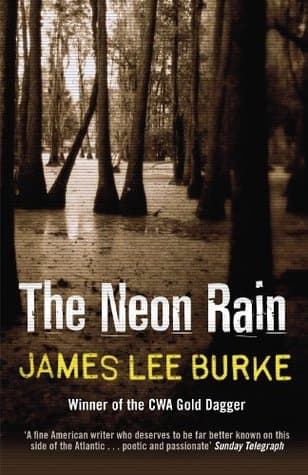
- The Neon Rain
James Lee Burke
3.9 (21k) average on GoodreadsThrillerFirst book in the Dave Robicheaux series, establishing the character and setting.
- Mystic River
Dennis Lehane
4.2 (128k) average on GoodreadsThrillerFeatures a dark, character-driven crime story with themes of revenge and moral ambiguity.
- The Lincoln Lawyer
Michael Connelly
4.2 (193k) average on GoodreadsThrillerWhile both Burke and Connelly craft compelling legal/crime thrillers, "A Morning for Flamingos" delves deeper into the psychological toll and moral ambiguities faced by its protagonist, Robicheaux, who is forced into a morally compromising undercover role. Connelly's Mickey Haller, while also navigating ethical gray areas, operates more within the established legal system, albeit with unconventional methods. Burke's novel is less about legal maneuvering and more about the visceral, personal corruption of the soul when confronted with systemic evil, a point highlighted by scholar Maureen T. Reddy's analysis of Burke's 'southern noir' (Reddy, The Southern Literary Journal, 2001).
- Angels & Demons
Dan Brown
3.9 (2.7M) average on GoodreadsThrillerA Harvard symbologist races through Rome's ancient sites, deciphering cryptic clues to unmask the Illuminati and stop a vengeful plot to destroy the Vatican with a stolen antimatter weapon.
- Gone Girl
Gillian Flynn
4.1 (2.3M) average on GoodreadsThrillerA wife's sudden disappearance on her fifth anniversary reveals a web of lies and psychological warfare, exposing the secrets within a seemingly perfect marriage.
- The Girl on the Train
Paula Hawkins
3.9 (2.1M) average on GoodreadsThrillerA woman’s fascination with a seemingly perfect couple she watches from her daily train commute leads her into a dark investigation when she witnesses something that shatters their idyllic image.





Enjoyed the summary?
A summary gives you the shape of the book. The book itself has the detail, the examples and the voice.
Find A Morning for Flamingos on AmazonAs an Amazon Associate, BookBrief earns from qualifying purchases. How we're funded