

Synopsis
Covers the whole plot, including the ending.
- Difficulty
- Medium
- Pacing
- Slow
- Mood
- Atmospheric, Macabre, Melancholy, Disturbing
- Read it if
- You enjoy Southern Gothic literature, psychological studies of isolation, and stories with a dark, macabre twist.
- Skip it if
- You prefer straightforward narratives, happy endings, or are sensitive to themes of decay and death.
A Rose for Emily Plot Summary
Covers the whole plot, including the ending.
The Town Gathers for Emily's Funeral
The story begins with the death of Miss Emily Grierson, an elderly, reclusive woman from a once-prominent Southern family. The entire town of Jefferson attends her funeral. The men feel a respectful obligation, and the women are curious about her mysterious life. Emily was a fixture in the town, representing a bygone era. Her house, once grand, became a decaying eyesore. The narrator, speaking for the town, recalls various events from Emily's life, starting with her refusal to pay taxes many years prior. Colonel Sartoris had granted this exemption out of chivalry after her father's death, though later town officials tried unsuccessfully to collect payment.
Tax Troubles and Emily's Defiance
Years before her death, when a new generation of town aldermen tried to collect her overdue taxes, Miss Emily firmly refused. She met them at the door, a small, stout woman with a long gold chain disappearing into her belt, her eyes expressionless. She insisted she owed no taxes in Jefferson, referring to an arrangement with the late Colonel Sartoris, who had 'remitted' her taxes after her father's death. Despite the aldermen's explanations that the arrangement was informal and expired, Emily simply said, 'I have no taxes in Jefferson. Colonel Sartoris explained it to me. Perhaps one of you can explain it to him.' She then dismissed them, leaving the town frustrated but unwilling to force the issue, maintaining her unique exemption.
The Smell and the Lime
About two years after her father's death, a terrible smell came from Miss Emily's house, leading to neighbor complaints. The aldermen hesitated to confront Emily directly, knowing her reclusive and proud nature. The mayor, Judge Stevens, was reluctant to accuse a lady of smelling bad. After much discussion, four men secretly went to Emily's property late one night and sprinkled lime around the foundation of her house and in her cellar. The smell eventually disappeared, and the town never spoke of it again, though they speculated about its source, connecting it to her father's recent death and Homer Barron's arrival.
Homer Barron's Arrival
Soon after her father's death and the mysterious smell, Homer Barron, a jovial, loud Northern foreman, arrived in Jefferson to oversee sidewalk paving. He quickly became popular with the town's younger generation. To the townspeople's surprise and disapproval, Miss Emily began riding on Sunday afternoons with Homer Barron in his buggy. This relationship was scandalous, as Homer was a Northerner and not a suitable match for a woman of Emily's standing. The town women believed Emily, having lost her father, was forgetting her 'noblesse oblige' and shaming the Grierson name.
Emily Buys Arsenic
When Emily bought arsenic from the druggist, the town worried. The druggist, following rules, asked her what she intended to use it for, but Emily, with her usual haughty demeanor, simply stared him down, offering no explanation. The druggist, intimidated, sold her the poison. The townspeople immediately assumed she planned suicide, fearing Homer Barron had abandoned her or was about to. They recalled her family's history of mental instability and pitied her, believing she was distraught over her doomed romance with Homer.
The Minister's Visit
Concerned by Emily's public relationship with Homer Barron and her arsenic purchase, the town's prominent women pressured the Baptist minister to visit her about her conduct. The minister visited Emily's house but refused to discuss their conversation, only saying Emily would never allow him inside again. Afterward, the minister's wife wrote to Emily's two cousins in Alabama, who arrived shortly to stay with Emily and presumably stop the impropriety and counsel her.
Homer's Disappearance
For a time, the presence of Emily's cousins seemed to deter Homer Barron, who was not seen with Emily for a while. However, one evening, shortly after the cousins left, Homer was seen entering Miss Emily's house. A neighbor saw Emily's servant, Tobe, admit him through the kitchen door. This was the last time Homer Barron was seen in Jefferson. He simply vanished, and the town assumed he had left for good, perhaps abandoning Emily as they had predicted. The town's pity for Emily deepened, believing her a victim of Homer's heartlessness.
Emily's Reclusion and Decline
After Homer Barron's disappearance, Miss Emily withdrew completely from the town. Her front door remained closed, and she was rarely seen. Her only contact with the outside world was through her servant, Tobe, who would go out for groceries. Emily grew heavier, and her hair turned iron gray, then pepper-and-salt, and finally a dull, coal black, as if dyed. She gave private china-painting lessons for a period, but even those stopped. She became a complete recluse, a ghost in her own house, known only by her occasional appearances in a downstairs window or at her door to dismiss tax collectors.
The Long Wait for Death
For forty years, Miss Emily lived in her decaying mansion, a living anachronism. The town continued to send her tax notices, which she consistently ignored or refused. Her house became increasingly dilapidated, a stark contrast to the modernizing town around it. She was seen less and less, her appearances becoming events of curious speculation. Tobe, her loyal servant, aged alongside her, eventually becoming a stooped old man. Emily became a legend, a symbol of the Old South's stubborn refusal to change, her life shrouded in mystery and her house a silent, foreboding monument.
Emily's Death and the Funeral
At seventy-four, Miss Emily Grierson died in her sleep. Tobe, her faithful servant, let in the town's women and then disappeared forever. The entire town attended her funeral, not only out of respect but also from a long-held curiosity to finally enter the mysterious house. After the funeral, the townspeople began to explore the house, which had been closed off for so long. They found the downstairs parlor dusty and smelling of decay, filled with faded grandeur and forgotten relics of her past.
The Locked Room
After the funeral, the townspeople's curiosity led them to explore the upstairs of Emily's house. They found a room locked for forty years, the door bolted from the inside. They had to break it down. Inside, the room was shrouded in dusty, rose-colored light. It was furnished as a bridal chamber, complete with a dressing table, a suit of men's clothes carefully folded, and a silver toilet set with Emily's initials. On the pillow next to a long indentation, they found a single strand of iron-gray hair, a chilling discovery that deepened the mystery.
The Macabre Discovery
Within the bridal chamber, the townspeople made a horrifying discovery. Lying in the bed was Homer Barron's long-decayed corpse. He was stretched out as if in an embrace, his body decomposed into a skeleton, his head's indentation still visible on the pillow. The room was thick with forty years of dust and the smell of decay. On the pillow beside Homer's skeleton, among the dust and evidence of a long-ago intimacy, the townspeople found a single, long strand of iron-gray hair, confirming the shocking truth of Emily's macabre secret and her final, desperate act of possession.
Principal Figures
Miss Emily Grierson
Protagonist
A reclusive, aristocratic Southern woman who clings to the past.
Miss Emily is the central figure of the story, a descendant of an old, once-prominent Southern family. She is a proud, stubborn woman who defies town conventions and lives a life of extreme isolation. Her life is marked by the controlling presence of her father, her scandalous courtship with Homer Barron, and her ultimate descent into madness and necrophilia. She represents the decaying aristocracy of the Old South, unable to adapt to change and desperately clinging to a romanticized past. Her actions are driven by a profound fear of abandonment and a desire to control her own destiny, however twisted.
Relationships: Mr. Grierson (Father) (Overbearing and controlling, he prevented her from marrying.); Homer Barron (Her lover, whom she poisons and keeps as a corpse.); Tobe (Her loyal, long-suffering servant who eventually abandons her house after her death.)
Homer Barron
Supporting
A Northern foreman who becomes Emily's lover and victim.
Homer Barron is a jovial, loud, and popular Northern construction foreman who arrives in Jefferson to pave sidewalks. He is a stark contrast to the reserved Southern gentlemen Emily would have traditionally associated with. Homer is described as a 'man's man' who enjoys drinking and socializing, and he openly admits he is 'not a marrying man.' His relationship with Emily is scandalous to the townspeople, but he seems genuinely fond of her, at least initially. He represents the encroaching change and modernity that the Old South, and Emily, resist. His ultimate fate is grim, becoming the object of Emily's twisted affection.
Relationships: Miss Emily Grierson (Her lover, whom he plans to leave but is instead murdered by her.)
Tobe
Supporting
Miss Emily's loyal, long-serving Negro servant.
Tobe is Miss Emily's faithful servant throughout her adult life. He is the only other person who lives in the Grierson house and serves as Emily's sole connection to the outside world for many years. He does her errands, maintains the house to the best of his ability, and is the one who lets people in and out. He is a silent, enduring presence, witnessing Emily's reclusion and the decay of her life. His loyalty is unwavering until Emily's death, at which point he quietly disappears, suggesting a sense of liberation from his long service.
Relationships: Miss Emily Grierson (Her loyal servant until her death.)
The Town (Narrator)
Supporting
The collective voice of Jefferson, observing and judging Emily's life.
The town, represented by a collective 'we' narrator, serves as a character itself. It embodies the Southern community's traditions, gossip, prejudices, and evolving attitudes. The town observes Emily's life with a mixture of pity, curiosity, judgment, and a certain degree of reverence for her family's past. It is the repository of the story's history and memory, piecing together Emily's life through anecdotes and speculation. The town's perspective highlights the conflict between individual eccentricity and societal expectations, and the lingering influence of the Old South.
Relationships: Miss Emily Grierson (The object of their collective observation, pity, and gossip.)
Colonel Sartoris
Mentioned
Former mayor of Jefferson who remitted Emily's taxes.
Colonel Sartoris was the mayor of Jefferson shortly after Miss Emily's father died. He is the one who 'remitted' Emily's taxes out of a sense of chivalry and pity, declaring that her father had lent money to the town. This act, though informal, established a precedent that Emily clung to for decades, refusing to pay taxes to subsequent town administrations. He represents the old Southern code of honor and gentility, which gradually fades with his passing and the rise of new leadership.
Relationships: Miss Emily Grierson (Granted her a tax exemption out of chivalry.)
Judge Stevens
Mentioned
Mayor who dealt with the smell from Emily's house.
Judge Stevens was the mayor of Jefferson when the mysterious smell emanated from Miss Emily's house. He is an old, dignified man who is reluctant to confront Emily directly about the smell, stating, 'Dammit, sir, will you accuse a lady to her face of smelling bad?' He represents the lingering Southern courtesy and the difficulty of enforcing modern rules against a respected, albeit peculiar, member of the old aristocracy. He ultimately authorizes the secret lime-spreading operation.
Relationships: Miss Emily Grierson (Reluctantly dealt with complaints about her house.)
Mr. Grierson (Emily's Father)
Mentioned
Miss Emily's overbearing and controlling father.
Emily's father is never seen alive in the story, but his influence profoundly shapes her life. He was a proud, aristocratic man who drove away all her suitors, believing none were good enough for his daughter. He kept Emily isolated and dependent on him, effectively preventing her from forming any romantic relationships or having a life of her own. His death leaves Emily utterly alone and unprepared for independence, contributing to her subsequent mental decline and desperate actions. He symbolizes the stifling nature of the Old South's patriarchal control.
Relationships: Miss Emily Grierson (His daughter, whom he controlled and isolated.)
Themes & Insights
The Decline of the Old South
The story shows the decay of the aristocratic Old South and its struggle against modernity. Miss Emily Grierson symbolizes this decline, a relic of a past era whose decaying mansion mirrors her family's crumbling lineage. Her refusal to pay taxes, her adherence to old social norms, and her inability to adapt to the changing town of Jefferson highlight the old order's stubborn resistance. The town's changing attitudes towards her, from respectful pity to frustrated curiosity, reflect broader societal transition. Homer Barron's arrival, a Northern working-class man, further emphasizes the clash between old Southern values and the new industrializing North.
“When Miss Emily Grierson died, our whole town went to her funeral: the men through a sort of respectful affection for a fallen monument, the women mostly out of curiosity to see the inside of her house, which no one save Tobe, a combined gardener and cook, had seen in at least ten years.”
Isolation and Loneliness
Isolation is a constant theme, seen in Emily's physical and emotional detachment from the community. Her father's overbearing presence initially isolates her by driving away suitors, leaving her alone after his death. Emily then chooses to withdraw, becoming a recluse in her decaying mansion, a symbol of her deep loneliness. Her only significant relationship, with Homer Barron, comes from this desperation for connection. The town observes her from a distance, curious but unable to truly understand her solitude. This extreme isolation contributes to her mental decline and her macabre attempt to preserve companionship, however twisted.
“She had evidently shut up the top floor of the house—like the rest of us she had long since ceased to be able to afford the Negroes to wait on it—and she lived downstairs with the cook and a young girl.”
Memory and the Past
The narrative structure itself, non-linear and retrospective, highlights the theme of memory and the past's inescapable grip. The town constantly revisits Emily's history, piecing together her life through fragmented recollections and gossip. Emily, too, is trapped by her past; she clings to family traditions, the tax exemption from Colonel Sartoris, and most tragically, her relationship with Homer Barron. Her house is a museum of the past, filled with dust and decay, refusing to acknowledge time's passage. The final discovery in the locked room reveals her ultimate, horrifying attempt to freeze a moment in time and preserve a past that never truly was.
“Then we knew that this was the last we should see of Miss Emily. She would not be seen again for a long time. She was sick for a long time. When we next saw her, she was fat and her hair was turning gray.”
Love, Death, and Obsession
These intertwined themes drive the central conflict and the story's shocking climax. Emily's life is defined by a desperate desire for love and companionship, initially thwarted by her father. Her relationship with Homer Barron offers a brief glimpse of happiness, but his impending abandonment triggers her ultimate obsession. Unable to cope with loss and the finality of death, Emily tries to control it, transforming Homer's living presence into an eternal, macabre companion. Her arsenic purchase, the terrible smell, and the bridal chamber's discovery reveal a deep psychological disturbance born from an inability to let go of a perceived love, ending in a necrophilic bond.
“Then we noticed that in the second pillow was the indentation of a head. One of us lifted something from it, and level with the light we saw a long strand of iron-gray hair.”
Plot Devices & Literary Techniques
Non-Linear Narrative
The story is told out of chronological order, jumping between different periods of Emily's life.
Faulkner employs a non-linear narrative, presenting events out of sequence. The story begins with Emily's funeral, then flashes back to various episodes from her past, such as her tax troubles, the smell incident, and her courtship with Homer Barron, before returning to the present discovery. This structure mirrors the way the town collectively remembers Emily, piecing together fragments of her life. It creates suspense, gradually revealing details that build towards the horrifying climax, and emphasizes the theme of memory and the past's enduring influence, making the reader actively participate in constructing Emily's story.
First-Person Plural Narrator ('We')
The story is told from the collective perspective of the town of Jefferson.
The use of 'we' as the narrator makes the town itself a character, representing community gossip, judgment, and collective memory. This perspective provides an outsider's view of Emily, highlighting her isolation and the town's struggle to understand her. It also allows for subjective interpretation and speculation, building suspense around Emily's mysterious life. The collective voice underscores the themes of societal expectations versus individual eccentricity and the way a community preserves and distorts history, ultimately leading to the shared discovery of Emily's secret.
Symbolism of the House
Emily's decaying mansion symbolizes the decline of the Old South and her own mental state.
Miss Emily's house is a central symbol, reflecting both the grandeur and the decay of the Old South. Once a magnificent structure, it slowly deteriorates, becoming 'an eyesore among eyesores,' mirroring the decline of the Grierson family and the aristocratic era it represents. The house is also a physical manifestation of Emily's reclusive nature and her psychological state. Its dusty, closed-off rooms, particularly the locked bridal chamber, symbolize her refusal to move on from the past, her mental stagnation, and the dark secrets she harbors within her own mind and the confines of her life.
Foreshadowing
Subtle clues throughout the story hint at the macabre discovery.
Faulkner uses several instances of foreshadowing to build suspense. The most prominent is Emily's purchase of arsenic, which she refuses to explain, leading the town to suspect suicide but ultimately used for murder. The 'terrible smell' emanating from her house after Homer's disappearance strongly suggests a decaying body. The description of Emily's hair turning 'iron-gray' and the final discovery of a single strand of iron-gray hair on the pillow beside Homer's skeleton directly links her to the crime and the long passage of time since his death. These clues prepare the reader, subliminally, for the shocking revelation.
A Rose for Emily Quotes
“When Miss Emily Grierson died, our whole town went to her funeral: the men through a sort of respectful affection for a fallen monument, the women mostly out of curiosity to see the inside of her house, which no one save old Tobe, her man-servant, had seen in at least ten years.”
“We remembered all the young men her father had driven away, and we knew that with nothing left, she would have to cling to that which had robbed her, as people will.”
“Then we knew what was to be expected of her; less than a year later her father died, and the town began to feel sorry for her.”
“She was a small, fat woman in black, with a thin gold chain descending to her waist and vanishing into her belt, leaning on an ebony cane with a gold head.”
“She told them that Miss Emily didn't owe any taxes. She had no taxes in Jefferson. Colonel Sartoris had remitted her taxes, personally, on account of her father's services to the town.”
“It was as if she demanded more than ever the rigorous attention of her town, not for her sake, but for the sake of the decorum.”
“And sure enough, after a week or two the smell went away. That was when some of the ladies began to say that it was a disgrace to the town and a bad example to the young people.”
“Then the next day they saw him at the post office, with a certain wistful alertness, and on the third day he was gone.”
“So she had to cling to that which had robbed her, as people will. She never did get married. She was over thirty then. We were glad as if the absence of that youth was a sort of heritage, an obligation, a duty.”
“She was sick for a long time. When we saw her again, her hair was cut short, making her look like a girl, with a vague resemblance to those angels in colored church windows—sort of tragic and serene.”
“And sure enough, after a week or two the smell went away. That was when some of the ladies began to say that it was a disgrace to the town and a bad example to the young people.”
“A day later the town was aghast. A Negro man had been seen on her street at night, carrying a basket.”
“The man himself lay in the bed. For forty years he had lain there, in the attitude of an embrace, beneath the pervasive dust of the room and the long undisturbed change of her bridal atire.”
“Then we noticed that in the second pillow was the indentation of a head. One of us lifted something from it, and level with our eyes we saw a long strand of iron-gray hair.”
Quiz
10 questions on the plot and the characters. Each answer comes with a short explanation.
Question 1
What is the primary reason the townspeople initially complain about Emily Grierson's house?
- Its dilapidated appearance makes the neighborhood look bad.
- A foul smell emanates from the property.
- She refuses to pay her taxes.
- She keeps too many cats.
Show answer
B. A foul smell emanates from the property. The townspeople complain to the mayor about a terrible smell emanating from Emily's house shortly after Homer Barron disappears.
Question 2
What does Emily purchase from the druggist, which raises eyebrows in the town?
- Rat poison
- Arsenic
- Sleeping pills
- A strong disinfectant
Show answer
B. Arsenic Emily asks for arsenic, stating it's for rats, but the druggist is hesitant due to the poison's lethality and the lack of a clear reason.
Question 3
Who is Homer Barron?
- Emily's estranged cousin.
- A wealthy suitor from a neighboring town.
- A foreman for a construction company.
- The mayor of Jefferson.
Show answer
C. A foreman for a construction company. Homer Barron is a Northern foreman who comes to Jefferson with a construction company to pave the sidewalks.
Question 4
What is discovered on the pillow next to Homer Barron's skeleton after Emily's death?
- A locket with a picture of Emily.
- A single strand of long, iron-gray hair.
- A faded wedding ring.
- A note in Emily's handwriting.
Show answer
B. A single strand of long, iron-gray hair. After the townspeople break down the locked door to the upstairs room, they find Homer's skeleton on the bed and a single strand of Emily's hair on the pillow next to it.
Question 5
How does Emily react when her father dies?
- She immediately seeks comfort from her relatives.
- She refuses to admit he is dead for three days.
- She holds a lavish funeral, inviting the entire town.
- She leaves town for a period of mourning.
Show answer
B. She refuses to admit he is dead for three days. Emily keeps her father's body for three days, denying his death, before finally allowing the town to bury him.
Question 6
What does the narrator imply about Emily's relationship with her father?
- He was a loving and supportive parent who encouraged her independence.
- He was overprotective and drove away all her potential suitors.
- He was often absent, leaving Emily to raise herself.
- He was critical of her social standing and pushed her to marry well.
Show answer
B. He was overprotective and drove away all her potential suitors. The story describes Emily's father as preventing her from having any suitors, suggesting a controlling and isolating influence.
Question 7
Which of these themes is most central to 'A Rose for Emily'?
- The triumph of justice over corruption.
- The beauty of selfless love and sacrifice.
- The decay of the Old South and the resistance to change.
- The pursuit of the American Dream.
Show answer
C. The decay of the Old South and the resistance to change. The story extensively explores the decline of the Southern aristocracy, represented by Emily and her decaying home, and her stubborn refusal to adapt to modern societal norms.
Question 8
What is the significance of the 'rose' in the title 'A Rose for Emily'?
- It symbolizes a literal gift of a rose given to Emily by a suitor.
- It represents a gesture of compassion or understanding from the narrator, despite Emily's actions.
- It refers to the rose garden Emily cultivates in her backyard.
- It signifies Emily's secret passion for gardening.
Show answer
B. It represents a gesture of compassion or understanding from the narrator, despite Emily's actions. The 'rose' is widely interpreted as a symbolic, perhaps ironic, gesture of compassion or a tribute to Emily, acknowledging her tragic existence and the complex motivations behind her actions, rather than a literal object.
Question 9
Why do the townspeople wait until after Emily's funeral to enter the locked upstairs room?
- They fear her ghost will haunt them if they disturb her property too soon.
- They are respecting her family's wishes to keep the room private.
- They want to avoid a legal dispute over her estate.
- They have always been too intimidated by her and her family's status to intrude while she was alive.
Show answer
D. They have always been too intimidated by her and her family's status to intrude while she was alive. The townspeople have a long history of being intimidated by Emily and her family's aristocratic status. It is only after her death, when her authority is gone, that they feel emboldened to investigate the mysterious room.
Question 10
The narrative structure of 'A Rose for Emily' is non-linear. What effect does this have on the reader's understanding of Emily?
- It makes Emily's actions seem more predictable and rational.
- It gradually reveals details, building suspense and a more complex, fragmented portrait of her life.
- It simplifies the plot, making it easier to follow the timeline of events.
- It allows the narrator to withhold crucial information until the very end, making her a purely mysterious figure.
Show answer
B. It gradually reveals details, building suspense and a more complex, fragmented portrait of her life. The non-linear narrative, moving back and forth in time, allows Faulkner to reveal pieces of Emily's life and the town's perception of her gradually, creating a sense of unfolding mystery and a more nuanced, albeit unsettling, understanding of her character by the story's climax.
A Rose for Emily FAQ
What is the basic premise of 'A Rose for Emily'?
The story centers on Emily Grierson, an eccentric aristocratic woman living in the American South, whose life and death become the subject of local gossip and scrutiny. After her death, the townspeople discover a macabre secret hidden within her decaying mansion, revealing the extent of her isolation and her desperate clinging to the past.
Who is Homer Barron and what is his significance to Emily?
Homer Barron is a Northern foreman who comes to Jefferson to pave sidewalks and becomes Emily's suitor. He represents a fleeting moment of happiness and potential escape from her father's control, but his eventual disappearance, strongly implied to be at Emily's hand, becomes the central mystery and horror of the story.
What is the 'rose' in the title 'A Rose for Emily'?
The 'rose' is symbolic and not a literal flower; it represents a gesture of understanding, pity, or perhaps even a final act of twisted love or remembrance for Emily, despite her macabre secret. It acknowledges the tragedy of her life, marked by isolation and a desperate need for affection that she could not find conventionally.
How does the town's perception of Emily change over time?
Initially, the town views Emily with a mix of respect for her aristocratic lineage and pity for her reclusiveness after her father's death. As she ages and further isolates herself, her image shifts to one of an eccentric curiosity, then to a figure of fear and morbid fascination, especially after the smell from her house and Homer's disappearance.
What is the 'macabre secret' discovered at the end of the story?
After Emily's death, the townspeople break into a locked room in her house and find the decaying body of Homer Barron lying in a bed, alongside an indentation on the pillow next to him and a single strand of long, iron-gray hair, implying Emily had been sleeping beside his corpse for decades.
What is the significance of the arsenic Emily buys?
Emily purchases arsenic, ostensibly to kill rats, shortly after Homer Barron's public rejection of marriage and his subsequent disappearance. The townspeople suspect it's for suicide, but in hindsight, it becomes clear she used it to poison Homer, preserving his body as a permanent companion.
How does Emily's father influence her life?
Emily's father exerted immense control over her, driving away all suitors and keeping her in a state of sheltered dependence, which is depicted in a tableau where he stands over her with a whip. His death leaves her emotionally crippled and unable to function independently, fueling her desperate attempts to cling to the past and control her own relationships.
What does the strand of hair found on the pillow signify?
The iron-gray strand of hair on the pillow next to Homer Barron's skeleton confirms that Emily not only murdered him but also slept beside his decaying body for decades. This detail underscores her profound loneliness, her inability to let go, and her twisted attempt to maintain a permanent relationship after being abandoned.
How does the decaying Grierson house symbolize Emily's state?
The Grierson house, once grand, slowly decays and becomes a symbol of Emily's own decline, her isolation, and her clinging to a past that no longer exists. Its closed-off, dusty interior and the eventual discovery of the corpse within reflect Emily's psychological stagnation and her morbid secrets.
What role do the townspeople play as narrators?
The story is narrated by an unnamed collective 'we' representing the townspeople, offering a communal, often gossipy and speculative, perspective on Emily's life. This narrative choice highlights how Emily is seen through the lens of community judgment and curiosity, emphasizing her isolation while also providing fragmented insights into her character.
How does Emily's refusal to pay taxes reflect her character?
Emily's steadfast refusal to pay taxes, citing a vague agreement from Colonel Sartoris, demonstrates her belief in her own aristocratic privilege and her detachment from contemporary societal rules. It highlights her stubbornness, her inability to adapt, and her living in a bygone era where she felt entitled to special treatment.
What psychological state might Emily have been in?
Emily likely suffered from severe social isolation, attachment issues stemming from her father's control, and potentially a form of psychosis or delusional thinking. Her inability to grieve her father properly, her desperate clinging to Homer, and her subsequent actions suggest a profound detachment from reality and a desperate need for control over her personal world.
Is Emily a victim or a villain?
Emily is a complex character who can be seen as both. She is a victim of her father's oppressive control and societal expectations that left her isolated and emotionally stunted. However, her actions, particularly the murder of Homer Barron and living with his corpse, paint her as a villain driven by a pathological need for possession and control, making her a tragic figure rather than purely one or the other.
How does the story comment on the Old South?
'A Rose for Emily' serves as a commentary on the decaying aristocracy of the Old South, symbolized by Emily and her house. It explores the inability of some to adapt to changing times, clinging to outdated traditions, privilege, and a romanticized past, ultimately leading to stagnation and morbid decay rather than progress.
What is the significance of the smell emanating from Emily's house?
The 'smell' is the first tangible sign to the townspeople that something is terribly wrong inside Emily's house, long before the ultimate discovery. It hints at the decaying corpse of Homer Barron, symbolizing the hidden corruption and macabre secrets that Emily keeps, literally and figuratively, locked away from the public eye.
Why does Emily resist letting go of her father's body after his death?
Emily resists for three days, telling the ladies that her father is not dead. This reaction stems from her profound psychological dependence on him and her inability to accept abandonment. Having been controlled by him her entire life, his death left her without a guiding figure, and she desperately tried to deny this final loss, foreshadowing her later actions with Homer.
How does the changing of the street numbers affect Emily?
When the town decides to implement free mail delivery and affix metal numbers above their doors, Emily refuses, citing her family's long history in the town and her belief that such changes do not apply to her. This small detail underscores her resistance to modernization and her staunch adherence to her own perceived, unchanging world.
What is the role of Tobe, Emily's servant?
Tobe is Emily's loyal, silent, and long-suffering Black servant, who is the only other person living in the house and the sole link between Emily and the outside world for many years. He lets in visitors, does her shopping, and is the first to disappear after Emily's death, implying he knew of the secret but remained silent out of loyalty or fear.
About the author
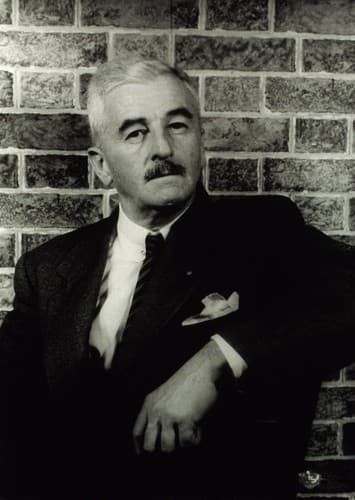
William Cuthbert Faulkner was an American writer known for his novels and short stories set in the fictional Yoknapatawpha County, based on Lafayette County, Mississippi, where Faulkner spent most of his life. A Nobel laureate, Faulkner is one of the most celebrated writers of American literature and often is considered the greatest writer of Southern literature.
Similar books
- Nineteen Eighty-Four
George Orwell
4.2 (5.5M) average on GoodreadsFictionWinston Smith dreams of truth and rebellion in a world where Big Brother watches all, but he confronts the terrifying power of a regime that controls not just actions, but thoughts.
- The Frozen River
Ariel Lawhon
4.4 (600k) average on GoodreadsFictionIn 1789 Maine, a heroic midwife's diary helps her expose a murder and get justice in a town that wants to silence her.
- A Man Called Ove
Fredrik Backman
4.4 (569k) average on GoodreadsFictionA stubborn widower, who lives by strict rules, finds his quiet world changed by a lively new family next door, making him face his past and find happiness in human connection.
- The Art of Racing in the Rain
Garth Stein
4.2 (452k) average on GoodreadsFictionThrough the eyes of Enzo, a wise and observant dog, a race car driver's family navigates a journey of love, loss, and resilience, learning that life's most important lessons often come in the curves, not just on the straightaways.
- The Colour of Magic
Terry Pratchett
4.0 (425k) average on GoodreadsFictionOn a discworld hurtling through space on the back of a giant turtle, an inept wizard and his naive, walking-luggage-toting tourist embark on a chaotic, belief-fueled journey to the very edge of their flat planet, encountering dragons that only exist if you believe in them.
- The Correspondent
Virginia Evans
4.5 (391k) average on GoodreadsFictionA distinguished lawyer's life of carefully written letters, both sent and unsent, reveals a past heartbreak, making her confront forgiveness and the power of written words.






Enjoyed the summary?
A summary gives you the shape of the book. The book itself has the detail, the examples and the voice.
Find A Rose for Emily on AmazonAs an Amazon Associate, BookBrief earns from qualifying purchases. How we're funded