

Synopsis
Covers the whole plot, including the ending.
- Difficulty
- Easy
- Pacing
- Slow
- Mood
- Melancholy, Poignant, Reflective, Somber
- Read it if
- You appreciate classic French realism, character studies of ordinary lives, or short, poignant tales of devotion and loss.
- Skip it if
- You prefer fast-paced plots, complex narratives, or stories with overt optimism and happy endings.
A Simple Heart Plot Summary
Covers the whole plot, including the ending.
Félicité's Early Life and Arrival at Madame Aubain's
Félicité, a young woman from Pont-l'Évêque, has a difficult youth marked by poverty and heartbreak. Her fiancé, Théodore, leaves her for a wealthier woman. Despite her sorrow, Félicité stays strong. At eighteen, she becomes a maid for Madame Aubain, a widow with two young children, Paul and Virginie. She quickly proves to be a diligent, honest, and frugal servant, dedicating herself to the household. Her arrival begins a lifelong commitment to Madame Aubain and her family, bringing Félicité a sense of stability she had lacked.
Life at Madame Aubain's and Paul's Departure
Félicité's days are full of work for Madame Aubain. She manages the household efficiently and selflessly, often sacrificing her comfort for the family. She cares for Paul and Virginie, teaching them catechism and looking after them with maternal affection. When Paul goes to school in Caen, Félicité feels sad but understands it is for his education. His departure leaves a void, and she misses his lively presence, showing her deep emotional connection to the children.
Virginie's Illness and Death
Virginie, a delicate child, develops a chest ailment. Félicité nurses Virginie with tenderness and vigilance. She sits by her bedside, giving medicine and comfort. Despite Félicité's efforts and prayers, Virginie's condition worsens. The doctor confirms her illness is fatal. Virginie dies, deeply affecting Félicité, who had cared for her like her own child. This event is a significant sorrow for Félicité, adding to the theme of loss in her life.
The Arrival of Victor, Félicité's Nephew
Years later, Félicité's sister dies, leaving an orphaned son named Victor. Félicité, despite her small wages, takes Victor in, bringing him to Madame Aubain's house. She dotes on him, seeing in him a new object for her affection. Victor often wanders off, and Félicité searches for him, showing her fierce protectiveness. She teaches him, cares for him, and cherishes him, finding renewed purpose and joy in this family connection. Victor represents a brief period of happiness and family love for Félicité.
Victor's Maritime Career and Departure
As Victor grows older, he wants to become a sailor. Félicité, though worried about the sea's dangers, supports his decision, understanding his need for independence. She bids him a tearful farewell as he leaves on his first voyage. His departure leaves Félicité with worry, and she waits for news of him, writing letters and praying for his safe return. This separation highlights her vulnerability to loss and her selfless love, as she puts Victor's desires before her own comfort.
Victor's Death and Félicité's Grief
One day, a letter brings news that Victor has died of yellow fever in Havana. Félicité is heartbroken. The news shatters her, and she isolates herself in grief, finding it hard to cope with another loss. Madame Aubain, though sympathetic at first, grows tired of Félicité's long mourning. Victor's death is a profound blow, taking away one of the last objects of her affection and deepening her solitude and sorrow.
Félicité's Acquaintance with Loulou the Parrot
Madame Aubain's son, Paul, gives his mother a green parrot named Loulou. Madame Aubain finds the parrot's squawking annoying and gives Loulou to Félicité. Félicité, with her affection, quickly forms a deep bond with the bird. She talks to Loulou, teaches him phrases, and cares for him with the same devotion she showed Virginie and Victor. Loulou becomes her constant companion, filling the void left by her many losses and giving her comfort and purpose.
Loulou's Escape and Return
One day, Loulou escapes his cage and flies away. Félicité is distraught, fearing she has lost another companion. She searches frantically, calling his name. Her distress is immense, showing her emotional investment in the bird. After a tense search, Loulou is found and returned to Félicité, bringing her great relief and strengthening her attachment to him. This incident shows her vulnerability and the depth of her affection for the parrot.
Félicité's Declining Health and Madame Aubain's Death
As years pass, Félicité's health fails. She becomes frail, losing her hearing and sight. Her world narrows, centering almost entirely on her duties and Loulou. Madame Aubain, now an old woman, also declines. Eventually, Madame Aubain dies, leaving Félicité alone in the house. This event marks the end of Félicité's long service and the loss of her main human connection. She is left to manage the house alone, her solitude deepening as her physical abilities wane.
Loulou's Death and Félicité's Final Days
Loulou, now old and ailing, dies. Félicité is devastated by this final loss. She has the parrot stuffed and places him on her mantelpiece, continuing to speak to him as if he were alive. Her mental and physical state worsens. She becomes weaker and more isolated, finding solace only in her memories and the stuffed parrot. The house falls into disrepair, reflecting her own decline. Her life, marked by continuous loss, now nears its end, with Loulou being her last and most cherished companion.
The Fête-Dieu Procession and Félicité's Vision
The Fête-Dieu (Corpus Christi) procession is being prepared, and Félicité, despite her extreme weakness, insists on contributing. She offers Loulou, the stuffed parrot, to adorn the altar. As the procession passes her window, Félicité lies on her deathbed. With her last breath, she has a vision: Loulou, transfigured, appears to her as the Holy Spirit. In this final moment, her simple, pure heart, full of selfless love and devotion, finds its ultimate spiritual fulfillment, going beyond the earthly losses she endured.
Principal Figures
Félicité
Protagonist
A simple, selfless, and devoted servant woman.
Félicité is a woman of unwavering devotion and purity of heart. Despite a life filled with relentless toil and profound losses, she maintains an astonishing capacity for selfless love and loyalty. She is uneducated and unworldly, but possesses an innate goodness and a deep sense of duty. Her life is defined by her service to others, whether it's her mistress, children, nephew, or even a parrot. She finds meaning and purpose in her attachments, enduring hardship with quiet resilience and unwavering faith. Her simplicity is not a lack of intelligence, but a lack of complexity in her emotional landscape.
Relationships: Madame Aubain (Mistress and lifelong employer, a source of stability.); Virginie (Child she cared for with maternal affection, deeply mourned after her death.); Paul (Child she cared for, who eventually leaves home.); Victor (Beloved nephew, a brief source of familial joy, whose death causes immense grief.); Loulou (Her final, most cherished companion, treated with profound devotion.)
Madame Aubain
Supporting
Félicité's employer, a respectable but often self-absorbed widow.
Madame Aubain is a respectable widow of independent means, living a quiet, bourgeois life in Pont-l'Évêque. She is generally kind to Félicité but often takes her devotion for granted, failing to fully appreciate the depth of her servant's affection and sacrifices. She is concerned with appearances and the proper upbringing of her children, Paul and Virginie. While she experiences her own sorrows, particularly the death of Virginie, her grief is more conventional and less all-consuming than Félicité's. She represents the detached, often oblivious, upper-class perspective contrasting with Félicité's simple, heartfelt existence.
Relationships: Félicité (Her loyal and indispensable servant, whom she relies on but doesn't fully understand.); Virginie (Her delicate daughter, whose death she mourns.); Paul (Her son, who grows up and moves away.)
Virginie
Supporting
Madame Aubain's delicate daughter, cared for by Félicité.
Virginie is Madame Aubain's younger child, a delicate and somewhat sickly girl. Félicité develops a deep, maternal affection for her, caring for her with immense tenderness. Virginie's illness and eventual death are significant events in Félicité's life, marking one of her earliest profound losses. For Félicité, Virginie represents innocence and a cherished object of her nurturing love. Her death underscores the fragility of life and the constant threat of loss that shadows Félicité's existence, contributing to her quiet resignation.
Relationships: Félicité (Her primary caregiver and a recipient of Félicité's deep, maternal affection.); Madame Aubain (Her mother.)
Paul
Supporting
Madame Aubain's son, who grows up and moves away.
Paul is Madame Aubain's son, a lively boy in his youth. Félicité also cares for him, teaching him and attending to his needs. As he grows older, he is sent away to school and eventually leads his own life, visiting his mother infrequently. He represents the natural progression of life and the eventual departure of those Félicité cares for. His gift of Loulou the parrot, though seemingly minor, becomes profoundly significant in Félicité's later life, providing her with her final companion and object of devotion.
Relationships: Félicité (One of the children she cared for, later the giver of Loulou.); Madame Aubain (His mother.)
Victor
Supporting
Félicité's beloved nephew, who dies tragically at sea.
Victor is Félicité's orphaned nephew, whom she takes in and cares for with immense love and dedication after her sister's death. He becomes a central figure in Félicité's life, filling a void left by previous losses. Victor is a spirited boy who eventually decides to become a sailor. His departure for sea and subsequent death from yellow fever in Havana inflict another devastating blow on Félicité, highlighting the recurring theme of loss and the fragility of her happiness. He represents a brief, cherished period of familial connection for Félicité.
Relationships: Félicité (His devoted aunt and caregiver, who loves him unconditionally.)
Loulou
Supporting
Félicité's cherished parrot and final companion.
Loulou is a green parrot gifted to Madame Aubain by Paul, but quickly becomes Félicité's most beloved companion. After years of human losses, Loulou becomes the ultimate recipient of Félicité's boundless capacity for affection. She talks to him, teaches him, and cares for him with an almost religious devotion. Loulou represents the culmination of Félicité's simple heart's need to love and be loved. His death is a significant emotional blow, but his stuffed form eventually plays a pivotal role in Félicité's final spiritual vision, symbolizing the Holy Spirit.
Relationships: Félicité (Her most cherished companion, the final recipient of her affection, and a spiritual symbol in her death.)
Théodore
Mentioned
Félicité's first love, who abandons her.
Théodore is Félicité's first love, a young man who promises to marry her but then abandons her for a wealthier woman. This betrayal marks Félicité's first significant heartbreak and shapes her early understanding of love and disappointment. Though he only appears briefly in her past, his actions set a precedent for the theme of loss and unfulfilled desire that will permeate Félicité's life. He symbolizes the harsh realities and disappointments of the world outside her simple devotion.
Relationships: Félicité (Her former fiancé, who betrayed her.)
Themes & Insights
Unconditional Love and Devotion
The main theme is Félicité's boundless and selfless capacity for love and devotion, given to everyone and everything in her life, regardless of how it was returned or how long it lasted. From her heartbroken love for Théodore, to her maternal care for Virginie and Victor, and finally to her deep attachment to Loulou the parrot, Félicité's heart remains open and giving. Her tireless nursing of Virginie, her frantic search for Victor, and her careful care for Loulou all show this. It culminates in her vision of the parrot as the Holy Spirit, symbolizing the purity of her devotion. Her love is her defining characteristic, a constant in a life of change and loss.
“Her heart was simple, and the animals of the good Lord were not less important than men.”
Loss and Resignation
Félicité's life is a series of losses: her first love, her parents, Virginie, Victor, Madame Aubain, and finally Loulou. Each loss causes deep pain, yet Félicité meets each with quiet resignation. She grieves deeply but never becomes bitter or cynical. This theme highlights life's harsh realities and the human ability to endure sorrow without losing the ability to love again. Her acceptance of these inevitable losses, without complaint, shows her simple faith and belief in a divine order, as when she attributes Victor's death to God's will.
“And her heart, though it was full of sorrow, was calm.”
The Nature of Simplicity and Piety
Félicité embodies a deep simplicity, not foolishness, but a lack of worldly complexity or intellectual pretense. Her piety is equally simple and heartfelt, rooted in direct experience and emotional connection rather than theological dogma. She finds spiritual meaning in everyday life and in her attachments, blurring the lines between the sacred and the mundane. Her connection with Loulou, ending in her vision of him as the Holy Spirit during the Fête-Dieu procession, shows how her simple faith transforms her mundane affections into spiritual transcendence. Her life suggests that true piety comes from purity of heart and selfless love.
“She was so simple that she thought she saw the Holy Ghost in the parrot.”
Social Class and Invisible Lives
The novella subtly explores social class by showing the largely invisible and unappreciated life of a servant. Félicité's existence is one of constant labor and self-sacrifice, taken for granted by her employers. Her joys and sorrows, though deep, are often unnoticed or dismissed by those around her, especially Madame Aubain. Her life highlights the contrast between the emotional depth and inner world of a 'simple' person and the often superficial concerns of the bourgeois class. Flaubert gives voice and dignity to a life that would typically be overlooked, making a statement about human worth beyond social standing. Her quiet suffering and unwavering dedication define her worth.
“For fifty years she had been scouring the floors of the Aubain household, and her mouth was always shut.”
Plot Devices & Literary Techniques
Symbolism of Loulou the Parrot
The parrot represents Félicité's evolving capacity for love and her spiritual fulfillment.
Loulou the parrot serves as a potent symbol throughout the novella. Initially, he is a simple pet, but he quickly becomes a substitute for all the human affections Félicité has lost. He embodies her loneliness and her profound need to love. As Félicité's health declines and her world shrinks, Loulou becomes her sole companion and the ultimate object of her boundless devotion. In her final moments, Loulou is transfigured in her dying vision into the Holy Spirit, symbolizing the culmination of her simple, pure faith and the spiritual transcendence of her earthly love, suggesting that her capacity for unconditional love was, in itself, a form of divine grace.
Chronological Narrative Structure
A linear progression of events emphasizes the accumulation of Félicité's experiences and losses.
The story is told in a straightforward, chronological manner, tracing Félicité's life from her youth to her death. This linear structure allows Flaubert to meticulously document the passage of time and the cumulative effect of Félicité's experiences, particularly her repeated losses. By presenting events sequentially, the reader witnesses the gradual erosion of Félicité's human connections and her increasing isolation, which makes her eventual attachment to Loulou and her final spiritual vision all the more poignant. The steady progression underscores the relentless nature of life and the quiet endurance of the protagonist.
Irony of the Title
The 'simple heart' is both a literal description and a profound statement on spiritual depth.
The title, 'A Simple Heart,' functions with a subtle irony. On one level, it literally describes Félicité's unpretentious, uneducated, and uncomplicated nature. However, it also ironically highlights the profound spiritual depth and unwavering capacity for love that reside within this 'simple' individual, often overlooked by the more complex, worldly characters. Her simplicity is not a flaw but a source of her enduring goodness and ultimate spiritual insight. The title challenges the reader to look beyond superficial appearances and recognize the extraordinary virtue in an ordinary life, suggesting true richness can be found in the purity of one's affections rather than worldly success or intellect.
Realism and Detached Narration
Objective, detailed narration creates a sense of authenticity and allows the reader to draw their own conclusions.
Flaubert employs a highly realistic and often detached third-person narration, characteristic of his literary style. The narrator observes Félicité's life with meticulous detail, presenting facts, actions, and observations without overtly intruding with emotional commentary or judgment. This objective approach creates a sense of authenticity and allows the reader to infer Félicité's inner world and emotional depth through her actions and reactions to life's events. The realism grounds the story in the everyday, making Félicité's quiet suffering and eventual spiritual transcendence resonate more powerfully, as it emerges organically from her mundane existence.
A Simple Heart Quotes
“For half a century the good women of Pont-l'Évêque had ceased to mention her. And here she was, risen from the dead, like a saint.”
“She was one of those women who are always running errands, always busy, always working.”
“Her heart was always open, and she lived only for others.”
“She never complained.”
“Her whole life was a kind of martyrdom, endured with a gentle smile.”
“She had known only poverty and neglect, but she had never felt sorry for herself.”
“She gave without counting, and received without expecting.”
“And her love was immense, even for a parrot.”
“She saw in him her child, her lover, her God.”
“She would wake with a start, thinking she heard his voice, and then remember that he was gone.”
“She believed that the Holy Ghost was the parrot, and the parrot the Holy Ghost.”
“A blue vapor escaped from her lips. And in it, the Holy Ghost, like a gigantic parrot, hovered above her.”
“She had never learned to read, but she knew the language of the heart.”
“She was a simple soul, and her life was a simple story.”
Quiz
10 questions on the plot and the characters. Each answer comes with a short explanation.
Question 1
What is Félicité's profession throughout most of her adult life?
- Seamstress
- Governess
- Cook
- Maid/Servant
Show answer
D. Maid/Servant Félicité serves as a maid for Madame Aubain for over fifty years, performing various household tasks.
Question 2
What is the name of Madame Aubain's country estate where Félicité often accompanies her?
- Le Havre
- Touques
- Pont-l'Évêque
- Honfleur
Show answer
B. Touques Madame Aubain and Félicité frequently spend their summers at the farm in Touques, which is mentioned several times in the story.
Question 3
What animal becomes Félicité's most cherished companion in her later years?
- A cat
- A dog
- A parrot
- A canary
Show answer
C. A parrot Loulou, the parrot, is given to Félicité by a relative of Madame Aubain and becomes a central figure in her solitary life.
Question 4
What specific event causes Félicité immense grief related to one of Madame Aubain's children?
- Virginie's marriage
- Paul's departure for boarding school
- Virginie's death from pneumonia
- Paul's failure in his studies
Show answer
C. Virginie's death from pneumonia Félicité is deeply affected by the death of Virginie, whom she nursed and cared for like her own child, and she participates in the funeral preparations.
Question 5
What is the primary theme explored through Félicité's life and her relationships?
- The pursuit of wealth and social status
- The enduring nature of unrequited love and devotion
- The corrupting influence of power
- The struggle for political freedom
Show answer
B. The enduring nature of unrequited love and devotion Félicité consistently gives her love and devotion to others—Théodore, Virginie, Paul, her nephew Victor, and even Loulou—often without receiving commensurate affection in return, highlighting a lifelong search for love.
Question 6
What is the name of Félicité's nephew who goes to sea and for whom she feels great affection?
- Théodore
- Victor
- Paul
- Fabien
Show answer
B. Victor Victor is Félicité's nephew, and she is deeply concerned for his well-being, especially when he sails to Cuba.
Question 7
What symbolic object does Félicité associate with the Holy Spirit in her dying moments?
- A dove
- A lamb
- Her parrot, Loulou
- A crucifix
Show answer
C. Her parrot, Loulou As Félicité dies, she has a vision of her beloved parrot, Loulou, transformed into the Holy Spirit, a poignant moment of her simple faith and devotion.
Question 8
How does Félicité react to the news of her nephew Victor's death?
- She immediately travels to Cuba to verify the news.
- She falls ill with a fever and is confined to bed for weeks.
- She initially struggles to comprehend it, then quietly mourns and continues her duties.
- She blames Madame Aubain for not preventing his departure.
Show answer
C. She initially struggles to comprehend it, then quietly mourns and continues her duties. When the news of Victor's death from yellow fever reaches her, Félicité's reaction is characterized by a profound, internalized grief, showing her stoic nature in the face of repeated loss.
Question 9
What is the significance of the Virginie's first communion in the story?
- It marks the beginning of Félicité's religious skepticism.
- It is a moment where Félicité feels a profound spiritual connection and personal fulfillment through Virginie's experience.
- It leads to a major conflict between Félicité and Madame Aubain.
- It causes Virginie to become estranged from Félicité.
Show answer
B. It is a moment where Félicité feels a profound spiritual connection and personal fulfillment through Virginie's experience. During Virginie's first communion, Félicité experiences a powerful, almost mystical identification with the child, feeling as if she herself is receiving communion, highlighting her simple, vicarious spirituality and capacity for devotion.
Question 10
What ultimately happens to the house where Félicité and Madame Aubain live for decades?
- It is inherited by Paul and modernized.
- It is sold to a wealthy family from Paris.
- It gradually falls into disrepair and is eventually condemned.
- It is converted into an orphanage after Madame Aubain's death.
Show answer
C. It gradually falls into disrepair and is eventually condemned. After Madame Aubain's death and Félicité's increasing frailty, the house deteriorates, its garden overgrown, mirroring the decline of its inhabitants and the fading of an era, eventually being condemned.
A Simple Heart FAQ
What is the central premise of 'A Simple Heart'?
'A Simple Heart' chronicles the life of Félicité, a devoted and uncomplaining servant woman in Pont-l'Évêque, France. The narrative follows her journey through various losses and attachments, primarily her unwavering loyalty to her employer Madame Aubain and her deep affection for her parrot, Loulou, finding solace and meaning in her simple existence.
Who is Félicité and what are her defining characteristics?
Félicité is the protagonist, a servant woman characterized by her profound simplicity, unwavering loyalty, and capacity for selfless love. Despite enduring numerous personal tragedies and betrayals throughout her life, she remains steadfast in her devotion to those she serves, never complaining or questioning her humble lot.
Who is Madame Aubain and what is her relationship with Félicité?
Madame Aubain is Félicité's employer, a widowed bourgeois woman with two children, Paul and Virginie. Their relationship is one of long-standing dependence, with Félicité serving Madame Aubain for over fifty years. While Madame Aubain relies heavily on Félicité's domestic skills and loyalty, she often treats her with a degree of condescension, failing to fully appreciate the depth of Félicité's devotion.
What role does the parrot Loulou play in Félicité's life?
Loulou, the parrot, becomes Félicité's most significant companion and object of affection in her later years. After the deaths of Virginie and Paul, and the departure of her nephew Victor, Loulou fills the void in her heart. Félicité comes to associate the parrot with the Holy Ghost, especially after her vision of Loulou's spirit merging with the divine during her deathbed hallucination.
How does Flaubert use specific details to establish the setting and characters?
Flaubert masterfully employs precise, almost clinical details to paint a vivid picture of 19th-century provincial life and Félicité's humble existence. He describes the faded grandeur of Madame Aubain's house, the specific tasks Félicité performs, and even the appearance of minor characters, grounding the emotional narrative in a meticulously observed reality.
Are there any subtle connections between Félicité's personal losses and her religious beliefs?
Yes, Félicité's personal losses often intertwine with her burgeoning religious understanding, albeit a simplistic one. For instance, after Virginie's death, Félicité's grief leads her to associate Virginie with the Holy Virgin, and later, the parrot Loulou becomes a tangible representation of the Holy Ghost for her, offering comfort and a focus for her devotion.
What is the significance of the various animals in Félicité's life?
Animals in Félicité's life often serve as surrogates for human affection and companionship that she lacks or loses. Beyond Loulou, there are the initial cows she tends, the dog she briefly cares for, and even the imagery of the bear at the fair. They represent innocent, uncomplicated sources of attachment, culminating in her profound bond with the parrot.
How does Félicité's 'simple heart' influence her perception of the world and her experiences?
Félicité's 'simple heart' dictates a worldview devoid of cynicism, intellectual complexity, or self-pity. She accepts her lot without question, finds joy in small acts of service, and processes grief with a direct, almost childlike understanding. This simplicity allows her to maintain an unwavering capacity for love and devotion despite repeated disappointments.
What psychological impact do the numerous deaths and losses have on Félicité?
Despite the constant barrage of deaths—her parents, her lover Théodore, her nephew Victor, Virginie, Paul, and finally Loulou—Félicité does not descend into bitterness or despair. Instead, each loss, while deeply felt, seems to redirect her capacity for love, often towards new, simpler objects of affection or a more profound, if unconventional, spiritual focus.
How does Félicité cope with social isolation and lack of intellectual stimulation?
Félicité copes with social isolation by pouring her entire being into her duties and her few, simple attachments. Her lack of intellectual stimulation is not a source of frustration for her; rather, her world is defined by practical tasks and immediate emotions. She finds meaning in her service and her personal relationships, however fleeting they may be.
Is Félicité a tragic figure or a figure of quiet triumph?
This is debatable. While her life is undeniably marked by numerous tragedies and a lack of conventional fulfillment, her enduring capacity for love and her peaceful death, accompanied by her vision of Loulou as the Holy Ghost, can be seen as a quiet triumph. She finds her own form of spiritual solace and meaning, transcending her mundane existence.
How does Flaubert's realism in 'A Simple Heart' differ from his earlier, more scandalous works?
In 'A Simple Heart,' Flaubert's realism is less focused on exposing societal hypocrisy or scandalous romantic entanglements, as seen in *Madame Bovary*. Here, realism serves to meticulously document the humble life of an ordinary servant, elevating her experiences to art without idealization, showcasing a different facet of everyday human existence with profound empathy.
What is the deeper meaning of Félicité's final vision of Loulou as the Holy Ghost?
Félicité's final vision can be interpreted as her ultimate spiritual apotheosis, a culmination of her simple faith and profound love. Her most cherished earthly possession, Loulou, transforms into a divine symbol, suggesting that her pure heart and selfless devotion, however humble, ultimately lead her to a personal, meaningful communion with the sacred.
How does the story challenge or uphold traditional notions of happiness and fulfillment?
The story challenges traditional notions of happiness, suggesting that fulfillment is not necessarily found in wealth, status, or grand romantic love, but can reside in unwavering devotion, simplicity, and a deep, albeit unconventional, spiritual connection. Félicité's life, though outwardly unremarkable, is presented as deeply meaningful to her.
Considering Flaubert's stated intention to pay tribute to George Sand and debate realism, how does 'A Simple Heart' fulfill these aims?
Flaubert's tribute to George Sand lies in the story's profound empathy for a simple, virtuous character, a quality Sand championed. The debate on realism is addressed by showing that meticulous detail can elevate even the most ordinary life to art, proving that 'Beauty is the object of all my efforts' even within the confines of a realistic portrayal of humble existence.
What is the significance of Félicité's name, meaning 'felicity' or 'happiness'?
The ironic juxtaposition of Félicité's name with her life of hardship and loss highlights the story's themes. While she doesn't experience conventional happiness, her name might suggest an inner state of contentment derived from her simple faith and unwavering devotion, or it could be seen as Flaubert's subtle commentary on the elusive nature of true felicity.
How does the narrative's detached, objective tone contribute to the story's emotional impact?
Flaubert's famously objective and detached narrative tone, characteristic of realism, allows the reader to observe Félicité's life without overt authorial sentimentality. This seemingly cold recounting paradoxically amplifies the emotional impact of Félicité's struggles and moments of quiet devotion, making her experiences feel more authentic and poignant.
Does Félicité ever experience romantic love in the traditional sense?
Félicité experiences a brief, youthful infatuation and betrayal with Théodore, which leaves her heartbroken and wary of men. After this, her capacity for love is redirected towards familial bonds (her nephew Victor), maternal affection (Virginie and Paul), and eventually, spiritual devotion and her profound bond with the parrot Loulou, rather than romantic love.
What is the final state of Madame Aubain's household by the end of the story?
By the end of the story, Madame Aubain's household has dwindled significantly. Her children, Virginie and Paul, are dead. The house itself is described as decaying and quiet, reflecting the passage of time and the loss of its former inhabitants. Félicité remains the sole constant, serving Madame Aubain until her own death.
About the author
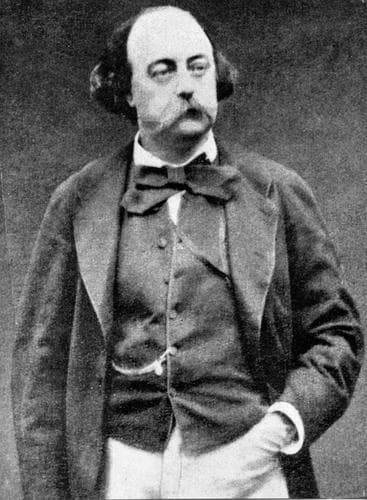
Gustave Flaubert was a French novelist. He has been considered the leading exponent of literary realism in his country and abroad. According to the literary theorist Kornelije Kvas, "in Flaubert, realism strives for formal perfection, so the presentation of reality tends to be neutral, emphasizing the values and importance of style as an objective method of presenting reality". He is known especially for his debut novel Madame Bovary (1857), his Correspondence, and his scrupulous devotion to his style and aesthetics. The celebrated short story writer Guy de Maupassant was a protégé of Flaubert.
Similar books
- Ethan Frome
Edith Wharton
3.4 (108k) average on GoodreadsHistorical FictionA bleak and realistic portrayal of unfulfilled lives and tragic circumstances in a rural setting.
- Nineteen Eighty-Four
George Orwell
4.2 (5.5M) average on GoodreadsFictionWinston Smith dreams of truth and rebellion in a world where Big Brother watches all, but he confronts the terrifying power of a regime that controls not just actions, but thoughts.
- The Frozen River
Ariel Lawhon
4.4 (600k) average on GoodreadsFictionIn 1789 Maine, a heroic midwife's diary helps her expose a murder and get justice in a town that wants to silence her.
- A Man Called Ove
Fredrik Backman
4.4 (569k) average on GoodreadsFictionA stubborn widower, who lives by strict rules, finds his quiet world changed by a lively new family next door, making him face his past and find happiness in human connection.
- The Art of Racing in the Rain
Garth Stein
4.2 (452k) average on GoodreadsFictionThrough the eyes of Enzo, a wise and observant dog, a race car driver's family navigates a journey of love, loss, and resilience, learning that life's most important lessons often come in the curves, not just on the straightaways.
- The Colour of Magic
Terry Pratchett
4.0 (425k) average on GoodreadsFictionOn a discworld hurtling through space on the back of a giant turtle, an inept wizard and his naive, walking-luggage-toting tourist embark on a chaotic, belief-fueled journey to the very edge of their flat planet, encountering dragons that only exist if you believe in them.






Enjoyed the summary?
A summary gives you the shape of the book. The book itself has the detail, the examples and the voice.
Find A Simple Heart on AmazonAs an Amazon Associate, BookBrief earns from qualifying purchases. How we're funded