
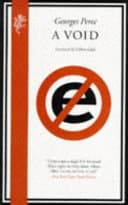
Synopsis
Covers the whole plot, including the ending.
- Difficulty
- Hard
- Pacing
- Variable
- Mood
- Intellectual, Puzzling, Experimental, Witty
- Read it if
- You enjoy highly experimental literature, linguistic puzzles, and meta-narratives that play with form and constraint.
- Skip it if
- You prefer straightforward narratives, character-driven plots, or find linguistic gimmicks distracting.
A Void Plot Summary
Covers the whole plot, including the ending.
The Disappearance of Anton Vowl
The novel begins with the sudden disappearance of Anton Vowl, a young, eccentric man in a rundown Parisian apartment. His landlord, Monsieur V., finds Vowl's room in disarray, with a half-finished manuscript on his desk. This manuscript and a journal become the first clues. The journal entries are unusual, filled with philosophical thoughts and a growing sense of dread about a 'void' that seems to consume his mind. Anton's friends, including journalist Amaury and historian Arthur Wilburg, grow worried as weeks pass without a trace of him. The police, initially uninterested, are eventually drawn into the perplexing case by Vowl's strange writings.
The Search Begins: Amaury and Arthur's Investigation
Amaury, a sharp journalist, and Arthur Wilburg, a careful historian and close friend of Anton's, decide to find Anton Vowl. Amaury uses his contacts and investigative skills, while Arthur looks into Anton's past, his intellectual interests, and the odd patterns in his writings. Both become focused on a peculiar absence in Anton's journal—a consistent avoidance of a specific linguistic element. Their individual searches often lead to dead ends, but they slowly piece together a fragmented picture of Anton's final days, uncovering his increasingly isolated and obsessive behavior. They question mutual acquaintances and visit places Anton frequented, finding more questions than answers.
The Peculiar Constraint
As Amaury and Arthur examine Anton Vowl's writings, especially his journal and the unfinished manuscript, they find a remarkable and unsettling pattern: the letter 'e' is clearly missing from all of Anton's recent texts. This discovery is a major turning point, explaining the unusual phrasing and word choices in Anton's writing and suggesting a deliberate, self-imposed rule. This immediately raises the stakes, turning the search for a missing person into a baffling intellectual puzzle. They begin to suspect that Anton's disappearance might be linked to this linguistic obsession, and that understanding the 'e'-less world he inhabited might be the key to finding him or understanding what happened to him.
Clues in the Absence
The investigators now re-examine all of Anton Vowl's belongings and communications through the lens of the 'e'-less constraint. They find that Anton had corresponded with a secret society, the 'Oulipo,' which specialized in literary constraints. This connection suggests that Anton's personal project might have been part of a larger, more dangerous game. They discover cryptic messages and coded references that, when deciphered under the lipogrammatic rule, point to a hidden conspiracy involving ancient texts and a powerful organization seeking to control knowledge. The absence of 'e' is not just a stylistic quirk but a deliberate act of concealment, a way for Anton to communicate without being fully understood by those who do not share his particular insight.
The Antagonistic Force: 'The Group'
As Amaury and Arthur follow the trail of 'e'-less clues, they start to uncover a shadowy, powerful group Anton had been investigating. This group, often called 'The Group,' is a clandestine organization with deep historical roots, possibly linked to ancient secret societies and esoteric knowledge. They appear to be obsessed with controlling information and suppressing certain truths, and Anton's research into a particular historical artifact or text seems to have put him directly in their path. The investigators realize that Anton's disappearance is not random but a calculated move by this group, who see Anton as a threat to their guarded secrets and influence. Their methods are ruthless, and their reach is extensive.
The Pursuit Across Europe
The clues Anton Vowl left, interpreted through the lipogrammatic constraint, lead Amaury and Arthur on a frantic pursuit across Europe. Their journey takes them from the dimly lit archives of Paris to the bustling markets of Istanbul, and then to the ancient ruins of Greece. Each location holds a piece of the puzzle, often an 'e'-less document, an obscure inscription, or a contact who speaks in riddles. They meet various eccentric characters, some helpful, some obstructive, all seemingly connected to Anton's research or 'The Group.' The chase is full of danger, as they are constantly aware that 'The Group' is also following them, trying to stop their progress and silence them before they can uncover the full truth.
The Revelation of the Manuscript
Finally, after much danger and deduction, Amaury and Arthur find a hidden manuscript, a companion to Anton Vowl's initial writings. This manuscript, also written entirely without the letter 'e,' details Anton's discovery of a lost ancient text that challenges traditional historical narratives and holds immense power. It reveals that 'The Group' is desperately trying to suppress this text, as its contents could destabilize their influence and control over global knowledge. The manuscript also contains Anton's growing fears for his own safety and his certainty that he would be targeted. It becomes clear that Anton sacrificed his own life and freedom to expose this truth, using the lipogram as a shield and a key.
The Confrontation and the Sacrifice
The story's climax sees Amaury and Arthur confronting 'The Group' at a secluded, ancient location where the original lost text is supposedly hidden. A tense standoff occurs, as 'The Group' tries to seize the manuscript and silence the investigators. In a dramatic turn, one of the protagonists, possibly Arthur, makes a significant sacrifice to ensure the manuscript's safety and its eventual exposure to the world. This sacrifice is not necessarily a physical death but a deep personal loss or a permanent change in their life, ensuring that Anton Vowl's legacy and the truth he sought to reveal are preserved. The confrontation highlights the immense power of knowledge and how far some will go to control it.
The Unveiling of the Truth
Following the confrontation, the lost ancient text that Anton Vowl dedicated his life to uncovering is finally brought to light. Its contents are revolutionary, challenging long-held historical beliefs and exposing 'The Group's' manipulations throughout centuries. The revelation sends shockwaves through academic and political circles, forcing a re-evaluation of established narratives. While 'The Group' may not be entirely dismantled, their power is significantly weakened, and their secrets are exposed to the public. Anton Vowl, though still missing, is posthumously cleared, his peculiar literary project revealed as a brilliant, if dangerous, method of communication and resistance against an oppressive force.
The Lingering Absence
Even after the truth is exposed and 'The Group' is weakened, Anton Vowl himself is never truly found. His fate remains unclear, a lingering question that highlights the novel's central theme of absence. Was he killed? Is he in hiding, living a life forever limited by his linguistic project? The story leaves his ultimate whereabouts unresolved, suggesting that some voids can never be fully filled. However, his work lives on, a testament to his intellect and courage. The final pages reflect on the impact Anton's unique literary approach had on uncovering a monumental truth, and how his personal disappearance became a powerful symbol of truths often hidden in plain sight, or in plain absence.
Principal Figures
Anton Vowl
Protagonist/Missing Person
The enigmatic writer whose disappearance triggers the central mystery.
Anton Vowl is an intellectual, eccentric, and highly disciplined writer who becomes obsessed with a linguistic constraint: writing without the letter 'e'. He is a recluse but possesses a sharp mind and a profound curiosity about history and hidden truths. His drive is to uncover a suppressed ancient text, believing it holds the key to understanding a vast historical conspiracy. His meticulous nature and intellectual prowess make him a formidable, albeit unconventional, investigator.
Relationships: Amaury (Friend and fellow investigator, though Amaury initially doesn't understand Anton's full project.); Arthur Wilburg (Close friend and intellectual confidant, who understands Anton's academic pursuits deeply.)
Amaury
Supporting/Investigator
A tenacious journalist who helps uncover the truth behind Anton's disappearance.
Amaury is a pragmatic and resourceful journalist, initially skeptical but ultimately dedicated to finding Anton Vowl. He is driven by a sense of loyalty to his friend and a journalist's instinct for a compelling story. His investigative skills, ability to navigate various social circles, and direct approach complement Arthur's more academic and contemplative methods. He is courageous and willing to face danger in pursuit of the truth, often acting as the more active and confrontational figure in the investigation.
Relationships: Anton Vowl (Friend whose disappearance Amaury investigates.); Arthur Wilburg (Collaborator in the investigation, often providing the practical drive.)
Arthur Wilburg
Supporting/Investigator
A meticulous historian and Anton's intellectual counterpart in the investigation.
Arthur Wilburg is a brilliant and scholarly historian, deeply familiar with ancient texts and esoteric knowledge. He is Anton Vowl's intellectual peer and closest friend, making him uniquely equipped to understand the nuances of Anton's 'e'-less writings. Arthur is methodical, analytical, and possesses a vast knowledge base that proves crucial in deciphering Anton's clues. He is driven by loyalty to Anton and a profound respect for historical truth, often providing the intellectual framework for the investigation.
Relationships: Anton Vowl (Close friend and intellectual colleague, who understands Anton's unique mind.); Amaury (Collaborator in the investigation, providing academic insights.)
Monsieur V.
Supporting/Minor
Anton Vowl's concerned landlord who first reports his disappearance.
Monsieur V. is Anton Vowl's landlord, a man of routine and a keen observer, though not intellectually equipped for the mystery that unfolds. He is the first to notice Anton's absence and report it, setting the initial events of the plot in motion. His concern for his tenant is genuine, and he provides the initial description of Anton's apartment and the peculiar writings found within, offering the first glimpse into Anton's world.
Relationships: Anton Vowl (Landlord-tenant relationship; he is the first to notice Anton's absence.)
The Group
Antagonist
A shadowy, ancient organization seeking to control knowledge and suppress historical truths.
'The Group' is the primary antagonistic force, a clandestine organization with vast resources and influence. They operate in the shadows, manipulating historical narratives and suppressing any information that threatens their power. Their motivation is the preservation of their own authority and the control of societal understanding. They are ruthless, intelligent, and deeply entrenched, making them formidable adversaries for Amaury and Arthur. Their methods involve surveillance, intimidation, and the elimination of threats, including Anton Vowl.
Relationships: Anton Vowl (Anton is their target, as he threatens to expose their secrets.); Amaury & Arthur Wilburg (They become targets as they pursue Anton's investigation.)
Olga
Mentioned/Minor
A former acquaintance of Anton Vowl, briefly interviewed by the investigators.
Olga is a minor character, a former acquaintance of Anton Vowl who Amaury and Arthur interview during their initial search. She provides some anecdotal information about Anton's peculiar habits and intellectual intensity, but ultimately has no direct knowledge of his disappearance or the larger conspiracy. Her role is to illustrate Anton's reclusive nature and the limited social circle he maintained, while also offering a brief respite from the increasingly intense investigation.
Relationships: Anton Vowl (A past acquaintance who offers limited insight into his character.)
Themes & Insights
Absence and Presence
The most prominent theme, shown by Anton Vowl's disappearance and symbolically by the absence of the letter 'e' throughout the novel. This absence is not empty but a strong presence, shaping the narrative, characters' views, and the language itself. It forces readers and characters to face what is missing and how that missing piece defines what remains. Anton's 'e'-less writing is a deliberate act of communication through omission, highlighting how what is *not* said can be as important as what is said. The lasting mystery of Anton's fate reinforces that absence can be a profound and lasting condition.
“'But what if absence, far from being a void, was a form of presence, a signal, a word made of silence?”
The Power of Language and Constraints
The novel explores how language can be both a tool for communication and a self-made prison. The lipogrammatic constraint (the absence of 'e') is central, showing how arbitrary rules can lead to incredible creativity and hidden meanings. Anton's use of this constraint is not just an artistic exercise but a way to encode truth and resist oppression. It highlights that limitations can unlock new forms of expression and understanding, forcing a deeper engagement with words and their alternatives. The struggle to communicate without a fundamental building block of language mirrors the struggle to uncover suppressed truths.
“'Constraint is a tool, not an obstacle. It is a path to a labyrinth that might just hold the truth.”
Truth, Secrecy, and Conspiracy
At its heart, the novel is a mystery driven by the search for truth and the uncovering of deep secrets. Anton Vowl's disappearance is linked to a vast conspiracy by 'The Group,' who actively suppress historical knowledge to maintain power. The narrative explores how far individuals will go to expose truth and the dangers of challenging established narratives. It examines historical revisionism and the idea that much of what we accept as fact might be carefully constructed fiction, maintained through censorship and control. The lipogram serves as a metaphor for hidden truths that require a different way of seeing or reading to be understood.
“'History is not what happened. It is what is told, and who controls the telling.”
Identity and Self-Imposed Limits
Anton Vowl's decision to live and write without the letter 'e' is a deep act of self-definition. It raises questions about how much our identity is shaped by our choices and the limits we place on ourselves. His linguistic constraint becomes an integral part of his being, influencing his thoughts, his interactions, and ultimately, his fate. The novel explores whether such extreme self-limitation leads to freedom or further isolation, and how an individual's unique 'voice' can be both amplified and obscured by their chosen boundaries. Anton's 'e'-less existence is a radical embrace of a unique identity.
“'To cast off a common thing is to become uncommon, to find a new way of being, a new way of seeing.”
Plot Devices & Literary Techniques
Lipogram
The literary constraint of deliberately omitting a common letter, specifically 'e'.
The lipogram is the central plot device, shaping the entire narrative. The novel itself is written entirely without the letter 'e', mirroring Anton Vowl's own linguistic obsession. This constraint functions as a puzzle for the reader, a key for the investigators, and a method of encoding for Anton. It creates unique stylistic challenges and forces the author and characters to invent ingenious circumlocutions, making the absence itself a powerful narrative element. It's not just a stylistic quirk but an integral part of the plot, revealing Anton's state of mind and the nature of the conspiracy.
The Missing Person Mystery
Anton Vowl's disappearance serves as the inciting incident and primary narrative hook.
The classic mystery trope of a missing person drives the initial plot. Anton Vowl's sudden vanishing creates urgency and provides the motivation for Amaury and Arthur's investigation. This device allows for the gradual unfolding of clues, red herrings, and the introduction of various characters and locations. The mystery of his whereabouts is not just about finding him, but about understanding the deeper reasons behind his absence, leading to the larger conspiracy. It transforms a personal quest into an intellectual and existential one.
Cryptic Journal Entries
Anton Vowl's journal provides fragmented, 'e'-less clues to his research and state of mind.
Anton Vowl's journal entries are a crucial plot device, offering direct access to his thoughts and discoveries, albeit in a highly constrained and cryptic form. These entries are the first clues to the lipogrammatic constraint and the unfolding conspiracy. They build suspense, reveal Anton's intellectual journey, and hint at the dangers he faced. The fragmentary nature of the entries forces the investigators and the reader to actively participate in piecing together the narrative, making the process of deduction a central part of the reading experience.
The Secret Society / Conspiracy
A shadowy organization ('The Group') acts as the antagonist, driving the conflict.
The existence of 'The Group' provides the overarching conflict and antagonist for the story. This secret society, obsessed with controlling knowledge, gives Anton Vowl's disappearance a sinister and far-reaching implication. It elevates the personal mystery into a grander struggle against systemic oppression and historical manipulation. This device allows for elements of espionage, pursuit, and high stakes, as Amaury and Arthur uncover the vast reach and ruthless methods of this hidden power, making the investigation dangerous and compelling.
A Void Quotes
“All things must pass; only a void, perhaps, remains.”
“It is, as if, for a long, long time, I had had within my mind a word, a sound, a vision of what I wanted to say, of what I wanted to do, of what I wanted to know, and had found myself unable to do so.”
“A void had grown, a void had spread, a void had swallowed up all that was vital.”
“His world, his ways, his words, his works, his whims, his will, had all, without warning, for no good reason, vanished.”
“For a long, long time, I had had a word, a sound, a vision of what I wanted to say, of what I wanted to do, of what I wanted to know, and had found myself unable to do so.”
“It was as if a part of his mind, a part of his soul, a part of his very being, had simply, without prior warning, ceased to exist.”
“A void, a hollow, a blank, a gaping chasm, had opened up in his world.”
“All sorts of things, all sorts of words, all sorts of thoughts, all sorts of forms, had, without his knowing, simply gone.”
“What was it that was missing? What was it that had vanished? What was it that was no longer? What was it that was no more?”
“A world without it was a world diminished, a world impoverished, a world incomplete.”
“His mind, his mouth, his hand, his thoughts, his words, his works, all found him wanting.”
“A void, a blank, a nothing, a nullity, had taken root, had grown, had flourished.”
“All that was good, all that was vital, all that was human, was slowly, but surely, being drawn into that vast, dark void.”
Quiz
10 questions on the plot and the characters. Each answer comes with a short explanation.
Question 1
What is the most significant constraint Georges Perec imposed upon himself when writing 'A Void'?
- He avoided all words longer than four letters.
- He did not use any punctuation marks.
- He completely avoided the letter 'e'.
- He wrote the entire novel using only palindromes.
Show answer
C. He completely avoided the letter 'e'. 'A Void' (La Disparition in French) is famous for being a lipogrammatic novel, meaning Perec wrote it without using the letter 'e' at all.
Question 2
What is the name of the protagonist whose disappearance sets the central mystery in motion?
- Anton Vowl
- Oswald Vex
- Arthur Vroom
- Ivan Volkov
Show answer
A. Anton Vowl The novel begins with the mysterious vanishing of Anton Vowl, prompting his friends and colleagues to investigate.
Question 3
Which of the following literary devices is Perec primarily demonstrating through the very act of writing 'A Void'?
- Stream of consciousness
- Oulipian constraint
- Magical realism
- Postmodern pastiche
Show answer
B. Oulipian constraint Georges Perec was a prominent member of Oulipo (Ouvroir de littérature potentielle), a group of writers and mathematicians who used constrained writing techniques. 'A Void' is a prime example of an Oulipian constraint.
Question 4
As the characters investigate Anton Vowl's disappearance, what recurring pattern do they begin to notice in the world around them?
- An increasing number of black cats appearing
- A gradual loss of the color red from objects
- The systematic vanishing of the letter 'e' from texts and speech
- People spontaneously forgetting common words
Show answer
C. The systematic vanishing of the letter 'e' from texts and speech The characters slowly become aware that the letter 'e' is disappearing from their world, mirroring the book's own lipogrammatic constraint.
Question 5
Which character serves as a primary investigator and narrator, attempting to piece together the mystery of Vowl's absence?
- Douglas Haig
- Amaury Conson
- A.C. Vowl (Anton's cousin)
- Aubrey Vowl
Show answer
D. Aubrey Vowl Aubrey Vowl, Anton's friend, takes on a significant role in investigating the disappearance, often narrating parts of the unfolding mystery.
Question 6
What is the ultimate fate or revelation regarding Anton Vowl and the missing 'e'?
- He was kidnapped by a secret society who worshipped the letter 'e'.
- He voluntarily removed himself from existence, along with the letter 'e', to prove a philosophical point.
- He is revealed to have been the victim of a conspiracy linked to the suppression of the letter 'e'.
- He simply moved to another country and changed his identity.
Show answer
C. He is revealed to have been the victim of a conspiracy linked to the suppression of the letter 'e'. The novel culminates in the revelation that Vowl was murdered by characters associated with a cabal that sought to eradicate the letter 'e', connecting his disappearance directly to the book's central constraint.
Question 7
How does the novel subtly, and sometimes overtly, comment on the nature of language and its limitations?
- By demonstrating that language is inherently flawed and incapable of conveying truth.
- By showcasing the immense creativity and flexibility required to express complex ideas even under extreme linguistic constraints.
- By arguing for a universal language free of cultural biases.
- By suggesting that written language is superior to spoken language.
Show answer
B. By showcasing the immense creativity and flexibility required to express complex ideas even under extreme linguistic constraints. The entire premise of 'A Void' is a testament to the versatility of language. Despite the absence of 'e', Perec manages to craft a complex narrative, demonstrating how writers can innovate and adapt to express meaning.
Question 8
What is the significance of the novel's title, 'A Void,' in relation to its central constraint and plot?
- It refers to the empty space where Anton Vowl once lived.
- It symbolizes the emotional emptiness felt by the characters.
- It directly references the missing letter 'e', which is pronounced similarly to 'a void' in French ('e' as in 'un e vide').
- It alludes to the existential void that underpins all human existence.
Show answer
C. It directly references the missing letter 'e', which is pronounced similarly to 'a void' in French ('e' as in 'un e vide'). The French title, 'La Disparition,' translates to 'The Disappearance.' The English title 'A Void' cleverly plays on the sound of the letter 'e' (as in 'an e void'), directly linking the title to the lipogrammatic constraint.
Question 9
Beyond the lipogrammatic constraint, Perec incorporates numerous other literary games and allusions. Which of the following is a prominent example?
- Acrostics hidden within chapter titles that spell out character names.
- Palindromic sentences and chapters that can be read forwards and backward.
- References to other Oulipo works and writers, and self-referential comments about the writing process.
- The entire novel is a coded message that can only be deciphered using a specific cipher key.
Show answer
C. References to other Oulipo works and writers, and self-referential comments about the writing process. Perec, as an Oulipian, frequently wove in meta-commentary, allusions to other Oulipo members, and internal references to the art of constrained writing itself, adding layers of complexity for the attentive reader.
Question 10
The novel can be interpreted as an extended metaphor for various forms of loss or suppression. Which of the following best captures a core metaphorical interpretation?
- The loss of innocence in childhood.
- The suppression of personal identity under totalitarian regimes or the loss of cultural memory.
- The inevitable decline of physical health in old age.
- The disappearance of endangered species due to human activity.
Show answer
B. The suppression of personal identity under totalitarian regimes or the loss of cultural memory. Many critics interpret the systematic removal of the letter 'e' as a powerful metaphor for the deliberate erasure of history, memory, and identity, particularly in the context of totalitarian regimes or the Holocaust, themes Perec was deeply concerned with.
A Void FAQ
What is the central premise of Georges Perec's 'A Void'?
'A Void' tells the story of Anton Vowl, a young man who senses an unexplained malaise in his life and the world around him. As he investigates, he uncovers a conspiracy related to a secret society and a missing letter, driving the plot forward through a series of increasingly bizarre and dangerous encounters.
Who is Anton Vowl and what is his role in the story?
Anton Vowl is the protagonist, an orphan who inherits a flat from his father and becomes the central figure in uncovering the mystery. He is initially a somewhat melancholic and detached character, but his pursuit of the truth transforms him into a determined, albeit often bewildered, detective figure.
Can you describe the main antagonist or opposing force in 'A Void'?
The primary antagonist appears to be a shadowy organization or secret society, often referred to as 'The Oulipo' within the narrative, which is responsible for the systematic removal or suppression of the letter 'e'. Their motives are initially obscure, adding to the mystery and peril Vowl faces.
What kind of mystery does Anton Vowl try to solve?
Anton Vowl is trying to solve the mystery of a pervasive absence – specifically, the gradual disappearance of the letter 'e' from all texts, conversations, and ultimately, reality itself. This linguistic void is tied to a personal family history and a larger, more sinister plot.
How does the author maintain suspense despite the unusual constraint?
Perec maintains suspense by embedding the linguistic constraint directly into the narrative's fabric, making the 'e'-lessness a plot point that affects the characters' perception and communication. The constant threat of exposure or failure to adhere to the constraint, coupled with the escalating danger Vowl faces, builds tension effectively.
What is the significance of the missing letter 'e' beyond a mere literary gimmick?
The missing 'e' is not just a gimmick; it symbolizes a deeper void or absence, reflecting themes of loss, censorship, and the fragility of language and memory. It also hints at the characters' struggles with expressing emotions or truths that are inherently tied to the 'e', adding a layer of psychological depth.
Are there any hidden references to Perec's own life or other works within the text?
Indeed, the book is riddled with self-references and allusions to Perec's other works, his life, and the Oulipo group itself. The constraint of the lipogram (writing without a specific letter) is a direct nod to the Oulipo's experimental literary techniques, blurring the lines between fiction and meta-commentary.
How does the ending reveal or re-contextualize earlier plot points?
The ending reveals that the entire narrative is a self-referential construct, a story dictated by the very constraint it describes. Anton Vowl's ultimate fate, often interpreted as his own 'disappearance' or assimilation into the void, re-contextualizes his journey as a metaphor for the author's struggle with and mastery of the linguistic challenge.
Are there any clever wordplays or linguistic tricks that might be missed on a first reading?
Yes, the entire book is a masterclass in linguistic trickery. Beyond the obvious 'e'-less writing, there are countless hidden palindromes, anagrams, and subtle allusions that become apparent only upon close inspection, often revealing deeper meanings or ironic twists related to the plot.
How does Anton Vowl's psychological state evolve throughout his investigation?
Anton Vowl starts as passive and melancholic, but as he uncovers the conspiracy, he becomes increasingly paranoid and obsessed. His psychological state mirrors the increasing pressure of the 'e'-less world, leading to a breakdown of his perception of reality and self.
What psychological impact does the 'e'-less world have on the characters?
The 'e'-less world forces characters to constantly self-censor and rephrase their thoughts, leading to frustration, anxiety, and a sense of alienation. This linguistic constraint impacts their ability to form deep connections and express complex emotions, creating a pervasive feeling of emptiness.
Can the 'void' be interpreted as a metaphor for a specific psychological condition?
The 'void' can be interpreted as a metaphor for various psychological states, such as depression, anhedonia, or even a form of literary aphasia. The enforced absence of a fundamental element of language mirrors the experience of feeling a crucial part of oneself or one's world is missing.
How do the supporting characters, like Amaury and Olga, reflect Vowl's internal struggles?
Amaury, Vowl's friend, often acts as a sounding board, initially dismissive but later drawn into Vowl's world, reflecting Vowl's struggle for validation. Olga, a mysterious woman Vowl encounters, represents both an object of desire and an enigma, mirroring Vowl's internal search for meaning and connection within the void.
Is 'A Void' simply a literary experiment, or does it carry a deeper philosophical message?
'A Void' transcends mere experimentation, carrying profound philosophical messages about the nature of language, reality, and human perception. It questions how much our understanding of the world is shaped by the tools we use to describe it and what happens when those tools are deliberately limited.
How might the ending be interpreted in terms of Anton Vowl's ultimate fate?
Anton Vowl's ultimate fate is open to interpretation. Some argue he literally disappears, consumed by the void he fought. Others see it as a symbolic 'death' of the author or protagonist, where he becomes one with the linguistic constraint, a final sacrifice to the narrative itself.
What is the significance of the book's title, 'A Void,' in relation to its themes?
The title 'A Void' directly refers to the central absence of the letter 'e' and the emptiness it creates in language and the characters' lives. It also alludes to a broader existential void, a lack of meaning or presence that permeates the narrative, inviting readers to ponder what is truly missing.
Could 'A Void' be read as a commentary on censorship or totalitarian control?
Absolutely. The systematic removal of the letter 'e' and the coercion characters face to conform to this linguistic restriction can be powerfully interpreted as a metaphor for censorship, totalitarian control over thought and expression, and the erosion of individual freedom through linguistic manipulation.
How does the book challenge traditional notions of narrative and storytelling?
The book fundamentally challenges traditional narrative by making its primary constraint the very engine of its plot and character development. It forces readers to re-evaluate what constitutes a 'story' and how meaning is constructed, pushing the boundaries of what fiction can achieve.
About the author
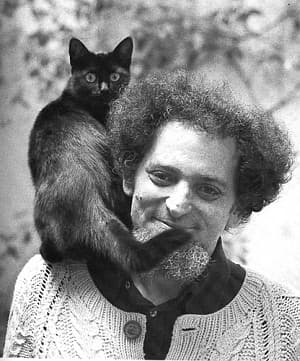
Georges Perec was a French novelist, filmmaker, documentalist, and essayist. He was a member of the Oulipo group. His father died as a soldier early in the Second World War and his mother was killed in the Holocaust. Many of his works deal with absence, loss, and identity, often through word play.
Similar books
- The Name of the Rose
Umberto Eco
4.1 (301k) average on GoodreadsHistorical FictionA complex mystery with intellectual depth, historical setting, and a focus on semiotics and interpretation.
- Angels & Demons
Dan Brown
3.9 (2.7M) average on GoodreadsThrillerA Harvard symbologist races through Rome's ancient sites, deciphering cryptic clues to unmask the Illuminati and stop a vengeful plot to destroy the Vatican with a stolen antimatter weapon.
- Gone Girl
Gillian Flynn
4.1 (2.3M) average on GoodreadsThrillerA wife's sudden disappearance on her fifth anniversary reveals a web of lies and psychological warfare, exposing the secrets within a seemingly perfect marriage.
- The Girl on the Train
Paula Hawkins
3.9 (2.1M) average on GoodreadsThrillerA woman’s fascination with a seemingly perfect couple she watches from her daily train commute leads her into a dark investigation when she witnesses something that shatters their idyllic image.
- The Lovely Bones
Alice Sebold
3.8 (2M) average on GoodreadsFantasyA murdered teenage girl watches from the afterlife as her family struggles with grief and her killer remains free, wanting to bridge the gap between worlds to bring him to justice.
- The Da Vinci Code
Dan Brown
3.9 (1.9M) average on GoodreadsThrillerA symbologist and a cryptologist race through European landmarks, deciphering ancient codes and uncovering a conspiracy that could rewrite the foundations of Christianity.






Enjoyed the summary?
A summary gives you the shape of the book. The book itself has the detail, the examples and the voice.
Find A Void on AmazonAs an Amazon Associate, BookBrief earns from qualifying purchases. How we're funded