
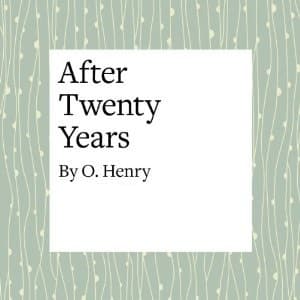
Synopsis
Covers the whole plot, including the ending.
- Difficulty
- Easy
- Pacing
- Moderate
- Mood
- Nostalgic, Ironic, Suspenseful, Melancholy
- Read it if
- You enjoy classic short stories with clever plot twists and a focus on character irony.
- Skip it if
- You prefer longer narratives with extensive character development or dislike stories with melancholic endings.
After Twenty Years Plot Summary
Covers the whole plot, including the ending.
A Rainy Night Beat
Officer Jimmy Wells is on his nightly beat on a deserted New York street, around 10 PM. A cold wind blows and a fine rain begins to fall. He sees a man leaning in the doorway of a hardware store, which used to be 'Big Joe' Brady's restaurant. The man, who calls himself Bob, is waiting for an old friend. Bob explains that twenty years ago, he and Jimmy Wells, his best friend, agreed to meet at this exact spot at this exact time, no matter what their lives had become. Bob talks about their last meal together at Brady's, just before he left New York to seek his fortune in the West, while Jimmy stayed in the city.
The Westerner's Tale
Bob, sounding important, describes his successful life out West, hinting that he 'had to hustle' to make his money, suggesting some illegal activities. He brags about his success, contrasting it with what he assumes is Jimmy's more ordinary life as a city resident. Bob pulls out a magnificent watch covered in diamonds, showing his wealth. He feels sure that Jimmy, 'good old Jimmy,' would have kept the appointment, even if he didn't have similar success. Officer Wells listens closely to Bob's story, watching his friend with a sharp, neutral gaze, his own identity still hidden.
A Familiar Face
Bob continues to recall Jimmy, calling him a 'plodder' but a 'fine fellow.' He assumes that Jimmy, having stayed in New York, probably didn't achieve the same financial success as Bob did in the West. He even suggests that Jimmy might work for the city, perhaps in a minor role. Officer Wells, keeping his professional manner, agrees that twenty years is a long time and can change a person greatly. He asks if Bob thinks Jimmy would have been successful if he had stayed. Bob dismisses the idea, convinced his own path was better. The officer then moves on, continuing his patrol, leaving Bob to wait alone.
The Second Man
After some time, a different man approaches Bob in the doorway. This man is taller and has a distinct nose. He greets Bob warmly, calling him 'Bob' and claiming to be Jimmy Wells. Bob is overjoyed, shaking the man's hand vigorously, believing his old friend has finally arrived. He expresses his happiness and relief that Jimmy kept the appointment. The two men begin to walk down the street together, discussing their past and catching up, with Bob still happy about their reunion. The streetlights illuminate their faces, showing more details about the 'reunited' friends.
A Sudden Realization
As they walk under the bright light of a drugstore, Bob suddenly stops, his face pale with shock and recognition. He notices a distinct feature on the man's face — a small scar above his right eye, which he hadn't seen clearly in the dim light of the doorway. More importantly, he realizes the man's nose is different from Jimmy's. He exclaims, 'You're not Jimmy Wells!' The realization hits him hard, destroying his joy and replacing it with a cold fear. The man, who had been pretending to be Jimmy, now reveals his true purpose.
The Arrest
The man, who is actually a plainclothes officer, calmly confirms Bob's realization. He tells Bob that he is under arrest for being a wanted man in Chicago, known as 'Silky' Bob. The officer explains that he was sent to arrest Bob after the first officer, Jimmy Wells, recognized him. Bob is stunned and defeated, his confidence completely gone. The officer then hands Bob a note, revealing the painful truth of the situation, a final twist from his old friend. Bob is led away, his reunion ending in capture.
The Note from Jimmy
Bob reads the note, which is from Officer Jimmy Wells. The note explains that Jimmy, the first patrolman Bob met, recognized him immediately. However, Jimmy realized that Bob was the wanted man 'Silky' Bob, and he couldn't bring himself to arrest his old friend personally. Instead, he walked away and sent a plainclothes officer to do the job. The note expresses Jimmy's regret and his conflicting emotions, but ultimately upholds his duty to the law. Bob is left to deal with the painful reality that his best friend, the man he waited twenty years for, was the one who turned him in, though indirectly.
After Twenty Years Characters
Bob ('Silky' Bob)
Protagonist/Antagonist
A flashy, self-assured criminal from the West, waiting for an old friend.
Bob is a confident and somewhat boastful man who has made a fortune out West, though through questionable means, earning him the nickname 'Silky' Bob. He is sentimental enough to travel a thousand miles to keep a twenty-year-old appointment with his best friend, Jimmy Wells. Despite his criminal background, he values loyalty and friendship. He carries himself with an air of success, sporting a diamond-studded watch and a confident demeanor. He initially believes himself to be superior to Jimmy, assuming Jimmy's life has been less eventful.
Relationships: Jimmy Wells (Childhood best friend; Bob admires him but also condescends to his perceived lack of success. Unbeknownst to Bob, Jimmy is the officer who implicitly betrays him.)
Officer Jimmy Wells
Supporting/Protagonist
A dedicated New York patrolman torn between duty and friendship.
Jimmy Wells is a diligent and observant New York City patrolman, committed to upholding the law. He is described as a 'plodder' by Bob, implying a steady, perhaps less exciting life. However, his quiet dedication contrasts sharply with Bob's flashy criminality. Despite his professional exterior, he possesses deep loyalty to his old friend. He faces a profound moral dilemma when he recognizes Bob as a wanted man but cannot bring himself to make the arrest personally, choosing instead to delegate the task to another officer.
Relationships: Bob ('Silky' Bob) (Childhood best friend; Jimmy recognizes him as a wanted criminal but cannot personally arrest him due to their shared past.)
Plainclothes Officer
Supporting
The officer sent by Jimmy Wells to arrest Bob.
This officer is a pragmatic and professional figure, serving as the instrument of the law in Jimmy's place. He is taller than Jimmy and has a slightly different physical appearance, particularly his nose, which ultimately alerts Bob to his true identity. He carries out the arrest without personal attachment, simply fulfilling his duty. His appearance allows for the story's final twist, delivering the news of Bob's arrest and Jimmy's note.
Relationships: Jimmy Wells (Colleague, sent by Jimmy to make an arrest.)
After Twenty Years Themes
The Conflict Between Friendship and Duty
This is the main theme, shown through Officer Jimmy Wells's difficult decision. He recognizes his old friend, Bob, as a wanted criminal. His loyalty to their twenty-year-old pact is clear, as he was at the meeting spot. However, his duty as a police officer to uphold the law wins out. He cannot bring himself to arrest Bob personally, showing their deep bond, but he also cannot let Bob escape justice. This inner conflict highlights the hard choices people face when personal connections conflict with moral or professional duties, leading him to send someone else for the arrest.
“I was to meet Jimmy Wells here to-night. It's exactly twenty years ago to-night that we parted here, at Big Joe Brady's restaurant.”
The Unpredictability of Time and Change
Twenty years changes both Bob and Jimmy, not just physically but in their life paths and values. Bob leaves New York seeking money and finds it, but becomes a criminal. Jimmy, whom Bob calls a 'plodder,' stays in the city and becomes a respected law enforcer. The story emphasizes how time can shape individuals into very different people, making it hard to connect the past with the present. The physical changes are just a surface representation of the deeper moral and ethical shifts that have happened.
“It's twenty years, Bob; I hope you've had half the good time I have. I had to call you here to-night to tell you that Jimmy Wells is not the man I expected him to be.”
Appearance vs. Reality
The story expertly uses what characters think versus what is true. Bob sees himself as a successful 'big shot' from the West, while implicitly seeing Jimmy as a less accomplished, ordinary man. He doesn't recognize the uniformed officer as his old friend, failing to see the man beyond the uniform. The plainclothes officer first appears to be Jimmy, fooling Bob until a key detail (the nose) reveals the trick. This theme shows how easily appearances can mislead and how quick judgments can blind people to real situations, leading to dramatic discoveries.
“You're not Jimmy Wells,' he snapped. 'Twenty years is a long time, but not long enough to change a man's nose from a Roman to a pug.”
Justice and Law Enforcement
The story explores how justice is unwavering. Despite the deep personal bond between Jimmy and Bob, the law must be followed. Jimmy's decision to send another officer to arrest Bob shows that law enforcement is impartial and necessary, even in emotional situations. It suggests that while personal feelings are valid, they cannot override society's need for order and accountability. The story quietly praises the integrity of those who uphold the law, even at personal cost.
“I was glad to see you, Bob, after all these years. But I knew at once that you were the man wanted in Chicago.”
Plot Devices & Literary Techniques
Situational Irony
The contrast between expectation and reality creates a surprising outcome.
The story is built on situational irony. Bob waits for his old friend Jimmy, expecting a heartwarming reunion, only for that friend to be the very police officer who has recognized him as a wanted criminal. Bob's confident boasts about his success and his assumption of Jimmy's mundane life are ironically juxtaposed with Jimmy's integrity and the fact that Jimmy, the 'plodder,' is the one who ultimately ensures Bob's capture.
Twist Ending (O. Henry Ending)
A sudden, unexpected turn of events at the story's conclusion.
The quintessential O. Henry ending is employed when the reader, along with Bob, discovers that the first patrolman was indeed Jimmy Wells, and that Jimmy, unable to personally arrest his old friend, sent a plainclothes officer to do the job. This revelation completely recontextualizes the earlier scenes and delivers a powerful emotional punch, making the story memorable for its unexpected final development.
Foreshadowing
Subtle hints that suggest future events without revealing the twist.
O. Henry uses subtle foreshadowing, such as Jimmy Wells's quiet observation of Bob and his brief, almost evasive conversation, which hints at his recognition of Bob without giving away his identity or his internal conflict. Bob's description of Jimmy as a 'plodder' and his own 'hustle' also subtly sets up the contrast in their moral paths, preparing the reader for the eventual reveal of their differing lives.
Dialogue as Characterization
Speech patterns and content reveal character traits.
The dialogue is crucial for characterization. Bob's boastful and self-important speech, filled with references to his wealth and 'hustle,' immediately establishes him as a flashy, perhaps morally ambiguous character. In contrast, Jimmy Wells's sparse, professional dialogue and his focus on his beat reveal his disciplined and dutiful nature, setting up the conflict between their respective lives and values.
After Twenty Years Quotes
“The cop, swinging his club with many intricate and artful movements, turned to the man. 'It's all right, officer,' said the latter, 'I'm just waiting for a friend. It's an appointment made twenty years ago.'”
“Twenty years ago to-night,' said the man, 'we stood here at the door of 'Big Joe' Brady's restaurant.”
“Jimmy and I were boys together, you see. There was a restaurant where this store stands—'Big Joe' Brady's restaurant.”
“We agreed that night that we would meet here again exactly twenty years from that date and time, no matter what our conditions might be or from what distance we might have to come.”
“He was a fine chap, though, Jimmy. He was my best chum, and a good fellow.”
“I've had to hustle around a good deal to make my pile. A man gets in a groove in New York. It takes the West to put a razor-edge on him.”
“I'll be on my way. Hope your friend comes around all right. Going to call time on him pretty soon, ain't you?”
“The waiting man began to pace the sidewalk, a fine, hearty, self-possessed man, with a keen eye, and a face that showed his determination.”
“'Is that you, Bob?' he asked, doubtfully. 'Is that you, Jimmy Wells?' cried the other, with a sudden thrill of pleasure.”
“You've changed a good deal, Jimmy. I never thought you were so tall by two or three inches.”
“It's twenty years, Bob; that's a long time. The West has made a big man of you, old chap.”
“When they came to the bright glare of a drug store, each of them turned simultaneously to gaze upon the other's face.”
“You are not Jimmy Wells,' he snapped. 'Jimmy Wells would never have worn a scarf-pin with a big diamond in it.”
“The note was rather short. 'Bob: I was at the appointed place on time. When you struck the match to light your cigar I saw it was the face of the man wanted in Chicago. Somehow I couldn't do it myself, so I went around and got a plain clothes man to do the job. Jimmy.'”
Quiz
10 questions on the plot and the characters. Each answer comes with a short explanation.
Question 1
What is the name of the police officer who first encounters Bob?
- Officer Williams
- Patrolman O'Connor
- Patrolman Wells
- Patrolman Jimmy Wells
Show answer
D. Patrolman Jimmy Wells The first officer who speaks with 'Silky' Bob identifies himself as Patrolman Jimmy Wells.
Question 2
Where did Bob and Jimmy agree to meet 'After Twenty Years'?
- At a specific street corner near Times Square.
- At the entrance of a particular theater.
- In front of the old Big Joe Brady's restaurant.
- At a hotel lobby in downtown New York.
Show answer
C. In front of the old Big Joe Brady's restaurant. Bob explicitly states they agreed to meet at the place where Big Joe Brady's restaurant used to stand.
Question 3
What object does Bob use to identify himself and prove his story to the first officer?
- A distinctive gold watch.
- A diamond-studded tie pin.
- A large scarf pin with an oddly cut diamond.
- A photograph taken twenty years ago.
Show answer
C. A large scarf pin with an oddly cut diamond. Bob proudly displays his scarf pin, which has a large diamond, to the officer as proof of his success.
Question 4
What is 'Silky' Bob's primary reason for returning to New York City?
- To escape legal troubles in the West.
- To find new business opportunities.
- To keep his twenty-year-old appointment with Jimmy Wells.
- To revisit his childhood home.
Show answer
C. To keep his twenty-year-old appointment with Jimmy Wells. Bob has traveled a thousand miles specifically to fulfill the pact he made with Jimmy two decades prior.
Question 5
How does Bob describe Jimmy's character in their youth?
- Quiet and studious.
- A plodder, but a good fellow.
- Ambitious and ruthless.
- Wild and adventurous.
Show answer
B. A plodder, but a good fellow. Bob characterizes Jimmy as a 'plodder' who was good-hearted but not destined for great wealth or adventure.
Question 6
What physical detail about Bob makes the second man realize he is the wanted criminal?
- The scar on his left cheek.
- His distinctive 'bulldog' jaw.
- The way he holds his cigar.
- His expensive overcoat.
Show answer
B. His distinctive 'bulldog' jaw. The note from Jimmy Wells states that the second man recognized 'the scar over your right eye' and 'the peculiar set of your jaw' from the wanted poster.
Question 7
What is the primary theme explored through the story's ending?
- The corrupting influence of wealth.
- The enduring power of friendship.
- Loyalty versus duty.
- The unpredictable nature of fate.
Show answer
C. Loyalty versus duty. The story's climax forces Jimmy to choose between his personal loyalty to an old friend and his professional duty as a police officer.
Question 8
Why does Jimmy Wells send another plainclothes officer to arrest Bob instead of doing it himself?
- He was called away to another emergency.
- He didn't want to personally betray his old friend.
- He wanted to test if Bob would recognize a different officer.
- He was off duty by the time Bob arrived.
Show answer
B. He didn't want to personally betray his old friend. Jimmy's note reveals his internal conflict and decision to have another officer make the arrest, showing his reluctance to face Bob directly after recognizing him as a wanted criminal.
Question 9
What is the significance of the note Jimmy Wells gives to the plainclothes officer?
- It contains a detailed list of Bob's crimes.
- It explains why Jimmy couldn't make the arrest himself.
- It serves as a warrant for Bob's arrest.
- It is a farewell message to Bob.
Show answer
B. It explains why Jimmy couldn't make the arrest himself. The note explicitly states, 'I couldn't do it myself, Bob,' revealing Jimmy's emotional struggle and his decision to uphold his duty while sparing himself the pain of personally arresting his friend.
Question 10
What is 'Big Joe Brady's restaurant' symbolic of in the story?
- The corrupt underworld of New York.
- A simpler time and their shared innocent past.
- Bob's successful ventures in the West.
- The changing face of urban architecture.
Show answer
B. A simpler time and their shared innocent past. The now-demolished restaurant represents the shared past and friendship of Bob and Jimmy before their lives diverged drastically and before one became a criminal and the other a lawman.
After Twenty Years FAQ
What is the core premise of 'After Twenty Years'?
'After Twenty Years' centers on two old friends, Jimmy Wells and Bob, who made a pact to meet at a specific restaurant twenty years after their last supper together. The story begins with a policeman on his beat encountering a man waiting at the appointed spot, setting up the central mystery of their reunion.
Who is the policeman introduced at the beginning of the story?
The policeman introduced early in the story is Patrolman Jimmy Wells, though his full identity as Jimmy is not immediately revealed to the reader or the waiting man. He is depicted as a diligent officer, moving with a 'slight swagger' and 'watchful eye' as he patrols his district.
Who is the man waiting at 'Big Joe Brady's restaurant'?
The man waiting at the former site of 'Big Joe Brady's restaurant' is 'Silky' Bob, a character who has evidently made his fortune out West. He is described as having a 'pale, square-jawed face' with 'keen eyes' and a diamond in his tie, indicating his current prosperity.
What was the nature of the pact made by Jimmy and Bob?
Jimmy Wells and Bob made a solemn pact to meet at the exact spot where they had their last supper together, 'Big Joe Brady's restaurant,' precisely twenty years from that night. They agreed to do this 'no matter what their future conditions might be or from what distance they might have to come.'
How does the story's famous twist ending unfold?
The twist occurs when Bob realizes the man who claims to be Jimmy, and with whom he has been conversing, is not his old friend. He discovers this when he lights a cigar and sees the man's face clearly, noticing a 'small white scar above his right eyebrow' and a 'slightly different nose,' before being handed a note confirming his arrest by the real Jimmy Wells.
What specific detail about Bob's appearance hints at his criminal nature before the reveal?
Before the reveal, Bob's appearance includes a 'small white scar above his right eyebrow,' which is an identifying mark. More subtly, the 'large diamond' in his scarfpin and his 'keen eyes' that 'had a way of peering about' hint at a cautious, perhaps illicit, lifestyle.
How does the description of the 'Big Joe Brady's restaurant' location contribute to the story's atmosphere?
The former site of 'Big Joe Brady's restaurant' is described as a 'hardware store' with a 'darkened doorway,' emphasizing the passage of time and the changing nature of the city. This setting creates a melancholic, slightly dilapidated atmosphere that contrasts with Bob's grand expectations for the reunion.
What is the significance of the note Jimmy sends to Bob?
The note Jimmy sends to Bob is crucial as it reveals Jimmy's true identity as the first patrolman and explains why he couldn't bring himself to arrest his old friend personally. It underscores Jimmy's internal conflict and his ultimate decision to uphold his duty, while also delivering the final punch of the twist.
How does O. Henry use the elements of light and darkness throughout the story?
O. Henry skillfully uses light and darkness, particularly with the 'drizzling rain' and the 'dimly lighted street,' to obscure identities and build suspense. The crucial moment of recognition, or lack thereof, occurs when Bob lights his cigar, momentarily illuminating the imposter's face and allowing Bob to notice the physical discrepancies.
Analyze Jimmy Wells' internal conflict and his decision-making process.
Jimmy Wells faces a profound internal conflict between his loyalty to an old friend and his commitment to his duty as a police officer. His decision to identify Bob and then send another officer to make the arrest shows he values justice and integrity above personal sentiment, but not without acknowledging his past bond.
What does Bob's continued waiting despite the weather reveal about his character?
Bob's unwavering patience in waiting for Jimmy, even in the 'fine, cold drizzle,' reveals his deep sentimentality and loyalty to their old friendship. It also highlights his somewhat romanticized view of their past and future reunion, contrasting sharply with the harsh reality of his criminal present.
How does the story explore the theme of identity and transformation over time?
'After Twenty Years' profoundly explores how identity can transform, not just in appearance, but in moral character, over two decades. Jimmy remains a symbol of law and order, while Bob becomes a criminal, illustrating divergent paths stemming from the same origin, making recognition difficult both physically and morally.
What psychological impact might the ending have on Bob?
The ending likely has a devastating psychological impact on Bob, as he is not only arrested but also betrayed by the very friend he held in such high regard. The realization that Jimmy, his loyal old friend, was the one who arranged his capture would be a profound shock, shattering his romanticized view of their past.
Is Jimmy Wells' action of having another officer arrest Bob morally justifiable?
Whether Jimmy's action is morally justifiable is debatable. On one hand, he upholds his duty and the law, which is expected of a police officer. On the other, some might argue it's a cold, impersonal way to deal with an old friend, even a criminal one, potentially lacking compassion, though it spared him the direct act.
Could Bob have avoided arrest if he had been more observant or less trusting?
Bob might have avoided arrest if he had been more observant or less trusting. His initial trust in the man claiming to be Jimmy, despite subtle physical differences, blinded him. If he had paid closer attention to the first patrolman's face or been more suspicious of the new arrival, he might have recognized the setup.
What commentary does the story offer on the nature of friendship when confronted with conflicting values?
The story suggests that while the bonds of friendship can be strong, they may not withstand fundamental differences in values and morality, especially when one friend embraces a life of crime. Jimmy's ultimate decision prioritizes justice over sentiment, highlighting that friendship has its limits when confronted with duty and integrity.
Does O. Henry implicitly criticize or endorse either character's life choices?
O. Henry doesn't explicitly criticize or endorse either character's life choices, rather he presents their divergent paths as a consequence of their individual decisions and the opportunities presented to them. He focuses on the dramatic irony and human dilemma, allowing the reader to draw their own conclusions about the morality of each man's life.
How does the setting of New York City contribute to the story's themes?
New York City, with its vastness and rapid changes, serves as a backdrop that facilitates both the separation and the eventual, ironic reunion of the two friends. It symbolizes the anonymity that allows for different lives to be led and the relentless march of time that transforms both places and people, making it a perfect stage for the story's themes of identity and fate.
About the author
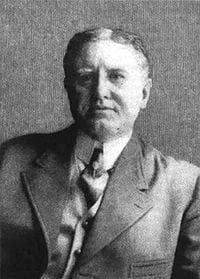
O. Henry was an American author known for his short stories that often feature twist endings and witty narratives. Among his notable works are "The Last Leaf," which explores themes of hope and sacrifice, and "After Twenty Years," a tale of friendship and fate. His writing captures the essence of early 20th-century American life.
Similar books
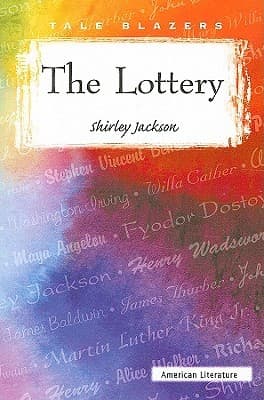
- The Lottery
Shirley Jackson
4.1 (58k) average on GoodreadsScience FictionA short story with a shocking and memorable twist that recontextualizes earlier events.
- Nineteen Eighty-Four
George Orwell
4.2 (5.5M) average on GoodreadsFictionWinston Smith dreams of truth and rebellion in a world where Big Brother watches all, but he confronts the terrifying power of a regime that controls not just actions, but thoughts.
- The Frozen River
Ariel Lawhon
4.4 (600k) average on GoodreadsFictionIn 1789 Maine, a heroic midwife's diary helps her expose a murder and get justice in a town that wants to silence her.
- A Man Called Ove
Fredrik Backman
4.4 (569k) average on GoodreadsFictionA stubborn widower, who lives by strict rules, finds his quiet world changed by a lively new family next door, making him face his past and find happiness in human connection.
- The Art of Racing in the Rain
Garth Stein
4.2 (452k) average on GoodreadsFictionThrough the eyes of Enzo, a wise and observant dog, a race car driver's family navigates a journey of love, loss, and resilience, learning that life's most important lessons often come in the curves, not just on the straightaways.
- The Colour of Magic
Terry Pratchett
4.0 (425k) average on GoodreadsFictionOn a discworld hurtling through space on the back of a giant turtle, an inept wizard and his naive, walking-luggage-toting tourist embark on a chaotic, belief-fueled journey to the very edge of their flat planet, encountering dragons that only exist if you believe in them.





Enjoyed the summary?
A summary gives you the shape of the book. The book itself has the detail, the examples and the voice.
Find After Twenty Years on AmazonAs an Amazon Associate, BookBrief earns from qualifying purchases. How we're funded