
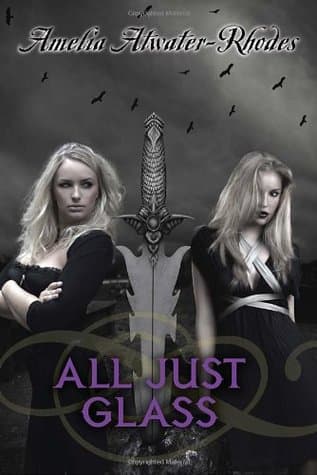
Synopsis
Covers the whole plot, including the ending.
- Difficulty
- Easy
- Pacing
- Fast
- Mood
- Dark, Suspenseful, Action-packed, Angsty
- Read it if
- You enjoy fast-paced YA urban fantasy with a focus on vampire lore, sisterly bonds, and a touch of romance, set in a world where magic and duty clash.
- Skip it if
- You prefer fantasy with intricate world-building over action, or if you're not a fan of morally grey characters and quick resolutions to major conflicts.
All Just Glass Plot Summary
Covers the whole plot, including the ending.
The Awakening of a Vampire
Sarah Vida wakes in a rundown apartment, overcome by a thirst for blood. She is now a vampire, turned by her former lover, Kian. Disgusted by her new nature, she tries to fight the hunger, but it is a painful struggle. She regrets her transformation, having betrayed everything her vampire-hunting family, the Vidas, represents. She knows her family, especially her mother, will hunt her. Sarah feels a complicated affection for Kian, but also faces the horrifying reality of what he has made her, and the crushing guilt of her new state.
Aida's Burden
Aida Vida, Sarah's older sister and a witch, receives a difficult assignment from her mother, Adian. Adian, the leader of the Vida coven, orders Aida to find and kill Sarah, who has become a vampire. Aida is conflicted; her loyalty to her family's old laws and her mother's commands clashes with her deep love for her sister. She remembers her childhood with Sarah, showing their strong bond. The weight of this impossible choice immediately affects Aida, starting her internal conflict and moral dilemma.
The First Encounter
Using her tracking skills, Aida finds Sarah in a deserted park. Their reunion is tense and sad. Sarah, weakened by hunger and despair, is defensive and angry, while Aida is heartbroken and uncertain. Aida tries to talk to Sarah, hoping to understand what happened and find another way. Sarah, however, is consumed by her new reality and believes her sister cannot understand. Their conversation quickly becomes a painful exchange of accusations and unspoken fears, showing the distance that has grown between them.
Kian's Intervention
Just as the tension between Sarah and Aida peaks, Kian, Sarah's sire, appears. He is protective of Sarah, immediately challenging Aida. Kian tries to explain his actions, claiming he turned Sarah to save her or to be with her, though his reasons remain unclear and manipulative. His presence further complicates the sisters' strained relationship, as Aida sees him as the cause of their pain, while Sarah is still grappling with her feelings for him. A brief, tense standoff shows Kian's power and possessive nature.
A Forced Alliance
Kian reveals that the Vida family is not the only threat. He speaks of a powerful, ancient vampire group, the Strigoi, who want to use Sarah's unique lineage. He suggests that Sarah, as a Vida vampire, has a rare power that could be important in an upcoming war between supernatural groups, or that she is a target because of her powerful bloodline. This revelation makes Aida reconsider her immediate mission, realizing that her sister's fate might be tied to a larger, more dangerous conflict. A fragile, uneasy alliance begins to form out of necessity.
The Hunt for the Elder
Following Kian's lead, the three travel to find an ancient, reclusive vampire known as the Elder. Kian believes this Elder has important information about the Strigoi threat and possibly a way to understand or control Sarah's unique vampiric nature. The journey is tense; Aida deeply distrusts Kian, and Sarah still struggles with her internal conflict and her new thirst. They face minor supernatural obstacles along the way, testing their fragile cooperation and forcing them to rely on each other despite their animosity. This part of the journey highlights the growing risks.
The Elder's Revelation
Upon reaching the Elder's lair, the ancient vampire confirms Kian's warnings. The Elder explains that Sarah's transformation is not just a curse but a rare event that could shift the balance in a coming war between traditional vampire covens and the ruthless Strigoi. Sarah's unique Vida blood, now with vampiric power, makes her a crucial and sought-after figure. The Elder details the Strigoi's plan to disrupt the supernatural world and hints at Sarah's potential to become a powerful weapon or a vital shield, further complicating the sisters' dilemma.
Aida's Choice
Faced with the Elder's revelations and the immediate threat, Aida makes a difficult decision. She chooses to protect Sarah, defying her mother's direct orders. Her loyalty shifts from blind obedience to her family's traditions to the deep love she holds for her sister. This choice is a key moment for Aida, marking her transition from a dutiful daughter to an independent agent. She commits to finding a way to save Sarah and possibly prevent a larger war, even if it means becoming an outcast from her coven and risking her life against the Strigoi.
The Strigoi Attack
The Strigoi, having tracked Sarah, launch a surprise attack. A fierce battle follows, forcing Sarah, Aida, and Kian to fight together against the common enemy. Sarah, new to her powers, struggles to control her abilities but fights with new ferocity driven by self-preservation and a desire to protect Aida. Aida uses her witch powers effectively, while Kian shows his vampiric strength. The fight is intense and dangerous, with casualties on both sides, showing the brutal reality of the supernatural conflict and solidifying the fragile alliance between the trio.
Sarah's Power Unleashed
During the battle against the Strigoi, Sarah is pushed to her limits. Seeing Aida in danger or facing overwhelming odds, something within her changes. She fully uses her new vampiric strength, speed, and senses, combined with latent witch abilities from her bloodline, unleashing a devastating power she did not know she had. This moment is her turning point, where she stops fighting her nature and begins to use it. She becomes a formidable force, surprising even Kian and the Strigoi, and turning the tide of the battle in their favor.
Aftermath and New Beginnings
With the Strigoi repelled, the immediate threat is gone, but the future is uncertain. Sarah, having embraced her powers, is no longer the same conflicted girl. Aida, having defied her family, is now an active part of her sister's new life. Kian's role becomes less clear; while he helped, his past actions still linger. The sisters acknowledge their changed relationship and the new world they inhabit. They understand that their fight is far from over, but they are united in facing whatever comes next, though with a lingering sense of loss and the weight of their choices.
All Just Glass Characters
Sarah Vida
Protagonist
A vampire-hunting witch transformed into a vampire, struggling with her new identity.
Sarah is a young woman from the powerful Vida family of vampire hunters. Raised with strict rules against vampires, she finds herself transformed into one by her lover, Kian. Initially, she is consumed by self-loathing, guilt, and disgust for her new nature and her insatiable bloodlust. She is fiercely independent but deeply vulnerable, grappling with betrayal from Kian and abandonment by her family. Her internal conflict between her inherited duty and her new reality drives much of the narrative.
Relationships: Aida Vida (Sister, initially estranged but reunites to fight a common enemy.); Kian (Former lover and sire, complex and manipulative, but also a protector.); Adian Vida (Mother, who orders her death.)
Aida Vida
Supporting Character / Co-protagonist
Sarah's older sister, a dutiful witch torn between family loyalty and sisterly love.
Aida is Sarah's older sister, responsible and dedicated to the Vida coven's traditions. She is initially presented as the 'good' daughter, always upholding her family's values. However, her deep love for Sarah creates an immense internal struggle when she is tasked with hunting and killing her transformed sister. Aida is intelligent, capable, and fiercely loyal, but her greatest strength lies in her capacity for empathy and her willingness to question established dogma for the sake of those she loves.
Relationships: Sarah Vida (Sister, initially tasked to kill her, but ultimately protects her.); Adian Vida (Mother, whose orders Aida eventually defies.); Kian (Mistrusts him deeply, seeing him as the cause of Sarah's suffering.)
Kian
Supporting Character / Antagonist (initially)
Sarah's sire and former lover, a powerful and manipulative vampire with ulterior motives.
Kian is the vampire who transformed Sarah. His motivations are complex; while he claims to love and protect Sarah, his actions are often manipulative and self-serving. He is powerful, knowledgeable about the supernatural world, and possesses a subtle charisma. He initially seems to be Sarah's betrayer, but later reveals knowledge of a larger threat, positioning himself as a reluctant ally. His true allegiances and ultimate goals remain somewhat ambiguous, adding a layer of tension and distrust to his interactions with the Vida sisters.
Relationships: Sarah Vida (Lover and sire, a complicated and possessive bond.); Aida Vida (Distrusted by Aida, but they form a temporary, uneasy alliance.)
Adian Vida
Supporting Character / Antagonist
The matriarch of the Vida coven, unyielding in her adherence to ancient laws.
Adian is the formidable mother of Sarah and Aida, and the strict leader of the Vida vampire-hunting coven. She is a powerful witch, deeply committed to her family's ancient traditions and the eradication of vampires. Her love for her daughters is overshadowed by her unwavering belief in duty and the coven's laws, leading her to order Sarah's death without hesitation. She represents the rigid, unforgiving aspect of tradition and is a formidable antagonist, even when not physically present.
Relationships: Sarah Vida (Daughter, whom she orders to be killed after her transformation.); Aida Vida (Daughter, whom she tasks with killing Sarah.)
The Elder
Supporting Character / Mentor
An ancient, reclusive vampire who provides crucial information about the brewing war.
The Elder is an ancient and wise vampire, living in seclusion, possessing vast knowledge of the supernatural world and its history. They serve as a source of exposition, revealing the true nature of Sarah's transformation and the looming threat of the Strigoi. The Elder is neutral, offering information rather than taking sides, but their revelations are pivotal in shifting Aida's perspective and understanding the larger stakes involved. Their presence adds a sense of ancient power and history to the narrative.
Relationships: Sarah Vida (Provides insight into her unique condition.); Aida Vida (Provides information that influences Aida's choice.)
All Just Glass Themes
Love vs. Duty
This is the main conflict, seen mostly in Aida Vida. She is torn between her duty to her family's old laws, which say all vampires, including her sister, must be destroyed, and her deep love for Sarah. This theme also appears in Sarah's struggle with Kian; her complex feelings for him clash with the 'duty' of a vampire hunter she was raised to uphold. The story explores the painful choices people make when these powerful forces meet, ending with Aida defying her mother to protect Sarah.
“Love wasn’t a choice. It was a compulsion. Aida knew that now, in the deepest part of her soul, even if it meant betraying everything she was raised to believe.”
Identity and Transformation
Sarah's journey is an exploration of identity. Her transformation into a vampire removes her old identity as a Vida witch, forcing her to confront a new self she dislikes. The theme explores her struggle with self-acceptance, the fight against her new instincts, and finally, the embrace of a unique identity that defies categories. This is shown in her physical changes, her new desires, and her fight to connect her past with her present, ending with her unleashing her powers.
“She was a monster. She was a Vida. And she was neither. She was something new, something terrifying, and something undeniably powerful.”
Family Bonds and Betrayal
The Vida family is defined by its strong, though strict, bonds and its history of vampire hunting. Sarah's transformation is seen as the ultimate betrayal, leading to her family's immediate rejection. However, the strong bond between Sarah and Aida becomes the focus, as Aida's love ultimately goes beyond the family's rules. Kian's 'betrayal' of Sarah by turning her also plays into this, showing how trust and love can be twisted. The story suggests that true family loyalty can exist outside of traditional, rigid expectations.
“Her mother had chosen the coven over her daughter. Aida would choose her sister over everything.”
Prejudice and Acceptance
The world of the Den of Shadows is filled with prejudice between different supernatural groups, especially between witches and vampires. Sarah, as a Vida-turned-vampire, represents the ultimate challenge to this prejudice. Her struggle is not just internal but also external, facing the hatred of her own kind and the suspicion of other vampires. The story subtly questions these ideas, suggesting that unity and acceptance, even among traditional enemies, might be necessary for survival against a greater threat, as seen in the uneasy alliance formed.
“The lines were drawn in blood, centuries deep. But sometimes, blood could be thicker than a thousand years of hatred.”
Plot Devices & Literary Techniques
The Ticking Clock
The entire story unfolds over a single 24-hour period.
The narrative's compressed timeline, taking place over just twenty-four hours, creates an intense sense of urgency and high stakes. This device forces rapid character development and immediate action, as Aida must make her decision about Sarah quickly, and the Strigoi threat is imminent. It heightens the emotional tension and ensures that every scene and decision carries significant weight, propelling the plot forward with relentless momentum.
The Chosen One/Unique Hybrid
Sarah's unique lineage and transformation make her a pivotal figure in an impending war.
Sarah's identity as a Vida witch turned vampire is not just a personal tragedy but a supernatural anomaly that holds significant power. The Elder's revelation that her unique hybrid nature makes her crucial in the war against the Strigoi positions her as a 'chosen one.' This device elevates Sarah's personal struggle to a world-altering conflict, giving her transformation a larger purpose and providing a strong motivation for Kian and Aida to protect her, despite their personal differences.
Internal Monologue
Extensive use of characters' inner thoughts to explore their moral dilemmas.
The novel heavily utilizes internal monologue, particularly for Sarah and Aida, to delve into their complex emotional states and moral quandaries. This device allows readers direct access to their self-loathing, guilt, love, and conflict, making their struggles palpable. It is crucial for understanding Sarah's revulsion at her vampirism and Aida's agonizing choice between duty and sisterly love, providing depth to their character arcs without relying solely on external dialogue.
The Greater Threat
The introduction of the Strigoi shifts the focus from family conflict to a world-altering war.
Initially, the conflict is internal (Sarah's identity) and familial (Aida's mission). However, the introduction of the ancient, destructive Strigoi faction as a looming threat expands the scope of the story. This plot device forces the characters, particularly Aida and Kian, to temporarily put aside their differences and form an uneasy alliance. It elevates the stakes beyond personal drama, creating a common enemy that necessitates cooperation and ultimately defines the new path for the protagonists.
All Just Glass Quotes
“The world isn't just what you see through a window; it's what you make of the glass itself.”
“Magic isn't about power, Elara. It's about understanding the truth of things, even if that truth is made of smoke and mirrors.”
“Every shard has a story, and every story can cut deep if you don't know how to hold it.”
“Love, like glass, can be beautiful and fragile, but also incredibly strong if it's forged with enough heat.”
“Sometimes, the only way to see clearly is to break what's in front of you.”
“You can't build a future if you're constantly looking back through shattered panes.”
“The greatest illusions are the ones we create for ourselves, believing they're real.”
“To mend a broken thing, you must first understand the force that broke it.”
“Fear is just another kind of glass, distorting everything you see.”
“Not all transparency is honesty. Sometimes, it's just a trick of the light.”
“Our choices are the refractions, bending the light of our lives in new directions.”
“Even the clearest glass has a faint ripple, a memory of its making.”
“True sight isn't about what your eyes show you, but what your heart recognizes.”
“Some secrets are best left shattered, lest their sharp edges cut everyone who touches them.”
Quiz
10 questions on the plot and the characters. Each answer comes with a short explanation.
Question 1
What is Sarah Vida's current state at the beginning of the book?
- She is a human witch in hiding from vampires.
- She is a vampire, having been changed by the boy she loved.
- She is a ghost, haunting her former family home.
- She is a human, but afflicted with a mysterious illness.
Show answer
B. She is a vampire, having been changed by the boy she loved. The book description explicitly states that Sarah 'IS a vampire—changed by the boy she thought she loved.'
Question 2
What is Aida Vida's primary assignment from her mother regarding Sarah?
- To find Sarah and bring her back to the family unconditionally.
- To help Sarah control her new vampire urges.
- To find Sarah and kill her.
- To find Sarah and convince her to join a new coven.
Show answer
C. To find Sarah and kill her. Aida's mother 'insists that Sarah be found and killed,' making this Aida's assigned duty.
Question 3
How long does the main action of 'All Just Glass' take place?
- Over several months
- Just twenty-four hours
- Over one week
- Exactly one year
Show answer
B. Just twenty-four hours The summary clearly states, 'Taking place over just twenty-four hours, ALL JUST GLASS tells the story of a game-changing battle.'
Question 4
What is Sarah's internal struggle regarding her new vampire nature?
- She is excited by her new powers and embraces them fully.
- She is disgusted by her appetite for blood.
- She is indifferent to her new state, focusing only on revenge.
- She feels a strong connection to other vampires immediately.
Show answer
B. She is disgusted by her appetite for blood. The text states, 'Sarah herself is disgusted by her appetite for blood,' highlighting her internal conflict.
Question 5
What is Aida's typical role within her family before the events of the book?
- The rebellious younger sister.
- The good, reliable sibling who always does her family proud.
- The distant sibling who rarely interacts with the family.
- The family's primary researcher into ancient vampire lore.
Show answer
B. The good, reliable sibling who always does her family proud. Aida is described as 'the good, reliable sibling who always does her family proud,' setting up her conflict with the assignment.
Question 6
The central conflict for the two sisters, Sarah and Aida, revolves around choosing between what two concepts?
- Wealth and poverty.
- Power and vulnerability.
- Love and duty.
- Freedom and imprisonment.
Show answer
C. Love and duty. The summary states, 'And at its center is the story of two sisters who must choose between love and duty.'
Question 7
What is the broader impact of the 'game-changing battle' mentioned in the summary?
- It will establish a new vampire hierarchy.
- It will forever change the world of the Den of Shadows.
- It will lead to the extinction of all witches.
- It will create a permanent peace treaty between species.
Show answer
B. It will forever change the world of the Den of Shadows. The book summary explicitly states the battle 'will forever change the world of the Den of Shadows.'
Question 8
What was Sarah's family's traditional stance and teaching regarding vampires?
- To seek alliances with powerful vampire clans.
- To never trust a vampire, to never let her guard down, and to avoid all tricky attachments of the heart.
- To study vampires for their magical abilities.
- To attempt to cure vampires of their condition.
Show answer
B. To never trust a vampire, to never let her guard down, and to avoid all tricky attachments of the heart. Sarah 'was raised to never trust a vampire, to never let her guard down, and to avoid all tricky attachments of the heart,' which directly contradicts her current situation.
Question 9
What does Sarah's family do to her after she becomes a vampire?
- They try to reverse the transformation.
- They accept her with reservations.
- Her family has forsaken her.
- They send her away to a special school for new vampires.
Show answer
C. Her family has forsaken her. The summary states, 'Her family has forsaken her,' highlighting the severe consequences of her transformation.
Question 10
How does Aida's internal conflict regarding her assignment to kill Sarah manifest?
- She is eager to carry out the assignment quickly and efficiently.
- She views it as a necessary evil for the family's survival.
- She is given 'the one assignment that she may not be able to carry out.'
- She immediately seeks help from other family members to do it for her.
Show answer
C. She is given 'the one assignment that she may not be able to carry out.' The description states Aida 'is given the one assignment that she may not be able to carry out,' indicating her profound reluctance and internal struggle.
All Just Glass FAQ
What is the central conflict driving the plot of 'All Just Glass'?
The central conflict revolves around Sarah Vida, a former vampire-hunting witch who has been turned into a vampire, and her sister, Aida Vida, who is tasked by their mother to hunt down and kill Sarah. This creates a deeply personal struggle between familial loyalty, duty to their ancient lineage, and the complicated bonds of sisterly love, all unfolding within a single day.
Who is Sarah Vida and what significant change has she undergone?
Sarah Vida is a member of the legendary Vida family of vampire-hunting witches, raised to despise and eliminate vampires. However, she has been transformed into a vampire herself by the boy she loved, leading to her family's ostracization and her own internal disgust with her new bloodlust and existence.
Who is Aida Vida and what is her primary dilemma?
Aida Vida is Sarah's older sister, traditionally the 'good' and reliable sibling who upholds family honor. Her primary dilemma arises when their mother orders her to find and kill Sarah, forcing Aida to choose between her duty to her family's ancient traditions and her deep, complex love for her transformed sister.
What is the significance of the 'twenty-four hours' timeframe mentioned in the synopsis?
The story of 'All Just Glass' takes place over an intense and condensed twenty-four-hour period, which amplifies the urgency and stakes of the sisters' conflict. This compressed timeline means every decision, every encounter, and every revelation carries immediate and profound consequences for the Den of Shadows world and their personal fates.
How does Sarah's transformation challenge the established order of the Vida family?
Sarah's transformation into a vampire directly defies the core mission and identity of the Vida family, who are dedicated vampire hunters. It forces them to confront the unthinkable: one of their own has become the very enemy they are sworn to destroy, shattering their long-held traditions and creating an unprecedented internal crisis.
What is the 'Den of Shadows' and how does this battle impact it?
The 'Den of Shadows' refers to the larger supernatural world and the interconnected series of books by Amelia Atwater-Rhodes. The battle between the Vida sisters and the surrounding events in 'All Just Glass' is described as 'game-changing,' implying it will permanently alter the power dynamics and future of this established world, potentially for all its supernatural inhabitants.
Who is the 'boy she thought she loved' who turned Sarah into a vampire, and what are his motivations?
While the synopsis doesn't explicitly name him, the 'boy she thought she loved' is likely a known character from the Den of Shadows series, whose actions set Sarah's transformation in motion. His motivations are crucial to understanding Sarah's betrayal and the origins of her current predicament, hinting at a manipulative or complex past relationship that goes beyond simple romance.
Are there other Vida family members or supernatural factions involved in the hunt for Sarah besides Aida and her mother?
Given the Vida family's legendary status as vampire hunters and the 'game-changing battle' mentioned, it's highly probable that other Vida family members or allied supernatural factions are involved. Their presence would escalate the conflict, provide additional obstacles or support for Aida, and deepen the political implications of Sarah's existence.
How does Sarah's 'disgust by her appetite for blood' reflect her internal struggle?
Sarah's revulsion towards her new vampiric hunger highlights her profound internal conflict, as her physical needs directly oppose her deeply ingrained moral upbringing as a witch. This disgust signifies her struggle to reconcile her past identity with her present reality, making her a tragic figure torn between what she was taught to be and what she has become.
Analyze the psychological impact of Aida being given the assignment to kill her sister.
Aida's assignment places an immense psychological burden on her, forcing her to confront the ultimate moral dilemma: choosing between filial duty and sisterly love. This task likely generates extreme guilt, conflict, and internal questioning of her own values and loyalties, pushing her to her emotional and ethical limits within the twenty-four-hour period.
How does the theme of 'love vs. duty' manifest differently for Sarah and Aida?
For Sarah, 'love vs. duty' manifests as the betrayal of her family's duty for a love that ultimately transformed her into their enemy, now struggling with the duty to survive versus her disgust. For Aida, it's the direct conflict between her duty to her family's legacy and her ingrained love for her sister, forcing her to make an active, life-or-death choice.
What psychological factors might influence Aida's ultimate decision regarding Sarah?
Aida's decision will likely be influenced by her long-standing role as the 'good, reliable' sibling, her deep emotional history with Sarah, the intensity of their mother's expectations, and her own moral compass. Her internal struggle will involve weighing the consequences of both obedience and defiance, potentially leading to a choice driven by empathy, fear, or a sense of justice.
Could Sarah's transformation be interpreted as a metaphor for rebellion or breaking free from oppressive family expectations?
Yes, Sarah's transformation can be interpreted as a powerful metaphor for rebellion. By falling for a vampire and becoming one herself, she shatters the rigid, generations-old expectations of her family, symbolizing a drastic break from an identity and duty that was perhaps stifling, even if the outcome is now one of personal torment.
Is there a possibility for Sarah to reconcile with her family, or is her transformation an unforgivable act?
Given the Vida family's deep-seated hatred for vampires and Sarah's own self-disgust, full reconciliation seems highly challenging, potentially even impossible, within the traditional framework. However, Aida's internal conflict suggests that forgiveness or a new understanding might be possible, but it would require a fundamental shift in the family's core beliefs, making it a point of significant debate.
How might the ending of 'All Just Glass' reshape the moral landscape of the Den of Shadows universe?
The ending of 'All Just Glass' is poised to drastically reshape the moral landscape by potentially blurring the lines between good and evil, hunter and hunted. If Aida spares Sarah, or if Sarah finds a way to exist as a 'good' vampire, it could challenge the black-and-white morality often present in such worlds, forcing all factions to reconsider their long-held prejudices and definitions of monstrosity.
What does the title 'All Just Glass' signify in the context of the story?
The title 'All Just Glass' likely signifies fragility, transparency, or the shattering of illusions. It could refer to the fragile nature of Sarah's new life, the transparency of hidden truths coming to light, or the complete shattering of the Vida family's established order and the sisters' previous lives, leaving them exposed and vulnerable.
Could the 'love' Sarah felt for the boy who turned her be viewed as a naive or misguided choice, rather than true love?
Given Sarah's background and the devastating consequences of her transformation, her 'love' for the boy who turned her could easily be interpreted as naive or misguided. It suggests a vulnerability that was exploited or a youthful defiance that led to unforeseen and tragic outcomes, making it a critical point of discussion about the nature of her initial choices.
How might the 'game-changing battle' affect the balance of power between witches and vampires in the Den of Shadows?
The 'game-changing battle' could significantly alter the balance of power, potentially weakening the witches' dominance due to internal conflict or revealing new strengths among vampires, especially with a former witch like Sarah now among them. It might also lead to new alliances or rivalries, fundamentally shifting the long-standing status quo between these two supernatural factions.
Similar books
- Vampire Academy
Richelle Mead
4.6 (3k) average on GoodreadsFantasyFeatures strong female protagonists, vampire lore, and high-stakes supernatural conflict with romance.
- Twilight
Stephenie Meyer
3.9 (842) average on GoodreadsLiterary FictionDeals with a human-turned-vampire, forbidden love, and supernatural family drama.
- Blue Bloods
Melissa de la Cruz
3.7 (132k) average on GoodreadsFantasyInvolves ancient vampire lineages, secret societies, and young protagonists navigating supernatural powers.
- A Court of Thorns and Roses
Sarah J. Maas
4.2 (476k) average on GoodreadsFantasyBoth novels feature a strong female protagonist thrust into a dangerous supernatural world, developing powers and engaging in a forced alliance with a powerful male figure. However, Maas's 'A Court of Thorns and Roses' typically presents more morally ambiguous characters and a darker, more politically complex fantasy world with a stronger emphasis on intricate court intrigue and high-stakes conflict, compared to the more straightforward 'good vs. evil' dynamic in 'All Just Glass'.
- Harry Potter and the Sorcerer's Stone
J.K. Rowling
4.5 (7M) average on GoodreadsFantasyRescued from a miserable life under the stairs, an orphaned boy discovers he's a wizard destined for a magical school, where he uncovers a dangerous secret tied to the dark wizard who murdered his parents.
- The Hunger Games
Suzanne Collins
4.3 (6.4M) average on GoodreadsFantasyIn a future where children fight to the death on live television, Katniss Everdeen volunteers for the arena, turning a death sentence into a fight for survival and a spark of rebellion.





Enjoyed the summary?
A summary gives you the shape of the book. The book itself has the detail, the examples and the voice.
Find All Just Glass on AmazonAs an Amazon Associate, BookBrief earns from qualifying purchases. How we're funded