
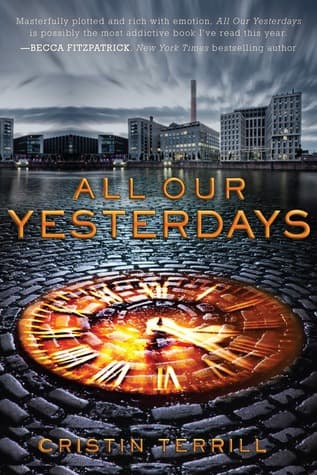
Synopsis
Covers the whole plot, including the ending.
- Difficulty
- Medium
- Pacing
- Fast
- Mood
- Suspenseful, Paradoxical, Romantic, Dark, Urgent
- Read it if
- You enjoy time-travel paradoxes, morally complex choices, and a heart-wrenching romance intertwined with a high-stakes thriller.
- Skip it if
- You prefer straightforward plots without time-bending complexities or find the idea of 'killing the one you love' too dark.
All Our Yesterdays Plot Summary
Covers the whole plot, including the ending.
The Cells and the Note
Em wakes up in a stark, cold cell, disoriented and alone. She can hear Finn, a boy she knows, in an adjacent cell, his pain a constant reminder of their shared predicament. They are being interrogated by 'The Doctor,' who seeks information about events that, to Em, haven't happened yet. The present is a relentless cycle of questioning and deprivation. Em's memory is fragmented, but she knows she loves Finn. One day, she discovers a small, folded note hidden in her cell. It's from her future self and contains cryptic, urgent instructions: 'You have to go back. You have to kill him.' This note shatters her understanding of their situation and hints at a far more complex, time-bending reality.
The First Jump and the Asylum
Following the note's instructions, Em experiences a disorienting temporal shift, finding herself in a past version of her body. She is in an asylum, a place she vaguely remembers. Here, she meets a younger, unscarred Finn and a girl named Charlie, who is also a 'traveler' from the future. Charlie helps Em understand her new reality: they are part of 'Project Tempest,' a covert operation using time travel to prevent a catastrophic future. Em learns that her current mission is to locate and kill the younger version of James, a brilliant but dangerously unstable scientist, before he can initiate the events that lead to their dystopian present. Em struggles with the concept of killing James, whom she once considered a friend.
Learning the Rules and the First Target
Charlie becomes Em's reluctant mentor, teaching her the intricacies and dangers of time travel, including the 'ripple effect' and the importance of not altering history unnecessarily. Em learns that she can 'jump' into her past selves, reliving moments and making different choices. Their primary target is James, the young genius, who is currently attending a prestigious university. Em and Charlie formulate a plan to get close to him. Em is plagued by guilt and internal conflict, as the James she remembers from her past was not inherently evil, but rather a brilliant, albeit troubled, boy. She questions the morality of their mission and whether killing him is truly the only way to save the future, or if there's another path.
Infiltrating the University and Meeting James
Em and Charlie successfully enroll at the university James attends, posing as new students. Em’s mission is to observe James, understand his motivations, and ultimately, eliminate him. However, as she gets closer to the younger James, she finds herself drawn to his intelligence and his earnest, albeit socially awkward, personality. She sees glimpses of the kind boy she knew before the 'Doctor' persona consumed him. This rekindled connection makes her mission increasingly difficult, as the lines between her past affections and her future directive blur. Charlie remains pragmatic, constantly reminding Em of the stakes and the horrific future they are trying to prevent, but Em struggles to reconcile the two versions of James.
The Shifting Past and Finn's Arrival
Em's presence and interactions in the past begin to subtly alter the timeline, creating minor paradoxes and inconsistencies. Her emotional turmoil over James is exacerbated by the unexpected arrival of a younger Finn in the past. This Finn is not the tortured prisoner she knows but a carefree, charming boy who quickly becomes integral to their small group. His appearance creates a dangerous love triangle and further complicates Em's loyalties and mission. She struggles to maintain her focus, torn between her duty to the future, her growing feelings for the present Finn, and her lingering affection for James. Charlie becomes increasingly frustrated with Em's wavering resolve.
The Doctor's Emergence and the First Betrayal
As Em and Finn grow closer, James begins to display unsettling traits that hint at his future transformation into 'The Doctor.' He becomes possessive of Em, showing flashes of his manipulative genius and a desire for control. During this time, a member of Project Tempest, who Em and Charlie thought they could trust, betrays them, providing crucial information to James. This betrayal jeopardizes their mission and forces Em to confront the harsh reality that James is indeed on a path to becoming the monster they need to stop. The stakes escalate, and Em realizes the window for action is closing rapidly, forcing her to consider more drastic measures.
The Confrontation and the Escape
Em, realizing she can no longer delay, confronts James. The confrontation is emotionally charged, as Em tries to reason with him, hoping to steer him away from his destructive path. However, James's paranoia and nascent megalomania are too strong. The encounter turns violent, forcing Em, Finn, and Charlie to flee. This event solidifies James's transformation into 'The Doctor' in Em's eyes, hardening her resolve. They are now fugitives, hunted by James and his burgeoning organization, making their mission to stop him even more perilous. The escape is fraught with danger, and they barely make it out alive, cementing their desperate situation.
The Paradox of Love and Duty
As they continue their mission, Em's love for Finn deepens, creating an unbearable paradox. The note from her future self had instructed her to kill 'him,' which she initially assumed was James. However, new information and her growing understanding of the timeline suggest a horrifying possibility: the 'him' she must kill might actually be Finn. This realization is devastating, forcing Em to choose between the boy she loves and the salvation of humanity. She grapples with the ultimate sacrifice, questioning whether she has the strength to commit such an act, even if it means preventing the dystopian future she's fighting against. Her internal conflict is at its peak.
The Final Showdown and the Sacrifice
Em, Finn, and Charlie track James to his new base of operations, where he is close to perfecting his time-travel technology, the very device that will lead to the dystopian future. A climactic battle ensues, filled with temporal distortions and high stakes. Em confronts James one last time, recognizing the monstrous 'Doctor' fully formed. In the chaos, Em is forced to make the ultimate sacrifice. She realizes that to truly sever the thread that leads to the future, she must kill Finn, not James, as Finn's death is the catalyst for James's descent into villainy. With a broken heart, she fulfills her mission, ensuring a different timeline, and then experiences a final, painful jump.
The New Future and Lingering Memories
Em wakes up in a new, altered future, one where Project Tempest never existed, and the dystopian world has been averted. The world is peaceful, and the 'Doctor' is merely a historical footnote, a brilliant scientist who died young. She meets a version of Finn who is alive and well, but who has no memory of their shared past or the love they once shared. Em carries the full weight of her memories and her sacrifice alone. She lives in a world she saved, but at the cost of her love and her own innocence. She is a hero, but a solitary one, forever haunted by the choices she made and the life she had to take to create this better, yet bittersweet, present.
All Our Yesterdays Characters
Em
Protagonist
A time-traveler tasked with preventing a dystopian future by killing the boy she loves.
Em is a resourceful and emotionally complex young woman who finds herself imprisoned in a bleak future. She discovers she has the ability to travel back in time, 'jumping' into her past selves. Initially driven by survival and a desire to escape her torment, she is burdened by the mission to kill James, a boy she once cared for deeply. Her journey is marked by profound internal conflict, as she grapples with the morality of her actions, the shifting nature of her memories, and the devastating choice between love and duty. She is resilient, but ultimately scarred by the sacrifices she makes.
Relationships: Finn (Love interest, fellow prisoner, eventual tragic sacrifice); James/The Doctor (Former friend/love interest, antagonist, target); Charlie (Mentor, friend, fellow traveler)
Finn
Love Interest / Tragic Figure
Em's fellow prisoner and love interest, whose fate is intrinsically linked to the dystopian future.
In the 'present' dystopian future, Finn is Em's fellow prisoner, sharing her torment and her love. In the past, he is a charming, carefree boy who becomes entangled in Em's mission. He is loyal and protective of Em, quickly falling in love with her. His presence in the past complicates Em's mission and creates a profound emotional dilemma. Finn represents the hope and love Em could have, making her ultimate decision to sacrifice him all the more agonizing. He is a catalyst for James's transformation into The Doctor, making his existence a paradox that Em must resolve.
Relationships: Em (Love interest, fellow prisoner); James/The Doctor (Rival, later the indirect cause of James's villainy)
James / The Doctor
Antagonist
A brilliant scientist whose descent into madness creates the dystopian future Em must prevent.
James is introduced as 'The Doctor,' Em's sadistic captor in the dystopian future. In the past, he is a socially awkward but brilliant young scientist, a former friend and crush of Em's. His transformation into The Doctor is gradual, fueled by paranoia, jealousy, and a desire for control, particularly over time itself. He is driven by a twisted sense of purpose, believing he can fix humanity through his experiments. His genius is both his greatest strength and his fatal flaw, leading him down a path of destruction. He is the architect of the future Em is trying to undo.
Relationships: Em (Former friend/love interest, antagonist); Finn (Rival, object of jealousy)
Charlie
Supporting
A pragmatic and experienced time-traveler who mentors Em.
Charlie is a fellow 'traveler' from the future, older and more experienced than Em. She serves as Em's mentor, explaining the rules and dangers of time travel and the mission of Project Tempest. Charlie is pragmatic, focused, and often ruthless in her pursuit of their goal, constantly reminding Em of the stakes and the horrific future they are trying to prevent. She acts as a foil to Em's emotional struggles, providing a grounded, albeit sometimes cynical, perspective. Despite her tough exterior, she genuinely cares for Em and the success of their mission.
Relationships: Em (Mentor, friend, fellow traveler)
Future Em
Supporting/Catalyst
Em's future self who initiates the mission with a cryptic note.
Future Em is the mysterious figure who sends the initial note to Em in the cell, setting the entire plot in motion. She represents the ultimate consequence of Em's actions and the knowledge gained through past painful experiences. While not a physically present character for most of the story, her instructions and warnings guide Em's path. She embodies the sacrifices and difficult choices that Em will eventually have to make, serving as a silent, powerful presence that underscores the gravity of the mission.
Relationships: Em (Past self, recipient of instructions)
All Our Yesterdays Themes
The Morality of Sacrifice
The novel explores the ethical dilemmas of sacrificing one life for the greater good. Em grapples with killing a younger, seemingly innocent James, and later, the devastating realization that she must kill Finn, the boy she loves, to prevent a dystopian future. This theme is central to her internal conflict, as she questions whether the ends justify such brutal means, and what it costs a person to make such a choice. The story forces both Em and the reader to confront the weight of these decisions.
“You have to go back. You have to kill him.”
Love vs. Duty
Em is torn between her deep love for Finn and her duty to save humanity from The Doctor's tyranny. Her emotional attachments conflict with the cold, hard logic of her mission. This struggle is highlighted by her initial reluctance to kill James, and later, the agonizing choice she faces when she realizes Finn might be the true target. The novel suggests that while love can be a powerful motivator, it can also be a dangerous distraction, forcing Em to make an impossible choice that shatters her heart but ultimately saves the world.
“How could she kill the boy she loved, even if it meant saving everything else?”
The Nature of Identity and Memory
Time travel in the novel creates a complex interplay with identity and memory. Em 'jumps' into her past selves, reliving moments and making new choices, which subtly alters her own history and memories. She struggles with fragmented recollections and the weight of knowing multiple timelines. The question of who she truly is, given her altered pasts and future knowledge, becomes a significant internal challenge. The novel explores how much of one's identity is tied to their experiences and how difficult it is to reconcile different versions of oneself.
“Every jump changed her, erased a piece of the Em she used to be.”
The Ripple Effect and Unintended Consequences
The novel illustrates the 'ripple effect' in time travel. Even minor alterations in the past can have unforeseen and significant consequences for the future. Em's interactions, particularly her relationship with Finn, inadvertently change the timeline, sometimes for the worse, highlighting the delicate balance of causality. This theme shows the immense responsibility of the time travelers and the dangers of meddling with history, showing how even noble intentions can lead to unexpected and tragic outcomes.
“One wrong move, one misplaced word, and the future could unravel in a thousand different ways.”
Plot Devices & Literary Techniques
Time Travel / Temporal Jumps
The primary method of altering the past, allowing characters to inhabit their past selves.
Characters like Em and Charlie possess the ability to 'jump' into their past bodies at specific moments. This isn't a physical journey but a mental one, where their consciousness inhabits a younger version of themselves, allowing them to relive and potentially alter events. This device is crucial for the plot, enabling Em's mission to prevent the dystopian future. It also introduces complexities regarding memory, identity, and the ripple effect, as characters must navigate their own pasts with future knowledge.
The Mysterious Note
A cryptic message from the future that initiates Em's mission.
The note found by Em in her cell, written by her future self, serves as the initial inciting incident. Its vague but urgent instructions ('You have to go back. You have to kill him.') create immediate suspense and mystery, driving Em's actions and the reader's curiosity. The ambiguity of 'him' is a central mystery that evolves throughout the story, leading to the ultimate heartbreaking twist. This device effectively sets the high stakes and the personal cost of the mission from the very beginning.
The Ripple Effect / Paradoxes
The consequence of altering the past, where small changes lead to unpredictable future outcomes.
This device highlights the inherent dangers and complexities of time travel. Every action Em takes in the past, no matter how small, has consequences that subtly (or dramatically) alter the future. This creates a sense of constant tension and uncertainty, as characters must weigh their choices carefully. It also introduces paradoxes, such as Em's own existence being tied to the future she's trying to prevent, making the narrative a compelling exploration of causality and destiny.
The Doctor's Interrogation
The framing device of Em and Finn's imprisonment, revealing information in fragments.
The story begins and periodically returns to Em and Finn's imprisonment and interrogation by 'The Doctor' in the dystopian future. This serves as a powerful framing device, creating a sense of urgency and mystery. The Doctor's questions about events that haven't happened yet to Em provide tantalizing hints about the future and the stakes involved. This narrative structure keeps the reader disoriented, mirroring Em's confusion, and gradually reveals the full horror of the future they are fighting against.
All Our Yesterdays Quotes
“I will change the past. I will save you.”
“The future isn't fixed. It's a million possibilities, and we choose which one to step into.”
“Sometimes, the only way to save someone is to let them go.”
“Every choice we make ripples through time, affecting everything that comes after.”
“Memory is a funny thing. It can be a weapon, or a shield, or a prison.”
“You can't outrun your past, but you can choose how you face it.”
“Love isn't about finding the perfect person, it's about seeing an imperfect person perfectly.”
“The greatest prison is the one we build for ourselves inside our own minds.”
“Even a broken clock is right twice a day. Even a lost cause can have its moments of triumph.”
“Sometimes, the hardest thing to do is forgive yourself.”
“The past is a stubborn thing. It doesn't want to be changed.”
“We're all just trying to make sense of the chaos, to find our place in the storm.”
“What if saving one person means dooming another? How do you choose?”
“There's a difference between living and just existing.”
Quiz
10 questions on the plot and the characters. Each answer comes with a short explanation.
Question 1
Where are Em and Finn initially imprisoned by the Doctor?
- A luxurious mansion with hidden secrets.
- A bare, cold cell with no comforts.
- A futuristic laboratory filled with advanced technology.
- A psychiatric hospital for troubled youths.
Show answer
B. A bare, cold cell with no comforts. The book explicitly states that Em is locked in a bare, cold cell with no comforts, and Finn is in the cell next door.
Question 2
What is the primary reason the Doctor is keeping Em and Finn imprisoned?
- To force them to reveal the location of a hidden treasure.
- He wants them to tell him about events that haven't happened yet.
- He suspects them of being spies from a rival organization.
- He is experimenting on them to develop time travel technology.
Show answer
B. He wants them to tell him about events that haven't happened yet. The synopsis clearly states, 'Trouble is, what he wants to know hasn't happened yet,' indicating his interest in future events.
Question 3
What object does Em discover in her cell that changes everything?
- A hidden key to unlock her cell door.
- A map detailing an escape route.
- A note from her future self with instructions.
- A weapon hidden by a previous prisoner.
Show answer
C. A note from her future self with instructions. The synopsis mentions, 'Then Em finds a note in her cell which changes everything. It's from her future self and contains some simple but very clear instructions.'
Question 4
What is the ultimate, tragic task Em's future self instructs her to do to avert a tragedy?
- Convince the Doctor to stop his experiments.
- Travel back in time and kill the boy she loves.
- Find a way to rescue Finn from his cell.
- Gather evidence against the Doctor for the authorities.
Show answer
B. Travel back in time and kill the boy she loves. The note's instructions are clear: 'Worse, she has to pursue and kill the boy she loves to change the future.'
Question 5
What is the nature of Em and Finn's relationship, as implied by their current situation?
- They are long-lost siblings reunited.
- They are rivals forced to cooperate.
- They have a shared past and a romantic connection.
- They are strangers who met in prison.
Show answer
C. They have a shared past and a romantic connection. The synopsis states, 'Em and Finn have a shared past, but no future unless they can find a way out,' and later, Em is tasked to 'kill the boy she loves,' indicating a romantic bond.
Question 6
What is a central theme explored by the premise of 'All Our Yesterdays' regarding fate and choice?
- The inevitability of destiny regardless of intervention.
- The power of individual actions to alter a predetermined future.
- The futility of fighting against powerful adversaries.
- The idea that all futures lead to the same outcome.
Show answer
B. The power of individual actions to alter a predetermined future. Em's mission to 'travel back in time to avert a tragedy' directly addresses the theme of changing the future through deliberate action.
Question 7
How is the 'present' described for Em and Finn while they are imprisoned?
- A period of calm reflection and planning.
- A time of shared misery and emotional distress.
- An opportunity to learn about the Doctor's motives.
- A brief respite before a larger conflict.
Show answer
B. A time of shared misery and emotional distress. The synopsis states, 'The present is torture - being kept apart, overhearing each other's anguish as the Doctor relentlessly seeks answers.'
Question 8
What paradox is immediately introduced by the Doctor's interrogation of Em and Finn?
- He wants information from them about events they have no memory of.
- He is asking them about future events that haven't yet occurred.
- He is punishing them for actions they haven't committed.
- He claims to be their ally but treats them as enemies.
Show answer
B. He is asking them about future events that haven't yet occurred. The core of the Doctor's goal is 'what he wants to know hasn't happened yet,' which is a temporal paradox.
Question 9
Considering the instruction from her future self, what difficult moral dilemma does Em face?
- Choosing between her own survival and Finn's freedom.
- Deciding whether to trust her future self's motives.
- Sacrificing her love for Finn to save a greater future.
- Revealing the Doctor's secrets or protecting her past.
Show answer
C. Sacrificing her love for Finn to save a greater future. The instruction to 'pursue and kill the boy she loves to change the future' directly sets up a profound moral conflict between her personal feelings and a perceived greater good.
Question 10
What does the phrase 'There's no way back from here, to what they used to be, the world they used to know' primarily suggest about Em and Finn's situation?
- They are physically trapped in a location they cannot escape.
- Their experiences have irrevocably altered their identities and circumstances.
- They have forgotten their past due to the Doctor's torture.
- The world they knew has been destroyed by a global catastrophe.
Show answer
B. Their experiences have irrevocably altered their identities and circumstances. This phrase suggests a profound and irreversible change, implying that their ordeal and the subsequent mission mean they can never return to their former lives or innocence.
All Our Yesterdays FAQ
What is the core premise of 'All Our Yesterdays'?
The novel centers on Em, who is imprisoned with Finn by a mysterious figure known as The Doctor. They are being interrogated about future events that haven't occurred yet. Em discovers a note from her future self, instructing her to travel back in time to prevent a tragedy, specifically by killing Finn, the boy she loves.
Who are the main characters and what is their relationship?
The main characters are Em and Finn. They share a profound romantic connection forged in the past, but their present is defined by their shared imprisonment and the future demands Em to betray him. Their relationship is the emotional core, complicated by the time travel paradox and the horrific task Em must undertake.
What is the primary conflict Em faces throughout the story?
Em's primary conflict is the agonizing dilemma of having to kill Finn, the person she loves most, to prevent a catastrophic future. She grapples with the morality of her mission, the manipulation by her future self, and the emotional toll of knowing she must sacrifice her love for the greater good.
What role does The Doctor play in Em and Finn's predicament?
The Doctor is their captor and interrogator, seeking information about future events from Em and Finn. He represents the oppressive force that pushes Em towards her time-traveling mission, although his ultimate motives and connection to the future tragedy are gradually revealed throughout the narrative.
How does time travel manifest in the story, and what are its rules?
Time travel is initiated by Em through a mysterious mechanism tied to the notes from her future self, allowing her to jump back to specific points in her past. The rules imply a fixed point paradox or a loop, where future Em is guiding past Em to ensure a specific outcome, even if it's painful.
What is the significance of the 'note' Em finds in her cell?
The note is a crucial plot device, acting as a direct communication from Em's future self, initiating her time-traveling mission. It contains vital instructions and warnings, guiding her actions and revealing the terrible task she must undertake, thus setting the entire plot in motion.
How does the narrative structure (alternating timelines) enhance the story?
The alternating timelines, switching between Em and Finn's imprisonment and Em's past time-travel missions, build suspense and reveal information incrementally. This structure allows readers to piece together the tragic history and the reasons behind the future's impending catastrophe, while also highlighting the emotional toll on Em.
Are there any subtle clues about The Doctor's true identity or motivations early on?
Subtle clues include The Doctor's intimate knowledge of Em and Finn's shared history and his relentless focus on specific future events. His methodical torture and the desperate nature of his questioning hint at a personal stake or a profound consequence tied to the information he seeks, rather than simple malevolence.
What is the 'tragedy' Em is trying to avert, and how is Finn connected to it?
The tragedy Em is trying to avert involves a future where Finn, driven by grief and a desperate attempt to 'fix' things, creates a cataclysmic event with his time-travel device, destroying the world. He becomes the unwitting catalyst for the very future Em is sent back to prevent.
How does Em's love for Finn complicate her mission psychologically?
Em's deep love for Finn creates immense psychological torment, forcing her to constantly battle her emotions against her mission. She experiences profound guilt, grief, and internal conflict, questioning her ability to commit such an act and struggling with the moral implications of sacrificing the one she loves for an uncertain future.
What psychological impact does the constant threat of torture have on Em and Finn?
The constant threat of torture and their separation in the cells severely impacts Em and Finn's psychological state. It creates an environment of fear, helplessness, and emotional anguish, amplifying their pain and forcing them to confront their deepest fears while being unable to comfort each other.
How does Em's future self influence her decisions and mental state?
Em's future self acts as a constant, unseen manipulator, guiding her actions through the notes and creating a sense of inevitability. This external pressure can be both a motivator and a source of immense psychological burden, as Em struggles with the loss of agency and the weight of her future self's despair.
Describe the psychological journey Em undergoes as she grapples with the idea of killing Finn.
Em's journey is a descent into moral and emotional ambiguity. Initially horrified by the prospect, she slowly rationalizes the necessity, yet never fully accepts the act. She experiences cycles of denial, despair, determination, and profound grief, ultimately sacrificing her own happiness for what she believes is the greater good.
Is the ending of 'All Our Yesterdays' truly a happy one, given the sacrifices made?
The ending is bittersweet and open to interpretation. While Em successfully averts the global tragedy, the cost is immense, including the erasure of her love with Finn in the original timeline. The 'happy' outcome is shadowed by the profound personal loss and the question of whether the new timeline truly compensates for what was sacrificed.
Does the book suggest that free will exists, or are Em's actions predetermined by her future self?
The book presents a complex view, suggesting a degree of predestination through the notes from future Em, yet also implying that Em's choices within that framework are crucial. Her emotional struggle and the specific ways she carries out her mission highlight an element of free will within a seemingly predetermined loop, making her actions impactful.
What is the central message or theme of 'All Our Yesterdays' regarding love and sacrifice?
The central theme is the agonizing nature of ultimate sacrifice for love. It explores whether love can endure, or even necessitate, the most horrific acts, and questions the cost of saving humanity when it means destroying one's own happiness and the person they cherish most. It’s a study in profound, selfless love.
How does the concept of memory and its reliability play into the narrative?
Memory is crucial and often unreliable, especially with time travel. Em's memories of Finn and their past are her anchors, yet her future self's instructions challenge those memories and ask her to overwrite them. The shifting timelines also create ambiguity about which memories are 'real' or belong to the 'correct' timeline.
Could there have been an alternative solution to the tragedy that didn't involve killing Finn?
The narrative strongly suggests that killing Finn was the only viable solution presented by future Em, implying a closed-loop paradox. However, readers might debate whether Em could have found another way, perhaps by preventing Finn's initial grief or altering the design of his time-travel device, if she had more information or agency.
Similar books
- The Time Traveler's Wife
Audrey Niffenegger
4.0 (1.6M) average on GoodreadsFantasyFeatures a central romance deeply affected by time travel and its complexities.
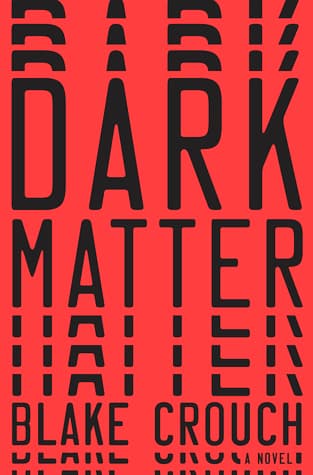
- Dark Matter
Blake Crouch
4.0 (11k) average on GoodreadsFantasyInvolves high-stakes sci-fi concepts, moral dilemmas, and a focus on a singular, urgent mission.
- Passenger
Alexandra Bracken
3.8 (36k) average on GoodreadsFantasyYoung adult time travel with a strong romantic element and a race against time.
- Angels & Demons
Dan Brown
3.9 (2.7M) average on GoodreadsThrillerA Harvard symbologist races through Rome's ancient sites, deciphering cryptic clues to unmask the Illuminati and stop a vengeful plot to destroy the Vatican with a stolen antimatter weapon.
- Gone Girl
Gillian Flynn
4.1 (2.3M) average on GoodreadsThrillerA wife's sudden disappearance on her fifth anniversary reveals a web of lies and psychological warfare, exposing the secrets within a seemingly perfect marriage.
- The Girl on the Train
Paula Hawkins
3.9 (2.1M) average on GoodreadsThrillerA woman’s fascination with a seemingly perfect couple she watches from her daily train commute leads her into a dark investigation when she witnesses something that shatters their idyllic image.





Enjoyed the summary?
A summary gives you the shape of the book. The book itself has the detail, the examples and the voice.
Find All Our Yesterdays on AmazonAs an Amazon Associate, BookBrief earns from qualifying purchases. How we're funded