
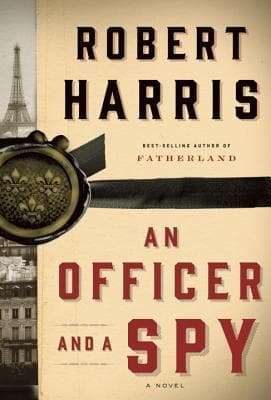
Synopsis
Covers the whole plot, including the ending.
- Difficulty
- Medium
- Pacing
- Moderate
- Mood
- Suspenseful, Intriguing, Historically Rich, Dramatic
- Read it if
- You enjoy historical thrillers based on real-life events, with a focus on espionage, political intrigue, and a lone protagonist fighting a corrupt system.
- Skip it if
- You prefer fast-paced action over meticulous investigation and political machinations, or are looking for a lighthearted read.
An Officer and a Spy Plot Summary
Covers the whole plot, including the ending.
The Humiliation of Dreyfus
In January 1895, Colonel Georges Picquart, a rising officer in French military intelligence, attends the public degradation of Captain Alfred Dreyfus in the École Militaire courtyard. Dreyfus, a Jewish artillery officer, is accused of selling military secrets to Germany, specifically the 'bordereau' — a list of classified documents. The event is a spectacle of nationalistic fervor, with a large crowd demanding Dreyfus's punishment. Picquart, observing Dreyfus's calm demeanor and his declarations of innocence, feels a flicker of unease despite believing the man is guilty. This public shaming marks the official end of the initial trial, with Dreyfus sentenced to life imprisonment on Devil's Island.
Picquart Takes the Helm of the Statistical Section
Following Dreyfus's conviction and deportation, Georges Picquart is promoted to head the Deuxième Bureau's Statistical Section, the counter-espionage unit responsible for 'proving' Dreyfus's treason. His predecessor, Colonel Sandherr, is gravely ill. Picquart, a careful and ambitious officer, takes over with a commitment to efficiency and discretion. He is initially content with the official story of Dreyfus's guilt, viewing the case as closed. His new role places him at the center of French intelligence, giving him access to all sensitive documents and the military's spy operations, a position that will soon challenge his beliefs.
The Discovery of the 'Petit Bleu'
Months after Dreyfus's imprisonment, Picquart's section intercepts a torn telegram, known as the 'petit bleu,' addressed to Major Ferdinand Esterhazy, an officer known for his gambling debts and shady character. The telegram is from the German military attaché, Colonel Max von Schwartzkoppen, and contains an innocuous but suspicious message. Picquart's graphologist, a new recruit, identifies the handwriting on the 'petit bleu' as matching that of the original bordereau, the key piece of evidence against Dreyfus. This discovery immediately raises Picquart's suspicions: if Esterhazy is communicating with the Germans, then Dreyfus might be innocent, and the real spy is still free in the French military.
Investigating Esterhazy
Driven by duty and a growing unease, Picquart begins a secret investigation into Major Esterhazy, despite the official stance that the Dreyfus affair is closed. He discovers Esterhazy's extravagant lifestyle, his mounting debts, and his volatile temperament. Picquart obtains samples of Esterhazy's handwriting and compares them to the bordereau. The similarities are striking, far more convincing than the previous comparison to Dreyfus's hand. Picquart also learns of Esterhazy's connections to influential figures within the military, suggesting a possible cover-up or protection. This evidence solidifies Picquart's belief that Esterhazy is the true traitor.
Confronting His Superiors
Picquart compiles a detailed report outlining his findings about Esterhazy and what they mean for Dreyfus's conviction. He presents this evidence to his superiors: General Gonse, the Deputy Chief of the General Staff, and General Boisdeffre, the Chief of the General Staff. To his dismay, they are unreceptive, dismissing his findings and urging him to drop the matter. They are more concerned with protecting the army's reputation and maintaining the 'truth' of Dreyfus's guilt than with finding the real traitor. This meeting is a turning point, as Picquart realizes he is against a powerful conspiracy within the military establishment.
The Forged Document and Picquart's Isolation
As Picquart continues to press his case, he becomes isolated. Colonel Hubert Henry, a subordinate in the Statistical Section and a key figure in the original Dreyfus investigation, actively works against him. Henry, under pressure from superiors who want to definitively close the case and reinforce Dreyfus's guilt, forges a new document — a letter supposedly from the Italian military attaché to the German attaché, explicitly naming Dreyfus as a spy. This 'faux Henry' is a clear attempt to silence any lingering doubts. Picquart is sidelined, his loyalty questioned, and he is eventually transferred out of Paris to a remote posting in Tunisia.
The Affair Goes Public
Despite Picquart's removal, the truth begins to emerge. Mathieu Dreyfus, Alfred's brother, tirelessly campaigns for his brother's innocence. He receives anonymous tips and eventually connects with Picquart's former lawyer, Maître Labori. The writer Émile Zola publishes his open letter, 'J'Accuse...!', in the newspaper L'Aurore, publicly accusing high-ranking military officers of obstructing justice and fabricating evidence against Dreyfus. The letter creates a national scandal, dividing France. Amidst the public outcry and demands for justice, Picquart is recalled from Tunisia to face questioning, bringing him back into the heart of the growing scandal.
Picquart's Testimony and Imprisonment
Upon his return, Picquart is interrogated by military tribunals and civilian courts. He testifies about his discovery of Esterhazy's guilt and the subsequent cover-up by his superiors. His testimony, combined with Zola's public accusations and the growing scrutiny, forces the military to finally investigate Esterhazy. Esterhazy is eventually court-martialed, but to the astonishment of many, he is acquitted, a clear sign of the military's determination to protect its own. In a shocking turn, Picquart is then arrested and imprisoned for violating official secrecy, further showing the lengths to which the establishment will go to silence dissent. However, the pressure mounts, and Colonel Henry's forgery is eventually exposed, leading to his confession and suicide.
The Rennes Court-Martial
In 1899, Alfred Dreyfus is brought back from Devil's Island for a new court-martial in Rennes. The expectation is that he will finally be cleared, given the overwhelming evidence against Esterhazy and the exposure of Henry's forgery. However, the military establishment, deeply set in its position and determined to uphold its honor, continues to fight for Dreyfus's guilt. The trial is marred by further attempts at obfuscation and the introduction of new, questionable evidence. Despite the truth emerging, the military tribunal finds Dreyfus guilty again, though with 'extenuating circumstances,' sentencing him to ten years' imprisonment.
Dreyfus Pardoned, Picquart Reinstated
The verdict at Rennes sparks international outrage. To prevent further civil unrest and to quell the growing international condemnation, the President of France, Émile Loubet, pardons Alfred Dreyfus, allowing him to walk free, though his conviction is not officially overturned. This pardon is a political maneuver rather than a full exoneration. Years later, in 1906, the Supreme Court of Appeals officially annuls the Rennes verdict, fully rehabilitating Dreyfus. Georges Picquart, whose integrity and courage brought the truth to light, is reinstated into the army with the rank of brigadier general and is later appointed Minister of War, a remarkable turnaround for the whistle-blower who dared to challenge the most powerful institutions in France.
An Officer and a Spy Characters
Georges Picquart
Protagonist
The meticulous and principled head of French military intelligence.
Colonel Georges Picquart is an ambitious, intellectual, and initially conventional officer in the French General Staff. He is a man of order and discipline, deeply loyal to the army and his country. However, his defining characteristic is his unwavering commitment to truth and justice, which compels him to act when he discovers evidence of a grave miscarriage of justice. He is initially a believer in Dreyfus's guilt but his professional integrity forces him to confront the conspiracy within his own institution.
Relationships: Alfred Dreyfus (Initially a distant, condemned figure; later, the innocent man Picquart fights to exonerate.); Colonel Hubert Henry (Subordinate and later a deceitful adversary who actively obstructs Picquart's investigation and forges evidence.); General Gonse (Picquart's superior who attempts to suppress his findings and protect the army's reputation.); Paul Valéry (Friend and confidant, to whom Picquart entrusts his secrets.)
Alfred Dreyfus
Central Figure
The innocent Jewish artillery officer falsely accused of treason.
Captain Alfred Dreyfus is a reserved, proud, and highly disciplined Jewish artillery officer from Alsace. He is a devoted family man and a patriot, making the accusation of treason particularly devastating. Throughout his ordeal, he maintains his innocence with remarkable stoicism and dignity, even under the most brutal conditions on Devil's Island. He is less a proactive character in the narrative and more the catalyst for the events, his suffering driving Picquart and others to seek justice.
Relationships: Georges Picquart (His unwitting savior; Picquart's actions lead to Dreyfus's eventual exoneration.); Mathieu Dreyfus (His devoted brother who tirelessly campaigns for his innocence.); Lucie Dreyfus (His loyal and suffering wife.)
Colonel Hubert Henry
Antagonist
The deceitful intelligence officer who fabricates evidence against Dreyfus.
Colonel Hubert Henry is a subordinate in the Statistical Section, a key figure in the initial Dreyfus investigation, and later Picquart's direct adversary. He is driven by a combination of anti-Semitism, ambition, and a desire to protect the military's reputation at all costs. Henry is unscrupulous and willing to resort to forgery and deception to maintain the official narrative of Dreyfus's guilt. He represents the corrupt and prejudiced elements within the military establishment.
Relationships: Georges Picquart (His superior and later his nemesis, whose truth-seeking Henry actively thwarts.); Major Ferdinand Esterhazy (Co-conspirator whom Henry protects and enables.)
Major Ferdinand Esterhazy
Antagonist
The real traitor, a debauched and indebted officer.
Major Ferdinand Esterhazy is the actual spy who sold military secrets to Germany. He is depicted as a man of questionable character, riddled with gambling debts, and prone to volatile behavior. He is a Hungarian-born officer who feels little loyalty to France. His handwriting on the 'bordereau' is the crucial piece of evidence Picquart uncovers, but he is protected by powerful figures within the military who prioritize covering up the scandal over prosecuting the true culprit.
Relationships: Colonel Hubert Henry (His protector and accomplice in the cover-up.); Georges Picquart (The officer who uncovers his treason.)
General Charles-Arthur Gonse
Supporting
Deputy Chief of the General Staff who prioritizes the army's honor over justice.
General Gonse is Picquart's superior and the Deputy Chief of the General Staff. He embodies the institutional resistance to reopening the Dreyfus case. He is not necessarily malicious but is deeply concerned with protecting the army's reputation and avoiding scandal. He repeatedly instructs Picquart to drop his investigation, fearing the damage it would do to the military's prestige. His actions highlight the profound institutional inertia and pride that fueled the cover-up.
Relationships: Georges Picquart (His subordinate whom he attempts to silence and control.); General Boisdeffre (His superior, with whom he shares the goal of protecting the army.)
Émile Zola
Supporting
The acclaimed writer whose 'J'Accuse...!' ignites public outrage.
Émile Zola is a renowned French novelist and intellectual who becomes a fierce advocate for Dreyfus's innocence. His powerful and courageous open letter, 'J'Accuse...!', published in L'Aurore, publicly accuses high-ranking military officials of obstructing justice. Zola's intervention transforms the Dreyfus affair from a military secret into a national and international scandal, galvanizing public opinion and forcing the government to address the conspiracy. He risks his career and freedom for what he believes is right.
Relationships: Alfred Dreyfus (The subject of his impassioned defense.); Mathieu Dreyfus (Collaborator in exposing the truth.)
Mathieu Dreyfus
Supporting
Alfred Dreyfus's devoted brother and tireless campaigner for justice.
Mathieu Dreyfus is Alfred's older brother and an unwavering force in the fight for his brother's exoneration. He dedicates years of his life and considerable personal resources to uncovering the truth and mobilizing public support. He is persistent, resourceful, and relentless in his pursuit of justice, often working behind the scenes to gather evidence and engage influential figures like Émile Zola. His fraternal loyalty is a strong emotional anchor in the narrative.
Relationships: Alfred Dreyfus (His younger brother, for whom he fights tirelessly.); Émile Zola (A key ally in publicizing the injustice.)
An Officer and a Spy Themes
Truth vs. Institutional Protection
The novel explores the conflict between an individual's pursuit of truth and a powerful institution's efforts to protect its reputation. Picquart's journey is defined by his struggle against the French military's refusal to admit error, even when faced with clear evidence. The military's fear of scandal, shown by General Gonse and Boisdeffre, leads to the suppression of evidence, the fabrication of documents, and the persecution of those who seek justice. This theme is illustrated when Picquart presents his findings on Esterhazy, only to be met with dismissal and eventually exiled, highlighting the high cost of challenging a powerful, self-preserving establishment.
“There are some things so terrible that they must not be spoken, even if they are true. Especially if they are true.”
Anti-Semitism and Prejudice
The widespread anti-Semitism within French society and the military is a core element of the Dreyfus Affair. Dreyfus's Jewish heritage makes him an easy scapegoat, allowing prejudice to cloud judgment and fuel the initial conviction. The novel shows how this bias is used by figures like Colonel Henry and Major Esterhazy, and how it makes the military reluctant to admit that a non-Jewish officer could be the real traitor. The public's initial anger against Dreyfus is often rooted in anti-Semitic sentiments, showing how prejudice can be used to manipulate public opinion and obstruct justice.
“It was not just Dreyfus they wanted to destroy. It was his kind.”
The Nature of Justice and Injustice
The novel examines what justice is and how easily it can be corrupted. Dreyfus's initial conviction, based on weak evidence and prejudice, is a clear example of injustice. Picquart's struggle reveals that justice is not just about following procedures but about a relentless pursuit of truth, regardless of the consequences. Esterhazy's repeated acquittals and Dreyfus's initial re-conviction at Rennes, despite overwhelming evidence of innocence, highlight how deeply ingrained biases and institutional power can twist justice. Ultimately, the story shows that true justice often requires great courage and sacrifice.
“A military secret is like a woman's secret: once it is known, it is no longer a secret.”
The Role of the Whistle-blower
Picquart's transformation into a whistle-blower is central to the narrative. He is initially a loyal officer, but his commitment to truth compels him to expose the conspiracy, despite knowing the severe personal and professional risks. The novel portrays the immense pressure and isolation faced by a whistle-blower who challenges powerful institutions. Picquart loses his career, is exiled, and is eventually imprisoned, yet he continues. His story shows the critical but dangerous role individuals play in holding power accountable and the personal cost of upholding moral integrity against systemic corruption.
“I will not carry this secret to my grave.”
Plot Devices & Literary Techniques
The Bordereau
The incriminating document that falsely implicates Dreyfus.
The 'bordereau' is a handwritten list of classified French military documents offered for sale to Germany. It serves as the primary piece of 'evidence' used to convict Alfred Dreyfus. Its ambiguous nature and the misidentification of its handwriting are central to the initial injustice. Later, the discovery that the handwriting actually belongs to Major Esterhazy becomes the pivotal turning point in Picquart's investigation, transforming it from a symbol of Dreyfus's guilt into the key to proving his innocence and exposing the real traitor.
The 'Petit Bleu'
The intercepted telegram that reveals the true spy's identity.
The 'petit bleu' is a torn, intercepted telegram addressed to Major Esterhazy from the German military attaché. While seemingly innocuous, its existence, combined with the fact that it was addressed to Esterhazy, prompts Picquart to investigate further. Crucially, the discovery that its handwriting matches that of the bordereau is the first concrete piece of evidence that leads Picquart to suspect Esterhazy and, by extension, Dreyfus's innocence. It acts as the initial thread that unravels the entire conspiracy.
The Faux Henry (False Document)
The forged document designed to definitively implicate Dreyfus and silence dissent.
The 'faux Henry' is a forged letter created by Colonel Hubert Henry, purportedly from the Italian military attaché, explicitly naming Dreyfus as a spy. This document is introduced by the military establishment to reinforce Dreyfus's guilt and to discredit any attempts to reopen the case, particularly Picquart's findings. It represents the depths of deception and corruption within the military's cover-up. Its eventual exposure is a critical moment in the affair, leading to Henry's confession and suicide, and ultimately paving the way for Dreyfus's exoneration.
An Officer and a Spy Quotes
“Every secret is a weapon, and every man has a price.”
“The truth is a terrible thing, especially when it's inconvenient.”
“Doubt is the beginning of wisdom, they say. It's also the beginning of an obsession.”
“In war, truth is the first casualty. In peace, it seems, it's often the second.”
“A man’s greatest enemy is often his own certainty.”
“The machinery of justice, once set in motion, is very difficult to stop, even when it’s going in the wrong direction.”
“What is honour? It is the last refuge of the scoundrel, and the first sacrifice of the honest man.”
“To be truly free, one must first be willing to be alone.”
“The past is never dead. It’s not even past.”
“They say the Devil is in the details. Sometimes, so is salvation.”
“The most dangerous lies are the ones we tell ourselves.”
“It is not enough to know the truth; one must be prepared to fight for it.”
“Power does not corrupt. It reveals.”
“The greatest trick the Devil ever pulled was convincing the world he didn't exist. The second greatest was convincing it that justice was blind.”
Quiz
10 questions on the plot and the characters. Each answer comes with a short explanation.
Question 1
What is Alfred Dreyfus's initial sentence after being convicted of treason?
- Execution by firing squad
- Life imprisonment at Devil’s Island
- Twenty years in a military prison in France
- Exile to a French colony in Africa
Show answer
B. Life imprisonment at Devil’s Island Alfred Dreyfus is sentenced to life imprisonment at Devil’s Island, a harsh penal colony.
Question 2
Who is Georges Picquart at the beginning of the novel?
- The chief prosecutor in the Dreyfus trial
- A journalist investigating the Dreyfus affair
- The recently promoted head of the French counterespionage agency
- Alfred Dreyfus's defense attorney
Show answer
C. The recently promoted head of the French counterespionage agency Georges Picquart is the ambitious, intellectual, recently promoted head of the counterespionage agency that 'proved' Dreyfus's guilt.
Question 3
What event initially causes Picquart to doubt Dreyfus's guilt?
- Dreyfus's personal letter from Devil's Island
- A confession from another officer
- Stumbling on information suggesting another spy is still active
- An anonymous tip from a foreign intelligence agency
Show answer
C. Stumbling on information suggesting another spy is still active Picquart begins to doubt the case when he stumbles on information suggesting that there is still a spy at large in the French military, despite Dreyfus's conviction.
Question 4
What is the primary theme explored through Picquart's journey of questioning the Dreyfus case?
- The personal cost of ambition and power
- The corruption within the French aristocracy
- The conflict between loyalty to one's country and upholding truth/justice
- The futility of individual efforts against state power
Show answer
C. The conflict between loyalty to one's country and upholding truth/justice Picquart is compelled to question his most deeply held beliefs about his country and himself, highlighting the conflict between loyalty and truth when faced with institutional corruption.
Question 5
Which specific document is central to the initial conviction of Dreyfus, and later to Picquart's investigation?
- A coded telegram intercepted from Germany
- The 'bordereau,' a list of secret documents
- A handwritten confession signed by Dreyfus
- Testimony from a German intelligence officer
Show answer
B. The 'bordereau,' a list of secret documents The 'bordereau' (a memorandum listing secret documents) is the key piece of evidence used to convict Dreyfus, and later becomes central to Picquart's discovery of the real spy.
Question 6
What is the profession of the individual who is eventually revealed to be the true spy, Esterhazy?
- A high-ranking government minister
- A low-level clerk in the War Ministry
- A major in the French army
- A foreign diplomat stationed in Paris
Show answer
C. A major in the French army The true spy is Ferdinand Walsin Esterhazy, a major in the French army, whose handwriting matches the 'bordereau'.
Question 7
What is the broader societal context that made Dreyfus's initial conviction particularly resonant and difficult to overturn?
- A strong anti-monarchist sentiment in France
- Widespread anti-Semitism and nationalism in France
- Fear of a communist uprising
- A desire to avoid war with Germany at all costs
Show answer
B. Widespread anti-Semitism and nationalism in France The novel highlights the widespread anti-Semitism and fervent nationalism in turn-of-the-century France, which fueled the public's conviction of Dreyfus and made it difficult for the truth to emerge.
Question 8
What happens to Picquart as he pursues the truth about the spy within the French military?
- He is promoted for his diligent work
- He is hailed as a national hero by the public
- He faces increasing opposition, threats, and is eventually imprisoned
- He flees France to seek asylum abroad
Show answer
C. He faces increasing opposition, threats, and is eventually imprisoned As a whistleblower, Picquart faces severe repercussions, including being removed from his post, accused of forging evidence, and eventually imprisoned for his efforts to expose the truth.
Question 9
Which prominent French writer famously published an open letter, 'J'accuse!', in defense of Dreyfus, risking his own freedom?
- Victor Hugo
- Émile Zola
- Alexandre Dumas
- Guy de Maupassant
Show answer
B. Émile Zola Émile Zola's famous open letter, 'J'accuse!', published in a newspaper, publicly accused the government and military of obstruction of justice and anti-Semitism, significantly impacting public opinion.
Question 10
What is the ultimate resolution for Alfred Dreyfus at the end of the historical affair depicted in the novel?
- He dies in prison on Devil's Island
- His conviction is upheld, and he remains disgraced
- He is eventually exonerated and reinstated into the army
- He is pardoned but never fully cleared of the charges
Show answer
C. He is eventually exonerated and reinstated into the army Despite immense opposition, Dreyfus is eventually exonerated, his conviction is annulled, and he is reinstated into the French army with promotion.
An Officer and a Spy FAQ
What is the central historical event that 'An Officer and a Spy' dramatizes?
The novel meticulously retells the infamous Dreyfus Affair, a major political scandal that divided France at the end of the 19th century. It focuses on the wrongful conviction of Captain Alfred Dreyfus, a Jewish artillery officer, for treason and the subsequent efforts to expose the truth.
Who is Georges Picquart, and what is his initial role in the Dreyfus Affair?
Georges Picquart is the novel's protagonist, an ambitious and intellectual military officer who initially believes firmly in Dreyfus's guilt. He is promoted to head the Deuxième Bureau, France's counter-espionage agency, after Dreyfus's conviction, and was present at Dreyfus's public degradation.
What prompts Picquart to begin questioning Dreyfus's guilt?
Picquart's doubts arise when he discovers that the actual spy, Major Ferdinand Esterhazy, is still passing secrets to the Germans, even after Dreyfus has been imprisoned. He finds striking similarities between Esterhazy's handwriting and the 'bordereau,' the key piece of evidence used to convict Dreyfus.
How does the French military establishment react to Picquart's findings?
The military establishment, particularly high-ranking officers like General Mercier and Colonel Henry, actively works to suppress Picquart's evidence and maintain the facade of Dreyfus's guilt. They fear that admitting a mistake would discredit the army and destabilize the government, resorting to threats and even imprisonment for Picquart.
What is the significance of the 'bordereau' in the novel?
The 'bordereau' is a handwritten list of secret French military documents offered to the German military attaché, Max von Schwartzkoppen. It was the sole piece of physical evidence used to convict Dreyfus, despite its authorship being misattributed, and became central to the cover-up.
Who is Colonel Henry, and what is his ultimate role in the cover-up?
Colonel Hubert-Joseph Henry is a key figure in the Deuxième Bureau who fabricates false evidence to solidify Dreyfus's guilt and later to frame Picquart. He confesses to forging a crucial document, known as the 'faux Henry,' which ultimately exposes the extent of the military's deceit.
How does Émile Zola contribute to the public awareness of the affair?
Émile Zola, a renowned novelist, publishes his famous open letter 'J'accuse!' which directly accuses high-ranking military officials of obstructing justice and knowingly convicting an innocent man. This electrifies public opinion and turns the affair into a national and international scandal.
What is the significance of the novel's title, 'An Officer and a Spy'?
The title cleverly refers to both Dreyfus, the innocent officer wrongly accused of being a spy, and Picquart, the officer who uncovers the true spy, Esterhazy. It also alludes to the internal conflict within the military, where officers become spies against their own colleagues.
How does Picquart's personal life and relationships evolve throughout his investigation?
Picquart's personal life becomes increasingly isolated and fraught with danger as he pursues the truth. His affair with Pauline Monnier is complicated by the constant surveillance and threats he faces, and his professional relationships are strained to breaking point as he alienates former allies.
How does Picquart's initial belief in military loyalty clash with his pursuit of justice?
Picquart, a career military man, initially holds deep loyalty to the institution and its hierarchy. However, his discovery of the truth about Dreyfus forces a profound moral conflict, compelling him to prioritize justice and truth over unquestioning obedience, even at great personal cost.
What psychological pressures does Picquart face as a whistleblower?
Picquart endures immense psychological pressure, including isolation, constant surveillance, threats to his career and life, and the burden of knowing a profound injustice is being perpetrated. He grapples with fear, doubt, and the weight of being a solitary voice against a powerful establishment.
How does antisemitism play a role in Dreyfus's conviction and the subsequent cover-up?
Antisemitism is a pervasive underlying factor, making Dreyfus a convenient scapegoat due to his Jewish faith in a climate of growing nationalist and anti-Jewish sentiment. It fuels the initial accusations and provides a ready justification for the military's refusal to admit error.
What does the novel suggest about the nature of truth in the face of institutional power?
The novel powerfully illustrates how institutional power can distort and suppress truth for self-preservation, even when faced with irrefutable evidence. It shows the immense difficulty and danger involved in challenging established narratives, especially when they are tied to national pride and military honor.
How does the book explore the themes of integrity and moral courage?
Picquart embodies moral courage by choosing to pursue the truth despite overwhelming opposition, risking his career, reputation, and freedom. His journey highlights the profound personal cost of maintaining integrity when confronted with systemic corruption and injustice.
What contemporary relevance does the Dreyfus Affair, as presented in the book, hold?
The novel's themes of 'witch hunts,' secret tribunals, out-of-control intelligence agencies, and the fate of whistleblowers resonate strongly with modern issues. It serves as a cautionary tale about the dangers of unchecked power, media manipulation, and the suppression of dissent.
Does the novel offer a definitive happy ending for Picquart and Dreyfus?
While Dreyfus is eventually exonerated and reinstated, and Picquart eventually receives recognition, the ending is not entirely 'happy.' It acknowledges the immense suffering endured by both men and the lasting scars on French society, suggesting that justice, when delayed, can never fully heal the wounds.
How does the character of Dreyfus himself contribute to the narrative, given his imprisonment?
Despite being absent for much of the direct action, Dreyfus's suffering on Devil's Island serves as a constant moral compass and a stark reminder of the injustice Picquart is fighting. His stoic endurance and the detailed accounts of his degradation emphasize the human cost of the affair.
What is the role of public opinion and the press in resolving the Dreyfus Affair?
Public opinion, heavily influenced by figures like Émile Zola and the press, plays a crucial role in creating the necessary pressure for the truth to emerge. The affair highlights the power of an engaged citizenry and a free press to challenge and ultimately overcome state-sponsored deception.
About the author
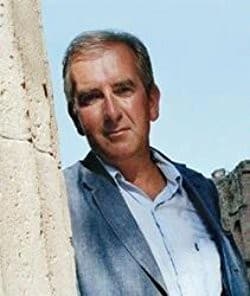
Robert Harris is a British author known for his historical fiction and thrillers. His notable works include "Fatherland," a novel set in a world where Nazi Germany won World War II; "Pompeii," which explores the eruption of Mount Vesuvius; "An Officer and a Spy," a fictional retelling of the Dreyfus Affair; and "Enigma," centered around codebreakers during World War II.
Similar books
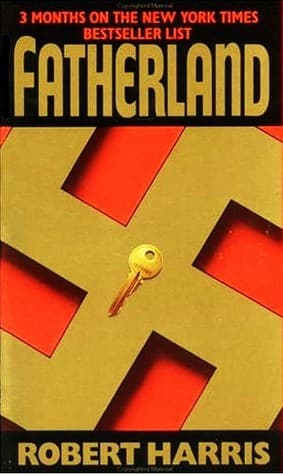
- Fatherland
Robert Harris
4.0 (37k) average on GoodreadsThrillerA historical mystery/thriller set against a meticulously researched historical backdrop, with a protagonist uncovering a dark truth.
- The Day of the Jackal
Frederick Forsyth
4.3 (118k) average on GoodreadsThrillerA classic political thriller known for its detailed procedural approach and high stakes.
- The Name of the Rose
Umberto Eco
4.1 (301k) average on GoodreadsHistorical FictionWhile both are historical mysteries with intellectual depth, Eco's novel is more philosophical and semiotic, with a labyrinthine plot and extensive theological and historical digressions. Harris's "An Officer and a Spy" is more grounded in political realism and the mechanics of a military cover-up, with a more straightforward thriller structure, making it generally more accessible to a broader audience interested in historical intrigue without heavy philosophical undertones.
- Angels & Demons
Dan Brown
3.9 (2.7M) average on GoodreadsThrillerA Harvard symbologist races through Rome's ancient sites, deciphering cryptic clues to unmask the Illuminati and stop a vengeful plot to destroy the Vatican with a stolen antimatter weapon.
- Gone Girl
Gillian Flynn
4.1 (2.3M) average on GoodreadsThrillerA wife's sudden disappearance on her fifth anniversary reveals a web of lies and psychological warfare, exposing the secrets within a seemingly perfect marriage.
- The Girl on the Train
Paula Hawkins
3.9 (2.1M) average on GoodreadsThrillerA woman’s fascination with a seemingly perfect couple she watches from her daily train commute leads her into a dark investigation when she witnesses something that shatters their idyllic image.





Enjoyed the summary?
A summary gives you the shape of the book. The book itself has the detail, the examples and the voice.
Find An Officer and a Spy on AmazonAs an Amazon Associate, BookBrief earns from qualifying purchases. How we're funded