

Synopsis
Covers the whole plot, including the ending.
- Difficulty
- Easy
- Pacing
- Moderate
- Mood
- Suspenseful, Dramatic, Observational, Darkly Humorous
- Read it if
- You enjoy character-driven mysteries with a focus on female relationships, domestic secrets, and social commentary.
- Skip it if
- You prefer fast-paced, action-heavy thrillers or stories without morally ambiguous characters.
Big Little Lies Plot Summary
Covers the whole plot, including the ending.
New Beginnings and Schoolyard Clashes
Jane Chapman, a young single mother, moves to the affluent coastal town of Pirriwee with her son, Ziggy. On Ziggy's first day at Pirriwee Public School, she meets Madeline Mackenzie, a lively and outspoken mother, and Celeste Wright, a beautiful but reserved woman. The morning quickly turns chaotic when Amabella Klein, daughter of Renata Klein, accuses Ziggy of choking her. Despite Ziggy's denials, Renata demands action, creating an immediate division among the kindergarten parents. Madeline, protective of Jane, gathers support, while Celeste observes, remaining somewhat detached. This incident sets the stage for the escalating tensions and alliances within the school community, especially between Madeline's group and Renata's.
Madeline's Domestic Drama and Past Grievances
Madeline's life is a constant juggle. She is happily married to Ed, but her relationship with her ex-husband, Nathan, and his new, younger wife, Bonnie, is full of tension. Nathan and Bonnie live in Pirriwee with their daughter, Skye, who is the same age as Madeline's youngest daughter, Chloe. Madeline's eldest daughter, Abigail, from her marriage to Nathan, is a rebellious teenager who often prefers spending time with Nathan and Bonnie, much to Madeline's annoyance. Madeline struggles with feelings of displacement and jealousy, especially regarding Bonnie's seemingly effortless grace and the way Abigail gravitates towards her. This dynamic drives many of Madeline's outspoken opinions and her strong loyalty to her friends.
Celeste's Secret Suffering
Celeste Wright appears to have the perfect life: beauty, a wealthy and charismatic husband, Perry, and twin sons, Max and Josh. However, behind closed doors, Celeste is a victim of severe domestic violence. Perry's charming exterior hides a possessive and brutal temper, leading to frequent, violent outbursts that leave Celeste bruised and terrified. She consistently makes excuses for his behavior, even to herself, rationalizing that their passionate make-up sex justifies the abuse. Celeste is ashamed and isolated, unable to confide in anyone, not even Madeline or Jane, for fear of judgment and the collapse of her carefully constructed perfect image. The abuse is escalating, making her increasingly fearful for her safety and that of her children.
Jane's Lingering Trauma and the Search for Answers
Jane carries deep trauma from a sexual assault she experienced years prior, which resulted in Ziggy's conception. She has never identified the perpetrator, and a key reason for her move to Pirriwee was a faint memory of the attacker mentioning the town. Jane is haunted by the incident, struggling with intimacy and trust. She keeps a small photo of a man she believes might be Ziggy's father, hoping to one day identify him. This hidden pain makes her particularly sensitive to Ziggy's accusations, fearing he might inherit traits from his unknown father. Her quest for answers subtly guides her interactions and observations in the community.
Escalating School Tensions and Playground Politics
The 'choking incident' involving Ziggy and Amabella remains a hot topic, fueling the 'us vs. them' mentality among the kindergarten parents. Renata Klein continues to lead the campaign against Ziggy, while Madeline fiercely defends him. Other parents begin to take sides, creating tension at school functions and in online forums. Further incidents, like a child being bitten, lead to more accusations, though the true culprit remains elusive. These events show the competitive and often cruel nature of the schoolyard politics, reflecting deeper insecurities and judgments among the adults. The children's conflicts become a proxy for the parents' own unresolved issues.
The Charity Quiz Night and Underlying Currents
The annual school Charity Quiz Night becomes a focal point for the community. Madeline, the organizer, is heavily involved, using it as an outlet for her energy and frustrations. Celeste, despite her internal struggles, also participates, trying to maintain her public image. Jane, though initially hesitant, is drawn into the preparations, finding a sense of belonging with Madeline and Celeste. The event forces them to interact with a wider range of parents, including Renata and her husband, Gordon. As the night approaches, the various personal dramas and secrets of the key characters simmer beneath the surface, promising a dramatic culmination.
Celeste's Breaking Point and Confession
The abuse at home intensifies, leaving Celeste increasingly isolated and terrified. After a severe beating from Perry, which she struggles to hide, Celeste's resolve begins to crack. She has been secretly seeing a therapist, Dr. Reisman, under the guise of marriage counseling. During a session, Celeste finally breaks down and admits the full extent of Perry's violence, describing the physical and emotional torment she endures. This confession is a moment for Celeste, marking her first step towards acknowledging the reality of her situation and contemplating a future without Perry, despite her fear and attachment.
Jane's Revelation and the Puzzle Pieces
While Jane is at the school, she sees Perry Wright interacting with his sons. A sudden, strong memory is triggered, and she realizes with horrifying certainty that Perry is the man who sexually assaulted her years ago. The recognition is absolute and devastating. This revelation immediately makes her question everything, especially the 'choking incident'. She connects the dots: if Perry is her attacker, and Ziggy is his son, then Ziggy could not have been the one choking Amabella. Instead, it becomes clear that Perry's twin son, Max, is likely the perpetrator, mirroring his father's violent tendencies, and Amabella's silence is due to fear.
The Charity Quiz Night: Climax and Confrontation
The Charity Quiz Night is in full swing, with many parents dressed as Audrey Hepburn and Elvis Presley. Tensions are high. Jane, Madeline, Celeste, and Bonnie are all present. Celeste, having decided to leave Perry, confronts him during the party, telling him she knows the truth about his abuse and that she's leaving him. Perry, enraged and cornered, reacts violently. Jane, seeing Perry, has flashbacks to her assault. In the ensuing chaos, Madeline, Bonnie, and Renata are also drawn into the confrontation. As Perry lunges at Celeste, about to push her down a flight of stairs, Bonnie, who had been observing the escalating violence, intervenes, pushing Perry herself, sending him to his death.
The Aftermath and United Front
In the immediate aftermath of Perry's death, with the police investigating, the five women present—Madeline, Celeste, Jane, Bonnie, and Renata—form an unspoken pact. They collectively decide to lie to the police, fabricating a story that Perry accidentally slipped and fell down the stairs during an argument. They maintain this united front through repeated interrogations, protecting Bonnie and each other. The shared secret solidifies their bond, transforming their previous rivalries and individual struggles into a powerful sisterhood. The truth about Perry's abuse and his identity as Jane's attacker remains a secret among them, a heavy burden but also a source of their newfound strength and solidarity.
Principal Figures
Madeline Mackenzie
Protagonist
Outspoken, fiercely loyal, and prone to drama, navigating complex family dynamics.
Madeline is a vibrant, opinionated, and highly energetic woman, deeply invested in her children's lives and the local community. She is married to Ed and has two daughters, Abigail (from her first marriage to Nathan) and Chloe. Madeline struggles with the presence of her ex-husband Nathan and his new wife Bonnie in Pirriwee, often feeling competitive and resentful, particularly when Abigail gravitates towards Bonnie. She is fiercely protective of her friends, especially Jane, and is quick to defend those she cares about, often to her own detriment. Her theatrical nature and strong opinions make her a central figure in the school's social landscape.
Relationships: Ed Mackenzie (Husband); Nathan Wright (Ex-husband); Bonnie Carlson (Nathan's wife, initially rival, later ally); Abigail Mackenzie (Teenage daughter); Chloe Mackenzie (Youngest daughter); Jane Chapman (Close friend); Celeste Wright (Close friend)
Celeste Wright
Protagonist
Stunningly beautiful but secretly suffering from severe domestic abuse.
Celeste is a woman of breathtaking beauty and quiet elegance, married to the charismatic and wealthy Perry Wright. She is mother to twin boys, Max and Josh. On the surface, her life appears perfect, but behind closed doors, she endures horrific physical and emotional abuse from Perry. Celeste is intelligent, once a successful lawyer, but has become isolated and psychologically trapped by her husband's violence and her own shame. She struggles to reconcile the loving, passionate side of Perry with his brutal alter ego, making excuses for him and fearing the consequences of leaving. Her journey is one of silent suffering and a gradual, painful awakening to her need for freedom.
Relationships: Perry Wright (Abusive husband); Max Wright (Son); Josh Wright (Son); Madeline Mackenzie (Close friend); Jane Chapman (Close friend)
Jane Chapman
Protagonist
New to town, a single mother with a mysterious past and a quest for justice.
Jane is a young, somewhat reserved single mother who moves to Pirriwee with her son, Ziggy. She is haunted by a traumatic sexual assault from her past, which resulted in Ziggy's conception. Jane carries a deep sadness and a quiet determination to find Ziggy's biological father, whom she vaguely remembers mentioning Pirriwee. She is initially an outsider but quickly forms a strong bond with Madeline and Celeste. Jane is sensitive, especially concerning Ziggy's behavior, and fears that he might have inherited negative traits from his unknown father. Her quest for truth and justice is a driving force in the narrative.
Relationships: Ziggy Chapman (Son); Madeline Mackenzie (Close friend); Celeste Wright (Close friend); Perry Wright (Her rapist and Ziggy's biological father)
Perry Wright
Antagonist
Celeste's charming yet brutally abusive husband and Jane's hidden assailant.
Perry is Celeste's handsome, charismatic, and wealthy husband, and father to twins Max and Josh. To the outside world, he appears to be the epitome of success and a devoted family man. However, behind closed doors, Perry is a violent, controlling abuser who regularly beats Celeste. He is manipulative, using charm and apologies to keep Celeste trapped in their cycle of abuse. Perry is also the man who sexually assaulted Jane years ago, making him Ziggy's biological father. His violent tendencies are subtly mirrored in his son Max. His death at the end of the novel is the catalyst for the central mystery.
Relationships: Celeste Wright (Wife, abuse victim); Max Wright (Son); Josh Wright (Son); Jane Chapman (His sexual assault victim and mother of his other son, Ziggy)
Renata Klein
Supporting
Powerful career woman, fiercely protective mother, and Madeline's rival.
Renata is a highly successful, wealthy businesswoman and mother to Amabella. She is a driven, competitive, and somewhat haughty figure in the Pirriwee community, often clashing with Madeline. Renata is fiercely protective of her daughter and becomes the primary antagonist against Ziggy after Amabella accuses him of choking her. She represents a certain type of affluent, demanding parent, and her perceived perfection often masks her own insecurities and anxieties about her daughter. Despite her initial antagonism, Renata eventually joins forces with the other women in the face of tragedy.
Relationships: Gordon Klein (Husband); Amabella Klein (Daughter); Madeline Mackenzie (Rival, later ally)
Ed Mackenzie
Supporting
Madeline's steady and supportive second husband.
Ed is Madeline's kind, patient, and supportive second husband and father to Chloe. He is a generally easygoing man who often finds himself caught in the crossfire of Madeline's dramas, particularly concerning her ex-husband, Nathan. Ed deeply loves Madeline and tries to be a calming influence, though he sometimes struggles with her outspoken nature and her lingering resentments. He represents stability and quiet strength within Madeline's often chaotic life, providing a grounding presence for his family.
Relationships: Madeline Mackenzie (Wife); Chloe Mackenzie (Daughter); Abigail Mackenzie (Step-daughter)
Bonnie Carlson
Supporting
Nathan's calm, spiritual second wife, who becomes a crucial ally.
Bonnie is Nathan Wright's second wife and mother to Skye. She is depicted as calm, graceful, and spiritual, often practicing yoga and meditation. Her serene demeanor initially makes Madeline feel insecure and resentful, as Abigail seems to prefer Bonnie's company. Bonnie is perceptive and observant, often noticing things others miss. She plays a crucial role in the climax of the story, driven by her own past trauma and a deep sense of justice. Her quiet strength and unexpected decisive action are pivotal.
Relationships: Nathan Wright (Husband); Skye Carlson (Daughter); Madeline Mackenzie (Nathan's ex-wife, initially rival, later ally)
Nathan Wright
Supporting
Madeline's ex-husband, now married to Bonnie.
Nathan is Madeline's ex-husband and Abigail's biological father. He is married to Bonnie and father to Skye. Nathan is often portrayed as somewhat self-absorbed and oblivious to the complexities of his relationships, particularly with Madeline. He tries to be a good father to Abigail but frequently clashes with Madeline, contributing to her ongoing frustrations. His presence in Pirriwee, along with Bonnie, is a constant source of tension for Madeline.
Relationships: Madeline Mackenzie (Ex-wife); Bonnie Carlson (Wife); Abigail Mackenzie (Daughter); Skye Carlson (Daughter)
Ziggy Chapman
Supporting
Jane's son, accused of bullying, whose true parentage is a central mystery.
Ziggy is Jane's son, a kind and sensitive boy who is new to Pirriwee Public School. He is immediately accused by Amabella Klein of choking her, sparking the central conflict among the kindergarten parents. Ziggy vehemently denies the accusation, and his distress is genuine. He is unaware of the circumstances of his conception or the identity of his biological father. His behavior is often observed for signs of aggression, due to the unknown nature of his father, but he ultimately proves to be innocent of the initial accusation.
Relationships: Jane Chapman (Mother); Perry Wright (Biological father)
Themes & Insights
The Dangers of 'Little Lies' and Secrets
The novel explores how seemingly small lies and deep-seated secrets, both personal and collective, can have catastrophic consequences. Celeste's secret of domestic abuse, Jane's hidden trauma of sexual assault and the identity of Ziggy's father, and the collective lie the women tell to protect Bonnie, all show how concealment can fester, distort reality, and ultimately lead to violence or a murder cover-up. The book suggests that while lies can offer temporary protection or maintain a facade, they ultimately erode trust and peace.
“What does it say about a society when the women are afraid to tell the truth and the men are afraid to hear it?”
Domestic Abuse and its Hidden Toll
A central theme is the nature of domestic violence, especially through Celeste's story. The book details the psychological manipulation, physical brutality, and emotional isolation experienced by victims like Celeste, who maintain a perfect facade while suffering in silence. It shows the difficulty in leaving an abusive relationship due to fear, shame, and the perpetrator's intermittent charm. The theme shows how abuse often goes unnoticed in seemingly perfect lives and the courage required to break free.
“He always knew exactly how far he could push her. The line was a tightrope, and he walked it with the grace of a seasoned performer.”
Motherhood and its Complexities
The novel looks at the many aspects of motherhood, from the fierce protectiveness shown by Madeline and Renata, to Jane's anxieties about her son's origins, and Celeste's struggle to protect her children from their abusive father. It examines the societal pressures on mothers, the competitive nature of school communities, and the deep, often unspoken, bonds that form between women united by their shared experiences and fears for their children. The book portrays motherhood as a source of both joy and stress.
“Motherhood was a constant push and pull, a desire to hold on and a need to let go.”
The Façade of Perfection vs. Reality
Pirriwee, with its beautiful homes and seemingly ideal coastal life, is a backdrop for the stark contrast between outward appearances and inner turmoil. Celeste's perfect marriage hides brutal abuse, Renata's successful career masks anxieties, and Madeline's outspokenness covers deeper insecurities about her family. The novel peels back these layers, revealing the messy, often painful realities beneath the polished exteriors people present to the world, especially in affluent communities where appearances are highly valued.
“We're all just trying to get by, aren't we? And sometimes, getting by means telling ourselves a few little lies.”
Female Solidarity and Sisterhood
Despite initial rivalries and misunderstandings, the core women—Madeline, Celeste, Jane, Bonnie, and even Renata—ultimately form a powerful bond of solidarity. Their shared experiences of motherhood, vulnerability, and the trauma of Perry's actions lead them to protect each other, culminating in a collective lie that binds them irrevocably. This theme shows the strength and resilience found in female friendships and the deep support women can offer one another in the face of adversity and patriarchal violence, crossing social divides.
“They were a force. A collective, formidable, impenetrable force.”
Plot Devices & Literary Techniques
Flashforward/Framing Device
The story is framed by police interrogations and witness testimonies after a murder.
The novel immediately establishes that a murder has occurred at the school's Charity Quiz Night, but the victim and perpetrator are unknown. This flashforward structure creates suspense, as the narrative alternates between the present-day interrogations and the past events leading up to the murder. The fragmented testimonies from various townspeople, often unreliable and biased, offer differing perspectives and hints, forcing the reader to piece together the truth alongside the police, making the 'who' and 'why' central to the reading experience.
Multiple Perspectives/Third-Person Omniscient with Focalization
The story shifts between the viewpoints of Madeline, Celeste, and Jane.
Moriarty employs a third-person omniscient narrator but frequently focalizes through the minds of Madeline, Celeste, and Jane. This allows the reader deep insight into their individual struggles, secrets, and perceptions, often revealing how differently they interpret the same events. This technique builds empathy for each woman and creates dramatic irony, as the reader often knows more about one character's secret than the others do, intensifying the suspense and highlighting the themes of hidden lives and misunderstandings.
The 'Choking Incident' as a Microcosm
A kindergarten dispute mirrors the larger adult conflicts and hidden truths.
The initial accusation that Ziggy choked Amabella serves as a catalyst for the entire plot. This seemingly minor schoolyard incident quickly escalates, revealing the underlying tensions, rivalries, and judgments among the adult characters. It becomes a microcosm of the larger themes of blame, truth, and the projection of adult anxieties onto children. Ultimately, the resolution of this 'little lie' is intrinsically linked to the major truth about Perry Wright, making it a crucial plot point for unraveling the central mystery.
Symbolism of the Ocean/Pirriwee
The beautiful coastal setting contrasts with the dark secrets it holds.
The affluent coastal town of Pirriwee, with its beautiful beaches and seemingly perfect lives, acts as a symbolic backdrop. The serene, picturesque environment stands in stark contrast to the turbulent emotions, hidden violence, and dark secrets simmering beneath the surface. The ocean itself can represent both tranquility and the overwhelming, uncontrollable forces at play in the characters' lives, mirroring the deceptive calm that often precedes a storm, much like Perry's charming facade before his violent outbursts.
Big Little Lies Quotes
“It's because a mother's love for her child is like no other love. To be able to put the happiness of another person above your own.”
“She was so full of love and joy, she didn't know how to contain it. It was like trying to hold a sunbeam in your hands.”
“It's a lot easier to be in love than to be in like.”
“She was fine. She was always fine. To the point where fine had become her mantra, her armor, her prison.”
“Sometimes it's the little lies that turn out to be the most lethal.”
“You can't be held responsible for the things you do when you're trying to survive.”
“She looked like a woman who had everything, but she felt like a woman who had nothing.”
“Friendship was witnessing another's slow drip of miseries, and long bouts of boredom, and occasional triumphs. It was feeling honored by the privilege of getting to be present for another person's most dismal moments, and knowing that you could be dismal around her in return.”
“It was strange how you could be so wrong about a person.”
“The problem with running away was that you took yourself with you.”
“She had the sort of face that made you want to tell her your secrets.”
“Sometimes you had to accept that some people were just born with more.”
“It was the perfect crime. Except that it wasn't a crime at all.”
“She felt a sudden, fierce love for her children, so intense it was like a pain.”
Quiz
10 questions on the plot and the characters. Each answer comes with a short explanation.
Question 1
What event at the Pirriwee Public School fundraiser leads to the death that opens the novel?
- A heated argument over school funding
- A trivia night costume contest
- An Elvis and Audrey Hepburn themed trivia night
- A bake sale competition
Show answer
C. An Elvis and Audrey Hepburn themed trivia night The novel begins with the aftermath of a death at the school's annual trivia night, which has an Elvis and Audrey Hepburn theme. This event brings together all the key characters and tensions that culminate in the fatal incident.
Question 2
Who is Ziggy's biological father, a secret that Jane has kept hidden?
- A former boyfriend from her hometown
- A man named Saxon Banks
- Madeline's ex-husband Nathan
- A teacher from her past
Show answer
B. A man named Saxon Banks Jane reveals that Ziggy's father is Saxon Banks, a man who raped her when she was younger. This traumatic event shapes her character and motivations throughout the story.
Question 3
What is the name of the bullying incident that causes conflict among the parents at the school?
- The playground push
- The kindergarten choking
- The lunchbox theft
- The classroom scribble
Show answer
B. The kindergarten choking The 'kindergarten choking' incident, where Amabella is allegedly choked by another child, sparks major divisions among parents, with Jane's son Ziggy initially blamed.
Question 4
Why does Celeste stay in her abusive marriage with Perry for so long?
- Financial dependence and fear of poverty
- Love for Perry and denial about the abuse
- Pressure from her family to maintain appearances
- Threats that Perry will take their children
Show answer
B. Love for Perry and denial about the abuse Celeste loves Perry and struggles to acknowledge the severity of the abuse, often rationalizing his behavior. Her internal conflict and the cycle of violence keep her trapped until she begins to see the impact on her children.
Question 5
What secret does Madeline discover about her daughter Chloe's friendship with Skye?
- That Chloe has been bullying Skye
- That Skye is actually Jane's secret daughter
- That Chloe is teaching Skye to lie to her parents
- That Skye is the daughter of Madeline's ex-husband Nathan and his wife Bonnie
Show answer
D. That Skye is the daughter of Madeline's ex-husband Nathan and his wife Bonnie Madeline learns that Skye is the daughter of Nathan and Bonnie, which complicates her feelings due to her strained relationship with her ex-husband and his new wife.
Question 6
How does Perry die at the trivia night?
- He is pushed down the stairs by Madeline
- He falls accidentally while drunk
- He is pushed by Bonnie after attacking Celeste
- He is stabbed by Jane in self-defense
Show answer
C. He is pushed by Bonnie after attacking Celeste Perry dies after Bonnie pushes him down a flight of stairs when he attacks Celeste at the trivia night. This act is portrayed as a protective impulse rather than premeditated murder.
Question 7
What theme is most central to the novel's exploration of the 'little lies' mentioned in the title?
- The lies people tell to achieve career success
- The deceptive nature of social media
- The false fronts maintained in suburban life and relationships
- The lies children tell to avoid punishment
Show answer
C. The false fronts maintained in suburban life and relationships The novel focuses on how characters like Celeste, Madeline, and Jane hide truths about their lives—abuse, past trauma, and personal conflicts—to maintain appearances in their suburban community, showing how these deceptions can escalate dangerously.
Question 8
Which character is revealed to have been the actual bully who choked Amabella?
- Ziggy
- Max
- Josh
- Chloe
Show answer
B. Max Max, one of Celeste and Perry's twin sons, is revealed to have choked Amabella. This discovery ties into themes of inherited behavior, as Max witnesses his father's abuse.
Question 9
What practical step does Celeste take towards leaving Perry before his death?
- She secretly rents an apartment
- She files for divorce without telling him
- She takes the children to her parents' house
- She confronts him publicly at a school event
Show answer
A. She secretly rents an apartment Celeste secretly rents an apartment as a safe place for herself and her children, showing her growing determination to escape the abuse, though she hasn't yet fully acted on it when Perry dies.
Question 10
How does the community ultimately protect the women involved in Perry's death?
- By bribing the police to drop the investigation
- By staging an alibi for Bonnie
- By collectively lying to the police that it was an accident
- By hiding evidence of the push
Show answer
C. By collectively lying to the police that it was an accident After Perry's death, the parents at the trivia night unite to tell the police that he fell accidentally, protecting Bonnie and highlighting the novel's theme of solidarity versus the 'little lies' that earlier caused harm.
Big Little Lies FAQ
What is 'Big Little Lies' about?
The novel follows three mothers—Madeline, Celeste, and Jane—in the affluent coastal town of Pirriwee, Australia, whose lives intertwine through their children's kindergarten class. It centers on a murder at a school trivia night, with the narrative alternating between the events leading up to the death and police interviews afterward, exploring themes of domestic violence, bullying, and the 'little lies' people tell to cope.
Why should I read 'Big Little Lies'?
It's a compelling blend of mystery, social satire, and psychological drama that delves into the dark undercurrents of suburban life. The book skillfully balances suspense with deep character exploration, making it both a page-turner and a thoughtful examination of issues like domestic abuse, friendship, and societal pressures.
What is the background/setting of 'Big Little Lies'?
Set in the fictional seaside community of Pirriwee, Australia, the story unfolds in an affluent suburb where appearances are everything. The primary settings include the local elementary school, the characters' homes, and the school trivia night event, all of which highlight the contrast between public perfection and private turmoil.
What are the most memorable quotes from 'Big Little Lies'?
Notable quotes include Madeline's 'It's because of the children. Everything is because of the children,' reflecting parental obsession, and Celeste's internal realization, 'She was living a life she no longer recognized,' capturing her trapped existence. Another key line is Jane's thought, 'Sometimes it's the little lies that turn out to be the most lethal,' which ties into the novel's central theme.
What writing style does Liane Moriarty use in 'Big Little Lies'?
Moriarty employs a multi-perspective narrative, shifting between the viewpoints of Madeline, Celeste, and Jane, interspersed with snippets of police interviews that build suspense. Her style is conversational and witty, blending dark humor with poignant moments to critique suburban norms while maintaining a gripping mystery structure.
What minor details add significant meaning to 'Big Little Lies'?
Small details like Celeste's frequent bruises, which she dismisses as accidents, subtly reveal her abusive marriage long before it's openly discussed. Jane's son Ziggy's aversion to the color blue hints at his traumatic conception, and the school's 'Blonde Bobs' clique symbolizes the superficial judgments that drive much of the conflict.
What are some subtle foreshadowing moments in 'Big Little Lies'?
Early scenes of Perry's controlling behavior toward Celeste, such as his jealousy and physical dominance, foreshadow the eventual reveal of his abuse. The repeated mentions of the school trivia night's chaotic atmosphere hint at the murder, and Jane's nightmares about a man with a blue silk tie subtly point to Perry as her attacker.
What unexpected character connections exist in 'Big Little Lies'?
A major twist reveals that Perry, Celeste's husband, is the same man who raped Jane years earlier, making him the father of her son Ziggy. This connection ties the women's stories together and culminates in his death, as they unite to protect each other from his violence.
What are unspoken character motivations in 'Big Little Lies'?
Madeline's fierce loyalty and meddling stem from her insecurity over her ex-husband's new wife, Bonnie. Celeste stays in her abusive marriage out of shame and a twisted belief she deserves it, while Jane's guardedness is driven by her unresolved trauma from the rape, which she hides to protect Ziggy.
What psychological complexities do characters exhibit in 'Big Little Lies'?
Celeste embodies the duality of a victim who appears perfect but is trapped in cycles of abuse, struggling with self-blame. Jane shows resilience mixed with deep-seated fear, manifesting in her protective parenting. Madeline's outwardly confident persona masks vulnerabilities related to aging and family dynamics.
What are the major emotional turning points in 'Big Little Lies'?
Key moments include Jane confiding in Madeline and Celeste about her rape, which deepens their bond; Celeste finally admitting the abuse to her therapist and friends, leading to her decision to leave Perry; and the trivia night confrontation where Perry attacks Celeste, prompting the women's collective act of defense.
How do relationship dynamics evolve among the women in 'Big Little Lies'?
Initially, Madeline takes Jane under her wing out of pity, but their friendship grows into genuine solidarity. Celeste's isolation breaks as she opens up about her abuse, transforming the trio into a supportive unit. By the end, they share a deep, unspoken bond forged through trauma and mutual protection.
Which parts of 'Big Little Lies' remain ambiguous or open-ended?
The exact details of Perry's death are left somewhat ambiguous—whether it was an accident or intentional push by Bonnie is never fully clarified. Additionally, the long-term impact on the women's lives and how they navigate the aftermath is hinted at but not detailed, leaving room for interpretation.
What are controversial scenes or decisions in 'Big Little Lies'?
Bonnie's push that leads to Perry's death sparks debate over whether it was justified self-defense or murder. Celeste's choice to stay in an abusive relationship for years, despite her wealth and resources, is also controversial, highlighting complex victim psychology. The cover-up by the women raises ethical questions about justice and loyalty.
'Big Little Lies' ending explained: how it ends & what it means
The novel ends with Perry's death at the trivia night, revealed to be caused by Bonnie pushing him down stairs to stop him from attacking Celeste. The women cover it up as an accident, and they move forward with stronger bonds. This conclusion emphasizes themes of female solidarity and the idea that sometimes 'little lies' are necessary for survival and protection.
About the author

Liane Moriarty is an Australian author known for her contemporary fiction that often explores complex relationships and personal secrets. Her notable works include "Big Little Lies," "The Husband's Secret," "What Alice Forgot," "Nine Perfect Strangers," "Truly Madly Guilty," and "The Hypnotist's Love Story." Moriarty's writing has garnered significant attention and has been adapted into various television series.
Similar books
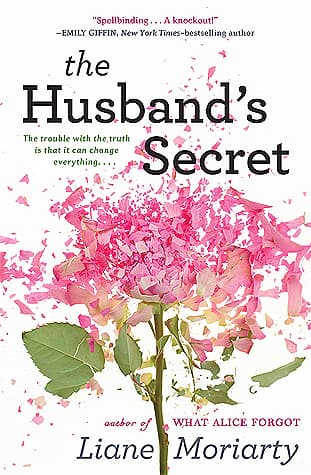
- The Husband's Secret
Liane Moriarty
3.9 (532k) average on GoodreadsThrillerExplores suburban secrets and the impact of a shocking revelation on multiple lives.
- Gone Girl
Gillian Flynn
4.1 (2.3M) average on GoodreadsThrillerFeatures complex, unreliable characters and a dark exploration of marriage and identity.
- The Girl on the Train
Paula Hawkins
3.9 (2.1M) average on GoodreadsThrillerA mystery with a focus on psychological suspense and the hidden lives of women.
- Angels & Demons
Dan Brown
3.9 (2.7M) average on GoodreadsThrillerA Harvard symbologist races through Rome's ancient sites, deciphering cryptic clues to unmask the Illuminati and stop a vengeful plot to destroy the Vatican with a stolen antimatter weapon.
- The Da Vinci Code
Dan Brown
3.9 (1.9M) average on GoodreadsThrillerA symbologist and a cryptologist race through European landmarks, deciphering ancient codes and uncovering a conspiracy that could rewrite the foundations of Christianity.
- The Guest List
Lucy Foley
3.8 (1.3M) average on GoodreadsThrillerOn a remote Irish island, a glamorous wedding descends into a deadly whodunnit when a guest is found murdered, trapping everyone with their secrets as a storm rages.





Enjoyed the summary?
A summary gives you the shape of the book. The book itself has the detail, the examples and the voice.
Find Big Little Lies on AmazonAs an Amazon Associate, BookBrief earns from qualifying purchases. How we're funded