

Synopsis
Covers the whole plot, including the ending.
- Difficulty
- Medium
- Pacing
- Moderate
- Mood
- Gritty, Suspenseful, Atmospheric, Melancholy
- Read it if
- You enjoy hardboiled detective stories with a strong sense of place, complex moral dilemmas, and a protagonist haunted by his past.
- Skip it if
- You prefer lighthearted mysteries or stories with clear-cut heroes and villains.
Black Cherry Blues Plot Summary
Covers the whole plot, including the ending.
A Ghost from the Past
Dave Robicheaux, a former New Orleans homicide detective, runs a fishing business in New Iberia, Louisiana. He tries to escape his past, including his wife Mae's murder. His peace ends when Dixie Lee Pugh, a charismatic but dangerous friend from Vietnam, arrives. Dixie, a former rodeo star and criminal, is on the run, claiming he is framed for the murder of a DEA agent named Bobby Earl and his girlfriend, Debbie, in Montana. He asks Dave for help, pulling Dave back into a violent world he tried to leave, all involving a valuable black cherry Gibson guitar.
The Montana Connection
Dave helps Dixie, driven by loyalty and a sense of responsibility. He travels to Montana, to Missoula and the Flathead Reservation, to investigate the murders and the mysterious guitar. There, Dave meets federal agents, local police, and people connected to local organized crime, all interested in the guitar. He starts to realize the guitar is not just an instrument but holds something far more valuable, likely laundered money or illegal documents, linking the murders to a larger criminal operation.
Encountering the Mafia
As Dave investigates the Montana murders, he sees he is up against more than local criminals. He meets Frank Giardano, a ruthless Mafia enforcer, and others tied to a powerful crime family. Giardano and his group are also looking for the black cherry guitar, suggesting a bigger stake in it than first thought. Dave faces threats and surveillance, understanding he is in grave danger. He also meets Dana Green, a mysterious woman with her own agenda and ties to the criminal underworld, which further complicates his investigation.
A Narrow Escape
Dave's search for the truth puts him in the Mafia's sights. He survives an assassination attempt. This makes it clear he is no longer just investigating a friend's innocence; he is a target. Accused of interfering with a federal investigation and possibly other crimes, Dave becomes a fugitive. He realizes the only way to clear his name and help Dixie is to uncover the full truth behind the black cherry guitar and the murders, even if it means risking everything.
The Return to Louisiana
With the danger in Montana, Dave returns to Louisiana, believing he can better plan and protect himself there. He knows the Mafia's reach goes beyond Montana and that he needs to find Dixie and the guitar before his enemies do. Back in New Iberia, Dave's life is complicated by federal agents who see him with suspicion, and local criminals wary of his return. He tries to connect with his daughter, Alafair, and former colleagues, but his fugitive status makes these interactions dangerous for everyone.
Unraveling the Conspiracy
Dave discovers the black cherry Gibson guitar contains a hidden microfiche detailing a large money-laundering operation involving high-ranking government officials and the Mafia. This raises the stakes, explaining why so many powerful people are willing to kill for it. He learns DEA agent Bobby Earl was close to exposing this, which led to his murder. Dave also realizes Dixie Lee Pugh, despite his criminal past, might be a pawn in a larger game, or knows more than he admits.
The Confrontation with Dixie
Dave finds Dixie Lee Pugh, who has been hiding in the Louisiana bayou. Their reunion is tense as Dave presses Dixie for the truth about the guitar and his role in the murders. Dixie, still evasive but increasingly desperate, reveals more about how he got the guitar and his limited understanding of its true meaning. He admits to being on the edge of criminal activity but maintains his innocence in the murders. Dave realizes that while Dixie is a survivor and a criminal, he might truly be caught in a trap set by more powerful forces.
The FBI's Involvement
As Dave nears the truth, the FBI, led by Agent Kroll, gets more involved. Kroll initially sees Dave as a suspect, but as the conspiracy becomes clearer, he starts to view Dave as a potential, though unconventional, asset. The FBI's involvement adds another layer of danger, as Dave must avoid both Mafia hitmen and federal arrest. He uses his knowledge of the Louisiana bayou and his contacts to stay ahead, all while trying to protect his loved ones.
The Final Showdown in the Bayou
The search for the black cherry guitar and the microfiche ends in a violent fight in the Louisiana bayou. Mafia enforcers, led by Giardano, close in on Dixie and Dave, while the FBI watches. The bayou's difficult landscape becomes the setting for a brutal confrontation with shootouts and chases. Dave, using his knowledge of the swamps and his combat skills from Vietnam, fights to protect Dixie and get the crucial evidence. The climax is chaotic and deadly, with many lives at risk and the truth about the conspiracy uncertain.
Justice and Aftermath
After the bayou confrontation, the microfiche is secured, exposing the money-laundering operation and implicating corrupt officials and Mafia figures. Giardano and his group are stopped or arrested. Dixie Lee Pugh's fate is unclear, fitting his elusive nature. Dave, having helped expose the conspiracy, faces the legal and personal results of his actions as a fugitive. While he may have brought some justice, the experience leaves him further scarred, showing that the darkness he tries to escape is always near, and the line between right and wrong is often blurred.
Principal Figures
Dave Robicheaux
Protagonist
A former New Orleans homicide detective haunted by his past.
Dave Robicheaux is a deeply conflicted and morally complex character. A recovering alcoholic and a Vietnam veteran, he carries immense emotional baggage, particularly the unsolved murder of his wife, Mae. He strives for a quiet life running a fishing business, but his inherent sense of justice and loyalty to old friends constantly pulls him back into the violent world he tries to escape. He is intelligent, tenacious, and possesses a strong moral compass, even when operating outside the law. His internal struggles with anger and the bottle are central to his character.
Relationships: Dixie Lee Pugh (Loyal but strained friendship from their Vietnam days.); Alafair Robicheaux (Loving father-daughter relationship.); Frank Giardano (Mortal enemies, representing opposing sides of justice and crime.); Dana Green (Complex, ambiguous romantic and professional entanglement.)
Dixie Lee Pugh
Supporting
Dave's charming but dangerous friend, a rodeo star turned small-time criminal.
Dixie Lee Pugh is a charismatic and enigmatic figure, a Vietnam War buddy of Dave's who is constantly on the run from the law. He's a survivor, quick-witted, and possesses a certain roguish charm, but also capable of great violence and deception. He initially appears as a victim framed for murder, but his true involvement in the larger conspiracy surrounding the black cherry guitar is gradually revealed to be more complex. He represents the kind of 'lost cause' that Dave, despite his better judgment, feels compelled to help.
Relationships: Dave Robicheaux (Deep, complicated friendship forged in war, now tested by crime and loyalty.)
Frank Giardano
Antagonist
A ruthless Mafia enforcer pursuing the black cherry guitar.
Frank Giardano is the primary physical antagonist, a cold, calculating, and utterly ruthless Mafia enforcer. He is a professional killer, driven by loyalty to his organization and the desire to retrieve the valuable contents of the black cherry guitar. Giardano embodies pure evil and represents the pervasive corruption and violence that Dave constantly battles. He is relentless in his pursuit, showing no mercy, and his presence ratchets up the tension and danger for Dave at every turn. He is a formidable and intelligent adversary, not just a brute.
Relationships: Dave Robicheaux (Sworn enemies, locked in a deadly cat-and-mouse game.)
Dana Green
Supporting
A mysterious and beautiful woman connected to the criminal underworld.
Dana Green is a captivating and ambiguous character who crosses paths with Dave in Montana. She is beautiful, intelligent, and possesses a mysterious allure, making it difficult for Dave to discern her true allegiances. She seems to be connected to the criminal elements involved in the conspiracy, possibly as a courier or an informant, but she also exhibits moments of vulnerability and hints at a desire for a different life. Her motives are often unclear, keeping both Dave and the reader guessing about her true role in the unfolding events.
Relationships: Dave Robicheaux (A complex, sexually charged, and distrustful alliance.)
Alafair Robicheaux
Supporting
Dave's young, insightful daughter.
Alafair is Dave's beloved daughter, a beacon of innocence and hope in his otherwise dark and violent life. Though young, she is perceptive and often senses the danger and turmoil surrounding her father. Her presence serves as a reminder of what Dave is fighting for and the quiet life he longs to protect. Her vulnerability motivates Dave, and his interactions with her reveal his softer, more protective side, contrasting with his tough exterior when dealing with criminals.
Relationships: Dave Robicheaux (Loving and protective father-daughter relationship.)
Agent Kroll
Supporting
A federal agent investigating the Montana murders.
Agent Kroll is an FBI agent who initially views Dave Robicheaux with suspicion, seeing him as an interfering ex-cop or even a suspect. He is by-the-book and focused on his investigation, but as the conspiracy unravels, he begins to grudgingly respect Dave's abilities and insights, even if he disapproves of his methods. Kroll represents the official side of law enforcement, contrasting with Dave's more maverick approach. He is a professional trying to do his job in a complex and dangerous situation.
Relationships: Dave Robicheaux (Initially adversarial, evolving into a cautious, professional alliance.)
Bobby Earl
Mentioned
The murdered DEA agent whose death sparks the investigation.
Bobby Earl is a DEA agent whose murder, along with his girlfriend Debbie, in Montana sets the entire plot in motion. Though only mentioned, his death is the catalyst for Dixie Lee Pugh's flight and Dave Robicheaux's subsequent investigation. He was seemingly close to uncovering the vast money-laundering conspiracy, making him a critical figure whose actions, even posthumously, drive the narrative. His death underscores the high stakes of the criminal enterprise.
Themes & Insights
The Weight of the Past and Redemption
Dave Robicheaux is always haunted by his past—his wife Mae's murder, his time in Vietnam, and his struggles with alcoholism. This theme shows how past traumas shape present actions and the constant fight for redemption. Dave helps Dixie, despite the danger, because he wants to make up for past failures and find justice. The black cherry guitar itself symbolizes hidden secrets and the past returning, forcing characters to face their history. His internal thoughts often reflect on how impossible it is to truly escape one's past.
“You can never really outrun the ghosts, can you? They just change their clothes and their addresses.”
Moral Ambiguity and Corrupt Justice
The novel explores the unclear lines between good and evil, and the widespread corruption in both the criminal underworld and, at times, official groups. Dave Robicheaux, a former cop, often acts outside the law, using violence and bending rules to get justice. The presence of crooked federal agents and powerful Mafia figures shows how hard it is to find true justice when the system itself is flawed. Characters like Dixie Lee Pugh and Dana Green embody this ambiguity, making choices that are not entirely good or evil, but driven by survival in a morally compromised world.
“Justice isn't always clean, Clete. Sometimes it's a dirty mop in a filthy bucket.”
Loyalty and Betrayal
Loyalty is a strong force in the novel, especially Dave's commitment to Dixie Lee Pugh, a friendship formed in war. This loyalty is tested by Dixie's evasiveness and the growing danger. The theme also looks at betrayal, both personal (Dixie's possible deceit) and systemic (corrupt officials betraying public trust). Dave's struggle is often about figuring out who to trust when everyone seems to have an agenda, and when loyalty can be both a strength and a weakness, leading him into dangerous situations.
“You stand by your friends, no matter what. That's what separates us from the animals.”
The Allure and Danger of the Underworld
The novel clearly shows the dark, appealing, and destructive nature of the criminal underworld. From New Orleans streets to isolated tribal lands in Montana, the story reveals a vast network of organized crime, money laundering, and violence. Characters like Frank Giardano show the brutal efficiency of this world, while figures like Dana Green are drawn to its power and wealth, even as they risk their lives. Dave's constant fight against these forces highlights the deep human cost of such illegal activities and how hard it is to escape their influence once involved.
“The devil always offers the sweetest fruit, until you bite into the worm.”
Plot Devices & Literary Techniques
The MacGuffin: The Black Cherry Gibson Guitar
A seemingly ordinary object that drives the entire plot.
The black cherry Gibson guitar serves as the central MacGuffin. Initially presented as just a guitar Dixie came across, its true significance gradually unfolds: it contains a hidden microfiche detailing a vast money-laundering operation. This device propels the narrative, motivating multiple factions—Dave, the Mafia, and federal agents—to pursue it relentlessly. Its changing perceived value and contents provide escalating stakes and allow for various reveals, keeping the plot moving and the mystery alive without necessarily being the central focus of the characters' emotional journeys.
The Unreliable Narrator (internal monologues)
Dave Robicheaux's internal struggles and subjective interpretations.
While Dave Robicheaux is the protagonist, his narration often includes extensive internal monologues that reveal his struggles with alcoholism, anger, and past traumas. These monologues sometimes present a subjective, emotionally charged view of events, making him an unreliable narrator in the sense that his perceptions are colored by his personal demons. This device deepens characterization, allowing the reader direct access to Dave's psychological landscape, but also creates a sense of tension as his judgment can be clouded, forcing the reader to question his interpretations of events and other characters' motives.
The Vietnam War Backstory
A shared past that binds characters and explains their skills.
The shared history of Dave Robicheaux and Dixie Lee Pugh as Vietnam War veterans is a crucial plot device. It establishes their deep, complex loyalty and provides a credible explanation for their combat skills, resilience, and their ability to navigate dangerous situations. This backstory also hints at the psychological scars they both carry, informing their present-day choices and their often-violent responses to conflict. It grounds their friendship in a profound, shared experience, making Dave's commitment to Dixie more understandable despite the risks involved.
The Southern Gothic Atmosphere
The use of the Louisiana bayou as a character in itself.
The Louisiana bayou and its surrounding environments are more than just a setting; they function as a plot device by shaping the narrative's atmosphere and influencing the characters' actions. The bayou's dense, treacherous landscape provides natural hiding places, complicates pursuits, and serves as a backdrop for violent confrontations. Its oppressive heat, unique flora and fauna, and sense of ancient mystery contribute to the novel's Southern Gothic tone, reflecting the moral decay and hidden dangers within the human characters. It's a place where secrets can be buried, and justice can be elusive.
Black Cherry Blues Quotes
“The wind was blowing hard out of the north, across the prairie and the salt flats, and the sky was a bruised plum color, full of thunderheads that looked like gigantic anvils.”
“Sometimes you choose the devil you know, sometimes the devil chooses you.”
“The past is never dead. It's not even past.”
“There's a fine line between being a good guy and being a fool.”
“Grief is like a river. It finds the lowest point and carves its own channel.”
“The truth is a hard thing, and sometimes it's better left buried.”
“He had eyes like a snake that had just swallowed a rat.”
“Money talks, but sometimes it just whispers sweet nothings in your ear while it picks your pocket.”
“Some men are born to trouble, and some men go looking for it.”
“The smell of cheap perfume and stale beer is the official scent of regret.”
“There's a difference between justice and revenge, and most people can't tell it apart.”
“The world is full of broken things, and sometimes the best you can do is try to put a few of them back together.”
“Even the devil was an angel once.”
“The silence in the desert at night is a sound all its own, full of the echoes of things that never happened.”
Quiz
10 questions on the plot and the characters. Each answer comes with a short explanation.
Question 1
What business does Dave Robicheaux own and operate at the beginning of 'Black Cherry Blues'?
- A private investigation firm
- A fishing and tackle shop
- A bar and restaurant
- A boat repair service
Show answer
B. A fishing and tackle shop At the start of the novel, Dave Robicheaux is trying to live a quiet life running a fish-and-tackle business.
Question 2
Who is the 'old friend' whose surprise appearance thrusts Robicheaux back into a violent world?
- Clete Purcel
- Batist
- Bubba Rocque
- Dixie Lee Dudman
Show answer
A. Clete Purcel Clete Purcel, Robicheaux's former partner and a controversial figure, reappears and embroils Dave in new trouble.
Question 3
What significant personal tragedy haunts Dave Robicheaux from his past?
- His daughter's disappearance
- His brother's betrayal
- His wife's murder
- Losing his police badge
Show answer
C. His wife's murder The memory of his wife's murder is a recurring source of pain and motivation for Robicheaux.
Question 4
Which two geographical regions are central to the plot's movement in 'Black Cherry Blues'?
- Florida Everglades and New York City
- Louisiana bayou and Montana's tribal lands
- Texas border and California desert
- Mississippi Delta and Chicago
Show answer
B. Louisiana bayou and Montana's tribal lands The story takes Robicheaux from his familiar Louisiana setting to the stark landscapes of Montana.
Question 5
What personal struggle does Robicheaux continually battle throughout the novel, alongside external threats?
- A gambling addiction
- A struggle with alcoholism
- A dependency on painkillers
- A fear of commitment
Show answer
B. A struggle with alcoholism Robicheaux is 'running from the bottle,' indicating his ongoing fight against alcohol addiction.
Question 6
Who is Dixie Lee Dudman in relation to the initial murder Robicheaux investigates?
- The victim's estranged wife
- A key witness who disappears
- The exotic dancer Robicheaux is accused of murdering
- A federal agent assigned to the case
Show answer
C. The exotic dancer Robicheaux is accused of murdering Dave Robicheaux finds himself implicated in Dixie Lee Dudman's murder, which drives much of the initial plot.
Question 7
What criminal organization is Dave Robicheaux forced to confront again due to his friend's reappearance?
- A drug cartel
- A biker gang
- The Mafia
- A white supremacist group
Show answer
C. The Mafia The summary explicitly mentions Robicheaux being 'thrust back into the violent world of Mafia goons.'
Question 8
What is the primary reason Robicheaux travels to Montana?
- To visit a long-lost relative
- To escape a homicide rap and pursue a lead
- To start a new life and leave his past behind entirely
- To attend a fishing competition
Show answer
B. To escape a homicide rap and pursue a lead Robicheaux flees Louisiana to avoid being arrested for murder and follows the trail of his troubles to Montana.
Question 9
Which of the following best describes the character of Clete Purcel in 'Black Cherry Blues'?
- A reliable and law-abiding friend who helps Robicheaux clear his name.
- A dangerous, unpredictable, and morally ambiguous figure who often complicates Robicheaux's life.
- A federal agent assigned to protect Robicheaux from the Mafia.
- An innocent bystander caught up in the criminal underworld.
Show answer
B. A dangerous, unpredictable, and morally ambiguous figure who often complicates Robicheaux's life. Clete is known for his volatile nature and often brings trouble, despite his loyalty to Robicheaux.
Question 10
What recurring theme, characteristic of James Lee Burke's work, is prominent in 'Black Cherry Blues'?
- The triumph of justice through conventional legal means.
- The clear distinction between good and evil.
- The struggle for redemption amidst violence, corruption, and personal demons.
- The romanticization of the criminal lifestyle.
Show answer
C. The struggle for redemption amidst violence, corruption, and personal demons. Robicheaux is constantly battling his own past, his addictions, and the pervasive corruption around him, seeking some form of moral clarity or redemption.
Black Cherry Blues FAQ
What is the central conflict that draws Dave Robicheaux back into a world of violence?
Dave Robicheaux is drawn back into a violent world when his old friend, Dixie Lee Pugh, reappears in Louisiana. Dixie is involved in a high-stakes scheme involving stolen money and a possible connection to the Mafia, and his presence quickly implicates Robicheaux in a murder he didn't commit, forcing him to go on the run.
Who is Dixie Lee Pugh and what is his significance to Robicheaux's past?
Dixie Lee Pugh is an old friend from Dave Robicheaux's military past, specifically from their time together in Vietnam. Their shared experiences in the war created a bond, but Dixie's life has taken a much darker path, pulling Robicheaux into a criminal underworld he had tried to escape.
What is the primary crime Robicheaux is accused of, and why does he flee rather than clear his name through official channels?
Robicheaux is accused of the murder of a federal agent, whose body is found after a confrontation involving Dixie Lee Pugh. He flees because the circumstances, including his past history with the law and Dixie's involvement, make it difficult for him to trust the system to believe his innocence, especially with powerful figures seemingly working against him.
How does Montana become a crucial setting in Robicheaux's journey?
Montana becomes a crucial setting because Dixie Lee Pugh has ties there, specifically to a Native American tribal community where he believes he can find refuge and possibly retrieve stolen money. Robicheaux follows him there, leading to confrontations with both federal agents and the Mafia on tribal lands.
Who is Clete Purcel and what role does he play in Robicheaux's life and the plot?
Clete Purcel is Robicheaux's former partner from the New Orleans police force and a deeply troubled, violent man with his own criminal connections. Despite his flaws, Clete remains fiercely loyal to Robicheaux, acting as an unpredictable ally who often complicates situations while also providing crucial, if morally ambiguous, assistance.
What is the significance of the 'black cherry blues' title?
The title 'Black Cherry Blues' evokes a sense of melancholy, darkness, and the lingering scars of the past that define Robicheaux's world. 'Black cherry' suggests a deep, intense color, hinting at the profound sorrow and moral ambiguity he navigates, while 'blues' directly points to his perpetual state of haunted reflection and struggle.
How does the murder of Robicheaux's first wife, Mae, continue to influence his actions and decisions?
The unsolved murder of Mae continues to haunt Robicheaux, fueling his deep-seated grief and a pervasive sense of injustice. This past trauma makes him wary of the legal system and often drives him to seek his own brand of justice, sometimes pushing him to reckless extremes in pursuit of truth and retribution.
What subtle clues hint at the true nature of the federal agents' involvement beyond simply apprehending Robicheaux?
Subtle clues, such as the agents' unusual aggression, their seemingly deliberate efforts to frame Robicheaux, and their apparent protection of certain criminal elements, suggest a deeper corruption. Their actions imply they are not merely enforcing the law but are embroiled in the very criminal enterprise they are supposed to be investigating.
How does the theme of redemption manifest in Robicheaux's character arc, despite his violent actions?
Redemption for Robicheaux is not about escaping violence, but about finding a moral compass within it. He seeks to protect the innocent, avenge the wronged, and confront his own demons, often through violent means, believing that his actions, however brutal, serve a higher, personal sense of justice, even if it brings him no peace.
Discuss Robicheaux's internal struggle with alcoholism and how it impacts his judgment and reliability.
Robicheaux constantly battles his addiction to alcohol, a struggle that serves as both an escape and a constant reminder of his past failures. While he often manages to stay sober, moments of extreme stress or despair can push him towards the bottle, clouding his judgment and making him question his own perceptions and decisions.
How does the novel explore the concept of inherited trauma, particularly through Robicheaux's relationship with his deceased father?
The novel explores inherited trauma through Robicheaux's memories of his father, a man who also struggled with violence and moral ambiguity. Robicheaux sees echoes of his father's struggles in himself, particularly his capacity for violence and his difficulty finding peace, suggesting that trauma and certain character traits can be passed down through generations.
Analyze the complex relationship between Robicheaux and Dixie Lee Pugh, examining the blend of loyalty, betrayal, and shared history.
Their relationship is a volatile mix of deep loyalty forged in Vietnam and profound betrayal. Robicheaux feels a lingering sense of responsibility for Dixie, yet Dixie's actions repeatedly put Robicheaux in mortal danger. This dynamic highlights Robicheaux's struggle to reconcile his past bonds with the grim realities of Dixie's criminal present.
To what extent is Robicheaux a product of his environment (Louisiana bayou, Vietnam War) versus an individual making conscious moral choices?
Robicheaux is undeniably shaped by his environment—the gritty bayou culture and the brutal realities of Vietnam instilled in him a certain toughness and a pragmatic view of justice. However, he consistently makes conscious moral choices to protect the innocent and pursue what he believes is right, often at great personal cost, demonstrating his individual agency despite his formative experiences.
Is Robicheaux a traditional hero, an anti-hero, or something else entirely? Justify your answer.
Robicheaux is best described as a complex anti-hero. While he fights for justice and protects the vulnerable, he frequently operates outside the law, employs brutal violence, and grapples with deep personal demons like alcoholism and anger. His methods are often morally ambiguous, making him a flawed but ultimately compelling figure.
How does the novel critique or uphold the concept of justice in America, particularly concerning marginalized communities?
The novel critiques the American justice system by showing its corruption, its susceptibility to manipulation by powerful figures, and its frequent failure to protect marginalized communities, such as the Native American tribal lands in Montana. Robicheaux often finds himself acting as a rogue agent of justice, highlighting the system's inadequacies.
What is the novel's stance on the lasting impact of war on individuals, as exemplified by Robicheaux and Dixie Lee Pugh?
The novel strongly emphasizes the devastating and lasting impact of war. Both Robicheaux and Dixie Lee Pugh are deeply scarred by their experiences in Vietnam, manifesting in Robicheaux's PTSD, alcoholism, and violent tendencies, and in Dixie's complete descent into a life of crime and emotional instability. War is depicted as a trauma that irrevocably alters individuals.
Does the ending offer a sense of resolution for Robicheaux, or does it reinforce the cyclical nature of his struggles?
The ending offers a temporary reprieve but largely reinforces the cyclical nature of Robicheaux's struggles. While he may achieve a measure of justice in the immediate conflict, the deeper demons of his past, his propensity for violence, and his ongoing battle with alcoholism remain, suggesting that true, lasting peace is an elusive concept for him.
How does the landscape of Louisiana and Montana contribute to the novel's atmosphere and themes?
The landscapes are integral to the atmosphere and themes. The humid, murky Louisiana bayou mirrors Robicheaux's conflicted psyche and the moral ambiguity of his world. The vast, rugged, and sometimes unforgiving Montana landscape, particularly the tribal lands, emphasizes themes of isolation, survival, and the clash between different cultures and legal systems.
Similar books
- The Big Sleep
Raymond Chandler
4.0 (126k) average on GoodreadsThrillerFeatures a tough, morally complex detective navigating a corrupt world with stylish prose.
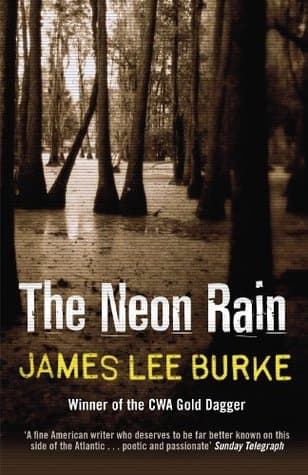
- The Neon Rain
James Lee Burke
3.9 (21k) average on GoodreadsThrillerThe first book in the Dave Robicheaux series, establishing the character and setting.
- Angels & Demons
Dan Brown
3.9 (2.7M) average on GoodreadsThrillerA Harvard symbologist races through Rome's ancient sites, deciphering cryptic clues to unmask the Illuminati and stop a vengeful plot to destroy the Vatican with a stolen antimatter weapon.
- Gone Girl
Gillian Flynn
4.1 (2.3M) average on GoodreadsThrillerA wife's sudden disappearance on her fifth anniversary reveals a web of lies and psychological warfare, exposing the secrets within a seemingly perfect marriage.
- The Girl on the Train
Paula Hawkins
3.9 (2.1M) average on GoodreadsThrillerA woman’s fascination with a seemingly perfect couple she watches from her daily train commute leads her into a dark investigation when she witnesses something that shatters their idyllic image.
- The Da Vinci Code
Dan Brown
3.9 (1.9M) average on GoodreadsThrillerA symbologist and a cryptologist race through European landmarks, deciphering ancient codes and uncovering a conspiracy that could rewrite the foundations of Christianity.





Enjoyed the summary?
A summary gives you the shape of the book. The book itself has the detail, the examples and the voice.
Find Black Cherry Blues on AmazonAs an Amazon Associate, BookBrief earns from qualifying purchases. How we're funded