
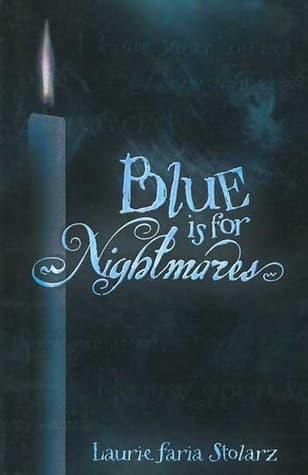
Synopsis
Covers the whole plot, including the ending.
- Difficulty
- Easy
- Pacing
- Moderate
- Mood
- Suspenseful, Mysterious, Romantic, Eerie
- Read it if
- You enjoy supernatural mysteries with a touch of romance, set in a boarding school, and featuring a protagonist with a unique, dark gift.
- Skip it if
- You prefer realistic thrillers without supernatural elements or are looking for a story with minimal romance.
Blue is for Nightmares Plot Summary
Covers the whole plot, including the ending.
The Return of Nightmares and a Troubling Warning
Stacey Brown starts her junior year at Northgate Academy, a boarding school, feeling the familiar dread of her recurring prophetic nightmares. Three years prior, she had dreams about a little girl named Abby dying, which she ignored, leading to Abby's tragic death. Now, the nightmares are back, centering on her best friend, Drea Smith. The dreams are vivid, featuring white lilies, a symbol of death, and a sense of coming danger for Drea. Stacey is deeply troubled, especially as Drea begins receiving anonymous, disturbing emails and phone calls, escalating from playful pranks to clear threats. Stacey tells her other close friend, Amber, and her boyfriend, Jacob, about her concerns, but they, along with Drea, mostly dismiss the threats as a harmless prank by a jealous student or a former admirer.
Escalating Threats and a Secret Crush
The mysterious stalker's activities grow more serious. Drea finds white lilies, identical to those in Stacey's nightmares, left on her bed and in her locker. The emails become more personal and threatening, showing the stalker knows private details about Drea's life. Stacey's anxiety grows, as the events look more like her dreams. Amidst this rising tension, Stacey also struggles with a secret crush on Jacob, Drea's boyfriend and her own best friend. She feels immense guilt and conflict over these feelings, especially given Drea's current distress. She tries to hide her emotions, but Jacob's kindness and shared history with Stacey make it difficult to ignore her growing attraction to him, adding more stress to her already difficult life.
The First Victim and Mounting Suspicion
Stacey's worst fears come true when another student, Molly, is found murdered in the woods near the school. Molly was not directly connected to Drea, but her death causes panic through Northgate Academy, confirming that a dangerous person is loose. The police begin an investigation, interviewing students and staff, but no clear suspects emerge, and everyone seems to have an alibi. The incident proves Stacey's prophetic abilities to Amber and Jacob, who now take her nightmares more seriously. The school community is scared and paranoid, with students suspecting each other. Stacey feels pressure to understand her dreams and find the killer before Drea becomes the next victim, or before another innocent person is harmed.
Turning to Folk Magic for Answers
Wanting to protect Drea and solve the mystery, Stacey turns to the folk magic taught to her by her deceased grandmother, a skill she had mostly hidden since Abby's death. She begins performing various spells and rituals, using herbs, candles, and other items, hoping to get clarity on her dreams or find the killer. One of her first attempts is a dream interpretation spell, which brings more disturbing images of Drea in danger. She also tries a protection spell for Drea. Stacey keeps her magic secret from most, fearing judgment, but tells Amber some of what she is doing. Her journey into magic is a mix of hope and fear, as she deals with the power and responsibility of her abilities.
A Developing Relationship and a New Suspect
As the investigation continues and the threats against Drea persist, Stacey and Jacob spend more time together, trying to find clues and comfort Drea. Their shared concern for Drea, along with the stress, causes their emotional bond to grow, making Stacey's secret crush on Jacob even harder to manage. Meanwhile, suspicion starts to fall on Piper, a new, quiet, and somewhat troubled student who has recently transferred to Northgate. Piper acts strangely, including an unusual interest in Drea and a history of being excluded at her previous school. Stacey's dreams also start to include glimpses of Piper, though the connection is not immediately clear, leading Stacey to wonder if Piper is involved in the escalating terror.
Confrontation and Misdirection
Stacey's nightmares continue to point towards Piper, showing her in unsettling ways connected to Drea. Driven by her prophetic visions and the growing danger, Stacey decides to confront Piper. She approaches Piper, trying to subtly ask her about her past and her relationship with Drea. Piper's answers are unclear and defensive, further increasing Stacey's suspicions. However, the confrontation does not produce any solid evidence, and Piper denies any involvement in the threats or Molly's murder. Stacey is frustrated, unsure if her dreams are accurately identifying the culprit or if Piper is just a distraction. The killer's true identity remains hidden, and the pressure on Stacey to interpret her dreams correctly grows.
The Halloween Dance and a Close Call
Northgate Academy hosts its annual Halloween dance, an anticipated event that becomes a backdrop for more terror. Despite the ongoing investigation and the lingering fear, students try to enjoy themselves. Stacey, Drea, Jacob, and Amber attend, trying to act normal. However, Stacey's nightmares have warned her of danger at the dance. During the party, a near-fatal incident occurs, targeting Drea. The killer tries to harm Drea amidst the crowded dance floor, but Drea narrowly escapes because of Stacey's quick thinking and premonition. The attempt is chaotic, leaving many witnesses, but the killer manages to slip away unnoticed in the confusion, increasing the fear and confirming that Drea is the primary target.
A Shocking Revelation and Betrayal
Stacey's dreams become more focused and urgent. Through her prophetic visions and careful observation, she finally puts together the clues, leading to a shocking and painful realization: the killer is not Piper, but Amber, her other best friend. The revelation is devastating, as Stacey struggles to see the sweet, loyal friend she knows as the disturbed person responsible for Molly's murder and the threats against Drea. Amber's reason is revealed to be a deep jealousy and obsession with Drea, wanting to remove her perceived rival for attention and affection, particularly Jacob's. The discovery leaves Stacey feeling betrayed and heartbroken, knowing she must confront Amber to save Drea.
The Climax: A Desperate Fight for Survival
The final confrontation takes place in a secluded area of the school grounds, where Amber lures Drea under false pretenses. Stacey, with her knowledge and magical abilities, arrives just in time to intervene. A tense and dangerous struggle happens, with Amber showing the full extent of her rage and her careful planning. Stacey, using the folk magic her grandmother taught her, uses various spells and defensive measures to protect Drea and herself from Amber's attack. The fight is desperate, with Amber determined to finish Drea. Stacey must use all her courage and magical skill to subdue her former friend and prevent another tragedy, facing the ultimate test of her abilities and her resolve.
Aftermath and Lingering Scars
Amber is eventually caught by the authorities, her terror brought to an end. Drea is safe, though deeply traumatized by the ordeal and the betrayal of her friend. The school community is reeling from the shocking events, struggling to understand Amber's actions. Stacey, while relieved that Drea is safe, is left with deep emotional scars. The betrayal by Amber, the weight of her prophetic abilities, and the lingering guilt from Abby's death continue to affect her. She and Drea must now navigate the difficult path of healing and rebuilding their friendship, forever changed by the nightmare that became their reality. The experience makes Stacey accept her unique abilities, but also the heavy burden they carry.
Principal Figures
Stacey Brown
Protagonist
A boarding school student burdened with prophetic nightmares and a secret magical heritage.
Stacey is the central protagonist, a junior at Northgate Academy who possesses the ability to foresee future events through vivid, often terrifying, nightmares. She struggles with the guilt of ignoring a past premonition that led to a child's death, making her determined to act on her current dreams. She is intelligent, observant, and deeply loyal to her friends, Drea and Amber. Stacey is also secretly in love with Drea's boyfriend, Jacob, adding to her internal conflict. Her grandmother taught her folk magic, which she initially suppresses but later embraces to protect her friends.
Relationships: Drea Smith (Best friend, target of the stalker); Amber (Best friend, eventually revealed as the antagonist); Jacob (Drea's boyfriend, Stacey's crush and close friend); Grandmother (Deceased, taught Stacey folk magic)
Drea Smith
Supporting
Stacey's popular best friend and the primary target of the mysterious stalker.
Drea is Stacey's vivacious and popular best friend, who initially dismisses the anonymous threats as pranks. She is initially oblivious to the serious danger she is in, and to the true nature of her friends' feelings. Drea is kind-hearted but can be a bit naive, often relying on Stacey and Amber for emotional support. Her vulnerability makes her an ideal target for the antagonist's twisted game. She is dating Jacob, unaware of Stacey's secret feelings for him.
Relationships: Stacey Brown (Best friend); Amber (Best friend, the killer); Jacob (Boyfriend)
Amber
Antagonist
Stacey's seemingly loyal best friend, secretly obsessed with Drea and the true killer.
Amber is initially presented as Stacey's other best friend, seemingly supportive and concerned about Drea's safety. However, she is secretly the manipulative and jealous antagonist, driven by a deep-seated obsession with Drea and a desire to eliminate anyone she perceives as a rival, including Molly and eventually Drea herself. Her friendly facade hides a disturbed and dangerous mind. She meticulously plans the attacks and murders, attempting to frame others and deflect suspicion, showcasing her cunning and psychological instability.
Relationships: Stacey Brown (Best friend, eventually her adversary); Drea Smith (Object of obsession and target)
Jacob
Supporting
Drea's boyfriend and Stacey's close friend, caught in a complicated web of relationships.
Jacob is Drea's boyfriend and a good friend to Stacey. He is kind, protective, and initially tries to reassure Drea that the threats are harmless. As the situation escalates, he becomes more concerned and supportive, often spending time with Stacey trying to understand what's happening. He is oblivious to Stacey's romantic feelings for him. His presence creates a romantic tension for Stacey, adding another layer of complexity to her life amidst the unfolding horror.
Relationships: Drea Smith (Girlfriend); Stacey Brown (Close friend, object of her crush)
Molly
Mentioned
A fellow Northgate Academy student, the first victim of the killer.
Molly is a student at Northgate Academy who becomes the first murder victim. While not directly connected to Drea or the core group of friends, her death signifies the serious escalation of the threats and confirms Stacey's nightmares are indeed prophetic and dangerous. Her murder creates widespread fear and paranoia within the school, pushing the police investigation into high gear and forcing everyone to acknowledge the presence of a killer.
Piper
Supporting
A new, quiet student who becomes a red herring in the murder investigation.
Piper is a new transfer student at Northgate Academy, portrayed as quiet, somewhat socially awkward, and with a troubled past. Her mysterious demeanor and unusual interest in Drea lead Stacey and others to initially suspect her involvement in the threats and murder. She serves as a red herring, diverting attention from the true killer. Her character highlights the dangers of jumping to conclusions based on appearances and rumors.
Abby
Mentioned
A young girl whose death in the past fuels Stacey's guilt and fear of her powers.
Abby is a little girl from Stacey's past whose tragic death three years prior deeply traumatized Stacey. Stacey had prophetic nightmares about Abby's death but chose to ignore them, leading to immense guilt. Abby's story is crucial to understanding Stacey's reluctance to embrace her abilities and her intense fear of failing to prevent another tragedy. Her memory serves as a constant reminder of the stakes involved in Stacey's prophetic visions.
Relationships: Stacey Brown (Stacey's past acquaintance/friend, her death caused Stacey guilt)
Grandmother
Mentioned
Stacey's deceased grandmother, who taught her the ways of folk magic.
Stacey's grandmother is a significant off-screen character. She was the family member who understood and nurtured Stacey's psychic abilities, teaching her about folk magic, herbs, and spells. Though deceased, her teachings provide Stacey with the tools and confidence to confront the killer. Her legacy empowers Stacey to embrace her unique gifts and use them for good, ultimately saving Drea's life.
Relationships: Stacey Brown (Grandmother and mentor)
Themes & Insights
Identity and Self-Acceptance
Stacey's story is deeply rooted in her struggle to accept her identity as someone with prophetic abilities. Initially, she tries to suppress her nightmares and magic because of the guilt over Abby's death. The growing threats force her to confront and ultimately embrace her powers, using them to protect her friends. This theme is clear as she moves from hiding her 'secret weapon' to relying on her grandmother's teachings and her own intuition to solve the mystery and save Drea.
“I knew, deep down, that the dreams were real. And I also knew that this time, I couldn't ignore them.”
Friendship and Betrayal
The novel explores the complexities of friendship, especially through the close bonds between Stacey, Drea, and Amber. It shows the loyalty and support among them, but eventually looks at the devastating impact of betrayal when one of the closest friends is the villain. Amber's actions destroy the trust and innocence within the group, forcing Stacey and Drea to deal with the shocking reality that evil can hide in unexpected places, even within their most valued relationships.
“How could someone I loved so much, someone I trusted with everything, turn out to be so utterly, completely wrong?”
The Burden of Knowledge
Stacey's prophetic nightmares place a heavy burden on her. She knows about future tragedies but struggles to interpret and act on this knowledge well. The guilt from Abby's death weighs heavily, making her fear what her visions mean. This theme explores the moral and psychological weight of knowing the future, and the isolation Stacey feels carrying this secret, showing how hard it is to convince others of unseen dangers until it is too late.
“Knowing was one thing. Proving it, stopping it, was another entirely.”
Obsession and Jealousy
A central theme is the destructive power of obsession and jealousy, mainly shown by Amber. Her actions are fueled by a distorted desire for Drea's attention and affection, leading her to eliminate perceived rivals. This theme shows how extreme emotional states can warp perceptions, leading to irrational and violent behavior. It also explores the subtle ways jealousy can grow under a normal appearance until it erupts into deadly consequences.
“It wasn't about hate, not really. It was about wanting so much, wanting to be her, to have her life, that it just… broke.”
The Supernatural vs. Reality
The novel mixes the supernatural elements of Stacey's prophetic dreams and folk magic with the reality of a boarding school murder mystery. It explores the tension between rational explanations and mystical interventions. Initially, characters dismiss Stacey's warnings, but as events escalate, the supernatural becomes undeniable, forcing a re-evaluation of what is possible. This theme shows how the characters, especially Stacey, live in a world where both everyday and magical forces are at play.
“Some things, like my dreams, just couldn't be explained away with logic.”
Plot Devices & Literary Techniques
Prophetic Nightmares
Stacey's recurring dreams that foreshadow future events, particularly danger.
The prophetic nightmares are the central plot device, driving the entire narrative. They provide Stacey with crucial, albeit often cryptic, clues about the impending danger to Drea and the identity of the killer. The dreams create suspense and urgency, compelling Stacey to act. They also serve as a source of internal conflict for Stacey, as she grapples with the responsibility and guilt associated with her ability, especially after a past failure to prevent Abby's death. Their evolving clarity guides Stacey's investigation.
Folk Magic/Witchcraft
Stacey's use of her grandmother's spells and rituals to gain insight and protection.
Stacey's folk magic, inherited from her grandmother, acts as both a character trait and a crucial plot device. It provides her with practical tools (e.g., dream interpretation spells, protection charms) to confront the supernatural elements of her visions and the very real threat of the killer. The magic also represents Stacey's acceptance of her unique identity and heritage, contrasting with the rational world of the boarding school and police investigation. It's her 'secret weapon' in a situation where conventional methods fail.
Red Herring (Piper)
A character introduced to mislead the reader and characters about the killer's identity.
Piper, the new, quiet, and somewhat troubled transfer student, functions as a prominent red herring. Her suspicious behavior, unusual interest in Drea, and Stacey's initial dream interpretations lead both Stacey and the reader to believe she might be the killer. This device effectively builds suspense and misdirection, allowing the true antagonist, Amber, to remain hidden in plain sight, making the eventual reveal of Amber's guilt much more shocking and impactful.
First-Person Narration
The story is told exclusively from Stacey's perspective, limiting information and building suspense.
The use of first-person narration through Stacey's eyes immerses the reader directly into her experiences, fears, and internal conflicts. It allows the reader to share Stacey's limited knowledge, making the discovery of clues, the interpretation of dreams, and the eventual reveal of the killer equally surprising and impactful for both character and audience. This perspective heightens suspense and empathy, as readers only know what Stacey knows, and feel her frustration and terror alongside her.
Symbolism of White Lilies
A recurring visual motif representing death and impending doom.
White lilies appear repeatedly in Stacey's nightmares and are physically left for Drea by the stalker. They serve as a powerful symbol of death, purity, and mourning, foreshadowing the escalating danger and ultimately Molly's murder. The consistent appearance of the lilies connects Stacey's psychic visions directly to the real-world threats, making the dreams tangible and undeniable. Their presence reinforces the ominous atmosphere and the gravity of the situation.
Blue is for Nightmares Quotes
“Blue is for nightmares, red is for love, green is for jealousy, and black is for death.”
“Sometimes the things we fear the most are the things we need to face.”
“Love isn't always about butterflies and rainbows. Sometimes it's about trust and sacrifice.”
“The past has a way of haunting us, but it's up to us to decide if it controls our future.”
“Magic isn't about waving a wand; it's about believing in yourself.”
“Friendship is the strongest spell you can cast.”
“Fear can be a prison, but courage is the key.”
“Every dream tells a story, if you're willing to listen.”
“The truth isn't always pretty, but it's always necessary.”
“In the darkest moments, light comes from within.”
“Love doesn't erase fear, but it gives you a reason to fight it.”
“Sometimes the answers are hidden in plain sight, in the colors of our dreams.”
“Being different isn't a curse; it's a gift that lets you see what others can't.”
“The heart knows things the mind can't explain.”
Quiz
10 questions on the plot and the characters. Each answer comes with a short explanation.
Question 1
What recurring element in Stacey's dreams serves as a key clue connecting them to the real-world threats against Drea?
- Red roses
- Black cats
- White lilies
- Broken mirrors
Show answer
C. White lilies In the book, white lilies appear in Stacey's nightmares and are also left for Drea by the stalker, symbolizing death and directly linking Stacey's dreams to the real danger.
Question 2
What is the dark secret that Stacey fears will ruin her friendships?
- She cheated on a test
- She has a crush on her best friend's boyfriend
- She stole money from a friend
- She started the stalker rumors
Show answer
B. She has a crush on her best friend's boyfriend Stacey's secret crush on Drea's boyfriend adds tension to her relationships and complicates her efforts to protect Drea from the stalker.
Question 3
What happened three years ago when Stacey ignored her nightmares?
- She failed a class
- Her grandmother died
- A little girl died
- She lost her magic abilities
Show answer
C. A little girl died This past event motivates Stacey to take her current nightmares seriously, as she feels guilty for not acting on her premonitions earlier.
Question 4
What method does Stacey primarily use to try to uncover the stalker/killer?
- Conventional detective work with the police
- Folk magic taught by her grandmother
- Hypnosis sessions
- Social media investigation
Show answer
B. Folk magic taught by her grandmother Stacey turns to her grandmother's folk magic as her secret weapon, using spells and rituals to gain insights and protect those around her.
Question 5
Why does the murder of another girl at school escalate the situation?
- It proves the stalker is harmless
- It gives everyone a clear alibi
- No one has a perfect alibi, making everyone a suspect
- It stops the stalker's threats
Show answer
C. No one has a perfect alibi, making everyone a suspect The murder turns the stalker situation deadly, and with no witnesses and imperfect alibis, suspicion falls on multiple characters, increasing the mystery's tension.
Question 6
What is a key theme explored through Stacey's use of magic in the story?
- The superiority of technology over tradition
- The conflict between intuition and logic
- The importance of academic success
- The benefits of ignoring one's fears
Show answer
B. The conflict between intuition and logic Stacey's folk magic represents intuition and ancestral knowledge, contrasting with the logical, skeptical world around her, highlighting themes of trust in one's inner voice.
Question 7
How do the stalker's initial actions against Drea manifest?
- Through public confrontations
- Via weird emails and freaky phone calls
- By stealing her belongings
- Through anonymous letters to the school
Show answer
B. Via weird emails and freaky phone calls The stalking begins subtly with electronic harassment, which escalates to physical threats like the white lilies, mirroring the progression in Stacey's dreams.
Question 8
What makes Stacey's nightmares particularly urgent in this story compared to typical dreams?
- They are in color
- They predict future events accurately
- They only occur during full moons
- They are shared by multiple characters
Show answer
B. They predict future events accurately Stacey's nightmares are prophetic, as shown by the white lilies and the past death, making them a crucial plot device that drives her to act.
Question 9
In what way does the Deluxe Spellbook Edition enhance the reader's experience of the book?
- By adding a sequel story
- Through spells, poems, and an author interview contributed by fans
- By changing the ending
- By removing the romance subplot
Show answer
B. Through spells, poems, and an author interview contributed by fans This edition includes fan-contributed spells and meditations, plus an author interview, enriching the magical and communal aspects of the story.
Question 10
What internal conflict does Stacey face that complicates her investigation?
- Her desire to be popular versus helping Drea
- Her guilt over the past and fear of her nightmares' power
- Her need to excel academically versus her magical studies
- Her rivalry with another student over magical abilities
Show answer
B. Her guilt over the past and fear of her nightmares' power Stacey struggles with guilt from ignoring past nightmares and fear that her magic might not be strong enough, adding depth to her character and the suspense.
Blue is for Nightmares FAQ
What is 'Blue is for Nightmares' about?
The book follows Stacey, a junior at a boarding school, who uses folk magic inherited from her grandmother to solve a mystery. When her best friend Drea becomes the target of a stalker leaving white lilies—mirroring Stacey's prophetic nightmares—and another girl is murdered, Stacey must harness her abilities to uncover the killer before more tragedies occur.
Why should I read 'Blue is for Nightmares'?
It blends supernatural elements with a gripping mystery, exploring themes of friendship, guilt, and self-acceptance. The unique incorporation of folk magic and spells adds depth to the YA genre, while the suspenseful plot keeps readers engaged as Stacey races against time to prevent her nightmares from becoming reality.
What is the background/setting of 'Blue is for Nightmares'?
The story is set at a boarding school during Stacey's junior year, creating an isolated atmosphere where secrets and tensions among students intensify. This confined environment heightens the suspense as the stalker's threats and the murder investigation unfold within the school community.
What are the most memorable quotes?
Key quotes include Stacey's reflections on her magic, such as 'I know your secret...' which hints at the book's central mystery, and lines about the white lilies symbolizing death. These often tie into themes of fear and the burden of her prophetic dreams.
What writing style does the author use?
Laurie Faria Stolarz employs a first-person narrative from Stacey's perspective, blending descriptive prose with tense, fast-paced scenes. The style immerses readers in Stacey's emotional turmoil and the supernatural elements, while the Deluxe Spellbook Edition includes interactive spells and fan contributions for added engagement.
What minor details add significant meaning?
The white lilies left for Drea are a crucial detail, as they directly connect to Stacey's nightmares and symbolize impending death. Small acts of folk magic, like the spells Stacey performs, subtly foreshadow key plot twists and highlight her internal struggle with her abilities.
What are some subtle foreshadowing moments?
Stacey's nightmares about Drea receiving lilies foreshadow the stalker's actions and the murder. Her guilt over ignoring past dreams, which led to a girl's death three years earlier, hints at her determination to intervene this time, setting up the climax where she uses magic to confront the killer.
What unexpected character connections exist?
Stacey's crush on her best friend's boyfriend adds a layer of tension, complicating her relationships. The killer's identity is revealed to be someone within the school community, showing how trust is betrayed and highlighting the theme of hidden secrets among peers.
What are unspoken character motivations?
Stacey is driven by deep-seated guilt from her past failure to act on her nightmares, fueling her resolve to protect Drea. The stalker's motivations stem from obsession and jealousy, while other characters' alibis and secrets reflect fears of exposure in the tight-knit school setting.
What psychological complexities do characters exhibit?
Stacey grapples with self-doubt and the weight of her magical heritage, often feeling isolated. Drea's fear and vulnerability contrast with her outward confidence, and the killer displays manipulative behavior, masking true intentions behind a facade of normalcy to evade suspicion.
What are the major emotional turning points?
Key moments include Stacey confessing her crush and secret to Drea, risking their friendship; the murder of another girl, which escalates the panic; and Stacey's decision to fully embrace her magic, leading to a confrontation where she must overcome her fears to save others.
How do relationship dynamics evolve?
Stacey and Drea's friendship is tested by Stacey's secrets and the stalker threat, but grows stronger through shared danger. Romantic tensions shift as Stacey navigates her feelings, and trust among students deteriorates as paranoia spreads after the murder, revealing alliances and betrayals.
Which parts remain ambiguous or open-ended?
The resolution leaves some questions about the long-term impact of Stacey's magic use and whether her nightmares will continue. The aftermath of the killer's exposure and how the school community heals are not fully detailed, allowing readers to ponder the consequences.
What are controversial scenes or decisions?
Stacey's use of folk magic to solve the mystery sparks debate on ethics and reliance on supernatural means. Her hiding of secrets from friends, especially her crush, raises questions about loyalty, and the violent murder scene may be intense for some YA readers.
'Blue is for Nightmares' ending explained: how it ends & what it means
Stacey successfully uses her magic to identify and confront the killer, preventing further harm. The ending signifies her acceptance of her abilities and growth from guilt to empowerment, with themes of friendship prevailing over fear. It suggests that facing one's darkest nightmares can lead to redemption and strength.
Similar books
- Hex Hall
Rachel Hawkins
3.9 (132k) average on GoodreadsFantasyFeatures a magical boarding school, a protagonist with special abilities, and a central mystery.
- The Name of the Star
Maureen Johnson
3.9 (48k) average on GoodreadsFantasyA murder mystery set in a boarding school with a supernatural twist and a strong female lead.
- Wake
Lisa McMann
3.7 (23k) average on GoodreadsFantasyProtagonist has a supernatural ability tied to dreams and uses it to solve mysteries, often involving danger.
- Wicked Lovely
Melissa Marr
3.7 (153k) average on GoodreadsFantasyCompared to Wicked Lovely, Blue is for Nightmares offers a more grounded and less intricate mythological system. While Marr delves into complex fae politics and lore, Stolarz keeps the supernatural elements focused on the protagonist's personal experience, making it more approachable for new fantasy readers but less rewarding for those seeking rich world-building.
- The Princess Diaries
Meg Cabot
4.0 (624) average on GoodreadsYoung AdultWhile Cabot's work is contemporary romance/comedy, both series share a focus on an 'ordinary' girl navigating extraordinary circumstances. However, Cabot excels in humorous character voice and relatability, whereas Stolarz prioritizes suspense, sometimes at the expense of nuanced character interactions and emotional resonance.
- Harry Potter and the Sorcerer's Stone
J.K. Rowling
4.5 (7M) average on GoodreadsFantasyRescued from a miserable life under the stairs, an orphaned boy discovers he's a wizard destined for a magical school, where he uncovers a dangerous secret tied to the dark wizard who murdered his parents.




Enjoyed the summary?
A summary gives you the shape of the book. The book itself has the detail, the examples and the voice.
Find Blue is for Nightmares on AmazonAs an Amazon Associate, BookBrief earns from qualifying purchases. How we're funded