

Synopsis
Covers the whole plot, including the ending.
- Difficulty
- Medium
- Pacing
- Moderate
- Mood
- Suspenseful, Dark, Investigative, Gritty
- Read it if
- You enjoy intricate forensic thrillers with a strong female protagonist, detailed investigative procedures, and a suspenseful cat-and-mouse game with a serial killer.
- Skip it if
- You dislike graphic descriptions of murder, prefer fast-paced action over methodical investigation, or are not interested in forensic science.
Body of Evidence Plot Summary
Covers the whole plot, including the ending.
Beryl Madison's Grisly Murder
Dr. Kay Scarpetta, Chief Medical Examiner, is called to the Richmond home of Beryl Madison, a famous romance novelist. Beryl has been murdered, nearly decapitated, and left in a suggestive pose. The scene is disturbing. Kay immediately notices no forced entry, suggesting Beryl knew her killer. Detective Pete Marino is the lead investigator; his rough manner often conflicts with Kay's careful approach. Initial findings show Beryl had been getting threatening phone calls and had returned from Key West after a disturbing message was left on her car. The most puzzling detail is Beryl's latest manuscript, 'Body of Evidence,' is missing from her computer and home.
The Missing Manuscript and Suspects Emerge
During the autopsy, Kay finds signs of a struggle and unusual bruising, pointing to a specific weapon or attack. She also learns Beryl recently changed her will, leaving much of her estate to Cary Boggs, a younger, aspiring writer. Boggs becomes a main suspect, especially after he was seen at a bar near Beryl's house the night of the murder. Another person of interest is Gloria Haggerty, Beryl's jealous, estranged mentor, who had a history of professional rivalry with Beryl. The missing manuscript, believed to contain sensitive information, is a key focus, as its contents could reveal the killer's motive.
A Disturbing Phone Call and Personal Intrusion
Kay starts to experience unsettling events like Beryl's harassment before her death. She gets a chilling, anonymous phone call at home, a deep, raspy voice breathing heavily. This makes her realize the killer might be targeting her or sending a message. She also feels watched and notices small changes around her house, like a moved object, suggesting someone has been inside. Her personal life gets more complicated when her former lover, Mark James, an English professor, tries to restart their relationship, adding stress to Kay's demanding life. Kay struggles to balance her work with her growing sense of vulnerability.
Gloria Haggerty's Murder and a New Lead
The case quickly grows when Gloria Haggerty is found murdered in her secluded country home. The method is similar to Beryl's murder, suggesting the same killer. This changes the investigation, as Gloria was initially a suspect in Beryl's death. Kay's autopsy of Gloria shows similar, precise wounds and a careful cleanup of the scene, pointing to a killer who is meticulous. During the investigation, it is discovered Gloria had recently contacted David Perrault, a former lover and a respected but reclusive poet known for disturbing works and a troubled past. Perrault becomes a significant person of interest because of his connections to both victims and his known psychological issues.
Unraveling David Perrault's Connection
Kay and Marino begin to connect David Perrault to the crimes. It is revealed Perrault had a deeply intertwined and often difficult relationship with both Beryl and Gloria, having been their lover at different times. He was known for intense emotional attachments and a history of mental instability. Marino finds out Perrault had been in Richmond recently and had shown signs of increasing paranoia and possessiveness, especially about his literary work and his relationships with the two women. The missing manuscript, 'Body of Evidence,' is thought to contain details that could expose Perrault's past or his role in their lives, giving him a strong reason to silence both women and get the manuscript back.
The Threat Intensifies and Cary Boggs's Role
The anonymous phone calls to Kay become more frequent and threatening, often including details only someone watching her closely would know. She installs an alarm system, but the feeling of being watched continues. Meanwhile, Cary Boggs, Beryl's protégé, remains elusive and unhelpful. Kay and Marino discover Boggs had been trying to get Beryl's manuscript, claiming it had material that could harm his own rising career. His suspicious behavior and connection to the victims keep him on the suspect list, despite increasing evidence pointing to Perrault. Kay's niece, Lucy, a talented computer expert, helps Kay analyze phone records and digital footprints, offering important technical support.
The Autopsy Reveals a Pattern
Through careful forensic analysis, Kay identifies a pattern in the wounds on both Beryl Madison and Gloria Haggerty. The specific cuts and attack method suggest a killer with a particular technique, possibly from martial arts or a very precise approach. She thinks the killer might be left-handed or ambidextrous, given the wound angles. This forensic detail becomes an important part of the puzzle, helping to narrow down suspects. Kay also finds traces of a rare, specialized fiber on Gloria's clothing, which she believes could link the killer to a specific place or job.
Mark James's Deception and a Confrontation
Kay's personal life takes a bad turn when she realizes Mark James, her former lover, has been manipulating her. She discovers he had a past connection to David Perrault through literary circles. Mark's sudden return to her life, along with his evasiveness about his past and his unusual interest in the case, raises Kay's suspicions. She confronts him, realizing he might be using her for information or to divert suspicion. Mark's true intentions become clearer as Kay connects his actions to the investigation and the threats against her. This discovery shakes Kay, making her question her judgment and trust.
The Killer's Identity Revealed and a Trap is Set
With forensic evidence, Perrault's psychological profile, and a key detail about the unique wounds, Kay realizes David Perrault is the killer. She sees that the unusual precision and angle of the wounds, combined with the killer's apparent knowledge of Beryl's routine and security, point directly to him. Kay, with Marino's help, plans to draw Perrault out. She arranges a fake 'leak' of information suggesting Beryl's missing manuscript has been found and will be published, knowing Perrault would do anything to stop its release. This bait puts Kay directly in the killer's path, as she is the most likely person to have the manuscript.
A Deadly Confrontation and Resolution
The trap works, and David Perrault, driven by his obsession with the manuscript and his need for control, breaks into Kay's home. Kay finds herself in a terrifying, close confrontation with the killer. Perrault, armed and dangerous, believes Kay has the manuscript and intends to silence her. Kay, using her intelligence and training, fights him. Marino and other police officers, who have been watching, burst in as Perrault is about to overpower Kay. Perrault is caught, but Kay has a harrowing experience that leaves her shaken but alive. The missing manuscript is eventually found, and justice is done.
Principal Figures
Dr. Kay Scarpetta
Protagonist
Chief Medical Examiner for Virginia, brilliant forensic pathologist.
Dr. Kay Scarpetta is a highly intelligent, meticulous, and dedicated forensic pathologist. She is driven by a profound sense of justice and an unwavering commitment to the truth, often clashing with the more pragmatic and less detail-oriented police detective, Pete Marino. Kay is analytical and relies heavily on scientific evidence, but also possesses a strong intuition and empathy that allows her to understand the human element behind the crimes. She is a private person, often struggling with loneliness and the emotional toll of her work, and finds herself increasingly vulnerable as the killer targets her. Her dedication to her profession often comes at the expense of her personal life.
Relationships: Pete Marino (professional colleague, often contentious but ultimately reliant partnership); Lucy Farinelli (niece, brilliant computer expert, close familial bond); Mark James (former lover, complex and manipulative relationship); Beryl Madison (murder victim, subject of her investigation); Gloria Haggerty (murder victim, subject of her investigation)
Detective Pete Marino
Supporting
Rough-around-the-edges lead detective, Scarpetta's investigative partner.
Detective Pete Marino is a seasoned police detective with a gruff exterior and a cynical worldview. He is practical, street-smart, and often impatient with the intricacies of forensic science, preferring direct action. Despite his rough demeanor and occasional insensitivity, he is fiercely loyal to Kay and deeply committed to solving cases. He often acts as Kay's protector, though their working relationship is frequently marked by friction and disagreements over methodology. Marino's experience in the field complements Kay's scientific expertise, making them an effective, if often bickering, team.
Relationships: Dr. Kay Scarpetta (professional colleague, often contentious but ultimately reliant partnership); Beryl Madison (murder victim, subject of his investigation); Gloria Haggerty (murder victim, subject of his investigation)
Beryl Madison
Mentioned
Victim of a brutal murder, a successful romance novelist.
Beryl Madison is a successful romance novelist whose brutal murder kicks off the entire investigation. She is portrayed as a woman who had achieved fame and fortune but was also grappling with personal demons, including a history of troubled relationships and a recent period of intense harassment. Her missing autobiographical manuscript, 'Body of Evidence,' is central to the plot, as its contents are believed to hold the key to her death. Beryl's character is explored posthumously through her relationships, her writings, and the insights gained during the investigation, revealing her complexities and vulnerabilities.
Relationships: Dr. Kay Scarpetta (murder victim, subject of her investigation); Gloria Haggerty (mentor and rival); Cary Boggs (protégé and beneficiary); David Perrault (former lover and muse)
Gloria Haggerty
Mentioned
Victim of a second murder, Beryl Madison's jealous mentor.
Gloria Haggerty is a reclusive and once-renowned writer who served as Beryl Madison's mentor, later becoming her bitter rival. She is portrayed as intelligent but deeply resentful of Beryl's success, believing Beryl had stolen her ideas and eclipsed her own literary career. Her murder, strikingly similar to Beryl's, confirms a serial killer. Gloria's character is revealed through her past interactions with Beryl and David Perrault, highlighting her artistic pride, her possessiveness, and her vulnerability to manipulation. Her death further complicates the investigation and points towards a deeper, shared history among the victims and the killer.
Relationships: Dr. Kay Scarpetta (murder victim, subject of her investigation); Beryl Madison (mentee and rival); David Perrault (former lover and muse)
David Perrault
Antagonist
The reclusive and psychologically unstable poet, the serial killer.
David Perrault is the primary antagonist, a reclusive and highly intelligent poet with a history of mental instability and intense, possessive relationships. He was romantically involved with both Beryl Madison and Gloria Haggerty, serving as a muse and a source of both inspiration and torment for them. Perrault is driven by a pathological need for control, particularly over his literary work and his relationships. He is meticulous and cunning, capable of meticulous planning and execution of his crimes. His motive stems from a desire to suppress information in Beryl's manuscript that could expose his past and to silence anyone who threatened his carefully constructed world.
Relationships: Dr. Kay Scarpetta (primary target and investigator); Beryl Madison (former lover, muse, and victim); Gloria Haggerty (former lover, muse, and victim); Mark James (acquaintance through literary circles)
Cary Boggs
Supporting
Beryl Madison's protégé, an aspiring writer and suspicious character.
Cary Boggs is Beryl Madison's young, ambitious protégé and a beneficiary in her will. He is an aspiring writer who seems overly eager to capitalize on Beryl's legacy and acquire her missing manuscript. Boggs is initially a strong suspect due to his evasiveness, his presence near Beryl's home on the night of the murder, and his clear financial motive. He represents the opportunistic side of the literary world and adds a layer of misdirection to the investigation, though he is ultimately cleared of the murders. His character highlights the complexities and rivalries within the writing community.
Relationships: Beryl Madison (mentor and beneficiary); Dr. Kay Scarpetta (subject of investigation)
Mark James
Supporting
Kay Scarpetta's former lover, an English professor with hidden connections.
Mark James is Kay Scarpetta's former lover, an English professor who reappears in her life during the investigation. He attempts to rekindle their relationship, but his motives are gradually revealed to be manipulative and self-serving. Mark has a hidden connection to David Perrault through literary circles and subtly tries to influence Kay's investigation, possibly to protect Perrault or to gain access to information. His character serves to highlight Kay's vulnerability and her struggle to balance personal relationships with her demanding professional life, ultimately revealing that she is not immune to deception in her personal sphere.
Relationships: Dr. Kay Scarpetta (former lover, manipulative relationship); David Perrault (acquaintance through literary circles)
Lucy Farinelli
Supporting
Kay Scarpetta's brilliant and troubled niece, a computer expert.
Lucy Farinelli is Kay Scarpetta's exceptionally brilliant and technologically savvy niece. Despite her young age, Lucy is a computer prodigy who provides invaluable technical assistance to Kay, helping to analyze phone records, digital footprints, and other electronic evidence. She is a complex character, often rebellious and emotionally guarded due to a difficult past, but deeply loyal to Kay. Her skills are crucial in advancing the investigation, particularly in tracking down digital clues that the police might overlook. Lucy represents the future of forensic technology and provides a personal connection for Kay amidst the grim reality of her work.
Relationships: Dr. Kay Scarpetta (aunt, close familial bond); Pete Marino (colleague, often clashes with his old-school methods)
Themes & Insights
The Vulnerability of the Investigator
This theme shows how Kay Scarpetta, usually an objective observer of death, becomes a direct target of the killer. Anonymous phone calls, the feeling of being watched, and intrusions into her personal life break her sense of security. This personal threat forces Kay to face her own mortality and vulnerability, blurring the lines between her work and private life. It shows that even crime investigators are not safe from terror, highlighting the psychological cost of her job and the dangers of seeking justice.
“I was accustomed to dealing with the dead, not living with the fear of becoming one of them.”
The Dark Side of Artistic Creation and Obsession
The novel explores the intense and often destructive nature of artistic creation, especially in the literary world. Beryl Madison, Gloria Haggerty, and David Perrault are all writers whose lives are consumed by their craft and their relationships within that field. The missing manuscript, 'Body of Evidence,' symbolizes the power of words to expose truths and ruin reputations. The killer's motive is an obsessive desire to control stories and prevent personal revelations, showing how artistic passion can become possessiveness, jealousy, and violence. It highlights the fine line between genius and madness when art controls someone.
“Some writers bleed on the page. Others, it seems, bleed in life.”
Truth vs. Deception
A central theme is the constant effort to find truth among deception, misdirection, and manipulation. From Beryl Madison's public image to Mark James's hidden agenda and David Perrault's calculated lies, Kay Scarpetta must navigate many falsehoods. Forensic science is presented as the tool for objective truth, but even that needs Kay's intelligence and intuition to interpret. The story constantly questions appearances and motivations, showing that what seems obvious is often an illusion meant to mislead and protect the guilty.
“The dead, if you listen closely enough, always tell the truth.”
The Nature of Relationships and Trust
The book explores various complex relationships, focusing on trust, betrayal, and loyalty. Kay's work partnership with Pete Marino has friction but is built on mutual respect. Her relationship with her niece, Lucy, shows family bonds that offer both support and challenge. Most importantly, Mark James's betrayal makes Kay re-evaluate her judgment and the people she allows into her personal life. The difficult relationships between Beryl, Gloria, and Perrault show how intimacy can become destructive. The theme highlights how fragile trust is and how personal connections can be both a source of strength and extreme vulnerability.
“Trust was a fragile thing, easily broken, and once broken, rarely mended.”
Plot Devices & Literary Techniques
The Missing Manuscript ('Body of Evidence')
A MacGuffin and central motivator for the killer.
Beryl Madison's missing autobiographical manuscript, titled 'Body of Evidence,' serves as a powerful MacGuffin. Its contents are unknown for much of the novel, but it is believed to contain scandalous or damaging information that could expose the killer's past. The manuscript acts as the primary motivator for the killer, driving them to silence both Beryl and Gloria and to target Kay Scarpetta. Its absence creates suspense and fuels the investigation, as its recovery is seen as key to understanding the motive and identity of the murderer. It also symbolically represents the 'body of evidence' that Kay painstakingly accumulates.
Parallel Harassment
The killer's actions mirroring Beryl's pre-murder experience, targeting Kay.
This device involves the killer duplicating the pre-murder harassment tactics Beryl Madison endured, but this time directing them at Kay Scarpetta. The anonymous, heavy-breathing phone calls, the feeling of being watched, and subtle intrusions into Kay's home create a terrifying sense of personal vulnerability for the protagonist. This not only heightens the suspense and danger for Kay but also provides a direct connection between her and the victims, allowing her to empathize with their fear and understand the killer's escalating psychological manipulation. It effectively puts the investigator in the shoes of the victim.
Forensic Detail and Autopsy Narrative
Kay's detailed autopsy reports serving as the primary source of plot progression.
Kay Scarpetta's meticulous forensic examinations and detailed autopsy narratives are a crucial plot device. Instead of relying solely on witness testimony or police interviews, the story frequently progresses through Kay's scientific discoveries in the morgue. Every cut, bruise, and trace of evidence found on the victims' bodies provides a new clue, challenging initial assumptions and guiding the investigation. This device emphasizes the scientific rigor of forensic pathology and showcases Kay's expertise, allowing the reader to follow her thought process as she pieces together the 'body of evidence' from physical clues.
Red Herring Characters
Suspects introduced to mislead the reader and complicate the investigation.
The novel employs several red herring characters, such as Cary Boggs and initially even Gloria Haggerty, to divert suspicion and add complexity to the plot. Cary Boggs, with his financial motive and suspicious behavior, is presented as a strong potential killer early on. These characters serve to mislead both Kay Scarpetta and the reader, making the true killer's identity less obvious. This device builds suspense and allows the author to explore various facets of the victims' lives and relationships, enriching the narrative before the ultimate reveal of the true antagonist.
Body of Evidence Quotes
“The dead have no secrets, only the living do.”
“Fear is the most dangerous weapon of all.”
“Every body tells a story, if you know how to read it.”
“Justice is not a destination, but a journey.”
“The mind can be a more terrifying crime scene than any physical location.”
“In the silence of the morgue, the dead speak loudest.”
“Trust no one, not even the evidence, until it's proven beyond doubt.”
“A killer's signature is often written in the smallest details.”
“The past never truly dies; it haunts the present.”
“Courage is not the absence of fear, but the will to face it.”
“Truth is a fragile thing, easily broken by lies.”
“In the end, we are all just bodies of evidence.”
“The line between justice and revenge is often blurred.”
“Sometimes the most obvious clue is the one everyone overlooks.”
Quiz
10 questions on the plot and the characters. Each answer comes with a short explanation.
Question 1
What terrifying event causes Beryl Madison to flee Key West at the beginning of the novel?
- She receives a threatening letter in the mail
- A message is scratched on her car
- Her home is broken into while she's away
- She witnesses a murder near her residence
Show answer
B. A message is scratched on her car Beryl Madison flees Key West after finding a terrifying message scratched on her car, which escalates the menacing phone calls and surveillance she had been experiencing for months.
Question 2
What is the professional role of Dr. Kay Scarpetta in this novel?
- Police detective
- Forensic psychologist
- Chief Medical Examiner
- Crime scene investigator
Show answer
C. Chief Medical Examiner Dr. Kay Scarpetta serves as the Chief Medical Examiner, using her forensic expertise to investigate Beryl Madison's murder and other related crimes.
Question 3
What crucial item is missing from Beryl Madison's home after her murder?
- Her computer hard drive
- Her latest manuscript
- Her personal diary
- A collection of valuable jewelry
Show answer
B. Her latest manuscript Beryl's latest manuscript is missing after her murder, becoming a key piece of evidence that Scarpetta must track down to understand the motive behind the killing.
Question 4
Why is it particularly puzzling that Beryl Madison deactivated her burglar alarm on the night of her murder?
- She had just installed the alarm system that day
- She was known to be extremely security-conscious due to previous threats
- The alarm had been malfunctioning for weeks
- She had received a false alarm earlier that evening
Show answer
B. She was known to be extremely security-conscious due to previous threats Given the months of menacing phone calls and surveillance Beryl had endured, her decision to deactivate the alarm suggests she knew her killer or felt compelled to let them in, which becomes a central mystery for Scarpetta.
Question 5
Who becomes the second murder victim that Scarpetta investigates in connection with Beryl's case?
- Beryl's literary agent
- A local journalist writing about the case
- Beryl's jealous mentor
- A police officer working on the investigation
Show answer
C. Beryl's jealous mentor Beryl's jealous mentor is murdered, connecting this second killing to Beryl's case and expanding Scarpetta's investigation into the literary world's darker motivations.
Question 6
What personal quality of Scarpetta's is highlighted as essential alongside her forensic skills in solving the case?
- Aggressiveness
- Skepticism
- Imagination
- Ruthlessness
Show answer
C. Imagination The book emphasizes that Scarpetta's intelligence, compassion, and imagination are crucial in interpreting forensic evidence, allowing her to see connections that pure technical analysis might miss.
Question 7
What type of 'nightmare' does Scarpetta find herself drawn into as she pursues the evidence?
- A political conspiracy within the police department
- A personal crisis involving her family members
- A dangerous situation that becomes personally threatening to her
- A legal battle over evidence admissibility
Show answer
C. A dangerous situation that becomes personally threatening to her Scarpetta's investigation leads her 'directly into a nightmare all her own,' indicating that the case becomes personally dangerous and threatening beyond her professional role.
Question 8
What aspect of the murders suggests a connection between the victims beyond their profession?
- Both victims were working on biographies of the same historical figure
- The murders involved similar forensic evidence patterns
- The killer used identical weapons in both crimes
- Professional jealousy and literary rivalry appear to be motives
Show answer
D. Professional jealousy and literary rivalry appear to be motives The murders of Beryl Madison and her mentor are linked by themes of professional jealousy and literary rivalry, with the missing manuscript suggesting competition or secrets within their writing circle.
Question 9
How does Scarpetta's approach to the investigation demonstrate the novel's theme about modern forensic science?
- She shows that technology alone is sufficient to solve crimes
- She proves that traditional detective work is obsolete in the forensic age
- She illustrates how high-tech evidence requires human interpretation to be meaningful
- She demonstrates that forensic tools are primarily useful for excluding suspects
Show answer
C. She illustrates how high-tech evidence requires human interpretation to be meaningful The novel emphasizes that Scarpetta's 'high-tech forensic skills' collect evidence that 'would mean little without her intelligence, compassion, and imagination,' highlighting the essential human element in interpreting technical data.
Question 10
What does the title 'Body of Evidence' metaphorically refer to beyond the literal forensic evidence?
- The physical manuscripts written by the murder victims
- The accumulated clues and insights that Scarpetta pieces together
- The victim's corpse as the primary source of information
- The legal documentation required for prosecution
Show answer
B. The accumulated clues and insights that Scarpetta pieces together While literally referring to forensic evidence from bodies, the title also symbolizes the 'body' of accumulated clues, relationships, and motivations that Scarpetta must assemble to solve the case, encompassing both physical and psychological evidence.
Body of Evidence FAQ
What is 'Body of Evidence' about?
The novel follows Chief Medical Examiner Dr. Kay Scarpetta as she investigates the brutal murder of writer Beryl Madison, who was nearly decapitated after returning to Richmond from Key West. Scarpetta must uncover why Beryl deactivated her burglar alarm to let the killer in and why her latest manuscript is missing, leading to another murder involving Beryl's jealous mentor and putting Scarpetta herself in danger.
Why should I read 'Body of Evidence'?
It's a gripping forensic thriller that combines high-stakes mystery with detailed procedural elements, showcasing Scarpetta's intelligence and compassion as she navigates personal and professional challenges. The plot's tension builds from Beryl's pre-murder stalking to Scarpetta's own peril, making it a compelling read for fans of crime fiction with strong female leads.
What is the background/setting of 'Body of Evidence'?
The story is set primarily in Richmond, Virginia, with Key West, Florida, as a secondary location where Beryl Madison flees due to stalking. The Richmond setting includes Scarpetta's medical examiner's office, crime scenes, and urban environments that highlight the forensic and investigative aspects of the plot.
What are the most memorable quotes?
Key quotes include Scarpetta's reflections on evidence: 'Clues that would mean little without her intelligence, compassion, and imagination,' and Beryl's fearful realization: 'Her every move is being watched.' These lines underscore the themes of forensic detail and psychological terror central to the novel.
What writing style does the author use?
Patricia Cornwell employs a detailed, procedural style with a focus on forensic science and psychological depth, blending fast-paced thriller elements with Scarpetta's introspective narration. The prose is crisp and immersive, drawing readers into the investigative process and character dynamics.
What minor details add significant meaning?
The scratched message on Beryl's car in Key West and the deactivated burglar alarm in Richmond are minor details that foreshadow her vulnerability and hint at a personal connection to the killer. Beryl's missing manuscript symbolizes the secrets and jealousy driving the murders, adding layers to the mystery.
What are some subtle foreshadowing moments?
Beryl's menacing phone calls and the scratched car message foreshadow her eventual murder, while her decision to return to Richmond despite threats hints at a forced or manipulated situation. The mention of her jealous mentor early on subtly sets up the second murder and the broader conspiracy.
What unexpected character connections exist?
Beryl's mentor is revealed to be connected to her murder through professional jealousy and possibly collusion with the killer, creating a twist in the investigation. Scarpetta's personal problems intertwine with the case, showing how her professional and private lives are linked in dangerous ways.
What are unspoken character motivations?
Beryl's decision to deactivate her alarm suggests she may have known or trusted the killer, possibly out of fear or manipulation. The mentor's jealousy over Beryl's success drives his involvement, while Scarpetta's determination stems from a deep-seated need for justice and personal resilience.
What psychological complexities do characters exhibit?
Beryl displays paranoia and vulnerability from stalking, yet her actions imply a conflicted trust. Scarpetta balances forensic detachment with emotional investment, showing compassion for victims while facing her own fears. The killer's motives blend obsession and control, reflecting psychological manipulation.
What are the major emotional turning points?
Beryl's murder shocks Scarpetta into intense focus, the discovery of the missing manuscript deepens the mystery, and the mentor's murder escalates the threat. Scarpetta's realization that she is being drawn into her own nightmare marks a pivotal emotional shift toward personal danger.
How do relationship dynamics evolve?
Scarpetta's professional relationships with colleagues strain under the case's pressure, while her personal connections are tested by the investigation's risks. The dynamic between Beryl and her mentor shifts from mentorship to lethal rivalry, revealing hidden tensions that drive the plot.
Which parts remain ambiguous or open-ended?
The exact reason Beryl deactivated her alarm and opened the door is left somewhat ambiguous, inviting interpretation about her state of mind or coercion. The full extent of the killer's network and motivations may have unresolved elements, leaving room for reader speculation.
What are controversial scenes or decisions?
Beryl's choice to return to Richmond despite clear danger is controversial, as it defies logical self-preservation. Scarpetta's high-risk investigative methods, which put her in personal peril, spark debate about professional boundaries and the ethics of pursuing justice at all costs.
'Body of Evidence' ending explained: how it ends & what it means
The ending reveals the killer's identity and motives tied to jealousy and control, with Scarpetta solving the case through forensic evidence but facing her own nightmare as the investigation turns personal. It signifies the ongoing battle between intellect and evil, and Scarpetta's resilience in the face of danger.
About the author

Patricia Cornwell is an American author known for her crime fiction, particularly featuring forensic science and investigative themes. Her notable works include "Body of Evidence," "The Body Farm," "Unnatural Exposure," "Black Notice," and "All That Remains," which explore complex characters and intricate plots within the genre. Cornwell's writing often reflects her background in journalism and her interest in criminal psychology.
Similar books
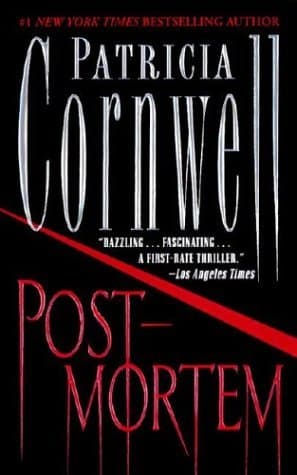
- Postmortem
Patricia Cornwell
4.0 (212k) average on GoodreadsThrillerFirst book in the Kay Scarpetta series, similar forensic detail and investigative style.
- The Silence of the Lambs
Thomas Harris
4.2 (464k) average on GoodreadsThrillerFeatures a female protagonist pursuing a serial killer with psychological depth.
- Kiss the Girls
James Patterson
4.0 (313k) average on GoodreadsThrillerPatterson's Alex Cross series, like 'Kiss the Girls', shares the element of a highly intelligent protagonist pursuing serial killers. However, Patterson's style is generally characterized by shorter chapters, faster pacing, and often a more direct, less descriptive narrative. Cornwell, in 'Body of Evidence', offers a more immersive, detailed experience, particularly in the forensic scenes, and relies less on cliffhangers between chapters. While both offer thrillers, Cornwell's approach is more grounded in the minutiae of science, whereas Patterson often prioritizes sheer narrative propulsion and broader psychological drama.
- Angels & Demons
Dan Brown
3.9 (2.7M) average on GoodreadsThrillerA Harvard symbologist races through Rome's ancient sites, deciphering cryptic clues to unmask the Illuminati and stop a vengeful plot to destroy the Vatican with a stolen antimatter weapon.
- Gone Girl
Gillian Flynn
4.1 (2.3M) average on GoodreadsThrillerA wife's sudden disappearance on her fifth anniversary reveals a web of lies and psychological warfare, exposing the secrets within a seemingly perfect marriage.
- The Girl on the Train
Paula Hawkins
3.9 (2.1M) average on GoodreadsThrillerA woman’s fascination with a seemingly perfect couple she watches from her daily train commute leads her into a dark investigation when she witnesses something that shatters their idyllic image.





Enjoyed the summary?
A summary gives you the shape of the book. The book itself has the detail, the examples and the voice.
Find Body of Evidence on AmazonAs an Amazon Associate, BookBrief earns from qualifying purchases. How we're funded