

Synopsis
Covers the whole plot, including the ending.
- Difficulty
- Easy
- Pacing
- Moderate
- Mood
- Heartwarming, Melancholy, Hopeful, Poignant
- Read it if
- You want a poignant story about friendship, imagination, and coping with loss, particularly suitable for young readers navigating complex emotions.
- Skip it if
- You prefer lighthearted stories without themes of tragedy and grief, or are not in the mood for an emotionally heavy read.
Bridge to Terabithia Plot Summary
Covers the whole plot, including the ending.
Jess's Ambition and Leslie's Arrival
Jess Aarons, a ten-year-old boy in rural Lark Creek, Virginia, wants to be the fastest runner in fifth grade. He spends his summer practicing daily in the cow pasture to improve his speed. His home life is difficult, with four sisters and parents who are often busy or have money problems. School starts, and Jess is sure he will win the races, but his hopes are dashed when a new girl, Leslie Burke, moves into the old Perkins place down the road. Dressed differently and very fast, Leslie enters the boys' race and beats everyone, including Jess. This upsets the boys and initially makes Jess resentful.
An Unlikely Friendship Blossoms
At first, Jess is annoyed by Leslie Burke, especially after she beats him in the school races. However, Leslie, an intelligent and imaginative girl from an artistic, well-off family, tries to befriend him. She is an outsider at school, seen as strange by the other students. Jess, also somewhat of an outsider despite his family, finds himself drawn to her different personality. They start spending time together, first on the school bus, then exploring the woods behind Leslie's house. Their bond grows as they discover shared interests and a deep understanding of each other that neither has experienced before.
The Birth of Terabithia
In the woods behind Leslie's house, Jess and Leslie find a secluded creek with a rope swing hanging over it. They cross to the other side and, inspired by Leslie's imagination, declare it their own secret kingdom: Terabithia. This magical land becomes their refuge, a place where they are king and queen, ruling over imaginary creatures and fighting mythical enemies. Terabithia offers them an escape from the daily routines and pressures of school and home. It allows them to express their creativity, fears, and dreams without judgment. It strengthens their unique and powerful friendship, becoming the center of their shared world.
Adventures and Challenges in Terabithia
In Terabithia, Jess and Leslie go on many adventures, facing imaginary 'squogres' and 'evil forces' that threaten their kingdom. Their imaginative play brings them joy and helps them grow together. Outside Terabithia, they deal with the complexities of their school and home lives. Leslie helps Jess with his art, encouraging his talent, and introduces him to books and ideas he has never seen. Jess, in turn, helps Leslie adjust to their rural environment. They support each other through school bullies like Janice Avery and the challenges of their families, finding comfort and strength in their strong friendship.
Christmas Gifts and a Trip to Washington
Christmas comes, and Jess, despite his family's poverty, buys Leslie a puppy, Prince Terrien, who immediately becomes the guardian of Terabithia. Leslie gives Jess a set of professional art supplies, a gift that deeply moves him and supports his artistic goals. Later, on a rainy spring morning, Jess's music teacher, Miss Edmunds, invites him on a day trip to Washington, D.C., to visit art galleries. Jess is very excited and considers asking Leslie to come, but decides not to, wanting the special time with Miss Edmunds for himself. He leaves a note for his mother and goes with Miss Edmunds.
Tragedy Strikes
While Jess enjoys his day trip to Washington D.C. with Miss Edmunds, a tragic event happens in Lark Creek. Leslie, wanting to visit Terabithia, decides to go by herself, even though heavy rain has made the creek swell. She tries to swing across the creek on the rope, but the rope breaks. Leslie falls, hits her head, and drowns in the fast-moving water. Unknown to Jess, his best friend, the queen of Terabithia, is gone. The entire community is shocked by the sudden loss.
The Devastating News
Jess returns home from his wonderful day with Miss Edmunds, eager to share stories with Leslie. As he enters his house, he sees his family's sad faces. His father, in a rare tender moment, takes him aside and tells him the terrible news: Leslie Burke is dead. Jess at first refuses to believe it, running out of the house in shock and denial. He runs through the fields, trying to escape the truth, but the reality of Leslie's absence slowly begins to sink in, leaving him heartbroken and lost. His world has been shattered.
Grief and Guilt
In the days after Leslie's death, Jess experiences many emotions. He struggles with deep grief; the pain of losing his best friend is almost unbearable. He feels great guilt for having gone to Washington with Miss Edmunds, believing he should have been with Leslie. He also deals with anger, asking why such a terrible thing could happen to someone as good as Leslie. He lashes out at his family and even throws the art supplies Leslie gave him into the creek. His father, seeing Jess's despair, tries to comfort him, sharing his own understanding of loss and helping Jess face the reality of death.
Returning to Terabithia
After some time, and with his family's quiet support, especially his father, Jess finds himself drawn back to the woods. He visits the broken rope swing, where Leslie's accident happened, and then goes to Terabithia. The kingdom feels empty without Leslie. He finds Prince Terrien, Leslie's dog, waiting for him. Jess builds a memorial for Leslie in Terabithia, a small wooden cross decorated with flowers. This acknowledges her lasting presence and the memory she left behind. This act is a turning point in his grieving, allowing him to begin to heal.
A New Bridge, A New Queen
Inspired by Leslie's spirit and his wish to keep Terabithia alive, Jess decides to build a proper bridge across the creek, replacing the dangerous rope swing. He uses lumber Leslie's father, Bill Burke, had given them. With the bridge finished, Jess leads his younger sister, May Belle, across. May Belle, who had always wanted to join their secret world, is now welcomed. Jess crowns May Belle the new queen of Terabithia. This shows that the magic and wonder Leslie brought into his life will continue. Through this act, Jess honors Leslie's memory and takes on his role as the protector of their shared legacy. He carries forward the lessons of imagination, love, and courage that Leslie taught him.
Bridge to Terabithia Characters
Jess Aarons
Protagonist
A sensitive, artistic boy who finds his true self through an unlikely friendship.
Jess Aarons is a ten-year-old boy from a poor, rural family, often overlooked by his parents and overshadowed by his four sisters. He initially seeks validation through running, but his true passion lies in drawing. He feels isolated and longs for connection, which he finds in Leslie. Jess is sensitive, prone to self-doubt, and struggles with expressing his emotions, often retreating into himself. Leslie's friendship opens him up to imagination, courage, and a deeper understanding of the world. Her death devastates him, but ultimately forces him to confront grief and grow stronger.
Relationships: Leslie Burke (Best friend, kindred spirit); May Belle Aarons (Younger sister, protégé); Joyce Ann Aarons (Youngest sister); Ellie Aarons (Older sister); Brenda Aarons (Older sister); Mr. Aarons (Dad) (Father, somewhat distant but ultimately supportive); Mrs. Aarons (Mom) (Mother, often preoccupied); Miss Edmunds (Music teacher, mentor, crush)
Leslie Burke
Supporting/Catalyst
An imaginative, free-spirited new girl who transforms Jess's life.
Leslie Burke is the new girl in Lark Creek, an only child from an affluent, artistic, and intellectually open family. She is intelligent, imaginative, and fearless, both physically and intellectually. Leslie is an outcast at school due to her unconventional clothes, lack of a television, and unique perspective, but she embraces her individuality. She is the driving force behind the creation of Terabithia, inspiring Jess to tap into his own creativity and courage. Leslie is a catalyst for Jess's personal growth, teaching him about friendship, imagination, and facing fears. Her sudden death is the central tragedy of the story.
Relationships: Jess Aarons (Best friend, kindred spirit); Bill Burke (Father, supportive and understanding); Judy Burke (Mother, supportive and understanding)
May Belle Aarons
Supporting
Jess's younger sister, who looks up to him and eventually inherits the magic of Terabithia.
May Belle is Jess's younger sister, around six years old, and the only one in his family with whom he shares a somewhat close bond. She idolizes Jess and desperately wants to be part of his world, especially his adventures with Leslie. She is innocent, somewhat naive, and prone to tattling, but her affection for Jess is genuine. May Belle represents the future of Terabithia, as Jess eventually crowns her queen, ensuring Leslie's legacy of imagination and wonder continues.
Relationships: Jess Aarons (Older brother, idol); Leslie Burke (Friend, admired figure)
Miss Edmunds
Supporting
Jess's free-spirited music teacher who encourages his artistic side.
Miss Edmunds is Jess's kind and unconventional music teacher, whom he harbors a crush on. She is one of the few adults who recognizes and encourages Jess's artistic talent and sensitive nature. She offers him a glimpse into a world beyond his rural upbringing, inviting him on a trip to Washington D.C. to visit art galleries. Her invitation, while well-intentioned, inadvertently leads to Jess being away when Leslie drowns, adding a layer of ironic tragedy to the story.
Relationships: Jess Aarons (Teacher, mentor, object of crush)
Mr. Aarons (Dad)
Supporting
Jess's hardworking but often distant father, who offers unexpected comfort in grief.
Jess's father is a hardworking, often gruff, and emotionally reserved man who struggles to provide for his large family. He has difficulty expressing affection and understanding Jess's artistic inclinations. However, in the wake of Leslie's death, Mr. Aarons steps up in a profoundly meaningful way. He is the one who gently, yet firmly, delivers the tragic news to Jess and later offers him comfort and understanding during his grief, sharing his own experiences of loss. This moment reveals a hidden depth to his character and a bond with Jess that transcends their usual distance.
Relationships: Jess Aarons (Son); Mrs. Aarons (Wife); May Belle Aarons (Daughter)
Mrs. Aarons (Mom)
Supporting
Jess's overwhelmed mother, preoccupied with the demands of her large family.
Mrs. Aarons is Jess's mother, a busy and often overwhelmed woman responsible for raising five children in financially challenging circumstances. She is generally depicted as tired and preoccupied, finding it difficult to give individual attention to Jess or understand his unique needs. While she cares for her family, her emotional bandwidth is limited. Her reactions to Jess's grief are more practical than deeply empathetic, though she does show concern in her own way.
Relationships: Jess Aarons (Son); Mr. Aarons (Husband)
Janice Avery
Supporting/Antagonist
The school bully, whose vulnerability is revealed through Jess and Leslie's compassion.
Janice Avery is a seventh-grader, the resident bully of Lark Creek Elementary School. She is physically imposing and uses her size to intimidate younger students, particularly on the school bus, often stealing their lunch money or snacks. She represents the harsh realities and injustices of school life that Jess and Leslie face. However, a pivotal moment occurs when Jess and Leslie discover her own vulnerability and pain, stemming from an abusive father. Their act of kindness towards her reveals her softer side and the complexities behind her bullying behavior.
Relationships: Jess Aarons (Victim (initially), helper); Leslie Burke (Helper)
Prince Terrien
Supporting
Leslie's puppy, who becomes the guardian of Terabithia.
Prince Terrien, or P.T., is the puppy Jess gives Leslie for Christmas. He quickly becomes an integral part of their adventures in Terabithia, declared its 'guardian' and a loyal companion to both children. P.T. symbolizes the innocent joy and companionship of their kingdom. After Leslie's death, P.T. remains a comforting presence for Jess, a tangible link to Leslie and their shared magical world, accompanying Jess on his return to Terabithia.
Relationships: Leslie Burke (Owner, friend); Jess Aarons (Friend, owner after Leslie's death)
Bridge to Terabithia Themes
Imagination and Creativity
Imagination is central to 'Bridge to Terabithia,' seen most strongly in the creation of the secret kingdom. Terabithia shows how imagination transforms things. It gives Jess and Leslie a safe place to escape the ordinary, face their fears, and express their true selves. Leslie, with her vivid stories, awakens Jess's artistic talent and encourages him to see the world beyond its literal form. Even after Leslie's death, Jess continues to draw, and by building the bridge and crowning May Belle, he ensures Terabithia's imaginative spirit lives on.
“It was Leslie who had almost fooled him into believing that he was a king. Now he would have to believe it for himself.”
Friendship and Connection
The deep friendship between Jess and Leslie is the emotional core of the novel. They are alike, finding in each other the understanding and acceptance missing in their other relationships. Leslie encourages Jess and opens his mind to new ideas, while Jess offers Leslie a loyal companion. Their bond goes beyond social barriers and personal differences, creating a strong sense of belonging. The depth of their connection makes Leslie's death even more devastating. It shows the irreplaceable value of such a friendship and its lasting impact on Jess.
“It was the only place they could be without having to worry about outside stuff. It was a kingdom for just the two of them.”
Grief and Loss
The novel shows the raw process of grief after Leslie's sudden death. Jess experiences denial, anger, guilt, and deep sadness. His struggle to understand and accept the loss is shown honestly, from his first refusal to believe the news to his lashing out and eventual, slow healing. The book shows that grief is not a straight path and that support from others, especially his father, helps Jess through this overwhelming experience. The story suggests that while loss is painful, the love and lessons from those we have lost can last and help us grow.
“He knew that he could not cry, that he could not weep. Not now. He just had to be strong. He had to be strong for Leslie.”
Coming of Age and Personal Growth
Jess's story in the novel is a coming-of-age journey. Before Leslie, he is insecure and withdrawn, trying to find his place. Leslie's friendship challenges him, encourages his art, and gives him courage and self-worth. Her death, though devastating, forces him to face the realities of life and death, making him mature faster. He learns to process deep grief, take responsibility, and eventually carry forward the lessons Leslie taught him, becoming a more resilient and caring person ready to build new connections, both real and symbolic.
“He had to be the strong one now. He had to be the one to carry on.”
Social Class and Isolation
The novel touches on social class and the isolation it causes. Jess's family is poor, and he often feels ashamed of their worn clothes and lack of money. This contrasts with Leslie's family, who are wealthier and more intellectual. This makes Leslie an outsider in the rural school. Both Jess and Leslie experience a type of isolation – Jess because of his family's situation and his sensitive nature, Leslie because of her different background and personality. Their shared experience of being outsiders helps form their deep bond, as they find comfort and understanding in each other.
“He was such a nothing. Just a stupid country kid.”
Plot Devices & Literary Techniques
Terabithia (Imaginary Kingdom)
A shared fantasy world that serves as a sanctuary and a symbol of childhood imagination.
Terabithia is the central plot device, an imaginary kingdom created by Jess and Leslie in the woods. It functions as a safe haven from the challenges of their real lives, a place where they can be powerful, creative, and truly themselves. It symbolizes the power of imagination, the purity of childhood friendship, and the escape from harsh realities. Its existence, and the ritual of crossing the creek to enter it, underscores the unique bond between the two children. After Leslie's death, Terabithia becomes a sacred memorial and a space for Jess to process his grief and eventually carry on Leslie's legacy.
The Rope Swing/Bridge
A literal and metaphorical connection between two worlds and a symbol of risk and transition.
The rope swing that hangs over the creek is initially the thrilling, yet perilous, means of entry into Terabithia. It symbolizes the leap of faith and courage required to enter their imaginative world and the inherent risks of childhood adventure. Its breaking leads directly to Leslie's death, transforming it into a symbol of tragic loss. Jess later replaces the swing with a sturdy wooden bridge, symbolizing his acceptance of Leslie's death, his growth, and his commitment to carrying on her legacy by building a safer, more permanent connection to their shared world for May Belle.
Art and Drawing
Jess's creative outlet and a representation of his inner world and unique talent.
Jess's talent for drawing is a significant plot device, representing his true self and his inner emotional life. Initially, he hides his art, feeling it's unmanly or unappreciated. Leslie's encouragement validates his passion, and her gift of professional art supplies further affirms his identity. Drawing becomes a way for Jess to process his emotions, express his creativity, and connect with Leslie. After her death, art helps him cope with grief and keep Leslie's memory alive, evolving from a solitary hobby to a confirmed aspect of his identity and a means of understanding the world.
The Creek
A natural boundary that separates the ordinary world from the magical, and a source of both adventure and danger.
The creek serves as a physical and symbolic boundary. It separates the ordinary, often challenging, world of Lark Creek from the enchanting, imaginative realm of Terabithia. Crossing it signifies entering a space of freedom and wonder. Initially, it's a manageable obstacle, part of their adventure. However, when swollen by rain, it becomes a dangerous force, directly leading to Leslie's drowning. The creek thus embodies both the allure of the unknown and the inherent dangers that can lurk within nature, representing the fragility of life and the suddenness of tragedy.
Bridge to Terabithia Quotes
“It was up to him to pay back to the world in beauty and caring what Leslie had loaned him in vision and strength.”
“He had thought that magic was for fairy tales, but here, right in the middle of ordinary life, was magic.”
“She had tricked him. She had made him leave his old self behind and come into her world, and then before he was really at home in it but too late to go back, she had left him stranded there—alone.”
“It's like the smarter you are, the more things can scare you.”
“You have to believe it and you hate it. I don't have to believe it and I think it's beautiful.”
“The only way you can be a queen is to have everyone know you're a queen.”
“He was going to be the fastest runner in the fifth grade, and when he was in the sixth grade, he would be the fastest runner in the school.”
“Sometimes it seemed to him that his life was delicate as a dandelion. One little puff from any direction, and it was blown to bits.”
“She was more than his friend. She was his other, more exciting self—his way to Terabithia and all the worlds beyond.”
“You don't have to be afraid of us. We're your friends.”
“It was Leslie who had taken him from the cow pasture into Terabithia and turned him into a king.”
“The only thing I know is that it's not right to be afraid of people.”
“He thought about it all day, how before Leslie came, he had been nothing—a stupid, weird little kid who drew pictures all the time.”
“Maybe the thing he had been afraid of was that he would never be able to do anything as well as Leslie.”
Quiz
10 questions on the plot and the characters. Each answer comes with a short explanation.
Question 1
What is Jess Aarons's main goal at the beginning of the book?
- To become the best artist in his class
- To be the fastest runner in the fifth grade
- To win a writing competition
- To make friends with the new girl
Show answer
B. To be the fastest runner in the fifth grade Jess spends the entire summer practicing running because he wants to be recognized as the fastest runner in his grade, which is established early in the book as his primary motivation before meeting Leslie.
Question 2
How do Jess and Leslie initially become friends?
- They are paired together for a school project
- Leslie beats Jess in a race at school
- They discover they are neighbors
- Jess helps Leslie with her homework
Show answer
B. Leslie beats Jess in a race at school Leslie, the new girl, unexpectedly outruns Jess in a race at school, which initially frustrates him but eventually leads to their friendship as they bond over their shared experiences.
Question 3
What do Jess and Leslie use to cross into Terabithia?
- A fallen log over a stream
- A rope swing over a creek
- A small wooden bridge
- A secret tunnel
Show answer
B. A rope swing over a creek They use a rope swing to swing across the creek into the woods, which becomes the symbolic 'bridge' to their imaginary kingdom of Terabithia.
Question 4
Why does Leslie go to Terabithia alone on the day of the tragedy?
- Jess is grounded by his parents
- Jess goes on a trip to Washington, D.C. with his teacher
- They have a fight and aren't speaking
- Leslie wants to explore Terabithia by herself
Show answer
B. Jess goes on a trip to Washington, D.C. with his teacher Jess is invited by his music teacher, Miss Edmunds, to visit the National Gallery of Art in Washington, D.C., leaving Leslie to go to Terabithia alone where the rope swing breaks and she drowns.
Question 5
What is a significant theme explored through Jess's relationship with his father?
- The importance of academic achievement
- The struggle for parental approval and connection
- The value of hard work on a farm
- The conflict between tradition and modernity
Show answer
B. The struggle for parental approval and connection Jess often feels distant from his father, who is preoccupied with work and doesn't understand Jess's artistic interests, highlighting themes of seeking approval and emotional connection within family dynamics.
Question 6
How does Jess initially react to Leslie's death?
- He immediately tells his family and seeks comfort
- He denies it happened and continues his daily routine
- He blames himself publicly at school
- He destroys Terabithia in anger
Show answer
B. He denies it happened and continues his daily routine Jess is in shock and denial after hearing about Leslie's death; he refuses to believe it and tries to act normally, showing his difficulty in processing the sudden loss.
Question 7
What role does Miss Edmunds play in Jess's life?
- She is a strict disciplinarian who punishes Jess often
- She encourages Jess's artistic talents and provides emotional support
- She is Leslie's mother and a source of conflict
- She is the principal who expels Jess from school
Show answer
B. She encourages Jess's artistic talents and provides emotional support Miss Edmunds, the music teacher, recognizes and nurtures Jess's drawing abilities, offering him validation and companionship that he lacks at home, making her a positive adult influence.
Question 8
What does Jess do to honor Leslie's memory at the end of the book?
- He writes a book about Terabithia
- He builds a real bridge to Terabithia and brings his sister May Belle there
- He moves away from Lark Creek to forget the past
- He gives all his drawings to Leslie's parents
Show answer
B. He builds a real bridge to Terabithia and brings his sister May Belle there Jess constructs a sturdy bridge over the creek to replace the dangerous rope swing, then invites his younger sister May Belle to become the new queen of Terabithia, symbolizing healing and passing on Leslie's legacy.
Question 9
How does Terabithia serve as a metaphor in the story?
- It represents the economic struggles of rural life
- It symbolizes the escape from reality and the power of imagination to cope with difficulties
- It is a literal place that the children discover
- It stands for the competitive nature of childhood
Show answer
B. It symbolizes the escape from reality and the power of imagination to cope with difficulties Terabithia is an imaginary kingdom created by Jess and Leslie, allowing them to escape their real-world problems (like bullying and family issues) and develop confidence, making it a metaphor for the therapeutic role of imagination and friendship.
Question 10
What is significant about the Burke family's background compared to the Aarons family?
- The Burkes are wealthy writers from the city, while the Aarons are poor farmers
- Both families are equally poor and struggle financially
- The Aarons are artists, and the Burkes are scientists
- The Burkes are religious conservatives, and the Aarons are atheists
Show answer
A. The Burkes are wealthy writers from the city, while the Aarons are poor farmers Leslie's parents are well-educated writers who have moved to the country for a simpler life, contrasting with Jess's family who are struggling farmers, highlighting themes of class differences and how Leslie's perspective enriches Jess's world.
Bridge to Terabithia FAQ
What is 'Bridge to Terabithia' about?
The story follows Jess Aarons, a fifth-grader who dreams of being the fastest runner in his class, until new student Leslie Burke beats him. They become close friends and create an imaginary kingdom called Terabithia in the woods, using it as an escape from school bullies and family pressures. When Leslie dies in a tragic accident while visiting Terabithia alone, Jess must grapple with profound grief and eventually finds healing by honoring her memory and helping his younger sister May Belle.
Why should I read 'Bridge to Terabithia'?
It's a powerful exploration of friendship, imagination, and loss that resonates with both children and adults. The book handles grief with remarkable sensitivity while celebrating creativity and resilience. Its emotional depth and authentic characters have made it a beloved classic that continues to offer comfort and insight into coping with tragedy.
What is the background/setting of 'Bridge to Terabithia'?
Set in rural Virginia during the 1970s, the story takes place primarily at Lark Creek Elementary School and the surrounding woods. Jess comes from a working-class farming family struggling financially, while Leslie's family are educated newcomers who've moved from the city. This socioeconomic contrast influences their friendship and how they're perceived by classmates.
What are the most memorable quotes from 'Bridge to Terabithia'?
Key quotes include Leslie's declaration 'We need a place... just for us' when creating Terabithia, and Jess's realization after her death: 'He thought about it all day, how before Leslie came, he had been a nothing.' The title itself becomes symbolic when Jess builds a bridge to Terabithia at the end, telling May Belle 'It's not something you have to earn. It's for everyone.'
What writing style does Katherine Paterson use?
Paterson employs straightforward, accessible prose that captures a child's perspective while dealing with complex emotions. She balances realistic school and family scenes with lyrical descriptions of Terabithia's imaginary world. The narrative voice remains close to Jess's thoughts and feelings, making his grief journey particularly intimate and authentic.
What minor details add significant meaning to the story?
Small details like Jess's drawing practice (which Leslie encourages) symbolizes his suppressed creativity, while the Easter dress his mother gives Leslie foreshadows her death during a church-related outing. The creek separating their homes from Terabithia represents both the boundary between reality and imagination and the literal danger that claims Leslie's life.
What are some subtle foreshadowing moments?
Early references to the creek being 'swollen' after rain hint at its danger. Leslie's comment about being 'scared of the water' contrasts with her later confidence crossing to Terabithia. Jess's repeated worries about Leslie going to Terabithia alone, and his father's warning about the old rope swing being 'rotten,' all subtly prepare readers for the tragedy.
What unexpected character connections exist?
Miss Edmunds, the music teacher Jess admires, becomes an important adult connection who shares his artistic interests and ultimately helps him process his grief. Janice Avery, the school bully, reveals her own vulnerabilities when Leslie and Jess help her, showing how pain connects characters across social divisions. Jess's father, initially distant, becomes more emotionally available after the tragedy.
What are unspoken character motivations?
Jess seeks validation through running partly to escape his father's disappointment about his artistic interests. Leslie's elaborate world-building stems from her loneliness as a newcomer and intellectual mismatch with classmates. Jess's mother's initial coldness toward Leslie may reflect her own struggles with poverty and resentment toward the more privileged Burke family.
What psychological complexities do characters exhibit?
Jess shows conflicting desires for both athletic achievement and artistic expression, complicated by gender expectations in his rural community. Leslie demonstrates remarkable emotional intelligence but also a dangerous overconfidence in her physical abilities. Both children use Terabithia as psychological refuge, with Jess depending on it more heavily as an escape from family tensions.
What are the major emotional turning points?
Key moments include Jess's humiliation when Leslie beats him in the race, their shared victory over school bullies through Terabithia's imaginary power, the joyful Christmas scene where Jess gives Leslie a puppy, the devastating news of her death, and finally Jess's decision to build a bridge and include May Belle in Terabithia, symbolizing his movement through grief.
How do relationship dynamics evolve throughout the story?
Jess and Leslie's friendship deepens from competitive beginnings to creative partnership to profound emotional dependence. Jess's relationship with his father evolves from distant respect to meaningful connection after the tragedy. His bond with May Belle strengthens as he assumes a protective, mentoring role previously filled by Leslie.
Which parts remain ambiguous or open-ended?
The exact circumstances of Leslie's death are never fully detailed, leaving room for reader interpretation about whether it was purely accidental or involved some choice on her part. The future of Terabithia after Jess includes May Belle remains uncertain—whether it will retain its magic or become ordinary. Jess's long-term emotional recovery is suggested but not fully shown.
What are controversial scenes or decisions in the book?
Some readers debate whether Leslie's sudden death is appropriately handled for a children's book, or if it feels too traumatic. Others question Jess's decision to take May Belle to Terabithia at the end—whether this honors Leslie's legacy or dilutes their private world. The religious elements, particularly Leslie's family being non-churchgoers in a religious community, have sparked discussion.
'Bridge to Terabithia' ending explained: how it ends & what it means
The story concludes with Jess building a solid bridge to Terabithia and inviting his younger sister May Belle to become its new queen. This symbolizes his acceptance of Leslie's death and decision to channel her creative, generous spirit rather than abandon their imaginary world. The ending suggests that while grief changes us, love and imagination can transform tragedy into something that includes and helps others.
How does Terabithia function as more than just an imaginary game?
Terabithia serves as psychological sanctuary where Jess and Leslie process real-world problems—school bullying, family tensions, and social isolation. It becomes a space where Jess can explore his artistic side suppressed at home and where Leslie's intelligence is celebrated rather than mocked. After her death, Terabithia transforms into a memorial and tool for healing.
What role does social class play in the story?
Class differences subtly shape the friendship—Lesley's educated, liberal family contrasts with Jess's traditional, struggling household. This affects how other characters perceive them (Leslie is seen as 'weird,' Jess as 'poor') and creates tension when their worlds intersect. Their friendship bridges these divides but doesn't erase them, as shown in their different experiences with religion and family expectations.
How does the book handle religious themes?
Religion appears through Jess's family's church attendance, Leslie's family's secularism, and Jess's crisis of faith after her death. The story explores different approaches to spirituality without endorsing any single view—contrasting institutional religion with Leslie's more personal sense of wonder. Jess ultimately finds comfort in action (building the bridge) rather than doctrine.
What makes Jess's grief journey particularly realistic?
His grief unfolds in authentic stages: initial numbness, anger at adults for their inadequate responses, guilt over not inviting Leslie on the museum trip, and eventual integration of her memory into his life. The book captures how children's grief often manifests physically (Jess's exhaustion) and through regression (his temporary inability to draw), making his recovery feel earned rather than rushed.
How does the story address gender expectations?
Jess struggles with masculine ideals in his community that value physical strength over artistic sensitivity. Leslie defies feminine stereotypes through her athleticism, intelligence, and preference for practical clothes over dresses. Their friendship allows both to transcend these limitations—Jess through drawing and imagination, Leslie through emotional vulnerability she rarely shows elsewhere.
About the author

Katherine Womelsdorf Paterson is an American writer best known for children's novels, including Bridge to Terabithia. For four different books published 1975–1980, she won two Newbery Medals and two National Book Awards. She is one of four people to win the two major international awards; for "lasting contribution to children's literature" she won the biennial Hans Christian Andersen Award for Writing in 1998 and for her career contribution to "children's and young adult literature in the broadest sense" she won the Astrid Lindgren Memorial Award from the Swedish Arts Council in 2006, the biggest monetary prize in children's literature. Also for her body of work she was awarded the NSK Neustadt Prize for Children's Literature in 2007 and the Laura Ingalls Wilder Medal from the American Library Association in 2013. She was the second US National Ambassador for Young People's Literature, serving 2010 and 2011.
Similar books
- The Great Gilly Hopkins
Katherine Paterson
3.8 (21k) average on GoodreadsChildren'sExplores themes of challenging family dynamics and finding belonging, with a strong, memorable young protagonist.
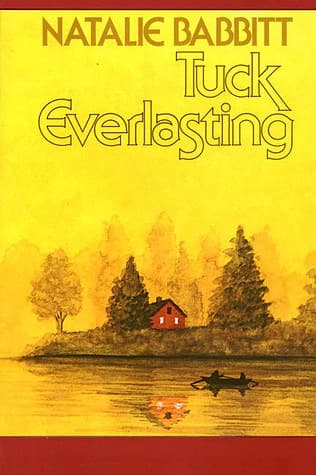
- Tuck Everlasting
Natalie Babbitt
3.9 (232k) average on GoodreadsFantasyFeatures a young protagonist who encounters a magical secret and grapples with themes of life, death, and friendship.
- A Monster Calls
Patrick Ness
4.3 (208k) average on GoodreadsFantasyDeals explicitly with a child's grief and the power of storytelling to cope with profound loss, in a fantastical context.
- A Wrinkle in Time
Madeleine L'Engle
4.0 (1.1M) average on GoodreadsFantasyWhile both 'Bridge to Terabithia' and 'A Wrinkle in Time' (1962) are classics in children's literature and involve imaginative worlds, their approaches to fantasy differ significantly. L'Engle's novel presents a literal, cosmic fantasy with scientific elements and a battle against an external evil (The Black Thing), focusing on themes of conformity vs. individuality and the power of love across dimensions. In contrast, 'Bridge to Terabithia' grounds its 'fantasy' entirely in the shared imagination of two children, using it as an internal coping mechanism against the realities of a mundane and eventually tragic world. Paterson's focus is on emotional realism and personal grief, whereas L'Engle's is on grand, philosophical adventures and external conflict. As Perry Nodelman (1996) might note in his discussions on fantasy, 'Terabithia' uses fantasy metaphorically, while 'A Wrinkle in Time' uses it literally to explore its themes.
- The Fault in Our Stars
John Green
4.2 (3.6M) average on GoodreadsYoung Adult'Bridge to Terabithia' shares thematic commonalities with 'The Fault in Our Stars' (2012) in its exploration of young love/friendship cut short by tragedy and the profound impact of loss. Both novels are praised for their realistic and often heartbreaking portrayal of difficult subjects. However, Green's novel is firmly situated in young adult literature, dealing with terminal illness among teenagers, incorporating more mature themes of existentialism, first love, and the search for meaning in the face of imminent death, often with a sarcastic and intellectual tone. Paterson's book, while equally powerful, is directed at a younger audience, focusing on the innocence of childhood friendship and the initial, raw shock of grief, with a more direct and less intellectually complex emotional journey. While both tackle mortality, 'Terabithia' deals with an accidental, unexpected death, whereas Green's characters are living with a known, progressing illness, shaping their perspectives differently.
- Harry Potter and the Sorcerer's Stone
J.K. Rowling
4.5 (7M) average on GoodreadsFantasyRescued from a miserable life under the stairs, an orphaned boy discovers he's a wizard destined for a magical school, where he uncovers a dangerous secret tied to the dark wizard who murdered his parents.





Enjoyed the summary?
A summary gives you the shape of the book. The book itself has the detail, the examples and the voice.
Find Bridge to Terabithia on AmazonAs an Amazon Associate, BookBrief earns from qualifying purchases. How we're funded