

Synopsis
Covers the whole plot, including the ending.
- Difficulty
- Medium
- Pacing
- Moderate
- Mood
- Atmospheric, Suspenseful, Dark, Melancholy
- Read it if
- You love intricate, character-driven police procedurals with a strong psychological element and a deep dive into the impact of place and past trauma.
- Skip it if
- You prefer fast-paced thrillers with clear-cut heroes and villains, or find stories about mental illness and child death too distressing.
Broken Harbor Plot Summary
Covers the whole plot, including the ending.
The Brutal Discovery in Brianstown
Detective Mick 'Scorcher' Kennedy, a careful and by-the-book member of the Dublin Murder Squad, is assigned a high-profile case. In Brianstown, a half-abandoned 'ghost estate' on the Irish coast, Patrick Spain and his two young children, Emma and Jack, have been murdered in their home. Patrick's wife, Jenny Spain, is found barely alive, seriously injured. The scene is disturbing: the family dog is also dead, and strange details like multiple baby monitors aimed at holes in the walls suggest a bizarre motive. Scorcher, known for his methodical approach, takes charge, determined to quickly solve what appears to be a clear case of domestic violence or a home invasion.
Unsettling Anomalies and a Familiar Landscape
As Scorcher and his new partner, Richie Curran, begin their investigation, they find strange details. Jenny Spain's account, once she can speak, is broken and contradictory, hinting at an intruder but also showing signs of severe psychological distress. The baby monitors are aimed at holes in the walls, and the family's computer hard drive has been wiped clean of important files. Scorcher also finds that the Brianstown estate was formerly called Broken Harbor, the place where he and his younger sister, Dina, spent a traumatic childhood summer. This personal connection, a place he thought he had forgotten, immediately complicates his professional view and brings back suppressed memories.
Jenny's Troubled State and Patrick's Secrets
Jenny Spain's condition worsens, both physically and mentally. Her stories become more erratic, involving a shadowy 'Bridesmaid' figure and growing paranoia about the house. Scorcher and Richie look into Patrick Spain's life, finding significant financial problems from the recession and property market collapse. Patrick had invested heavily in Brianstown, buying into the 'Celtic Tiger' dream, only to see it fail. There are also hints of a possible affair, adding another layer to the family dynamics. Scorcher struggles to stay objective as pressure mounts and the case does not fit a simple story. His concern for Jenny's sanity grows, while he also needs to question her as a possible suspect.
The 'Bridesmaid' and Growing Paranoia
Jenny Spain's fragmented story increasingly focuses on a malevolent presence she calls the 'Bridesmaid,' an unseen entity she believes was responsible for the attacks and trying to break into their home. She describes elaborate attempts to secure the house, including covering windows and setting up the baby monitors as a surveillance system against this perceived threat. Scorcher at first dismisses these claims as delusions caused by trauma, but Jenny's strong belief and the strange setup of the house make him reconsider. The holes in the walls, Jenny explains, were not made by an intruder, but by Patrick as part of a desperate attempt to 'cleanse' the house of the 'Bridesmaid's' influence.
Dina's Return and Scorcher's Past
During the investigation, Scorcher's estranged sister, Dina, unexpectedly reappears. Her return, triggered by news reports about the Brianstown murders, forces Scorcher to face the buried trauma of their childhood summer in Broken Harbor. He had always tried to protect Dina from their mother's mental illness, which had similar paranoid delusions and a belief in evil presences in their home. Dina's presence, and her own fragile mental state, begin to break down Scorcher's carefully built defenses, making him question his own memories and view of reality. The similarities between Jenny Spain's delusions and his mother's become unsettling.
The Truth About Patrick's Actions
Through careful investigation and re-examining evidence, Scorcher realizes that Jenny's 'Bridesmaid' story, while delusional, had some truth. He uncovers that Patrick Spain, overwhelmed by financial ruin and the pressure to appear successful, had himself become paranoid. He was the one who made the holes in the walls, believing he needed to 'air out' the house to fight the evil presence Jenny had first described. Patrick, in his desperate state, began to believe Jenny's delusions, not as an external threat, but as an internal one, a sickness within their home destroying his family. This revelation shifts the focus from an external attacker to the internal collapse of the family.
Patrick's Break and the Murders
The evidence, carefully put together by Scorcher, points to Patrick Spain as the killer. Driven to a complete mental breakdown by financial despair and a shared, growing paranoia with Jenny about the 'Bridesmaid' in their home, Patrick believed he was saving his children from this evil force. In a horrific act of delusional mercy, he murdered Emma and Jack, and then attacked Jenny, though she survived. The 'Bridesmaid' was a creation of their shared psychosis, a reflection of their anxieties and the pressures of their failing lives. The case, which seemed simple at first, reveals a deep tragedy rooted in mental health and economic desperation.
Dina's Intervention and Scorcher's Reckoning
As the truth about the Spains' shared delusion comes out, Scorcher's sister Dina, who has been staying with him, becomes more disturbed. Her own history of mental fragility, like their mother's, worsens because of the similarities she sees in the Spain case. Dina confronts Scorcher about his denial of their mother's illness and its lasting impact on them, especially the traumatic summer in Broken Harbor. She reveals her own vivid, disturbing memories of their mother's paranoia, memories Scorcher had suppressed or explained away. This confrontation forces Scorcher to finally face his emotional walls and the deep trauma he has carried for decades, realizing his 'by-the-book' approach to life was a coping mechanism.
The Aftermath and Scorcher's Future
Despite solving the case, Scorcher's deep personal involvement and his initial attempts to suppress his past trauma lead to professional problems. His partner, Richie Curran, whose observations and questions often challenged Scorcher's strict views, is reassigned. Scorcher himself is moved from the Murder Squad, a result of his emotional investment in the case and a perceived lack of objectivity, especially concerning Jenny Spain's testimony and his own mental state. The resolution of the Spain case, while bringing justice, also marks a significant personal and professional downfall for Scorcher. He is left to deal with the broken pieces of his ordered life and the newly found truths of his past.
Broken Harbor's Lingering Shadow
Afterward, Scorcher is left to rebuild. His relationship with Dina is uncertain, as both are deeply affected by their shared history. The image of the 'star' detective, the man who always knew the answers, has crumbled. The experience of revisiting Broken Harbor, both physically and emotionally, has changed him. The case, which started as a straightforward murder investigation, became a journey into human despair, mental illness, and the lasting power of childhood trauma. Scorcher, no longer the perfect hero, faces his own weaknesses and the lingering shadows of Broken Harbor, forever marked by his past and the tragic fate of the Spain family.
Broken Harbor Characters
Mick 'Scorcher' Kennedy
Protagonist
A meticulous, by-the-book detective haunted by his past in Broken Harbor.
Scorcher Kennedy is a highly regarded, ambitious detective in the Dublin Murder Squad, known for his methodical approach, attention to detail, and strict adherence to protocol. He prides himself on his professionalism and his ability to compartmentalize personal feelings. However, the Spain case in Brianstown (formerly Broken Harbor) forces him to confront a deeply traumatic childhood summer spent there with his mentally unstable mother and fragile sister, Dina. He has suppressed these memories, constructing a rigid identity to cope. The case gradually erodes his defenses, revealing his underlying anxieties and the impact of his past on his present. He is driven by a need for order and control, which ultimately clashes with the chaotic reality of the Spain murders and his own family history.
Relationships: Richie Curran (Rookie partner, often questioning his methods); Dina Kennedy (Younger sister, with a shared traumatic past); Jenny Spain (Victim/suspect, whose delusions mirror his mother's); Patrick Spain (Victim/perpetrator, whose despair reflects the estate's failure)
Richie Curran
Supporting
Scorcher's observant and empathetic rookie partner.
Richie Curran is a young, intelligent, and perceptive detective who serves as Scorcher's partner on the Spain case. Despite his rookie status, Richie often sees details and nuances that Scorcher, blinded by his own biases and past, overlooks. He is more empathetic and less rigid than Scorcher, often trying to understand the psychological underpinnings of the crime rather than just the facts. His innocent questions and fresh perspective frequently challenge Scorcher's assumptions, acting as a foil to the older detective's rigid methodology. He represents a different generation of policing, one more open to the complexities of human behavior and less reliant on strict procedure. His growing discomfort with Scorcher's personal involvement highlights the ethical dilemmas of the investigation.
Relationships: Mick 'Scorcher' Kennedy (Senior partner, mentor figure but also a source of frustration); Jenny Spain (Victim/suspect, whom he tries to understand beyond her delusions)
Jenny Spain
Victim/Suspect
The sole survivor of the attack, whose fragmented testimony reveals a shared delusion.
Jenny Spain is the wife of Patrick Spain and mother to Emma and Jack, and the sole survivor of the brutal attack in Brianstown. Initially found in critical condition, her testimony is crucial but increasingly unreliable and fragmented, marked by severe trauma and profound psychological disturbance. She speaks of a malevolent entity called the 'Bridesmaid' and believes the house itself is hostile. Her delusions, initially dismissed as trauma-induced, are later revealed to be a shared psychosis with her husband, fueled by financial despair and isolation. She represents the tragic human cost of the economic collapse and the fragility of mental health under extreme pressure. Her story is central to understanding the true nature of the murders.
Relationships: Patrick Spain (Husband, with whom she shared a delusional state); Emma Spain (Daughter, murdered); Jack Spain (Son, murdered); Mick 'Scorcher' Kennedy (Investigating detective)
Patrick Spain
Victim/Perpetrator
The murdered husband and father, secretly driven to despair and delusion.
Patrick Spain is initially presented as one of the victims, found brutally murdered alongside his two children. He was an ambitious man who had invested heavily in the Brianstown development, convinced it represented a prosperous future. However, the economic collapse shattered his dreams, leading to immense financial pressure and a deep sense of failure. This despair, combined with his wife Jenny's nascent paranoia, led him down a path of shared delusion. He became convinced of the malevolent 'Bridesmaid' and, in a tragic and misguided attempt to 'save' his family, committed the murders. His character embodies the devastating impact of the 'Celtic Tiger' bust and the pressures of maintaining a facade of success.
Relationships: Jenny Spain (Wife, with whom he shared a delusional state); Emma Spain (Daughter, murdered by him); Jack Spain (Son, murdered by him)
Dina Kennedy
Supporting
Scorcher's fragile younger sister, a living reminder of their shared traumatic past.
Dina Kennedy is Scorcher's younger sister, who shares his traumatic childhood summer in Broken Harbor. She is mentally fragile, having been deeply affected by their mother's mental illness, which manifested in similar paranoid delusions to those exhibited by Jenny Spain. Dina's unexpected return to Scorcher's life, triggered by the news of the Brianstown murders, forces him to confront the memories he has suppressed. She is more open and vulnerable than her brother, and her own struggles with mental health make her an empathetic, if unsettling, mirror to the Spain family's tragedy. Her presence serves as a catalyst for Scorcher's eventual reckoning with his past and his carefully constructed identity.
Relationships: Mick 'Scorcher' Kennedy (Brother, with whom she shares a traumatic past); Mrs. Kennedy (Mother) (Mother, whose mental illness deeply affected her)
Fidelma
Supporting
Jenny Spain's sister, offering insights into the family's struggles.
Fidelma is Jenny Spain's sister and provides crucial, albeit biased, information to the investigating detectives. She is protective of Jenny and initially believes her sister's claims of an intruder, painting Patrick in a negative light. Fidelma's perspective highlights the external pressures on the Spain family, particularly the financial strain and the societal expectation to maintain appearances. Her interviews help Scorcher piece together the timeline and the family dynamics, though her loyalty to Jenny sometimes clouds her judgment. She represents the wider community's struggle to comprehend the tragedy and the instinct to assign blame.
Relationships: Jenny Spain (Sister, whom she is fiercely protective of); Patrick Spain (Brother-in-law, initially viewed with suspicion)
O'Kelly
Supporting
Scorcher's superior officer, focused on results and procedure.
O'Kelly is Scorcher's superintendent, a pragmatic and results-oriented superior. He represents the institutional pressure on the Murder Squad to solve high-profile cases quickly and efficiently. O'Kelly values Scorcher's reputation as a 'star' detective but becomes increasingly concerned by Scorcher's emotional investment and the unconventional turns of the Spain investigation. He is less interested in the psychological nuances of the crime and more in delivering a clear, prosecutable outcome. His actions ultimately lead to Scorcher's reassignment, highlighting the professional consequences of Scorcher's personal entanglement in the case.
Relationships: Mick 'Scorcher' Kennedy (Subordinate, whom he values for his competence but ultimately reassigns)
Mrs. Kennedy (Mother)
Mentioned
Scorcher and Dina's mother, whose mental illness profoundly shaped their childhood.
Scorcher and Dina's deceased mother is not a direct character but a powerful, pervasive presence in the narrative through their memories. She suffered from severe mental illness, experiencing paranoid delusions and believing in malevolent presences within their home, particularly during the traumatic summer in Broken Harbor. Her illness deeply affected both her children, with Scorcher developing rigid coping mechanisms and Dina becoming emotionally fragile. Her experiences provide a chilling parallel to Jenny Spain's delusions, serving as a key to understanding the psychological undercurrents of the Spain case and Scorcher's own internal struggles. Her legacy is the trauma that continues to haunt her children.
Relationships: Mick 'Scorcher' Kennedy (Son, whom she traumatized); Dina Kennedy (Daughter, whom she traumatized)
Broken Harbor Themes
Identity and Self-Discovery
The novel explores how people create and keep their identities, especially when dealing with trauma. Scorcher Kennedy carefully builds an identity as a detached, by-the-book detective to hide his traumatic childhood memories of Broken Harbor. The Spain case, by forcing him to revisit this place, breaks his carefully made facade. He finds that his professional strictness is a way of coping, and his true self is deeply connected to his past. Similarly, the Spain family's identity as a successful, happy unit falls apart under financial pressure and shared delusion, revealing a desperate struggle underneath.
“You can forget anything, if you try hard enough. I'd proved that to myself. I'd rebuilt myself from the ground up, into someone who could stand anything, as long as it wasn't the past.”
The Fragility of Mental Health
A main theme is the damaging effect of mental illness, both on individuals and their families. Jenny Spain's and Patrick Spain's shared paranoia, which led to the murders, shows the destructive power of untreated psychological distress. This is mirrored in Scorcher's own family history, with his mother's severe mental illness and Dina's ongoing fragility. The book shows how outside pressures (like financial ruin) can make existing vulnerabilities worse, leading to tragic results. It also explores how hard it is to recognize and address mental health issues, both within families and in society.
“The Bridesmaid. It was the name Jenny had given to the thing that had broken into their house, or broken into their minds, or both.”
The Ghost of the Celtic Tiger
The novel uses the setting of Brianstown (Broken Harbor), a half-finished 'ghost estate,' as a metaphor for the collapse of Ireland's economic boom, the 'Celtic Tiger.' The Spain family's ambition and later ruin are directly tied to the property market's rise and fall. The abandoned houses and unfulfilled promises of the estate symbolize broken dreams, financial despair, and the societal pressures to maintain an image of success. This economic background creates anxiety and hopelessness that adds to the Spain family's psychological breakdown, showing how wide societal changes can have deeply personal and tragic results.
“This was the Celtic Tiger's skeleton, left to bleach in the sun, a monument to greed and delusion.”
Memory, Trauma, and Repression
The story looks at the nature of memory, especially how trauma can lead to repression and selective recall. Scorcher has carefully suppressed his childhood memories of Broken Harbor and his mother's mental illness, believing he has moved past them. However, the Spain case forces these hidden memories to the surface, challenging his view of himself and his family history. The book explores how people cope with trauma by building mental walls, and the devastating results when those walls break down. Dina's more vivid, painful memories contrast with Scorcher's denial, showing how subjective and often unreliable memory is.
“I had built a wall between myself and my past, brick by careful brick, and I had believed it was solid. But the wall had always been permeable.”
The Nature of Truth and Perception
The novel questions the nature of truth, especially with psychological distress and unreliable narration. Jenny Spain's testimony is fragmented and delusional, yet it contains parts of truth about her husband's actions. Scorcher's own view of events is colored by his suppressed trauma, leading him to misinterpret clues and make assumptions. The 'Bridesmaid' is an example of subjective truth — a real entity in the Spains' minds, but a symptom of their psychosis in reality. The story shows how personal biases, mental states, and shared delusions can distort what is seen as 'real,' making the detective's job of finding objective truth complex.
“Truth was a slippery thing, a chameleon that changed its colours depending on who was looking.”
Plot Devices & Literary Techniques
Unreliable Narrator
Scorcher Kennedy's perspective is influenced by his repressed trauma.
Mick 'Scorcher' Kennedy serves as the first-person narrator, but his reliability is gradually undermined throughout the novel. His meticulous nature and insistence on 'playing by the book' are initially presented as strengths, but as the investigation progresses, it becomes clear that his perception is heavily colored by his own repressed childhood trauma from Broken Harbor. His denial of his mother's mental illness and his attempts to distance himself from his past lead him to misinterpret evidence and dismiss Jenny Spain's delusions. This device forces the reader to question Scorcher's judgments and to piece together the truth alongside him, making the eventual revelations more impactful.
Setting as Metaphor
The 'ghost estate' of Brianstown reflects broken dreams and psychological decay.
The setting of Brianstown, a half-finished, abandoned 'luxury' housing estate, is a powerful metaphor throughout the novel. Once named Broken Harbor, it directly connects to Scorcher's traumatic past. More broadly, it symbolizes the economic collapse of the 'Celtic Tiger' in Ireland, representing broken promises, financial ruin, and the decay of dreams. The isolation and desolation of the estate contribute to the Spain family's sense of entrapment and exacerbate their mental decline. The physical environment mirrors the psychological landscape of the characters, a place of unfulfilled potential and lurking despair, making it more than just a backdrop but an active participant in the story's themes.
Parallelism
The Spain family's tragedy mirrors Scorcher's childhood trauma.
The novel extensively uses parallelism, particularly between the Spain family's descent into shared delusion and Scorcher's own childhood experiences with his mentally ill mother in Broken Harbor. Jenny Spain's paranoia about the 'Bridesmaid' and the 'sick' house directly mirrors Scorcher's mother's delusions of malevolent presences. This mirroring forces Scorcher to confront his repressed memories and recognize the profound impact his past has had on him. The parallels highlight the cyclical nature of trauma and mental illness, and how past events can echo disturbingly in the present, complicating the objective pursuit of truth for the detective.
Red Herring (The Bridesmaid)
The initial focus on an external 'Bridesmaid' figure misdirects both characters and readers.
The 'Bridesmaid,' initially presented as a shadowy, malevolent intruder described by Jenny Spain, functions as a significant red herring. Both Scorcher and the reader are led to believe that this entity, or a person fitting its description, might be the true perpetrator or a key to understanding the crime. Jenny's vivid descriptions and the strange measures taken to 'protect' the house reinforce this illusion. However, the 'Bridesmaid' is ultimately revealed to be a manifestation of the Spains' shared psychosis, a symbol of their internal collapse rather than an external threat. This misdirection deepens the mystery and underscores the theme of subjective truth and the fragility of perception.
Broken Harbor Quotes
“The past is a foreign country; they do things differently there.”
“Broken Harbor was a place where people came to forget, but the past had a way of catching up.”
“Sometimes the most dangerous thing is a dream that's been broken.”
“We all have our own version of the truth, and we cling to it like a life raft.”
“The line between sanity and madness is thinner than you think.”
“A house is just bricks and mortar until you fill it with stories.”
“Fear doesn't need a reason; it just needs a shadow.”
“The sea doesn't care about your problems; it just keeps on whispering.”
“You can't outrun the things you've done, no matter how fast you go.”
“In the end, we're all just trying to keep the monsters at bay.”
“Silence can be louder than any scream.”
“Hope is a fragile thing, easily shattered by a single lie.”
“The truth is a messy, complicated thing, and sometimes it's easier to bury it.”
“We build our own prisons, brick by brick, with the choices we make.”
Quiz
10 questions on the plot and the characters. Each answer comes with a short explanation.
Question 1
What is the name of the 'luxury' development where the Spain family murders occur?
- Ocean View Estates
- Brianstown
- Harbor Heights
- Spain Manor
Show answer
B. Brianstown The murders take place in Brianstown, a half-abandoned development built during Ireland's economic boom that was originally called Broken Harbor, which holds personal significance for Scorcher.
Question 2
Who is the sole survivor of the attack on the Spain family?
- Patrick Spain
- Jenny Spain
- Their son, Jack
- Their daughter, Emma
Show answer
B. Jenny Spain Jenny Spain survives the attack but is left in intensive care with severe injuries, while her husband Patrick and their two young children are murdered.
Question 3
What unusual evidence is found in the Spain house involving baby monitors?
- They were all playing different lullabies
- They were pointed at holes smashed in the walls
- They were hidden in the children's toys
- They were transmitting to a neighbor's house
Show answer
B. They were pointed at holes smashed in the walls One of the disturbing pieces of evidence is half a dozen baby monitors found pointed at holes that had been smashed in the walls of the Spain home, suggesting paranoia or surveillance.
Question 4
Why does the Broken Harbor location hold painful memories for Scorcher Kennedy?
- He lost his first partner there during a previous case
- His father committed suicide there when he was a child
- He was attacked there as a teenager
- His mother abandoned the family there
Show answer
B. His father committed suicide there when he was a child Scorcher's childhood trauma involves his father taking the family to Broken Harbor for a holiday and then attempting to kill them all before committing suicide, an event that deeply affected Scorcher and his sister Dina.
Question 5
What story did Jenny Spain tell her sister that becomes important to the investigation?
- That Patrick was having an affair
- That she wanted to leave Patrick
- That a shadowy intruder was slipping past their locks
- That their children were being bullied
Show answer
C. That a shadowy intruder was slipping past their locks Jenny told her sister about a shadowy intruder who could apparently slip past the house's locks, which initially seems like paranoia but becomes a key element in understanding what happened to the family.
Question 6
How does Scorcher's sister Dina factor into the investigation?
- She is a suspect in the murders
- She provides crucial evidence about the Spain family
- Her mental health struggles parallel Jenny Spain's situation
- She works as a forensic analyst on the case
Show answer
C. Her mental health struggles parallel Jenny Spain's situation Dina's fragile mental state and her shared childhood trauma with Scorcher at Broken Harbor cause Scorcher to see parallels between his sister's struggles and what might have been happening in the Spain household, affecting his objectivity.
Question 7
What initially makes Scorcher think the Spain case will be an easy solve?
- There's clear forensic evidence pointing to a specific suspect
- He believes it's a straightforward murder-suicide by Patrick Spain
- Jenny Spain confesses immediately upon waking from her coma
- A neighbor witnessed the entire crime
Show answer
B. He believes it's a straightforward murder-suicide by Patrick Spain Scorcher initially assumes it's a classic murder-suicide where Patrick killed his children and attempted to kill his wife before taking his own life, but the accumulating strange evidence complicates this theory.
Question 8
What is revealed about the files on the Spain family's computer?
- They contained evidence of Patrick's gambling addiction
- They were erased shortly before the murders
- They showed Jenny was planning to leave the country
- They contained Patrick's secret business plans
Show answer
B. They were erased shortly before the murders The files were erased from the family computer, which is another piece of puzzling evidence that doesn't fit with Scorcher's initial murder-suicide theory and suggests someone was covering something up.
Question 9
What theme does 'Broken Harbor' particularly explore through the Spain family's situation?
- The corruption of the Irish police force
- The psychological impact of economic collapse on families
- The dangers of social media obsession
- Genetic predisposition to violence
Show answer
B. The psychological impact of economic collapse on families The novel explores how Ireland's economic collapse and the failure of 'luxury' developments like Brianstown created immense pressure on families like the Spains, contributing to psychological breakdown and tragedy.
Question 10
How does Scorcher's 'by the book' approach ultimately affect the investigation?
- It causes him to overlook the true perpetrator completely
- It helps him solve the case quickly and efficiently
- It blinds him to psychological complexities and personal connections
- It gets him removed from the case for procedural violations
Show answer
C. It blinds him to psychological complexities and personal connections Scorcher's rigid adherence to procedure and his need for control initially prevent him from understanding the psychological complexities of the case and how his own trauma connects to it, though he eventually must confront these elements.
Broken Harbor FAQ
What is 'Broken Harbor' about?
'Broken Harbor' follows Detective Mick 'Scorcher' Kennedy as he investigates the brutal murders of Patrick Spain and his two children in a half-abandoned luxury development in Ireland. The case becomes increasingly complex due to unexplained details like baby monitors pointed at holes in walls and erased computer files, while also forcing Scorcher to confront traumatic childhood memories connected to the area once called Broken Harbor.
Why should I read 'Broken Harbor'?
You should read 'Broken Harbor' for its masterful psychological depth, as Tana French explores how past trauma shapes present investigations through Scorcher's deteriorating mental state. The novel combines a meticulously plotted murder mystery with profound character study, examining themes of memory, family secrets, and the fragility of the 'perfect life' against Ireland's economic collapse backdrop.
What is the background/setting of 'Broken Harbor'?
The novel is set in contemporary Ireland, primarily at Brianstown—a half-finished luxury housing development that stands as a symbol of Ireland's economic boom and bust. This decaying ghost town was originally called Broken Harbor, a coastal area where Scorcher and his sister Dina experienced a traumatic family event during their childhood summers.
What are the most memorable quotes?
Key quotes include Scorcher's mantra 'I am the man who gets things done' reflecting his rigid professionalism, and his observation that 'Memory is a tricky thing' as his childhood recollections unravel. Jenny Spain's desperate claim about 'something in the walls' haunting their home becomes central to understanding the family's psychological breakdown.
What writing style does Tana French use?
French employs first-person narration through Scorcher's perspective, creating an intimate yet unreliable viewpoint as his mental state deteriorates. Her prose is atmospheric and psychological, blending procedural detail with lyrical descriptions of decaying landscapes and fragmented memories, building tension through gradual revelation rather than action.
What minor details add significant meaning?
The half-dozen baby monitors pointed at holes in the Spains' walls symbolize their escalating paranoia about invisible threats. The erased computer files represent Patrick's attempt to hide their financial ruin, while the 'shadowy intruder' Jenny describes reflects both real danger and psychological projection of their collapsing world.
What are some subtle foreshadowing moments?
Early scenes where Scorcher insists he has his childhood memories 'tightly under control' foreshadow their eventual unraveling. The Spains' perfect-family facade in crime scene photos contrasts with their hidden desperation, hinting at the psychological breakdown to come. References to Broken Harbor's changing name (from natural harbor to development) mirror how trauma gets buried beneath progress.
What unexpected character connections exist?
The most crucial connection is between Scorcher's childhood trauma at Broken Harbor and the Spains' psychological breakdown in the same location decades later. Scorcher's sister Dina, who witnessed their mother's suicide attempt at Broken Harbor, becomes a mirror for Jenny Spain's mental fragility, creating parallel narratives of families destroyed by hidden despair.
What are unspoken character motivations?
Scorcher's obsessive professionalism masks his fear of confronting his family's trauma, while his protective attitude toward Dina stems from guilt over failing to prevent their mother's breakdown. Patrick Spain's erased files hide not just financial ruin but his shame at failing as provider, and Jenny's 'intruder' stories express her unacknowledged terror of their collapsing life.
What psychological complexities do characters exhibit?
Scorcher displays compartmentalization pathology, rigidly separating work from trauma until they violently intersect. Jenny Spain experiences folie à deux with Patrick, their shared psychosis manifesting as paranoia about house invaders. Dina Kennedy represents trauma embodiment, her fragmented memories and instability contrasting with Scorcher's controlled denial.
What are the major emotional turning points?
The discovery that Scorcher's childhood memory of saving Dina is false—he actually failed to prevent their mother's suicide attempt—shatters his identity. Jenny Spain's confession that she killed her family to 'save' them from despair reveals how economic collapse bred psychological collapse. Scorcher's final breakdown in the Broken Harbor ruins marks his acceptance of uncontrollable trauma.
How do relationship dynamics evolve?
Scorcher and Dina's relationship deteriorates from protective to confrontational as buried memories surface. Scorcher's partnership with rookie Richie Curran shifts from mentor-student to mutual vulnerability as both confront case horrors. The Spain marriage transforms from picture-perfect to folie à deux, their love twisting into shared psychosis under financial pressure.
Which parts remain ambiguous or open-ended?
The exact nature of the 'intruder' Jenny describes remains ambiguous—whether real, imagined, or Patrick himself during psychotic breaks. Whether Scorcher will recover from his breakdown or remain broken is unresolved. The line between the Spains' psychological collapse and actual supernatural elements in their house is deliberately blurred.
What are controversial scenes or decisions?
Jenny Spain murdering her children then attempting suicide is deeply controversial, raising questions about maternal psychosis versus moral accountability. Scorcher's eventual breakdown and career implosion divides readers on whether it represents tragic failure or necessary catharsis. The novel's suggestion that economic collapse can literally drive families to murder sparked debate about social commentary versus exploitation.
'Broken Harbor' ending explained: how it ends & what it means
The novel ends with Scorcher shattered after learning the truth about his mother's suicide attempt and the Spains' murders, his professional identity destroyed. Jenny Spain survives but is institutionalized, her perfect family annihilated. The ending suggests that trauma, whether personal (Scorcher's childhood) or societal (Ireland's economic collapse), cannot be controlled or buried—it eventually breaks through all defenses, leaving characters to rebuild from ruins.
What symbolism does the setting provide?
Brianstown's half-built houses symbolize the Spains' crumbling dream life and Ireland's false economic promises. The holes in the Spains' walls represent both literal entry points for imagined intruders and psychological vulnerabilities. Broken Harbor itself symbolizes how trauma persists beneath surface progress, with the natural landscape holding memories that urban development cannot erase.
How does the economic backdrop influence the plot?
Ireland's property crash directly causes the Spains' financial ruin, which triggers their psychological breakdown—their 'perfect life' in a luxury development becomes a prison of debt and despair. This mirrors how Scorcher's childhood trauma at Broken Harbor resurfaces when economic progress (the development) fails, showing how societal collapse exposes personal fractures.
About the author

Tana French is an Irish author known for her psychological thrillers and literary fiction. Her notable works include "In the Woods," "The Likeness," "Faithful Place," "Broken Harbor," and "The Secret Place," which often explore complex characters and intricate plots within the framework of crime and mystery. French's writing has garnered significant attention and recognition in contemporary literature.
Similar books
- The Likeness
Tana French
4.0 (126k) average on GoodreadsThrillerAnother Dublin Murder Squad novel with a strong sense of place and psychological depth.
- Mystic River
Dennis Lehane
4.2 (128k) average on GoodreadsThrillerExplores the lingering impact of childhood trauma on adult lives amidst a murder investigation.
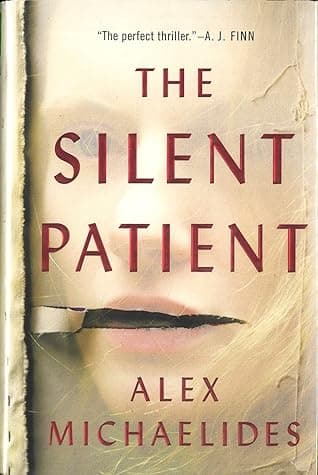
- The Silent Patient
Alex Michaelides
4.1 (507k) average on GoodreadsThrillerFeatures a female character in a psychiatric facility whose silence holds the key to a violent crime.
- Angels & Demons
Dan Brown
3.9 (2.7M) average on GoodreadsThrillerA Harvard symbologist races through Rome's ancient sites, deciphering cryptic clues to unmask the Illuminati and stop a vengeful plot to destroy the Vatican with a stolen antimatter weapon.
- Gone Girl
Gillian Flynn
4.1 (2.3M) average on GoodreadsThrillerA wife's sudden disappearance on her fifth anniversary reveals a web of lies and psychological warfare, exposing the secrets within a seemingly perfect marriage.
- The Girl on the Train
Paula Hawkins
3.9 (2.1M) average on GoodreadsThrillerA woman’s fascination with a seemingly perfect couple she watches from her daily train commute leads her into a dark investigation when she witnesses something that shatters their idyllic image.





Enjoyed the summary?
A summary gives you the shape of the book. The book itself has the detail, the examples and the voice.
Find Broken Harbor on AmazonAs an Amazon Associate, BookBrief earns from qualifying purchases. How we're funded