
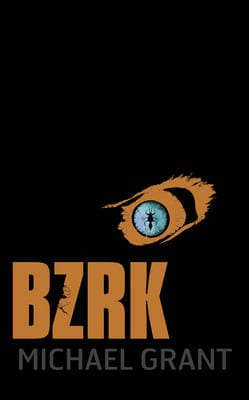
Synopsis
Covers the whole plot, including the ending.
- Difficulty
- Medium
- Pacing
- Fast
- Mood
- Intense, Suspenseful, Dark, Action-packed
- Read it if
- You enjoy high-stakes, fast-paced science fiction thrillers with a focus on mind control, nano-technology, and a youthful rebellion against a dystopian future.
- Skip it if
- You prefer fantasy over science fiction, or are looking for a story with less violence and psychological intensity.
BZRK Plot Summary
Covers the whole plot, including the ending.
The First Strike and the Recruitment
The story opens with Sadie McLure, an ordinary high school girl, experiencing a hallucination in her classroom. Her mind is under attack by microscopic nanobots controlled by the Armstrong Twins. Meanwhile, Vincent, a BZRK operative, infiltrates a secure facility to rescue Keats, a young hacker. Vincent then recruits Noah, a skilled gamer, into the BZRK team after showing him a nanobot infection. Noah, initially skeptical, sees the effects of the nanobots firsthand, convincing him to join the fight against the Armstrongs' mind-controlling agenda.
Sadie's Ordeal and the BZRK Mission
Sadie's mental state worsens as the nanobots intensify their assault, causing her to lose control of her thoughts and actions. She becomes a puppet, experiencing hallucinations and a breakdown of her perception of reality. The BZRK team, composed of Noah, Keats, Vincent, and other operatives, learns that Sadie is a critical target for the Armstrong Twins, who plan to use her as a public demonstration of their mind-control capabilities. Their mission is to infiltrate the Armstrongs' facility and extract Sadie before she is completely subsumed, while also gathering intelligence on the twins' plans for global domination through nanobot technology.
Infiltration and Initial Confrontations
The BZRK team begins their infiltration of the Armstrong Fancy Gifts Corporation's headquarters. Using their specialized nano-weapons and vehicles, they navigate the complex, which is full of security systems and manned by Armstrong's 'hive' of controlled individuals. Vincent leads the charge, while Noah and Keats provide tactical support from their remote stations, piloting their own nanobots through the facility's networks. They encounter Armstrong's defenses, which include advanced nanobots designed to disable or destroy invading units. The team faces intense pressure, with each member making critical decisions to avoid detection and destruction.
Sadie's Mindscape and the Rescue Attempt
To rescue Sadie, Noah must physically enter her mindscape using a neural interface. Inside, he finds a chaotic, fragmented world reflecting Sadie's psychological torment, where her memories and fears appear as dangerous obstacles. He encounters manifestations of the nanobots corrupting her, which take on monstrous forms. Noah must navigate this internal landscape, battling these mental constructs and trying to reach the core of Sadie's consciousness. The experience is disorienting and perilous, as the line between reality and hallucination blurs, and Sadie's subconscious tries to fight him off, mistaking him for another threat.
The Armstrong Twins Revealed
As the BZRK team moves deeper into the Armstrong facility, they learn more about Charles and Benjamin Armstrong, the conjoined twins who are behind the nano-war. They learn that the twins, despite their appearance and goal of creating a 'utopia,' are ruthless and lack empathy. Their vision of a perfect world involves stripping humanity of free will, believing that conflict and suffering come from individual choice. The team discovers the extent of their control, realizing that many high-ranking officials and public figures are already under the twins' influence, making their fight even more critical and widespread.
The Hive and Mind Control
The BZRK team encounters the 'Hive,' a group of individuals whose minds have been completely taken over by the Armstrong Twins' nanobots. These people function as extensions of the twins' will, their personalities erased, replaced by a collective consciousness. The sight is horrifying, as these once-independent individuals now move and act in synchronized obedience, without emotion or thought. The team realizes the true stakes of the war: not just control over individual actions, but the complete annihilation of the self. This encounter reinforces their resolve, understanding that allowing the Armstrongs to succeed would mean the end of humanity as they know it.
The Betrayal and the Trap
During a critical phase of their mission, the BZRK team falls into a trap. It is revealed that one of their own, a trusted operative, has been compromised by the Armstrong Twins and is working as a mole. This betrayal leads to an ambush, where several BZRK members are captured or severely injured. The mole's actions provide the Armstrongs with intelligence, allowing them to anticipate BZRK's moves. Noah and Keats are forced to make desperate decisions to survive the onslaught, realizing the pervasive reach of the Armstrongs' influence and the constant threat of internal compromise within their own ranks.
The Counter-Attack and Sacrifices
Despite the losses and betrayal, the remaining BZRK operatives regroup and launch a desperate counter-attack. They are outmatched in resources and numbers, but their determination to protect free will drives them forward. Vincent, in particular, shows bravery, making a sacrifice to create an opening for Noah and Keats to advance. The battle is fierce, with nanobots clashing on a microscopic level, causing macroscopic damage to the environment and the minds of those involved. The team suffers further casualties, highlighting the brutal reality of their war against an enemy that controls the very fabric of reality within the human mind.
The Confrontation with the Twins
Noah and Keats, having overcome obstacles and personal losses, finally confront Charles and Benjamin Armstrong in their inner sanctum. The confrontation is not physical, but a high-stakes nano-battle, where their respective nanobots clash directly within a shared neural interface. The twins, with their experience and control over their nanobot armies, are formidable opponents. Noah, using his understanding of the nano-world, and Keats, with his hacking skills, must combine their strengths to stand a chance against the conjoined masterminds. The fate of humanity's free will hangs in the balance during this mental and technological duel.
The Resolution and Lingering Threat
Through skill, sacrifice, and a desperate gamble, Noah and Keats manage to temporarily incapacitate the Armstrong Twins, disrupting their control over the nanobots and freeing Sadie and other affected individuals. The immediate threat of global mind control is averted, and BZRK achieves a critical victory. However, the ending makes it clear that the war is far from over. The Armstrong Twins, though defeated for now, are still alive, and their ideology of a 'perfect' world without free will remains. The BZRK team, though diminished, understands that they must remain vigilant, as the battle for the human mind is an ongoing struggle with no definitive end in sight, only temporary reprieves.
BZRK Characters
Noah Albury
Protagonist
A skilled gamer recruited into the nano-war.
Noah is initially a seemingly ordinary teenager, exceptional only in his gaming abilities. He is reluctant to believe in the BZRK mission but quickly adapts to the brutal reality of the nano-war. He possesses an innate talent for piloting nanobots and an intuitive understanding of the microscopic battleground. His primary motivation is to protect free will and prevent the Armstrong Twins from enslaving humanity. He is courageous and quick-thinking, often improvising solutions in dire situations, and feels a strong sense of responsibility for his teammates.
Relationships: Keats (Teammate and close friend, a strategic partner.); Sadie McLure (Target of rescue, develops a protective bond.); Vincent (Mentor and fellow operative.)
Sadie McLure
Supporting
A high school student targeted by the Armstrong Twins.
Sadie is an intelligent and independent high school student whose mind becomes a primary battleground for the Armstrong Twins' nanobots. She experiences intense hallucinations and mental manipulation, making her a sympathetic figure whose struggle highlights the horrifying reality of the twins' power. Despite being a victim, she shows resilience and fight within her own mindscape. Her ordeal serves as a focal point for BZRK's mission and a stark warning of what the Armstrongs intend for the world.
Relationships: Noah Albury (Her rescuer, forming a deep, unspoken connection.); Charles and Benjamin Armstrong (Her tormentors and manipulators.)
Keats
Supporting
A brilliant hacker and BZRK operative.
Keats is a young, exceptionally intelligent hacker, rescued from captivity by BZRK. He is the technical backbone of the team, capable of navigating complex systems and manipulating data on a microscopic level. He is often cynical and sarcastic but possesses a deep loyalty to the BZRK cause and his teammates. His strategic mind and technical prowess are invaluable in the fight against the Armstrongs, often providing the crucial tactical advantage needed to overcome impossible odds. He provides a grounded, realistic perspective amidst the fantastical nano-war.
Relationships: Noah Albury (Teammate and close friend, a strategic partner.); Vincent (Rescuer and fellow operative.)
Charles and Benjamin Armstrong
Antagonists
Conjoined twins and masterminds of the mind-control plot.
The Armstrong Twins are the grotesque and brilliant owners of Armstrong Fancy Gifts Corporation. Conjoined and physically unsettling, they are the architects of the nano-war, seeking to create a 'utopia' by eradicating free will through pervasive mind control. They believe that humanity's flaws stem from individual choice and that a unified, controlled consciousness will bring peace and prosperity. They are ruthless, manipulative, and possess an almost god-like complex, seeing themselves as saviors of humanity, even as they strip away its essence. Their shared mind makes them incredibly formidable opponents.
Relationships: The Hive (Their controlled subjects and extensions of their will.); BZRK (Their primary opposition in the nano-war.)
Vincent
Supporting
A veteran BZRK operative and mentor.
Vincent is a seasoned and battle-hardened BZRK operative, responsible for recruiting Noah and rescuing Keats. He serves as a mentor figure to the younger members of the team, guiding them through the complexities and dangers of the nano-war. He is pragmatic, courageous, and deeply committed to the BZRK cause, having witnessed the devastating effects of the Armstrongs' mind control firsthand. His experience and leadership are crucial in the early stages of the mission, and he often makes difficult decisions for the greater good of the team and their objective.
Relationships: Noah Albury (Mentor and recruiter.); Keats (Rescuer and fellow operative.)
The Hive
Mentioned
Individuals whose minds are fully controlled by the Armstrong Twins.
The Hive refers to the collective of individuals whose minds have been completely subjugated by the Armstrong Twins' nanobots. They act as a single, unified entity, extensions of the twins' will, devoid of individual thought or personality. They serve as guards, operatives, and public faces for the Armstrongs, demonstrating the terrifying potential of their mind-control technology. Their existence highlights the ultimate consequence of the Armstrongs' 'utopia' and serves as a constant reminder of the stakes of the nano-war.
Relationships: Charles and Benjamin Armstrong (Their masters and controllers.)
BZRK Themes
The Nature of Free Will vs. Control
This is the novel's central conflict. The Armstrong Twins believe that free will leads to chaos and suffering, proposing a 'utopia' where all minds are unified under their control. BZRK, conversely, fights to protect the right to be 'messed up,' to make mistakes, and to experience the full spectrum of human emotions and choices. The mental manipulation Sadie endures shows the horrors of losing one's autonomy, forcing readers to question the true cost of 'peace' without freedom. The narrative constantly challenges the reader to consider which side they would choose and why.
“The right to be messed up. The right to make your own mistakes. The right to be human.”
The Ethics of Technology and Progress
The nanobot technology in BZRK represents the double-edged sword of scientific advancement. While nanobots could offer medical and technological benefits, the Armstrong Twins use this potential for control. The story explores the ethical boundaries of manipulating the human mind and the potential for technology to be used for oppression rather than liberation. The advanced nature of the nano-war, fought within the brains of individuals, raises questions about responsibility, oversight, and the unforeseen consequences of pushing technological limits without moral consideration.
“Nano. It could cure every disease, solve every problem…or it could enslave every mind.”
Identity and Self-Perception
The constant threat of mind control forces characters to confront their identity. Sadie's struggle with hallucinations and the erosion of her self-awareness shows the terrifying experience of losing control over one's own mind. The 'Hive' is a warning of what happens when identity is completely erased. Characters like Noah and Keats, though fighting externally, are constantly reminded of the fragility of their own thoughts and perceptions, emphasizing the importance of holding onto one's unique self in a world where it can be easily stolen.
“What is a person, if not their thoughts, their memories, their choices?”
The Power of the Individual vs. Collective
BZRK highlights the impact of individual actions against overwhelming collective power. The Armstrong Twins represent a collective seeking to homogenize humanity. BZRK, a small group of individuals, fights against this, believing that each person's unique contribution is vital. Noah, initially an ordinary gamer, becomes a key figure, showing how one person's courage and skill can make a difference. The story emphasizes that even in a world dominated by advanced technology and vast conspiracies, the choices and actions of individuals can shape the future, proving that a single spark can ignite a revolution against an oppressive collective.
“One mind. One choice. One voice against the hive.”
Plot Devices & Literary Techniques
Nanobots
Microscopic machines that act as the primary weapons and tools.
Nanobots are the core technological plot device. These microscopic machines are capable of manipulating biological systems, including the human brain. They are used by the Armstrong Twins for mind control and by BZRK for combat, infiltration, and healing. Their existence allows for battles to occur on a cellular level, making the stakes incredibly personal and internal. The nanobots' versatility drives much of the plot, enabling both the antagonists' grand schemes and the protagonists' desperate counter-measures.
Mindscape/Neural Interface
A virtual reality within the human mind, accessed via technology.
The mindscape serves as a crucial battleground and narrative device. Through neural interfaces, characters can project their consciousness into another person's mind, or a shared virtual space. This allows for direct mental combat, psychological exploration, and vivid, often terrifying, visual representations of mental states. Sadie's mindscape, for instance, is a chaotic reflection of her torment. This device externalizes internal struggles, making abstract concepts like 'mind control' visually and viscerally impactful for the reader.
The Hive Mind
A collective consciousness created by the Armstrong Twins' nanobots.
The Hive Mind is a terrifying consequence of the Armstrong Twins' technology. It represents the complete subjugation of individual will, where multiple people's minds are linked and controlled as one. This device serves to illustrate the ultimate goal and horror of the antagonists, showcasing a world devoid of individuality. Encounters with the Hive highlight the extreme stakes of the conflict and provide a chilling visual representation of the loss of self, reinforcing BZRK's mission to protect free will at all costs.
Conjoined Twins (Charles and Benjamin Armstrong)
The physically and mentally linked antagonists.
The conjoined nature of the Armstrong Twins is more than just a physical characteristic; it's a symbolic plot device. Their shared body and mind reflect their ideology of a unified, controlled humanity. Their grotesque appearance contrasts with their stated goal of 'utopia,' creating a sense of unease and hinting at the distorted nature of their vision. Their unique physiology also presents a unique challenge for BZRK, as disabling one does not necessarily defeat the other, emphasizing the formidable and interconnected nature of their threat.
BZRK Quotes
“We are the BZRK. We are the cure. We are the knife in the heart of the machine.”
“There are no ordinary moments. There is always a war to be fought, a life to be saved, a truth to be uncovered.”
“The greatest weapon isn't a nanobot or a virus. It's an idea. And ideas are contagious.”
“Love isn't a weakness. It's the ultimate strength. It's why we fight.”
“Every secret has a price. And the price of some secrets can be the world.”
“Sometimes, to save the world, you have to break it first.”
“Fear is a choice. Courage is a choice. You choose.”
“They want to control your thoughts, your dreams, your very being. We want to set you free.”
“The human mind is a battlefield. And the war for humanity is being fought within it.”
“No one is expendable. Not in this fight.”
“What you don't know can kill you. What you do know can save everyone.”
“Sometimes, the smallest things make the biggest difference.”
“The future isn't written. It's fought for.”
Quiz
10 questions on the plot and the characters. Each answer comes with a short explanation.
Question 1
What is the ultimate goal of the Armstrong Fancy Gifts Corporation, led by the Armstrong twins?
- To develop advanced nanotechnology for medical purposes.
- To create a world without war, conflict, or hunger, but also without free will.
- To establish a global monopoly on luxury goods and services.
- To genetically engineer humans for enhanced intelligence.
Show answer
B. To create a world without war, conflict, or hunger, but also without free will. The Armstrong twins' vision of utopia involves eliminating all negative aspects of humanity, but at the cost of individual free will.
Question 2
What is the name of the guerrilla group of teens fighting against the Armstrong twins?
- The Free Minds
- Project Chimera
- BZRK
- The Cognoscenti
Show answer
C. BZRK The opposing force against the Armstrongs is a group of teenagers operating under the code name BZRK.
Question 3
What is the primary battleground for the war between BZRK and the Armstrongs?
- Global financial markets
- The human brain
- International political arenas
- Underground data networks
Show answer
B. The human brain The conflict is fought on a nano-level, with the human brain serving as the ultimate battleground.
Question 4
What is the unique physical characteristic of Charles and Benjamin Armstrong?
- They are identical twins with telepathic abilities.
- They are conjoined twins, sharing a single body.
- They are cyborgs with advanced prosthetic limbs.
- They are clones, each a perfect replica of the other.
Show answer
B. They are conjoined twins, sharing a single body. Charles and Benjamin Armstrong are conjoined twins, a key detail about their character and motivation.
Question 5
What is the consequence of losing a battle in the BZRK war?
- Imprisonment
- Death
- Madness
- Memory loss
Show answer
C. Madness The stakes are high in this nano-war; the outcome is either victory or madness for the combatants.
Question 6
Which of the following is a core theme explored in 'BZRK'?
- The ethics of artificial intelligence
- The struggle for personal choice and free will
- Environmental conservation and sustainability
- Interstellar travel and alien contact
Show answer
B. The struggle for personal choice and free will The central conflict revolves around the Armstrongs' desire to remove free will versus BZRK's fight to protect it, highlighting the theme of personal choice.
Question 7
What type of weapons are primarily used in the war depicted in 'BZRK'?
- High-yield explosives
- Bio-engineered viruses
- Nano-level technology
- Psychic abilities
Show answer
C. Nano-level technology The war is fought using advanced nanotechnology, with weapons deployed on a nano-level inside the human brain.
Question 8
The Armstrong twins' vision of utopia is characterized by the absence of conflict and hunger, but also by the absence of what fundamental human attribute?
- Creativity
- Empathy
- Free will
- Memory
Show answer
C. Free will Their 'utopia' explicitly removes free will, aiming to control humanity's choices for what they perceive as the greater good.
Question 9
What is the significance of the phrase 'to be messed up, to be human' for the BZRK group?
- It's a sarcastic motto reflecting their despair.
- It emphasizes their belief in the value of imperfections and individuality.
- It refers to their physical and mental struggles as a result of the war.
- It's a cover to hide their true, more sinister intentions.
Show answer
B. It emphasizes their belief in the value of imperfections and individuality. BZRK fights to protect the right to be 'messed up, to be human,' which encapsulates their defense of individuality, flaws, and the very essence of human free will against the Armstrongs' perfect, controlled world.
Question 10
The war in 'BZRK' is described as having 'no stalemates.' What does this imply about the nature of the conflict?
- The technology used is too advanced for prolonged engagements.
- The combatants are too skilled to allow for draws.
- Every engagement results in a definitive victory or a devastating loss, often sanity.
- The war is fought in short, decisive battles with quick resolutions.
Show answer
C. Every engagement results in a definitive victory or a devastating loss, often sanity. The phrase 'no stalemates' followed by 'It’s victory . . . or madness' indicates that there are no inconclusive outcomes; every battle has a profound and often destructive result for one side.
BZRK FAQ
What is the central conflict in BZRK?
The central conflict in BZRK is a war for control of the human mind. The Armstrong Fancy Gifts Corporation, led by the conjoined twins Charles and Benjamin Armstrong, seeks to impose a utopian vision of peace and order by eradicating free will, while the teenage guerrilla group BZRK fights to preserve humanity's right to individuality and choice, even if it means imperfection.
Who are the main protagonists on the BZRK team?
The main protagonists on the BZRK team are Sadie McLure, a skilled 'nano-operator' who can control biots, and Noah Compton, a new recruit with a tragic past who becomes a crucial part of the team. Other key members include Vincent, the team's leader, and the twins, Keats and Lear, who provide technical support.
What are 'biots' and how are they used in the war?
Biots are advanced biological nanobots that are the primary weapons in the BZRK war. They are deployed into human brains to manipulate thoughts, emotions, and even physical functions. The Armstrongs use biots to 'cure' people into compliance, while BZRK uses them to counter the Armstrongs' influence and fight their agents.
What is the Armstrongs' ultimate goal for humanity?
The Armstrongs' ultimate goal is to create a global utopia free of war, conflict, hunger, and suffering. However, their method involves eradicating free will, essentially turning humanity into a perfectly compliant, emotionless collective, which they believe is the only way to achieve true peace.
What is the significance of the 'meat' metaphor used by the Armstrongs?
The 'meat' metaphor is significant because it reflects the Armstrongs' dehumanizing view of humanity. They see people as mere biological machines, or 'meat,' to be controlled and optimized for their utopian vision, rather than individuals with inherent worth and free will.
How does the 'meat puppet' concept relate to the Armstrongs' operations?
The 'meat puppet' concept directly relates to the Armstrongs' operations, as it describes individuals whose minds have been completely taken over by their biots. These people lose their free will and become puppets, perfectly obedient to the Armstrongs' commands, serving as agents or simply compliant citizens in their 'utopia.'
What is the true nature of the conjoined twins, Charles and Benjamin Armstrong?
Charles and Benjamin Armstrong are more than just conjoined twins; they are essentially a single, highly intelligent, and manipulative entity. Their physical bond mirrors their shared consciousness and singular, unwavering vision for humanity, making them a formidable and psychologically complex antagonist.
What is the 'Mindspace' and how does it function?
The 'Mindspace' is a virtual, shared consciousness created and manipulated by the Armstrongs through their biot network. It's where they can project their influence directly into the minds of their 'cured' subjects, acting as a collective unconscious that reinforces their utopian ideals and suppresses individual thought.
How does the concept of 'madness' play into the consequences of the biot war?
Madness is a direct and terrifying consequence of the biot war. When biots malfunction or a brain is overwhelmed by conflicting signals, individuals can descend into irreversible insanity, losing their minds completely. This threat underscores the high stakes of every battle for both sides.
How does Sadie's personal trauma influence her commitment to BZRK?
Sadie's personal trauma, specifically the loss of her family due to the Armstrongs' influence, profoundly fuels her commitment to BZRK. Her desire for revenge and to prevent others from suffering the same fate makes her a fierce and determined warrior, driving her to master her biot control skills.
What psychological vulnerabilities do the Armstrong twins exploit in their victims?
The Armstrong twins exploit fundamental human psychological vulnerabilities such as fear of chaos, desire for peace, and the longing for an end to suffering. They offer a false sense of security and perfection, preying on people's hopes for a better world to justify stripping them of their autonomy.
How does Noah's initial skepticism evolve throughout the story, and what does it reveal about his character?
Noah's initial skepticism evolves from a detached observer into a deeply committed member of BZRK. This transformation reveals his inherent morality and empathy, as he witnesses the true cost of the Armstrongs' 'utopia' and chooses to fight for humanity's messy, imperfect freedom, even at great personal risk.
Discuss the psychological impact of operating biots within a human brain for the BZRK members.
Operating biots within a human brain has a significant psychological impact on BZRK members. It requires immense focus and mental fortitude, blurring the lines between self and target. The constant exposure to others' thoughts and emotions, and the potential for mental backlash, can be incredibly draining and psychologically taxing, risking their own sanity.
Is the Armstrongs' vision of utopia truly evil, or simply misguided?
The Armstrongs' vision of utopia is highly debatable. While their stated goal of ending suffering seems noble, their method of eradicating free will makes it arguably evil. It raises the question of whether a perfect world is worth living in if it comes at the cost of what makes us human: choice, emotion, and individuality.
Does the book suggest that humanity is inherently flawed and needs external control, or that free will, even with its imperfections, is essential?
The book strongly suggests that free will, even with its imperfections and capacity for chaos, is essential to humanity. The BZRK team's fight is fundamentally about preserving the right to be human, with all its flaws, rather than submitting to a controlled, emotionless existence, implying that true humanity lies in choice.
How does the 'nano-level' warfare reflect larger societal debates about technology and control?
The 'nano-level' warfare in BZRK reflects larger societal debates about technology and control by illustrating the potential for advanced technology to be used for both immense good and profound oppression. It highlights the ethical dilemmas surrounding invasive technologies and the fine line between enhancement and manipulation, echoing real-world concerns about privacy and algorithmic control.
What does the ending of BZRK imply about the nature of conflict and the possibility of lasting peace?
The ending of BZRK, without revealing specifics, implies that the nature of conflict is often cyclical and complex, and lasting peace is rarely easily achieved, especially when fundamental ideologies clash. It suggests that even 'victory' can come with significant costs and may not fully resolve the underlying tensions, leaving room for future struggles.
Could the BZRK team be considered as extremist in their own right, given their methods?
While fighting for a noble cause, the BZRK team could arguably be considered extremist in their own right, given their use of highly invasive nano-technology and sometimes morally ambiguous tactics. They operate outside the law and engage in direct, often violent, intervention into human minds, raising questions about the ethics of their 'ends justify the means' approach.
About the author

Michael Grant is an American author known for his work in young adult fiction. His notable books include the dystopian series "Gone," the sci-fi thriller "BZRK," the fantasy novel "Light," the historical fiction series "Front Lines," and the apocalyptic tale "Plague." Grant's writing often explores themes of survival, power, and the complexities of human nature.
Similar books
- Unwind
Neal Shusterman
4.2 (192k) average on GoodreadsThrillerFeatures a dystopian society and a group of teens rebelling against a powerful, oppressive system.
- Ready Player One
Ernest Cline
4.3 (861k) average on GoodreadsFantasyInvolves high-stakes virtual battles and a determined protagonist navigating a technologically advanced world.
- Mindscan
Robert J. Sawyer
3.8 (3k) average on GoodreadsFantasyExplores themes of consciousness, identity, and the future of the human mind through technological advancements.
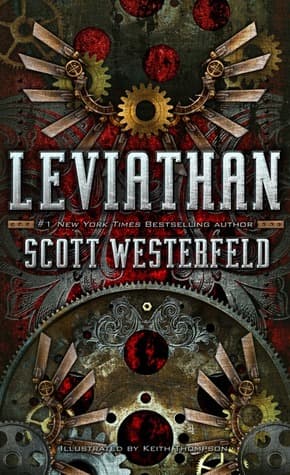
- Leviathan
Scott Westerfeld
4.0 (15k) average on GoodreadsLiterary FictionBZRK shares with Leviathan a blend of speculative technology and high-stakes conflict. However, Westerfeld's series, while also imaginative, offers a more meticulously constructed world and deeper character arcs, allowing for a more nuanced exploration of its themes. Leviathan integrates its technological marvels (clankers vs. Darwinists) more organically into its historical setting, providing a richer backdrop for character development and moral dilemmas, whereas BZRK's technological advancements can sometimes feel more like plot devices.
- The Hunger Games
Suzanne Collins
4.3 (6.4M) average on GoodreadsFantasyBoth BZRK and The Hunger Games feature young protagonists thrust into life-or-death situations against powerful, oppressive forces. While BZRK focuses on microscopic warfare and mind control, The Hunger Games delves deeper into the psychological trauma of conflict, the ethics of entertainment, and the brutal realities of oppression. Collins' work excels at depicting the emotional toll on its characters and the societal implications of its dystopian setting with greater depth and consistency than BZRK, which sometimes prioritizes action over sustained emotional and thematic exploration.
- Angels & Demons
Dan Brown
3.9 (2.7M) average on GoodreadsThrillerA Harvard symbologist races through Rome's ancient sites, deciphering cryptic clues to unmask the Illuminati and stop a vengeful plot to destroy the Vatican with a stolen antimatter weapon.


Enjoyed the summary?
A summary gives you the shape of the book. The book itself has the detail, the examples and the voice.
Find BZRK on AmazonAs an Amazon Associate, BookBrief earns from qualifying purchases. How we're funded