
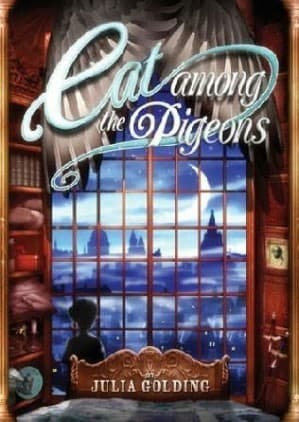
Synopsis
Covers the whole plot, including the ending.
- Difficulty
- Easy
- Pacing
- Fast
- Mood
- Adventurous, Mysterious, Exciting, Hopeful
- Read it if
- You enjoy historical mysteries with a plucky, disguised heroine and a blend of high society and gritty underworld settings.
- Skip it if
- You prefer less intricate plots or are not a fan of adventure stories aimed at a younger audience (though enjoyable for all).
Cat Among the Pigeons Plot Summary
Covers the whole plot, including the ending.
The Threat of Re-Enslavement
The story opens with the Drury Lane community celebrating a successful performance. Their joy ends when Mr. Davies, Pedro's former slave master from Jamaica, appears with legal papers, claiming Pedro as his property. Pedro had been freed by his previous owner, but Davies says the man had no legal right to do so. Cat Royal, Quick, and other friends are angry and try to protect Pedro, but Davies's legal claim is strong. Pedro, fearing re-enslavement, hides, leaving Cat determined to find a way to secure his freedom permanently.
Cat's Disguise and Boarding School Entry
Believing Mr. Davies is involved in illegal activities that could discredit him, Cat makes a plan. With her friends' help, she cuts her hair short, dresses in boy's clothing, and becomes 'Kit,' a mischievous but intelligent boy. Her goal is to infiltrate the upper levels of society where Davies operates, specifically a prestigious boys' boarding school called St. Augustine's, where Davies's son, Edward, is a student. Cat hopes to find information or evidence that will expose Davies's true character and invalidate his claim on Pedro.
Life as 'Kit' at St. Augustine's
As 'Kit,' Cat struggles to adapt to St. Augustine's strict rules and social hierarchy. She quickly makes an enemy of a bully but also befriends a kind and intelligent boy named Bartholomew, who becomes her confidant and helper. Cat observes Edward Davies, finding him a shy and withdrawn boy, unlike his domineering father. Through her interactions and exploration of the school, 'Kit' starts to hear whispers and subtle clues suggesting that Mr. Davies might be involved in more than just legitimate business, hinting at smuggling operations.
The Smuggling Ring Investigation
Cat, still disguised as 'Kit,' overhears conversations and gathers information that points to Mr. Davies being deeply involved in a large-scale smuggling ring, using his connections and possibly the school's closeness to the docks. Realizing she needs help from those familiar with London's underworld, Cat contacts members of a street gang known as the 'Mudlarks,' led by a charismatic but dangerous boy named Silas. She offers them information in exchange for their help investigating Davies's illegal activities and finding proof.
Infiltrating the Mudlarks
To gain the Mudlarks' full trust and access their network, Cat fully joins their world. She scavenges with them, learns their secret codes and meeting places, and proves her bravery and resourcefulness. This experience contrasts sharply with her life at St. Augustine's, showing her the desperate poverty and harsh realities faced by many London children. Despite the dangers, Cat earns the respect of Silas and his gang, who begin to share their knowledge and resources, helping her track Davies's movements and uncover the routes of his smuggled goods.
Billy Boil's Interference
As Cat makes progress, her old enemy, Billy 'Boil' Shepherd, reappears. Billy, always a problem for Cat, is also involved in the criminal underworld and quickly learns of 'Kit's' activities. He recognizes Cat despite her disguise, or at least suspects her true identity, and begins to follow her, trying to sabotage her efforts and exploit the situation for his own gain. His presence adds constant danger, forcing Cat to be even more cautious and clever to avoid being exposed or captured.
The Discovery of the Warehouse
Working with Bartholomew's insights from St. Augustine's and the Mudlarks' street intelligence, Cat carefully puts together the puzzle of Davies's smuggling operation. They track suspicious movements of goods and follow leads that eventually bring them to a secluded warehouse near the docks. Cat, with some of the Mudlarks, infiltrates the warehouse, finding it filled with contraband goods, confirming her suspicions about Davies's illegal activities. This discovery provides the evidence she needs to expose him and free Pedro.
The Confrontation and Exposure
Armed with proof, Cat orchestrates a dramatic confrontation. She arranges for the authorities, along with Quick and other trusted friends, to raid the warehouse while Davies is present. With the evidence exposed, Davies cannot deny his involvement in the smuggling ring. His reputation is ruined, and his legal claim over Pedro is invalid. Pedro is finally, unequivocally free from the threat of re-enslavement. Cat reveals her true identity, surprising some and relieving her friends.
Aftermath and Pedro's Freedom
Following the warehouse raid, Mr. Davies is arrested and faces the consequences of his illegal activities. Pedro is officially recognized as a free man, no longer under threat. The Drury Lane community celebrates Pedro's permanent freedom. Cat, having successfully navigated the worlds of aristocratic boarding schools and London's street gangs, sheds her 'Kit' persona. She reflects on the complexities of justice, the sharp differences between social classes, and the true meaning of freedom, not just for Pedro, but for herself and her friends.
A New Beginning for Edward Davies
With his father's downfall, Edward Davies, who had been a quiet and somewhat oppressed figure, gets a chance at a new life. Cat, recognizing his goodness and his own suffering under his father's control, ensures he is not abandoned. She helps connect him with people who can offer him guidance and a fresh start, perhaps even a place within the theatrical world of Drury Lane, suggesting his potential to escape his family's past and forge his own path, free from his father's influence.
Cat Among the Pigeons Characters
Cat Royal
Protagonist
A spirited and resourceful orphan who navigates London's social strata.
Cat is an irrepressible and fiercely independent young girl, raised in the lively world of Drury Lane Theatre. She is quick-witted, brave, and possesses an innate sense of justice. Her theatrical background makes her adept at disguise and performance, skills she puts to good use. Driven by loyalty to her friends, especially Pedro, she is willing to take immense risks and challenge societal norms to achieve her goals. She is observant, empathetic, and capable of charming or outwitting nearly anyone she encounters.
Relationships: Pedro (Close friend, like a brother; his freedom is her primary motivation.); Quick (Loyal, protective friend and mentor figure.); Billy 'Boil' Shepherd (Arch-nemesis; a constant threat and source of conflict.); Bartholomew (New friend and ally at St. Augustine's.); Silas (Leader of the Mudlarks; initially suspicious, later an ally.)
Pedro
Supporting
A gentle and artistic former slave whose freedom is threatened.
Pedro is a kind and artistic young man, originally from Jamaica. He was brought to England as a slave but was granted his freedom, only for it to be challenged. He is gentle, intelligent, and deeply appreciative of the freedom and community he has found at Drury Lane. Despite his past trauma, he maintains a hopeful spirit, though the threat of re-enslavement deeply affects him. He symbolizes the struggle for freedom and justice against oppressive systems.
Relationships: Cat Royal (Close friend, like a sister; she fights for his freedom.); Mr. Davies (His former and attempted re-enslaver; source of his conflict.)
Mr. Davies
Antagonist
Pedro's ruthless former master and a manipulative smuggler.
Mr. Davies is a wealthy and influential man who embodies the corrupting power of greed and privilege. He is relentless in his pursuit of Pedro, driven by a twisted sense of ownership and a desire to exploit others for profit. Beyond his legal claim on Pedro, he is revealed to be the mastermind behind a large-scale smuggling operation. He is cunning, arrogant, and uses his social standing to conceal his illicit activities, making him a formidable and dangerous adversary.
Relationships: Pedro (His former slave, whom he seeks to re-enslave.); Edward Davies (His son, whom he neglects and pressures.); Cat Royal (His primary adversary, though he initially underestimates her.)
Quick
Supporting
Cat's loyal, protective friend and a performer at Drury Lane.
Quick is one of Cat's oldest and most trusted friends, a talented performer and a constant presence in her life at Drury Lane. He is fiercely protective of Cat and Pedro, always ready to lend a hand or offer support. Quick is practical, brave, and possesses street smarts, making him a valuable ally in Cat's schemes. He acts as a grounding force for Cat, often worrying about her safety but ultimately trusting her judgment and supporting her audacious plans.
Relationships: Cat Royal (Close friend and confidant; protective.); Pedro (Friend; committed to securing his freedom.)
Billy 'Boil' Shepherd
Antagonist
Cat's recurring nemesis, a cunning and dangerous figure in London's criminal underworld.
Billy 'Boil' Shepherd is a manipulative and treacherous individual who operates in the darker corners of London. He is Cat's long-standing rival, always looking for an opportunity to thwart her or exploit situations for his own benefit. Billy is intelligent but uses his intellect for nefarious purposes, often involving himself in criminal activities. His presence adds a layer of personal danger and complexity to Cat's mission, as he is capable of recognizing her even in disguise and actively works against her.
Relationships: Cat Royal (Arch-rival and enemy; he seeks to undermine her.)
Bartholomew
Supporting
A kind and intelligent student at St. Augustine's who befriends 'Kit'.
Bartholomew is a sensitive, studious, and observant boy at St. Augustine's boarding school. He is initially quiet but possesses a sharp mind and a strong moral compass. He is one of the first to befriend 'Kit' (Cat in disguise) and becomes a crucial ally, providing information and insights from within the school's walls. His intelligence and gentle nature contrast with the more boisterous boys, and he offers a different perspective on the upper-class world. He represents the potential for goodness even within privileged circles.
Relationships: Cat Royal ('Kit') (Friend and ally; helps her with her investigation.); Edward Davies (Schoolmate; observes Edward's strained relationship with his father.)
Silas
Supporting
The charismatic leader of the Mudlarks street gang.
Silas is the shrewd and respected leader of the Mudlarks, a street gang operating in the poorer areas of London. He is tough, resourceful, and deeply loyal to his gang members. Having grown up in poverty, he is wary of outsiders, especially those from higher social classes, but possesses a strong sense of justice for his own community. He is initially suspicious of 'Kit' but is eventually won over by Cat's bravery and genuine desire to help Pedro. He represents the resilience and resourcefulness of London's working-class and impoverished youth.
Relationships: Cat Royal ('Kit') (Initially wary, then an ally and collaborator.); The Mudlarks (Leader; commands their loyalty and respect.)
Edward Davies
Supporting
Mr. Davies's quiet and overshadowed son at St. Augustine's.
Edward Davies is the son of Mr. Davies, attending St. Augustine's. He is a quiet, somewhat withdrawn boy, seemingly burdened by his father's expectations and domineering personality. He appears to be a pawn in his father's world rather than an active participant in his schemes. Cat observes his unhappiness and perhaps even a subtle disapproval of his father's actions, making him a more sympathetic figure than his father. His character highlights the often hidden costs of wealth and power.
Relationships: Mr. Davies (His father; a strained and oppressive relationship.); Cat Royal ('Kit') (Schoolmate; Cat observes and subtly helps him.)
Cat Among the Pigeons Themes
Freedom vs. Enslavement
The main theme is Pedro's struggle for freedom and the fight against re-enslavement. This appears in the literal threat from Mr. Davies's claim and in the broader societal limits faced by various characters. Cat's disguise as 'Kit' is a temporary freedom from her own gendered expectations, while the Mudlarks represent a desperate fight for independence in poverty. The theme explores what it means to be truly free, both physically and from societal or personal oppression, as seen when Pedro finally escapes Davies's grasp and Edward is freed from his father's influence.
“Freedom is not a gift, but a prize fought for with every breath.”
Social Class and Inequality
The novel shows the contrast between London's social classes, as Cat moves between the aristocratic world of St. Augustine's and the poor streets of the Mudlarks. Mr. Davies's privilege, allowing him to legally claim Pedro and engage in smuggling, stands against the desperate lives of the street children and the vulnerability of someone like Pedro. Cat's ability to move between these worlds highlights the superficiality of class distinctions and exposes the injustices in the system. The book shows how wealth can corrupt and how poverty can force individuals into difficult choices, yet also how resilience and community can thrive in hardship.
“One world wore silk and powdered wigs; the other, rags and soot. But the hunger for justice knew no such divide.”
Identity and Disguise
Cat's change into 'Kit' is a core part of the story, exploring themes of identity and the power of disguise. Her ability to convincingly portray a boy allows her access to worlds otherwise closed to her, highlighting the restrictive nature of gender roles at the time. The disguise is more than practical; it allows Cat to experience different parts of herself and observe society from a unique view. It also raises questions about who we are beneath our outward appearances, as seen in Edward Davies's true nature hidden beneath his father's shadow, and Cat's struggle to maintain her 'Kit' persona while staying true to herself.
“To be a boy was to be invisible, to be a girl was to be seen too much. The disguise was a cloak, not just for my body, but for my true self.”
Justice and Morality
The pursuit of justice for Pedro drives the entire story. Cat and her friends work outside the official legal system, which initially favors Mr. Davies, forcing them to seek a more moral form of justice. The story questions the morality of laws that permit enslavement and allow the wealthy to exploit others. Cat's actions, while sometimes close to illegal, are always driven by a strong ethical sense. The theme explores the idea that true justice sometimes requires unconventional methods and the courage to challenge established wrongs, ultimately succeeding over the legal but immoral claims of the antagonist.
“The law may speak for the powerful, but justice sings for the oppressed.”
Plot Devices & Literary Techniques
Disguise and Secret Identity
Cat adopts the persona of 'Kit' to infiltrate forbidden spaces.
Cat's disguise as 'Kit' is the primary plot device, enabling her to access the boys' boarding school and the male-dominated street gangs, which would otherwise be impossible for a girl of her era. This device allows for comedic moments, tension as her identity is almost exposed, and deeper exploration of gender roles. It also provides Cat with a unique dual perspective, observing both the privileged and the impoverished worlds of London, which is crucial for her investigation and character development.
The MacGuffin (Pedro's Freedom)
Pedro's re-enslavement threat is the central object of desire and motivation.
Pedro's threatened re-enslavement serves as the primary MacGuffin, the driving force behind Cat's entire mission. While Pedro himself is a character, his state of being (free or enslaved) is what propels the plot forward. It motivates Cat, unites her allies, and provides a clear goal for the narrative. The resolution of this threat marks the climax and the ultimate success of Cat's endeavors, giving the story its core purpose and emotional stakes.
Juxtaposition of Worlds
The stark contrast between aristocratic and impoverished London settings.
The novel uses the juxtaposition of the opulent, structured world of St. Augustine's boarding school and the gritty, lawless environment of London's streets (home to the Mudlarks) to highlight themes of social class and inequality. Cat's movement between these two extremes, often within the same day, provides rich thematic depth and showcases her adaptability. This device allows the reader to experience the vast disparities of 18th-century London and underscores the complexity of the society Cat navigates.
The Recurring Antagonist (Billy 'Boil' Shepherd)
Billy 'Boil' Shepherd reappears to complicate Cat's plans.
Billy 'Boil' Shepherd's re-emergence serves as a recurring antagonist device. His presence adds an element of personal vendetta and constant threat, beyond the primary conflict with Mr. Davies. He creates additional obstacles and suspense, as Cat must not only outwit Davies but also evade or outmaneuver Billy, who often recognizes her despite her disguises. This device ensures that Cat is never truly safe and raises the stakes by introducing a familiar, dangerous foe.
Cat Among the Pigeons Quotes
“The past is a foreign country; they do things differently there.”
“All that a man has is his past.”
“You can’t go home again.”
“Memory is a way of holding onto the things you love, the things you are, the things you never want to lose.”
“The world had changed, and with it, he had changed too.”
“Sometimes the things we think we know best are the very things we know least.”
“There are some things that time cannot erase, no matter how hard it tries.”
“Every secret has its season, and every season brings its own revelation.”
“The weight of what was unsaid was often heavier than the words themselves.”
“Life has a way of circling back, bringing old echoes to new shores.”
“We are all prisoners of our own making, bound by the choices we refuse to confront.”
“The quiet moments often hold the loudest truths.”
“To truly forget, one must first truly forgive.”
“Sometimes the greatest mysteries are not in what happened, but in why it happened.”
Quiz
10 questions on the plot and the characters. Each answer comes with a short explanation.
Question 1
Why does Cat Royal disguise herself as a boy and enter an aristocratic boarding school?
- To escape the villainous Billy 'Boil' Shepherd.
- To investigate the disappearance of a valuable jewel.
- To secure the freedom of her friend, Pedro, from his old slave master.
- To learn aristocratic manners and improve her social standing.
Show answer
C. To secure the freedom of her friend, Pedro, from his old slave master. Cat's primary mission in 'Cat Among the Pigeons' is to help Pedro, who is being pursued by his former slave master. Her disguise and infiltration of the boarding school are part of this plan.
Question 2
Who is the friend Cat Royal is trying to help secure freedom for in this adventure?
- Billy 'Boil' Shepherd
- Pedro
- Lady Isabella
- Mr. Sheridan
Show answer
B. Pedro The book description explicitly states that Cat's mission is to help Pedro, whose old slave master wants him back.
Question 3
What is the name of the villain who frequently appears in the Cat Royal Adventure series, including 'Cat Among the Pigeons'?
- Captain Jack
- Mr. Scroop
- Billy 'Boil' Shepherd
- Lord Fitzwilliam
Show answer
C. Billy 'Boil' Shepherd The series description mentions 'the evil Billy “Boil” Shepherd' as a recurring character, also present in this book.
Question 4
Besides entering an aristocratic boarding school, what other social stratum does Cat infiltrate to gather information for her mission?
- A group of traveling performers
- A secret society of spies
- A street gang
- A royal court.
Show answer
C. A street gang The summary states Cat 'scales the heights of London society before joining a street gang to probe its depths' as part of her mission.
Question 5
What is a recurring element, besides mysteries and theatrical spectacles, that the book description highlights as being present in 'Cat Among the Pigeons' and 'The Diamond of Drury Lane'?
- International travel
- The irrepressible Cat, who never fails to stir up trouble and save the day.
- Hidden treasure maps
- A focus on scientific inventions.
Show answer
B. The irrepressible Cat, who never fails to stir up trouble and save the day. The text explicitly states: 'Like THE DIAMOND OF DRURY LANE, CAT AMONG THE PIGEONS features mysteries, theatrical spectacles, the evil Billy “Boil” Shepherd, and, of course, the irrepressible Cat, who never fails to stir up trouble and save the day wherever she goes.'
Question 6
The setting for 'Cat Among the Pigeons' is primarily the 'underbelly' and heights of what major European city?
- Paris
- Dublin
- Edinburgh
- London
Show answer
D. London The summary mentions Cat 'plunges readers into the underbelly of London' and 'scales the heights of London society'.
Question 7
What is the primary motivation for Cat's actions and adventures in 'Cat Among the Pigeons'?
- Personal gain and wealth.
- A mission for justice and securing a friend's freedom.
- To become a famous actress.
- To uncover a governmental conspiracy.
Show answer
B. A mission for justice and securing a friend's freedom. The summary explicitly states the book 'plunges readers into the underbelly of London in a mission for justice' and 'all to secure the freedom of her friend'.
Question 8
What is the title of the next book in the Cat Royal Adventure series, which takes place during the French Revolution?
- The Diamond of Drury Lane
- Den of Thieves
- The Parisian Pigeon
- Revolutionary Royal
Show answer
B. Den of Thieves The blurb concludes by stating: 'Coming in Spring 2009, Cat travels to Paris during the French Revolution in DEN OF THIEVES.'
Question 9
How does Cat Royal's ability to navigate different social classes (aristocratic boarding school and street gang) contribute to the overall theme of the novel?
- It highlights the rigid class structure of 18th-century London, making her journey harder.
- It underscores the theme of disguise and the idea that appearances can be deceiving, allowing her to gain diverse perspectives and aid her mission.
- It demonstrates her desire to permanently escape her lower-class origins.
- It primarily serves as a comedic element, showcasing her clumsiness in high society.
Show answer
B. It underscores the theme of disguise and the idea that appearances can be deceiving, allowing her to gain diverse perspectives and aid her mission. Cat's ability to blend into different social strata, often through disguise, is central to her character and her success in gathering information and achieving her goals, reinforcing the themes of disguise and the complex social landscape.
Question 10
The phrase 'Cat Among the Pigeons' is an idiom. How does the title relate to Cat Royal's role and actions within the story?
- It refers to Cat's love for animals, especially birds.
- It signifies Cat's ability to cause a stir or create trouble, particularly when she enters a seemingly peaceful or unsuspecting environment like the aristocratic boarding school.
- It suggests Cat is literally trying to catch pigeons for food.
- It implies Cat is a quiet, observant character who avoids drawing attention.
Show answer
B. It signifies Cat's ability to cause a stir or create trouble, particularly when she enters a seemingly peaceful or unsuspecting environment like the aristocratic boarding school. The idiom 'a cat among the pigeons' means someone or something causing trouble or disruption in a quiet or orderly place. This perfectly describes Cat's character and her disruptive, yet ultimately helpful, influence when she infiltrates new environments.
Cat Among the Pigeons FAQ
What is the central conflict driving the plot of 'Cat Among the Pigeons'?
The central conflict revolves around the urgent need to prevent Pedro, Cat Royal's friend and a former slave, from being recaptured by his ruthless old master, Mr. Jukes. This threat forces Cat and her allies to devise an elaborate plan to secure his freedom permanently.
What is Cat Royal's primary disguise in this adventure, and where does it take her?
Cat Royal's primary disguise is as a boy named Pip, which allows her to infiltrate the aristocratic boarding school attended by Lady Aurelia and Lord Francis. This disguise is crucial for her to move within high society circles and gather information relevant to Pedro's plight.
Who is Billy 'Boil' Shepherd, and what role does he play in this book?
Billy 'Boil' Shepherd is a recurring antagonist from the series, a menacing figure from London's criminal underworld. In 'Cat Among the Pigeons,' he continues to cause trouble for Cat and her friends, often acting as an obstacle or a source of danger as they navigate the city's depths.
How does Cat navigate both the upper echelons of London society and its criminal underworld?
Cat uses her disguise as Pip to access the aristocratic boarding school and interact with characters like Lady Aurelia, allowing her to probe high society. Simultaneously, she joins a street gang, leveraging her street smarts and connections to delve into London's dangerous underbelly, gathering crucial intelligence from both extremes.
What is the ultimate goal Cat and her friends are trying to achieve for Pedro?
Their ultimate goal is to secure Pedro's permanent freedom from the threat of recapture by Mr. Jukes. This involves not only hiding him but also finding a way to legally or practically prevent his former master from ever reclaiming him, ensuring his future safety and autonomy.
What specific clues or hidden connections does Cat uncover while disguised at the boarding school?
While at the boarding school, Cat, as Pip, uncovers connections between Mr. Jukes and influential figures within high society, possibly revealing their complicity or knowledge of his attempts to reclaim Pedro. She also gathers insights into Jukes's financial dealings or his network of contacts.
Are there any subtle allusions to historical events or social issues of 18th-century London beyond slavery?
The narrative subtly alludes to the stark class divides, the precariousness of life for the working poor, and the prevalence of street gangs in 18th-century London. It also touches upon the legal complexities and societal attitudes surrounding slavery and ownership, even within England.
How does the 'theatrical spectacle' mentioned in the blurb manifest in the plot?
The theatrical spectacle likely manifests through Cat's innate connection to the Drury Lane theatre, possibly involving an elaborate scheme or a public performance used as a distraction or a means to convey information. It could also refer to the 'performance' of her disguise as Pip.
What specific skills or knowledge does Pedro contribute to the plan to save himself?
Pedro likely contributes his personal knowledge of Mr. Jukes's habits, weaknesses, or past dealings, offering crucial intelligence. His experience as a slave might also give him insight into escape routes or methods of evasion that prove vital to the group's efforts.
How does Cat's experience disguised as a boy challenge or reinforce her understanding of gender roles in her society?
Cat's disguise as Pip likely challenges her understanding by exposing her to the different freedoms and restrictions placed on boys versus girls in society. She might experience greater physical freedom or less scrutiny, yet also face expectations of masculine behavior that are foreign to her.
What psychological toll does the constant threat of Pedro's recapture take on him and his friends?
The constant threat of recapture likely induces significant anxiety and fear in Pedro, impacting his sense of security and belonging. For Cat and her friends, it creates immense pressure, fostering a sense of urgency, vigilance, and potentially guilt or helplessness, driving their desperate actions.
How does Cat's irrepressible nature and tendency to 'stir up trouble' contribute to both her successes and failures?
Cat's irrepressible nature drives her bold initiatives and willingness to take risks, often leading to crucial breakthroughs and her eventual successes. However, this same impulsiveness can also land her in dangerous situations or create unforeseen complications that her friends must help her resolve.
What motivates Mr. Jukes beyond simple ownership to pursue Pedro so relentlessly?
Beyond simple ownership, Mr. Jukes's relentless pursuit of Pedro might be driven by a desire for control, a need to assert his power, or even a financial motive if Pedro possesses unique skills or knowledge. His actions could also stem from a deep-seated vindictiveness or a refusal to be defied.
To what extent is Cat's 'saving the day' truly her individual effort versus a collective achievement of the Drury Lane community?
While Cat is undeniably the catalyst and often the one taking direct action, her 'saving the day' is heavily reliant on the collective support, loyalty, and diverse skills of the Drury Lane community. They provide her with resources, information, cover, and emotional resilience, making it a true collaborative effort.
How does the title 'Cat Among the Pigeons' metaphorically reflect Cat's role and impact in the story?
The title metaphorically reflects Cat's role as a disruptive, unexpected force entering a seemingly orderly or unsuspecting environment (the 'pigeons,' representing high society or the established order). Her presence inevitably causes chaos, stirs up hidden truths, and forces change, much like a cat scattering pigeons.
Is there a moral or ethical debate presented regarding the concept of freedom and ownership in the book?
Yes, the book implicitly presents a strong moral and ethical debate on freedom versus ownership through Pedro's story. It highlights the inherent injustice of slavery and questions the legal and moral legitimacy of one person 'owning' another, advocating for human dignity and autonomy.
How does the setting of London's 'underbelly' versus its 'heights' contribute to the novel's themes?
The stark contrast between London's underbelly and its heights highlights themes of social inequality, hypocrisy, and the interconnectedness of different societal strata. It shows how power and wealth in the heights often rely on exploitation in the depths, while revealing resilience and community in unexpected places.
What is the significance of the upcoming adventure in 'Den of Thieves' taking place in Paris during the French Revolution?
The French Revolution setting for 'Den of Thieves' signifies a shift to a period of massive social and political upheaval, promising even greater stakes and dangers for Cat. It suggests themes of revolution, justice, and societal transformation, potentially mirroring or amplifying the freedom themes from 'Cat Among the Pigeons'.
About the author

Julia Golding is a British author known for her works of fiction, particularly in the children's and young adult genres. Her notable books include "Cat Among the Pigeons," "Dragonfly," "The Diamond of Drury Lane," and "Den of Thieves," which showcase her storytelling skills and imaginative plots. Golding's writing often features adventure and historical elements, appealing to a wide range of readers.
Similar books
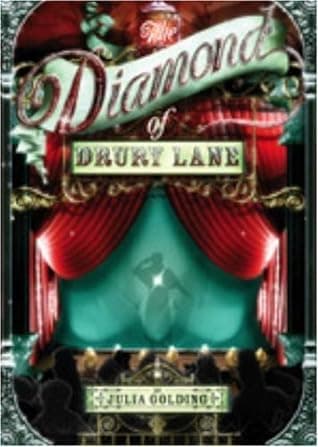
- The Diamond of Drury Lane
Julia Golding
4.0 (4k) average on GoodreadsChildren'sFirst book in the same series, featuring the same protagonist and setting.
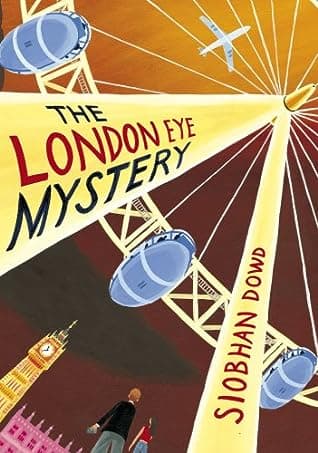
- The London Eye Mystery
Siobhan Dowd
3.9 (12k) average on GoodreadsChildren'sWhile Dowd's book is a contemporary mystery rather than historical, it shares Golding's strength in portraying a unique protagonist (Ted, who has Asperger's) navigating a complex puzzle. Dowd excels in character voice and a highly original premise. Golding's strength lies in her historical detail and the weight of the social injustice underpinning the mystery, whereas Dowd's focus is more on cognitive difference and modern urban mystery. Both are strong in character-driven investigation, but Golding's stakes are inherently higher due to the historical context of slavery.
- Angels & Demons
Dan Brown
3.9 (2.7M) average on GoodreadsThrillerA Harvard symbologist races through Rome's ancient sites, deciphering cryptic clues to unmask the Illuminati and stop a vengeful plot to destroy the Vatican with a stolen antimatter weapon.
- Gone Girl
Gillian Flynn
4.1 (2.3M) average on GoodreadsThrillerA wife's sudden disappearance on her fifth anniversary reveals a web of lies and psychological warfare, exposing the secrets within a seemingly perfect marriage.
- The Girl on the Train
Paula Hawkins
3.9 (2.1M) average on GoodreadsThrillerA woman’s fascination with a seemingly perfect couple she watches from her daily train commute leads her into a dark investigation when she witnesses something that shatters their idyllic image.
- The Da Vinci Code
Dan Brown
3.9 (1.9M) average on GoodreadsThrillerA symbologist and a cryptologist race through European landmarks, deciphering ancient codes and uncovering a conspiracy that could rewrite the foundations of Christianity.




Enjoyed the summary?
A summary gives you the shape of the book. The book itself has the detail, the examples and the voice.
Find Cat Among the Pigeons on AmazonAs an Amazon Associate, BookBrief earns from qualifying purchases. How we're funded