

Synopsis
Covers the whole plot, including the ending.
- Difficulty
- Easy
- Pacing
- Fast
- Mood
- Suspenseful, Tense, Mysterious, Dark
- Read it if
- You enjoy classic YA thrillers with a mystery element, high stakes, and a group of friends being picked off one by one.
- Skip it if
- You prefer modern thrillers with complex psychological depth or are sensitive to dated portrayals of trauma and justice.
Chain Letter Plot Summary
Covers the whole plot, including the ending.
The First Letter
Alison receives a chilling chain letter signed 'Your Caretaker.' It details a horrific secret: the hit-and-run death of a man a year prior, which Alison and six friends — Tony, Ralya, Pete, Fran, Neil, and Michael — covered up. The letter demands she perform a specific, dangerous task: steal a rare book from the library. Failure, it warns, will result in dire consequences. Alison initially dismisses it as a cruel prank, but the letter's intimate knowledge of the accident unnerves her. She confides in her boyfriend, Tony, who is equally disturbed. The letter marks the beginning of a terrifying ordeal, pulling Alison back into the guilt of their shared secret.
The Confession and First Task
Alison, Tony, Ralya, Pete, Fran, Neil, and Michael gather, each having received an identical chain letter. They are forced to confront the hit-and-run accident they caused a year ago, where they struck and killed a man, then fled the scene and buried his body in the desert. The letters demand increasingly dangerous tasks from each of them. Alison's task is to steal a rare book from the library. She attempts it but is caught by a librarian. Miraculously, the librarian lets her go, seemingly without consequence, leading Alison to believe the 'Caretaker' might have intervened, or that the threat is not as immediate as it seems. However, the incident only deepens their fear and suspicion.
Pete's Ordeal
Pete receives his task from the Caretaker: to spend a night alone in a deserted, supposedly haunted house. Despite his fear, Pete agrees, hoping to prove the Caretaker's threats are empty. He endures a night of psychological torment, hearing strange noises and feeling an unseen presence. The experience is genuinely terrifying for him, pushing him to the brink of his sanity. The next morning, he emerges shaken but unharmed. His survival, however, does little to calm the group's nerves; instead, it reinforces the idea that the Caretaker is watching their every move and is capable of orchestrating highly disturbing events. The friends realize the game is becoming more dangerous.
Fran's Accident
Fran's letter demands she drive her car at an impossibly high speed down a treacherous road. Reluctantly, she attempts the task. While driving, her car mysteriously malfunctions, leading to a horrific crash. Fran is severely injured, suffering a broken leg and other wounds, and is hospitalized. This incident shatters the group's remaining skepticism. They now understand that the Caretaker's threats are real and deadly. The 'accidents' are not coincidences, and the consequences of disobedience are severe. The friends are gripped by fear, realizing their lives are truly in danger, and the Caretaker is willing to inflict serious harm.
Ralya's Disappearance
Ralya receives her task, which involves entering a dangerous, abandoned building. Despite the group's warnings, she goes. The next day, Ralya is reported missing, and her car is found abandoned near the building. Her disappearance sends a wave of terror through the remaining friends. They frantically search for her, but she is nowhere to be found. The police are involved, but without a body or clear evidence, they have few leads. The group is convinced that the Caretaker is responsible for Ralya's vanishing act, and they fear she may be dead. This event pushes them further into paranoia and desperation, as they realize their number is dwindling.
Neil's Demise
Neil, increasingly paranoid and desperate, receives his task: to swim across a dangerous, shark-infested bay. He attempts it, believing he can outwit the Caretaker. However, during his swim, he is attacked and killed by a shark. While seemingly a tragic accident, the remaining friends are convinced it was orchestrated by the Caretaker. Neil's death is a brutal confirmation of the Caretaker's lethal intent and power. The group is now truly terrified, realizing that no one is safe and that defying the letters means certain death. The guilt of their past crime, combined with the present danger, consumes them.
Michael's Breakdown and Confession
Michael, already fragile, descends into a severe mental breakdown after Neil's death. He becomes increasingly withdrawn and erratic. In a moment of extreme distress, he confesses to Alison and Tony that he knows more about the accident than he let on. He admits that the man they hit wasn't dead when they buried him; he was still alive. This revelation horrifies Alison and Tony, adding another layer of unspeakable guilt to their secret. Michael's confession suggests a deeper, more sinister aspect to their crime, making the Caretaker's vengeance feel even more justified and inescapable. He becomes a shell of his former self, haunted by his actions.
The Revelation of the Caretaker
Driven by desperation and Michael's confession, Alison and Tony begin to investigate the hit-and-run victim. They trace his identity to a man named Mr. Davids, a local recluse. They soon discover that Mr. Davids had a son, who was also a recluse and had a strong connection to his father. Through careful deduction and piecing together clues, they realize that the Caretaker is, in fact, Mr. Davids' son. He was the only person who knew about his father's disappearance and subsequently discovered the truth about the friends' crime. This revelation explains the Caretaker's intimate knowledge and relentless pursuit of revenge, as he seeks justice for his murdered father.
The Confrontation
Alison and Tony track the Caretaker, Mr. Davids' son, to his secluded home. They confront him, and he confirms his identity and motive: avenging his father's death. He reveals that he witnessed the burial from a distance and has been meticulously planning his revenge ever since. The Caretaker, filled with cold fury, explains how he orchestrated each 'accident' and disappearance, ensuring the friends paid for their crime. He describes the psychological torment and physical harm he inflicted as a form of poetic justice. The confrontation is tense and dangerous, with the Caretaker showing no remorse, only a chilling determination to complete his vendetta.
The Final Task and Resolution
The Caretaker sets his final task for Alison and Tony: to return to the desert grave and confess their sins. They obey, driven by fear and a desperate hope for survival. At the grave site, the Caretaker confronts them one last time. A struggle ensues, and in the chaos, the Caretaker is accidentally killed. His death brings an end to the chain letter nightmare, but not to the friends' guilt. Alison and Tony are left with the profound weight of their past actions and the tragic consequences. They realize that while the physical threat is over, the psychological scars will remain, forcing them to live with the memory of their crime and the lives lost.
Chain Letter Characters
Alison
Protagonist
The first to receive the chain letter, haunted by a past crime.
Alison is a seemingly ordinary high school student whose life is turned upside down by the chain letter. She is intelligent and perceptive, often taking the lead in trying to understand and combat the Caretaker. Initially, she tries to deny the severity of their past crime, but as the body count rises, she is forced to confront her guilt and the horrific implications of their actions. She cares deeply for her friends, even as they fall victim to the Caretaker, and her primary motivation becomes survival and uncovering the truth.
Relationships: Tony (Boyfriend and co-conspirator); Ralya (Friend and co-conspirator); Pete (Friend and co-conspirator); Fran (Friend and co-conspirator); Neil (Friend and co-conspirator); Michael (Friend and co-conspirator)
Tony
Supporting
Alison's boyfriend, who supports her through the ordeal.
Tony is Alison's boyfriend and one of the seven involved in the hit-and-run. He is initially skeptical of the chain letter's threats but quickly becomes convinced of the danger. Tony is generally more cautious and protective than Alison, often trying to find a safe way out or to protect his friends. He struggles with the guilt of their shared secret but remains a steadfast presence for Alison. He is a loyal friend, though his fear sometimes paralyzes him, making him less proactive than Alison in seeking solutions.
Relationships: Alison (Boyfriend); Ralya (Friend and co-conspirator); Pete (Friend and co-conspirator); Fran (Friend and co-conspirator); Neil (Friend and co-conspirator); Michael (Friend and co-conspirator)
The Caretaker (Mr. Davids' Son)
Antagonist
The mysterious sender of the chain letters, seeking revenge.
The Caretaker is the vengeful son of the man the friends killed and buried. He is a recluse, deeply affected by his father's death, which he witnessed from afar. His motivation is pure, cold revenge, meticulously planned and executed. He is highly intelligent, resourceful, and utterly ruthless, using psychological manipulation and orchestrated 'accidents' to make the friends pay for their crime. He shows no mercy and views his actions as a justified form of justice. His identity remains a secret for most of the story, adding to the psychological horror.
Relationships: Mr. Davids (Father (victim)); Alison (Target); Tony (Target); Ralya (Target); Pete (Target); Fran (Target); Neil (Target); Michael (Target)
Michael
Supporting
One of the seven, whose guilt leads to a crucial confession.
Michael is one of the seven friends involved in the hit-and-run. He is portrayed as more sensitive and fragile than the others, and the guilt of their crime weighs heavily on him from the beginning. As the Caretaker's threats escalate, Michael's mental state rapidly deteriorates. His breakdown leads to the crucial revelation that the man they buried was still alive, adding a horrifying new dimension to their crime. He is a character consumed by his conscience, ultimately unable to cope with the psychological pressure.
Relationships: Alison (Friend and co-conspirator); Tony (Friend and co-conspirator)
Fran
Supporting
One of the seven, seriously injured by the Caretaker's demands.
Fran is one of the seven friends. She is initially dismissive of the chain letter, believing it to be a joke, but quickly learns the hard way about the Caretaker's seriousness. Her task, involving reckless driving, results in a severe car crash and serious injuries, including a broken leg. Her accident serves as a brutal wake-up call for the entire group, confirming that the threats are real and that the Caretaker is willing to inflict physical harm. Fran's ordeal shifts the group's perception from fear to terror.
Relationships: Alison (Friend and co-conspirator)
Pete
Supporting
One of the seven, who endures a terrifying night.
Pete is another member of the group. He is portrayed as somewhat adventurous and initially tries to face his task with bravado, spending a night in a haunted house. While he survives the night physically unharmed, the psychological torment he endures is significant. His experience underscores the Caretaker's ability to manipulate and terrorize without direct physical contact, showcasing the psychological aspect of the revenge plot. Pete's ordeal reinforces the pervasive fear and the Caretaker's omnipresence.
Relationships: Alison (Friend and co-conspirator)
Ralya
Supporting
One of the seven, who mysteriously disappears.
Ralya is one of the seven friends targeted by the Caretaker. Her task involves entering a dangerous, abandoned building. She subsequently disappears without a trace after attempting her task. Her vanishing act is a pivotal moment, escalating the stakes from injury to suspected death, and deepening the mystery surrounding the Caretaker's methods. Her absence fuels the remaining friends' paranoia and desperation, as they realize the Caretaker is capable of making people disappear entirely, leaving no trace.
Relationships: Alison (Friend and co-conspirator)
Neil
Supporting
One of the seven, who dies in a tragic 'accident'.
Neil is one of the friends who receives a chain letter. He is characterized by his increasing paranoia and desperation as the events unfold. His task involves swimming in a dangerous, shark-infested bay, which leads to his death by shark attack. While seemingly an unfortunate accident, his demise is clearly orchestrated by the Caretaker, serving as the ultimate proof of the Caretaker's lethal intent. Neil's death eliminates any lingering doubt among the friends about the severity of their situation.
Relationships: Alison (Friend and co-conspirator)
Mr. Davids
Mentioned
The victim of the hit-and-run, whose death sparks the revenge plot.
Mr. Davids is the reclusive man who was struck by the friends' car and then buried alive in the desert. His death is the catalyst for the entire revenge plot. Although he is never seen alive in the narrative, his presence is felt through his son's relentless pursuit of justice. His identity is initially unknown to the friends, adding to the mystery, but his past as a recluse and his connection to his son are crucial in uncovering the Caretaker's motive and identity.
Relationships: The Caretaker (Father)
Chain Letter Themes
Guilt and Consequence
The central theme is the crushing weight of guilt following an unspeakable crime and the inevitable, severe consequences. The friends initially try to bury their guilt along with the body, but the chain letter forces them to confront it. Each task and subsequent 'accident' is a direct consequence of their past actions, showing that secrets, especially those involving murder, rarely stay buried. Michael's confession about burying the man alive intensifies this theme, highlighting the horrific nature of their original sin and the inescapable nature of its repercussions.
“You thought you could bury your secret in the desert. But some things refuse to stay buried.”
Revenge and Justice
The novel explores the line between revenge and justice through the character of the Caretaker. Driven by the loss of his father and the friends' cover-up, the Caretaker believes he is delivering just retribution. His methods, however, are cruel and often lethal, blurring the lines between seeking justice for a wrong and inflicting vengeful punishment. The escalating nature of his demands, from stealing a book to causing death, shows how the pursuit of revenge can consume an individual and lead to extreme, violent measures, even if born from a desire for 'justice' for a loved one.
“An eye for an eye, a life for a life. You took my father, now I take yours.”
The Corrupting Power of Secrets
The story shows how a shared, dark secret can corrupt and destroy a group of individuals. The initial act of covering up the hit-and-run binds the friends together in a web of lies and fear. This secret creates suspicion and paranoia among them, even before the Caretaker appears. As the letters arrive and the friends start to die, their secret becomes a weapon against them, isolating them and driving them to madness. The inability to confide in authorities due to their crime further traps them, showing how secrets can lead to self-destruction.
“The desert holds many secrets, but none as deadly as the one you carry.”
Moral Compromise and Desperation
The friends repeatedly face moral compromises, first in covering up the accident, and later in obeying the Caretaker's increasingly dangerous demands. Their desperation to survive drives them to perform acts they wouldn't normally consider, such as theft or reckless behavior. This theme highlights how extreme circumstances can push individuals to abandon their moral compass. The story questions how far one would go to protect their life, and whether survival at any cost is truly worth the moral degradation and psychological toll it exacts. Each character's struggle with their assigned task reflects this theme.
“We were trapped. Every choice was wrong, but we had to choose.”
Plot Devices & Literary Techniques
The Chain Letter
The primary catalyst and ongoing threat.
The chain letter serves as the central plot device, initiating the conflict and driving the narrative forward. It is the Caretaker's chosen method of communication and control, allowing him to deliver demands, threats, and reveal his intimate knowledge of the friends' crime without direct confrontation. The anonymous nature of the letter creates suspense and paranoia, as the friends are constantly guessing the sender's identity and location. Its escalating demands and increasingly dire warnings build tension and force the characters into action, making it a relentless engine of the plot.
The Unseen Observer
A constant sense of being watched and manipulated.
This device creates pervasive tension and paranoia. The Caretaker is initially an unseen, omniscient force, knowing every detail of the friends' lives and crimes. This leads the characters to constantly suspect each other and question who among them might be the betrayer or the Caretaker's accomplice. The feeling of being watched, even when alone, heightens the psychological horror and makes escape seem impossible. This device emphasizes the Caretaker's power and control, turning the friends' world into a prison where every move is monitored, fostering deep mistrust within the group.
The Escalating Stakes
A progressive increase in danger and consequences.
The plot employs escalating stakes, starting with relatively minor demands (like stealing a book) and quickly progressing to tasks that result in severe injury, disappearance, and ultimately death. This gradual increase in danger maintains reader engagement and reinforces the Caretaker's ruthlessness. Each new 'accident' or death raises the emotional and physical stakes for the remaining characters, making their situation feel increasingly desperate and pushing them closer to breaking point. This device ensures that the tension never wanes, constantly reminding both characters and readers of the deadly seriousness of the situation.
The Unreliable Group Narrative
Information held back or distorted by group members.
Initially, the group shares a common lie about the hit-and-run, but as the story progresses, it becomes clear that not everyone knows the full truth, or some are actively withholding information. Michael's confession that the victim was buried alive is a prime example. This device creates internal conflict and suspense, as the protagonist, Alison, must discern who is being truthful and what secrets still lie hidden. It highlights the corrosive nature of their shared crime and how deceit within the group further complicates their desperate situation, making it harder to trust and unite against their common enemy.
Chain Letter Quotes
“I know what you did last summer.”
“The game isn't over until the last player drops out.”
“No one believed us. No one ever does.”
“Sometimes the past isn't just dead, it's waiting.”
“Fear has a way of making you do things you never thought you would.”
“It wasn't just a game anymore; it was a matter of life and death.”
“We all make mistakes. Some just have bigger consequences.”
“The truth was out there, but no one wanted to find it.”
“You can run, but you can't hide from your conscience.”
“The silence was almost as terrifying as the threats.”
“We were all connected by that one terrible night.”
“Trust was a luxury they could no longer afford.”
“The past has claws, and it doesn't let go easily.”
“Sometimes the monster isn't under your bed, it's inside your head.”
Quiz
10 questions on the plot and the characters. Each answer comes with a short explanation.
Question 1
What was the name of the mysterious sender of the chain letter?
- The Avenger
- Your Caretaker
- The Watcher
- The Judge
Show answer
B. Your Caretaker The chain letter was explicitly signed 'Your Caretaker,' which is how the sender identified themselves.
Question 2
Where did Alison and her six friends commit the 'unthinkable crime'?
- A secluded cabin in the mountains
- A deserted beach at night
- The desolate California desert
- An abandoned warehouse in the city
Show answer
C. The desolate California desert The book explicitly states that the crime occurred in the 'desolate California desert,' which is the central setting for the past event.
Question 3
What specifically did the chain letter demand from its recipients?
- To reveal their secret to the police
- Dangerous, impossible deeds
- A large sum of money
- To confess their sins publicly
Show answer
B. Dangerous, impossible deeds The chain letter demanded 'dangerous, impossible deeds' from each of the friends as a form of twisted penance.
Question 4
What was the initial reaction of Alison and her friends to the chain letter?
- Immediate panic and confession
- They thought it was a terrible sick joke
- They dismissed it as spam mail
- They immediately contacted the authorities
Show answer
B. They thought it was a terrible sick joke Alison initially thought the letter was 'some terrible sick joke,' a sentiment shared by the group before the threats escalated.
Question 5
What consequence was threatened if the demands of the chain letter were not met?
- Public exposure of their crime
- Financial ruin for their families
- Violence and death
- Imprisonment for their past actions
Show answer
C. Violence and death The letter explicitly threatened 'violence if the demands were not met,' and this threat soon materialized into 'accidents' and 'dying.'
Question 6
What event made the friends realize the nightmare was 'really happening to them'?
- A public announcement on the news
- The 'accidents' started happening and people began dying
- They received a second, more threatening letter
- One of them confessed to the police
Show answer
B. The 'accidents' started happening and people began dying The turning point was when 'the accidents started happening -- and the dying,' confirming the seriousness of the threats.
Question 7
What is a central theme explored in 'Chain Letter' regarding past actions?
- Forgiveness and redemption are always possible.
- The past inevitably catches up, demanding a reckoning.
- Secrecy is the best way to deal with guilt.
- Friendship can overcome any obstacle, even murder.
Show answer
B. The past inevitably catches up, demanding a reckoning. The core premise of the book is that a past crime, long hidden, has returned to haunt the perpetrators, forcing them to confront their actions.
Question 8
What type of crime did Alison and her friends commit in the desert?
- Grand theft auto
- Vandalism of a historical site
- The book implies it was a murder or a similar grave act, leading to death and severe consequences.
- Illegal drug manufacturing
Show answer
C. The book implies it was a murder or a similar grave act, leading to death and severe consequences. While not explicitly stated as 'murder' in the synopsis, the description of an 'unthinkable crime' leading to 'the dying' strongly implies a death was involved, or an act of such severity that it warrants deadly retribution.
Question 9
How does the 'Caretaker' primarily enforce their demands?
- Through psychological manipulation and threats of exposure.
- By directly harming the friends themselves.
- By orchestrating 'accidents' and deaths that appear coincidental.
- By involving the local police in the investigation.
Show answer
C. By orchestrating 'accidents' and deaths that appear coincidental. The Caretaker's method of enforcement involves orchestrating 'accidents' and deaths, making it difficult for the victims to prove they are being targeted.
Question 10
What is the primary motivation of 'Your Caretaker'?
- To gain wealth from the friends.
- To seek revenge for the crime committed by the friends.
- To teach them a moral lesson without causing harm.
- To protect someone from the friends' future actions.
Show answer
B. To seek revenge for the crime committed by the friends. The Caretaker is 'determined to make them pay for it,' indicating a clear motive of revenge or retribution for the 'unthinkable crime' they committed.
Chain Letter FAQ
What is the central premise of 'Chain Letter'?
'Chain Letter' follows Alison and her six friends, who are being targeted by an anonymous individual known as 'Your Caretaker.' This person is blackmailing them with knowledge of a terrible crime they committed in the California desert and is forcing them to perform dangerous, impossible deeds through a series of chain letters, threatening violence and death if they fail to comply.
What 'unthinkable crime' did the seven friends commit in the desert?
The 'unthinkable crime' the friends committed was leaving a man, whom they believed to be dead after a car accident, in the desolate desert. They panicked and fled the scene, fearing the repercussions of their involvement, only to later discover that the man might have still been alive when they abandoned him.
Who are the main characters involved in the chain letter plot?
The main characters targeted by the chain letter are Alison, her boyfriend Pete, Fran, Tony, Michael, Ralia, and Karen. These seven individuals were all present during the fateful desert incident that 'Your Caretaker' is using to manipulate and terrorize them.
What kind of demands does 'Your Caretaker' make in the chain letters?
The demands made by 'Your Caretaker' are increasingly dangerous and often morally compromising. They range from stealing a car to committing arson, and even more personal and psychologically torturous tasks designed to isolate the friends and make them confront their guilt.
How do the 'accidents' and 'dying' escalate the horror for the friends?
The 'accidents' and 'dying' serve as concrete proof that 'Your Caretaker' is serious and deadly. When characters like Tony and Michael meet violent ends, it shatters the group's disbelief and forces them to confront the reality that their lives are truly in peril, increasing their fear and desperation.
What is the significance of the desert setting for the initial crime?
The desolate desert setting emphasizes the isolation and lack of witnesses to the initial crime, allowing the friends to believe they could escape consequences. It also symbolizes their moral barrenness and the 'wasteland' of their conscience after abandoning the accident victim, making it a perfect backdrop for a hidden secret.
Are there any clues early on that hint at the identity of 'Your Caretaker'?
Early clues are subtle and often psychological, focusing on the group's dynamics and individual reactions to stress. The Caretaker's intimate knowledge of their lives and their guilt suggests someone close to the group or someone who meticulously researched them and their actions.
How does the author use the concept of a 'chain letter' beyond a simple plot device?
The author uses the 'chain letter' as a metaphor for the inescapable chain of consequences that link the friends to their past actions. Each letter passed on symbolizes the spreading guilt and terror, and the idea that once a chain is broken (or a crime committed), its effects continue to ripple outwards.
What role does guilt play in the characters' reactions to the chain letter?
Guilt is a central psychological driver, paralyzing some characters and making others desperate. Their shared culpability for abandoning the man in the desert prevents them from fully trusting each other or going to the authorities, as they fear exposure for their initial crime.
How does the pressure from 'Your Caretaker' impact the group's dynamics?
The pressure from 'Your Caretaker' severely erodes the group's cohesion. Trust breaks down, paranoia sets in, and accusations fly, as each member suspects the others of being the blackmailer or of not fulfilling their dangerous tasks, leading to isolation and internal conflict.
What psychological effect does the anonymous nature of 'Your Caretaker' have on the friends?
The anonymous nature of 'Your Caretaker' creates intense paranoia and a feeling of constant surveillance. Since anyone could be the blackmailer, the friends become suspicious of each other and even their closest allies, leading to a breakdown of their social bonds and increasing their isolation and fear.
How does Alison's perspective as the primary narrator influence the reader's understanding of the events?
Alison's perspective, fraught with fear, guilt, and determination, provides an intimate look into the psychological toll of the blackmail. Her internal struggles and efforts to uncover the truth drive the narrative, making the reader experience the terror and confusion alongside her, though it might also limit objective understanding.
What is the ultimate message or moral 'Chain Letter' might be conveying?
'Chain Letter' appears to convey a strong message about the inescapable nature of consequences and the corrosive power of guilt. It suggests that secrets, especially those involving serious moral transgressions, will inevitably surface and demand a reckoning, whether from an external force or one's own conscience.
Is 'Your Caretaker' truly seeking justice, or are their motives more sinister?
This is a point of debate. While 'Your Caretaker' claims to be seeking justice for the abandoned man, the methods employed—demanding dangerous, illegal acts and inflicting terror and death—suggest a more sinister, perhaps vengeful or even sadistic, motivation that goes beyond simple retribution.
How does the ending of 'Chain Letter' contribute to its overall impact?
The ending of 'Chain Letter' often leaves a lasting impact by revealing the identity and motivations of 'Your Caretaker,' potentially challenging the reader's assumptions about justice and revenge. It solidifies the themes of guilt and consequence, often with a final twist that underscores the pervasive nature of the past.
Could the 'unthinkable crime' have been avoided, and what does this say about the characters?
The crime could likely have been avoided if the characters had acted responsibly and sought help for the accident victim, rather than succumbing to panic and self-preservation. Their decision highlights their immaturity, fear, and a collective lack of moral courage at a critical moment, setting the stage for their later torment.
How does the book explore the theme of collective responsibility versus individual blame?
The book explores this by initially presenting the crime as a collective act, but then 'Your Caretaker' targets individuals with specific demands, forcing them to confront their personal roles. This creates tension within the group as each member grapples with their own guilt and tries to shift blame, highlighting the complexities of shared culpability.
What distinguishes 'Chain Letter' from other Young Adult thrillers of its time?
'Chain Letter' distinguishes itself with its relentless psychological torment and the moral ambiguity of its characters, who are not merely victims but also perpetrators of a serious crime. The escalating, deadly demands and the focus on inescapable guilt create a darker, more mature tone than many contemporary YA thrillers.
About the author
Christopher Pike is a prolific author known for his young adult horror and thriller novels. His works, including "Remember Me," "Chain Letter," and "Falling," often feature suspenseful plots, supernatural elements, and teenage protagonists. Pike's distinctive writing style has made him a popular figure in the genre, captivating readers with his ability to blend mystery and fright.
Similar books
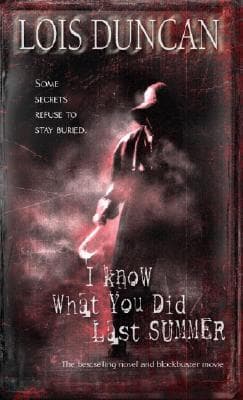
- I Know What You Did Last Summer
Lois Duncan
3.5 (12k) average on GoodreadsThrillerFeatures a group of friends haunted by a shared secret accident and stalked by a mysterious avenger.
- Angels & Demons
Dan Brown
3.9 (2.7M) average on GoodreadsThrillerA Harvard symbologist races through Rome's ancient sites, deciphering cryptic clues to unmask the Illuminati and stop a vengeful plot to destroy the Vatican with a stolen antimatter weapon.
- Gone Girl
Gillian Flynn
4.1 (2.3M) average on GoodreadsThrillerA wife's sudden disappearance on her fifth anniversary reveals a web of lies and psychological warfare, exposing the secrets within a seemingly perfect marriage.
- The Girl on the Train
Paula Hawkins
3.9 (2.1M) average on GoodreadsThrillerA woman’s fascination with a seemingly perfect couple she watches from her daily train commute leads her into a dark investigation when she witnesses something that shatters their idyllic image.
- The Da Vinci Code
Dan Brown
3.9 (1.9M) average on GoodreadsThrillerA symbologist and a cryptologist race through European landmarks, deciphering ancient codes and uncovering a conspiracy that could rewrite the foundations of Christianity.
- The Guest List
Lucy Foley
3.8 (1.3M) average on GoodreadsThrillerOn a remote Irish island, a glamorous wedding descends into a deadly whodunnit when a guest is found murdered, trapping everyone with their secrets as a storm rages.





Enjoyed the summary?
A summary gives you the shape of the book. The book itself has the detail, the examples and the voice.
Find Chain Letter on AmazonAs an Amazon Associate, BookBrief earns from qualifying purchases. How we're funded