
Synopsis
Covers the whole plot, including the ending.
- Difficulty
- Easy
- Pacing
- Moderate
- Mood
- Emotional, Hopeful, Romantic, Suspenseful
- Read it if
- You enjoy emotionally driven YA mysteries with a strong romantic element and themes of healing and overcoming trauma.
- Skip it if
- You prefer fast-paced thrillers or stories without significant romantic subplots.
Clarity Plot Summary
Covers the whole plot, including the ending.
A Reclusive Life in the Woods
Helen Winters, blind since birth, lives a solitary life in a remote cabin. She supports herself as a writer, typing manuscripts on a special Braille keyboard. Her world is organized to accommodate her lack of sight, and she finds comfort in her routine. This reclusive existence is a direct consequence of a traumatic event that forced her to drop out of college and left her deeply distrustful of others. She values her independence, viewing her self-sufficiency as a shield against further hurt.
Liam's Unexpected Arrival
One day, Helen's solitude is interrupted by Dr. Liam Larson. He is a brilliant neuro-ophthalmologist who has developed a surgical procedure he believes can restore Helen's sight. Liam is persistent and charismatic, immediately challenging Helen's emotional walls. Despite her initial skepticism and refusal, Liam is determined to convince her, seeing her as more than a patient but as someone in need of connection and healing. He makes it clear that he will not give up.
Initial Resistance and Growing Curiosity
Helen is initially resistant to Liam's offer, citing her contentment with her current life and her fear of vulnerability. She has built her identity around her blindness and the independence it has fostered. However, Liam's kindness and belief in his research begin to chip away at her defenses. He does not treat her with pity, but with respect and a gentle challenge. He starts visiting her regularly, bringing her food and engaging her in conversations beyond her medical condition, slowly reintroducing her to human connection and the possibility of a different future.
Unveiling the Past
As Liam continues his visits, a tentative trust forms between them. Helen, still guarded, gradually starts to open up about the traumatic event that caused her to leave college and retreat from society. She reveals she was a victim of a violent assault, which left her physically scarred and emotionally wounded. The experience shattered her trust in humanity and solidified her belief that isolation was the only way to protect herself. This revelation helps Liam understand her emotional scars and reinforces his desire to help her heal.
A Glimmer of Hope
Liam's patience, empathy, and belief in his procedure eventually persuade Helen to consider the surgery. She is not easily convinced, but his consistent presence and the care he shows make her question her long-held conviction that she is better off alone. The prospect of sight, once dismissed as impossible, now holds a fragile appeal. She agrees to undergo preliminary examinations, a significant step from her initial refusal, indicating a subtle shift in her perspective and a nascent hope for change.
The Surgery and Its Aftermath
Helen undergoes the delicate surgery, performed by Liam. The procedure is a success, but recovery is not simple. When the bandages are removed, Helen is overwhelmed by the flood of visual information. The world, which she had perceived through touch, sound, and smell, is now a chaotic explosion of colors and shapes. She experiences disorientation and sensory overload, struggling to process what she sees. Liam remains by her side, guiding her through this challenging adjustment, explaining the visual world to her and helping her make sense of her new reality.
Learning to See
Liam dedicates himself to helping Helen learn to 'see' in a meaningful way. He teaches her to identify objects, distinguish colors, and understand depth and perspective. This process is emotionally taxing for Helen, as she grapples with the wonder and terror of her new sense. As her sight improves, she also begins to see the world, and Liam, in a new light. Their bond deepens through these shared experiences, moving beyond a doctor-patient relationship into something more intimate, filled with mutual respect and growing affection.
The Shadow of the Past Returns
Just as Helen begins to adjust to her sight and embrace the possibility of happiness with Liam, her past trauma resurfaces in a terrifying way. Her assailant, Mark, discovers her whereabouts and begins to stalk her, sending threatening messages and appearing in places she frequents. The return of this threat shatters her fragile sense of security, triggering her PTSD and sending her back into fear. She struggles to reconcile her new visual world with the terrifying memories that now have a face.
Liam's Protection and Helen's Struggle
Liam becomes Helen's protector, installing security measures at her cabin and offering constant reassurance. However, the renewed threat takes a severe toll on Helen's mental and emotional well-being. She becomes withdrawn and fearful, questioning her decision to open herself up to the world and to Liam. Her newfound sight, instead of being a blessing, now seems to amplify her fear, as she can visually confirm the danger. Liam works to support her, trying to prevent her from retreating completely back into her former isolation.
Confrontation and Resolution
The tension escalates when Mark directly confronts Helen, leading to a dangerous situation. Liam intervenes, putting himself at risk to protect her. During this confrontation, Helen, despite her fear, finds newfound strength. Her journey from blindness to sight, and from isolation to connection, has empowered her to stand up for herself. With Liam's support, Mark is apprehended by the authorities, ending the immediate threat and allowing Helen to finally begin the long process of healing from her past trauma.
Embracing a Future
With Mark imprisoned, Helen can finally breathe. The immediate danger is gone, and she begins to process the trauma with a clearer mind and the support of Liam. She realizes that her sight, while initially overwhelming and connected to renewed fear, is ultimately a gift that allows her to see the beauty in the world and the love in Liam's eyes. She chooses to embrace life beyond her cabin, looking forward to a future where she can continue to heal, grow, and experience the world with Liam by her side, no longer defined by her past or her former disability.
Principal Figures
Helen Winters
Protagonist
A fiercely independent blind writer, reclusive after a traumatic event.
Helen is a young woman born completely blind, who has developed immense self-reliance and a sharp intellect. After a traumatic assault, she retreats to a solitary life in the woods, using her writing as an outlet and her isolation as a shield. She is initially stubborn, distrustful, and fiercely protective of her independence, believing that vulnerability only leads to pain. Despite her outward strength, she carries deep emotional scars and a profound fear of opening up to others. She finds comfort in routine and the familiar darkness of her world.
Relationships: Liam Larson (Initially doctor-patient, evolving into deep romantic love and partnership.); Mark (Her past assailant, the source of her trauma and a recurring threat.)
Dr. Liam Larson
Supporting/Love Interest
A brilliant and determined doctor who offers Helen the gift of sight.
Liam is a compassionate and brilliant neuro-ophthalmologist, driven by a desire to help others and prove the efficacy of his groundbreaking research. He is persistent, empathetic, and possesses a strong moral compass. When he meets Helen, he sees beyond her blindness and her emotional walls, recognizing her potential for a fuller life. He is patient, protective, and unwavering in his belief in her, making it his personal mission to not only restore her sight but also to bring joy and connection back into her world. He is willing to put himself at risk for those he cares about.
Relationships: Helen Winters (His patient and the woman he falls deeply in love with.)
Mark
Antagonist
Helen's former assailant who resurfaces to terrorize her.
Mark is the individual responsible for the traumatic assault on Helen that led to her dropping out of college and retreating from society. He represents the external threat that Helen has been trying to escape. His character embodies cruelty and a predatory nature, showing no remorse for his past actions and continuing to stalk and terrorize Helen when he discovers her whereabouts. He is a catalyst for Helen's renewed fear and a direct threat to her newfound peace and happiness, forcing her to confront her deepest fears.
Relationships: Helen Winters (His victim, the object of his past assault and current stalking.)
Themes & Insights
Healing from Trauma
The novel deeply explores the long-lasting effects of trauma and the arduous journey toward healing. Helen's initial response to her assault is to withdraw, building emotional walls and living in isolation. Her physical blindness is a metaphor for her emotional blindness to connection. Liam's presence and the prospect of sight force her to confront her past, and the resurgence of her assailant brings her trauma to the forefront. Her eventual ability to see, both literally and figuratively, is linked to her capacity to process and overcome her past pain, culminating in her reclaiming her life.
“She had learned not to trust anyone, and to rely only on herself.”
The Nature of Sight and Perception
The theme of sight is central, not just as a physical ability but as a metaphor for understanding and perspective. Helen's physical blindness shapes her entire world, but her initial emotional 'blindness' prevents her from seeing the good in others or the possibilities for her own future. When she gains physical sight, she is overwhelmed, realizing that seeing is more than just visual input; it requires interpretation and emotional processing. The story suggests that true 'clarity' comes from seeing the world, and oneself, with an open heart and mind, rather than just with one's eyes. Her journey highlights how perception is intertwined with personal experience and emotional state.
“Her world has always been dark, but he might be able to change everything...”
Vulnerability vs. Independence
Helen's core struggle revolves around her fierce independence, born from her blindness and reinforced by her trauma, versus the vulnerability required for genuine human connection. She views self-reliance as her greatest strength and protection, fearing that any reliance on others will lead to further hurt. Liam challenges this belief, demonstrating that vulnerability, when placed in trusted hands, can lead to healing and love. Her decision to undergo surgery and allow Liam into her life signifies a shift from rigid independence to an acceptance of interdependence, recognizing that true strength can also be found in allowing oneself to be supported and loved.
“She had built her identity around her blindness and the independence it had fostered.”
Love as a Catalyst for Change
Love, both romantic and compassionate, acts as a powerful catalyst for Helen's transformation. Liam's belief in her and his persistent affection are instrumental in breaking down her emotional barriers. His love provides her with a safe space to confront her fears and her past. It is not just the medical possibility of sight, but the emotional connection and the love she develops for Liam, that truly empowers her to heal and envision a future beyond her isolation. Their relationship shows that love can mend broken spirits and provide the courage needed to face life's greatest challenges.
“He makes it his personal mission to rescue Helen from her loneliness, and bring joy into her world once more...”
Plot Devices & Literary Techniques
Sensory Deprivation/Overload
Helen's blindness transitioning to overwhelming sight.
This device is central to the narrative, using Helen's lifelong blindness to highlight her unique perspective and the intricate ways she navigates the world. The shift to gaining sight then creates a sensory overload, emphasizing the challenge of adapting to a new reality. This transition isn't merely a physical change but a profound psychological and emotional one, forcing Helen to re-evaluate everything she thought she knew about her environment and herself. It heightens the stakes of her journey and provides vivid descriptions of her struggle to interpret a visually rich world.
The Reclusive Heroine
Helen's self-imposed isolation as a coping mechanism.
Helen's choice to live as a reclusive writer in the woods serves as a powerful symbol of her emotional retreat from the world after trauma. This device isolates her from external influences, making Liam's persistent intrusions all the more impactful. It establishes her initial resistance to change and connection, and her journey out of this isolation becomes a core element of her character arc, symbolizing her healing and willingness to re-engage with life. The cabin itself acts as both a sanctuary and a prison.
The 'Magical' Cure
Liam's groundbreaking surgery offering a seemingly impossible solution.
Liam's revolutionary surgical procedure, which promises to restore Helen's lifelong blindness, functions as a 'magical' or highly improbable solution that drives the plot. While grounded in scientific ambition, its rapid and successful application against a congenital condition serves to create immediate high stakes and a clear goal. This device allows for the exploration of themes surrounding identity, perception, and the overwhelming impact of profound change, setting up the dramatic shift in Helen's life and the challenges that come with it, rather than focusing on the scientific plausibility.
The Past Haunting the Present
The reappearance of Helen's assailant.
The return of Mark, Helen's assailant, serves as a classic plot device to escalate conflict and force the protagonist to confront unresolved trauma. His reappearance shatters Helen's fragile peace and tests her newfound strength and connection with Liam. This external threat not only provides suspense but also acts as a catalyst for Helen's final steps in healing, forcing her to actively fight against the fear that has defined her for so long, rather than just passively recovering. It gives her a concrete enemy to overcome, both physically and psychologically.
Clarity Quotes
“The truth was a slippery thing, always just out of reach, like a dream you couldn't quite remember upon waking.”
“Sometimes, the biggest secrets weren't hidden in the dark, but in plain sight, disguised as ordinary.”
“He had a way of looking at me that made me feel like I was the only person in a crowded room, and also the only person who mattered.”
“Fear was a cold hand gripping your heart, but hope was the tiny spark that still flickered, refusing to be extinguished.”
“Every lie told created a ripple, and eventually, those ripples would become a wave that crashed down on the one who started it.”
“We were all just pieces of a larger puzzle, trying to find where we fit, and sometimes, forcing a fit only broke the picture.”
“The past wasn't just behind us; it was a shadow that walked beside us, influencing every step we took.”
“His smile was a weapon, disarming and charming, making you forget all the questions you had intended to ask.”
“It wasn't about finding the answers, but about understanding the questions, truly understanding them.”
“Grief was a heavy cloak, but sometimes, beneath it, you found the strength you never knew you had.”
“The quiet moments were often the loudest, filled with unspoken words and lingering doubts.”
“Trust was a fragile thing, easily broken, and once shattered, almost impossible to fully repair.”
“There's a difference between knowing a secret and truly comprehending its weight.”
“Love wasn't always a grand gesture; sometimes it was just being there, quietly, steadily, when everything else was falling apart.”
Quiz
10 questions on the plot and the characters. Each answer comes with a short explanation.
Question 1
What is Helen Winters' primary disability at the beginning of the story?
- She is deaf.
- She is paralyzed.
- She is completely blind.
- She has a speech impediment.
Show answer
C. She is completely blind. The synopsis explicitly states, 'Fiercely independent Helen Winters was born completely blind.'
Question 2
What event caused Helen to drop out of college and retreat from society?
- A severe financial crisis.
- A traumatic event that devastated her life.
- A disagreement with her professors.
- She became ill with a chronic disease.
Show answer
B. A traumatic event that devastated her life. The synopsis mentions she 'did not expect a traumatic event to devastate her life and force her to drop out of college.'
Question 3
Where does Helen choose to live after retreating from society?
- In a bustling city apartment.
- With her family in her childhood home.
- In a secluded cabin in the woods.
- In a shared house with other writers.
Show answer
C. In a secluded cabin in the woods. The description states she 'retreated from society to live by herself as a reclusive writer in the woods.'
Question 4
What is Dr. Liam Larson's profession?
- A therapist specializing in trauma.
- A novelist seeking inspiration.
- A brilliant young doctor with new research.
- A private investigator.
Show answer
C. A brilliant young doctor with new research. He is described as 'a brilliant young doctor' offering new research to help Helen see.
Question 5
Why does Helen initially refuse Dr. Liam Larson's offer to give her sight?
- She is afraid of the surgical risks.
- She has learned not to trust anyone and relies only on herself.
- She believes her blindness is a gift.
- She is already seeing other doctors.
Show answer
B. She has learned not to trust anyone and relies only on herself. The synopsis states, 'She has learned not to trust anyone, and to rely only on herself.'
Question 6
What is Liam's personal mission regarding Helen?
- To publish a groundbreaking medical paper about her case.
- To convince her to move back to the city.
- To rescue her from her loneliness and bring joy into her world.
- To help her overcome her writer's block.
Show answer
C. To rescue her from her loneliness and bring joy into her world. Liam 'makes it his personal mission to rescue Helen from her loneliness, and bring joy into her world once more.'
Question 7
What is the central conflict that Liam must help Helen overcome?
- Her lack of financial resources.
- Her 'demons' and grief threatening to destroy her rebuilt strength.
- Her inability to write due to her reclusive lifestyle.
- The interference of her overprotective family.
Show answer
B. Her 'demons' and grief threatening to destroy her rebuilt strength. The story highlights, 'When Helen's demons come racing back into her life, threatening to rip her apart and destroy the strength she has carefully rebuilt, Liam is the only one who might be able to save her.'
Question 8
What does the phrase 'see the world in a different light' metaphorically imply for Helen?
- She will literally gain physical eyesight and nothing more.
- She will develop a more positive and hopeful outlook on life, in addition to potentially gaining sight.
- She will become a renowned artist painting landscapes.
- She will only see things in black and white.
Show answer
B. She will develop a more positive and hopeful outlook on life, in addition to potentially gaining sight. Given the themes of loneliness, trauma, and finding joy, 'see the world in a different light' implies a deeper emotional and psychological transformation, not just physical sight.
Question 9
What is the primary motivation behind Helen's reclusive lifestyle?
- To focus solely on her writing career without distractions.
- To avoid being hurt by people again after past cruel experiences.
- To conduct secret experiments in solitude.
- She enjoys the quiet and nature more than human company.
Show answer
B. To avoid being hurt by people again after past cruel experiences. The text states, 'Disillusioned by the cruelty of people, Helen retreated from society to live by herself as a reclusive writer in the woods--where no one could ever hurt her again.'
Question 10
What does the description imply about the nature of Helen and Liam's relationship?
- It will be a purely professional doctor-patient relationship.
- Liam will be a mentor figure helping Helen with her writing.
- It will develop into a romantic relationship where Liam helps her heal emotionally and physically.
- They will become fierce rivals.
Show answer
C. It will develop into a romantic relationship where Liam helps her heal emotionally and physically. The genre includes 'Romance,' and Liam's 'personal mission to rescue Helen from her loneliness, and bring joy into her world once more' strongly suggests a romantic and deeply personal connection beyond just medical treatment.
Clarity FAQ
What is the central premise of 'Clarity'?
'Clarity' follows Helen Winters, a fiercely independent blind woman who has retreated to a reclusive life in the woods after a traumatic event. Her solitude is challenged when Dr. Liam Larson arrives, offering a revolutionary medical procedure that could grant her sight, forcing her to confront her past and her distrust of others.
Who are the two main characters, and what are their primary motivations?
Helen Winters is a blind writer who seeks isolation and self-reliance after past trauma, deeply distrustful of human connection. Dr. Liam Larson is a brilliant, persistent doctor driven by a desire to help Helen and bring joy back into her life, motivated by his groundbreaking research and perhaps a deeper personal connection to her situation.
What kind of traumatic event forced Helen to drop out of college and become a recluse?
The book hints at a deeply devastating traumatic event that shattered Helen's trust in people and led to her withdrawal from society. While the specifics are initially vague, it profoundly impacted her emotional well-being, forcing her to abandon her studies and seek solitude in the woods.
How does Dr. Liam Larson convince Helen to consider his experimental procedure?
Liam initially faces Helen's stubborn refusal, but he persists by making it his personal mission to break through her emotional barriers. He doesn't just offer medical hope; he tries to reintroduce joy and connection into her isolated world, slowly earning her trust through his dedication and genuine care.
What challenges does Helen face beyond her physical blindness?
Beyond her blindness, Helen grapples with profound emotional scars, including deep-seated distrust of others, a fear of vulnerability, and the lingering grief from her past trauma. Her journey is as much about healing her emotional wounds as it is about potentially gaining her physical sight.
Are there any subtle clues about Liam's past or his specific interest in Helen's case?
The narrative suggests Liam's intense focus on Helen goes beyond professional duty, hinting at a personal motivation or a deeper understanding of her plight. Readers might notice his unusual persistence and emotional investment, implying a backstory that will be revealed later in the series.
Does the book foreshadow the nature of Helen's 'demons' that come racing back into her life?
The book subtly alludes to the resurfacing of past threats, perhaps connected to the original trauma that drove Helen into reclusion. These 'demons' are not just internal struggles but external forces that threaten to unravel the fragile peace she has built, and Liam's presence might inadvertently draw them out.
Are there any symbolic elements related to Helen's blindness before the potential surgery?
Helen's physical blindness often symbolizes her emotional 'blindness' to trust and connection, and her inability to 'see' the good in people after her trauma. Her reclusive life in the dark woods further emphasizes her emotional isolation and her chosen refuge from a world she perceives as cruel.
How does Helen's fierce independence serve as both a strength and a weakness?
Helen's independence allows her to navigate a sighted world as a blind person and rebuild her life after trauma, showcasing remarkable resilience. However, it also manifests as stubbornness and an unwillingness to accept help or emotional connection, isolating her and hindering her emotional healing.
Analyze Liam's 'savior complex' and its potential impact on Helen's autonomy.
Liam's mission to 'rescue' Helen can be seen as a benevolent savior complex, driven by genuine care but potentially undermining Helen's hard-won autonomy. While he seeks to help her, his persistence could inadvertently disempower her if she doesn't actively choose her path, rather than being led by his strong will.
How does the author use the setting of the 'reclusive writer in the woods' to reflect Helen's psychological state?
The secluded cabin in the woods is a direct manifestation of Helen's desire for emotional safety and control, a physical barrier against the perceived dangers of society. It represents her retreat from vulnerability and her attempt to create a contained world where she believes no one can hurt her, mirroring her internal emotional walls.
What psychological barriers does Helen have to overcome to accept Liam's help?
Helen must overcome deep-seated distrust, a fear of being hurt again, and the ingrained belief that relying on herself is the only way to survive. Accepting Liam's help means confronting her past trauma and opening herself up to vulnerability, which she has actively avoided for so long.
Is Liam's dedication to Helen solely altruistic, or are there hints of a romantic interest from the start?
While Liam's initial motivation appears professional and altruistic, his intense persistence and personal mission to bring joy back into Helen's world strongly suggest a developing romantic interest. His actions go beyond a doctor-patient relationship, indicating a deeper emotional connection forming early on.
How does the title 'Clarity' relate to both Helen's physical and emotional journey?
'Clarity' refers not only to the potential for Helen to gain physical sight but also, more profoundly, to her journey toward emotional and psychological clarity. It implies gaining a clearer understanding of her past, her own strength, and the possibility of trust and love, seeing the world and herself in a new light.
Given this is the first book in a series, what major conflict or question is likely left unresolved at the end?
As the first book, it's highly probable that the immediate outcome of the surgery and the full extent of Helen's healing—both physical and emotional—will be left open. The true nature of her past trauma and the identity of the 'demons' threatening her will likely remain unresolved, setting up future installments.
Could Helen's initial refusal of sight be interpreted as a form of comfort with her known world?
Yes, Helen's stubborn refusal could be interpreted as a psychological defense mechanism where the known darkness, though challenging, is safer and more predictable than the unknown world of sight. It represents her comfort in her established coping mechanisms and a resistance to radical change that could expose her to new vulnerabilities.
What role does the 'young adult' genre typically play in a story like 'Clarity'?
The 'young adult' genre in 'Clarity' likely focuses on themes of identity, healing from trauma, first love, and finding one's place in the world, even for a protagonist who is technically an adult. It emphasizes emotional growth, self-discovery, and intense personal struggles common to the YA demographic, despite the mature themes.
About the author

Loretta Lost is a fiction author known for her novel "Clarity." Her works often explore complex emotional themes and character development, engaging readers with relatable narratives. Lost's writing reflects a deep understanding of human relationships and personal growth.
Similar books
- The Sun Is Also a Star
Nicola Yoon
4.1 (184k) average on GoodreadsYoung AdultA romance that develops quickly under unusual circumstances, with characters confronting personal challenges.
- One of Us Is Lying
Karen M. McManus
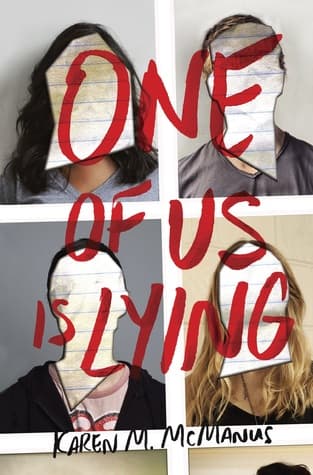
4.0 (216k) average on GoodreadsThriller'Clarity' shares the YA mystery genre with 'One of Us Is Lying,' but McManus's novel excels in intricate plot twists, multiple suspect perspectives, and a more morally ambiguous cast. 'Clarity' prioritizes Helen's emotional journey and romantic development, making its antagonist's motives less complex and its mystery less convoluted compared to McManus's more twist-driven narrative. While both build suspense, 'One of Us Is Lying' focuses more on 'whodunit' with multiple layers of deception, whereas 'Clarity' uses the mystery primarily as a catalyst for Helen's personal growth.
- Wonder
R.J. Palacio
4.4 (733k) average on GoodreadsChildren'sBoth 'Clarity' and 'Wonder' feature protagonists facing significant physical challenges and societal reactions. However, 'Wonder' focuses on Auggie's journey of social integration into a mainstream school and the impact of his appearance on those around him, exploring themes of empathy and acceptance through multiple perspectives. 'Clarity,' while also dealing with Helen's physical challenge (blindness and subsequent sight), primarily centers on her overcoming isolation, romantic development, and confronting a specific past trauma. Palacio's work is more about navigating social landscapes with a disability, while Lost's is about personal healing and finding love after trauma.
- Angels & Demons
Dan Brown
3.9 (2.7M) average on GoodreadsThrillerA Harvard symbologist races through Rome's ancient sites, deciphering cryptic clues to unmask the Illuminati and stop a vengeful plot to destroy the Vatican with a stolen antimatter weapon.
- Gone Girl
Gillian Flynn
4.1 (2.3M) average on GoodreadsThrillerA wife's sudden disappearance on her fifth anniversary reveals a web of lies and psychological warfare, exposing the secrets within a seemingly perfect marriage.
- The Girl on the Train
Paula Hawkins
3.9 (2.1M) average on GoodreadsThrillerA woman’s fascination with a seemingly perfect couple she watches from her daily train commute leads her into a dark investigation when she witnesses something that shatters their idyllic image.





Enjoyed the summary?
A summary gives you the shape of the book. The book itself has the detail, the examples and the voice.
Find Clarity on AmazonAs an Amazon Associate, BookBrief earns from qualifying purchases. How we're funded