
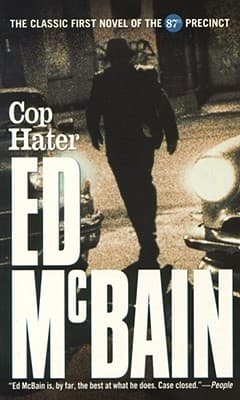
Synopsis
Covers the whole plot, including the ending.
- Difficulty
- Easy
- Pacing
- Fast
- Mood
- Gritty, Suspenseful, Tense, Dark
- Read it if
- You enjoy classic hardboiled detective stories with a strong sense of police procedural and a relentless hunt for a killer.
- Skip it if
- You prefer modern thrillers with complex psychological profiles or those that shy away from a straightforward whodunit.
Cop Hater Plot Summary
Covers the whole plot, including the ending.
The First Detective Down
The novel starts with the murder of Detective Arthur Reardon of the 87th Precinct. He is shot three times with a .45 caliber handgun in an alley. Detectives Steve Carella, Meyer Meyer, and Bert Kling arrive at the scene. The immediate question is why: Reardon was generally well-liked. The precinct, led by Lieutenant Byrnes, deals with the fact that one of their own was targeted. Carella feels a personal need to solve the case, which quickly affects the entire force.
A Second Officer Falls
Days after Reardon's murder, the killer strikes again. Detective Dave Foster, Reardon's partner, is found dead in the same way — three .45 shots. This second killing shocks the 87th Precinct, increasing fear and pressure. The pattern suggests a personal vendetta against the two partners. Carella and Meyer start looking into Reardon and Foster's recent cases for anyone with a grudge. The killings are clearly professional, leading detectives to suspect a highly organized or deeply motivated person.
The Net Widens: A Third Victim
The precinct's theory of a targeted vendetta against Reardon and Foster breaks when a third detective, Roger Havilland, is murdered. Havilland had no direct link to Reardon or Foster, other than being part of the 87th Precinct. This third killing changes the investigation from a specific grudge to a general attack on the force. The 'cop hater' is now clearly targeting any officer from the 87th. Fear among the detectives grows, and the pressure on Carella and his colleagues to catch the killer becomes immense. The city's media starts to sensationalize the murders, adding to public scrutiny.
Carella's Personal Stake
As the investigation continues, Detective Steve Carella's personal life becomes more involved with the case. His fiancée, Teddy Franklin, who is deaf, fears for his safety. She worries he could be the next victim, and her vulnerability highlights his danger. Carella, in love with Teddy, feels the weight of her concern, which strengthens his resolve to find the killer. Her fears remind him of the real danger facing every detective in the 87th Precinct, including himself.
Following a Slim Lead
The only clear clue detectives have is the .45 caliber weapon used in all three murders. Detective Carella and Meyer Meyer look into past cases involving .45s, connecting a specific weapon to an old robbery case handled by Reardon and Foster. This lead takes them to a pawn shop and then to a known fence in the city's criminal world. The investigation is difficult, with many interviews and dead ends, but the detectives remain determined. They start to trace the weapon's ownership, hoping it will lead them to the killer.
The Brothel and the Widow
Carella's search for the .45's history leads him to a brothel, a place frequented by criminals and a source of information. There, he hears about Mary Barton, a beautiful and mysterious widow with ties to the criminal underworld and, more importantly, to the type of weapon used in the killings. Carella visits Mary Barton, a femme fatale, in her apartment. She is alluring and avoids direct answers, giving just enough information to keep Carella interested but also raising his suspicions. He senses she knows more than she reveals, and her charm complicates his professional distance.
Unraveling the Past
Through careful investigation, Carella discovers that Mary Barton was involved with a small-time criminal named Danny Gimp, who was connected to the old robbery case Reardon and Foster had worked on. Gimp was thought to have been killed during that robbery, but details were always unclear. Carella realizes Mary Barton has a significant, hidden past and that her current mysterious behavior is a cover. He suspects her involvement is deeper than she admits, and that the reason for the cop killings might come from this unresolved past.
The Revelation of the Killer's Identity
Carella puts the facts together: Mary Barton is not just linked to the past crime; she is the leader, if not the direct killer, of the cop murders. He realizes Danny Gimp, believed dead, is alive and in hiding. The 'cop hater' is a team, with Mary in charge. The motive is revenge for a perceived betrayal or injustice from the original robbery and Gimp's 'death.' The realization is chilling: the killer is not alone but a calculated and ruthless duo, driven by a deep desire for vengeance against the police.
The Confrontation at the Apartment
With his new understanding, Carella returns to Mary Barton's apartment and confronts her. He finds Danny Gimp there, alive and the man behind the .45. The apartment becomes a tense standoff. Gimp, a hardened criminal, is ready to kill again to protect himself and Mary. Carella, alone and facing two dangerous people, remains steady, trying to reason with them while preparing for a deadly fight. The stakes are very high, with Carella's life now in the 'cop hater's' direct aim.
The Violent Climax
The confrontation turns into a violent struggle. Danny Gimp tries to shoot Carella with the .45. Carella is wounded, taking a bullet, but he manages to shoot back, critically injuring Gimp. In the chaos, Mary Barton also tries to intervene, but Carella, despite his injury, subdues her. The 'cop hater's' attacks end, but not without more bloodshed. Carella, though hurt, survives, having avenged his fallen comrades and protected the precinct. The precinct can finally relax, though the scars of the murders will remain.
Cop Hater Characters
Steve Carella
Protagonist
A dedicated and sharp detective of the 87th Precinct.
Detective Steve Carella is a tenacious and intelligent officer in the 87th Precinct. He is driven by a strong sense of justice and loyalty to his fellow detectives. Despite his relative youth, he possesses a keen investigative mind and a willingness to follow leads wherever they take him, even into dangerous territory. He is deeply in love with his fiancée, Teddy, and her vulnerability adds a personal dimension to his pursuit of the killer. Carella is observant, methodical, and unafraid to confront danger head-on.
Relationships: Teddy Franklin (Fiancée, a deaf woman who provides emotional support and motivation.); Meyer Meyer (Partner and trusted colleague, providing support and a sounding board.); Lieutenant Byrnes (Superior officer, providing guidance and pressure.)
Meyer Meyer
Supporting
Carella's experienced and calm partner.
Detective Meyer Meyer is Carella's partner, a more seasoned and pragmatic detective. His calm demeanor and methodical approach complement Carella's intensity. Meyer is reliable, observant, and often provides a grounded perspective during the frantic investigation. He is a loyal colleague and a steady presence in the precinct, offering a foil to Carella's sometimes impulsive drive. His experience is invaluable in navigating the complexities of the city's criminal underworld.
Relationships: Steve Carella (Partner and trusted colleague.); Lieutenant Byrnes (Superior officer.)
Mary Barton
Antagonist
A beautiful and dangerous widow with a hidden agenda.
Mary Barton is a mysterious and alluring woman, initially appearing as a femme fatale connected to the criminal underworld. She is beautiful, intelligent, and manipulative, using her charm to deflect suspicion. Beneath her composed exterior lies a deep-seated desire for revenge, stemming from a past injustice involving her lover, Danny Gimp, and the police. She is the calculating mastermind behind the cop killings, orchestrating the attacks with a chilling lack of remorse. Her motivation is rooted in a warped sense of loyalty and a thirst for vengeance.
Relationships: Danny Gimp (Lover and accomplice, the direct executor of the killings.); Steve Carella (The detective she attempts to mislead and ultimately kill.)
Danny Gimp
Antagonist
Mary Barton's presumed-dead lover and the actual 'cop hater'.
Danny Gimp is Mary Barton's lover, a hardened criminal believed to have been killed during an old robbery. He is the direct perpetrator of the cop killings, wielding the .45 caliber weapon with deadly precision. Gimp is ruthless, brutal, and completely devoted to Mary Barton, acting as her instrument of revenge. His survival and hidden existence are central to the plot's mystery. He represents the physical threat and the violent arm of the 'cop hater's' vendetta, driven by a raw, unfiltered desire for retribution.
Relationships: Mary Barton (Lover and accomplice, acting under her direction.); Steve Carella (The detective he attempts to murder.)
Teddy Franklin
Supporting
Steve Carella's deaf fiancée, who brings a personal dimension to the story.
Teddy Franklin is Steve Carella's fiancée, a loving and supportive woman who is deaf. Her inability to hear adds a unique layer to her character, making her particularly sensitive to the non-verbal cues and emotional undercurrents of Carella's stress. She represents Carella's personal life and the stakes beyond his professional duty. Her fear for his safety humanizes Carella and highlights the dangerous reality of his job, serving as a powerful emotional anchor for the protagonist.
Relationships: Steve Carella (Fiancée, providing emotional support and a reason for him to stay safe.)
Lieutenant Byrnes
Supporting
The commanding officer of the 87th Precinct.
Lieutenant Byrnes is the steady and authoritative commanding officer of the 87th Precinct. He carries the immense responsibility of protecting his officers while also solving the escalating murder case. Byrnes is a veteran of the force, experienced and level-headed, providing leadership and strategic direction to his detectives. He feels the pressure from the public and the internal fear among his men, but he remains composed and focused on the investigation, entrusting Carella and Meyer with significant responsibility.
Relationships: Steve Carella (Subordinate officer, to whom he delegates much of the investigation.); Meyer Meyer (Subordinate officer.)
Detective Arthur Reardon
Mentioned
The first victim of the 'cop hater'.
Detective Arthur Reardon is the first victim of the 'cop hater'. His murder sets the entire plot in motion. He is described as a generally unassuming and well-liked detective, making his targeted killing particularly perplexing. His past cases, particularly an old robbery, become crucial clues in unraveling the mystery behind the attacks.
Relationships: Detective Dave Foster (Partner, also murdered.); Steve Carella (Colleague, whose death Carella investigates.)
Detective Dave Foster
Mentioned
The second victim and partner of Detective Reardon.
Detective Dave Foster is the second victim of the 'cop hater' and was the partner of Arthur Reardon. His murder initially leads the 87th Precinct to believe the killings are a personal vendetta against the two partners. Like Reardon, his past work on an old robbery case becomes a key piece of the puzzle that Carella must solve.
Relationships: Detective Arthur Reardon (Partner, also murdered.); Steve Carella (Colleague, whose death Carella investigates.)
Detective Roger Havilland
Mentioned
The third victim, whose death broadens the scope of the investigation.
Detective Roger Havilland is the third victim of the 'cop hater'. His murder is significant because he had no direct connection to Reardon or Foster, shattering the precinct's initial theory of a targeted grudge against the partners. His death confirms that the killer is targeting any officer from the 87th Precinct, transforming the investigation into a full-blown manhunt against a general 'cop hater'.
Relationships: Steve Carella (Colleague, whose death Carella investigates.)
Cop Hater Themes
Revenge and Justice
The main theme is a twisted idea of justice driving a brutal revenge plot. Mary Barton and Danny Gimp believe the police wronged them in the past, leading them to seek violent payback against the 87th Precinct. This contrasts with the formal justice Carella and his colleagues pursue. The story explores how personal vengeance destroys, showing that such a quest only leads to more violence and tragedy.
“Someone out there hates cops enough to kill them, one by one.”
Fear and Vulnerability
The novel clearly shows the fear that fills the 87th Precinct as detectives are murdered. This theme highlights how vulnerable police officers are, showing that even those meant to protect can become targets. The fear is not just work-related; it extends to the detectives' personal lives, seen in Teddy Franklin's worries for Carella. This constant threat creates an atmosphere of paranoia and high tension, making every dark alley and new lead potentially deadly.
“Every cop in the precinct looked over his shoulder. Every cop wondered if he was next.”
The Nature of Evil
The story explores the calculated and cold nature of evil, shown by Mary Barton and Danny Gimp. Their actions are not sudden but carefully planned, driven by deep malice. Mary's manipulation and Gimp's brutality show different sides of criminal evil. The 'cop hater' is not a faceless enemy but a human one, making the evil more chilling. The story explores how past wrongs can grow into an all-consuming desire to harm, regardless of the victims' innocence.
“There was a cold, deliberate quality to the killings that chilled even the most hardened men.”
Loyalty and Brotherhood
Amidst the fear and violence, the loyalty among the detectives of the 87th Precinct is clear. The murders of Reardon, Foster, and Havilland unite the remaining officers, strengthening their resolve and their bonds. Carella's personal dedication to avenging his fallen comrades shows this brotherhood. The precinct acts as a close unit, united against a common enemy, demonstrating the deep trust and support within the police force during extreme danger.
“An attack on one of them was an attack on all of them.”
Plot Devices & Literary Techniques
Red Herring
Misleading clues used to divert the investigation.
Initially, the murders of Reardon and Foster, who were partners, suggest a personal grudge against the pair. This acts as a significant red herring, leading the detectives down a path focused on their specific past cases. The subsequent murder of Detective Havilland, who had no direct connection to the first two, shatters this theory, revealing that the killer is targeting any officer from the 87th Precinct. This device effectively ratchets up the tension and broadens the scope of the mystery.
Femme Fatale
A mysterious and alluring woman who ensnares the protagonist.
Mary Barton embodies the classic femme fatale. Her beauty, enigmatic demeanor, and carefully doled-out information initially intrigue Carella, drawing him into her web. She uses her allure to manipulate and mislead, making her a dangerous adversary. Her role adds a layer of psychological complexity to the investigation, as Carella must navigate her charm while uncovering her sinister true nature. Her presence complicates the detective's professional distance with personal temptation and danger.
The MacGuffin (The .45 Caliber Weapon)
A plot device that drives the story forward without being the main focus.
The .45 caliber handgun used in all the murders serves as a crucial MacGuffin. While the weapon itself isn't the story's ultimate focus, the investigation into its history and ownership is the primary driver of Carella's detective work. Tracing the gun's path from an old robbery to a pawn shop and eventually to Mary Barton and Danny Gimp provides the concrete clues needed to unravel the mystery and identify the killers. It's the tangible thread that connects disparate events and characters.
The Unseen Threat
The killer's anonymity creates widespread fear and psychological tension.
For much of the novel, the 'cop hater' is an unseen, unknown entity, striking from the shadows. This anonymity creates a pervasive sense of fear and psychological tension throughout the 87th Precinct. Every detective feels vulnerable, and the killer's identity remains a terrifying mystery. This device effectively builds suspense, as the audience and characters alike are left to wonder who is behind the attacks and when and where they will strike next. The reveal of the killer's identity is delayed, maximizing the impact.
Cop Hater Quotes
“There was a smell of stale beer and cheap perfume and a lingering aura of desperation.”
“The city was a million separate lives, all bumping and grinding against each other, sometimes in harmony, more often in discord.”
“A cop's life was a series of choices, most of them bad, all of them necessary.”
“The rain was coming down in sheets, washing the grime off the streets, but doing nothing for the grime in men's souls.”
“Fear was a cold, hard knot in the stomach, and it never really went away, not when you wore the badge.”
“Every time a cop went down, it chipped away at all of them, a little piece of their own mortality staring back.”
“The silence in the room was louder than any scream, filled with unspoken accusations and a terrible understanding.”
“Justice, he thought, was a blind woman with a very blunt instrument.”
“You learned to live with the ugly, because the ugly was always there, lurking just beneath the surface.”
“There were no easy answers in this city, only harder questions.”
“He carried the weight of the city on his shoulders, and sometimes it felt like it would crush him.”
“The truth was a slippery thing, always changing shape, always just out of reach.”
“Every face told a story, if you knew how to read the lines, the shadows, the unspoken words.”
“The night had a thousand eyes, and none of them were friendly.”
Quiz
10 questions on the plot and the characters. Each answer comes with a short explanation.
Question 1
Which detective is the first victim in 'Cop Hater'?
- Detective Steve Carella
- Detective Reardon
- Detective Kling
- Detective Hawes
Show answer
B. Detective Reardon The synopsis explicitly states, 'When Detective Reardon is found dead, motive is a big question mark.'
Question 2
How many shots are consistently used to kill each detective?
- Two .38 shots
- Three .45 shots
- Four .22 shots
- One shotgun blast
Show answer
B. Three .45 shots The description states: 'three .45 shots from the dark add up to one, two, three very dead detectives.'
Question 3
Who is the main detective investigating the murders?
- Detective Reardon
- The Chief of Police
- Detective Steve Carella
- A federal agent
Show answer
C. Detective Steve Carella The synopsis clearly identifies, 'With one meager clue, Detective Steve Carella begins his grim search for the killer.'
Question 4
What initial theory do the police consider after the second detective is killed?
- A random serial killer
- Open-and-shut grudge killings
- An inside job by another precinct
- A mob hit
Show answer
B. Open-and-shut grudge killings The text states: 'But when his partner becomes victim number two, it looks like open-and-shut grudge killings.'
Question 5
What type of weapon is consistently used in the killings?
- A revolver
- A .45 automatic
- A rifle
- A knife
Show answer
B. A .45 automatic The description specifies 'three .45 shots from the dark' and Carella's search ends with 'a .45 automatic aimed straight at his head.'
Question 6
Which of the following locations is NOT mentioned as a place Carella's search takes him?
- The city's underworld
- A notorious brothel
- An abandoned warehouse
- The apartment of a beautiful and dangerous widow
Show answer
C. An abandoned warehouse The synopsis lists 'the city's underworld to a notorious brothel, to the apartment of a beautiful and dangerous widow' but does not mention an abandoned warehouse.
Question 7
What is the primary motivation for the killer, as initially considered by the police after the first two victims?
- Revenge against the entire police force
- A personal vendetta linked to the victims' past cases
- To create chaos in the city
- To steal police evidence
Show answer
B. A personal vendetta linked to the victims' past cases After the second victim, the police consider it 'open-and-shut grudge killings,' implying a personal vendetta or revenge.
Question 8
The title 'Cop Hater' directly refers to which aspect of the story?
- A specific character's disdain for law enforcement
- The general public's distrust of the police
- The internal conflicts within the 87th Precinct
- A political movement against police authority
Show answer
A. A specific character's disdain for law enforcement The title 'Cop Hater' directly points to the motivation of the killer, who is targeting police officers, indicating a specific character or entity with hatred towards cops.
Question 9
What critical detail disproves the initial 'grudge killings' theory?
- The discovery of a different weapon
- The lack of connection between the first two victims
- The killing of a third detective
- An anonymous tip implicating a new suspect
Show answer
C. The killing of a third detective The synopsis states: 'it looks like open-and-shut grudge killings. That is, until a third detective buys it.' The third killing expands the scope beyond a simple grudge.
Question 10
What is the overarching threat faced by the 87th Precinct in this novel?
- A drug lord taking over the city
- A serial killer specifically targeting their officers
- Budget cuts threatening their jobs
- A rival police force undermining their authority
Show answer
B. A serial killer specifically targeting their officers The core premise is that 'someone is knocking off the 87th Precinct's finest, one by one,' making a serial killer targeting their officers the main threat.
Cop Hater FAQ
What is the central premise of 'Cop Hater'?
'Cop Hater' centers on a series of murders targeting detectives from the 87th Precinct. The killer uses a .45 automatic, firing three shots into each victim, leaving the precinct scrambling to identify the motive and the perpetrator as their own ranks are systematically targeted.
Who are the initial victims in the story?
The first victim is Detective Reardon, followed by his partner, Detective Kling. The pattern initially suggests a grudge, but the subsequent murder of a third, seemingly unconnected detective, discredits this theory and deepens the mystery.
Who is Detective Steve Carella, and what is his role?
Detective Steve Carella is the primary protagonist assigned to investigate the cop killings. He is a diligent and methodical detective who, despite the personal toll of his colleagues being targeted, relentlessly pursues the meager clues available to him.
What kind of clues does Carella initially have to work with?
Carella starts with very little beyond the weapon (.45 automatic) and the consistent three-shot pattern. His investigation leads him to connect the victims through seemingly innocuous details, eventually guiding him to the city's underworld and specific individuals.
Where does Carella's investigation take him within the city?
Carella's search for the killer takes him through various parts of the city, including its notorious underworld, a specific brothel that holds a key connection, and the apartment of a beautiful and dangerous widow who proves central to the unfolding mystery.
What is the significance of the .45 automatic used by the killer?
The .45 automatic is the signature weapon of the killer, used in all three murders, each time firing three shots. Its consistent use becomes a crucial identifying factor, linking the seemingly disparate victims and providing a tangible piece of evidence for Carella.
Are there any red herrings or misleading clues in the investigation?
Initially, the connection between Reardon and Kling suggests a targeted grudge, which is a major red herring. The subsequent murder of a third detective, who doesn't fit the 'partner' pattern, forces Carella to re-evaluate and look for a deeper, less obvious connection among the victims.
How does the 'beautiful and dangerous widow' fit into the plot?
The 'beautiful and dangerous widow' is ultimately revealed to be a key figure, directly or indirectly connected to the victims and the motive behind the killings. Her apartment becomes a critical location, and her interactions with Carella are pivotal in uncovering the truth.
What is the role of the brothel in Carella's investigation?
The brothel serves as a crucial link, as one or more of the victims had connections to it, or information related to the killer could be found there. It represents Carella's foray into the city's underbelly, where illicit activities often hold hidden truths.
How does the repeated targeting of police officers affect the morale of the 87th Precinct?
The systematic targeting of their own creates intense fear, paranoia, and a sense of vulnerability within the 87th Precinct. It underscores the danger inherent in their profession and fuels a desperate urgency to catch the killer before more colleagues fall.
What psychological impact does the case have on Detective Carella?
Carella experiences significant psychological strain, dealing with the grief of losing colleagues and the immense pressure of hunting a killer targeting his own. The case forces him to confront the fragility of life and the moral complexities of justice, even as he maintains his professional resolve.
How do the police officers' relationships with each other evolve under the threat?
The threat either strengthens their camaraderie, as they rally together for mutual protection and support, or introduces suspicion, as anyone could be next or even be hiding something. It puts their trust in each other to the ultimate test, forging new bonds or exposing existing weaknesses.
Does the novel explore the psychology of the killer?
Yes, through Carella's investigation, the novel gradually uncovers the killer's motivations, which are rooted in a specific, personal grievance rather than random malice. Understanding the 'why' behind the killings offers insight into the killer's warped sense of justice and their chosen method.
What is the overarching theme regarding justice in 'Cop Hater'?
The novel explores themes of justice, both official and personal, as the killer believes they are enacting their own form of retribution. It questions whether the law always serves true justice and highlights the blurred lines when personal vendettas intersect with the legal system.
How does 'Cop Hater' establish the tone for the 87th Precinct series?
As the first novel, 'Cop Hater' immediately establishes the grim, realistic, and often brutal tone characteristic of the 87th Precinct series. It introduces a world where danger is ever-present, and the lives of police officers are constantly at risk, setting the stage for future gritty investigations.
Is there a moral ambiguity in the killer's motivations or actions?
Yes, while the killer's actions are undeniably criminal, their motivations stem from a deep personal grievance, which can evoke a degree of understanding, if not sympathy, from the reader. This ambiguity challenges the simple categorization of good versus evil.
What does the ending suggest about the nature of crime and policing?
The ending, with Carella facing the killer, suggests that crime is often deeply personal and that policing is a relentless, dangerous pursuit. It reinforces the idea that even when a case is 'closed,' the scars remain, and the fight against crime is an ongoing, often thankless, battle.
How does the novel portray the city itself as a character?
The city is portrayed as a sprawling, complex entity with both respectable and seedy underbellies. It's a place where anonymity allows crime to flourish, and its various districts, from the precinct to the brothel, contribute to the oppressive and dangerous atmosphere of the narrative.
About the author
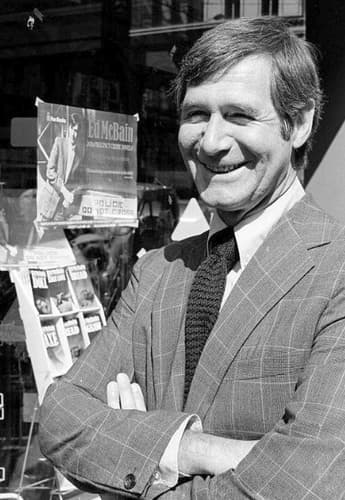
Ed McBain was the pen name of Evan Hunter, a prolific American author best known for his innovative "87th Precinct" series, which revolutionized the police procedural genre. He also wrote the screenplay for Alfred Hitchcock's 'The Birds' and penned numerous crime novels, including the acclaimed 'Cop Hater.' McBain's sharp dialogue and gritty realism profoundly influenced crime fiction.
Similar books
- The Big Sleep
Raymond Chandler
4.0 (126k) average on GoodreadsThrillerFeatures a tough, methodical detective navigating a corrupt city to solve a complex mystery.
- The Maltese Falcon
Dashiell Hammett
3.9 (89k) average on GoodreadsThrillerA seminal work of detective fiction with a cynical hero and a twisting plot full of deceit.
- Angels & Demons
Dan Brown
3.9 (2.7M) average on GoodreadsThrillerA Harvard symbologist races through Rome's ancient sites, deciphering cryptic clues to unmask the Illuminati and stop a vengeful plot to destroy the Vatican with a stolen antimatter weapon.
- Gone Girl
Gillian Flynn
4.1 (2.3M) average on GoodreadsThrillerA wife's sudden disappearance on her fifth anniversary reveals a web of lies and psychological warfare, exposing the secrets within a seemingly perfect marriage.
- The Girl on the Train
Paula Hawkins
3.9 (2.1M) average on GoodreadsThrillerA woman’s fascination with a seemingly perfect couple she watches from her daily train commute leads her into a dark investigation when she witnesses something that shatters their idyllic image.
- The Da Vinci Code
Dan Brown
3.9 (1.9M) average on GoodreadsThrillerA symbologist and a cryptologist race through European landmarks, deciphering ancient codes and uncovering a conspiracy that could rewrite the foundations of Christianity.






Enjoyed the summary?
A summary gives you the shape of the book. The book itself has the detail, the examples and the voice.
Find Cop Hater on AmazonAs an Amazon Associate, BookBrief earns from qualifying purchases. How we're funded