

Synopsis
Covers the whole plot, including the ending.
- Difficulty
- Medium
- Pacing
- Variable
- Mood
- Dark, Suspenseful, Gritty, Unsettling
- Read it if
- You enjoy complex thrillers with dual timelines, deep character backstories, and gritty police procedural elements.
- Skip it if
- You prefer lighthearted mysteries or are sensitive to detailed descriptions of violence and past trauma.
Criminal Plot Summary
Covers the whole plot, including the ending.
A Missing Student and a Blocked Investigation
Will Trent, a GBI agent, is in a new relationship with Sara Linton when he gets a call to investigate the disappearance of a college student, Maggie Lawson. His supervisor, Deputy Director Amanda Wagner, takes him off the case and gives it to another agent, Eddie Parrish. Will is suspicious of Amanda's reasons, as she usually lets him work. Amanda is also secretly investigating something about the missing girl, but for personal reasons. This immediate conflict sets up a deeper mystery connecting their pasts.
Amanda's Past: The Atlanta Police Department in 1975
The story moves to 1975 Atlanta, introducing Amanda Wagner as a new detective with her partner, Evelyn Mitchell. They are among the first female detectives in a male-dominated police department, facing constant harassment from male colleagues, especially Detective Jimmy and Detective Miller. Their struggle for respect is a main part of this timeline. They investigate a young woman's murder, and the case quickly gets complicated by departmental politics and corruption. This historical context shows how Amanda became the strong woman Will knows.
Will's Search Leads to the Past
Even though he is officially off the case, Will keeps investigating Maggie Lawson's disappearance on his own. His search leads him to an abandoned orphanage, the Atlanta Children's Home, a place from his own childhood. This discovery makes him suspicious of Amanda's involvement, as he knows she often works outside official rules. As he looks deeper, he finds old records and connections that link Maggie's case to events from decades ago, suggesting a larger conspiracy and a personal connection for Amanda he does not yet understand. The orphanage links the two timelines.
The 1975 Murder Case and Police Corruption
In 1975, Amanda and Evelyn investigate the murder of a young woman named Annie, whose body is found in the woods. Their investigation faces resistance and sabotage from male colleagues who seem to want to stop them. They find evidence suggesting a cover-up involving high-ranking police officials, prostitution, and drug dealing. Annie was connected to a pimp named Dale and a drug dealer, making it harder to find justice. They also meet John Shelley, a former detective who was disgraced and imprisoned, hinting at more corruption within the force.
Will's Confrontation and Shared History
Will's unauthorized investigation brings him back to the orphanage, where he unexpectedly meets Amanda. Their meeting is tense, but it becomes clear both are looking for the same truth, though from different perspectives. Amanda reveals that Maggie Lawson's disappearance is directly tied to an old case she worked on, a case that also holds the key to Will's origins. She explains that the orphanage was where Will's mother, Lucy, lived, and where Will spent his early years after his father, James Trent, was imprisoned. This revelation changes Will's understanding of his past and his relationship with Amanda.
Unraveling Lucy's Story
Through Amanda's accounts and his own discoveries, Will learns about his mother, Lucy. Lucy was a young woman with a difficult past, involved with the criminal world connected to the 1975 murder case. She was also targeted by corrupt police officers. Will discovers that Lucy had a close relationship with John Shelley, the disgraced detective, and was pregnant with Will during this time. Her attempts to escape the dangerous situation and protect her child led to her death, which was called a suicide but was murder planned by the corrupt officers.
The Truth About James Trent and John Shelley
Will learns that his father, James Trent, was not a murderer as he had believed. Instead, James was framed by corrupt police officers, particularly Detective Jimmy and Detective Miller, to hide their crimes and silence Lucy. John Shelley, who cared for Lucy, tried to expose the corruption but was also framed and imprisoned. The missing college student, Maggie Lawson, was investigating these old injustices, specifically the truth about James Trent's and John Shelley's cases. This put her in danger from the same people who planned the original cover-up. This revelation redefines Will's understanding of his family history.
The Present-Day Threat and the Original Perpetrators
Will and Amanda realize that the people responsible for the 1975 cover-up – now powerful figures – are still alive and trying to keep the truth hidden. They are targeting Maggie Lawson because her research into the cold cases, especially James Trent's wrongful conviction, threatens to expose them. Detective Jimmy, now a high-ranking official, is a main figure in both the past and present conspiracies. The stakes are high; Maggie's life is in danger, and the decades-old corruption is still active.
The Confrontation and the Orphanage's Secrets
The climax happens at the abandoned Atlanta Children's Home, where many past horrors took place and where Maggie Lawson is held. Will and Amanda work together to confront Detective Jimmy and his remaining co-conspirators. A violent fight happens, revealing the full extent of the past's crimes and the cover-up. Will uses his skills to outmaneuver the criminals, and Amanda uses her knowledge of their past tactics. The orphanage, once a symbol of Will's lost childhood, becomes the place where justice is fought for.
Justice and Lingering Scars
Will and Amanda rescue Maggie Lawson and bring the corrupt officials to justice, exposing their decades-long cover-up. The truth about James Trent's innocence and Lucy's murder comes out, clearing their names. While justice is achieved, the emotional cost for Will and Amanda is huge. Will deals with the revelations about his parents and his origins, while Amanda confronts painful memories of her early career and the injustices she saw. Their bond, formed through shared trauma and the search for truth, changes, leaving them with a complex understanding of their intertwined past.
Principal Figures
Will Trent
Protagonist
GBI agent whose investigation into a missing student unearths his own traumatic past.
Will Trent is a highly intelligent GBI agent with severe dyslexia and a troubled childhood spent in various foster homes and orphanages. He is deeply empathetic but often struggles with social interactions and intimacy due to his past. His drive for justice is unwavering, and he possesses a keen observational mind, allowing him to see details others miss. In 'Criminal,' Will is forced to confront the long-buried secrets of his birth and parentage, which are directly linked to a cold case Amanda Wagner worked decades ago. This personal connection makes the investigation profoundly difficult and transformative for him.
Relationships: Amanda Wagner (Mentor/surrogate mother figure, later revealed to have a deeper, complex connection to his past); Sara Linton (Girlfriend, providing emotional support and stability); James Trent (Biological father, wrongly imprisoned for murder); Lucy Trent (Biological mother, victim of a cover-up)
Amanda Wagner
Protagonist/Supporting
Deputy Director of the GBI, whose past as a trailblazing female detective is central to the mystery.
Amanda Wagner is a formidable and often intimidating figure, known for her sharp intellect and no-nonsense demeanor. In 1975, she was one of the first female detectives in the Atlanta Police Department, facing rampant misogyny and corruption. Her experiences shaped her into a hardened, cynical but ultimately principled investigator. In the present day, she is secretly investigating a case that directly connects to her past and to Will's origins, initially keeping Will in the dark to protect him. Her actions, though seemingly obstructive, are driven by a deep desire to rectify past injustices and protect those she cares about.
Relationships: Will Trent (Mentee/surrogate son, whose past is intertwined with hers); Evelyn Mitchell (Former partner and close friend from her early police days); Jimmy (Corrupt former colleague, now a powerful adversary)
Evelyn Mitchell
Supporting
Amanda's partner in 1975, a tough and loyal female detective.
Evelyn Mitchell is Amanda's partner and closest confidante during their early days as detectives in 1975. She is equally tough and determined, sharing Amanda's struggles against the misogynistic police force. Evelyn is fiercely loyal and provides crucial support to Amanda as they navigate the dangerous world of police corruption and violent crime. Her presence highlights the challenges faced by women in law enforcement during that era and underscores the deep bond formed between them under extreme pressure. Her fate is a significant part of Amanda's lingering trauma.
Relationships: Amanda Wagner (Partner and best friend); Lucy Trent (Investigative subject, whom she tries to protect)
Sara Linton
Supporting
Will Trent's girlfriend and a medical examiner, providing emotional support.
Sara Linton is a medical examiner and Will Trent's girlfriend. She is intelligent, compassionate, and provides a much-needed grounding presence in Will's tumultuous life. While not directly involved in the historical investigation, she supports Will through his emotional turmoil as he uncovers the painful truths about his past. Her unwavering love and understanding help Will navigate the traumatic revelations and maintain his emotional stability. Sara represents Will's hope for a stable future, contrasting sharply with his dark past.
Relationships: Will Trent (Girlfriend, providing emotional support)
Detective Jimmy
Antagonist
Corrupt Atlanta detective from 1975, a central figure in the cover-up.
Detective Jimmy is one of the primary antagonists, a deeply corrupt and misogynistic detective in the 1975 Atlanta Police Department. He and his partner, Miller, are involved in a criminal enterprise that includes prostitution, drug dealing, and murder, which they actively cover up. Jimmy is ruthless and uses his position to frame innocent people and silence anyone who threatens to expose him. In the present day, he has risen to a position of power and continues to protect his secrets, making him a dangerous adversary for Will and Amanda.
Relationships: Amanda Wagner (Former colleague and adversary); Evelyn Mitchell (Former colleague and adversary); Lucy Trent (Victim of his schemes); James Trent (Victim of his framing)
Lucy Trent
Mentioned/Pivotal backstory character
Will's biological mother, whose tragic life and death are central to the 1975 mystery.
Lucy Trent is Will's biological mother, a young woman caught in the dangerous web of crime and police corruption in 1975 Atlanta. She was a vulnerable figure, trying to survive and protect her unborn child amidst a brutal underworld. Her connection to the murder victim Annie, and her knowledge of the corrupt officers' activities, made her a target. Her death, initially ruled a suicide, was in fact a murder orchestrated to silence her. Her story is slowly pieced together through Amanda's memories and Will's investigation, revealing the depths of the injustices committed.
Relationships: Will Trent (Son); James Trent (Husband/partner); John Shelley (Protector/lover); Amanda Wagner (Investigator trying to help her)
James Trent
Mentioned/Pivotal backstory character
Will's biological father, wrongly imprisoned for murder in 1975.
James Trent is Will's biological father, a man unjustly imprisoned for a murder he did not commit in 1975. He was framed by the corrupt police officers as part of their cover-up to silence Lucy and protect their criminal enterprise. His wrongful conviction is the central historical injustice that Maggie Lawson is investigating, setting off the events of the present day. Will grew up believing his father was a murderer, a belief that shaped his perception of himself and his family. His exoneration is a key outcome of the investigation.
Relationships: Will Trent (Son); Lucy Trent (Wife/partner); Detective Jimmy (Framing adversary)
Maggie Lawson
Supporting
Missing college student whose investigation into cold cases ignites the present-day plot.
Maggie Lawson is a bright and tenacious college student whose disappearance kicks off the present-day investigation. She is a history major, fascinated by true crime and cold cases, specifically the wrongful conviction of James Trent. Her unauthorized research into these decades-old injustices puts her directly in the path of the original perpetrators, who are still alive and determined to keep their secrets buried. Maggie's courage and dedication to uncovering the truth make her a crucial catalyst for Will and Amanda's investigation.
Relationships: Will Trent (Investigative subject, later rescuer); Amanda Wagner (Investigative subject, later rescuer)
John Shelley
Supporting backstory character
Disgraced former detective who tried to help Lucy and expose corruption in 1975.
John Shelley was a detective in 1975 who genuinely tried to do the right thing and protect Lucy Trent. He formed a close bond with Lucy and became aware of the deep-seated corruption within the Atlanta Police Department. His attempts to expose Detective Jimmy and his cohorts led to him being framed and imprisoned, effectively silencing him and destroying his career. Shelley's story is a tragic example of what happens to those who stand against the powerful corrupt system, but his efforts were not entirely in vain, as he provided crucial information that eventually helps Will and Amanda.
Relationships: Lucy Trent (Lover and protector); Amanda Wagner (Colleague, who later uncovers his truth)
Themes & Insights
Corruption and Injustice
The novel looks at corruption in law enforcement, especially in the 1975 timeline. This appears through the actions of detectives like Jimmy and Miller, who use their power for criminal acts, framing innocent people like James Trent, and covering up murders. This systemic corruption shows how justice can be twisted for personal gain and to keep power. The present-day plot shows how these past wrongs continue to cause harm, demonstrating the long-term effects of unchecked power and moral decline in institutions. Amanda and Will's fight is against this lasting injustice.
“The police were supposed to protect people. But what happened when the police were the criminals?”
The Weight of the Past
A main theme is how past events shape the present, especially for Will and Amanda. Will's identity is based on a false story about his parents, and the truth changes his understanding of himself. Amanda is bothered by the failures and betrayals of her early career, which drives her secret investigation. The cold case from 1975 directly affects the present missing person case, showing that unresolved injustices still have an impact decades later. The orphanage itself shows this theme, as it is where past trauma and present investigation meet.
“The past wasn't dead. It wasn't even past. It was right there, breathing down their necks.”
Identity and Self-Discovery
Will Trent's story is one of self-discovery. He deals with a lifelong false story about his father being a murderer and his mother abandoning him. Finding the truth about Lucy and James Trent makes him rethink his entire identity and his place in the world. This journey is painful but leads to a more complete understanding of who he is. Amanda also confronts parts of her past self, recognizing the compromises she made and the personal cost of her career, leading to a form of self-reflection.
“He had spent his whole life building walls, and now they were all crumbling down, revealing a past he never knew was his.”
Misogyny and Resilience
The 1975 timeline clearly shows the misogyny in the Atlanta Police Department, where Amanda and Evelyn face constant harassment and sabotage from their male colleagues. This theme highlights the obstacles women faced when entering male-dominated jobs. Despite the hostile environment, Amanda and Evelyn show resilience and determination, refusing to be stopped from their duties. Their struggle shows the discrimination of the era and celebrates the strength needed to overcome it, shaping Amanda into the strong woman she becomes.
“They called them 'bitches in britches,' but Amanda and Evelyn just kept putting one foot in front of the other.”
Family and Betrayal
The novel explores the complex nature of family, both biological and chosen. Will's understanding of his biological family is built on lies and betrayal, causing deep emotional scars. The revelations about Lucy and James Trent show the ultimate betrayal by those in power. The theme also touches on chosen family, especially the complex bond between Will and Amanda, which is tested and redefined by the truths that come out. Family is shown as a source of both deep pain and strong connection.
“Family wasn't just blood. It was the people who stayed, even when you pushed them away.”
Plot Devices & Literary Techniques
Dual Timeline Narrative
Alternating chapters between present-day and 1975.
The novel employs a dual timeline structure, alternating between Will Trent's present-day investigation into Maggie Lawson's disappearance and Amanda Wagner's early career as a detective in 1975. This device is crucial for gradually revealing the layers of the mystery, showing how the events of the past directly led to the present-day crisis. It allows readers to understand Amanda's motivations and character development while simultaneously building suspense around Will's unknown origins and the historical cover-up. The connection between the two timelines becomes increasingly clear as the story progresses, culminating in their convergence.
The Atlanta Children's Home (Orphanage)
A symbolic and literal link between Will's past and the central mystery.
The abandoned Atlanta Children's Home serves as a powerful symbolic and literal plot device. It is where Will Trent spent his early, traumatic childhood, and where his mother, Lucy, also resided. In the present, it becomes a key location for the investigation into Maggie Lawson's disappearance and the final confrontation. Symbolically, it represents Will's lost innocence and the hidden, painful truths of his origins. Its dilapidated state mirrors the decaying secrets and injustices that have been buried for decades, waiting to be unearthed. Its rediscovery is a turning point for both Will and Amanda.
Cold Case Investigation
Maggie Lawson's research into a decades-old wrongful conviction.
The cold case investigation, specifically Maggie Lawson's research into James Trent's wrongful conviction, acts as the primary catalyst for the present-day plot. This device highlights how historical injustices can resurface and demand attention, even decades later. Maggie's unauthorized delving into the past directly threatens the powerful individuals who orchestrated the original cover-up, forcing them to act and bringing the historical secrets to light. It underscores the idea that truth, no matter how deeply buried, can eventually be uncovered by determined individuals, and that history often repeats itself.
Misdirection and Red Herrings
Initial misleading information about Will's father and Amanda's motives.
Karin Slaughter frequently uses misdirection and red herrings to keep readers guessing. Early in the novel, Will (and the reader) believes his father, James Trent, was a murderer, and that Amanda is deliberately obstructing his investigation out of spite or professional jealousy. These initial assumptions are later systematically dismantled as the true, complex narrative unfolds. This device builds suspense and allows for powerful reveals when the genuine connections and motives are finally exposed, demonstrating that appearances can be deeply misleading and that true understanding requires delving beneath the surface.
Criminal Quotes
“The past is never dead. It's not even past.”
“Sometimes the only way to move forward is to go back.”
“Fear is a prison you build for yourself.”
“Justice isn't always about the law; it's about what's right.”
“The truth has a way of bleeding through the lies.”
“We are all capable of darkness, given the right circumstances.”
“Grief is a wound that never fully heals; it just learns to hurt less.”
“In the end, it's not the crime that defines us, but how we respond to it.”
“The line between victim and perpetrator can be thinner than you think.”
“Silence can be the loudest confession.”
“Trust is a fragile thing, easily broken and hard to rebuild.”
“Monsters aren't born; they're made by the choices we ignore.”
“The dead have stories, and it's our job to listen.”
“Courage isn't the absence of fear, but the will to act despite it.”
Quiz
10 questions on the plot and the characters. Each answer comes with a short explanation.
Question 1
What is Will Trent's profession in 'Criminal'?
- Police detective
- FBI agent
- Georgia Bureau of Investigation agent
- Private investigator
Show answer
C. Georgia Bureau of Investigation agent Will Trent is specifically described as a brilliant agent with the Georgia Bureau of Investigation (GBI), which is a state-level law enforcement agency in Georgia, not federal like the FBI.
Question 2
Why is Will Trent kept off the case of the missing college student?
- He is on vacation
- His supervisor, Amanda Wagner, inexplicably removes him
- He is reassigned to another case
- He is suspended for misconduct
Show answer
B. His supervisor, Amanda Wagner, inexplicably removes him Amanda Wagner, Will's supervisor and mentor, keeps him off the case without clear explanation initially, which puzzles Will and drives part of the mystery.
Question 3
Where do Will and Amanda literally collide, revealing their shared connection to the past?
- A police station
- An abandoned orphanage
- A college campus
- Will's childhood home
Show answer
B. An abandoned orphanage They collide in an abandoned orphanage, which was Will's home when his father was imprisoned, and it ties to Amanda's past case from forty years ago.
Question 4
What personal mystery from Will's past is connected to Amanda's old case?
- The identity of his birth parents
- A hidden inheritance
- A lost sibling
- A secret criminal record
Show answer
A. The identity of his birth parents The case involves the long-held mystery of Will's birth and parentage, linking his personal history to Amanda's professional past.
Question 5
How does the book describe Will's current emotional state at the beginning?
- Depressed and isolated
- Newly in love and moving past a difficult past
- Angry and vengeful
- Bored and disinterested
Show answer
B. Newly in love and moving past a difficult past Will is described as newly in love and beginning to put a difficult past behind him, setting up his character development before the case disrupts this.
Question 6
What event from Will's childhood is tied to the abandoned orphanage?
- He was adopted there
- It was his home after his father was imprisoned for murder
- He worked there as a volunteer
- He solved his first case there
Show answer
B. It was his home after his father was imprisoned for murder When his father was imprisoned for murder, the orphanage became Will's home, making it a key location for his traumatic past.
Question 7
What role does Amanda Wagner play in Will's life?
- She is his biological mother
- She is his supervisor and mentor
- She is his former teacher
- She is his rival at work
Show answer
B. She is his supervisor and mentor Amanda is explicitly described as Will's supervisor and mentor at the GBI, adding complexity to their relationship as the past intertwines.
Question 8
What major theme is highlighted by the collision of past and present cases in 'Criminal'?
- The inevitability of fate
- The impact of unresolved trauma on investigations
- The superiority of modern policing
- The importance of forensic science
Show answer
B. The impact of unresolved trauma on investigations The book explores how unresolved trauma from the past, such as Will's childhood and Amanda's old case, directly affects current investigations and personal demons.
Question 9
Why is the case from forty years ago significant to Amanda Wagner?
- It was her first failure as an agent
- It launched her career
- It involved her family member
- It made her famous nationwide
Show answer
B. It launched her career The case that resurfaced is noted as the one that launched Amanda's career forty years ago, giving it personal and professional weight.
Question 10
What must Will and Amanda do to prevent greater terror according to the book's description?
- Solve the missing student case quickly
- Face down demons from the past
- Resign from their jobs
- Protect the orphanage from demolition
Show answer
B. Face down demons from the past The description states that both investigators need to face down demons from the past to prevent an even greater terror, emphasizing the psychological and personal stakes.
Criminal FAQ
What is 'Criminal' by Karin Slaughter about?
'Criminal' follows GBI agent Will Trent as he investigates a missing college student case while being blocked by his mentor Amanda Wagner. Their investigation leads them to an abandoned orphanage connected to Will's childhood and a 40-year-old case that shaped Amanda's career, ultimately revealing secrets about Will's birth and parentage that force both characters to confront traumatic pasts.
Why should I read 'Criminal'?
This thriller masterfully blends a gripping present-day investigation with a haunting historical case, featuring Karin Slaughter's signature complex character development. The dual timeline reveals shocking connections between Will Trent's personal history and institutional corruption, while delivering intense psychological suspense and emotional depth.
What is the background/setting of 'Criminal'?
The novel alternates between present-day Atlanta, Georgia, where Will investigates the missing student case, and 1975 Atlanta, where a young Amanda Wagner worked her first major case. The abandoned orphanage serves as the physical and psychological nexus connecting both timelines, representing institutional abuse and buried secrets.
What writing style does Karin Slaughter use in 'Criminal'?
Slaughter employs a dual timeline structure that alternates between Will's present investigation and Amanda's 1975 case, creating parallel narratives that gradually converge. Her prose is taut and visceral, with forensic detail balanced by deep psychological insight into trauma and institutional corruption.
What minor details add significant meaning in 'Criminal'?
The recurring motif of Will's dyslexia—which he hides from colleagues—mirrors how institutions hide their flaws. Small artifacts from the orphanage, like a specific toy or photograph, trigger repressed memories that gradually reveal the connection between Will's childhood and Amanda's old case.
What are some subtle foreshadowing moments?
Early mentions of Will's fragmented childhood memories and his discomfort around certain Atlanta locations hint at his orphanage connection. Amanda's protective yet secretive behavior toward Will foreshadows her deeper involvement in his past, while references to 'lost files' from the 1970s hint at institutional cover-ups.
What unexpected character connections exist?
The investigation reveals that Will's biological mother was a key figure in Amanda's 1975 case, creating a profound personal connection between mentor and protégé. Secondary characters from the orphanage resurface in both timelines, showing how institutional abuse created lasting networks of victims and perpetrators.
What are unspoken character motivations?
Amanda blocks Will from the case not out of distrust, but to protect him from discovering traumatic truths about his origins that she helped bury decades earlier. Will's relentless pursuit of the truth stems from his lifelong need to understand his identity beyond being 'the son of a murderer.'
What psychological complexities do characters exhibit?
Will demonstrates both brilliant investigative intuition and profound vulnerability regarding his past, showing how childhood trauma shapes adult coping mechanisms. Amanda embodies the conflict between professional duty and personal guilt, having built her career on a case that required morally compromising decisions.
What are the major emotional turning points?
Will's confrontation with physical evidence of his childhood at the orphanage shatters his emotional defenses. Amanda's confession about her role in covering up aspects of the 1975 case creates a rupture in their mentor relationship. The revelation of Will's true parentage forces both characters to reevaluate their entire shared history.
How do relationship dynamics evolve?
Will and Amanda's professional mentorship transforms into a fraught personal connection as past secrets emerge. Will's new romantic relationship is tested by his obsession with the case and traumatic revelations. The investigation creates unlikely alliances between former orphanage residents who had been separated for decades.
Which parts remain ambiguous or open-ended?
The full extent of institutional corruption surrounding the orphanage is implied but not fully detailed, leaving room for interpretation about how many officials were involved. Some characters' ultimate fates after the 1975 case are left uncertain, reflecting how trauma creates permanent gaps in personal histories.
What are controversial scenes or decisions?
Amanda's decision to conceal evidence in the 1975 case to protect vulnerable victims raises ethical questions about ends justifying means. The graphic depiction of orphanage abuse challenges readers' tolerance for institutional horror. Will's choice to pursue the truth despite devastating personal consequences divides opinions about self-preservation versus truth-seeking.
'Criminal' ending explained: how it ends & what it means
The ending reveals that Will's biological mother was a victim in Amanda's 1975 case, and his father's imprisonment was connected to the orphanage corruption. Will and Amanda achieve a painful reconciliation based on shared trauma rather than resolution. The conclusion suggests that some institutional wounds never fully heal, but truth provides a foundation for moving forward.
What are the most memorable quotes?
"The past isn't dead. It isn't even past" reflects the novel's theme of historical trauma resurfacing. "Sometimes the only way to solve a new crime is to solve an old one" captures the investigative premise. "We're all criminals of memory" speaks to how characters conceal or distort painful truths.
About the author

Karin Slaughter is an American author known for her gripping fiction, particularly in the crime and thriller genres. Her notable works include "Pretty Girls," "The Good Daughter," "Triptych," "The Kept Woman," "A Faint Cold Fear," and "Criminal," which often explore complex characters and dark themes. Slaughter's storytelling has garnered a significant readership and critical attention.
Similar books
- The Silent Patient
Alex Michaelides
4.1 (507k) average on GoodreadsThrillerFeatures psychological suspense and a shocking twist related to past events.
- Gone Girl
Gillian Flynn
4.1 (2.3M) average on GoodreadsThrillerInvolves a missing person, a complex mystery, and dark family secrets.
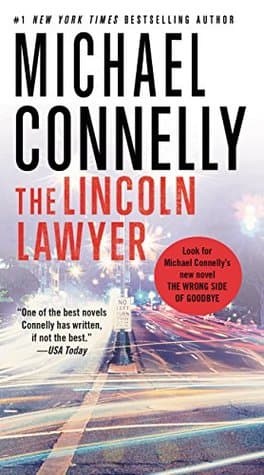
- The Lincoln Lawyer
Michael Connelly
4.2 (193k) average on GoodreadsThrillerOffers a detailed look into the legal and investigative processes with a strong lead detective.
- The Likeness
Tana French
4.0 (126k) average on GoodreadsThrillerBoth 'Criminal' and 'The Likeness' delve into deep psychological trauma and hidden pasts. However, French's novel prioritizes atmospheric tension and introspective character studies, with violence often implied or occurring off-page, whereas Slaughter's book is more explicit and visceral in its depiction of brutality and its direct impact on characters.
- Angels & Demons
Dan Brown
3.9 (2.7M) average on GoodreadsThrillerA Harvard symbologist races through Rome's ancient sites, deciphering cryptic clues to unmask the Illuminati and stop a vengeful plot to destroy the Vatican with a stolen antimatter weapon.
- The Girl on the Train
Paula Hawkins
3.9 (2.1M) average on GoodreadsThrillerA woman’s fascination with a seemingly perfect couple she watches from her daily train commute leads her into a dark investigation when she witnesses something that shatters their idyllic image.





Enjoyed the summary?
A summary gives you the shape of the book. The book itself has the detail, the examples and the voice.
Find Criminal on AmazonAs an Amazon Associate, BookBrief earns from qualifying purchases. How we're funded