
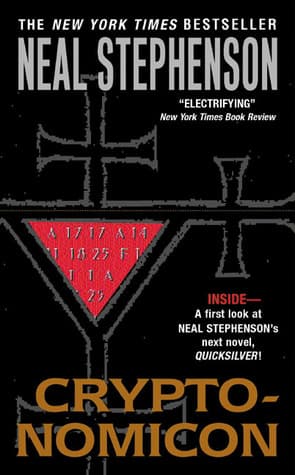
Synopsis
Covers the whole plot, including the ending.
- Difficulty
- Hard
- Pacing
- Variable
- Mood
- Intellectual, Conspiratorial, Humorous, Technically Dense, Epic
- Read it if
- You love intricate plots, historical puzzles, deep dives into cryptography and computer science, and a blend of war history with modern tech-thriller.
- Skip it if
- You prefer fast-paced, straightforward narratives, or find extensive technical explanations and philosophical digressions tedious.
Cryptonomicon Plot Summary
Covers the whole plot, including the ending.
The Cipher and the Cave
In 1942, Lawrence Waterhouse, a brilliant but socially awkward mathematician, is recruited to Bletchley Park, the secret British codebreaking center. He quickly becomes important in Detachment 2702, a top-secret Allied unit tasked with breaking Axis codes and managing the resulting intelligence without revealing that the codes have been compromised. Lawrence works alongside figures like Alan Turing, dealing with the ethical and practical issues of their work, which includes allowing some Allied losses to maintain the deception. At the same time, Corporal Bobby Shaftoe, a tough U.S. Marine, is involved in brutal jungle warfare in the Pacific, experiencing combat and developing a morphine addiction, all while participating in covert operations that often connect with Detachment 2702's broader strategic deceptions.
The Data Haven Dream
In the late 1990s, Randy Waterhouse, Lawrence's grandson and a skilled programmer, is part of a startup aiming to create an offshore data haven called 'Cabal' in the fictional Southeast Asian sultanate of Kinakuta. His partners include Avi Halaby, a shrewd businessman, and John Comstock, a former military cryptographer. Their goal is to establish a secure, anonymous digital sanctuary, free from government interference, using advanced encryption and fiber optic infrastructure. Randy's expertise in cryptography and digital security is essential to the project, which faces many logistical, political, and financial problems. The project also attracts the attention of various shadowy figures and organizations, suggesting deeper, more complex motivations than just profit.
The Gold and the German Submarine
During WWII, Bobby Shaftoe, now a sergeant, is assigned to a secret operation in the Philippines. His mission, organized by Detachment 2702, involves locating and securing a sunken German U-boat, the U-2359, which is believed to be carrying a large quantity of Nazi gold. This gold is not just treasure; it is part of a larger plan to fund post-war Nazi resistance or influence. Bobby's team faces dangerous conditions, Japanese patrols, and the psychological toll of their secret mission. Recovering the gold is complicated by the need for secrecy and the dangers of underwater salvage, adding another layer of deception to the war effort.
The Turing Test and the Cryptographic Key
Lawrence Waterhouse continues his work at Bletchley Park, often interacting with Alan Turing. Their discussions explore the philosophical basis of computation, artificial intelligence, and the nature of intelligence itself, anticipating Turing's later work on the Turing Test. Lawrence is tasked with developing a system for securely transmitting sensitive information, often involving elaborate physical and cryptographic key exchanges. He experiences intense intellectual and emotional pressure, dealing with the moral ambiguities of his work—knowing that his mathematical breakthroughs have direct, often fatal, consequences for soldiers on both sides. These intellectual pursuits are closely tied to the practical demands of wartime cryptography.
The Mindanao Gold Rush
In the present day, Randy Waterhouse's data haven project becomes connected with the search for the legendary WWII gold. He reconnects with Amy Shaftoe, Bobby Shaftoe's granddaughter, who is also interested in the historical gold, potentially linked to her grandfather's wartime experiences. Their quest takes them to the Philippines, specifically Mindanao, a region rumored to hold large quantities of Japanese and Nazi gold. They work with various eccentric and dangerous characters, including aging ex-pats and local guides, all while navigating the complexities of modern-day treasure hunting, which involves deciphering old maps, historical records, and cryptic clues left behind by their ancestors. The search for the gold is a significant financial and personal risk for both of them.
Enoch Root's Enigmas
Enoch Root, a mysterious and seemingly ageless figure, plays an important role in both timelines. In WWII, he is a member of Detachment 2702, often appearing at critical moments to offer cryptic advice or facilitate strange, almost magical solutions to cryptographic problems. His true origins and loyalties remain unclear, though he is associated with the ancient Societas Eruditorum. In the present day, Enoch reappears, seemingly unchanged, and presents Randy Waterhouse with a practically unbreakable encryption scheme known as the 'Solitaire' cipher, which he claims was developed during WWII. His presence consistently adds an element of the fantastical and the conspiratorial to the narrative, connecting the two timelines through his lasting influence and enigmatic knowledge.
The Japanese Gold Hoard
Bobby Shaftoe's wartime actions in the Philippines also involve the pursuit of Japanese gold, separate from the Nazi U-boat gold. He is part of a unit tasked with disrupting Japanese operations and preventing them from moving or consolidating their vast wartime loot, much of which was plundered from occupied territories. These missions are dangerous, involving intense combat and close encounters with the enemy. Bobby experiences firsthand the realities of the Pacific theater, witnessing the atrocities of war and the desperate measures taken by all sides to secure resources and intelligence. His involvement with the gold further highlights the hidden economic and strategic dimensions of the conflict, beyond the conventional battlefields.
The Cabal's Challenges
The 'Cabal' data haven project in Kinakuta faces a series of challenges. Technically, Randy and his team must design and implement a strong, secure, and truly anonymous infrastructure, fighting against potential surveillance and hacking attempts from various actors, including governments and rival corporations. Financially, they struggle to secure enough funding and manage the complex logistics of building a digital utopia in a developing nation. Politically, they must navigate the wishes of the Kinakutan Sultan and the interests of powerful global players who view their project with suspicion. These pressures force Randy to confront not only cryptographic puzzles but also the realities of business and geopolitics, testing the integrity of his vision.
The Solitaire Cipher's Revelation
Randy Waterhouse becomes deeply interested in understanding the 'Solitaire' cipher presented by Enoch Root. He recognizes its extraordinary complexity and potential for truly unbreakable encryption, a goal for the data haven. His research into its origins leads him to uncover more about his grandfather Lawrence's work during WWII and the secret operations of Detachment 2702. The Solitaire cipher is not just a technical marvel; it is a key that begins to unlock the deeper historical conspiracies surrounding the Nazi gold, the U-boat, and the true purpose of some of the Allied deceptions. Randy realizes the cipher is a direct link between the past and present, holding secrets that could impact his current endeavors.
The Final Confrontation and the Gold's Legacy
The search for the WWII gold ends in a complex series of events involving Randy, Amy, Avi, and various other parties, including descendants of WWII figures and shadowy organizations. The discovery of the U-boat and its cargo, along with the deciphering of old records, reveals the full extent of the Nazi gold conspiracy and the intricate Allied deceptions designed to counter it. The gold's recovery in the present day becomes a high-stakes effort, with everyone vying for a piece of the pie or to control its story. The characters must confront the moral ambiguities of their ancestors' actions and decide how to manage the immense wealth and historical significance of the treasure, ultimately shaping the future of the 'Cabal' project.
Lawrence's Post-War Life and Legacy
After the war, Lawrence Waterhouse finds it difficult to adjust to civilian life. The intense intellectual demands and moral compromises of his wartime work at Bletchley Park leave a lasting impact. He continues his academic career, exploring mathematics and the early field of computer science, but struggles with social interactions and the everyday aspects of existence. His experiences during Detachment 2702, particularly the constant need for deception and the knowledge of lives lost due to strategic choices, weigh heavily on him. His legacy, however, extends through his intellectual contributions and, unknowingly to him, through the cryptographic secrets he helped to develop and conceal, which resurface decades later through his grandson, Randy.
Bobby's Post-War Trauma and Family
Bobby Shaftoe returns from WWII a decorated but deeply traumatized veteran. His experiences in the brutal Pacific theater, including his morphine addiction and the horrors he witnessed, leave him with severe PTSD. He struggles to reintegrate into society, haunted by memories of combat and the secret operations he participated in. Despite his internal battles, Bobby eventually marries and builds a family, though the shadow of his wartime past continues to affect him and, indirectly, his descendants. His legacy is not only his military service but also the hidden stories of the gold and the deceptions he was part of, which his granddaughter, Amy, later uncovers, seeking to understand her family's history.
Principal Figures
Lawrence Waterhouse
Protagonist
Brilliant but socially awkward mathematician and cryptanalyst during WWII.
Lawrence is a prodigious mathematician with a gift for cryptography, recruited to Bletchley Park during WWII. Highly intelligent but socially inept, he struggles with human interaction and emotional expression, often finding solace in the abstract world of numbers. He is driven by intellectual curiosity and a deep sense of logic, which sometimes clashes with the moral ambiguities of his wartime duties. His work on breaking Axis codes and managing intelligence is crucial to the Allied effort, yet he grapples with the ethical implications of the strategic deceptions he helps orchestrate.
Relationships: Alan Turing (Colleague and intellectual sparring partner); Bobby Shaftoe (Indirectly connected through Detachment 2702 operations); Randy Waterhouse (Grandfather, whose intellectual legacy Randy inherits)
Bobby Shaftoe
Protagonist
Gung-ho U.S. Marine corporal, later sergeant, involved in covert WWII operations.
Bobby is a tough, resourceful, and often reckless U.S. Marine, a man of action rather than intellect. He is a survivor of brutal combat in the Pacific theater, developing a morphine addiction to cope with the physical and psychological trauma of war. Despite his rough exterior, he possesses a strong sense of loyalty and a surprising capacity for observation. He is often unknowingly at the sharp end of Detachment 2702's intricate deceptions, participating in missions involving Nazi and Japanese gold, which become legendary within his family.
Relationships: Lawrence Waterhouse (Indirectly connected through Detachment 2702 operations); Amy Shaftoe (Grandfather, whose legacy Amy investigates)
Randy Waterhouse
Protagonist
Brilliant programmer and entrepreneur in the late 1990s, Lawrence Waterhouse's grandson.
Randy is a contemporary programming geek, a self-proclaimed 'archivist' of digital information, and a co-founder of the 'Cabal' data haven project. He inherits his grandfather Lawrence's intellectual prowess and a deep fascination with cryptography and information security. Randy is driven by a desire to create a truly free and secure digital space, challenging traditional power structures. He is sharp-witted, cynical, and often socially awkward, much like his grandfather, but possesses a modern sensibility and an entrepreneurial spirit. His quest for a secure data haven intertwines with the historical mystery of WWII gold.
Relationships: Lawrence Waterhouse (Grandson, inheritor of intellectual legacy); Amy Shaftoe (Romantic interest and business partner); Avi Halaby (Business partner and friend); Enoch Root (Recipient of the Solitaire cipher and cryptic guidance)
Amy Shaftoe
Protagonist
Resourceful and intelligent woman, Bobby Shaftoe's granddaughter, involved in the gold hunt.
Amy is Bobby Shaftoe's granddaughter, a sharp, independent, and capable woman who becomes involved in Randy's data haven project and the search for the WWII gold. She shares her grandfather's adventurous spirit and resilience, though she channels it into intellectual pursuits and strategic planning. Amy is driven by a desire to understand her family's history and the mysterious circumstances surrounding her grandfather's wartime exploits. She provides a grounded, practical counterbalance to Randy's more abstract intellectualism, often acting as a bridge between the digital world and the messy realities of the physical world.
Relationships: Bobby Shaftoe (Granddaughter, investigating his past); Randy Waterhouse (Romantic interest and business partner)
Enoch Root
Supporting
Mysterious, seemingly ageless figure connected to both timelines and an ancient society.
Enoch Root is one of the most enigmatic characters, appearing in both the WWII and present-day timelines, seemingly without aging. He is a member of the Societas Eruditorum, an ancient and secretive organization. Enoch possesses vast knowledge, often appearing at critical junctures to offer cryptic advice or facilitate strange, almost magical solutions. He is the purveyor of the Solitaire cipher, a key element connecting the past and present narratives. His true motives and nature remain largely unknown, but he consistently acts as a catalyst for major plot developments, embodying the novel's conspiratorial undertones.
Relationships: Lawrence Waterhouse (Colleague in Detachment 2702); Randy Waterhouse (Giver of the Solitaire cipher, cryptic mentor)
Alan Turing
Supporting
Real-life mathematical genius and cryptographer, colleague of Lawrence Waterhouse.
Alan Turing is depicted as a brilliant, eccentric mathematician and cryptographer at Bletchley Park, working alongside Lawrence Waterhouse. He is a visionary thinker, grappling with the theoretical foundations of computation and artificial intelligence, foreshadowing his real-world contributions. Turing's interactions with Lawrence often involve deep philosophical discussions about numbers, logic, and the nature of intelligence. He is instrumental in the codebreaking efforts and provides a historical anchor for the novel's exploration of cryptography and information theory.
Relationships: Lawrence Waterhouse (Colleague and intellectual confidante)
Avi Halaby
Supporting
Shrewd businessman and co-founder of the 'Cabal' data haven.
Avi Halaby is one of Randy Waterhouse's business partners in the 'Cabal' data haven project. He is a pragmatic and ambitious entrepreneur with a keen eye for financial opportunity and logistical challenges. Avi is the driving force behind the business aspects of the data haven, navigating legal complexities, securing funding, and managing the intricate political landscape of Kinakuta. He often acts as a foil to Randy's more idealistic and technically focused approach, grounding the project in the realities of the market and international relations.
Relationships: Randy Waterhouse (Business partner and friend); Amy Shaftoe (Business associate)
John Comstock
Supporting
Former military cryptographer and co-founder of the 'Cabal' data haven.
John Comstock is another co-founder of the 'Cabal' data haven, bringing a background in military cryptography and intelligence. He provides a more seasoned, security-conscious perspective to the project, understanding the real-world implications of data security and government surveillance. John's experience grounds the ambitious data haven in practical security measures and a healthy dose of paranoia. He represents the intersection of the novel's historical military cryptography and its modern digital security concerns.
Relationships: Randy Waterhouse (Business partner); Avi Halaby (Business partner)
The Duke of Kinakuta
Supporting
Eccentric ruler of the fictional sultanate where the data haven is being built.
The Duke of Kinakuta is the enigmatic and somewhat whimsical ruler of the fictional Southeast Asian sultanate. He is a key figure in the present-day narrative, as his permission and cooperation are essential for the 'Cabal' data haven project. The Duke is depicted as a man of diverse interests, from technology to traditional customs, often making unexpected demands or offering cryptic pronouncements. His motivations are complex, balancing the desire for modernization and prosperity for his people with the protection of his sovereignty and cultural heritage. His unpredictable nature adds a layer of political intrigue and humor to the story.
Relationships: Randy Waterhouse (Key political figure for the 'Cabal' project); Avi Halaby (Key political figure for the 'Cabal' project)
Themes & Insights
The Nature of Information and Secrecy
The novel explores information as a fundamental force, its power to shape reality, and the human desire to control or free it. In WWII, Lawrence Waterhouse and Detachment 2702's mission is to control the flow of information—breaking enemy codes while maintaining the illusion that they are unbroken. This involves elaborate deceptions, like allowing convoys to be sunk to protect the larger secret. In the present, Randy Waterhouse's 'Cabal' project aims to create a zone of absolute information freedom and privacy, a direct response to the increasing surveillance and control of data in the digital age. The Solitaire cipher, an 'unbreakable' encryption scheme, symbolizes the ultimate goal of perfect secrecy, while the search for the Nazi gold represents information that has been deliberately hidden and manipulated for decades.
“When we want to sink a convoy, we send out an observation plane first... Of course, to observe is not its real duty—we already know exactly where the convoy is. Its real duty is to be observed... Then, when we come round and sink them, the Germans will not find it suspicious.”
The Interconnectedness of Past and Present
Cryptonomicon connects two time periods, showing how historical events, decisions, and even personal relationships impact the present. The actions of Lawrence Waterhouse and Bobby Shaftoe in WWII, especially their involvement with Detachment 2702 and the hidden Nazi gold, directly influence the motivations and challenges faced by their grandchildren, Randy Waterhouse and Amy Shaftoe, in the late 1990s. The discovery of the Solitaire cipher, a relic from WWII, serves as a literal cryptographic key that unlocks the secrets of the past, making the historical narrative essential to understanding the contemporary plot. The characters' family legacies, both intellectual and material, are linked across generations, suggesting that history is not merely a backdrop but an active force.
“It is not the business of the gods to be just. It is the business of the gods to be gods, and to be just is a matter for people.”
The Ethics of Technology and Intelligence
The novel deals with the moral and ethical dilemmas in technological advancement and intelligence gathering. Lawrence Waterhouse constantly confronts the paradox of his work: his mathematical brilliance helps win the war, but it also requires calculated decisions that lead to the deaths of Allied soldiers to protect the larger secret of codebreaking. This raises questions about the cost of strategic advantage and the dehumanizing aspects of war. In the present, Randy Waterhouse's pursuit of a data haven, while driven by ideals of freedom, also forces him to consider the potential for abuse of true anonymity and the challenges of creating a 'perfect' system in an imperfect world. The widespread paranoia surrounding information control in both eras highlights the double-edged sword of powerful technologies.
“The price of absolute freedom is absolute insecurity.”
The Nature of Genius and Eccentricity
Cryptonomicon celebrates and examines the nature of genius, often showing it as linked with eccentricity and social awkwardness. Lawrence Waterhouse and Alan Turing, both mathematical savants, are brilliant but struggle with conventional social norms and emotional expression. Their minds operate on a different plane, allowing them to see patterns and solutions others miss, but isolating them in a world not designed for their unique intellects. Randy Waterhouse, Lawrence's grandson, embodies a similar type of digital genius, finding comfort and mastery in code while often fumbling in social situations. The novel suggests that intellectual breakthroughs often come from those who operate outside the mainstream, challenging conventional thought and behavior.
“He was a genius, but a genius is merely a man who can do things that everyone else can do, only better and faster.”
The Pursuit of Treasure and Legacy
The hunt for hidden gold, both Nazi and Japanese, is a metaphor for the pursuit of legacy and the hidden truths of history. Bobby Shaftoe's wartime missions to secure or prevent the movement of this gold are driven by military strategy, but for his granddaughter Amy, the gold represents a tangible link to her family's past and a key to understanding her grandfather's experiences. Similarly, Randy Waterhouse's involvement initially stems from the financial needs of his data haven, but it quickly becomes a deeper quest to uncover the full scope of the WWII conspiracy, connecting him to his grandfather's intellectual legacy. The gold is not just wealth; it is a historical artifact, a symbol of power, and a catalyst for uncovering long-buried secrets.
“The greatest treasure is not the gold itself, but the story it tells.”
Plot Devices & Literary Techniques
Dual Narrative Structure
Alternating chapters between WWII and the late 1990s.
The novel employs a dual narrative structure, switching between chapters set in WWII (primarily following Lawrence Waterhouse and Bobby Shaftoe) and chapters set in the late 1990s (following Randy Waterhouse and Amy Shaftoe). This structure allows for the gradual revelation of connections between the two timelines, building suspense and demonstrating the long-term impact of historical events. The parallel narratives highlight thematic echoes and character parallels across generations, creating a rich tapestry of interwoven stories that eventually converge.
The Solitaire Cipher
A theoretically unbreakable encryption algorithm created by Enoch Root.
The Solitaire cipher is a fictional, practically unbreakable encryption scheme, presented by Enoch Root to Randy Waterhouse in the present day. It serves as a crucial plot device, connecting the two timelines and embodying the novel's central theme of information security. Randy's efforts to understand and implement it reveal its WWII origins and its connection to his grandfather's work. It also acts as a MacGuffin, driving much of the present-day plot and providing the foundation for the 'Cabal' data haven, while simultaneously unlocking historical secrets.
The Nazi Gold Conspiracy
A vast hoard of gold hidden by the Nazis during WWII, sought in both timelines.
The Nazi gold conspiracy is a central plot device that links the WWII and present-day narratives. In WWII, Bobby Shaftoe is involved in clandestine missions to recover or prevent the movement of this gold, hidden in a sunken U-boat. In the present, Randy Waterhouse and Amy Shaftoe embark on a quest to locate this same legendary gold, which provides financial backing for the 'Cabal' project and unlocks deeper historical truths. The gold serves as a tangible link to the past, a source of conflict, and a symbol of the novel's overarching themes of secrecy, legacy, and the hidden economic dimensions of war.
Detachment 2702
A top-secret Allied intelligence unit in WWII focused on deception and codebreaking.
Detachment 2702 is a fictional, highly secretive Allied intelligence unit during WWII, comprising individuals like Lawrence Waterhouse, Alan Turing, and Enoch Root. Its primary function is not just to break Axis codes but to manage the intelligence derived from those breaks through elaborate deception operations, ensuring the enemy never realizes their codes are compromised. This unit serves as the historical engine for the novel's exploration of information control, ethical dilemmas in wartime, and the strategic use of lies. Its operations lay the groundwork for many of the mysteries and discoveries in the present-day narrative.
The Societas Eruditorum
An ancient, secretive society with members like Enoch Root, influencing events across millennia.
The Societas Eruditorum is a mysterious, ancient society, to which Enoch Root belongs. While its full scope is never explicitly detailed, its existence hints at a deeper, long-standing conspiracy and a hidden network of knowledge and influence throughout history. It functions as a device to introduce elements of the fantastical and the conspiratorial, suggesting that some forces operate beyond conventional understanding. Its connection to Enoch Root provides a timeless, almost supernatural dimension to the narrative, implying that certain secrets and individuals transcend ordinary temporal bounds.
Cryptonomicon Quotes
“In the beginning was the Word, and the Word was with God, and the Word was God. And the Word was a .COM.”
“If you are a member of a small, exclusive, and highly secretive club, and you find a note on your door that says 'the jig is up', then you have a pretty good idea what it means.”
“The price of metaphor is eternal vigilance.”
“You can't have a good cryptosystem without a good random number generator.”
“Information wants to be free. Information also wants to be expensive. ... That's the tension.”
“It's always the guy who's not supposed to be there who's the most important.”
“Most people spend their lives in a fog, not knowing what's really going on, not knowing who's really pulling the strings. They're just content to walk around in the dark.”
“The only difference between a madman and a genius is success.”
“A lot of what we know about the universe is what we know about the universe after we've fucked with it.”
“You can't prove a negative. You can only prove a positive.”
“The greatest trick the Devil ever pulled was convincing the world he didn't exist. The second greatest trick was convincing the world that random numbers are easy to generate.”
“The whole point of the internet is that it's a giant, distributed, redundant, self-healing network.”
“It's a strange thing, but the more you know about something, the more you realize how much you don't know.”
“The world is full of things that can kill you. Most of them are invisible.”
“History is a set of lies agreed upon.”
Quiz
10 questions on the plot and the characters. Each answer comes with a short explanation.
Question 1
Which real-life historical figure is mentioned as a member of Detachment 2702 in the 1940s storyline?
- Albert Einstein
- Alan Turing
- J. Robert Oppenheimer
- Werner Heisenberg
Show answer
B. Alan Turing The book explicitly mentions Dr. Alan Turing as a member of Detachment 2702, explaining its workings to Lawrence Waterhouse.
Question 2
What is the primary goal of Detachment 2702 in the World War II storyline?
- To develop the atomic bomb
- To infiltrate German high command
- To break Axis communication codes and conceal that fact from the enemy
- To establish a secure communication network for the Allies
Show answer
C. To break Axis communication codes and conceal that fact from the enemy Detachment 2702's core mission is to break Axis codes while employing elaborate deception to prevent the enemy from realizing their codes are compromised.
Question 3
What project are Randy Waterhouse and Amy Shaftoe working on in the present-day storyline?
- A new social media platform
- An offshore data haven in Southeast Asia
- A virtual reality game
- A global cryptocurrency
Show answer
B. An offshore data haven in Southeast Asia Randy Waterhouse and Amy Shaftoe are collaborating to establish an offshore data haven in Southeast Asia, which is a central plot point in the modern timeline.
Question 4
What is the specific role of the observation plane in Alan Turing's explanation of Detachment 2702's deception strategy?
- To gather intelligence on enemy positions
- To distract enemy defenses
- To be observed by the enemy, making a later attack seem less suspicious
- To provide air support for ground troops
Show answer
C. To be observed by the enemy, making a later attack seem less suspicious Turing explains that the observation plane's 'real duty is to be observed' so that when the Allies sink the convoy, the Germans won't find it suspicious, highlighting the unit's deep deception tactics.
Question 5
Which character is described as a 'gung-ho, morphine-addicted marine' in the WWII storyline?
- Lawrence Waterhouse
- Enoch Root
- Bobby Shaftoe
- Alan Turing
Show answer
C. Bobby Shaftoe Bobby Shaftoe is specifically identified as the gung-ho, morphine-addicted marine in the 1940s storyline.
Question 6
What historical treasure are Randy Waterhouse and Amy Shaftoe hoping to uncover in the present day?
- Lost Roman artifacts
- A cache of ancient manuscripts
- Gold once destined for Nazi coffers
- Stolen art from World War II
Show answer
C. Gold once destined for Nazi coffers Part of the present-day plot involves the grandchildren uncovering gold that was 'once destined for Nazi coffers,' linking the modern narrative to WWII events.
Question 7
What is the relationship between Lawrence Waterhouse and Randy Waterhouse?
- They are brothers
- They are father and son
- They are grandfather and grandson
- They are unrelated, but share a surname
Show answer
C. They are grandfather and grandson The text states that Randy Waterhouse is one of the 'grandchildren of the WWII heroes,' specifically linking him to Lawrence Waterhouse.
Question 8
Enoch Root reappears in the 1990s storyline with what specific item or concept to 'befuddle' the protagonists?
- A detailed map of the Nazi gold location
- An unbreakable encryption scheme left over from WWII
- A lost diary detailing Detachment 2702's secrets
- New intelligence on a modern-day conspiracy
Show answer
B. An unbreakable encryption scheme left over from WWII Enoch Root 'pops up with an unbreakable encryption scheme left over from WWII to befuddle the 1990s protagonists,' creating a direct link between the timelines through cryptography.
Question 9
The book's 'paranoiac tone' is primarily reinforced by what overarching theme or plot device that connects both time periods?
- The constant threat of nuclear war
- The pursuit of ancient magical artifacts
- Layer upon layer of deception and cryptographic secrecy
- The struggle against a global corporate monopoly
Show answer
C. Layer upon layer of deception and cryptographic secrecy The description highlights how the 'secrecy resonates in the present-day story line' and that the WWII job 'boils down to layer upon layer of deception,' establishing this as a key theme and source of the paranoiac tone.
Question 10
What is the name of the organization that Enoch Root is a key member of, besides Detachment 2702?
- The Illuminati
- The Societas Eruditorum
- The Cypherpunks
- The Bletchley Park Alumni
Show answer
B. The Societas Eruditorum Enoch Root is explicitly identified as a 'key member of Detachment 2702 and the Societas Eruditorum,' indicating his affiliation with this additional, mysterious group.
Cryptonomicon FAQ
What is the central premise of 'Cryptonomicon' and how do the two timelines intertwine?
'Cryptonomicon' centers on two parallel timelines: World War II, where Allied cryptographers like Lawrence Waterhouse and Bobby Shaftoe work to break Axis codes while concealing their success, and the late 1990s, where their descendants, Randy Waterhouse and Amy Shaftoe, build an offshore data haven and search for hidden WWII gold. The connection is forged through shared bloodlines, the legacy of cryptographic secrets, and the mysterious reappearance of Enoch Root, who links the past's hidden information to the present's digital frontier.
Who are Lawrence Waterhouse and Bobby Shaftoe, and what are their primary roles in the WWII narrative?
Lawrence Waterhouse is a brilliant but socially awkward mathematician and cryptanalyst, tasked with breaking Axis codes and managing the complex deception involved in concealing Allied knowledge. Bobby Shaftoe is a tough, morphine-addicted U.S. Marine, part of Detachment 2702, whose missions involve creating plausible 'cover stories' for Allied intelligence, often through dangerous and seemingly random acts of sabotage or observation that are actually meticulously planned diversions.
What is the significance of Detachment 2702 and its unique operational philosophy?
Detachment 2702 is a highly secretive Allied unit in WWII, designed not just to gather intelligence, but to manage the 'information economy' of the war, specifically to prevent the Axis powers from realizing their codes have been broken. Its philosophy, articulated by Alan Turing, involves creating elaborate layers of deception where actions (like sending an 'observation plane') are performed not for their ostensible purpose, but to be observed, thereby providing a plausible, non-suspicious reason for subsequent Allied successes, like sinking a convoy.
How do Randy Waterhouse and Amy Shaftoe contribute to the modern-day plot?
Randy Waterhouse, a programming genius and descendant of Lawrence, is central to the modern plot as he tries to establish an offshore data haven, 'The Datahaven of the Western Pacific,' in the fictional Sultanate of Kinakuta. Amy Shaftoe, Bobby's granddaughter, is a powerful and resourceful woman who becomes involved with Randy's venture, and together they pursue a quest for hidden Nazi gold that connects directly to the cryptographic secrets and figures from their grandparents' wartime experiences.
Who is Enoch Root, and what is his enduring role across both timelines?
Enoch Root is a mysterious, seemingly ageless figure who appears in both the WWII and modern timelines. In the 1940s, he is a key member of Detachment 2702 and the Societas Eruditorum, involved in esoteric knowledge and an unbreakable encryption scheme. In the 1990s, he resurfaces, providing Randy and Amy with crucial, complex cryptographic puzzles and information that links directly to the WWII gold and the enduring legacy of secrets, often acting as a catalyst for the plot's deeper conspiracies.
What is the significance of the 'QWERTZ' encryption scheme mentioned in the book?
The 'QWERTZ' encryption scheme, developed by Lawrence Waterhouse in WWII, is an unbreakable one-time pad system that is used to secure the location of the Nazi gold. Its significance lies in its theoretical perfection, making the gold's location inaccessible without the physical key, and its enduring mystery into the modern day, where Randy and Amy must contend with its complexity to unlock the wartime secrets and retrieve the treasure.
How does the concept of 'information warfare' manifest differently in the two time periods?
In WWII, information warfare is primarily about breaking codes, managing deception, and controlling the flow of secrets to gain tactical advantage, exemplified by Detachment 2702's elaborate schemes. In the 1990s, it evolves into the realm of digital privacy, data havens, and the control of information in the nascent internet age, where individuals like Randy aim to create spaces free from government surveillance, reflecting a shift from state-controlled secrets to individual data sovereignty.
What is the role of the Societas Eruditorum and its connection to the overall narrative?
The Societas Eruditorum is a secretive, ancient society of learned individuals, of which Enoch Root is a member. It represents a hidden intellectual lineage and a repository of esoteric knowledge, often influencing historical events from behind the scenes. Its connection to the narrative implies a deeper, long-standing conspiracy or a hidden order that extends beyond the immediate concerns of WWII or modern technology, suggesting that certain knowledge and power have been carefully guarded for centuries.
How do the character arcs of Lawrence Waterhouse and Randy Waterhouse reflect their shared mathematical genius and social awkwardness?
Both Lawrence and Randy exhibit prodigious mathematical and computational talents, coupled with significant social awkwardness and a tendency to retreat into abstract thought. Lawrence struggles with the human element of war and deception, often finding solace in pure mathematics. Randy, similarly, excels in the digital world but finds real-world interactions challenging. Their arcs reflect a generational continuity of brilliant minds grappling with the messy realities of human interaction and the application of their genius to complex, often dangerous, problems.
Discuss Bobby Shaftoe's coping mechanisms and their psychological impact during and after the war.
Bobby Shaftoe copes with the extreme stress and trauma of his dangerous WWII missions through self-medication with morphine, which becomes a significant addiction. His psychological state is marked by a blend of gung-ho bravado and deep-seated emotional wounds from witnessing atrocities and participating in morally ambiguous operations. This addiction and trauma leave a lasting impact, influencing his post-war life and subtly shaping the legacy of his family, particularly his granddaughter Amy, who inherits some of his resilience and resourcefulness.
How does the novel explore the concept of paranoia and its role in both historical and modern contexts?
'Cryptonomicon' deeply explores paranoia, both as a tactical tool in wartime deception and as a psychological state. In WWII, characters like Lawrence and Alan Turing must induce and manage paranoia in the enemy while maintaining extreme secrecy themselves. In the modern era, Randy and others grapple with the paranoia of government surveillance, corporate control, and the enduring shadow of past conspiracies, suggesting that the drive to control information inherently fosters a climate of suspicion and distrust, regardless of the era.
What is the novel's stance on the ethics of information control and privacy?
The novel presents a nuanced view on information control and privacy. In WWII, the ethical imperative is to control information for national security and to defeat a totalitarian enemy, even if it means extensive deception. In the modern era, the focus shifts to individual privacy and the right to control one's own data, with characters like Randy advocating for data havens to protect against government and corporate intrusion. The book seems to argue that while information control can be necessary in extreme circumstances, its unchecked power in peacetime poses significant threats to individual liberty.
How does Neal Stephenson blend historical figures like Alan Turing with fictional characters and events?
Neal Stephenson seamlessly integrates real historical figures like Alan Turing into the fictional narrative by portraying them in plausible, yet imaginative, roles within the secret world of WWII cryptanalysis. Turing's genius and eccentricity are highlighted, and his interactions with fictional characters like Lawrence Waterhouse feel authentic, lending historical weight and credibility to the fictional elements. This blend allows Stephenson to explore the 'what if' scenarios of history, imagining the hidden conversations and collaborations that might have shaped the war.
What is the overarching theme regarding the legacy of war and its impact on subsequent generations?
The overarching theme is that the legacy of war, particularly its secrets and unresolved conflicts, profoundly impacts subsequent generations. The hidden gold, the cryptographic schemes, and the psychological scars of WWII characters directly shape the motivations and challenges faced by their grandchildren. The book suggests that history is not easily left behind; its unresolved issues, whether financial, technological, or emotional, continue to resonate and demand resolution from those who inherit its consequences.
Does the novel offer a definitive resolution to the mystery of Enoch Root's true nature or the Societas Eruditorum?
The novel deliberately leaves the true nature of Enoch Root and the full scope of the Societas Eruditorum somewhat ambiguous and open to interpretation. While Root provides crucial insights and connections, his agelessness and exact motivations are never fully explained, maintaining his enigmatic quality. Similarly, the Societas Eruditorum remains a shadowy organization whose influence is felt but never entirely unveiled, contributing to the book's conspiratorial tone and suggesting that some mysteries are too profound or ancient to be fully resolved.
How does the book explore the concept of 'luck' and its role in human affairs and warfare?
The book frequently explores 'luck' not just as random chance, but as something that can be strategically manipulated or accounted for in complex systems. Bobby Shaftoe's experiences often hinge on improbable survival, while Detachment 2702's operations are designed to make Allied successes appear 'lucky' rather than derived from broken codes. The narrative suggests that in the face of immense complexity and uncertainty, both in war and in cryptography, the perception and management of 'luck' become critical elements of control and deception.
What is the significance of the Philippines and Kinakuta as settings in the modern-day narrative?
The Philippines and the fictional Sultanate of Kinakuta are significant because they represent liminal spaces—geographically and politically—ideal for the establishment of an offshore data haven. Their relative instability, unique legal frameworks, and distance from Western governmental oversight make them attractive to Randy Waterhouse for his venture. These settings symbolize a frontier for digital freedom and a place where new rules for information and finance can be forged, away from established powers.
How do the various cryptographic elements, from WWII Enigma to modern PGP, serve as a unifying theme?
Cryptography serves as the central unifying theme, linking the two timelines and illustrating the enduring human struggle to secure information. From the complex mechanical encryption of the Enigma machine in WWII, which Lawrence Waterhouse and his team work tirelessly to break, to the advanced public-key cryptography (PGP) that Randy Waterhouse utilizes in the 1990s, the evolution of encryption techniques mirrors the progression of information technology and the constant battle between secrecy and disclosure.
About the author
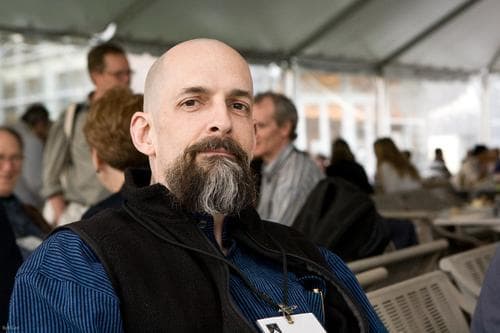
Neal Town Stephenson is an American writer known for his works of speculative fiction. His novels have been categorized as science fiction, historical fiction, cyberpunk, postcyberpunk, and baroque.
Similar books
- Snow Crash
Neal Stephenson
4.0 (237k) average on GoodreadsFantasyShares Stephenson's unique blend of high-concept tech, historical references, and a distinctive narrative voice.
- Angels & Demons
Dan Brown
3.9 (2.7M) average on GoodreadsThrillerA Harvard symbologist races through Rome's ancient sites, deciphering cryptic clues to unmask the Illuminati and stop a vengeful plot to destroy the Vatican with a stolen antimatter weapon.
- Gone Girl
Gillian Flynn
4.1 (2.3M) average on GoodreadsThrillerA wife's sudden disappearance on her fifth anniversary reveals a web of lies and psychological warfare, exposing the secrets within a seemingly perfect marriage.
- The Girl on the Train
Paula Hawkins
3.9 (2.1M) average on GoodreadsThrillerA woman’s fascination with a seemingly perfect couple she watches from her daily train commute leads her into a dark investigation when she witnesses something that shatters their idyllic image.
- The Da Vinci Code
Dan Brown
3.9 (1.9M) average on GoodreadsThrillerA symbologist and a cryptologist race through European landmarks, deciphering ancient codes and uncovering a conspiracy that could rewrite the foundations of Christianity.
- The Guest List
Lucy Foley
3.8 (1.3M) average on GoodreadsThrillerOn a remote Irish island, a glamorous wedding descends into a deadly whodunnit when a guest is found murdered, trapping everyone with their secrets as a storm rages.






Enjoyed the summary?
A summary gives you the shape of the book. The book itself has the detail, the examples and the voice.
Find Cryptonomicon on AmazonAs an Amazon Associate, BookBrief earns from qualifying purchases. How we're funded