

Synopsis
Covers the whole plot, including the ending.
- Difficulty
- Medium
- Pacing
- Moderate
- Mood
- Atmospheric, Cultural, Suspenseful, Thought-provoking
- Read it if
- You enjoy mysteries set in unique cultural landscapes with a strong sense of place and character.
- Skip it if
- You prefer fast-paced, action-driven thrillers without much focus on cultural detail or police procedure.
Dance Hall of the Dead Plot Summary
Covers the whole plot, including the ending.
The Vanishing and the Bloodstain
Lieutenant Joe Leaphorn of the Navajo Tribal Police is called to a remote area near the Zuñi Pueblo. Two boys, Ernesto Cata (Zuñi) and George Bowlegs (Navajo), have vanished. A large pool of blood is found, identified as Ernesto's. The initial investigation shows the boys had been running a footrace, a common activity for them. Leaphorn, a careful and culturally aware investigator, immediately suspects foul play. The amount of blood suggests severe injury or death, and the boys' sudden disappearance is unusual, especially for Ernesto, who was preparing for an important Zuñi religious ceremony.
Zuñi Customs and Initial Suspicions
Leaphorn's investigation is difficult due to the Zuñi people's traditional reluctance toward outsiders and their strong religious beliefs. He learns that Ernesto was a novitiate in the Zuñi Kiva, deeply committed to his spiritual path, making his disappearance even more puzzling. Initial suspects include Ernesto's older brother, who expresses concern but offers little information, and a group of hippies living nearby, viewed with suspicion by the local community. Leaphorn must carefully navigate Zuñi cultural sensitivities, which often involve secrecy, to make progress in the case.
The Drug Connection and the Archaeologist
A key piece of evidence appears: a hypodermic needle found near the scene, suggesting a drug connection. This discovery leads Leaphorn to an archaeological dig site led by Professor Chester Reynolds, who is excavating ancient Zuñi ruins. Reynolds, an eccentric academic, is initially uncooperative, more focused on his research than the missing boys. However, the needle and the dig's closeness to the disappearance site suggest a link between the drug trade, the missing boys, and people at the excavation, including Reynolds' assistant, Susanne. Leaphorn begins to suspect the boys stumbled upon something illegal.
George Bowlegs's Escape and the Peyote Cult
Days later, George Bowlegs is found alive but disoriented, having escaped his captors. He describes being held captive and seeing strange rituals. George's story, though fragmented and affected by trauma, points to a peyote cult in the area. This cult, different from traditional Zuñi practices, uses hallucinogenic peyote in its ceremonies. Leaphorn recognizes the importance of this lead, as it introduces a new, potentially dangerous element to the investigation, moving away from initial assumptions about traditional Zuñi motives or simple criminal acts. The search for Ernesto becomes more intense, with a clearer, though more complex, direction.
The Search for Ernesto and the Kiva Secrets
Leaphorn, understanding Ernesto's deep spiritual commitment, realizes that Ernesto's disappearance might be linked to his novitiate status in the Zuñi Kiva. He learns more about the Zuñi Shalako ceremony, a sacred ritual Ernesto was preparing for, which involves elaborate costumes and a spiritual journey. Leaphorn suspects Ernesto might have been abducted or killed because of his knowledge of, or involvement in, these sacred practices, possibly due to a conflict between traditional Zuñi beliefs and the peyote cult or other illegal activities. The Kiva's secrecy makes getting information difficult, but Leaphorn continues, respecting their customs.
Susanne's Involvement and the Stolen Artifacts
As Leaphorn continues his investigation, he uncovers evidence linking Susanne, Professor Reynolds' assistant, to the drug trade and possibly to stolen artifacts from the dig site. Susanne, who first seemed like a dedicated academic, is revealed to have a hidden agenda. Her involvement suggests the archaeological dig might be a cover for other illegal activities, such as drug distribution or the illicit sale of ancient Zuñi relics. This discovery broadens the scope of the crime, moving beyond a simple abduction to a more organized criminal enterprise the boys might have accidentally found.
The Coyote and the Ritual Murder
Leaphorn, following clues and insights into Zuñi mythology, particularly the figure of the Coyote, eventually finds Ernesto Cata's body. The discovery confirms his worst fears. Ernesto's death appears ritualistic, linking it to the peyote cult and their distorted interpretation of spiritual practices. The manner of death suggests a sacrifice or a violent attempt to silence him. This gruesome discovery strengthens Leaphorn's resolve and his understanding that the perpetrators are not merely common criminals but individuals operating under a warped spiritual framework, making them even more dangerous.
The Pursuit of the Killer and the Cult Leader
Through diligent police work and a deep understanding of the local landscape and culture, Leaphorn identifies the primary suspect: a charismatic but manipulative leader of the peyote cult. This individual, acting under the guise of spiritual guidance, is responsible for Ernesto's murder and George's abduction. The killer's motive is to keep his illegal operations secret and prevent Ernesto, with his deep knowledge of traditional Zuñi ways, from exposing their corrupted practices. Leaphorn begins a focused pursuit, knowing he must apprehend this dangerous individual before more harm occurs.
The Confrontation at the Dance Hall of the Dead
The story's climax happens during the sacred Zuñi Shalako ceremony, a time of spiritual significance. The killer uses this as a cover for escape or further illegal activities. Leaphorn, understanding the killer's psychology and desire to blend into the spiritual chaos, tracks him to the ceremony's heart — the 'Dance Hall of the Dead.' A tense confrontation occurs amidst the elaborate dances and costumed figures. Leaphorn must navigate the event's spiritual sanctity while trying to apprehend a dangerous murderer, all without disrupting the revered Zuñi traditions.
Justice and Cultural Respect
In a climactic struggle, Leaphorn successfully apprehends the killer, ending the twisted spiritual practices. Justice is served for Ernesto Cata, and Leaphorn carefully ensures that the integrity and sacredness of the Zuñi Shalako ceremony are preserved as much as possible. His actions show his unique ability to enforce the law while maintaining deep respect for the complex cultural and religious beliefs of the Native American communities he serves. The case closes, leaving a lasting sense of the delicate balance between tradition, crime, and justice.
Dance Hall of the Dead Characters
Lieutenant Joe Leaphorn
Protagonist
A Navajo Tribal Police officer who investigates crimes with cultural sensitivity.
Leaphorn is a highly intelligent, perceptive, and culturally astute Navajo Tribal Police officer. He possesses a deep understanding of both traditional Navajo and Zuñi customs, which allows him to navigate complex investigations that often involve spiritual beliefs and community secrecy. He is methodical, patient, and logical, often relying on his knowledge of human nature and the specific cultural context to solve crimes. His dedication to justice is matched by his profound respect for the traditions of his people and neighboring tribes.
Relationships: Ernesto Cata (Victim whose disappearance Leaphorn investigates); George Bowlegs (Witness and second victim whose testimony aids Leaphorn)
Ernesto Cata
Victim
A devout Zuñi novitiate whose disappearance triggers the investigation.
Ernesto is a young Zuñi boy deeply committed to his spiritual path, particularly his novitiate status in the Zuñi Kiva and his preparations for the sacred Shalako ceremony. He is portrayed as earnest, responsible, and observant of traditional Zuñi ways. His devotion makes his sudden disappearance, especially with a friend, highly uncharacteristic and immediately raises suspicions of foul play. His spiritual significance within the Zuñi community becomes a key element in Leaphorn's understanding of the crime.
Relationships: Joe Leaphorn (The object of Leaphorn's investigation); George Bowlegs (His best friend, who disappears with him)
George Bowlegs
Supporting
Ernesto's Navajo friend who escapes and provides crucial testimony.
George is Ernesto's Navajo friend, who disappears with him but later escapes his captors. He is younger and less spiritually grounded than Ernesto, making him more susceptible to the trauma of his ordeal. His fragmented and fear-ridden testimony about the peyote cult and the strange rituals he witnessed is crucial in shifting Leaphorn's investigation towards a new, more dangerous path. Despite his fear, his survival and willingness to speak are vital to solving the case.
Relationships: Ernesto Cata (His best friend, who is murdered); Joe Leaphorn (The police officer who relies on his testimony)
Professor Chester Reynolds
Supporting
An archaeologist whose dig site becomes entangled in the investigation.
Professor Reynolds is an archaeologist leading a dig near the Zuñi Pueblo. He is depicted as somewhat aloof, self-absorbed, and initially more concerned with his academic pursuits than the missing boys. His archaeological dig, however, becomes a point of interest for Leaphorn, as it is located near the disappearance site and is later linked to the drug trade and stolen artifacts. Reynolds serves as a red herring and a figure who, despite his academic focus, inadvertently provides a cover for illicit activities.
Relationships: Susanne (His assistant, who is deeply involved in the illicit activities); Joe Leaphorn (The investigator who questions his knowledge and involvement)
Susanne
Supporting
Professor Reynolds' assistant, secretly involved in the drug trade.
Susanne is Professor Reynolds' assistant at the archaeological dig. Initially appearing as a dedicated scholar, she is later revealed to be deeply involved in the drug trade and the illicit sale of artifacts. She uses the dig as a cover for her criminal activities, making her a significant, albeit secondary, antagonist. Her hidden agenda complicates the investigation, as she actively tries to mislead Leaphorn and protect her operations, ultimately revealing the broader scope of the criminal enterprise.
Relationships: Professor Chester Reynolds (Her employer, whom she uses as a cover); Joe Leaphorn (The investigator she tries to evade and deceive)
The Peyote Cult Leader
Antagonist
The charismatic and manipulative leader of a peyote cult responsible for the murders.
The unnamed Peyote Cult Leader is the primary antagonist, a charismatic and manipulative figure who uses a distorted form of spirituality to control his followers and cover his criminal enterprises. He is responsible for Ernesto Cata's murder, which he frames as a ritualistic act, and the abduction of George Bowlegs. His motives are rooted in maintaining secrecy around his drug operations and preventing any exposure from individuals like Ernesto who understood traditional Zuñi ways. He represents a corrupted spiritual force, preying on vulnerability.
Relationships: Ernesto Cata (His victim, murdered to maintain secrecy); George Bowlegs (His captive and a witness to his crimes); Joe Leaphorn (His ultimate adversary, who brings him to justice)
Coyote (mythological figure)
Mentioned
A significant trickster figure in Navajo and Zuñi mythology, influencing Leaphorn's deductions.
Coyote is a prominent trickster figure in Native American mythology, particularly in Navajo and Zuñi traditions. While not a physical character, the concept of Coyote influences Leaphorn's understanding of the crime. The killer's actions, particularly their deceptive nature and manipulation of spiritual symbols, resonate with the characteristics of Coyote. Leaphorn uses this mythological framework to understand the killer's psychology and anticipate their movements, highlighting the deep integration of cultural understanding into his investigative process.
Dance Hall of the Dead Themes
Clash of Cultures and Belief Systems
The novel explores the friction between traditional Native American spiritual practices (Zuñi and Navajo) and outside influences, including modern criminal enterprises (drug trade) and distorted spiritual cults (peyote cult). Leaphorn constantly navigates these cultural boundaries, respecting traditional secrecy while pursuing justice. The Zuñi's reluctance toward outsiders and their sacred ceremonies (like Shalako) are central to the plot, creating both obstacles and unique paths for Leaphorn's investigation. The peyote cult's corruption of spiritual practices highlights this clash.
“There were two kinds of law, Leaphorn knew. The white man’s law. And the Navajo law. And sometimes they were the same.”
The Nature of Spirituality and Corruption
The book examines the deep spirituality of the Zuñi people, especially through Ernesto Cata's devotion to the Kiva and the Shalako ceremony. This contrasts sharply with the corrupted spirituality of the peyote cult, which uses hallucinogens and ritualistic violence for illegal gains. The killer manipulates spiritual symbols and practices, twisting them to serve his criminal agenda. Leaphorn must distinguish between genuine spiritual devotion and its perversion, understanding how faith can be both a source of strength and a vulnerability.
“The Zuñi were a people who lived in their own time, their own place, with their own gods.”
Justice and Cultural Empathy
A main theme is Leaphorn's unique approach to justice, rooted in cultural empathy and respect. He does not just apply Western legal principles; he understands and uses the nuances of Native American customs, oral traditions, and spiritual beliefs in his detective work. This allows him to gain trust where others would fail and to interpret clues invisible to an outsider. His ability to bridge the gap between two worlds is essential to solving the crime and bringing peace to the community.
“Leaphorn thought about the Zuñi and their secret world, and how much he still didn’t understand.”
The Allure and Danger of the Unknown
The story highlights the mysterious and often dangerous aspects of the unknown, whether it is the hidden practices of the Zuñi Kiva, the secret operations of a drug cult, or the vast, isolating landscape of the New Mexico desert. The boys' disappearance into this unknown territory starts the plot. The archaeological dig itself represents the appeal of uncovering ancient secrets, yet it also provides a cover for modern-day illegal activities, showing how the 'unknown' can be both historically fascinating and criminally exploited.
“The desert held its secrets close, but sometimes, if you listened, it would whisper.”
Plot Devices & Literary Techniques
The Outsider/Insider Perspective
Leaphorn navigates the case as both an insider (Native American) and an outsider (Navajo investigating Zuñi).
This device is central to the novel. Leaphorn, as a Navajo, is an 'insider' compared to white law enforcement, granting him a degree of trust and understanding within Native communities. However, he is still an 'outsider' to the specific Zuñi traditions and secrets, requiring him to carefully navigate their cultural barriers. This dual perspective allows Hillerman to explore the complexities of inter-tribal relations and the challenges of law enforcement across distinct cultural lines, enriching the mystery with layers of cultural nuance.
Mythological Allusions (Coyote)
References to Native American mythology, particularly Coyote, guide Leaphorn's deductions.
Hillerman frequently uses allusions to Native American mythology, most notably the trickster figure Coyote, to provide insight into the killer's methods and Leaphorn's thought process. Coyote represents deception, chaos, and the overturning of norms. By recognizing the 'Coyote-like' aspects of the killer's actions – their manipulation, their attempts to create confusion, and their blending into a sacred ceremony – Leaphorn is able to anticipate their moves and understand their psychological profile, adding a unique cultural lens to the detective work.
The Sacred Ceremony (Shalako)
The Zuñi Shalako ceremony serves as both a backdrop and a critical plot element.
The elaborate and sacred Zuñi Shalako ceremony is not just a cultural backdrop but a crucial plot device. It provides a highly evocative setting for the climax, with its masked dancers and spiritual intensity. More importantly, the killer uses the chaos and spiritual significance of the ceremony as a cover for their actions and a potential escape. Leaphorn's understanding of its importance allows him to predict the killer's movements and to conduct his investigation with utmost respect, highlighting the conflict between profane crime and sacred tradition.
The Archaeological Dig as a Front
A legitimate academic endeavor used to conceal illicit activities.
The archaeological dig, led by Professor Reynolds, serves as a classic plot device: a seemingly legitimate operation that acts as a front for criminal activity. It provides a convenient cover for the drug trade and potentially the illicit sale of artifacts, drawing suspicion away from the true nature of the operations. This device introduces an element of deception and highlights how even respected institutions can be compromised, adding layers of intrigue and misdirection to the investigation.
Dance Hall of the Dead Quotes
“There’s no law against being a fool.”
“The wind was a constant, almost visible presence, shaping the land and the people.”
“He had learned that the most dangerous lies were often those spoken with the deepest conviction.”
“The past, Leaphorn knew, was never truly past out here.”
“Sometimes the best way to hide something is to put it in plain sight.”
“The desert taught patience, or it killed you.”
“Fear was a cold, lonely companion.”
“Every man carried his own wilderness inside him.”
“The truth was often a tangled thing, not a straight line.”
“Silence here was not an absence of sound, but a presence.”
“He had seen enough men driven by obsessions to know they rarely ended well.”
“Culture was a river, constantly flowing, constantly changing, but always carrying its essential current.”
“The most important things were often the ones not said.”
Quiz
10 questions on the plot and the characters. Each answer comes with a short explanation.
Question 1
What is the initial crime that Lieutenant Joe Leaphorn investigates?
- The theft of artifacts from an archaeological dig.
- The disappearance of two Native-American boys, one Zuni, with a pool of blood found.
- A murder at the local trading post.
- The sabotage of drilling equipment near the Zuni reservation.
Show answer
B. The disappearance of two Native-American boys, one Zuni, with a pool of blood found. The book begins with Leaphorn investigating the disappearance of two boys, one Zuni, and the ominous pool of blood left behind.
Question 2
Which specific Native American tribe's laws and religious rites complicate Leaphorn's investigation?
- Navajo
- Hopi
- Zuni
- Ute
Show answer
C. Zuni The summary explicitly states that 'the unique laws and sacred religious rites of the Zuñi people are throwing impassable roadblocks in Leaphorn's already twisted path.'
Question 3
What unusual item is found that further complicates Leaphorn's investigation, besides the archaeological dig?
- An ancient tribal mask
- A steel hypodermic needle
- A rare species of desert plant
- A piece of modern military equipment
Show answer
B. A steel hypodermic needle The summary mentions that the investigation is 'being complicated by an important archaeological dig . . . and a steel hypodermic needle.'
Question 4
What is the primary motivation stated for the potential murderer to 'elude justice or, worse still, to kill again'?
- To protect a secret related to the archaeological dig.
- To prevent the exposure of illegal drug trafficking.
- The unique laws and sacred religious rites of the Zuni people.
- A personal vendetta against Leaphorn.
Show answer
C. The unique laws and sacred religious rites of the Zuni people. The summary states that the Zuni laws and rites 'are throwing impassable roadblocks in Leaphorn's already twisted path, enabling a craven murderer to elude justice or, worse still, to kill again.'
Question 5
What is Lieutenant Joe Leaphorn's role in the story?
- A Zuni tribal elder providing cultural guidance.
- A lead archaeologist at the dig site.
- Lieutenant of the Navajo Tribal Police.
- A federal agent assigned to the case.
Show answer
C. Lieutenant of the Navajo Tribal Police. The summary clearly identifies him as 'Lieutenant Joe Leaphorn of the Navajo Tribal Police'.
Question 6
The setting for the initial crime and investigation is described as what kind of landscape?
- Lush, forested mountains.
- A dense urban environment.
- Parched New Mexican ground.
- A coastal region with cliffs.
Show answer
C. Parched New Mexican ground. The summary describes the scene of the blood as 'the parched New Mexican ground'.
Question 7
What is the primary genre of 'Dance Hall of the Dead'?
- Romance
- Fantasy
- Thriller, Mystery
- Historical Fiction
Show answer
C. Thriller, Mystery The genre is explicitly stated as 'Thriller, Mystery' in the provided information.
Question 8
What is the significance of the blood found at the scene of the boys' disappearance?
- It belongs to a local animal, indicating a predator attack.
- It is from one of the missing boys, a young Zuni, confirming Leaphorn's worst fears.
- It is ancient blood, suggesting a ritualistic site.
- It is a hoax, planted to mislead the investigation.
Show answer
B. It is from one of the missing boys, a young Zuni, confirming Leaphorn's worst fears. The summary states, 'the blood that stains the parched New Mexican ground once flowed through the veins of one of the missing, a young Zuñi. But his investigation into a terrible crime is being complicated by an important archaeological dig . . . and a steel hypodermic needle.'
Question 9
How does the archaeological dig specifically complicate Leaphorn's investigation?
- It provides too many unrelated suspects from the dig crew.
- It limits access to crucial areas that are part of the dig site.
- The summary indicates it's a complication, but doesn't specify how, leaving it as an implied hindrance.
- The artifacts uncovered distract Leaphorn from the main case.
Show answer
C. The summary indicates it's a complication, but doesn't specify how, leaving it as an implied hindrance. The summary states the investigation is 'being complicated by an important archaeological dig', but does not elaborate on the specific nature of this complication, only that it exists.
Question 10
What is the overarching theme suggested by the complications Leaphorn faces with the Zuni people's laws and rites?
- The superiority of modern law enforcement over traditional customs.
- The clash between modern investigative methods and deeply rooted indigenous cultural practices.
- The importance of ignoring cultural differences in the pursuit of justice.
- The idea that all cultures share identical legal frameworks.
Show answer
B. The clash between modern investigative methods and deeply rooted indigenous cultural practices. The description highlights 'unique laws and sacred religious rites of the Zuñi people are throwing impassable roadblocks in Leaphorn's already twisted path,' indicating a central theme of cultural conflict and challenges in applying external legal frameworks.
Dance Hall of the Dead FAQ
What is the central mystery Lieutenant Joe Leaphorn investigates in 'Dance Hall of the Dead'?
Leaphorn investigates the disappearance of two Native American boys, Ernesto Cata and George Bowlegs, from a remote Zuñi sheep camp. The discovery of Ernesto's blood at the scene, along with his abandoned truck and rifle, points to foul play, setting Leaphorn on a complex trail involving both Navajo and Zuñi customs.
Who are the two missing boys and what is their relationship?
The two missing boys are Ernesto Cata, a Zuñi boy, and George Bowlegs, a Navajo boy. They were friends, often camping together, and their disappearance together complicates the initial understanding of the crime, as it could be an inter-tribal issue or something more personal.
How does the archaeological dig complicate Leaphorn's investigation?
The archaeological dig, led by Professor Edward Eye and involving students like Susanne, is near the site of the boys' disappearance and becomes a focal point for suspects and motives. The tension between preserving ancient sites and modern development, along with the presence of outsiders, adds layers of complexity to the case.
What role do the unique laws and religious rites of the Zuñi play in the story?
The Zuñi's unique laws and sacred religious rites, particularly their secrecy surrounding the kachina cult and the concept of 'going to the kiva,' create significant roadblocks for Leaphorn. He struggles to understand and navigate these cultural barriers, which often prevent direct questioning or access to information crucial for his investigation.
Who is Susanne and what is her connection to the case?
Susanne is an anthropology student working at the archaeological dig and a friend of Ernesto Cata. Her close relationship with Ernesto and her knowledge of Zuñi culture, albeit from an outsider's perspective, makes her a key, albeit sometimes unreliable, informant for Leaphorn, as she tries to help in her own way.
What is the significance of the steel hypodermic needle found at the scene?
The steel hypodermic needle found near the crime scene is a critical piece of evidence that initially suggests drug use or a medical emergency, but ultimately points towards something far more sinister. It hints at the sophisticated and premeditated nature of the crime, leading Leaphorn to consider motives beyond simple tribal disputes.
How does the 'Dance Hall of the Dead' ritual connect to the plot?
The 'Dance Hall of the Dead' refers to a sacred Zuñi place or belief where spirits go, and it becomes a metaphor for where Ernesto Cata might have gone or been taken. The concept of the Zuñi kachina cult and the associated rituals are central to understanding the killer's motive and the perceived 'disappearance' of the victims.
What is the killer's ultimate motive for the murders?
The killer's ultimate motive is to prevent George Bowlegs from revealing the location of the sacred Zuñi 'Dance Hall of the Dead' and other kachina secrets to outsiders, specifically to anthropologists. The killer believes he is protecting his culture and its sacred traditions from desecration and exploitation.
How does Leaphorn's understanding of Navajo and Zuñi cultures influence his investigation?
Leaphorn's deep understanding of Navajo culture provides him with a framework, but he struggles with the nuances of Zuñi beliefs, which are distinct and often more insular. His ability to bridge these cultural gaps, or at least recognize their existence, is crucial for him to piece together the truth, even if it means respecting boundaries he doesn't fully comprehend.
Describe the psychological profile of the murderer.
The murderer, stimulated by a misguided sense of cultural preservation, is a complex individual driven by an intense desire to protect Zuñi sacred traditions from perceived external threats. This individual exhibits a fanatical devotion to their heritage, leading them to commit extreme acts of violence, believing these actions are justifiable for the greater good of their people.
How does Leaphorn's personal philosophy about order and chaos manifest in this investigation?
Leaphorn's personal philosophy often revolves around restoring order to a chaotic situation. In this case, the murder of the boys and the cultural clashes represent profound disorder. His methodical approach, seeking rational explanations even amidst spiritual beliefs, reflects his innate drive to understand and re-establish a sense of balance.
What is the psychological impact of the cultural secrecy on the Zuñi characters involved?
The cultural secrecy surrounding the kachina cult creates a psychological burden on Zuñi characters, particularly those who know details of the crime or its motive. They are torn between tribal loyalty and the demands of justice, leading to internal conflict, fear of ostracization, and difficulty in communicating openly with Leaphorn.
Is the murderer's act truly an act of cultural preservation, or is it an extreme form of fanaticism?
This is debatable; while the murderer genuinely believes they are preserving their culture, their methods are undeniably extreme and violent, crossing the line into fanaticism. The novel prompts readers to consider the ethical boundaries of cultural protection and whether any cause justifies murder, even for perceived sacred reasons.
How does the novel explore the tension between traditional beliefs and modern scientific inquiry?
The novel vividly portrays the tension between traditional beliefs, particularly the Zuñi's sacred practices and secrecy, and modern scientific inquiry, represented by the archaeological dig and anthropological studies. It highlights the clash between those who seek to understand and document cultures and those who fiercely guard their spiritual heritage from external scrutiny.
What does the ending suggest about the nature of justice when cultural boundaries are involved?
The ending suggests that justice, especially when cultural boundaries and sacred beliefs are involved, is not always clear-cut or easily achieved through conventional means. Leaphorn's resolution, while identifying the killer, leaves a lingering sense of the complexities and compromises inherent in bridging different worldviews, hinting that some aspects of justice may remain culturally bound.
Does the book ultimately condemn or understand the killer's actions from a cultural perspective?
The book doesn't explicitly condemn or condone the killer's actions; instead, it seeks to understand the motivations behind them from within a cultural context. While the violence is unequivocally wrong, the narrative provides insight into the depth of feeling and the perceived threat that drove the killer, allowing readers to grapple with the complexities without a simple judgment.
How does the landscape and geography of New Mexico influence the story's atmosphere and plot?
The stark, remote landscape of New Mexico, with its vast mesas, canyons, and isolated tribal lands, creates an atmosphere of isolation and ancient mystery. The challenging terrain influences the plot by making tracking difficult, concealing secrets, and emphasizing the deep connection between the indigenous cultures and their ancestral lands, which are central to the conflict.
What is the significance of George Bowlegs's notebook and drawings?
George Bowlegs's notebook, filled with his drawings and notes, is a crucial piece of evidence that ultimately reveals the killer's identity and motive. His artistic renderings of sacred Zuñi places, which he was inadvertently documenting for outsiders, are what directly led to his and Ernesto's deaths, as the killer sought to silence him.
About the author

Tony Hillerman was an American author known for his mystery novels set in the American Southwest, often featuring Navajo characters and culture. His notable works include "Listening Woman," "Dance Hall of the Dead," and "Coyote Waits," which are part of a series centered around Navajo Tribal Police officers. Hillerman's writing has contributed significantly to the genre of detective fiction.
Similar books
- Angels & Demons
Dan Brown
3.9 (2.7M) average on GoodreadsThrillerA Harvard symbologist races through Rome's ancient sites, deciphering cryptic clues to unmask the Illuminati and stop a vengeful plot to destroy the Vatican with a stolen antimatter weapon.
- Gone Girl
Gillian Flynn
4.1 (2.3M) average on GoodreadsThrillerA wife's sudden disappearance on her fifth anniversary reveals a web of lies and psychological warfare, exposing the secrets within a seemingly perfect marriage.
- The Girl on the Train
Paula Hawkins
3.9 (2.1M) average on GoodreadsThrillerA woman’s fascination with a seemingly perfect couple she watches from her daily train commute leads her into a dark investigation when she witnesses something that shatters their idyllic image.
- The Da Vinci Code
Dan Brown
3.9 (1.9M) average on GoodreadsThrillerA symbologist and a cryptologist race through European landmarks, deciphering ancient codes and uncovering a conspiracy that could rewrite the foundations of Christianity.
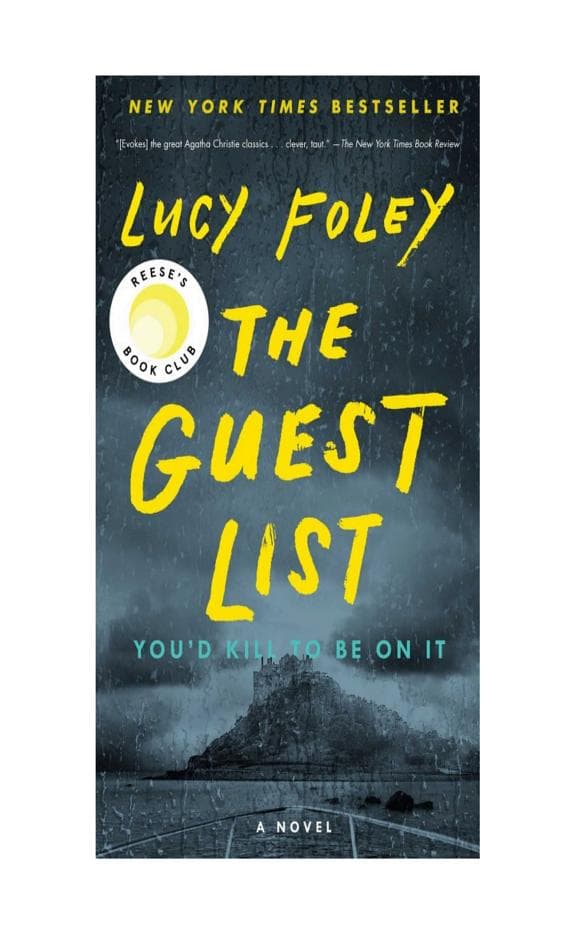
- The Guest List
Lucy Foley
3.8 (1.3M) average on GoodreadsThrillerOn a remote Irish island, a glamorous wedding descends into a deadly whodunnit when a guest is found murdered, trapping everyone with their secrets as a storm rages.
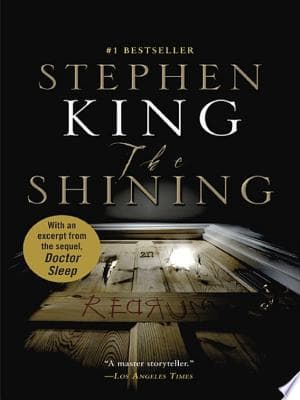
- The Shining
Stephen King
4.2 (1.1M) average on GoodreadsThrillerA recovering alcoholic accepts a caretaking job at a snow-bound, haunted hotel, where his son's psychic abilities reveal the sinister forces that drive him to madness and terrorize his family.




Enjoyed the summary?
A summary gives you the shape of the book. The book itself has the detail, the examples and the voice.
Find Dance Hall of the Dead on AmazonAs an Amazon Associate, BookBrief earns from qualifying purchases. How we're funded