
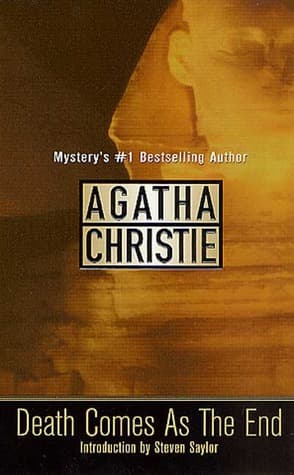
Synopsis
Covers the whole plot, including the ending.
- Difficulty
- Medium
- Pacing
- Moderate
- Mood
- Atmospheric, Suspenseful, Intriguing, Mysterious
- Read it if
- You enjoy classic whodunits set in unique historical periods, with a focus on family dynamics and psychological tension.
- Skip it if
- You prefer fast-paced thrillers or dislike historical settings that might feel a bit slow-burn.
Death Comes as the End Plot Summary
Covers the whole plot, including the ending.
Nofret's Arrival and Family Discord
The story begins in ancient Egypt, at the estate of Imhotep, a wealthy mortuary priest. His household already has simmering resentments among his children: the eldest, Yahmose; the ambitious Sobek; the resentful Ipy; and the daughters, Renisenb and Satipy. Into this volatile mix, Imhotep brings Nofret, a young, beautiful, and manipulative concubine. Nofret quickly takes control, openly mocking the family and subtly undermining their positions with Imhotep. Her presence worsens existing jealousies and creates new tensions, especially when she hints at influencing Imhotep's will, threatening the children's inheritances and social standing. Renisenb, recently widowed, watches these developments with growing unease, feeling her family's fragile peace break.
Nofret's Demise
The family's hatred for Nofret reaches a peak. One morning, Nofret's body is found at the foot of a cliff near the estate. Initially, her death is ruled an accident, a tragic fall while walking. However, the suspicious circumstances and the family's clear relief quickly lead to whispered accusations. Renisenb, in particular, questions the official explanation, remembering Nofret's manipulative nature and the extreme dislike she caused. The family, though outwardly grieving, privately breathes a sigh of relief, believing themselves free of her disruptive influence and the threat to their inheritances. Yet, the question of who, if anyone, was truly responsible for her death remains unspoken.
Hori's Investigation and Growing Fear
Hori, Imhotep's wise and loyal scribe, a man of quiet wisdom and sharp observation, does not accept the accident verdict. He begins a quiet, yet pointed, investigation, questioning family members and servants. His inquiries make everyone uneasy, as they realize their relief might be premature and that a murderer could still be among them. Renisenb, who trusts Hori completely, confides in him, sharing her observations and fears. The family's initial sense of freedom is replaced by a chilling realization: if Nofret was murdered, the killer is still at large and could strike again. The atmosphere in Imhotep's household becomes thick with suspicion and dread.
Satipy's Poisoning
The family's fragile peace breaks once more when Satipy, Sobek's wife, dies suddenly. She drinks from a cup of cosmetic water, believing it to be wine, and collapses, clearly poisoned. This second death shocks the household, confirming Hori's suspicions that Nofret's death was indeed murder. Panic sets in, as it becomes clear that a killer is systematically targeting family members. The motive remains unclear, but the method suggests a calculated, intimate crime. Renisenb is deeply disturbed, realizing that anyone could be next, and she begins to scrutinize her relatives with a new, fearful intensity, trying to find the killer's identity and aim.
Sobek's Demise
The wave of terror continues as Sobek, Imhotep's son and Satipy's widower, is found drowned in the Nile. His death is made to look like an accident, but the family knows better. This third murder solidifies the pattern: the killer is systematically eliminating family members, and the methods are varied, designed to mislead. The household descends into open fear and paranoia. Accusations, both subtle and overt, fly between the remaining family members. Renisenb feels an increasing sense of claustrophobia within her own home, trapped with a murderer. She clings to Hori, her only source of reassurance, as the body count rises and the truth seems ever more elusive.
Kama's Arrival and New Suspicions
Amidst the escalating murders, Kama, a beautiful and spirited woman from Imhotep's past, arrives at the estate. Her unexpected appearance adds another layer of complexity to the already strained family dynamics. Kama quickly becomes a point of contention and suspicion. Some family members resent her presence, fearing she might be another Nofret, while others are drawn to her charm. Her past connection to Imhotep raises questions about her motives for returning now, and whether she could be connected to the ongoing murders. Renisenb, though wary, finds herself somewhat intrigued by Kama's independent spirit, even as she wonders if Kama is another victim or, more chillingly, another suspect.
Ipy's Death and the Curse
The relentless murders continue with the death of Ipy, Imhotep's youngest son, found dead in his bed, having ingested poison. This fourth death plunges the household into even deeper despair and fear. The family members begin to speak openly of a curse, a malevolent force targeting them, as the logical explanations for so many 'accidents' and poisonings dwindle. The only remaining children of Imhotep are Yahmose and Renisenb, and the fear that they are next is clear. Hori intensifies his investigation, now desperate to unmask the killer before more lives are lost. Renisenb, increasingly isolated, feels the net tightening around her and her remaining family.
Renisenb's Revelation
As the body count rises, Renisenb, guided by Hori's subtle observations and her own growing intuition, starts to notice a pattern. She recalls seemingly insignificant details – a specific type of cosmetic, a particular mannerism, a subtle shift in conversation – that point towards a shocking truth. The killer is not targeting specific individuals out of immediate spite, but rather systematically eliminating anyone who stands in the way of a long-held, deeply hidden ambition. Renisenb realizes the true motive is not just greed for inheritance but a deeper, psychological manipulation. The horror of this realization begins to dawn on her, making her question everyone she thought she knew.
The Killer is Revealed
Through Hori's careful deduction and Renisenb's growing understanding, the killer's identity is finally revealed. The murderer is Yahmose, Imhotep's eldest son. His motive was not merely the inheritance of his father's estate, but a deeper, more insidious desire for power and control. He orchestrated the deaths of Nofret, Satipy, Sobek, and Ipy to clear his path to becoming the sole heir and head of the family, eliminating anyone he saw as a rival or an obstacle. The revelation shocks the remaining household, as the depth of his treachery and the cold calculation of his crimes are fully exposed. Renisenb is devastated by her brother's betrayal.
Confrontation and Resolution
Yahmose's guilt is confirmed through a clever trap set by Hori, exposing his manipulative nature and his willingness to sacrifice his own family for power. Faced with clear evidence, Yahmose attempts to flee, but is caught. The family is left reeling from the profound betrayal. Imhotep, devastated by his eldest son's monstrous acts, is forced to confront the dark truth within his own lineage. The murders cease, but the scars on the family are deep. Renisenb, though heartbroken, finds a new sense of resilience and clarity. The household, purged of its malevolent force, can begin the long process of healing, guided by Hori's wisdom and Renisenb's quiet strength, as they navigate a future forever marked by loss and betrayal.
Death Comes as the End Characters
Renisenb
Protagonist
A recently widowed daughter of Imhotep, she observes the family's unraveling.
Renisenb is the central character through whose eyes much of the story unfolds. Recently widowed and returned to her father's household, she is initially a quiet, observant, and somewhat melancholic figure. She possesses a keen sense of justice and a deep empathy for her family, even as she recognizes their flaws. Her experiences have made her reflective, and she is often the voice of reason or the first to notice subtle shifts in the household's dangerous atmosphere. She is intelligent and perceptive, though sometimes hesitant to act on her suspicions.
Relationships: Imhotep (daughter); Hori (trusted confidant and intellectual partner); Nofret (rival, object of suspicion); Yahmose (brother, later revealed as the murderer)
Imhotep
Supporting
The wealthy, aging mortuary priest and patriarch of the troubled family.
Imhotep is the patriarch of the family, a wealthy and respected mortuary priest. He is intelligent and capable in his professional life but surprisingly naive and often blind to the true nature of his children and the discord within his own home. His decision to bring Nofret into the household is the catalyst for the tragedy. He values his family and his legacy but struggles to maintain control as the murders escalate, often appearing bewildered and heartbroken by the unfolding events. He represents the flawed authority figure whose actions inadvertently unleash chaos.
Relationships: Renisenb (father); Nofret (concubine, object of his affection); Hori (trusted scribe and advisor)
Hori
Supporting
Imhotep's loyal and sagacious scribe, who acts as a detective figure.
Hori is Imhotep's trusted scribe, a man of quiet wisdom, keen intellect, and unwavering loyalty. He serves as the primary detective figure in the story, observing, analyzing, and guiding Renisenb towards the truth. He is calm, methodical, and possesses a deep understanding of human nature, making him immune to the family's emotional theatrics. Hori is not driven by personal gain but by a desire for justice and the well-being of the household. He is a source of stability and reason in a world descending into chaos.
Relationships: Imhotep (loyal scribe and advisor); Renisenb (trusted confidant and intellectual partner)
Nofret
Antagonist (initial victim)
Imhotep's beautiful and manipulative young concubine whose arrival sparks the tragedy.
Nofret is the catalyst for the entire series of events. Brought into Imhotep's household, she is young, beautiful, and deeply manipulative. She openly scorns Imhotep's children and uses her influence over him to threaten their inheritances and positions. Her cruel taunts and provocative behavior make her universally hated by the family, making her initial death seem like a relief and making everyone a suspect. Her character embodies the disruptive force that shatters the fragile peace of the household, even in her death.
Relationships: Imhotep (concubine); Renisenb (object of rivalry and disdain)
Yahmose
Antagonist
Imhotep's eldest son, seemingly responsible but harboring a dark secret.
Yahmose is Imhotep's eldest son, outwardly appearing responsible and dutiful. He is initially presented as one of the many family members who resent Nofret. Beneath his calm exterior, however, lies a cold, calculating, and deeply ambitious individual. He is driven by a profound desire for power and control over the family's assets and legacy. His quiet demeanor makes him less immediately suspicious than some of his more volatile siblings, allowing him to operate unseen for a time. He is the ultimate betrayer of his family.
Relationships: Imhotep (son); Renisenb (brother, later revealed as the murderer)
Satipy
Supporting
Sobek's wife, a vain and jealous woman who becomes a victim.
Satipy is Sobek's wife, characterized by her vanity, jealousy, and quick temper. She is one of the most vocal in her hatred for Nofret and expresses relief at her death. She is not particularly intelligent or insightful, often speaking before thinking. Her death by poisoning is the second murder, confirming that a killer is indeed at large and that Nofret's death was not an accident. Her character serves to highlight the pervasive animosity within the family.
Sobek
Supporting
Imhotep's son, a boisterous and somewhat crude character, also a victim.
Sobek is one of Imhotep's sons, known for his more boisterous and somewhat crude nature. He is deeply resentful of Nofret and protective of his own interests and his wife, Satipy. His death by drowning is the third murder, further escalating the terror within the household and solidifying the pattern of targeted killings. His character contributes to the general atmosphere of family discord and provides another victim for the serial killer.
Ipy
Supporting
Imhotep's youngest son, often petty and resentful, who also falls victim.
Ipy is Imhotep's youngest son, often portrayed as petty, resentful, and somewhat pathetic. He feels overlooked and undervalued by his father and siblings. His resentment for Nofret is profound, as he fears she will usurp his inheritance. His death by poisoning is the fourth murder, leaving only Yahmose and Renisenb among Imhotep's children. His character emphasizes the pervasive jealousy and self-interest that permeate the family, making him another convenient target for the murderer.
Kama
Supporting
A beautiful woman from Imhotep's past who arrives during the murders.
Kama is a beautiful and independent woman from Imhotep's past who arrives at the estate during the midst of the murders. Her presence immediately stirs suspicion and curiosity among the remaining family members. She is charming, self-possessed, and has a strong personality, making her a potential new rival or, conversely, a new victim. Her past connection to Imhotep adds another layer of potential motive and mystery to the unfolding events, though she ultimately proves to be unrelated to the killings.
Relationships: Imhotep (past acquaintance/lover)
Death Comes as the End Themes
The Destructive Power of Greed and Envy
The main theme is how unchecked greed for inheritance and deep envy can corrupt individuals and destroy family bonds. Nofret's arrival directly threatens the children's legacies, fueling their existing jealousies. The subsequent murders are all driven by a desire to eliminate rivals for wealth and status, as seen in Yahmose's systematic elimination of his siblings. The story shows how these vices, when not controlled, can lead to unspeakable acts, tearing apart families and leaving a trail of death. The entire household is poisoned by the pursuit of material gain.
“What had been a house of peace and goodwill had become a house of hate and murder.”
The Illusion of Family Harmony
The novel carefully shows the true nature of a family that seems harmonious but hides bitter resentments and animosities. Before Nofret's arrival, the family appears stable, if strained, but her presence acts as a catalyst, exposing the deep-seated hatreds between siblings and towards their father. Each character has private grievances and desires, proving that superficial peace can easily break under pressure. The murders force Renisenb and Hori to confront the uncomfortable truth that the greatest danger often lies within the closest circles, making the home a place of terror rather than safety.
“It was impossible to believe that any of them could be a murderer. But one of them was.”
Justice and Moral Order
Despite the pervasive evil and the cycle of death, the theme of justice and the restoration of moral order supports the story. Hori, with Renisenb's help, works to uncover the truth, driven by a strong sense of right and wrong. The pursuit of the killer is not just about identifying a criminal, but about restoring balance to a world thrown into chaos by dark deeds. The eventual revelation and confrontation of the murderer, Yahmose, signifies the triumph of truth over deception and the reassertion of moral boundaries, even if the cost is immense. The story ultimately affirms that evil cannot go unpunished.
“Justice will be done. The truth will out.”
The Nature of Evil
Christie explores the chilling nature of evil, not as an external monstrous force, but as something that can reside within ordinary individuals, even within one's own family. Yahmose's calculated and cold-blooded murders show how ambition and a lack of empathy can transform a son and brother into a ruthless killer. The novel suggests that evil can hide behind a polite facade, making it all the more insidious and difficult to detect. Renisenb's struggle to reconcile the brother she knew with the murderer he became highlights the shocking capacity for darkness within human nature, especially when driven by self-interest.
“It was a horror, a horror to realize what a human being could be capable of.”
Plot Devices & Literary Techniques
The Closed Circle Mystery
A limited number of suspects, all confined to a single location.
This classic Agatha Christie device is central to 'Death Comes as the End.' The entire series of murders takes place within Imhotep's isolated estate, with all primary suspects being members of his immediate family and household. This confinement intensifies the tension and suspicion, as characters are forced to live in close proximity with a potential murderer. It allows for deep psychological exploration of each suspect and forces the reader to scrutinize every interaction within the confined setting. The limited pool of suspects makes every revelation more impactful.
Red Herrings
Misleading clues or characters designed to distract the reader from the true culprit.
Christie masterfully employs red herrings throughout the narrative. Nofret's universally hated status makes many family members seem equally capable of her murder. Subsequent victims often have their own motives for murder, diverting suspicion. For example, the initial focus on Nofret's various enemies, and later the arrival of Kama, are designed to make the reader suspect multiple characters, leading them away from the true, less obvious culprit. These misdirections keep the reader guessing and add layers of complexity to the mystery.
The 'Least Likely Suspect' Trope
The killer is ultimately revealed to be a character who initially appears innocent or beyond suspicion.
A signature Christie trope, the killer in 'Death Comes as the End' is Yahmose, Imhotep's eldest son, who initially appears responsible and stable, making him seem less likely to be the serial murderer compared to his more volatile or obviously resentful siblings. This device plays on the reader's expectations and biases, proving that appearances can be deceiving and that evil can reside in the most unexpected places. The shock of his revelation is amplified because he was not the obvious choice, forcing a re-evaluation of all previous interactions.
Psychological Motivation
The murders are driven by deep-seated psychological factors rather than simple opportunism.
Unlike some mysteries driven by spur-of-the-moment crimes, the murders in 'Death Comes as the End' are meticulously planned and executed, stemming from a profound psychological motivation: a relentless desire for power and control. The killer's systematic elimination of family members is not random but strategic, designed to clear a path to sole inheritance and dominance. This focus on the killer's warped mental state and long-term planning adds a chilling depth to the narrative, making the villain more terrifying and the resolution more complex than a simple 'whodunit'.
Death Comes as the End Quotes
“For death comes as the end of all things, the final answer to every question.”
“The past is never dead. It's not even past.”
“It is always the simple things that are the most difficult to understand.”
“Love can be a terrible thing, my child, when it is not returned.”
“Men are like children, they need to be guided and protected.”
“There are many kinds of prisons. Some have walls of stone, others have walls of fear.”
“The heart has its reasons, which reason knows nothing of.”
“Even the strongest chain has a weak link.”
“A lie, however small, can fester and grow into something monstrous.”
“When the gods wish to punish us, they answer our prayers.”
“It is not the eye that sees, but the mind.”
“To forgive is divine, but to forget is foolish.”
“Silence can be a more powerful weapon than words.”
“Grief is a strange thing. It makes you do things you never thought you would.”
Quiz
10 questions on the plot and the characters. Each answer comes with a short explanation.
Question 1
Who is the wealthy landowner and priest of Thebes whose family is central to the mystery?
- Hori
- Yahmos
- Imhotep
- Sobek
Show answer
C. Imhotep Imhotep is the patriarch of the family and the priest who brings Nofret into their home, sparking the initial conflict.
Question 2
What is the name of the beautiful concubine whose arrival causes strife within Imhotep's family?
- Renisenb
- Nofret
- Satipy
- Kait
Show answer
B. Nofret Nofret is the concubine whose manipulative nature and plans to usurp legacies lead to her murder.
Question 3
Where is Nofret's lifeless body first discovered?
- In her bedchamber
- At the foot of a cliff
- In the granary
- By the Nile riverbank
Show answer
B. At the foot of a cliff Nofret's initial death is described as her body being found at the foot of a cliff, making it appear like an accident or suicide.
Question 4
Which character serves as the primary narrator and viewpoint for much of the novel?
- Hori, the scribe
- Yahmos, Imhotep's eldest son
- Renisenb, Imhotep's widowed daughter
- Kameni, the youngest son
Show answer
C. Renisenb, Imhotep's widowed daughter Renisenb, having returned home a widow, provides the main perspective through which the reader experiences the family dynamics and the murders.
Question 5
What is the primary motive initially suspected for Nofret's murder by the family members?
- Political conspiracy
- Revenge and greed over inheritance
- A curse from the gods
- An accidental death
Show answer
B. Revenge and greed over inheritance The family members immediately suspect that one of them killed Nofret due to her manipulative attempts to disinherit them and seize their legacies.
Question 6
Which other family member is poisoned with a cosmetic, leading to a second death?
- Satipy, Yahmos's wife
- Kait, Sobek's wife
- Kameni, the youngest son
- Bint, Imhotep's mother
Show answer
A. Satipy, Yahmos's wife Satipy is the second victim, poisoned by a cosmetic, which further heightens the tension and suspicion within the household.
Question 7
What unique aspect sets 'Death Comes as the End' apart from most other Agatha Christie novels?
- It features Hercule Poirot in a disguise.
- It is set in a modern-day European city.
- It is a historical mystery set in ancient Egypt.
- It is a spy thriller without any murders.
Show answer
C. It is a historical mystery set in ancient Egypt. The novel is unique in Christie's canon for being a historical mystery set entirely in ancient Egypt, a departure from her usual contemporary settings.
Question 8
Who is the true murderer responsible for the deaths in the household?
- Kameni
- Yahmos
- Hori
- Imhotep
Show answer
D. Imhotep The shocking revelation is that Imhotep, the patriarch, is the murderer, driven by a desire to remove anyone who opposes his will or threatens his comfort.
Question 9
What is the primary method Imhotep uses to commit the murders?
- Stabbing with a ceremonial dagger
- Poison, often disguised or subtly administered
- Strangulation
- Pushing victims from high places
Show answer
B. Poison, often disguised or subtly administered Imhotep primarily uses poison, such as in Nofret's wine (though she fell from a cliff) and the poisoned cosmetic for Satipy, to commit his crimes, making them seem like accidents or suicides.
Question 10
What is the underlying theme that Agatha Christie explores through the ancient Egyptian setting and family dynamics?
- The triumph of justice over tyranny in ancient societies.
- The timeless nature of human jealousy, greed, and family conflict.
- The superiority of ancient Egyptian religious beliefs.
- The impact of trade routes on ancient Egyptian culture.
Show answer
B. The timeless nature of human jealousy, greed, and family conflict. Despite the unique historical setting, the core themes of human nature—jealousy, greed, and the destructive power of family conflict—remain universal and are central to the story.
Death Comes as the End FAQ
What is the central conflict that initiates the series of murders in 'Death Comes as the End'?
The central conflict begins with the arrival of Nofret, a beautiful concubine brought into the household of the wealthy priest Imhotep. Her manipulative nature and open ambition to usurp the inheritances of Imhotep's children create immediate resentment and hostility, particularly from Satipy and Renisenb, setting the stage for the subsequent violence.
Who is Renisenb, and what is her role in the narrative?
Renisenb is Imhotep's recently widowed daughter, who returns to her father's household at the story's outset. She serves as the primary perspective character through much of the novel, observing the family dynamics and the growing tension Nofret's presence creates, and eventually becoming deeply involved in the unfolding mystery and romantic entanglements.
What makes 'Death Comes as the End' unique among Agatha Christie's works?
This novel is unique because it is the only one of Agatha Christie's novels not set in her contemporary period, but rather in ancient Egypt around 2000 BC. She drew upon her archaeological knowledge gained from her husband, Max Mallowan, to create an authentic historical setting and a plot that mirrors the domestic intrigues often found in her modern mysteries.
Who are some of the key family members in Imhotep's household besides Renisenb?
Imhotep's household includes his sons Yahmose, Sobek, and Ipy, and his daughters Satipy and Renisenb. Also present are their wives and children, such as Kait, Yahmose's wife, and Henet, a servant. These characters all have distinct personalities and motives that contribute to the complex family dynamics and the murder plot.
What is the initial murder, and who is suspected?
The initial murder is that of Nofret, whose body is found at the foot of a cliff. Due to the intense animosity she generated and her threats to disinherit Imhotep's children, suspicion immediately falls upon the family members. Satipy, known for her volatile temper and open hatred of Nofret, becomes a prime suspect.
What is the significance of the 'evil eye' or curses mentioned by some characters?
The 'evil eye' and curses are mentioned by several characters, particularly by the more superstitious members of the household, as potential explanations for the misfortunes and deaths. While these superstitions contribute to the ancient Egyptian atmosphere, they also serve to mislead and distract from the more mundane, human motives behind the murders, playing into the psychological tension.
How does the character of Esa, Imhotep's mother, contribute to the hidden details of the plot?
Esa, Imhotep's aged and seemingly senile mother, often makes cryptic remarks and possesses a keen, though often underestimated, understanding of the household's true dynamics. Her observations, seemingly random, often contain subtle clues or warnings about the killer's nature and methods, which are easily dismissed by the younger generation but reveal her underlying shrewdness.
Is there a specific historical or archaeological detail that Christie subtly incorporates as a clue?
Christie subtly incorporates details about the daily routines and physical layout of an ancient Egyptian estate, including the various storage rooms, pathways, and the use of boats for transport. These seemingly mundane details are crucial for understanding the killer's movements and opportunities, particularly regarding how poisons might be administered or bodies disposed of without immediate detection.
What role does the character of Hori, the family scribe, play beyond his official duties?
Hori, the family scribe, is presented as a loyal and observant member of the household, often acting as a quiet confidant to Renisenb. Beyond his administrative tasks, he serves as a voice of reason and a subtle investigator, piecing together information and offering insights into the true nature of the killer, though he rarely acts overtly.
How does Renisenb's grief for her deceased husband affect her perception of events?
Renisenb's recent widowhood leaves her in a state of emotional vulnerability and detachment initially. This grief makes her more introspective and observant of the family's toxic dynamics, but also makes her susceptible to emotional manipulation and misjudgment, particularly regarding her own romantic interests and trust in others.
Discuss the psychological motivations behind the killer's actions, beyond simple greed.
The killer's motivations extend beyond mere greed to encompass a deep-seated pathology, characterized by possessiveness, control, and a chilling disregard for human life. There is a strong element of narcissistic rage and a desire to eliminate anyone who threatens their established order or perceived status, suggesting a profound personality disorder rather than just opportunism.
How does the psychological concept of 'gaslighting' subtly manifest within the family dynamics?
The psychological concept of 'gaslighting' subtly manifests through the killer's manipulation of perceptions and the creation of doubt among family members. The killer often makes others question their sanity or memory, creating an atmosphere of confusion and distrust that prevents a clear understanding of events and isolates potential victims or witnesses.
Analyze the psychological impact of living in such a confined and competitive family environment.
Living in such a confined and competitive family environment fosters paranoia, resentment, and intense jealousy among the siblings and their spouses. The constant vying for Imhotep's favor and inheritance creates a hothouse atmosphere where small slights fester into deep-seated hatred, making everyone a potential suspect and victim, and eroding trust.
How does the novel challenge traditional notions of 'family' and 'loyalty'?
The novel profoundly challenges traditional notions of 'family' and 'loyalty' by depicting a household where blood ties are completely overridden by greed, envy, and murderous intent. The very people who should offer protection become the greatest threats, forcing characters like Renisenb to question the meaning of kinship and who can truly be trusted.
What is the broader commentary on human nature that 'Death Comes as the End' offers?
'Death Comes as the End' offers a bleak commentary on human nature, suggesting that primal emotions like greed, envy, and possessiveness are timeless and transcend historical periods or cultural settings. It argues that even in a seemingly pious and structured society, the darkest aspects of humanity can flourish, leading to profound moral decay within the most intimate relationships.
How does the ancient Egyptian setting influence the themes of fate versus free will?
The ancient Egyptian setting, with its strong belief in destiny, omens, and the afterlife, subtly influences the themes of fate versus free will. While some characters attribute events to divine will or curses, the narrative ultimately emphasizes human agency and choice as the driving force behind the tragedies, suggesting that even in a world of gods, human actions have tangible consequences.
Is there a feminist interpretation to be made regarding the female characters' struggle for agency?
Yes, a feminist interpretation can be made regarding the female characters' struggle for agency, particularly Renisenb's. Women in this society are largely dependent on male relatives for status and security. Renisenb's journey involves navigating this patriarchal system, asserting her intelligence and will in a world where her choices are limited, highlighting the constraints placed upon women in ancient societies.
What literary devices does Christie employ to build suspense in a historical setting?
Christie employs several literary devices to build suspense, including the confined setting of the household, which amplifies tension and suspicion. She uses unreliable narration through the characters' limited perspectives, red herring suspects, and the gradual reveal of character motives. The ancient setting itself adds an exotic, almost claustrophobic, atmosphere that heightens the sense of dread and isolation.
About the author
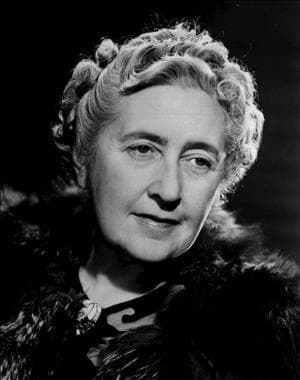
Dame Agatha Mary Clarissa Christie, Lady Mallowan, was an English writer known for her 66 detective novels and 14 short story collections, particularly those revolving around fictional detectives Hercule Poirot and Miss Marple. She also wrote the world's longest-running play, the murder mystery The Mousetrap, which has been performed in the West End since 1952. A writer during the "Golden Age of Detective Fiction", Christie has been called the "Queen of Crime". She also wrote six novels under the pseudonym Mary Westmacott. In 1971, she was made a Dame (DBE) by Queen Elizabeth II for her contributions to literature. Guinness World Records lists Christie as the best-selling fiction writer of all time, her novels having sold more than two billion copies.
Similar books
- Death on the Nile
Agatha Christie
4.1 (127k) average on GoodreadsThrillerAnother Christie mystery with a contained cast and a focus on interpersonal relationships leading to murder.
- Crooked House
Agatha Christie
4.0 (43k) average on GoodreadsThrillerA family full of potential murderers, where greed and hidden motives drive the plot.
- Angels & Demons
Dan Brown
3.9 (2.7M) average on GoodreadsThrillerA Harvard symbologist races through Rome's ancient sites, deciphering cryptic clues to unmask the Illuminati and stop a vengeful plot to destroy the Vatican with a stolen antimatter weapon.
- Gone Girl
Gillian Flynn
4.1 (2.3M) average on GoodreadsThrillerA wife's sudden disappearance on her fifth anniversary reveals a web of lies and psychological warfare, exposing the secrets within a seemingly perfect marriage.
- The Girl on the Train
Paula Hawkins
3.9 (2.1M) average on GoodreadsThrillerA woman’s fascination with a seemingly perfect couple she watches from her daily train commute leads her into a dark investigation when she witnesses something that shatters their idyllic image.
- The Da Vinci Code
Dan Brown
3.9 (1.9M) average on GoodreadsThrillerA symbologist and a cryptologist race through European landmarks, deciphering ancient codes and uncovering a conspiracy that could rewrite the foundations of Christianity.




Enjoyed the summary?
A summary gives you the shape of the book. The book itself has the detail, the examples and the voice.
Find Death Comes as the End on AmazonAs an Amazon Associate, BookBrief earns from qualifying purchases. How we're funded