
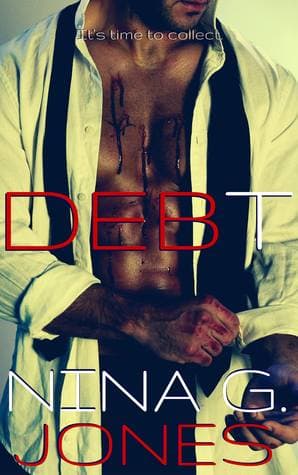
Synopsis
Covers the whole plot, including the ending.
- Difficulty
- Medium
- Pacing
- Variable
- Mood
- Dark, Suspenseful, Intense, Emotional, Thrilling
- Read it if
- You enjoy dark, intense thrillers with significant romantic tension, morally ambiguous characters, and themes of revenge and complicated pasts.
- Skip it if
- You prefer lighthearted stories, are sensitive to graphic content, or dislike plots where the line between hero and villain is heavily blurred.
Debt Plot Summary
Covers the whole plot, including the ending.
The Calculated Attack
Kelsie Matthews, bored with her life, hires someone online to stage a 'safe' attack on her. The plan is for the assailant to break in, scare her, and leave, giving her a controlled thrill. But on the night of the attack, the situation quickly goes beyond her control. The man, who calls himself 'Debt,' is more menacing than she expected. He doesn't follow the script, instead subjecting her to a terrifying ordeal. Kelsie realizes too late that she has invited real danger into her life, not just an illusion.
Debt's Revelation and Kelsie's Captivity
After the initial 'attack,' Debt doesn't disappear as Kelsie expected. He reveals the encounter was no accident or game. He says he was hired by someone else, or is acting on his own personal vendetta, targeting Kelsie as part of a meticulous plan. He takes her captive, moving her to a secluded location. Kelsie is terrified and confused, unable to understand why she is the target of such a scheme. Debt's demeanor is cold and calculated, hinting at a past filled with pain and betrayal. He sees Kelsie as a means to an end in his quest for vengeance.
Unraveling the Past
During her captivity, Debt slowly reveals parts of his traumatic past. Kelsie learns his real name is Liam and that he suffered immense loss and injustice from powerful people. He speaks of a destroyed family, a stolen life, and a burning desire for retribution that has consumed him for years. Kelsie starts to realize she is connected to the people Liam holds responsible for his pain, though her exact involvement remains unclear. Liam's story is filled with grief and rage, painting a picture of a man driven only by the need for his tormentors to 'pay their debt.'
The Growing Complexity of Their Relationship
As days turn into weeks, an unexpected and disturbing dynamic develops between Kelsie and Liam. Despite being his captive, Kelsie finds herself drawn to the damaged man beneath the ruthless exterior. She sees moments of vulnerability and glimpses of the person Liam might have been before his life shattered. Liam, in turn, finds Kelsie's resilience and compassion challenging his carefully built walls of hatred. Their interactions become a dangerous dance between captor and captive, marked by moments of intense emotional connection and forbidden physical intimacy, blurring the lines between fear, desire, and understanding.
Kelsie's Connection to the 'Debt'
Liam eventually reveals the full extent of Kelsie's family's involvement in his tragedy. He explains that Kelsie's father, a respected businessman, along with other powerful figures, was directly responsible for the ruin of Liam's family and the deaths of his loved ones. Kelsie is horrified to learn that her comfortable, privileged life was built on the suffering of others. This revelation shatters her perception of her family and forces her to confront the dark legacy she unknowingly inherited. The 'debt' Liam seeks is not just financial, but a reckoning for the lives destroyed by Kelsie's father and his associates.
A Divided Loyalty
Faced with undeniable evidence of her family's corruption and cruelty, Kelsie is in an impossible position. Her initial fear of Liam begins to change into a complex blend of understanding, pity, and even a twisted sense of justice. She struggles with the moral dilemma of her situation: should she condemn Liam for his methods, or acknowledge the wrong her family committed? Her loyalty becomes divided, torn between the family bonds she once cherished and the truth of Liam's suffering. She starts to see her family through Liam's eyes, recognizing the arrogance and ruthlessness that enabled their actions.
The Plan of Retribution
Liam explains his meticulously crafted plan for retribution. He intends to financially ruin Kelsie's father and his co-conspirators and expose their crimes to the world, ensuring they face public humiliation and legal consequences. Kelsie realizes she is a crucial, unwilling pawn in this grand scheme. Liam needs her access, her knowledge, or perhaps just her existence to complete his vengeance. The stakes are incredibly high, and Kelsie understands that her life, and the lives of everyone involved, will be changed by Liam's actions. The plan is intricate, involving financial manipulation, leaked information, and public exposure.
The Betrayal and the Test
As Liam's plan progresses, he tests Kelsie's loyalty. He puts her in situations where she must choose between protecting her family and aiding his mission. These tests are agonizing for Kelsie, forcing her to confront her family's depravity and her own unwitting complicity. One test involves her accessing sensitive information or directly confronting a family member, making her an active participant in their downfall. These moments solidify her shift in allegiance, as she begins to actively work alongside Liam, not just as a captive, but as a reluctant ally in his quest for justice.
The Confrontation and Aftermath
The climax of Liam's revenge involves a public confrontation and the exposure of Kelsie's father's illicit dealings. The evidence is released, leading to widespread scandal, arrests, and the collapse of the family empire. Kelsie witnesses the downfall of her father and his associates, a devastating yet cathartic event. The immediate aftermath is chaotic, with Kelsie grappling with the destruction of her former life and the changes in her identity. Liam, having achieved his goal, is left with the emptiness of vengeance, and the unexpected bond he forged with Kelsie.
A Future Forged in Ruins
With the 'debt' paid and the revenge plot concluded, Kelsie and Liam face the ruins of their lives. Kelsie has lost everything she knew, but has gained a clarity about herself and the world. Liam has achieved his vengeance, but the years of hatred have left deep scars. They are both changed by their shared ordeal. The intense, complicated bond they formed is undeniable, but they must now navigate whether a lasting relationship can be built from such a foundation of trauma, captivity, and retribution. Their future is uncertain, but linked by the events that brought them together.
Debt Characters
Kelsie Matthews
Protagonist
A woman seeking escape from boredom, who unknowingly invites true danger into her life.
Kelsie is initially portrayed as a privileged, somewhat naive woman, bored with her comfortable but unfulfilling life. She seeks a thrill, a 'safe' brush with danger, which ironically leads her into a truly perilous situation. She is intelligent and resilient, adapting to her captivity and eventually confronting the dark truths about her family. Her journey is one of profound self-discovery and moral reckoning, as she sheds her illusions and faces harsh realities.
Relationships: Liam (Debt) (Captor-captive, evolving into a complex, forbidden romantic and emotional bond.); Kelsie's Father (Initially loving and trusting, evolving into disillusionment, betrayal, and complicity in his downfall.)
Liam (Debt)
Antagonist/Love Interest
A man consumed by a burning desire for vengeance against those who destroyed his family.
Liam, known initially as 'Debt,' is a formidable and enigmatic figure, driven by deep-seated trauma and a meticulous plan for revenge. He is intelligent, resourceful, and ruthless, having spent years honing his skills and executing his intricate scheme. Beneath his hardened exterior, he carries profound grief and a capacity for complex emotions that Kelsie slowly uncovers. His motivation is not purely evil, but a twisted form of justice for the wrongs committed against him.
Relationships: Kelsie Matthews (Captor-captive, evolving into a complex, forbidden romantic and emotional bond.); Kelsie's Father (Primary target of his revenge, representing the corrupt system that destroyed his family.)
Kelsie's Father
Antagonist
A powerful and corrupt businessman whose past actions fuel Liam's revenge.
Kelsie's father is a seemingly respectable and influential figure in society, a wealthy businessman who has built an empire. However, beneath this veneer lies a ruthless, corrupt individual responsible for immense suffering and injustice, particularly against Liam's family. He embodies the systemic power and moral decay that Liam seeks to dismantle. His character primarily serves as the catalyst for Liam's actions and the ultimate target of his revenge.
Relationships: Kelsie Matthews (Daughter, whose perception of him crumbles as his true nature is revealed.); Liam (Debt) (The primary target of Liam's vengeful mission.)
Debt Themes
The Nature of Debt and Vengeance
The novel explores the many meanings of 'debt' — not just financial, but moral and emotional. Liam's entire existence is dedicated to making those who wronged him 'pay their debt,' highlighting how destructive vengeance can be. It questions whether true justice comes from retribution and if the 'debt' can ever truly be repaid. The theme shows in Liam's relentless pursuit, the suffering he endures, and the emotional cost of his actions, even when justified. The novel suggests that while vengeance might offer temporary relief, it rarely brings true peace.
“My mission is almost complete. The bubbling boil of vengeance that heats my blood might finally simmer. She is the last piece of the puzzle. Once I destroy her, everyone who ever hurt me will have paid their debt.”
The Illusion of Safety and Control
Kelsie initially believes she can control danger, staging a 'safe' attack for a thrill. This theme explores how easily that illusion shatters, showing that real danger can appear unexpectedly or be invited in without full understanding. It highlights human vulnerability, even for those in privileged positions, to forces beyond their control. Kelsie's initial naivety about the 'attack' and her subsequent terrifying captivity clearly illustrate this theme, revealing that her life was never truly safe, even before Liam's arrival, due to her family's dark secrets.
“It was an illusion of danger that I could walk away from as soon as it was over. Except that it wasn’t. Because I had been in danger long before I ever invited it into my life.”
Moral Ambiguity and Shifting Loyalties
The novel examines a complex moral landscape where right and wrong are blurred. Kelsie must confront her own family's villainy and her captor's twisted justice. This creates a deep internal conflict as she struggles with where her loyalty should lie. The narrative challenges readers to question their own moral compass, presenting a 'villain' (Liam) whose actions, though brutal, are rooted in injustice, and a 'victim' (Kelsie) whose privileged life is built on corruption. The development of Kelsie's relationship with Liam further complicates these boundaries.
“How could I hate him when his pain was so real, and my family's guilt so undeniable?”
The Corrupting Influence of Power and Privilege
Kelsie's family represents the corrupting influence of unchecked power and privilege. Her father and his associates show how wealth and status can be used to commit heinous acts without consequence, destroying lives and escaping justice for years. The novel exposes the dark side of a seemingly respectable society, where moral decay thrives behind closed doors. Liam's revenge is, in part, a rebellion against this system, aiming to dismantle the power structures that allowed such injustices to occur. Kelsie's realization of her family's guilt is a direct confrontation with this theme.
“They built their empires on the backs of the innocent, crushing anyone who stood in their way.”
Plot Devices & Literary Techniques
The Unreliable Narrator (Kelsie's Initial Perspective)
Kelsie's initial understanding of her situation is flawed and naive.
At the beginning of the novel, Kelsie's perception of the 'attack' and her motivations for orchestrating it are presented as naive and misinformed. She believes she is in control and that the danger is an illusion. This device creates immediate tension and foreshadows the true peril she faces. It allows the narrative to reveal the deeper, darker truths about her life and family gradually, shattering her illusions alongside the reader's, and highlighting the theme of the illusion of safety.
The Captor-Captive Dynamic
The evolving relationship between Kelsie and Liam, blurring traditional roles.
This classic thriller device is central to the novel, but it is subverted and complicated. Instead of a straightforward power imbalance, the relationship between Kelsie and Liam evolves into a complex bond characterized by fear, dependence, understanding, and forbidden attraction. It serves to explore themes of Stockholm Syndrome, moral ambiguity, and the unexpected connections that can form under extreme duress, making their relationship the emotional core of the story and challenging typical genre tropes.
Flashbacks and Reveals (Liam's Past)
Gradual unveiling of Liam's traumatic history to explain his motivations.
The novel uses fragmented flashbacks and gradual revelations of Liam's past to explain the depth of his trauma and the driving force behind his revenge. These aren't always linear, but are strategically placed to build sympathy for Liam, complicate the reader's judgment of his actions, and provide crucial context for the 'debt' he seeks to collect. This device ensures that his character is not a one-dimensional villain but a deeply wounded individual driven by profound injustice, making his motivations understandable, if not entirely justifiable.
The MacGuffin (The 'Debt')
The abstract concept of 'debt' as the primary motivator for the plot.
While not a physical object, the 'debt' serves as a central MacGuffin. It is the abstract concept that drives Liam's entire mission and dictates the plot's direction. It represents not just financial retribution but a moral and emotional reckoning for past wrongs. The ambiguity of what constitutes 'paying the debt' allows for the escalation of Liam's actions and the complex resolution of the story, as it's not simply about money but about justice, suffering, and the rebuilding of lives.
Debt Quotes
“The past is a debt that always comes due, eventually.”
“Love isn't supposed to feel like a cage, even a gilded one.”
“Some secrets are too heavy to carry alone, but too dangerous to share.”
“He looked at her like she was the only thing worth seeing in a crowded room, and for a moment, she believed it.”
“Revenge is a dish best served cold, but sometimes, hunger makes you impatient.”
“The line between protector and captor is often blurrier than we'd like to admit.”
“You can run from your past, but you can't outrun the person you became because of it.”
“Sometimes the only way to break free is to burn everything down.”
“Trust is a currency, easily spent and rarely repaid in full.”
“The quietest threats are often the most deadly.”
“Desire, like debt, has a way of escalating until it consumes everything.”
“Even in the darkest corners, a flicker of hope can ignite the fiercest fight.”
“Forgiveness is a luxury some debts simply don't allow.”
“The most dangerous game is the one played with hearts, not just lives.”
Quiz
10 questions on the plot and the characters. Each answer comes with a short explanation.
Question 1
What is the protagonist's initial motivation for hiring someone to attack her?
- To escape a real-life threat she was already facing.
- To seek revenge on someone from her past.
- To fill a void, break monotony, and experience an illusion of danger.
- To test the security of her home.
Show answer
C. To fill a void, break monotony, and experience an illusion of danger. The synopsis states she hired someone because she was 'bored, or lonely, or there was a void so deep inside of me that I needed something explosive to fill it. It was supposed to be safe. A thrill. A way to break through the monotony of everyday life.'
Question 2
What is the male protagonist's primary motivation for targeting the female protagonist?
- He was hired by a third party to protect her.
- He wants to destroy her as the last piece of a vengeance puzzle against those who hurt him.
- He is attracted to her and wants to start a relationship.
- He mistakenly believes she is someone else.
Show answer
B. He wants to destroy her as the last piece of a vengeance puzzle against those who hurt him. The synopsis states, 'She is the last piece of the puzzle. Once I destroy her, everyone who ever hurt me will have paid their debt.'
Question 3
What does the female protagonist initially believe about the 'danger' she invites into her life?
- That it would lead to her true love.
- That it was a real, life-threatening situation she couldn't escape.
- That it was an illusion of danger she could walk away from.
- That it was a test of her courage.
Show answer
C. That it was an illusion of danger she could walk away from. The text says, 'It was an illusion of danger that I could walk away from as soon as it was over.'
Question 4
What complicates the male protagonist's mission of vengeance?
- He discovers she has powerful allies protecting her.
- He finds out she is not the person he thought she was.
- His feelings for her become complicated as soon as he meets her.
- He runs out of resources to complete his mission.
Show answer
C. His feelings for her become complicated as soon as he meets her. The male protagonist states, 'It was supposed to be quick and easy, but as soon as I met her it got complicated. Very complicated.'
Question 5
What specific genre combination is 'Debt' described as?
- Fantasy and Mystery
- Science Fiction and Horror
- Thriller and Romance
- Historical Fiction and Drama
Show answer
C. Thriller and Romance The book description explicitly states 'Thriller, Romance'.
Question 6
What internal conflict does the female protagonist express regarding her decision to hire an attacker?
- Whether she should tell her family about it.
- Regret and confusion about her motivations, asking, 'I don’t know what I was thinking'.
- Fear that the attacker wouldn't be skilled enough.
- Worry about the cost of the service.
Show answer
B. Regret and confusion about her motivations, asking, 'I don’t know what I was thinking'. The protagonist opens with, 'I don’t know what I was thinking when I hired someone to attack me. Maybe I was bored, or lonely, or there was a void so deep inside of me that I needed something explosive to fill it.' This shows her internal conflict and uncertainty about her own decision.
Question 7
The male protagonist's 'bubbling boil of vengeance that heats my blood' suggests what about his character?
- He is prone to fits of uncontrollable rage.
- He is driven by a deep, intense, and long-standing desire for retribution.
- He is a chef with a passion for cooking.
- He is suffering from a fever.
Show answer
B. He is driven by a deep, intense, and long-standing desire for retribution. The metaphor 'bubbling boil of vengeance that heats my blood' conveys a powerful, consuming, and enduring drive for revenge that is central to his character.
Question 8
What key theme is introduced by the female protagonist's realization that 'I had been in danger long before I ever invited it into my life'?
- The theme of accidental discovery.
- The theme of inherent vulnerability and pre-existing threats, contrasting with her perceived control.
- The theme of cosmic irony.
- The theme of fate versus free will.
Show answer
B. The theme of inherent vulnerability and pre-existing threats, contrasting with her perceived control. This line directly contradicts her initial belief that she was inviting a 'safe' thrill, revealing that she was already in a precarious situation, deepening the sense of inherent danger and vulnerability.
Question 9
Given the 'Adult/graphic content that may be difficult for some readers' warning, what can be inferred about the nature of the 'thriller' elements in the book?
- The thrills are primarily psychological and non-violent.
- The thriller aspects likely involve intense, potentially violent, or sexually explicit scenes.
- The difficulty for readers comes from complex philosophical concepts.
- The graphic content refers to detailed descriptions of artwork.
Show answer
B. The thriller aspects likely involve intense, potentially violent, or sexually explicit scenes. The warning 'Adult/graphic content that may be difficult for some readers' in the context of a thriller/romance strongly suggests that the 'graphic' nature pertains to violence, sexual content, or other mature themes that are intense and potentially disturbing.
Question 10
How does the phrase 'everyone who ever hurt me will have paid their debt' contribute to the central conflict of the story?
- It implies a financial dispute between characters.
- It establishes a clear, personal vendetta as the male protagonist's driving force, directly clashing with his unexpected emotional connection to his target.
- It suggests a legal battle is at the heart of the plot.
- It indicates a metaphorical debt owed to society.
Show answer
B. It establishes a clear, personal vendetta as the male protagonist's driving force, directly clashing with his unexpected emotional connection to his target. The phrase defines the male protagonist's entire mission as one of settling scores and exacting vengeance. The central conflict arises when this clear, destructive goal becomes 'complicated' by his developing feelings for the very person who is the 'last piece of the puzzle' in his debt collection.
Debt FAQ
What is the core premise of 'Debt'?
The novel centers on a woman who hires an anonymous attacker for a thrill, only to discover that the 'attacker' is a man with a deeply personal vendetta against her, intertwining their lives in a dangerous and complicated game of revenge and unexpected attraction.
Who is the protagonist who hires an attacker, and what are her initial motivations?
The protagonist is Julianna. She initially hires an attacker out of boredom, loneliness, and a desire to fill a void in her life with an 'explosive' and 'safe' thrill, seeking to break the monotony of her everyday existence.
Who is the male lead, and what is his primary objective when he encounters Julianna?
The male lead is Silas. His primary objective is vengeance against those who wronged him, and Julianna is the final target in his carefully planned mission to ensure everyone who ever hurt him pays their 'debt'.
How does the 'safe' thrill Julianna seeks quickly unravel into genuine danger?
Julianna's illusion of safety shatters because Silas isn't a hired actor for a thrill; he has a real, deeply personal connection to her past that predates their arranged encounter, making his intentions far more sinister and rooted in genuine harm.
What kind of 'debt' is Silas seeking to collect, and from whom?
Silas is seeking retribution for profound past hurts he suffered, aiming to make Julianna and others connected to his traumatic history pay for their perceived roles in his suffering, believing they owe him for the pain inflicted.
What specific, hidden connection exists between Julianna and Silas that makes their encounter more than just a random act?
The hidden connection is that Julianna's family, or she herself, was involved in events that directly led to Silas's past trauma and suffering, making her a target of his elaborate revenge plot rather than a random victim.
Are there any subtle clues early in the narrative that hint at Silas's true intentions or his past?
Yes, the narrative often describes Silas's actions as precise and calculated, with an underlying intensity that goes beyond a mere 'hired hand'. His internal monologue frequently mentions 'mission' and 'vengeance,' hinting at a deeper, personal motive for targeting Julianna.
How does the initial power dynamic, where Julianna believes she's in control, shift as the truth is revealed?
Initially, Julianna believes she holds power by hiring an attacker, but this dynamic completely flips as she realizes Silas is not an employee but an avenger. He possesses the true power, knowing her past and holding her fate in his hands, making her the vulnerable party.
What role do secondary characters play in uncovering the full scope of Silas's past or Julianna's unwitting involvement?
Secondary characters, such as Julianna's family members or old acquaintances, likely provide pieces of the puzzle, either by revealing their own past transgressions or offering fragmented memories that help Julianna connect the dots to Silas's vendetta, solidifying their shared, dark history.
What psychological void is Julianna trying to fill by orchestrating her own attack?
Julianna is attempting to fill a profound sense of emptiness, boredom, and loneliness, seeking an extreme, fabricated thrill as a desperate attempt to feel something intense and break free from a monotonous existence, even if it's an illusion of danger.
How does Silas's trauma manifest in his pursuit of vengeance, and what psychological toll does it take on him?
Silas's trauma manifests as an all-consuming drive for retribution, a 'bubbling boil of vengeance' that fuels his every action. Psychologically, this singular focus likely leaves him isolated and emotionally stunted, making him believe fulfilling his mission is the only way to find peace.
Discuss the psychological impact of Julianna discovering she was a target of genuine, deeply personal revenge, rather than a hired thrill.
The discovery likely shatters Julianna's sense of safety and control, inducing profound fear, paranoia, and guilt. It forces her to confront uncomfortable truths about her past or her family's actions, leading to a deep psychological reckoning and self-reassessment.
How does the unexpected romantic element complicate the psychological states of both Julianna and Silas?
The unexpected romance creates immense cognitive dissonance for both. Julianna grapples with attraction to her tormentor, while Silas battles his desire against his ingrained need for revenge, leading to internal conflict, confusion, and a blurring of lines between hate and love, victim and perpetrator.
Is 'Debt' ultimately a story of redemption, or does it explore the darker, more destructive aspects of human nature?
While elements of redemption might emerge, 'Debt' leans heavily into exploring the darker, destructive aspects of human nature, showcasing how past trauma can fuel obsessive revenge and how individuals can be drawn to dangerous situations, even when they carry profound consequences.
Does the novel suggest that Julianna is truly innocent, or does it imply a degree of culpability in Silas's past suffering?
The novel likely implies a degree of culpability for Julianna, even if unwitting or indirect. It suggests she was 'in danger long before she ever invited it into her life,' indicating her past or her family's actions contributed to Silas's pain, making her part of the 'debt' that needs to be paid.
How does the 'Adult/graphic content' warning relate to the themes of the book beyond just physical violence?
The warning likely extends beyond physical violence to encompass the intense psychological manipulation, emotional torment, and moral ambiguities explored. It suggests graphic depictions of trauma, revenge, and the complex, often disturbing, nature of the romantic relationship that develops under duress.
What is the significance of the title 'Debt' in the context of both characters?
For Silas, 'Debt' signifies the retribution he demands for his past suffering. For Julianna, it represents the unforeseen karmic consequence of her own actions or her family's, suggesting that certain 'debts' must eventually be paid, regardless of intent or awareness.
Does the ending provide a clear resolution for Silas's vengeance, or does it leave room for ambiguity about the 'debt' being fully settled?
Given the 'complicated' nature of the relationship, the ending likely leaves some ambiguity. While Silas's initial mission might be 'almost complete,' the emotional entanglement with Julianna could prevent a clean resolution, suggesting that some 'debts' are too complex to be fully settled, or that new ones are created.
Similar books
- Twisted Love
Ana Huang
3.7 (1.7M) average on GoodreadsExplores a dark romance with a morally grey hero driven by a complex past and revenge.
- The Likeness
Tana French
4.0 (126k) average on GoodreadsThrillerWhile French's novel is a pure psychological thriller, it shares with 'Debt' a masterful command of psychological tension and the exploration of characters under extreme duress. However, French maintains a consistent tone, whereas Jones navigates the dual demands of thriller and romance, which can lead to tonal inconsistencies.
- Angels & Demons
Dan Brown
3.9 (2.7M) average on GoodreadsThrillerA Harvard symbologist races through Rome's ancient sites, deciphering cryptic clues to unmask the Illuminati and stop a vengeful plot to destroy the Vatican with a stolen antimatter weapon.
- Gone Girl
Gillian Flynn
4.1 (2.3M) average on GoodreadsThrillerA wife's sudden disappearance on her fifth anniversary reveals a web of lies and psychological warfare, exposing the secrets within a seemingly perfect marriage.
- The Girl on the Train
Paula Hawkins
3.9 (2.1M) average on GoodreadsThrillerA woman’s fascination with a seemingly perfect couple she watches from her daily train commute leads her into a dark investigation when she witnesses something that shatters their idyllic image.
- The Da Vinci Code
Dan Brown
3.9 (1.9M) average on GoodreadsThrillerA symbologist and a cryptologist race through European landmarks, deciphering ancient codes and uncovering a conspiracy that could rewrite the foundations of Christianity.





Enjoyed the summary?
A summary gives you the shape of the book. The book itself has the detail, the examples and the voice.
Find Debt on AmazonAs an Amazon Associate, BookBrief earns from qualifying purchases. How we're funded