
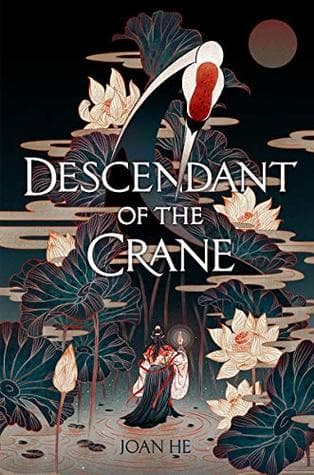
Synopsis
Covers the whole plot, including the ending.
- Difficulty
- Medium
- Pacing
- Moderate
- Mood
- Mysterious, Political, Suspenseful, Thought-provoking
- Read it if
- You enjoy intricate mysteries set in richly imagined, Chinese-inspired fantasy worlds with strong female protagonists and morally grey characters.
- Skip it if
- You prefer lighthearted fantasy or dislike political intrigue and morally ambiguous decisions.
Descendant of the Crane Plot Summary
Covers the whole plot, including the ending.
The Emperor's Demise and a Princess's Burden
Princess Hesina, known for her studies more than politics, is preparing for her father Emperor Sian's seasonal travel when she learns of his sudden death. The official cause is a stroke, but Hesina quickly finds clues suggesting foul play: a missing jade crane pendant, a strange burn mark on his arm, and a cryptic note about 'the crane's descendant.' Overwhelmed and suspicious, Hesina realizes she is now empress of Yan, a kingdom with political problems and a strict ban on magic. Her grief is made worse by the immediate need to find the truth behind her father's death, as she suspects a deeper plot than a simple illness.
A Treasonous Soothsayer and a Convicted Investigator
Desperate for answers, Hesina commits a treasonous act by secretly consulting a soothsayer, a practice punishable by death in Yan. The soothsayer's cryptic words tell her to find a 'convicted criminal' to uncover the truth. Following this illegal advice, Hesina visits the prison and chooses Akira, a smart but mysterious investigator jailed for forging imperial documents. She offers him a pardon if he helps solve the emperor's murder, knowing that trusting a criminal is risky. Akira, at first unwilling, agrees, starting an unusual partnership filled with suspicion and hidden motives.
The Imperial Court and Family Suspicions
As Hesina begins her reign, she must deal with her manipulative older brother, Caius, who openly questions her leadership and hints at his own claim to the throne. Her younger brother, Sanjing, seems supportive but also has secrets. Hesina's aunt, Lady Arin, a powerful court figure, offers advice but her intentions are unclear. Akira, with his sharp observations, points out the different groups and hidden loyalties within the court, making Hesina increasingly paranoid. She realizes the killer could be someone in her own family or inner circle, making every interaction a possible trap and every trusted face a possible betrayer.
Unraveling the Crane's Descent
Akira, using his intelligence and unusual methods, uncovers clues linking the emperor's murder to forbidden soothsaying and the ancient prophecy of the 'crane's descendant.' They discover that Emperor Sian was secretly investigating the return of magic and a hidden society dedicated to it. The missing jade crane pendant, a symbol of the royal family, takes on new meaning. Hesina learns that the 'crane's descendant' refers to someone with a special connection to ancient magical power, suggesting her father's death is part of a larger, magical plot rather than just a political killing.
The Soothsayer's Plea and a Hidden Alliance
Hesina's secret soothsayer, Tian, is captured by the Imperial Guard, forcing Hesina to publicly condemn her to keep up appearances, even as she secretly plans to save her. During an interrogation, Tian reveals she was not just a soothsayer, but also a member of a hidden community of magic-users and, surprisingly, an ally of Emperor Sian. She confesses that the Emperor was trying to understand and possibly bring magic back into Yan society, believing it could prevent future disasters. Tian's capture and confession reveal a deeper part of the conspiracy, suggesting the emperor was killed not for outlawing magic, but for trying to bring it back.
The Truth About Caius and Sanjing
Hesina discovers that her brother Caius was indeed plotting against her to take the throne, but he did not murder their father. Instead, she uncovers that Sanjing, her seemingly innocent younger brother, was involved in a secret society of soothsayers and was manipulated into a more active role in the events leading to their father's death. Sanjing, wanting to protect the soothsayers and bring back magic, believed he was acting for the greater good, but his actions unintentionally helped the assassination. This revelation shatters Hesina's trust and forces her to face the painful truth about her family.
Akira's Betrayal and the Soothsayer's Plan
Akira, whom Hesina had come to trust, reveals his true identity as a powerful soothsayer and a key figure in the hidden magical society. His imprisonment was a calculated move to gain access to the palace and Hesina. He confesses that the soothsayers, believing Emperor Sian was moving too slowly or dangerously in his attempts to restore magic, orchestrated his death to cause change. Their goal is to install a ruler who will fully embrace magic and restore its proper place in Yan. Hesina feels a deep sense of betrayal, realizing she was merely a pawn in their plan, her grief and desire for justice manipulated for a larger political agenda.
The Confrontation and a Difficult Choice
Hesina confronts Akira and the soothsayer leaders, learning the full extent of their plan. They reveal that Hesina herself is the true 'crane's descendant,' possessing an innate magical ability they intend to awaken and use to lead Yan into a new era of magic. They offer her a choice: embrace her power and rule with them, restoring magic to the kingdom, or resist and face the consequences of a kingdom in chaos. Hesina is torn between her duty to uphold the law, her desire for justice for her father, and the undeniable pull of a world where magic could solve many of Yan's problems.
The Trial and a Public Sacrifice
To maintain order and prevent civil war, Hesina stages a public trial. She publicly condemns Akira and the soothsayers for treason, but secretly negotiates a deal to spare their lives and allow them to operate in the shadows, under her strict control. She understands that getting rid of magic entirely is no longer possible or perhaps even desirable, given the soothsayers' power and magic's potential benefits. Hesina makes a difficult public sacrifice, appearing to uphold the law while secretly preparing for a future where magic and governance might coexist, though precariously.
A New Empress, A New Path
Hesina, now a hardened empress, accepts leadership with a new understanding of its burdens and compromises. She begins to quietly explore her own growing magical abilities, acknowledging her role as the 'crane's descendant.' She makes difficult decisions to stabilize the kingdom, including addressing corruption in the court and balancing the official law with the growing magical underground. Hesina realizes that being a good ruler means making impossible choices and that truth is often far more complex than simple justice. She wants to forge a new path for Yan, one that acknowledges its past while carefully embracing its magical future.
Descendant of the Crane Characters
Hesina
Protagonist
The reluctant scholar princess turned empress, driven by justice and duty.
Hesina begins as a scholarly and somewhat naive princess, more comfortable with books than politics. Her father's murder forces her into the role of empress, a position she initially resists but ultimately embraces with growing determination. She is intelligent, observant, and deeply loyal to her family and kingdom. Throughout the story, she struggles with her moral compass, the weight of leadership, and the betrayal of those she trusts. Her core drive is to find justice for her father and protect her people, even if it means compromising her own ideals.
Relationships: Emperor Sian (Beloved father, whose murder drives her quest for justice.); Caius (Manipulative older brother, political rival.); Sanjing (Younger brother, initially supportive but later revealed to be involved in the conspiracy.); Akira (Brilliant investigator and initial ally, later revealed as a betrayer and powerful soothsayer.); Tian (Secret soothsayer and informant, later revealed as an ally to Emperor Sian.)
Akira
Antagonist/Supporting
The enigmatic and brilliant criminal investigator with hidden magical powers.
Akira is introduced as a convicted criminal, imprisoned for forgery, whose sharp intellect and observational skills are legendary. He is cynical, pragmatic, and possesses a dry wit. Initially, he appears to be Hesina's most reliable ally in solving her father's murder, but he harbors deep secrets. He is a powerful soothsayer and a key figure in the magical society, using his 'imprisonment' as a means to infiltrate the palace. His true motivations are to restore magic to Yan and guide the 'crane's descendant' to power, even if it means manipulating Hesina.
Relationships: Hesina (Employer, later revealed as a target of manipulation and the 'crane's descendant'.)
Caius
Supporting
Hesina's ambitious and politically astute older brother.
Caius is Hesina's older brother, heir apparent before her, and a constant source of political tension. He is ambitious, cunning, and believes himself more suited to rule than Hesina. He openly challenges her authority and seeks to undermine her at every turn. While he is initially presented as a prime suspect in the emperor's murder, his motivations are more about power and political maneuvering within the existing system rather than involvement with the forbidden magic. He represents the traditional political opposition Hesina faces.
Relationships: Hesina (Sister and political rival.); Emperor Sian (Father, whose death he seeks to leverage for power.)
Sanjing
Supporting
Hesina's seemingly innocent younger brother, caught in a magical conspiracy.
Sanjing is Hesina's younger brother, initially appearing gentle, supportive, and somewhat naive. He is well-liked and seems to genuinely care for Hesina. However, he is secretly involved with the hidden soothsayer society and becomes a pawn in their larger plan. His actions, driven by a desire to protect the soothsayers and bring back magic, inadvertently contribute to his father's death. His character highlights the theme of how good intentions can lead to tragic consequences and how easily one can be manipulated.
Relationships: Hesina (Sister, whom he cares for but ultimately betrays through his actions.); Emperor Sian (Father, whose death he inadvertently helps cause.)
Emperor Sian
Mentioned
The murdered emperor whose death sets the plot in motion.
Emperor Sian is Hesina's beloved father, whose mysterious murder is the central catalyst for the entire story. Though deceased, his presence looms large as Hesina seeks justice for him. He is revealed to have been a complex ruler, publicly outlawing magic but secretly investigating its resurgence and attempting to understand its potential. He was a scholar in his own right, much like Hesina, and his progressive thinking regarding magic ultimately led to his downfall. His legacy is one of both traditional governance and a quiet, dangerous curiosity.
Relationships: Hesina (Daughter, whom he loved and entrusted with his kingdom.); Tian (Secret ally and soothsayer.)
Tian
Supporting
A hidden soothsayer and crucial informant to Hesina.
Tian is the soothsayer Hesina secretly consults, risking treason. She provides cryptic but vital clues that guide Hesina's investigation. Tian is a member of the hidden soothsayer community and, surprisingly, an ally of the late Emperor Sian, working with him to understand and potentially reintegrate magic into Yan society. Her capture and subsequent confession are pivotal, revealing the deeper magical conspiracy and the Emperor's true intentions. She is dedicated to the survival and resurgence of magic.
Relationships: Hesina (Client, later a potential ally.); Emperor Sian (Secret ally and collaborator.)
Lady Arin
Supporting
Hesina's aunt and a powerful, shrewd figure in the imperial court.
Lady Arin is Hesina's aunt and a significant presence in the imperial court. She is politically astute, observant, and offers Hesina counsel, though her true loyalties and intentions are often ambiguous. She represents the old guard and the established power structures within Yan, and her advice often leans towards maintaining tradition and stability. While she is not directly involved in the magical conspiracy, she is a powerful force Hesina must navigate and contend with in her role as empress.
Relationships: Hesina (Niece, whom she advises and observes closely.); Emperor Sian (Brother-in-law, whose death creates political upheaval she must manage.)
Descendant of the Crane Themes
Justice vs. Duty
This theme explores the conflict between personal justice and the wider duties of leadership. Hesina first wants only to find her father's killer. But as she uncovers the deeper plot involving magic and her kingdom's stability, she must weigh personal revenge against the practical needs of her people and Yan's fragile peace. Her decision to publicly condemn the soothsayers while secretly working with them shows this difficult balance, suggesting that true justice for her father might be impossible if it risks destroying her kingdom. The story implies that a ruler's duty often requires compromises that personal justice cannot make.
“Justice is a luxury. Duty is a burden.”
The Nature of Truth and Deception
The novel constantly questions what is true and what is simply an act or a lie. Hesina's investigation constantly uncovers layers of deception, from the official story of her father's death to the true identities and motives of those around her. Akira's entire identity is a lie, and even her seemingly innocent brother, Sanjing, is revealed to be involved in secrets. The story suggests that truth is rarely simple or singular, often hidden by political goals, personal desires, and the very act of seeking it. Hesina learns that to rule effectively, one must not only tell truth from lies but also sometimes use deception oneself for the greater good.
“Sometimes the truth is a weapon, and sometimes it's a shield.”
Magic vs. Order
This theme explores the societal conflict between strict law and order (the ban on magic) and the inherent, often wild, power of magic. Yan has centuries of history built on suppressing magic, seeing it as dangerous. However, the return of magic, and the revelation that the late Emperor was secretly exploring its potential, challenges this established order. The soothsayers believe magic is essential for the kingdom's prosperity and that its suppression is harmful. Hesina must decide if magic is a threat to be removed or a force that can be used, ultimately choosing a path that tries to integrate it, though carefully, into the existing structure, marking a shift in the kingdom's core beliefs.
“Magic is not chaos. It is merely misunderstood order.”
Family and Betrayal
Hesina's journey is closely tied to the theme of family loyalty and the pain of betrayal. Her search for justice begins with her father's murder, but she quickly discovers that the deceit extends to her closest relatives. Her ambitious brother, Caius, constantly plots against her, and her seemingly innocent younger brother, Sanjing, played a role in their father's death. The deepest betrayal comes from Akira, whom she comes to trust, only to discover he was manipulating her all along. This theme shows how personal relationships can be corrupted by power, ambition, and different beliefs, forcing Hesina to question who she can truly trust.
“The sharpest knives are always those you give to family.”
Plot Devices & Literary Techniques
The Crane's Descendant Prophecy
A prophecy foretelling a unique individual connected to ancient magic.
This prophecy serves as a central mystery and a driving force behind the plot. Initially, it's a cryptic clue left by the murdered Emperor, hinting at a magical element to his death. As the story progresses, it's revealed to refer to a person, ultimately Hesina, who possesses an innate connection to ancient magic. The prophecy justifies the soothsayers' actions, as they believe they are fulfilling a destined path by installing Hesina. It adds a layer of destiny and supernatural influence to the political machinations, elevating the stakes beyond a simple murder mystery to the fate of an entire magical lineage and the future of Yan.
Forbidden Magic (Soothsaying)
The outlawed practice of magic that is central to the conspiracy.
The strict prohibition of magic, particularly soothsaying, is the foundational plot device that creates the central conflict. It establishes the rigid societal rules of Yan and the high stakes of Hesina's investigation, as her consultation with a soothsayer is a treasonous act. The existence of a hidden soothsayer society, and their manipulation of events, drives the conspiracy. The 'forbidden' nature of magic creates an immediate sense of danger and mystery, forcing characters to operate in shadows and make dangerous alliances. It also sets up the thematic tension between order and power, and the potential for a new era in Yan.
The Missing Jade Crane Pendant
A symbolic object that serves as a key clue in the murder investigation.
The jade crane pendant is a physical plot device that acts as a crucial clue in Emperor Sian's murder. Its absence from his body immediately signals foul play to Hesina. As the investigation unfolds, the pendant's significance deepens, linking to the 'crane's descendant' prophecy and the royal lineage. It serves as a tangible representation of the underlying magical conspiracy, connecting the seemingly mundane act of a missing object to the ancient, forbidden powers at play. Its symbolic weight as an imperial artifact further emphasizes the connection between the emperor's death and the broader fate of the kingdom.
The Convicted Criminal as Investigator
Using a supposedly disgraced individual for their unique skills.
This device, embodied by Akira, allows Hesina to access unconventional methods and perspectives outside the rigid confines of the imperial court. Akira's criminal status provides a plausible reason for him to be outside the trusted circle, yet his renowned intelligence makes him indispensable. It creates a dynamic of forced alliance, mistrust, and eventual betrayal, as Akira's true motives as a soothsayer are revealed. This device allows for a protagonist to break rules and challenge norms, pushing the boundaries of what is acceptable in their world, and ultimately revealing the hidden truths that official channels could not.
Descendant of the Crane Quotes
“Justice is a fire. It can cook your food, but it can also burn your house down.”
“When you have nothing left to lose, you have everything to gain.”
“History is written by the victors, but truth is whispered by the dead.”
“A good ruler does not seek power, but accepts it as a burden.”
“The greatest lies are often hidden in plain sight, disguised as inconvenient truths.”
“Sometimes, the hardest thing to do is to forgive yourself.”
“Every secret comes with a price, and the longer it's kept, the higher the cost.”
“To truly know someone, you must see them not just for who they are, but for who they pretend to be.”
“Hope is a dangerous thing, but despair is a deadlier one.”
“The past is never truly gone; it merely waits for the right moment to return.”
“Power is not about what you can take, but what you can protect.”
“Even the clearest water can hide the deepest secrets.”
“A kingdom is only as strong as the trust between its people and its ruler.”
“The truth is a weapon, and like any weapon, it can be used to heal or to harm.”
Quiz
10 questions on the plot and the characters. Each answer comes with a short explanation.
Question 1
What is the primary reason Princess Hesina engages the aid of a soothsayer after her father's murder?
- To prove her innocence in the murder investigation.
- To find her father's killer, as traditional methods have failed.
- To gain magical abilities herself and restore magic to the kingdom.
- To communicate with her father's spirit in the afterlife.
Show answer
B. To find her father's killer, as traditional methods have failed. Hesina's desperation to find her father's killer leads her to break the law and consult a soothsayer, as magic is outlawed in Yan.
Question 2
Who is Akira, the individual Hesina turns to for help with the investigation?
- A loyal general of the Yan army.
- A renowned scholar from a neighboring kingdom.
- A brilliant investigator who is also a convicted criminal.
- Hesina's childhood friend and personal guard.
Show answer
C. A brilliant investigator who is also a convicted criminal. Akira is introduced as a brilliant investigator, but also a convicted criminal, making him a risky but necessary ally for Hesina.
Question 3
What is the primary consequence of practicing magic in the kingdom of Yan?
- Exile from the capital city.
- Public shaming and a heavy fine.
- Imprisonment without trial.
- Punishment by death.
Show answer
D. Punishment by death. The synopsis explicitly states that engaging a soothsayer is a 'treasonous act, punishable by death' because magic was outlawed centuries ago.
Question 4
What is the core dilemma Hesina faces regarding trust as she investigates her father's death?
- She is unsure if she can trust the soothsayer's predictions.
- She cannot trust the advice of her father's former advisors.
- She is uncertain if she can trust even her own family members.
- She doubts the loyalty of the common people of Yan.
Show answer
C. She is uncertain if she can trust even her own family members. The synopsis highlights Hesina's internal conflict, stating she is 'uncertain if she can trust even her family,' which adds to the mystery and tension.
Question 5
What kind of world is 'Descendant of the Crane' primarily set in, according to the description?
- A European-inspired medieval kingdom.
- A futuristic dystopian society.
- A shimmering Chinese-inspired fantasy setting.
- An ancient Egyptian-themed empire.
Show answer
C. A shimmering Chinese-inspired fantasy setting. The book is described as a 'shimmering Chinese-inspired fantasy,' indicating its cultural and aesthetic influences.
Question 6
What is Hesina's initial attitude towards the responsibilities of the crown before her father's murder?
- She was eager to embrace the crown and its duties.
- She was eager to shirk the responsibilities of the crown.
- She was indifferent to the crown, focusing on personal studies.
- She actively campaigned against the monarchy.
Show answer
B. She was eager to shirk the responsibilities of the crown. The text states Hesina 'has always been eager to shirk the responsibilities of the crown,' highlighting her transformation into a reluctant queen.
Question 7
What common historical practice in Yan is alluded to by the phrase 'Tyrants cut out hearts'?
- A literal form of capital punishment reserved for traitors.
- A metaphorical description of rulers who show no mercy.
- A ritual sacrifice performed by ancient Yan priests.
- A medical procedure for extracting magical abilities.
Show answer
B. A metaphorical description of rulers who show no mercy. The phrase 'Tyrants cut out hearts' is presented alongside 'Rulers sacrifice their own,' suggesting a thematic contrast about the nature of leadership and the harshness of power, rather than a literal act.
Question 8
What is the 'unstable kingdom' that Hesina inherits after her father's death?
- The kingdom of Xylos.
- The kingdom of Yan.
- The empire of Qin.
- The land of Shansi.
Show answer
B. The kingdom of Yan. The synopsis clearly identifies Hesina as 'Princess Hesina of Yan' and later states she becomes 'the queen of an unstable kingdom' upon her father's murder, referring to Yan.
Question 9
How does Hesina's personal growth and development as a character manifest through the narrative, as hinted by the synopsis?
- She transforms from a determined leader into a vulnerable one.
- She evolves from an eager royal into a reluctant ruler.
- She shifts from being a naive princess to a decisive, just queen.
- She remains consistently vulnerable and struggles to make decisions.
Show answer
C. She shifts from being a naive princess to a decisive, just queen. The synopsis describes Hesina as 'always been eager to shirk the responsibilities' but is 'thrust into power, suddenly the queen,' and finally as a 'determined and vulnerable young heroine struggling to do right,' indicating a journey of growth and taking on responsibility.
Question 10
What is the central mystery that drives the plot of 'Descendant of the Crane'?
- The origin of magic in the kingdom of Yan.
- The identity of Princess Hesina's father's murderer.
- The whereabouts of a lost royal artifact.
- The reason why magic was outlawed centuries ago.
Show answer
B. The identity of Princess Hesina's father's murderer. The core of the plot is Hesina's 'determined to find her father's killer,' which sets off the entire chain of events in the story.
Descendant of the Crane FAQ
What is the central mystery driving the plot of 'Descendant of the Crane'?
The central mystery revolves around the murder of Emperor Sian, Princess Hesina's father. Hesina, now Queen, is desperate to uncover his killer, suspecting foul play rather than a natural death, and this quest leads her to dangerous and forbidden methods.
Who is Princess Hesina and what are her initial struggles upon ascending the throne?
Hesina is the protagonist, initially reluctant to embrace the responsibilities of the crown. Upon her father's death, she is thrust into power as Queen of Yan, facing an unstable kingdom, a suspicious court, and the immense pressure of finding her father's murderer while maintaining control.
Why is engaging a soothsayer considered a treasonous act in Yan?
In Yan, magic, including soothsaying, was outlawed centuries ago after a period of conflict and tyranny. Practicing or consulting magic is punishable by death, as it's seen as a dangerous relic of the past that destabilizes the kingdom and undermines the current imperial order.
Who is Akira and what role does he play in Hesina's investigation?
Akira is a brilliant, albeit convicted, investigator whom Hesina enlists to help solve her father's murder. He possesses keen deductive skills and a network of contacts, but also harbors his own secrets and a complicated past that makes him both an invaluable ally and a potential risk.
What is the significance of the 'Descendant of the Crane' title within the story?
The title refers to the imperial lineage of Yan, particularly the belief that the emperors are descended from the revered crane, a symbol of longevity and wisdom. It ties into the legitimacy of the throne and the ancient traditions that govern the kingdom, often contrasting with the harsh realities of power.
What is the true nature of the magic in Yan, and how does it relate to the historical ban?
Magic in Yan, primarily soothsaying and elemental manipulation, is subtle but powerful. It was banned after tyrannical rulers, known as 'tyrants who cut out hearts,' abused it. The ban isn't just about fear of magic itself, but a historical trauma and a deliberate political decision to consolidate power and prevent past atrocities from recurring.
How does San-jing's past as a soothsayer influence the current political landscape and Hesina's choices?
San-jing, the soothsayer Hesina consults, is a direct link to the forbidden magical past. Her existence and the information she provides force Hesina to confront the history of magic, question the official narrative, and engage in treasonous acts, destabilizing her own position and the kingdom's foundations.
What is the significance of the 'hearts' mentioned in the synopsis, and how does it connect to the tyrants?
The phrase 'tyrants cut out hearts' refers to a brutal historical practice where rulers used magic to literally or metaphorically extract the 'hearts' or life force from their victims, perhaps as a form of sacrifice or power absorption. This dark history is why magic is so feared and strictly outlawed, shaping the kingdom's laws and the people's perception of magic.
What is the underlying political tension between the Emperor's family and the powerful noble families, and how does it complicate Hesina's reign?
There's a constant power struggle between the imperial family and influential noble houses, each vying for influence and control. This tension means Hesina cannot trust even her closest advisors, as many have their own agendas, making her search for her father's killer fraught with potential betrayals and political maneuvering.
How does Hesina's initial reluctance to rule evolve into a more determined leadership style?
Hesina begins as hesitant and overwhelmed, preferring scholarly pursuits to governance. However, the murder of her father and the immediate threats to her kingdom force her to mature rapidly. Her determination to find justice and protect her people transforms her into a more decisive, if still vulnerable, leader, willing to make difficult and unconventional choices.
Discuss the psychological impact of Hesina's isolation and the constant need for secrecy in her investigation.
Hesina's reliance on forbidden methods and her inability to trust those around her lead to profound isolation. She must keep her consultation with San-jing secret, and even her alliance with Akira is clandestine, creating immense psychological pressure, paranoia, and a sense of being alone against a treacherous world.
How does Akira's past as a convicted criminal influence his motivations and interactions with Hesina?
Akira's criminal past has left him with a deep understanding of the underbelly of society and a cynical view of justice, yet also a drive for redemption or purpose. His experiences make him resourceful but also guarded, leading to a complex dynamic with Hesina where trust is earned slowly and his motivations are not always transparent.
Explore the theme of justice versus survival as Hesina navigates her reign.
Hesina grapples with whether true justice for her father is possible or even paramount when the survival of her kingdom is at stake. She must often choose between upholding moral ideals and making pragmatic, sometimes morally ambiguous, decisions to maintain power and protect her people from internal and external threats, constantly weighing the 'cost' of justice.
Is the ban on magic purely for political control, or is there a genuine danger that justifies its prohibition?
The ban on magic is a complex issue. While it undeniably serves as a tool for political control, preventing rival factions or individuals from gaining power through supernatural means, there is also evidence of genuine danger from its past misuse, as seen with the 'tyrants who cut out hearts.' The story explores whether the historical fear is still relevant or if the ban now causes more harm than good.
How does the author use the Chinese-inspired setting to explore themes of tradition, duty, and individual agency?
The Chinese-inspired setting provides a rich backdrop of imperial tradition, filial piety, and strict social hierarchies. Hesina's struggle to balance her personal desire for justice with her duty as Empress, and her attempts to exert individual agency within a rigid system, are deeply intertwined with these cultural elements, highlighting the tension between ancient customs and modern challenges.
Can Hesina truly trust Akira, or is he ultimately pursuing his own agenda?
Akira's trustworthiness is a central question throughout the narrative. While he proves invaluable to Hesina's investigation, his mysterious past, his convicted status, and his own veiled motivations constantly raise doubts. The story encourages readers to question whether his loyalty lies with Hesina, with a larger cause, or purely with himself, making his character ambiguous.
What is the significance of the 'unstable kingdom' and how does it reflect broader societal issues?
The 'unstable kingdom' signifies more than just political unrest; it reflects deep-seated societal issues like historical trauma from magic, power imbalances among noble families, and the people's disillusionment or fear. This instability underscores the fragility of power and the constant threat of rebellion or collapse, making Hesina's task even more daunting.
How does Hesina's relationship with her siblings, particularly Caiyan and Lilian, evolve and impact her reign?
Hesina's relationships with her siblings are complex and fraught with suspicion. Caiyan, her younger brother, is a potential heir, creating a dynamic of rivalry and protectiveness. Lilian, her younger sister, offers emotional support but also has her own secrets. These familial ties are constantly tested, becoming both sources of comfort and potential betrayal, influencing Hesina's trust and decisions.
Similar books
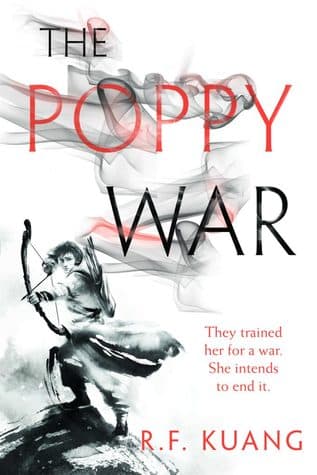
- The Poppy War
R.F. Kuang
4.0 (46k) average on GoodreadsFantasyShares a Chinese-inspired fantasy setting, political intrigue, and a determined female protagonist facing dark choices.
- An Ember in the Ashes
Sabaa Tahir
4.3 (182k) average on GoodreadsFantasyFeatures a strong female lead in a dangerous empire, navigating betrayal and rebellion.
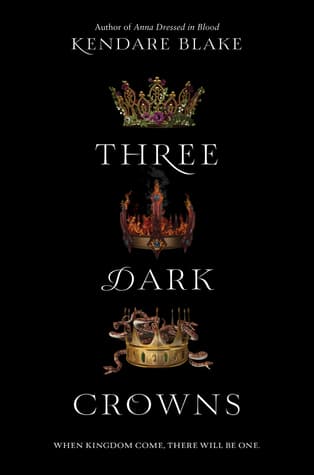
- Three Dark Crowns
Kendare Blake
3.8 (78k) average on GoodreadsFantasyExplores royal siblings, political maneuvering, and a deadly competition for the throne.
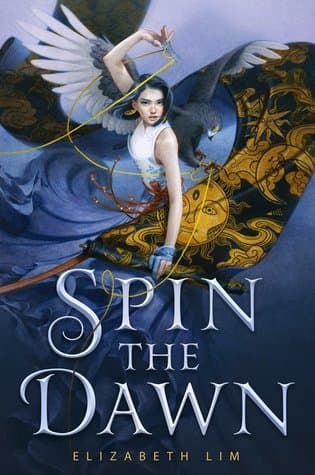
- Spin the Dawn
Elizabeth Lim
4.0 (19k) average on GoodreadsFantasyBoth Descendant of the Crane and Spin the Dawn are YA fantasies inspired by East Asian culture, featuring protagonists with unique skills navigating challenges. However, Lim's novel leans more into fairytale aesthetics, romance, and a quest narrative centered around magical tailoring, offering a lighter, more whimsical tone. He's book is significantly more grounded in political realism and mystery, with less emphasis on romance and more on the intellectual challenge of solving a murder and governing a kingdom. While both offer rich cultural backdrops, Descendant of the Crane is the more intricate and morally complex story, appealing to readers who enjoy political thrillers within a fantasy setting, whereas Spin the Dawn caters to those seeking a more enchanting and romantic adventure (as discussed by reviewers on platforms like Goodreads).
- Harry Potter and the Sorcerer's Stone
J.K. Rowling
4.5 (7M) average on GoodreadsFantasyRescued from a miserable life under the stairs, an orphaned boy discovers he's a wizard destined for a magical school, where he uncovers a dangerous secret tied to the dark wizard who murdered his parents.
- The Hunger Games
Suzanne Collins
4.3 (6.4M) average on GoodreadsFantasyIn a future where children fight to the death on live television, Katniss Everdeen volunteers for the arena, turning a death sentence into a fight for survival and a spark of rebellion.



Enjoyed the summary?
A summary gives you the shape of the book. The book itself has the detail, the examples and the voice.
Find Descendant of the Crane on AmazonAs an Amazon Associate, BookBrief earns from qualifying purchases. How we're funded