

Synopsis
Covers the whole plot, including the ending.
- Difficulty
- Medium
- Pacing
- Fast
- Mood
- Suspenseful, Dark, Investigative, Intense
- Read it if
- You enjoy forensic thrillers with a strong female protagonist, intricate plots involving cultural rituals, and a blend of scientific investigation with suspenseful action.
- Skip it if
- You are sensitive to graphic descriptions of human remains, find themes of occult practices disturbing, or prefer mysteries without a significant focus on forensic detail.
Devil Bones Plot Summary
Covers the whole plot, including the ending.
The Cellar Discovery and the Lake Cadaver
In Charlotte, North Carolina, a plumber renovating a house finds a hidden cellar. Inside, Dr. Temperance Brennan, a forensic anthropologist, discovers a disturbing scene: a decapitated chicken, various animal bones, cauldrons filled with beads, feathers, and other ritual items, and, most chillingly, the skull of a teenage girl at the center of the shrine. Almost at the same time, a dog walker finds a headless body of a teenage boy by Lake Wylie. These two gruesome discoveries, seemingly unrelated but deeply unsettling, immediately cause fear and speculation in the community, with many suspecting dark, occult practices.
Initial Forensic Analysis and Community Panic
Temperance Brennan, along with Detective Erskine "Skinny" Slidell of the Charlotte-Mecklenburg Police Department, begins to examine the remains. The girl's skull shows evidence of sharp-force trauma, indicating decapitation, while the boy's body is also headless and shows signs of ritualistic defilement. As news spreads, a local preacher-turned-politician, Reverend "Buck" Buchanan, uses the fear, publicly denouncing 'devil worshippers' and Wiccans, creating panic in the community. His inflammatory words quickly lead to a full-blown witch hunt, pressuring Tempe to find answers quickly and calm the rising fear.
Identifying the Victims and Early Leads
Through dental records and DNA analysis, Tempe identifies the skull from the cellar as Jasmine Pena, a local teenage girl reported missing. The headless boy is later identified as Justin O'Day. Both teenagers were known to associate with a group of young people interested in Wicca and other alternative spiritual practices, drawing suspicion towards these communities. Detective Slidell and Tempe start interviewing friends and acquaintances of Jasmine and Justin, uncovering a network of interconnected youths. Some express fear and are hesitant to speak openly about their activities or specific individuals in their circles.
Voodoo, Santería, and the Occult
As Tempe investigates further, the ritualistic aspects of the crime scenes suggest practices beyond simple Wicca. She consults experts on Santería and Haitian Vodou, identifying specific elements in the cellar that point to these complex belief systems. This new information broadens the investigation, moving beyond initial accusations of 'devil worship' and introducing the possibility of a more sophisticated, perhaps darker, motive. The cultural nuances and misinterpretations surrounding these practices make it hard for law enforcement to distinguish genuine religious rites from malevolent intent or exploitation.
The Vigilante Threat and Personal Danger
Reverend Buchanan's words continue to stir public sentiment, leading to intimidation and threats against individuals seen as involved in 'dark arts.' Tempe becomes a target of this growing vigilante movement, receiving anonymous threats and experiencing harassment. The pressure from the public and Buchanan's followers makes her work more challenging, as potential witnesses are afraid to come forward and the scientific integrity of her investigation is questioned by those seeking immediate, emotional answers rather than facts.
A Suspect Emerges: The Cult Leader
Tempe's investigation eventually leads her to a charismatic and manipulative figure named "Papa Doc" (Dominique Leblanc), who runs a spiritual center. He preys on vulnerable young people, drawing them into his cult-like group under the guise of spiritual guidance. Witnesses describe his controlling nature and coercive tactics. Tempe suspects Papa Doc might be exploiting Santería and Vodou beliefs for his own nefarious purposes, potentially leading to the ritualistic murders of Jasmine and Justin, who may have tried to leave his influence or defy him.
The Confrontation and Narrow Escape
Following a lead, Tempe confronts Papa Doc at his compound. She finds more evidence linking him to the ritualistic killings, including items similar to those found in the cellar and at the lake. Papa Doc is not easily apprehended. He is a dangerous and cunning adversary, capable of both physical violence and psychological manipulation. Tempe finds herself in a perilous situation, narrowly escaping his clutches and confirming her suspicions about his direct involvement in the deaths of Jasmine and Justin, and potentially other victims.
Unraveling the Conspiracy and Motive
As Tempe and Slidell piece together the final clues, they uncover a far more sinister motive behind the ritualistic killings. Papa Doc, it is revealed, was not just a cult leader but was involved in a human trafficking ring. He used spiritual ceremonies to exploit and control his victims. The murders of Jasmine and Justin were not just about defying him, but were ritual sacrifices meant to solidify his power, intimidate his followers, and perhaps even facilitate his criminal enterprise by creating an environment of fear and unquestioning obedience among his victims.
The Climax and Papa Doc's Downfall
Armed with solid evidence, Tempe and law enforcement, including her on-again, off-again lover Andrew Ryan from Quebec's Sûreté, raid Papa Doc's compound. A tense and dangerous confrontation follows, with Papa Doc and his most loyal followers resisting arrest. Tempe's forensic expertise is crucial in navigating the complex and booby-trapped environment. Ultimately, Papa Doc is apprehended, and his criminal enterprise is dismantled, ending his reign of terror and the ritualistic killings that had plagued Charlotte.
Aftermath and Reflection
With Papa Doc behind bars, the immediate threat to Charlotte is gone. The community, though scarred, slowly begins to heal from the fear and division caused by the murders and the ensuing witch hunt. Reverend Buchanan's influence lessens as the truth behind the crimes comes to light, exposing manipulation and exploitation rather than 'devil worship.' Tempe reflects on the disturbing intersection of faith, manipulation, and violence, and the human capacity for both good and evil, even when cloaked in spiritual guise. The case leaves a lasting impression on her, showing the dangers of unchecked zealotry and the importance of forensic science in uncovering truth.
Principal Figures
Dr. Temperance 'Tempe' Brennan
Protagonist
A forensic anthropologist with a sharp mind and a commitment to justice.
Tempe Brennan is a highly skilled forensic anthropologist working for the Charlotte-Mecklenburg Police Department and the state of North Carolina. She is intelligent, analytical, and tenacious, often putting herself in harm's way to uncover the truth. Despite her scientific rigor, she possesses a dry wit and a deep sense of empathy for the victims. She is often driven by a need to give a voice to the dead and ensure justice is served, even when facing public pressure or personal danger.
Relationships: Detective Erskine 'Skinny' Slidell (professional colleague and sometimes exasperated partner); Andrew Ryan (on-again, off-again romantic interest and professional colleague from Quebec)
Detective Erskine 'Skinny' Slidell
Supporting
A pragmatic and dedicated Charlotte-Mecklenburg homicide detective.
Skinny Slidell is a veteran detective with the Charlotte-Mecklenburg Police Department. He is a practical, no-nonsense officer who often serves as a foil to Tempe's more academic approach, though he deeply respects her expertise. He is dedicated to his job and the pursuit of justice, often acting as a buffer between Tempe and the more bureaucratic or politically charged aspects of the investigation. He relies heavily on Tempe's forensic insights to solve complex cases.
Relationships: Dr. Temperance Brennan (professional colleague and partner in investigations)
Reverend 'Buck' Buchanan
Antagonist
A charismatic preacher-turned-politician who incites fear and leads a witch hunt.
Reverend Buchanan is a powerful and charismatic local preacher who has transitioned into politics. He capitalizes on the fear and moral panic surrounding the murders, using inflammatory rhetoric to rally the community against 'devil worshippers' and Wiccans. He represents the dangers of demagoguery and mass hysteria, prioritizing political gain and a simplistic narrative over factual investigation and due process. His actions directly hinder the investigation and endanger innocent people, including Tempe.
Relationships: Charlotte Community (leader and manipulator of public opinion)
Andrew Ryan
Supporting
A Sûreté du Québec detective and Tempe's on-again, off-again love interest.
Andrew Ryan is a detective with the Sûreté du Québec, Tempe's on-again, off-again romantic partner. He is intelligent, resourceful, and possesses a dry wit that often matches Tempe's. He provides support, both professional and personal, to Tempe throughout the investigation, sometimes offering an outsider's perspective or additional resources. His presence adds a layer of emotional complexity to Tempe's otherwise highly analytical life.
Relationships: Dr. Temperance Brennan (on-again, off-again romantic interest and professional colleague)
"Papa Doc" (Dominique Leblanc)
Antagonist
A manipulative cult leader exploiting Santería and Vodou for criminal ends.
Dominique Leblanc, known as "Papa Doc," is the primary antagonist. He is a charismatic and highly manipulative individual who runs a spiritual center, preying on vulnerable young people. He exploits elements of Santería and Haitian Vodou, twisting them for his own nefarious purposes, which include human trafficking and ritualistic murder. He is cunning, dangerous, and believes himself to be above the law, using fear and pseudo-religious authority to control his followers and commit heinous crimes.
Relationships: Jasmine Pena (victim and former follower); Justin O'Day (victim and former follower); Cult Followers (manipulator and exploiter)
Jasmine Pena
Victim/Mentioned
A teenage girl whose skull is found in the hidden cellar.
Jasmine Pena is the teenage girl whose decapitated skull is discovered in the hidden cellar, initiating Tempe's investigation. She was a local girl who had been reported missing and was known to have an interest in alternative spiritual practices, which unfortunately led her into the orbit of Papa Doc. Her death is the catalyst for the entire mystery, and Tempe's work aims to give her justice.
Relationships: Papa Doc (victim of his manipulation and murder); Justin O'Day (acquaintance/friend, also a victim)
Justin O'Day
Victim/Mentioned
A teenage boy whose headless body is found by Lake Wylie.
Justin O'Day is the teenage boy whose headless body is discovered by Lake Wylie. Like Jasmine, he was involved in the local youth scene interested in alternative spiritualities and fell under the influence of Papa Doc. His murder, also ritualistic, further compounds the mystery and underscores the dangerous nature of the cult. His remains, along with Jasmine's, provide crucial forensic evidence for Tempe.
Relationships: Papa Doc (victim of his manipulation and murder); Jasmine Pena (acquaintance/friend, also a victim)
Themes & Insights
The Peril of Unchecked Zealotry and Manipulation
The novel explores how fervent belief, when unchecked or twisted by manipulative people, can lead to dangerous outcomes. Reverend Buchanan shows this, using religious rhetoric to start a witch hunt against perceived 'devil worshippers,' creating fear and prejudice. Similarly, Papa Doc exploits Santería and Vodou, not for spiritual enlightenment but to control and abuse his followers, leading to ritualistic murders. The theme highlights how easily faith can become a tool for power and violence.
“Fear is a powerful weapon, especially when wielded by those who claim to speak for God.”
Science vs. Superstition/Prejudice
A central conflict is the clash between Temperance Brennan's scientific, evidence-based approach to solving crimes and the public's tendency to resort to superstition, prejudice, and moral panic. While Tempe meticulously analyzes bones and DNA, the community, fueled by Buchanan, jumps to conclusions about 'devil worship' and Wiccans. This theme emphasizes the importance of objective investigation when faced with emotional outcry and the dangers of allowing preconceived notions to cloud judgment. Tempe consistently champions facts over baseless accusations.
“Bones don't lie. They tell a story, if you know how to listen.”
Cultural Misunderstanding and Exploitation
The novel explores the complex and often misunderstood nature of various spiritual practices, especially Santería and Vodou. It shows how outsiders can misrepresent these rich cultural traditions, leading to prejudice, and how malevolent individuals like Papa Doc can deliberately exploit and pervert them. Tempe's investigation requires her to differentiate between authentic spiritual practices and their criminal misuse, highlighting the responsibility to approach diverse cultures with nuance and respect, rather than fear or simplistic demonization.
“There's a vast difference between faith and fanaticism, and a wider one still between spiritual practice and criminal enterprise.”
Justice for the Voiceless
At its core, the novel is about Temperance Brennan's commitment to giving a voice to victims who can no longer speak. Jasmine Pena and Justin O'Day are not just bodies; they are individuals whose stories Tempe painstakingly reconstructs through forensic evidence. This theme emphasizes the moral need to seek justice for those exploited and murdered, especially when their deaths are shrouded in fear, manipulation, and the deliberate obfuscation of truth. Tempe's work shows that every life has value and deserves to be recognized and avenged.
“My job is to speak for the dead. And these dead were screaming.”
Plot Devices & Literary Techniques
Red Herring (Wicca/Devil Worship)
Misdirection through public accusation of innocent groups.
Initially, the ritualistic nature of the murders and the public outcry, spearheaded by Reverend Buchanan, strongly suggest that Wiccans or 'devil worshippers' are responsible. This serves as a significant red herring, diverting attention from the true perpetrator, Papa Doc, and his more complex criminal enterprise. The public's immediate leap to these sensationalized conclusions allows the actual killer to operate longer, creating a layer of misdirection that Tempe must meticulously peel away using scientific evidence, demonstrating the dangers of societal prejudice.
Forensic Science as Truth-Teller
Objective evidence counters public hysteria and manipulation.
Temperance Brennan's forensic anthropology expertise is not merely a tool for solving the crime; it functions as the ultimate arbiter of truth in a narrative riddled with misinformation and fear. While Reverend Buchanan incites panic and Papa Doc manipulates spiritual beliefs, Tempe relies solely on the bones, DNA, and other physical evidence. This device highlights how objective scientific inquiry can cut through societal biases and emotional narratives to reveal the factual reality of a situation, providing clarity and justice where superstition and manipulation obscure it.
Parallel Investigations
Multiple lines of inquiry broaden the scope and complexity of the mystery.
The novel employs parallel investigations: Tempe's forensic analysis of the remains, Slidell's traditional police work interviewing witnesses and tracking leads, and Tempe's own deeper dive into the cultural and religious aspects of Santería and Vodou. These different lines of inquiry, sometimes converging and sometimes diverging, create a multi-layered mystery that keeps the reader engaged. It allows for a comprehensive exploration of the crime, from the scientific details of the victims to the sociological and psychological motivations of the perpetrators, making the solution more satisfyingly intricate.
The Unreliable Community Perspective
The town's reactions and beliefs offer a distorted view of events.
The perspective of the Charlotte community, heavily influenced by Reverend Buchanan, serves as an unreliable narrative lens. Their immediate and fervent belief in 'devil worship' and their subsequent witch hunt are based on fear and prejudice rather than facts. This device creates tension and highlights the challenges Tempe faces, as she must work against a tide of public opinion that hinders the investigation and endangers potential witnesses. It emphasizes how collective fear can distort reality and complicate the pursuit of justice.
Devil Bones Quotes
“The dead don't care about our timetables. They have all the time in the world.”
“Sometimes the most monstrous acts are committed by those who appear the most ordinary.”
“Every bone tells a story, if you know how to listen.”
“Ignorance is not bliss when it comes to the truth. It's just ignorance.”
“The past has a way of reaching out and grabbing you, even when you think you've buried it deep.”
“Logic is a good tool, but sometimes you have to trust your gut.”
“There's a fine line between dedication and obsession. I seem to have crossed it several times.”
“The dead can't speak, but their remains often scream the loudest.”
“You can't outrun your demons. Eventually, they catch up.”
“Even in death, there's dignity to be found, if we look for it.”
“Secrets are like bones; the longer they're buried, the harder they are to identify.”
“Fear is a powerful motivator, but it can also blind you to the obvious.”
“Justice isn't always swift, but sometimes, it's relentlessly persistent.”
Quiz
10 questions on the plot and the characters. Each answer comes with a short explanation.
Question 1
What grisly discovery does the plumber make in the hidden cellar?
- A buried treasure chest and ancient coins
- A decapitated chicken, animal bones, cauldrons, and the skull of a teenage girl
- A cache of illegal weapons and drug paraphernalia
- A secret tunnel leading to another property
Show answer
B. A decapitated chicken, animal bones, cauldrons, and the skull of a teenage girl The plumber discovers a shrine containing a decapitated chicken, animal bones, cauldrons with relics, and most significantly, the skull of a teenage girl.
Question 2
Where is the headless body of a teenage boy found?
- In the hidden cellar with the girl's skull
- In a shallow grave in the backyard
- On a nearby lakeshore
- Inside the house under renovation
Show answer
C. On a nearby lakeshore The headless body of a teenage boy is found by a man walking his dog on a nearby lakeshore, separate from the cellar discovery.
Question 3
Who is called in to investigate the discoveries?
- A local detective specializing in cults
- Forensic anthropologist Temperance Brennan
- An FBI agent from the behavioral analysis unit
- A team of archaeologists
Show answer
B. Forensic anthropologist Temperance Brennan Forensic anthropologist Temperance Brennan is called in to investigate the grisly discoveries, as is typical for the series.
Question 4
What is Temperance Brennan's physical description given in the book's synopsis?
- Tall, slender, and in her late twenties
- Five-five, feisty, and forty-plus
- Short, quiet, and in her fifties
- Average height, calm, and in her thirties
Show answer
B. Five-five, feisty, and forty-plus The synopsis describes Temperance Brennan as 'five-five, feisty, and forty-plus'.
Question 5
Who leads the citizen vigilantes in blaming devil worshippers and Wiccans?
- The local police chief
- A prominent community activist
- A preacher turned politician
- The homeowner where the cellar was found
Show answer
C. A preacher turned politician Citizen vigilantes are led by a 'preacher turned politician' who incites a witch hunt against perceived devil worshippers and Wiccans.
Question 6
What specific religious or spiritual practices are mentioned as being part of the 'deadly mix' in the investigation?
- Buddhism, Hinduism, and Taoism
- Voodoo, Santería, and devil worship
- Paganism, Shamanism, and Animism
- Christianity, Judaism, and Islam
Show answer
B. Voodoo, Santería, and devil worship The synopsis explicitly states the investigation involves a 'deadly mix of voodoo, Santería, and devil worship'.
Question 7
What is the primary motivation of the citizen vigilantes?
- To assist law enforcement with the investigation
- To seek revenge against those they blame
- To protect their community from outside threats
- To uncover the true identity of the victims
Show answer
B. To seek revenge against those they blame The vigilantes are 'intent on seeking revenge' against those they hold responsible for the crimes.
Question 8
The discovery of a hidden cellar no one knew about in a house under renovation implies what about the previous occupants or history of the property?
- It was a known historical landmark.
- The property had a secret or concealed past.
- It was simply an oversight by the previous owner.
- The renovation project was poorly planned.
Show answer
B. The property had a secret or concealed past. A hidden cellar 'no one knew about' strongly suggests a concealed or secret past for the property, potentially linked to the illicit activities discovered.
Question 9
How does the discovery of the girl's skull in the cellar relate to the boy's headless body found on the lakeshore?
- They are confirmed to be unrelated incidents.
- The book immediately establishes them as connected through a shared ritual.
- Their proximity and similar nature suggest a potential connection, forming the central mystery.
- The skull is ancient, while the body is recent, indicating no relation.
Show answer
C. Their proximity and similar nature suggest a potential connection, forming the central mystery. While not explicitly stated as connected from the outset, the simultaneous discovery of a decapitated body and a skull in a ritualistic setting strongly implies a potential link, which Temperance Brennan would investigate as a central part of the mystery.
Question 10
The phrase 'a complex and gripping tale unfolds' suggests what about the nature of the investigation and narrative?
- The solution to the mystery is straightforward and quickly found.
- The plot will involve multiple layers, twists, and challenges for the protagonist.
- The story primarily focuses on the personal life of Temperance Brennan.
- The narrative is primarily a character study rather than a mystery.
Show answer
B. The plot will involve multiple layers, twists, and challenges for the protagonist. A 'complex and gripping tale' implies that the investigation will be intricate, with many details to unravel and a compelling narrative that keeps the reader engaged through various plot developments.
Devil Bones FAQ
What is the initial grisly discovery that sets the plot in motion?
A plumber renovating a house uncovers a hidden cellar containing a decapitated chicken, animal bones, cauldrons with beads and feathers, and most disturbingly, the skull of a teenage girl at its center. This macabre scene immediately suggests ritualistic activity and becomes the primary focus for Temperance Brennan.
How does the discovery of the teenage girl's skull connect with another crime scene?
Shortly after the skull's discovery, the headless body of a teenage boy is found on a nearby lakeshore. The immediate lack of a head for the boy and the presence of a skull for a girl creates an urgent, albeit initially unclear, link between the two cases, hinting at a shared perpetrator or ritual.
Who is the protagonist investigating these crimes, and what is her profession?
The protagonist is Dr. Temperance Brennan, a forensic anthropologist. She is called in to investigate the human remains and the ritualistic elements found, using her expertise to piece together the circumstances of the deaths and the identities of the victims.
What kind of public reaction and social tension arises from the discoveries?
Led by a preacher turned politician, citizen vigilantes quickly blame 'devil worshippers' and Wiccans for the crimes. This sparks a dangerous witch hunt, creating intense social tension and threatening to impede Temperance's objective investigation with public hysteria and calls for revenge.
What specific religious or spiritual practices are explored in the book?
The book delves into a complex mix of voodoo, Santería, and 'devil worship,' using these elements to create a chilling backdrop for the crimes. Temperance must differentiate between genuine religious practices and their potential perversion, as well as outright criminal acts.
What is the significance of the specific animal remains found alongside the human skull?
The decapitated chicken and other animal bones found in the cellar are significant because they are common elements in certain ritualistic practices, particularly Santería and voodoo. They suggest a pattern of sacrifice and ceremony, initially pointing toward specific cultural groups.
How do the 'relics' in the cauldrons contribute to the initial misdirection or understanding of the crime?
The beads, feathers, and other relics in the cauldrons are typical components of altars and offerings in Santería and voodoo. While they strongly suggest ritualistic activity, they also initially lead investigators, and the public, to suspect practitioners of these faiths, potentially overlooking other motives or perpetrators.
Are the initial suspicions about 'devil worshippers' and Wiccans accurate, or is there a deeper truth?
The initial suspicions fueled by the vigilantes are largely a misdirection, driven by fear and misunderstanding rather than concrete evidence. While ritualistic elements are present, the true perpetrators and their motives are far more complex and often exploit these practices for their own ends, rather than being genuine followers.
What role does the 'preacher turned politician' play in the unfolding events?
The preacher turned politician acts as a catalyst for public hysteria and vigilantism. He capitalizes on the fear surrounding the ritualistic discoveries to garner support and direct public anger, potentially obstructing justice and endangering innocent individuals through his 'witch hunt.'
How does Temperance Brennan's scientific method clash with the public's emotional response?
Temperance's reliance on forensic science, evidence, and logical deduction directly clashes with the public's emotional, fear-driven response and the vigilantes' calls for immediate retribution. She must navigate this tension, maintaining her objectivity while the community demands quick answers based on prejudice.
What psychological impact do the ritualistic elements of the crime have on the community?
The ritualistic elements, especially the decapitated chicken and the skull in a shrine, tap into primal fears of the unknown, the occult, and 'evil.' This generates widespread panic, suspicion, and a desire to find a scapegoat, leading to the witch hunt and intense social division.
How does the book explore the psychology of fear and scapegoating in society?
The novel vividly portrays how fear, particularly fear of the unfamiliar or misunderstood (like voodoo or Santería), can lead to scapegoating. The community, unable to comprehend the horror, quickly blames easily identifiable 'outsider' groups, demonstrating a dangerous human tendency to simplify complex threats.
What internal struggles does Temperance Brennan face while investigating such emotionally charged cases?
Temperance often grapples with the emotional toll of horrific crimes, especially those involving young victims and ritualistic abuse. She must constantly battle her own feelings of disgust and anger to maintain scientific objectivity, while also navigating personal relationships and professional pressures.
What is the book's stance on the difference between spiritual belief and criminal exploitation of ritual?
The book carefully distinguishes between genuine spiritual beliefs, even those that might seem unconventional, and the criminal exploitation or perversion of rituals for malicious purposes. It suggests that while specific practices may be used, the underlying motive is often far more mundane and sinister than true 'devil worship.'
Does the novel ultimately condemn or explain the practices of voodoo and Santería?
The novel aims to explain rather than condemn. It uses Temperance Brennan's scientific approach to demystify some aspects of these practices, showing how they can be misunderstood or misused by criminals, while also acknowledging their cultural significance without judgment.
How does the author use the setting (e.g., the hidden cellar, lakeshore) to enhance the mystery and suspense?
The hidden cellar creates an immediate sense of clandestine activity and dark secrets, while the lakeshore, often associated with tranquility, provides a stark contrast for the gruesome discovery of the boy's body. These settings amplify the mystery and contribute to the unsettling atmosphere of the crimes.
What broader social commentary might the 'witch hunt' aspect of the story be making?
The 'witch hunt' serves as a potent social commentary on how easily fear and prejudice can override reason and due process. It highlights the dangers of mob mentality, political opportunism, and the swiftness with which communities can turn on perceived 'outsiders' when faced with shocking events.
Is the ending of 'Devil Bones' conclusive, or does it leave room for debate or lingering questions?
While the immediate criminal case is typically resolved, Reichs often weaves in complex motivations and societal implications that can leave readers pondering the deeper psychological and social issues. The resolution usually brings justice to the victims but may not fully erase the societal scars or questions raised.
About the author

Kathy Reichs is an author and forensic anthropologist known for her crime fiction and thriller novels. Her notable works include "Déjà Dead," "Death du Jour," "Virals," "Bones to Ashes," "Devil Bones," and "Seizure," many of which feature her character Temperance Brennan, a forensic scientist. Reichs's writing often draws on her expertise in forensic science, blending real-life experiences with fictional narratives.
Similar books
- Bones to Ashes
Kathy Reichs
3.9 (27k) average on GoodreadsThrillerAnother Temperance Brennan novel featuring forensic investigation and cultural themes.
- The Lincoln Lawyer
Michael Connelly
4.2 (193k) average on GoodreadsThrillerFeatures a strong investigative element and legal drama, with a focus on unraveling complex cases.
- The Silent Patient
Alex Michaelides
4.1 (507k) average on GoodreadsThrillerOffers a gripping mystery with psychological depth and unexpected twists.
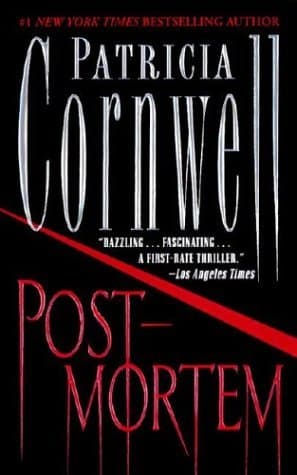
- Postmortem
Patricia Cornwell
4.0 (212k) average on GoodreadsThrillerPatricia Cornwell's Postmortem, the first in the Kay Scarpetta series, also features a female forensic pathologist protagonist and a focus on detailed autopsy procedures. However, Cornwell often delves deeper into the psychological profiles of her serial killers and the emotional toll on Scarpetta, creating a darker, more intense atmosphere. While Reichs excels at the scientific procedural, Cornwell often crafts antagonists with more intricate psychological motivations, and Scarpetta's personal struggles are often more central to the narrative, providing a different kind of character-driven suspense compared to Brennan's more detached, albeit still endangered, perspective.
- Angels & Demons
Dan Brown
3.9 (2.7M) average on GoodreadsThrillerA Harvard symbologist races through Rome's ancient sites, deciphering cryptic clues to unmask the Illuminati and stop a vengeful plot to destroy the Vatican with a stolen antimatter weapon.
- Gone Girl
Gillian Flynn
4.1 (2.3M) average on GoodreadsThrillerA wife's sudden disappearance on her fifth anniversary reveals a web of lies and psychological warfare, exposing the secrets within a seemingly perfect marriage.





Enjoyed the summary?
A summary gives you the shape of the book. The book itself has the detail, the examples and the voice.
Find Devil Bones on AmazonAs an Amazon Associate, BookBrief earns from qualifying purchases. How we're funded