

Synopsis
Covers the whole plot, including the ending.
- Difficulty
- Easy
- Pacing
- Moderate
- Mood
- Gritty, contemplative, redemptive, protective
Early Autumn Plot Summary
Covers the whole plot, including the ending.
The Custody Battle and Spenser's Introduction
Spenser, a private investigator, is hired by Susan Silverman's friend, Jill Joyce, to find her son, Paul. Paul has been taken by his father, Mel Joyce, a wealthy and powerful man, in a bitter custody battle. Jill explains that Mel has a history of aggressive tactics and has 'stolen' Paul, preventing her from seeing him. Spenser begins his investigation by watching Mel Joyce's home and associates, quickly seeing the depth of the animosity and the lengths Mel will go. He learns that Mel has hired a team of intimidating bodyguards, making a direct retrieval difficult and potentially violent. Spenser's initial assessment confirms this is not a simple missing person case but a high-stakes power struggle.
Initial Encounter and Retrieval
Spenser plans to retrieve Paul from Mel's compound. He watches Mel's security routine and finds an opening. During a calculated confrontation, Spenser gets past Mel's bodyguards, using stealth and decisive action. He finds Paul, who is at first hesitant and confused, having been manipulated by his father. Spenser convinces Paul to come with him, explaining that his mother wants him back. The retrieval is tense but works, and Spenser escapes with Paul, leaving Mel's security in disarray. This act shows Spenser's commitment to Paul's well-being, recognizing the boy's vulnerability in the adult conflict.
The Threat Escalates
After Paul's retrieval, Mel Joyce's anger grows. He uses his vast resources to put a contract out on Spenser's life, determined to punish him and regain control of his son. Spenser learns of the threat when he notices he's being followed and receives veiled warnings. He realizes that staying in the city is too dangerous for both him and Paul, as Mel's influence is extensive. Spenser understands he needs to disappear to protect Paul and himself from the professional killers Mel has hired. This changes the story from a custody dispute to a survival thriller.
Escape to the Wilderness
To escape Mel's assassins, Spenser decides to take Paul to a remote cabin in the Maine woods, a place he knows well. He tells Susan his plan, stressing the need for secrecy and isolation. The journey to Maine is tense, as Spenser remains alert for any signs of pursuit. Once at the cabin, Spenser begins to teach Paul the basics of survival: tracking, hunting, fishing, and self-defense. Paul, initially a pampered city boy, struggles with the harsh realities of the wilderness. Spenser sees that Paul needs more than just physical protection; he needs to build resilience and self-reliance.
Paul's Transformation Begins
Life in the Maine wilderness becomes a strict training ground for Paul. Spenser acts as a stern but caring mentor, pushing Paul beyond his comfort zone. Paul learns how to handle a rifle, set traps, and navigate the dense forest. He is taught the importance of discipline, observation, and self-sufficiency. Initially resentful, Paul slowly begins to adapt, showing flashes of determination. Spenser also works on Paul's mental strength, encouraging him to think for himself and confront his fears. The physical challenges and Spenser's steady guidance begin to break down Paul's sheltered upbringing, revealing an emerging strength within him.
The First Attackers
Despite Spenser's precautions, Mel Joyce's hired killers eventually track them to the remote cabin. The first group of assailants, less experienced but still dangerous, attack. Spenser, expecting such a move, uses his knowledge of the terrain and his combat skills to defend the cabin. He tells Paul to stay hidden and watch. The confrontation is violent but brief, with Spenser neutralizing the threats. This incident is a brutal wake-up call for Paul, forcing him to witness the real dangers Spenser has been protecting him from. It also strengthens Paul's trust in Spenser's abilities and the need for their isolation.
Deepening the Bond
After the first attack, the bond between Spenser and Paul grows. Paul, having seen Spenser's skill and the reality of the threats, becomes more committed to his training. He asks more questions, listens closely, and applies himself with greater focus. Spenser continues to teach not just survival skills but also life lessons about integrity, responsibility, and the nature of violence. They spend their days improving Paul's shooting, tracking, and physical conditioning. Paul begins to see Spenser not just as a protector, but as a father figure and a teacher, learning valuable lessons about self-reliance and moral courage.
The Second Wave of Assassins
Mel Joyce, undeterred by the failure of his first team, sends a more professional and ruthless group of assassins after Spenser and Paul. These new attackers are more cunning and persistent, making the cat-and-mouse game much more dangerous. Spenser senses their presence and prepares for a harder fight. He uses the wilderness to his advantage, setting traps and planning ambushes. The ensuing confrontations are more intense and prolonged, pushing Spenser to his limits. Paul, now more capable, assists Spenser in small but important ways, showing his growth and understanding of their perilous situation.
Paul's Test of Courage
During one of the more critical skirmishes with the second group of assassins, Paul is forced to act decisively alone. He uses the skills Spenser has taught him, making a crucial decision that directly impacts their survival. This moment is a turning point for Paul, as he moves from being a protected observer to an active participant in his own defense. He shows not only his physical capabilities but also his mental resilience and courage under extreme pressure. This act solidifies his transformation from a vulnerable boy into a more self-assured and capable young man.
The Final Confrontation and Resolution
Spenser systematically eliminates the remaining assassins, ending the immediate threat in the woods. With the danger gone, Spenser knows he must confront Mel Joyce directly to ensure Paul's long-term safety. He returns with Paul, who is now a changed individual, confident and resilient. Spenser faces Mel, not with violence, but with a firm warning and an implicit threat that any further attempts to harm Paul or Spenser will be met with severe consequences. Mel, realizing he has been outmaneuvered and defeated, is left to contend with his loss. Spenser ensures that Paul is returned to his mother, a stronger and more independent young man.
Early Autumn Characters
Spenser
Protagonist
A Boston private investigator with a strong moral code.
Spenser is a physically imposing and highly skilled private investigator with a sharp wit and a deep sense of justice. He is a former boxer and police officer, possessing exceptional combat skills, keen observational abilities, and a strategic mind. Beyond his tough exterior, Spenser is deeply empathetic, especially towards the vulnerable. He acts as a moral compass, often operating outside the strict confines of the law to achieve what he believes is right. His loyalty to his clients and his commitment to protecting those in his care are unwavering, even when it puts his own life at risk.
Relationships: Paul Joyce (Mentor/Protector); Jill Joyce (Client); Mel Joyce (Antagonist); Susan Silverman (Romantic partner/Confidante)
Paul Joyce
Supporting
A sheltered, 15-year-old boy caught in a custody battle.
Paul begins the story as a physically slight, emotionally fragile, and somewhat spoiled 15-year-old, deeply affected by his parents' bitter divorce. He is initially confused and resentful, easily manipulated by his father and uncomfortable with Spenser's intervention. Paul lacks self-confidence and has no experience with hardship or self-reliance. He is a product of his privileged upbringing, but beneath his vulnerability, there is an untapped resilience and a desire for stability and genuine connection. His journey with Spenser forces him to confront his weaknesses and discover his inner strength.
Relationships: Spenser (Mentee); Jill Joyce (Mother); Mel Joyce (Father)
Mel Joyce
Antagonist
Paul's wealthy and ruthless father.
Mel Joyce is a powerful, wealthy, and utterly ruthless businessman who sees his son, Paul, as a possession and a tool in his ongoing battle with his ex-wife, Jill. He is accustomed to getting his way through intimidation and the application of money and force. Mel is emotionally manipulative and lacks empathy, viewing any opposition as a personal affront. His actions are driven by a desire for control and a need to 'win' at all costs, even if it means endangering his own son or hiring assassins to kill Spenser. He represents the corrupting influence of unchecked power and privilege.
Relationships: Paul Joyce (Son (viewed as possession)); Jill Joyce (Ex-wife (antagonistic)); Spenser (Adversary)
Jill Joyce
Supporting
Paul's desperate and loving mother.
Jill Joyce is Paul's mother and Spenser's client. She is portrayed as a woman deeply distressed by her bitter divorce from Mel and her inability to protect her son from his father's manipulative tactics. She genuinely loves Paul and wants him back, but she feels powerless against Mel's wealth and influence. Jill represents the ordinary person caught in an extraordinary and dangerous situation, relying on Spenser's unique skills to fight a battle she cannot win on her own. Her desperation is a key motivator for Spenser's involvement, appealing to his sense of justice.
Relationships: Paul Joyce (Son); Mel Joyce (Ex-husband (antagonistic)); Spenser (Client/Protector)
Susan Silverman
Supporting
Spenser's insightful and supportive girlfriend.
Susan Silverman is Spenser's girlfriend and a psychologist. She provides a crucial emotional anchor for Spenser, offering him support, psychological insights, and a sounding board for his thoughts and moral dilemmas. Susan is intelligent, articulate, and perceptive, often seeing deeper into human motivations than Spenser, though she respects his pragmatic approach. Her presence highlights Spenser's softer, more vulnerable side and reinforces his humanity. She is not directly involved in the action but serves as his most trusted confidante, understanding the complexities of his work and personality.
Relationships: Spenser (Romantic partner)
Hawk
Supporting
Spenser's enigmatic and dangerous associate.
Hawk is a recurring character in the Spenser series, an independent operator who occasionally works with Spenser. He is a highly skilled, amoral, and dangerous man, whose loyalty is primarily to Spenser. Hawk operates in a morally gray area, capable of extreme violence but with his own unique code. While not directly involved in the main plot of 'Early Autumn,' his implied presence and Spenser's knowledge of his capabilities serve to underscore the serious nature of the threats Spenser faces and the lengths he might go to if pushed. He represents a darker, more pragmatic side of Spenser's world.
Relationships: Spenser (Ally/Friend)
Early Autumn Themes
The Nature of Fatherhood and Mentorship
The novel explores what it means to be a father figure, contrasting Mel Joyce's destructive, possessive 'fatherhood' with Spenser's nurturing mentorship. Spenser takes on a paternal role for Paul, teaching him not just survival skills but also integrity, self-reliance, and moral courage. This theme highlights that true fatherhood is about guiding and preparing a child for independence, rather than controlling them. Spenser's actions show that a father's responsibility extends beyond biological ties to include shaping character and instilling values.
“He'd taken Paul and given him back to his mother, but he'd given Paul back to Paul first.”
Transformation and Self-Reliance
Paul's journey is central to this theme. He begins as a pampered, weak, and dependent boy, a victim of his parents' conflict. Through Spenser's training in the wilderness, Paul is forced to confront his fears and weaknesses, learning essential survival skills and developing physical and mental strength. This transformation emphasizes that true strength comes from within and is forged through challenge and self-discovery. The wilderness acts as a crucible, stripping away Paul's vulnerabilities and revealing his capacity for resilience and independence.
“He hadn't learned to be tough, he'd learned he was tough.”
Justice Beyond the Law
Spenser often operates outside the legal system, believing that the law often fails to deliver true justice, especially when wealth and power are involved. Mel Joyce's ability to manipulate the legal system and hire assassins exemplifies this failure. Spenser's actions—taking Paul from his father and taking him into hiding—are technically illegal but are driven by a moral imperative to protect an innocent boy and ensure his well-being. This theme explores the idea that sometimes, moral obligations supersede legal ones, and that personal integrity can be a more effective instrument of justice than formal institutions.
“The law was a framework. Justice was what you did inside it, or sometimes outside it.”
The Corrupting Influence of Wealth and Power
Mel Joyce embodies this theme, using his immense wealth and social standing to control, intimidate, and ultimately endanger his son and anyone who stands in his way. His money allows him to hire thugs and assassins, effectively buying his way out of accountability within the legal system. This unchecked power makes him feel invincible and morally superior, leading to destructive behavior. The novel critiques how wealth can insulate individuals from consequences and warp their sense of morality, turning personal disputes into dangerous power plays.
“Money made a lot of things possible. Even murder, if you were careful.”
Plot Devices & Literary Techniques
The Wilderness as a Crucible
A harsh environment for character development.
The remote cabin in the Maine woods serves as a critical setting and a powerful plot device. It isolates Spenser and Paul from Mel Joyce's urban reach, removing the boy from the corrupting influence of his father's wealth and the comfort of his privileged life. More importantly, the harsh, unforgiving environment of the wilderness acts as a crucible for Paul's transformation. It forces him to shed his pampered exterior, confront physical challenges, and learn essential survival skills, thereby fostering self-reliance and inner strength. The wilderness is not just a hiding place but a training ground for character development.
Mentor-Mentee Relationship
Spenser's guidance shapes Paul's development.
The evolving relationship between Spenser and Paul is a central plot device, driving Paul's character arc and highlighting Spenser's own moral compass. Spenser, initially a reluctant protector, assumes a paternal role, teaching Paul not only practical skills like shooting and tracking but also crucial life lessons about responsibility, courage, and integrity. This mentorship allows the author to explore themes of fatherhood and the transmission of values. Paul's growth and eventual ability to defend himself are direct results of Spenser's unwavering commitment to his development, creating a powerful emotional core for the narrative.
The Contract on Spenser's Life
A ticking clock and escalating stakes.
Mel Joyce's decision to put a contract out on Spenser's life serves as a critical plot device that elevates the stakes from a custody dispute to a life-or-death thriller. This threat forces Spenser and Paul into hiding, justifying their retreat to the wilderness and initiating Paul's survival training. It provides external conflict, creating suspense and a sense of urgency as the assassins actively pursue them. The escalating danger from increasingly skilled hitmen pushes Spenser to his limits and provides the ultimate test for Paul's newfound abilities, culminating in violent confrontations.
Quiz
10 questions on the plot and the characters. Each answer comes with a short explanation.
Question 1
Who is the main protagonist in Robert B. Parker's novel 'Early Autumn'?
- The father
- The mother
- Spenser
- The 15-year-old son
Show answer
C. Spenser Spenser is explicitly mentioned as the protagonist hired to resolve the situation.
Question 2
What is the initial reason the father hires thugs in 'Early Autumn'?
- To protect his son
- To get revenge on his ex-wife
- To kidnap his son
- To locate his son
Show answer
C. To kidnap his son The text states, 'First the father hires thugs to kidnap his son.'
Question 3
Who hires Spenser at the beginning of the story?
- The father
- The thugs
- The 15-year-old son
- The mother
Show answer
D. The mother The text states, 'Then the mother hires Spenser to get the boy back.'
Question 4
What unexpected action does Spenser decide to take after sensing the situation?
- He decides to abandon the case.
- He decides to work with the father.
- He decides to do some kidnapping of his own.
- He decides to call the police.
Show answer
C. He decides to do some kidnapping of his own. The text mentions, 'But as soon as Spenser senses the lay of the land, he decides to do some kidnapping of his own.'
Question 5
Where does Spenser head with the 15-year-old boy?
- To the city
- To the coast
- To the Maine woods
- To a safe house
Show answer
C. To the Maine woods The passage states, 'he heads for the Maine woods, determined to give a puny 15 year old a crash course in survival.'
Question 6
What is Spenser's goal for the 15-year-old boy in the Maine woods?
- To teach him how to fight
- To hide him from danger
- To give him a crash course in survival
- To prepare him for a new life
Show answer
C. To give him a crash course in survival The text explicitly says Spenser wants 'to give a puny 15 year old a crash course in survival.'
Question 7
What is the primary genre of the book 'Early Autumn' as indicated in the description?
- Romance
- Science Fiction
- Thriller, Mystery
- Historical Fiction
Show answer
C. Thriller, Mystery The provided description explicitly labels the book as 'Thriller, Mystery.'
Question 8
What does the Philadelphia Inquirer praise Robert B. Parker for in relation to his writing?
- Complex plotlines
- Intricate world-building
- Simple dialogue and Spenser
- Deep character introspection
Show answer
C. Simple dialogue and Spenser The quote states, 'Robert B. Parker's brilliance is in his simple dialogue, and in Spenser.'
Question 9
What is the underlying conflict that leads to Spenser's involvement?
- A dispute over property ownership
- A custody battle between divorced parents
- A business rivalry
- A criminal investigation unrelated to family matters
Show answer
B. A custody battle between divorced parents The narrative begins with a bitter divorce, followed by the father kidnapping the son and the mother hiring Spenser, indicating a custody dispute as the root cause.
Question 10
What does Spenser aim to achieve by taking the boy to the Maine woods and teaching him survival?
- To protect the boy from his mother.
- To ensure the boy's long-term safety and prepare him to face his opponents.
- To teach him self-reliance so he can escape from everyone.
- To get the boy to testify against his father.
Show answer
B. To ensure the boy's long-term safety and prepare him to face his opponents. Spenser's goal is to teach the boy survival skills to 'beat his dangerous opponents at their own brutal game,' implying preparation for conflict and self-preservation.
Early Autumn FAQ
What is the plot of Robert B. Parker's "Early Autumn"?
"Early Autumn" follows private investigator Spenser as he's hired by a mother to retrieve her son from his abusive father. The situation escalates when Spenser decides to take the child into the Maine woods for a crash course in survival, while evading dangerous adversaries.
Who are the main characters in "Early Autumn"?
The central characters are Spenser, the tough and principled private detective, and the 15-year-old boy he is tasked with protecting. Other key figures include the boy's estranged parents and the thugs hired by the father.
What makes Spenser a unique character in detective fiction?
Spenser is known for his sharp, minimalist dialogue, his strong moral code, and his practical approach to problem-solving. He often finds himself in morally ambiguous situations but maintains a sense of justice.
What themes are explored in "Early Autumn"?
The novel delves into themes of parental responsibility, child protection, survival, and the often brutal nature of revenge. It also touches on the complexities of divorce and its impact on children.
Is "Early Autumn" part of a series?
Yes, "Early Autumn" is part of the long-running Spenser series by Robert B. Parker. Readers are introduced to Spenser in earlier books and continue to follow his adventures through many subsequent novels.
How does "Early Autumn" compare to other Spenser novels?
Like other Spenser novels, "Early Autumn" features Parker's signature sparse prose and witty dialogue. This installment focuses heavily on Spenser's protective instincts and his hands-on approach to teaching survival skills.
What is the tone of "Early Autumn"?
The tone is typically hard-boiled and suspenseful, characteristic of Parker's writing. There's a sense of urgency and danger as Spenser navigates a perilous situation.
What kind of action can I expect in "Early Autumn"?
Readers can anticipate gritty action sequences and tense confrontations, as Spenser uses his physical prowess and strategic thinking to overcome his opponents. The survival aspect in the Maine woods also contributes to the action.
What is Spenser's motivation for taking the boy into the woods?
Spenser's motivation stems from his belief that the boy is in danger and needs to learn self-reliance. He decides to remove the child from the immediate conflict and teach him how to survive, effectively taking matters into his own hands.
Is "Early Autumn" a good starting point for new readers of Robert B. Parker?
While "Early Autumn" is a strong entry, it's generally recommended to start with earlier Spenser novels like "The Godwulf Manuscript" to get a fuller understanding of Spenser's character and his world, though it can be enjoyed as a standalone.
About the author

Robert B. Parker was an American author known for his contributions to the crime fiction genre. His notable works include "Early Autumn," "Promised Land," and "Resolution," which feature intricate plots and well-developed characters. Parker's writing often explores themes of morality and justice within the context of engaging narratives.
Similar books
- The Big Sleep
Raymond Chandler
4.0 (126k) average on GoodreadsThriller"Early Autumn" shares the hardboiled detective aesthetic and cynical protagonist with Chandler's "The Big Sleep." Both feature a morally ambiguous detective navigating a corrupt world. However, Parker's novel introduces a significant emotional core through Spenser's relationship with Paul, a dimension largely absent in Marlowe's more solitary and detached investigations. While Marlowe's world is one of pervasive moral decay, Spenser, particularly in "Early Autumn," carves out pockets of genuine human connection and hope, making it a more emotionally complex and less purely nihilistic read.
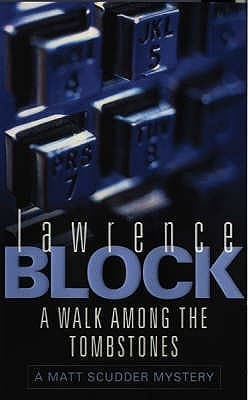
- A Walk Among the Tombstones
Lawrence Block
3.9 (5k) average on GoodreadsThrillerBoth "Early Autumn" and Block's "A Walk Among the Tombstones" feature a protagonist operating outside traditional law enforcement, taking on a private investigation with significant personal stakes. Block's Matt Scudder, like Spenser, grapples with his own moral code and the dark underbelly of society. However, "Early Autumn" is fundamentally an optimistic story about redemption and finding family, even if unconventional. Block's novel, while featuring a protagonist with his own ethical compass, is much darker and more focused on the grim realities of crime and the lasting trauma it inflicts, offering a less hopeful outlook on human nature and the possibility of positive change.
- Angels & Demons
Dan Brown
3.9 (2.7M) average on GoodreadsThrillerA Harvard symbologist races through Rome's ancient sites, deciphering cryptic clues to unmask the Illuminati and stop a vengeful plot to destroy the Vatican with a stolen antimatter weapon.
- Gone Girl
Gillian Flynn
4.1 (2.3M) average on GoodreadsThrillerA wife's sudden disappearance on her fifth anniversary reveals a web of lies and psychological warfare, exposing the secrets within a seemingly perfect marriage.
- The Girl on the Train
Paula Hawkins
3.9 (2.1M) average on GoodreadsThrillerA woman’s fascination with a seemingly perfect couple she watches from her daily train commute leads her into a dark investigation when she witnesses something that shatters their idyllic image.
- The Da Vinci Code
Dan Brown
3.9 (1.9M) average on GoodreadsThrillerA symbologist and a cryptologist race through European landmarks, deciphering ancient codes and uncovering a conspiracy that could rewrite the foundations of Christianity.





Enjoyed the summary?
A summary gives you the shape of the book. The book itself has the detail, the examples and the voice.
Find Early Autumn on AmazonAs an Amazon Associate, BookBrief earns from qualifying purchases. How we're funded