
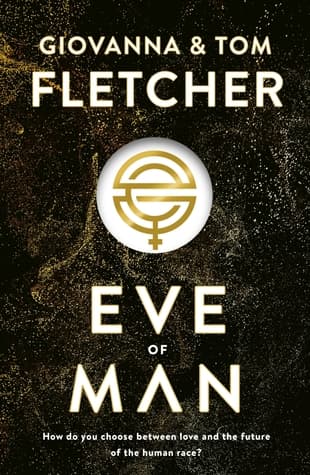
Synopsis
Covers the whole plot, including the ending.
- Difficulty
- Medium
- Pacing
- Variable
- Mood
- Intriguing, Romantic, Suspenseful, Hopeful
- Read it if
- You enjoy dystopian romance with a unique premise, forbidden love, and a strong female protagonist fighting for agency.
- Skip it if
- You prefer hard sci-fi over character-driven stories, or if you dislike love triangles and a slow-burn mystery.
Eve of Man Plot Summary
Covers the whole plot, including the ending.
The Sanctuary and the Truth
Eve, a sixteen-year-old, lives in a secluded Sanctuary, believing she is the last female on Earth. Raised by her 'mothers' — strict female scientists and guardians — she has never seen a boy or man. On her sixteenth birthday, her primary guardian, Vivian, reveals the truth: Eve is the first girl born in fifty years. A devastating plague made all other women infertile, making Eve humanity's last hope for reproduction. She is told that three carefully selected males will soon arrive, and she must choose one to mate with, securing the future of the human race. This revelation shatters Eve's sheltered existence and introduces her to the immense pressure of her destiny.
The Arrival of the Suitors
Following Vivian's revelation, the three chosen males arrive at the Sanctuary. Caleb, a charming and confident leader, represents strength. Michael, intelligent and artistic, offers a more sensitive connection. Ezekiel, quiet and observant, understands nature and survival. Eve is overwhelmed by their presence and the sudden intimacy. Each boy interacts with Eve under the watchful eyes of the Sanctuary's guardians, all aware of the monumental task before them. Eve struggles to reconcile her 'duty' with the very different personalities of the boys.
Bram's Intrusion
Amidst her interactions with Caleb, Michael, and Ezekiel, a fourth boy, Bram, unexpectedly infiltrates the Sanctuary. Unlike the others, Bram is not part of the official program; he is a 'wild' boy from the outside world, resourceful and rebellious. He is initially captured and held by the guardians. However, his presence introduces a disruptive element. Bram challenges the Sanctuary's rigid control and Eve's predetermined path. He questions the 'mothers'' motives and hints at a larger, more complex world beyond the Sanctuary's walls, sparking Eve's curiosity and a desire for genuine freedom.
Forbidden Connections
Despite severe warnings from Vivian and the other guardians, Eve finds herself drawn to Bram. She secretly visits him in his confinement, bringing him food and engaging in forbidden conversations. Bram shares stories of the outside world, a world of harsh realities but also of genuine human connection and choice, vastly different from Eve's controlled environment. Their secret meetings create a deep, undeniable connection between them, built on shared curiosity and a mutual defiance of authority. This growing bond directly conflicts with Eve's prescribed duty to choose one of the official suitors, complicating her emotional life and future.
The Test of Compatibility
The Sanctuary orchestrates various 'tests' and structured interactions for Eve with Caleb, Michael, and Ezekiel, designed to assess their compatibility. These include shared meals, supervised walks, and psychological evaluations. Eve, however, feels increasingly like a scientific subject rather than a person. While she finds aspects of each suitor appealing, her heart and mind return to Bram. The pressure to choose, combined with her growing feelings for Bram, makes these interactions feel disingenuous and forced, highlighting the contrast between duty and desire.
Unveiling the Sanctuary's Secrets
During their secret meetings, Bram reveals that the Sanctuary is not the benevolent institution Eve believes it to be. He claims that the 'mothers' are manipulating her, and that the outside world is not as desolate as they portray. Bram explains that there are other communities, and that the Sanctuary hoards resources and power, using Eve to maintain control over the remnants of humanity. He urges Eve to question everything she has been taught, planting seeds of doubt about her guardians' true intentions and the nature of her 'destiny,' further fueling her desire for freedom.
The Escape Plan
Convinced by Bram's revelations and her own longing for autonomy, Eve agrees to an escape plan. Bram, with his knowledge of the Sanctuary's vulnerabilities and the surrounding terrain, meticulously outlines their route. Their plan relies on precision and secrecy, as the Sanctuary is heavily guarded. Eve faces a monumental decision: embrace her predetermined fate and potentially save humanity, or risk everything for a chance at a life of her own, with Bram. The tension builds as they prepare for the perilous journey, knowing that failure means severe consequences, and success means an uncertain future.
The Attempted Escape and Capture
Eve and Bram put their escape plan into motion, navigating the Sanctuary's complex layout under the cover of darkness. They bypass several security measures, but their attempt is discovered. The guardians, led by Vivian, intercept them before they can reach the outside world. The capture is brutal, and both Eve and Bram are punished severely for their defiance. Bram is taken away, his fate uncertain, while Eve is subjected to stricter surveillance and psychological manipulation, designed to break her rebellious spirit and force her back onto her predestined path.
Vivian's Ultimatum
Following the failed escape, Vivian confronts Eve, revealing a deeper layer of the Sanctuary's motivations. She explains the true desperation of humanity's situation and the extreme measures taken to ensure Eve's survival and fertility. Vivian emphasizes the immense responsibility resting on Eve's shoulders, painting Bram as a dangerous distraction who jeopardizes everything. She gives Eve an ultimatum: comply with her duty, choose a suitor, and fulfill her role as the mother of the new generation, or face severe consequences, not just for herself, but potentially for Bram and the future of humanity.
The Choice and a Glimmer of Hope
Under immense pressure, Eve seemingly succumbs to Vivian's ultimatum, agreeing to choose one of the official suitors. However, this decision is made with a hidden agenda. While outwardly complying, Eve secretly plots her next move, fueled by her love for Bram and her desire for true freedom. A subtle hint or message from Bram, or an unexpected ally within the Sanctuary, gives Eve hope that her fight is not over. The book ends with Eve's immediate future seemingly decided, but with a strong sense that her journey for self-determination and the truth is far from complete, setting the stage for the next installment.
Principal Figures
Eve
Protagonist
The last fertile female, burdened with saving humanity.
Eve is a sixteen-year-old girl, raised in isolation and groomed for a singular purpose: to repopulate Earth. Initially naive and compliant, she possesses an innate curiosity and a growing desire for agency. She is intelligent, observant, and deeply empathetic, struggling with the immense pressure of her destiny. Her sheltered upbringing makes her vulnerable but also resilient, as she learns to question authority and trust her own instincts.
Relationships: Vivian (Primary guardian and complex mother figure, both protective and manipulative); Bram (Love interest and catalyst for her rebellion, offering a glimpse of true freedom); Caleb (Official suitor, representing strength and leadership); Michael (Official suitor, representing intellect and sensitivity); Ezekiel (Official suitor, representing quiet resilience and connection to nature)
Bram
Love Interest/Catalyst
A 'wild' boy from the outside who challenges Eve's world.
Bram is resourceful, rebellious, and fiercely independent, having grown up outside the controlled environment of the Sanctuary. He is pragmatic and street-smart, with a deep distrust of authority. Bram's arrival introduces a crucial element of chaos and truth into Eve's ordered life. He is driven by a desire for freedom and a suspicion of the Sanctuary's true motives. He sees Eve not as a means to an end, but as an individual deserving of choice.
Relationships: Eve (Love interest and partner in rebellion, sharing a deep emotional connection); Vivian (Antagonistic relationship, as he directly opposes her plans for Eve)
Vivian
Antagonist/Guardian
Eve's primary guardian, a scientist dedicated to humanity's survival.
Vivian is the stern, unyielding primary guardian and 'mother' to Eve. She is a brilliant scientist, driven by an unwavering commitment to the survival of the human race. Her methods are often manipulative and controlling, but she genuinely believes she is acting in humanity's best interest, even if it means sacrificing Eve's individual freedom. She embodies the cold, scientific logic of the Sanctuary, often struggling to understand Eve's emotional needs.
Relationships: Eve (Complex mother-daughter dynamic, guardian, and antagonist); The other 'mothers' (Leader and colleague in the Sanctuary's scientific mission)
Caleb
Supporting/Official Suitor
One of the three chosen males, embodying leadership and strength.
Caleb is one of the three official suitors presented to Eve. He is charismatic, confident, and possesses natural leadership qualities. Raised in a controlled environment similar to Eve's, he understands the gravity of their shared mission and is eager to fulfill his role. He genuinely believes in the Sanctuary's purpose and tries to connect with Eve through shared responsibility and a sense of duty. He represents the ideal male chosen by the authorities.
Relationships: Eve (Potential mate, a relationship based on duty and societal expectation); Michael (Fellow suitor, sometimes a rival, sometimes an ally); Ezekiel (Fellow suitor, sometimes a rival, sometimes an ally)
Michael
Supporting/Official Suitor
One of the three chosen males, representing intellect and artistry.
Michael is another of Eve's official suitors. He is intelligent, thoughtful, and artistic, offering a more sensitive and intellectual connection. He is observant and often expresses his feelings through creative outlets, which appeals to a different side of Eve. He is less overtly confident than Caleb but possesses a quiet depth. He is also committed to the mission of saving humanity but approaches it with a more introspective and gentle demeanor.
Relationships: Eve (Potential mate, a relationship based on intellectual and emotional compatibility); Caleb (Fellow suitor, sometimes a rival, sometimes an ally); Ezekiel (Fellow suitor, sometimes a rival, sometimes an ally)
Ezekiel
Supporting/Official Suitor
One of the three chosen males, representing quiet resilience and connection to nature.
Ezekiel is the third official suitor. He is quiet, observant, and possesses a deep connection to the natural world. He is less vocal than Caleb or Michael but has a strong, grounding presence. He offers Eve a sense of peace and understanding, often communicating through actions rather than words. He represents a more primal, essential connection to life and survival, contrasting with the scientific and social aspects of the other suitors.
Relationships: Eve (Potential mate, a relationship based on quiet understanding and connection to nature); Caleb (Fellow suitor, sometimes a rival, sometimes an ally); Michael (Fellow suitor, sometimes a rival, sometimes an ally)
The Mothers
Supporting/Antagonists
Female scientists and guardians overseeing Eve's upbringing and mission.
The 'Mothers' are a collective of female scientists and guardians who run the Sanctuary and have raised Eve. They are highly intelligent, dedicated, and utterly ruthless in their pursuit of humanity's survival. Each 'Mother' has a specific role in Eve's care and education, but they all share the unwavering belief that Eve's personal desires must be sacrificed for the greater good. They represent the oppressive, controlling force of the Sanctuary.
Relationships: Eve (Guardians and educators, but also jailers and manipulators); Vivian (Colleagues, with Vivian often acting as their leader)
Themes & Insights
Free Will vs. Destiny
This theme explores Eve's struggle to reconcile her predetermined destiny as humanity's savior with her desire for personal choice and freedom. From the moment she learns the truth, Eve is presented with a path she is expected to follow, yet she yearns for self-determination. Her connection with Bram, an 'outsider' who embodies freedom, directly challenges the rigid structure of her destiny. The narrative revolves around Eve trying to break free from what she is 'meant' to be versus what she 'wants' to be, highlighted by her attempted escape from the Sanctuary.
“They called me Eve. The first girl born in fifty years. They called me humanity’s last hope. But what if I just want to be me?”
Love vs. Duty
Eve is forced to choose between her growing love for Bram and her duty to save the human race by mating with one of the approved suitors. Her feelings for Bram represent genuine connection and personal happiness, while her duty is a heavy burden placed upon her by a dying world. This conflict is central to the plot, as her emotional life clashes with scientific and societal expectations. The pressure from Vivian and the 'Mothers' constantly reminds her of the stakes, making her choice between love and duty an agonizing one.
“How do you choose between love and the future of the human race?”
Control and Manipulation
The Sanctuary, led by Vivian and the 'Mothers,' controls Eve's life, from her isolated upbringing to her choice of mate. This theme explores the ethics of manipulating an individual for the greater good. Eve's entire existence is a product of controlled experiments and carefully managed information. Bram's arrival exposes the extent of this manipulation, revealing that the 'Mothers' have withheld crucial truths and use fear to maintain their authority. The narrative questions whether such control, even with noble intentions, can ever be justified.
“They had created me. But they didn’t own me.”
The Nature of Humanity and Survival
The book explores what it means to be human when faced with extinction. The Sanctuary represents a scientific, almost clinical approach to survival, prioritizing reproduction above all else. In contrast, Bram and his stories of the outside world suggest that humanity also includes freedom, choice, and genuine emotional connection, even in harsh conditions. The narrative asks if mere biological survival is enough, or if true humanity requires more. The choices Eve faces reflect these differing ideas on what makes life worth living and preserving.
“What kind of future were we saving if we had to sacrifice everything that made us human to get there?”
Plot Devices & Literary Techniques
The Chosen One Trope
Eve is prophesied and groomed to be humanity's sole hope.
Eve embodies the 'Chosen One' trope as she is literally the only fertile female born in fifty years, making her the sole individual capable of saving the human race from extinction. This device immediately establishes high stakes and places immense pressure on the protagonist. It sets up her journey not just as personal growth, but as a mission with global consequences, making her choices reverberate far beyond her own life. Her unique status isolates her but also gives her immense, albeit unwanted, power.
The Isolated Setting (Sanctuary)
A controlled, secluded environment that limits the protagonist's worldview.
The Sanctuary serves as a crucial plot device, representing both protection and imprisonment. Its isolation from the outside world allows the 'Mothers' to control every aspect of Eve's life, shaping her beliefs and limiting her understanding of reality. This controlled environment heightens the impact of any external influence, particularly Bram's arrival, as it dramatically expands Eve's worldview and exposes the lies she's been told. The Sanctuary itself functions as a character, a symbol of the oppressive forces acting upon Eve.
Love Triangle/Quadrangle
Eve is presented with multiple romantic interests, complicating her choices.
The introduction of Caleb, Michael, and Ezekiel as official suitors, followed by the unexpected arrival of Bram, creates a complex love dynamic. This device is not merely for romantic tension; it directly ties into the novel's central themes of free will vs. destiny and love vs. duty. Each suitor represents a different path or set of values, forcing Eve to confront not just who she is attracted to, but also what kind of future she truly desires and what she is willing to sacrifice for it. Bram's status as the 'forbidden' love interest makes this even more potent.
The Dystopian Society
A future society where humanity faces extinction and strict controls are enforced.
The novel is set in a post-apocalyptic, dystopian future where a plague has rendered most of humanity infertile. This societal backdrop justifies the extreme measures taken by the Sanctuary and creates the high stakes for Eve's mission. The dystopian elements, such as the strict societal control, the scarcity of fertile women, and the scientific manipulation of human life, highlight the desperation and moral ambiguities inherent in a fight for survival. It provides the context for Eve's extraordinary circumstances and her rebellion against a seemingly necessary evil.
Eve of Man Quotes
“The world needs you. More than it needs me. More than it needs any of us.”
“Hope is a dangerous thing, Mia. It makes you believe in impossible things.”
“You are not just a girl. You are the future.”
“Sometimes, the only way to be free is to let go of everything you think you know.”
“Love isn't something you can control. It just… happens.”
“Every choice has a consequence, Mia. Good or bad.”
“The greatest prison is a mind that refuses to see beyond its own walls.”
“Even in the darkest of times, there is always a flicker of light.”
“You can't save the world if you don't first save yourself.”
“The truth is rarely simple, and often inconvenient.”
“Sometimes, the biggest risks lead to the greatest rewards.”
“We are all products of our environment, but we don't have to be defined by it.”
“The silence was louder than any scream, filled with all the things unsaid.”
“To truly live, you must be willing to break the rules.”
Quiz
10 questions on the plot and the characters. Each answer comes with a short explanation.
Question 1
What is the primary reason Eve has been raised in isolation from males?
- To protect her from a deadly virus that only affects males.
- She is the first girl born in fifty years, and her purpose is to repopulate humanity.
- She has a unique genetic mutation that is dangerous to males.
- Her parents were overprotective and wanted to shield her from the outside world.
Show answer
B. She is the first girl born in fifty years, and her purpose is to repopulate humanity. Eve is the first girl born in fifty years after a global crisis led to a severe decline in female births. Her isolation and strict upbringing are designed to prepare her for her role in repopulating the human race.
Question 2
What is the name of the male who becomes a significant romantic interest for Eve, challenging her predetermined destiny?
- Caleb
- Bram
- Adam
- Silas
Show answer
B. Bram Bram is introduced as a guard who forms an unexpected and forbidden connection with Eve, which makes her question her pre-ordained role.
Question 3
At what age is Eve expected to begin fulfilling her destiny by choosing a mate?
- Thirteen
- Fifteen
- Sixteen
- Eighteen
Show answer
C. Sixteen The synopsis explicitly states, 'But at sixteen it's time for Eve to face her destiny.' This is when she is presented with the three potential males.
Question 4
What is the name of the facility where Eve has spent her entire life, isolated from the outside world?
- The Sanctuary
- The Glasshouse
- The Ark
- The Citadel
Show answer
B. The Glasshouse Eve lives in a highly controlled, enclosed environment known as 'The Glasshouse,' designed to protect her and monitor her every move.
Question 5
What is the central ethical dilemma explored in 'Eve of Man' regarding Eve's role?
- The morality of genetic engineering to create more females.
- The conflict between individual freedom and the survival of the human race.
- The dangers of artificial intelligence in a post-apocalyptic world.
- The struggle for power between different factions within the ruling council.
Show answer
B. The conflict between individual freedom and the survival of the human race. The core conflict revolves around Eve's personal desire for love and freedom versus the immense pressure and responsibility placed upon her to ensure humanity's future, as highlighted by the line, 'But how do you choose between love and the future of the human race?'
Question 6
Who are the 'Matriarchs' in Eve's society?
- The three chosen males for Eve.
- The female scientists responsible for Eve's care and upbringing.
- The ancient goddesses worshipped by the community.
- Eve's biological mother and grandmothers.
Show answer
B. The female scientists responsible for Eve's care and upbringing. The Matriarchs are the leading female figures who oversee Eve's life and the entire project, acting as her primary caregivers and instructors, albeit with strict control.
Question 7
What specific event led to the drastic decline in female births, necessitating Eve's role?
- A viral epidemic that targeted newborn girls.
- Environmental pollution that affected female fertility.
- A global war that decimated female populations.
- A mysterious biological shift causing almost all births to be male.
Show answer
D. A mysterious biological shift causing almost all births to be male. The book establishes that for fifty years, almost every birth has been male, indicating a fundamental biological shift rather than a disease or environmental disaster targeting existing females.
Question 8
What is the primary method used to educate Eve about the outside world and her future role?
- Direct interaction with people from different social classes.
- Extensive use of virtual reality simulations and educational videos.
- Reading physical books and historical documents.
- Oral traditions and storytelling from the Matriarchs.
Show answer
B. Extensive use of virtual reality simulations and educational videos. Eve's education relies heavily on simulated experiences and visual aids within the Glasshouse, as direct interaction with the outside world, especially males, is strictly forbidden.
Question 9
What is the name of the organization or governing body that controls Eve's life and the future of humanity?
- The New World Order
- The Collective
- The Authority
- The Matriarchy/The Programme
Show answer
D. The Matriarchy/The Programme While 'The Matriarchs' are the individuals in charge, the overall system and project governing Eve's life and the repopulation effort is often referred to as 'The Programme' or simply controlled by the Matriarchy.
Question 10
What is the immediate consequence of Eve's interaction with Bram for her carefully planned future?
- She is immediately exiled from the Glasshouse.
- The Matriarchs accelerate her mating process with the chosen males.
- It ignites her desire for control over her own life and freedom.
- She develops a mysterious illness that jeopardizes her fertility.
Show answer
C. It ignites her desire for control over her own life and freedom. Bram's presence and their connection awaken in Eve a strong desire for personal agency and freedom, making her question her predetermined destiny and the choices laid out for her, as stated in the synopsis: 'Eve wants control over her life. She wants freedom.'
Eve of Man FAQ
What is the central premise of 'Eve of Man' and why is Eve so important?
The central premise revolves around Eve, the first girl born in fifty years after a global infertility crisis led to only male births. She is humanity's last hope for survival, as her fertility is believed to be the key to repopulating the Earth, making her existence and reproductive choices paramount to the future of the human race.
Who are the 'three potential males' selected for Eve, and what is their role?
The three potential males are Caleb, Michael, and Artem, chosen by the Matriarchs based on genetic compatibility and societal standing. Their role is to be Eve's potential partners in reproduction, with the expectation that she will select one to father the next generation, fulfilling her destiny to save humanity.
What kind of environment has Eve grown up in, and how has it shaped her?
Eve has grown up in isolation within the Tower, a heavily controlled and monitored environment, with limited interaction only from her caretakers and the Matriarchs. This upbringing has made her initially compliant and accepting of her destiny, but also sheltered and naive about the outside world and genuine human connection.
Who is Bram, and how does his appearance complicate Eve's predetermined future?
Bram is a 'Grounder,' a male from the outside world, who Eve encounters unexpectedly. His appearance shatters her sheltered existence and introduces her to concepts of freedom, choice, and genuine love, directly conflicting with her predetermined duty to choose one of the three selected males for procreation.
What is the significance of the Matriarchs in Eve's society?
The Matriarchs are the ruling council of women who govern the surviving human society and meticulously orchestrate Eve's life and destiny. They represent the established order and the collective will to preserve humanity, often at the expense of individual freedom and emotional choice, particularly Eve's.
Are there any clues about what caused the infertility crisis, or is it left ambiguous?
The book hints at a past environmental catastrophe or plague as the cause of the widespread male-only births and female infertility, but it does not provide a definitive, scientifically detailed explanation. The focus is more on the societal consequences and Eve's role in the aftermath, leaving the precise origin somewhat ambiguous.
What is the true purpose behind Eve's rigorous training and education in the Tower?
Eve's training extends beyond basic education; it's designed to prepare her physically and mentally for her reproductive role and the pressures of being humanity's savior. This includes physical conditioning, historical lessons emphasizing her importance, and psychological conditioning to accept her fate, ensuring she is a 'perfect' vessel.
Are there any subtle hints about the 'Grounders' society or their beliefs before Eve directly encounters them?
Before Eve meets Bram, there are subtle hints through the Matriarchs' warnings and descriptions of the outside world, portraying Grounders as wild, uncivilized, and dangerous. These portrayals are designed to instill fear and discourage Eve from questioning her controlled environment, but they also inadvertently suggest a different way of life exists.
What is the symbolic meaning of Eve's name?
Eve's name is highly symbolic, directly referencing the biblical Eve, the first woman. This immediately establishes her as a foundational figure, the 'mother of all living' in this new, desperate era, burdened with the responsibility of repopulating and restarting humanity, mirroring the creation myth.
How does Eve's journey represent a coming-of-age story beyond just romance?
Beyond romance, Eve's journey is a profound coming-of-age story as she transitions from a compliant, sheltered girl to an individual questioning authority and fighting for self-determination. She learns about betrayal, true love, and the complexities of sacrifice, forcing her to define her own identity separate from her assigned purpose.
Discuss the psychological impact of Eve's isolation and the constant surveillance she endures.
Eve's extreme isolation and constant surveillance contribute to a deep sense of loneliness and a lack of personal agency, fostering a compliant personality initially. Psychologically, it makes her vulnerable to manipulation but also heightens her desire for genuine connection and freedom once she experiences it, leading to a strong rebellion against her gilded cage.
How does the novel explore the theme of free will versus destiny?
The novel critically explores free will versus destiny through Eve's internal conflict. Her entire existence is dictated by a predetermined destiny to save humanity, but her encounter with Bram introduces the concept of choosing her own path and love. This conflict forces her to weigh societal duty against personal happiness and autonomy.
What role does empathy play in Eve's character development, particularly in her interactions with the chosen males and Bram?
Empathy is crucial to Eve's development, especially as she learns to see the chosen males not just as reproductive partners but as individuals with their own hopes and fears. Her empathy for Bram, however, is deeper and more immediate, forging a unique bond that challenges her preconceived notions and ultimately drives her desire for freedom and authentic connection.
How does the ending of 'Eve of Man' set up the subsequent books in the trilogy?
The ending of 'Eve of Man' leaves Eve in a precarious and uncertain situation, having defied the Matriarchs and made a significant personal choice that jeopardizes her 'destiny.' This cliffhanger sets up the next books by suggesting a future of conflict, escape, and the ongoing struggle for survival, both for Eve personally and for humanity in general, with the stakes significantly raised.
To what extent is the Matriarchs' control justifiable, given the dire state of humanity?
The Matriarchs' extreme control is presented as a necessary evil, a desperate measure to ensure humanity's survival. While their methods are oppressive and deny individual freedom, their motivation stems from the near extinction of the human race, creating a moral dilemma about whether the ends justify such stringent means.
What societal commentary does the book offer regarding gender roles and expectations?
The book offers sharp commentary on extreme gender roles, where women are either revered as the last hope (Eve) or powerful rulers (Matriarchs), while men are largely relegated to a secondary, functional role for reproduction. It critiques a society where an individual's worth is solely defined by their biological function, highlighting the pressures and dehumanization this entails.
Are there any moments where Eve questions the Matriarchs' narrative about the outside world or her own past?
Yes, Eve increasingly questions the Matriarchs' narrative, particularly after her encounters with Bram and as she uncovers hidden information about her own past. She begins to see discrepancies between what she's been told and what she observes, leading her to doubt the benevolence and honesty of her caretakers and the ruling council.
How does the concept of 'love' evolve for Eve throughout the narrative?
Initially, Eve's understanding of 'love' is theoretical and tied to duty. She believes she must 'love' one of the chosen males for the sake of humanity. However, her relationship with Bram introduces her to a passionate, unconditional, and self-sacrificing form of love, which challenges her prior beliefs and becomes a powerful force driving her choices.
About the author

Giovanna Fletcher is a British author known for her work in fiction. One of her notable books is "Eve of Man," which explores themes of love and identity in a dystopian setting. In addition to her writing, she is recognized for her work as a television presenter and podcaster.
Similar books
- The Selection
Kiera Cass
4.1 (893k) average on GoodreadsFantasyFeatures a young woman choosing a mate from several suitors in a dystopian setting with romantic elements.
- Matched
Ally Condie
3.7 (653k) average on GoodreadsFantasyExplores a dystopian society where matches are pre-determined, and a protagonist questions her fate due to forbidden love.
- The Handmaid's Tale
Margaret Atwood
4.1 (1.5M) average on GoodreadsFantasy'Eve of Man' shares thematic similarities with Atwood's novel in its exploration of female fertility as a societal resource and control over women's bodies. However, Fletcher's YA approach lacks the profound psychological depth, socio-political critique, and nuanced character development found in Atwood's more mature and critically acclaimed work.
- The Hunger Games
Suzanne Collins
4.3 (6.4M) average on GoodreadsFantasyBoth novels feature a young female protagonist in a dystopian society facing forced choices. While 'Eve of Man' has a romantic subplot, it feels more central and less integrated into the broader rebellion than the romantic elements in 'The Hunger Games,' where Katniss's relationships are often directly tied to her survival and the larger political struggle.
- The Giver
Lois Lowry
4.1 (1.8M) average on GoodreadsFantasyBoth books explore a seemingly utopian society with hidden truths. 'The Giver' excels at gradually revealing societal flaws through the protagonist's unique role and internal reflection, leading to a more profound critical analysis of the system. 'Eve of Man' often prioritizes romantic rebellion over a deeper, more systemic critique of its dystopian world.
- Harry Potter and the Sorcerer's Stone
J.K. Rowling
4.5 (7M) average on GoodreadsFantasyRescued from a miserable life under the stairs, an orphaned boy discovers he's a wizard destined for a magical school, where he uncovers a dangerous secret tied to the dark wizard who murdered his parents.



Enjoyed the summary?
A summary gives you the shape of the book. The book itself has the detail, the examples and the voice.
Find Eve of Man on AmazonAs an Amazon Associate, BookBrief earns from qualifying purchases. How we're funded