
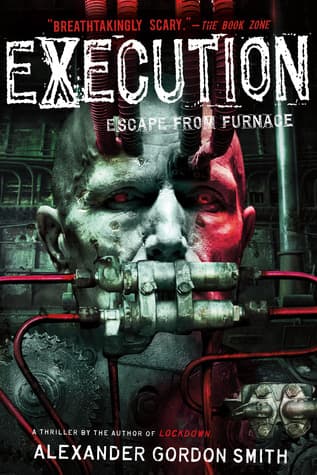
Synopsis
Covers the whole plot, including the ending.
- Difficulty
- Medium
- Pacing
- Fast
- Mood
- Dark, Suspenseful, Action-packed, Gritty
- Read it if
- You enjoy fast-paced, high-stakes YA thrillers with dystopian themes, supernatural elements, and a morally complex protagonist.
- Skip it if
- You prefer fantasy without science fiction elements or are looking for a lighthearted read.
Execution Plot Summary
Covers the whole plot, including the ending.
The Escape and the New World
Alex Sawyer, having escaped the terrifying underground prison called the Furnace, reaches the surface to find a world completely changed. The sky is dark, buildings are in ruins, and the streets are full of 'Freaks' that hunt and kill humans. He quickly learns that Alfred Furnace, the sadistic warden of his former prison, is now the ruler of this devastated world. Humans are either killed or enslaved, forced to work in grim camps. Alex is disoriented but desperately needs to find his friends and understand what happened to the world.
Encountering the Resistance
While navigating the dangerous streets, Alex is attacked by Freaks but is rescued by a small group of human survivors. He meets Sara, a fierce fighter, and others who are part of a resistance movement against Alfred Furnace. They are initially wary of Alex, given his strange appearance and sudden emergence, but his fighting skills and clear hatred for Furnace soon earn their trust. They explain Furnace's control and the systematic oppression of humanity, saying that Furnace somehow unleashed the Freaks and now commands them.
The Truth About Alex's Nature
As Alex fights with the resistance, he discovers he has extraordinary abilities. He can sense the Freaks, and in extreme danger, he can show monstrous strength and resilience, even healing quickly from severe injuries. These powers are both a help and a problem, making him a strong weapon but also setting him apart from his human allies, who see him with a mix of awe and fear. Alex realizes that his time in the Furnace, and the experiments on him, have changed him, making him similar to the monsters he fights.
Infiltrating Furnace's Domain
The resistance, helped by Alex's unique abilities, plans to strike a blow against Alfred Furnace. Their target is one of Furnace's main strongholds, a fortified compound where he is believed to be conducting more experiments and strengthening his power. The mission is dangerous, requiring them to navigate hordes of Freaks and Furnace's human guards. Alex's knowledge of Furnace's methods and his own growing powers are vital to their success, but the cost of failure is unimaginable for the dwindling human population.
Reunion and Revelation
During the infiltration, Alex has a reunion with some of his former friends from the Furnace, who are now enslaved and traumatized. Their condition fuels his anger against Alfred Furnace. He also learns more about Furnace's plan: Furnace is not just a tyrant but is trying to reshape humanity, believing the Freaks are the next evolutionary step and that he is their leader. Alex learns that his own transformation is a direct result of Furnace's experiments, making him a unique hybrid, a link between human and Freak, and possibly the key to both salvation and destruction.
The Betrayal and the Trap
The resistance's attack on the stronghold starts well, but they soon realize they have walked into a trap. Alfred Furnace anticipated their move, and an ambush destroys a large part of their forces. It becomes clear there was a traitor among them, giving Furnace vital information. Alex is forced to face the reality that Furnace is always several steps ahead, and his control over the Freaks and the remaining humans is far more complete than they first thought. The survivors are scattered and demoralized.
Alex's Isolation and Inner Conflict
After the ambush, Alex becomes more isolated. His powers are growing, making him more effective against the Freaks, but also more like them. He struggles with the fear of losing his humanity and becoming just another one of Furnace's creations. Sara and the remaining resistance members look to him as their last hope, putting a huge burden on him. Alex struggles with the moral implications of his power, knowing that to defeat Furnace, he might have to embrace the very monstrousness he hates in himself.
The Ultimate Confrontation
Driven by vengeance and humanity's desperate plea, Alex tracks Alfred Furnace to his central command, a monument to his power. The final confrontation is brutal. Furnace reveals the full extent of his transformation, showing powers that rival Alex's. He taunts Alex, calling him a failed experiment and a mirror of his own ambition. The battle is not just physical but ideological, a clash between Furnace's vision of a new, monstrous world and Alex's desperate fight for humanity's survival.
The Sacrifice and the Choice
In the height of their battle, Alex realizes that simply defeating Furnace might not be enough. Furnace's power is deeply connected to the world he created, and destroying him could unleash an even greater disaster. Alex faces an impossible choice: to kill Furnace and risk complete annihilation, or to find another way, potentially sacrificing his own humanity or even his life to contain the destruction. He must decide if he is the executed, a victim of Furnace's plans, or the executioner, making the ultimate decision on the world's future.
The Aftermath and New Beginning
The battle ends with a lasting change. While Furnace is defeated, the world is not simply restored. The effects of his reign and the presence of the Freaks continue to shape reality. Alex, having made his decision, emerges as a different being, forever marked by his experiences and his powers. The remaining humans, though scarred, begin the long process of rebuilding. Alex's future is unclear; he is neither fully human nor fully monster, a guardian of a fragile new world, forever balancing the light and darkness within himself.
Principal Figures
Alex Sawyer
Protagonist
A former prisoner transformed into a hybrid creature, humanity's last hope.
Alex Sawyer is a young man who endured unimaginable horrors in Alfred Furnace's underground prison. He emerges onto a devastated surface world, discovering he now possesses superhuman strength, rapid healing, and a connection to the monstrous 'Freaks.' He is driven by a powerful sense of justice, a desire to protect the innocent, and a deep-seated hatred for Furnace. Despite his monstrous abilities, he desperately clings to his humanity, fearing he will become no better than the creatures he fights. His empathy and moral compass are often tested by the brutal realities of his new world.
Relationships: Alfred Furnace (Arch-nemesis, torturer, creator of his powers); Sara (Ally, fellow resistance fighter, potential romantic interest); His former friends (Comrades from the Furnace, now victims he seeks to save)
Alfred Furnace
Antagonist
The tyrannical ruler of the devastated world, a scientist turned monstrous leader.
Alfred Furnace is the sadistic and brilliant mastermind behind the world's devastation. Formerly the warden of the underground prison, he has unleashed the Freaks and now commands them, ruling over the surface with an iron fist. He views humanity as flawed and believes he is guiding its evolution by creating the Freaks and transforming others, like Alex. Furnace is utterly devoid of empathy, driven by a twisted vision of a 'perfect' world, and revels in cruelty and control. He sees Alex not just as an enemy, but as a fascinating, albeit flawed, experiment.
Relationships: Alex Sawyer (Experiment, adversary, twisted protégé); The Freaks (His creations, his army, tools of his will); Human slaves (His subjects, resources for his experiments)
Sara
Supporting
A fierce and capable leader of the human resistance.
Sara is a pragmatic, resilient, and fiercely independent young woman who leads a faction of the human resistance against Alfred Furnace. She is an excellent fighter, resourceful, and possesses strong leadership qualities. Initially wary of Alex due to his unusual nature, she quickly recognizes his value and potential, becoming one of his closest allies and confidantes. She represents the unwavering spirit of humanity in the face of overwhelming odds, often grounding Alex when he struggles with his identity. Her focus is always on survival and fighting back, no matter the cost.
Relationships: Alex Sawyer (Ally, comrade-in-arms, potential romantic interest); Other resistance members (Her followers, her responsibility)
The Freaks
Antagonistic/Mentioned
Monstrous creatures unleashed by Furnace, serving as his army and agents of terror.
The Freaks are the terrifying, mutated creatures that roam the devastated surface world, preying on humans and enforcing Alfred Furnace's rule. They are monstrous in appearance and behavior, driven by primal urges and seemingly under Furnace's direct control. While initially appearing as mindless beasts, there are hints of a deeper, more sinister origin and purpose tied to Furnace's experiments and Alex's own transformation. They represent the physical manifestation of Furnace's twisted vision for a new world and the ultimate threat to humanity's survival.
Relationships: Alfred Furnace (Their creator and master); Alex Sawyer (Their target, but also connected to them through his powers)
Alex's Former Friends
Supporting/Mentioned
Fellow survivors from the Furnace, now enslaved or lost.
This group represents the other prisoners Alex knew from his time in the underground Furnace. While specific individuals aren't always deeply fleshed out, their collective presence serves as a powerful motivator for Alex. They are victims of Furnace's cruelty, either still enslaved, traumatized, or tragically lost to the new world. Their suffering fuels Alex's rage and his determination to overthrow Furnace, reminding him of what he is fighting for and the innocence that has been stolen. Their fate underscores the high stakes of Alex's mission.
Relationships: Alex Sawyer (Comrades, shared victims of Furnace); Alfred Furnace (Their tormentor and enslaver)
Themes & Insights
The Nature of Humanity and Monstrosity
This theme explores what it means to be human in a world overrun by monsters, and how close the line is between the two. Alex Sawyer embodies this conflict, as he has monstrous abilities but tries to keep his empathy and moral compass. His internal struggle reflects the external conflict: is humanity worth saving if it means becoming a monster to do so? Alfred Furnace represents the extreme corruption of humanity, embracing monstrosity as an ideal. The existence of the Freaks makes characters question the definition of 'human' and 'monster.'
“He was a monster, yes, but he was *their* monster, and perhaps that was the only hope left.”
Survival and Resistance
The story's core is the desperate struggle for survival against overwhelming odds. Humanity is almost extinct, enslaved and hunted by Alfred Furnace and his Freaks. The resistance movement, led by figures like Sara, shows the human spirit to fight back, even when hope seems lost. This theme highlights the resilience, cleverness, and sacrifices needed to survive in a dystopian world. Every action and decision focuses on the immediate need for survival and the long-term goal of reclaiming their world from tyranny.
“We fight not because we think we'll win, but because we refuse to lose.”
Identity and Transformation
Alex's journey is about identity. Transformed by Alfred Furnace's experiments, he deals with his new powers and the monstrous changes within him. He questions who he is now - a human, a Freak, or something entirely new? This theme explores the psychological effect of radical transformation, the fear of losing oneself, and the challenge of accepting a new, powerful, but potentially terrifying identity. His story involves coming to terms with his hybrid nature and understanding how it defines his role in the world.
“He looked into the broken glass, seeing not himself, but a stranger, a weapon, a thing that used to be a boy.”
Tyranny and Freedom
Alfred Furnace's complete control over the devastated world is the ultimate tyranny. He enslaves humans, unleashes terror, and seeks to reshape existence according to his twisted will. The entire struggle of the resistance, and Alex's personal quest, is a fight for freedom - not just political freedom, but the freedom to exist as humans, to choose their own destiny, and to rebuild a world free from oppression. The story contrasts the suffocating grip of Furnace's regime with the desperate, often violent, desire for liberation.
“Furnace didn't just want to rule; he wanted to own every breath, every thought, every beat of a human heart.”
Plot Devices & Literary Techniques
The Post-Apocalyptic Setting
A ruined world provides a backdrop of constant danger and despair.
The devastated surface world, with its crumbling cities and roaming 'Freaks,' immediately establishes a high-stakes, desperate atmosphere. This setting underscores the severity of Alfred Furnace's power and the fragility of human existence. It forces characters into extreme situations, highlighting their resilience and moral dilemmas. The ruins serve as a constant reminder of what was lost and what humanity is fighting to reclaim, amplifying the sense of urgency and the brutal nature of the conflict.
The Protagonist's Unique Powers
Alex's hybrid nature grants him abilities essential for fighting the antagonist but creates internal conflict.
Alex's transformation into a super-powered hybrid is a central plot device. His abilities are crucial for the resistance to stand a chance against Furnace and the Freaks, making him the 'chosen one' or last hope. However, these powers come with a heavy price: the constant threat of losing his humanity and becoming what he fights. This internal conflict adds depth to his character and creates moral dilemmas, making his journey not just about physical battles but also about the preservation of his soul. It links him directly to the antagonist's experiments, making their conflict deeply personal.
The Unknown Enemy/Threat
The true nature and origin of the 'Freaks' and Furnace's plan are gradually revealed.
Initially, the 'Freaks' are presented as a terrifying, inexplicable force. The gradual revelation of their connection to Alfred Furnace and his experiments, as well as Alex's own transformation, builds suspense and deepens the mystery. This device allows the author to slowly unveil the full scope of the antagonist's ambition and the true stakes of the conflict, making each discovery a significant plot point. It keeps the reader engaged, piecing together the horrifying truth alongside Alex.
The Traitor Among Us
A hidden informant within the resistance leads to a devastating ambush.
The presence of a traitor within the human resistance serves as a powerful plot twist, creating internal conflict and mistrust among the allies. This betrayal leads to a significant setback for the protagonists, highlighting the cunning of the antagonist and the desperation of the situation. It raises the stakes by demonstrating that danger can come from within, not just from the obvious external threats. This device also serves to isolate Alex further, forcing him to rely more on his own judgment and powers.
Execution Quotes
“Because I don’t believe in luck. I believe in people. I believe in you.”
“They want us to hate each other. They want us to tear each other apart. Don’t let them win.”
“Sometimes the only way to survive is to pretend you’re already dead.”
“Fear is a weapon. But it’s a weapon that can be turned against its wielder.”
“We are not criminals. We are victims. And victims fight back.”
“Every choice has a consequence. Even the choices you don’t make.”
“Hope is a dangerous thing. But it’s also the only thing that keeps us alive.”
“They built this place to break us. But they forgot we were already broken.”
“The greatest prison isn’t behind bars. It’s inside your own head.”
“You can take everything from me, but you can’t take who I am.”
“Sometimes, the only way to win is to change the rules of the game.”
“There’s a difference between surviving and living. And I choose to live.”
“The truth is a weapon. And it’s time we started using it.”
“Even in the darkest places, there can be light. You just have to find it.”
Quiz
10 questions on the plot and the characters. Each answer comes with a short explanation.
Question 1
What is the primary motivation for Alex Sawyer's actions throughout the book 'Execution'?
- To become the new ruler of the world
- To escape the world and live in peace
- To stop Alfred Furnace and save humanity
- To find his long-lost family members
Show answer
C. To stop Alfred Furnace and save humanity Alex's central goal is to confront and defeat Alfred Furnace, who has enslaved the world, in order to free humanity from his cruel reign.
Question 2
Who is Alfred Furnace in relation to the world Alex finds himself in?
- The leader of a rebel resistance group
- The master and ruler of the global prison
- A fellow escapee from the underground nightmare
- A scientist trying to cure the monsters
Show answer
B. The master and ruler of the global prison Alfred Furnace is established as the tyrannical master who has transformed the entire world into a prison, controlling the monsters and enslaved humans.
Question 3
What does Alex discover about himself that makes him unique and potentially capable of stopping Furnace?
- He has a hidden army of loyal followers
- He possesses a unique monstrous ability that can counter Furnace's power
- He has a secret weapon from the underground facility
- He is immune to the monsters' attacks
Show answer
B. He possesses a unique monstrous ability that can counter Furnace's power The book reveals that Alex himself is a 'monster' with unique powers, making him the only one who can truly challenge Alfred Furnace.
Question 4
What is the state of the world outside the underground nightmare Alex escaped from?
- It is a utopian society rebuilt after a global disaster.
- It is a vast, desolate wasteland with no signs of life.
- It is a global prison ruled by Alfred Furnace, overrun by monsters.
- It is a peaceful, agrarian society untouched by the previous conflicts.
Show answer
C. It is a global prison ruled by Alfred Furnace, overrun by monsters. Upon escaping, Alex finds that the world has become a 'prison' under Furnace's control, with monsters roaming freely and humans enslaved.
Question 5
What moral dilemma does Alex face regarding his own nature as a 'monster'?
- Whether to use his powers for personal gain or for the greater good.
- Whether embracing his monstrous side will make him as bad as Furnace.
- Whether he should hide his true nature from his allies.
- Whether his powers are strong enough to defeat Furnace.
Show answer
B. Whether embracing his monstrous side will make him as bad as Furnace. A central theme is Alex's struggle with his own monstrous identity and the fear that using his powers to stop Furnace might turn him into something equally destructive.
Question 6
What is the ultimate consequence Alex fears if he succeeds in stopping Furnace?
- He will be exiled from the newly freed world.
- He will lose his monstrous abilities forever.
- He could destroy everything, including himself or the world.
- He will be forced to take Furnace's place as ruler.
Show answer
C. He could destroy everything, including himself or the world. The synopsis explicitly states the stakes: 'in doing so he could destroy everything.' This highlights the extreme risk associated with his confrontation with Furnace.
Question 7
What is the significance of the question 'Is he the executed or the executioner?' in the context of the story?
- It refers to whether Alex will follow orders or give them.
- It highlights Alex's internal struggle between being a victim and being the one who delivers judgment.
- It literally asks if Alex will be caught and killed, or if he will kill Furnace.
- It questions whether Alex will be tried in court or become a judge.
Show answer
B. It highlights Alex's internal struggle between being a victim and being the one who delivers judgment. This phrase encapsulates Alex's ultimate choice and destiny: whether he will be destroyed by Furnace or be the one to bring Furnace's reign to an end, with the implication of who pays the ultimate price.
Question 8
How do the 'monsters' on the streets contribute to Furnace's reign of cruelty?
- They act as his personal guards and enforcers, ensuring obedience through violence.
- They provide a constant food source for the enslaved population.
- They are a distraction for Alex, keeping him from Furnace.
- They are simply random creatures with no connection to Furnace.
Show answer
A. They act as his personal guards and enforcers, ensuring obedience through violence. The synopsis states, 'Monsters rule the streets, leaving nothing but murder in their wake. Those who do not die become slaves to Furnace’s reign of cruelty,' implying they are instrumental in maintaining his oppressive control.
Question 9
What kind of 'underground nightmare' did Alex escape from, based on the context of the book?
- A natural cave system he was trapped in by accident.
- A prison or facility where he was held captive and likely transformed.
- A secret bunker where he was hiding from a nuclear war.
- A forgotten ancient city filled with treasures.
Show answer
B. A prison or facility where he was held captive and likely transformed. Given that Alex 'escaped' and is later revealed to be a 'monster,' the 'underground nightmare' most likely refers to a facility or prison where he was subjected to experiments or captivity that led to his transformation.
Question 10
The book's title, 'Execution,' and the final line, 'one way or another, it all ends now,' strongly suggest which narrative outcome?
- A peaceful resolution where all parties reconcile.
- A definitive, violent confrontation that will result in a major death or conclusion.
- A cliffhanger ending leading to a sequel.
- A philosophical debate about the nature of justice.
Show answer
B. A definitive, violent confrontation that will result in a major death or conclusion. The words 'Execution' and 'it all ends now' strongly imply a final, decisive, and likely violent showdown where someone will be 'executed' or something will be brought to a definitive end.
Execution FAQ
What is the core premise of 'Execution' following Alex Sawyer's escape?
After escaping the underground prison, Alex Sawyer finds that the entire world has been transformed into an even larger prison, now under the tyrannical control of Alfred Furnace. The surface is overrun by monstrous creatures, leaving widespread death and enslavement in their wake, forcing Alex to confront a global catastrophe rather than just personal freedom.
Who is Alfred Furnace and what is his role in this new world order?
Alfred Furnace is the primary antagonist, having ascended to become the absolute master of the world after Alex's initial escape. He orchestrates the reign of cruelty, commanding the monstrous creatures that terrorize the streets and enslaving the surviving human population, effectively turning the world into his personal empire.
What kind of 'monsters' rule the streets, and what is their impact on society?
The monsters ruling the streets are formidable and deadly creatures, described as causing widespread murder and destruction. Their presence enforces Furnace's control, creating an atmosphere of terror and ensuring that those who don't perish become subjugated slaves, thereby dismantling any semblance of normal human society.
How is Alex Sawyer himself considered a 'monster' in this narrative?
Alex is considered a 'monster' not necessarily due to his appearance, but because of the unique abilities or transformations he underwent during his time in the underground prison. These powers, while potentially destructive, are also what make him the only individual capable of challenging and stopping Alfred Furnace.
What is the central dilemma Alex faces regarding his role as 'executioner'?
Alex's central dilemma is whether he is the 'executed' or the 'executioner,' implying a profound moral and existential crisis. He must decide if his powerful, 'monstrous' nature will lead him to destroy Furnace and save humanity, or if his actions, even in defiance, will inadvertently lead to greater destruction, potentially making him a villain in his own right.
Are there specific callbacks or consequences from Alex's previous escape that influence his current abilities or predicament?
Yes, Alex's previous escape from the underground prison is crucial, as it's where he acquired or developed the unique abilities that now mark him as a 'monster.' These past experiences and transformations are directly responsible for his current power set and his unique position as the only one capable of confronting Furnace.
How does the world's transformation under Furnace connect to the motivations or experiments of the original prison system?
The world's transformation under Furnace likely reveals a deeper, perhaps intended, consequence or expansion of the original prison system's goals. Furnace's global takeover might be the ultimate realization of the prison's underlying philosophy of control and subjugation, or a twisted evolution of its experiments, now applied on a massive scale.
Is there a hidden weakness or vulnerability in Alfred Furnace's seemingly absolute power?
While Furnace seems omnipotent, there is likely a hidden weakness that Alex must discover or exploit. This could be tied to the source of his power, a flaw in his control over the monsters, or a psychological vulnerability that only someone with Alex's unique history and abilities can perceive or target.
What is the psychological toll on Alex of being both a 'monster' and humanity's last hope?
The psychological toll on Alex is immense, as he grapples with his identity as a 'monster' while simultaneously bearing the burden of saving humanity. This creates internal conflict, self-doubt, and a struggle with his own morality, questioning whether his methods, though necessary, will corrupt him further.
How does fear, both Alex's own and that of the enslaved population, serve as a psychological weapon for Furnace?
Fear is a primary psychological weapon for Furnace, as it paralyzes the enslaved population and solidifies his control. Alex's own fear, especially of his monstrous nature or the potential consequences of his actions, can also be manipulated by Furnace, creating internal obstacles that hinder his fight.
In what ways does Alex's past trauma from the underground prison manifest in his current decision-making?
Alex's past trauma from the underground prison significantly influences his current decision-making, potentially leading to moments of hesitation, recklessness, or a heightened sense of urgency. His experiences there have shaped his perception of authority, survival, and the lengths one must go to for freedom, informing his choices in this new, larger prison.
How does the concept of 'execution' extend beyond physical death in the narrative?
The concept of 'execution' extends beyond mere physical death to encompass the execution of freedom, hope, and humanity itself under Furnace's rule. It also refers to the 'execution' of a plan or destiny, where Alex must execute his role, whether as the one who dies or the one who delivers the final blow, thereby ending Furnace's reign.
What philosophical statement is being made about power and corruption through Alfred Furnace's character arc?
Through Alfred Furnace, the book makes a stark philosophical statement about power and corruption, illustrating how absolute power can utterly corrupt an individual, transforming them into a tyrannical force that seeks to control and subjugate all life. His character embodies the ultimate abuse of authority, demonstrating its destructive potential.
Does Alex's status as a 'monster' imply a critique of societal labeling or a commentary on the nature of heroism?
Alex's status as a 'monster' strongly implies a critique of societal labeling, suggesting that appearances or perceived differences do not define one's true nature or capacity for heroism. It also comments on heroism by positing that true heroes might emerge from unexpected, even feared, origins, challenging traditional notions of what a savior should be.
What is the significance of the question 'Who will die?' in the context of the book's themes?
The question 'Who will die?' is profoundly significant, emphasizing the high stakes and the inevitability of sacrifice in Alex's final confrontation with Furnace. It highlights the brutal reality of their conflict, where not only personal survival but also the fate of the world hinges on who prevails and who perishes, underscoring themes of ultimate loss and victory.
Could Alex's actions, even if successful in defeating Furnace, lead to an unintended new form of dystopia?
It's plausible that Alex's actions, despite defeating Furnace, could inadvertently usher in a different form of dystopia. The sheer power he wields, or the chaos unleashed during the final battle, might create a power vacuum or unforeseen consequences that prevent a true return to peace, raising questions about the cost of victory.
Is there a symbolic significance to Furnace's name, given his role as a global oppressor?
Yes, 'Furnace' carries significant symbolic weight, evoking imagery of intense heat, destruction, and a crucible that refines or consumes. This name perfectly reflects his role as a global oppressor who burns away freedom and life, subjecting humanity to a fiery, inescapable torment under his absolute and cruel reign.
How does the narrative explore the concept of free will versus predestination through Alex's journey?
The narrative explores free will versus predestination by presenting Alex as both uniquely equipped to stop Furnace and potentially fated to do so, given his 'monstrous' nature. His internal struggle and choices in the face of such a destiny highlight whether he is merely fulfilling a predetermined role or actively forging his own path, making conscious decisions that defy or embrace his powerful identity.
About the author
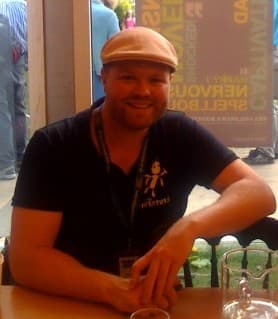
Alexander Gordon Smith is the author of the acclaimed "Lockdown" series, including "Lockdown," "Execution," and "Death Sentence." Known for his gripping young adult dystopian thrillers, Smith crafts fast-paced narratives with high stakes and compelling protagonists. His work often explores themes of survival, rebellion, and the fight for freedom in oppressive societies.
Similar books
- The Maze Runner
James Dashner
4.0 (1.1M) average on GoodreadsFantasyFeatures a dystopian world, a young protagonist fighting against an oppressive system, and a sense of constant danger.
- Gone
Michael Grant
4.2 (41k) average on GoodreadsThrillerExplores a world where children develop powers and are forced to survive in a dangerous, adult-less society.
- The Hunger Games
Suzanne Collins
4.3 (6.4M) average on GoodreadsFantasySuzanne Collins' The Hunger Games also explores themes of resistance, survival, and societal critique within a dystopian framework, much like Execution. However, The Hunger Games is often praised for its deeper exploration of trauma, moral ambiguity, and the psychological toll of violence on its protagonist, Katniss Everdeen (as discussed by researchers like Hintz & Tribunella, 2013). While Execution delivers thrilling action, Collins' work typically offers a more profound and critically acclaimed examination of the human cost of rebellion and the complexities of political power, providing richer character arcs and ethical dilemmas than are consistently present in Smith's conclusion.
- Angels & Demons
Dan Brown
3.9 (2.7M) average on GoodreadsThrillerA Harvard symbologist races through Rome's ancient sites, deciphering cryptic clues to unmask the Illuminati and stop a vengeful plot to destroy the Vatican with a stolen antimatter weapon.
- Gone Girl
Gillian Flynn
4.1 (2.3M) average on GoodreadsThrillerA wife's sudden disappearance on her fifth anniversary reveals a web of lies and psychological warfare, exposing the secrets within a seemingly perfect marriage.
- The Girl on the Train
Paula Hawkins
3.9 (2.1M) average on GoodreadsThrillerA woman’s fascination with a seemingly perfect couple she watches from her daily train commute leads her into a dark investigation when she witnesses something that shatters their idyllic image.





Enjoyed the summary?
A summary gives you the shape of the book. The book itself has the detail, the examples and the voice.
Find Execution on AmazonAs an Amazon Associate, BookBrief earns from qualifying purchases. How we're funded