

Synopsis
Covers the whole plot, including the ending.
- Difficulty
- Medium
- Pacing
- Moderate
- Mood
- Dark, Atmospheric, Suspenseful, Melancholy
- Read it if
- You enjoy gritty, character-driven police procedurals with strong social commentary and a melancholic detective.
- Skip it if
- You prefer fast-paced thrillers without much introspection or find dark themes and slow burns unappealing.
Faceless Killers Plot Summary
Covers the whole plot, including the ending.
The Brutal Discovery
Early one January morning in the quiet Scania countryside, farmer Yngve Holm makes a horrific discovery at the Lofa farm. He finds Johannes Lövgren bludgeoned to death and his wife, Maria Lövgren, barely clinging to life, tied to a kitchen chair. Before Maria succumbs to her injuries, she whispers a single, chilling word: "foreign." Inspector Kurt Wallander of the Ystad police station is assigned the case. His personal life is in disarray, with his wife Mona leaving him and his daughter Linda estranged. The brutal nature of the crime and Maria's dying utterance immediately ignite a wave of xenophobia in the community, fueled by media sensationalism and right-wing political groups, making Wallander's investigation tense from the outset.
Initial Investigation and Public Outcry
Wallander and his team, including Rydberg, Martinsson, and Hansson, begin their investigation at the Lofa farm. They find no forced entry, suggesting the victims knew their attackers or were surprised. The only physical evidence is a piece of string and a footprint. As news of Maria's dying word spreads, public opinion quickly turns against immigrants and asylum seekers, particularly those at a nearby refugee camp. Wallander, while privately empathetic to the plight of immigrants, must navigate the political pressure and the growing racial animosity, which threatens to overshadow the actual search for the killers. He is frustrated by the lack of concrete leads and the difficulty of separating fact from prejudice.
The Threat to Wallander's Team
The investigation takes a dangerous turn when Svedberg, a young police officer, is brutally attacked and beaten unconscious while investigating a lead related to the refugee camp. This incident further inflames public sentiment and puts the police force on edge. Wallander realizes the killers are not only ruthless but also willing to silence anyone who gets too close. The attack on Svedberg reminds Wallander of the personal risks involved in the case and intensifies his determination to find the culprits. He begins to suspect that the motive might be more complex than a simple robbery or hate crime, given the specific nature of the violence.
Political Interference and Media Scrutiny
The case attracts national attention, with politicians and media outlets weighing in on the 'immigrant crime' narrative. Wallander is summoned to meetings where he's pressured to declare the killers foreign, despite lacking concrete evidence. He resists these attempts to politicize the investigation, insisting on following the facts. The media, particularly the tabloid press, sensationalizes every detail, fanning the flames of xenophobia and making Wallander's job even harder. He feels increasingly isolated and burdened by the weight of public expectation and the moral imperative to conduct an unbiased investigation in a highly charged atmosphere.
A New Lead: The Bank Robbery
Rydberg, Wallander's experienced colleague, uncovers an old, unsolved bank robbery from several years prior. He notices a subtle but significant detail: the way the robbery was carried out, particularly the use of specific knotting techniques, resembles the way Maria Lövgren was tied. This new lead shifts the focus away from the immediate xenophobic theories and provides a more concrete direction for the investigation. Wallander, initially skeptical, begins to see the potential for a deeper, more calculated motive behind the Lövgren murders, suggesting a long-simmering revenge or an attempt to silence witnesses to a past crime.
Connecting the Dots
Wallander and his team examine the details of the old bank robbery. They discover that the Lövgrens, known for their reclusive nature, lived relatively close to the bank and might have been unwitting witnesses to the getaway. This theory gains traction as they find no other plausible motive for such extreme violence, especially given the Lövgrens' age and lack of obvious enemies. Wallander speculates that Maria's dying word, "foreign," might have been a deliberate misdirection by the killers, or a misunderstanding, to throw the police off track and exploit existing social tensions. The team focuses on identifying the bank robbers and their possible connection to the Lövgrens.
The Suspects Emerge
Through painstaking police work, including reviewing old case files and interviewing informants, Wallander's team identifies a group of local criminals known for their involvement in petty crimes and their association with more serious offenses. One name, in particular, stands out: a man named Alfred Harder, who was linked to the bank robbery. The team starts to build a profile of the suspects, realizing they are not foreign, but rather local Swedes who meticulously planned the Lövgren murders to eliminate any potential witnesses to their past crime. This revelation challenges the prevailing public narrative and deepens Wallander's frustration with the public's quick judgment.
The Confrontation and Capture
Acting on new intelligence, Wallander and his team locate Alfred Harder and his accomplices. A tense standoff ensues, culminating in a dramatic confrontation. The killers are apprehended after a brief struggle. During interrogation, they confess to the Lövgren murders, confirming that the motive was to silence the elderly couple who had witnessed their bank robbery years ago. They admit to using Maria's dying word to deliberately mislead the police and incite racial hatred, hoping to divert suspicion. The capture brings a sense of relief to Wallander, but also a deep weariness from the emotional toll of the case and the societal divisions it exposed.
The Aftermath and Public Reaction
The news of the killers' capture and their Swedish identity sends shockwaves through the community. The revelation that Maria's dying word was a deliberate ruse by the murderers, and not an accusation against foreigners, forces the public and the media to confront their hasty judgments and the dangers of xenophobia. Wallander faces the press, explaining the true motive and the deliberate manipulation. While the immediate crisis of the murders is resolved, the underlying social tensions and the ease with which prejudice can be exploited leave Wallander feeling disillusioned and pensive about the state of Swedish society. He reflects on the damage done by the baseless accusations.
Wallander's Personal Reflection
With the case closed, Wallander attempts to process the emotional and psychological toll it has taken. His personal life remains fractured, and the brutal nature of the crime, coupled with the societal hatred it exposed, leaves a lasting impression. He contemplates the fragility of justice, the pervasive nature of prejudice, and his own aging and increasing weariness. Despite solving the murders, Wallander feels no triumph, only a deep sense of melancholy and concern for the future of Sweden. He finds himself unable to fully reconcile the darkness he has witnessed, both in the criminals and in the broader community, leaving him with a deep sense of isolation and introspection.
Faceless Killers Characters
Inspector Kurt Wallander
Protagonist
A jaded, empathetic detective grappling with personal and societal turmoil.
Kurt Wallander is a middle-aged detective with the Ystad police, burdened by a crumbling personal life – his wife has left him, and his relationship with his daughter is strained. He is overweight, drinks too much, and struggles with insomnia. Despite his personal failings, Wallander is a tenacious and intuitive investigator, driven by a strong sense of justice and a deep-seated empathy for victims. He often feels isolated and overwhelmed by the darkness of the crimes he investigates and the societal issues they expose. He is a man of integrity, refusing to bend to political pressure or public hysteria.
Relationships: Mona Wallander (Estranged wife); Linda Wallander (Daughter, strained relationship); Rydberg (Older, trusted colleague and mentor); Martinsson (Younger, ambitious subordinate); Hansson (Colleague)
Johannes Lövgren
Victim
Elderly farmer brutally murdered in his home.
Johannes Lövgren is an elderly farmer who, along with his wife Maria, becomes the victim of a brutal home invasion and murder. He is bludgeoned to death. Little is revealed about his personality in life, as his role is primarily to be the catalyst for the central mystery. He and Maria are portrayed as reclusive, quiet individuals living a simple life in the Swedish countryside, making their violent deaths all the more shocking and seemingly inexplicable.
Relationships: Maria Lövgren (Wife, also murdered)
Maria Lövgren
Victim
Elderly farmer's wife, whose dying word ignites xenophobia.
Maria Lövgren is the wife of Johannes Lövgren, found brutally tortured and dying after the attack on their farm. Her final, whispered word, "foreign," becomes the central, misleading clue that fuels public xenophobia and complicates Wallander's investigation. Like her husband, she is presented as a quiet, elderly woman, making her violent end particularly tragic. Her role is crucial in setting the initial direction of the police inquiry and highlighting the dangers of prejudice.
Relationships: Johannes Lövgren (Husband, also murdered)
Rydberg
Supporting
Wallander's experienced and insightful senior colleague.
Rydberg is an older, more seasoned detective on Wallander's team. He serves as a mentor figure to Wallander, offering calm wisdom and a different perspective. His methodical approach and keen eye for detail are instrumental in uncovering the crucial link to the past bank robbery, which ultimately steers the investigation in the correct direction. Rydberg represents the quieter, more traditional side of police work, contrasting with Wallander's more emotionally driven style. He is a loyal and dependable presence for Wallander.
Relationships: Kurt Wallander (Colleague and trusted advisor)
Martinsson
Supporting
Younger, ambitious detective on Wallander's team.
Martinsson is a younger, more ambitious detective working under Wallander. He is eager to prove himself and sometimes struggles with Wallander's more melancholic and unconventional methods. Despite their differences, Martinsson is a competent and dedicated officer. He represents a newer generation of police officers, and his interactions with Wallander often highlight the generational gap in policing and societal attitudes. He is an integral part of the team, diligently following leads and assisting in the grunt work of the investigation.
Relationships: Kurt Wallander (Superior officer); Hansson (Colleague)
Alfred Harder
Antagonist
The primary perpetrator of the Lövgren murders.
Alfred Harder is one of the local Swedish criminals responsible for the brutal murders of Johannes and Maria Lövgren. He is revealed to be connected to an earlier bank robbery, and the Lövgrens were murdered to silence them as potential witnesses. Harder is portrayed as ruthless and cunning, willing to exploit societal prejudices by deliberately planting the "foreign" clue to mislead the police. He embodies the dark side of local criminality, demonstrating that not all threats come from outside the community.
Relationships: Lövgren couple (Victims of his crime)
Svedberg
Supporting/Mentioned
Young police officer attacked during the investigation.
Svedberg is a young police officer on Wallander's team who is brutally attacked and beaten while investigating a lead related to the refugee camp. His attack serves as a turning point, escalating the perceived danger of the investigation and further inflaming public sentiment. Although not a central character, his assault highlights the real risks faced by the police and the ruthlessness of the killers. He represents the vulnerability of those trying to uphold justice in a volatile environment.
Relationships: Kurt Wallander (Superior officer)
Yngve Holm
Mentioned
The farmer who discovers the murdered Lövgrens.
Yngve Holm is the local farmer who makes the horrifying discovery of Johannes and Maria Lövgren's bodies. He is the first person to alert the authorities, setting the entire investigation into motion. His role is brief but crucial as the initial witness to the crime scene. He represents the ordinary citizen whose life is suddenly impacted by extraordinary violence.
Relationships: Lövgren couple (Neighbors)
Faceless Killers Themes
Xenophobia and Prejudice
The novel powerfully explores the dangerous ease with which prejudice can take root and spread, particularly when fueled by fear and misinformation. Maria Lövgren's dying word, "foreign," immediately triggers a wave of anti-immigrant sentiment, amplified by media and political opportunism. Wallander constantly battles this tide of xenophobia, which threatens to derail the investigation and obscure the truth. The theme culminates in the revelation that the killers deliberately used this prejudice to mislead the police, highlighting the calculated manipulation of societal divides. This is evident in the public's immediate assumption of foreign perpetrators and the pressure on Wallander to confirm this bias.
“Foreigners. That’s what she said. Foreigners.”
The Decay of Swedish Society
Mankell uses the Lövgren murders and their aftermath to critique what he perceives as a decline in Swedish society, particularly the loss of traditional values and the rise of crime and social fragmentation. Wallander frequently reflects on the changing nature of Sweden, lamenting the increase in violence and the erosion of community trust. The novel suggests that the idyllic image of Sweden is cracking, revealing underlying tensions and a sense of moral decay. This is seen in Wallander's personal struggles mirroring societal ones, and the capacity for local Swedes to commit such brutal acts.
“He saw a society in the process of disintegrating, a new kind of violence, a new kind of cruelty.”
The Burden of Justice
The novel examines the immense personal and professional toll that seeking justice takes on those who pursue it, particularly Kurt Wallander. He is portrayed as a detective constantly battling exhaustion, self-doubt, and a deteriorating personal life, all made worse by the demands of his job. The case's brutality, coupled with the political and social pressures, weighs heavily on him. Even after solving the crime, Wallander experiences no triumph, only a deep sense of weariness and disillusionment, underscoring the idea that justice often comes at a high personal cost and doesn't always bring peace.
“He felt tired, profoundly tired, as if all the violence and hatred in the world had taken root inside him.”
Media Influence and Manipulation
The book critically examines the powerful and often detrimental role of the media in shaping public opinion and influencing criminal investigations. Tabloid newspapers sensationalize Maria Lövgren's dying word, igniting and fanning the flames of xenophobia without regard for the facts. This media frenzy creates immense pressure on Wallander and his team to conform to a predetermined narrative. The killers' deliberate use of the "foreign" clue is a direct manipulation of this media landscape, highlighting how easily public perception can be swayed and exploited for nefarious purposes, making the police's job infinitely harder.
“The headlines screamed, the radio blared. The word 'foreign' echoed like a death knell across the country.”
The Nature of Evil
Faceless Killers explores the unsettling nature of evil, demonstrating that it can originate not just from obvious external threats, but also from within a seemingly peaceful society. The revelation that the Lövgren murders were committed by local Swedes, rather than foreign perpetrators as initially assumed, challenges preconceived notions of who is capable of such brutality. The killers' calculated cruelty and their manipulation of social tensions reveal a chilling, 'faceless' evil that is both mundane and profoundly disturbing, lurking beneath the surface of everyday life. This forces Wallander to confront a darker side of his own countrymen.
“The evil was not foreign; it was here, among them, in their own backyard.”
Plot Devices & Literary Techniques
Red Herring
Maria Lövgren's dying word, "foreign," intentionally misleads the investigation.
The most prominent red herring in the novel is Maria Lövgren's whispered final word: "foreign." This single word immediately directs the police investigation and public opinion towards immigrant communities, fueling xenophobia. The killers deliberately planted this clue to divert suspicion from themselves. Wallander spends a significant portion of the investigation battling this preconceived notion, until the true motive (silencing witnesses to a past bank robbery) is uncovered, revealing the calculated deception. This device effectively highlights the theme of prejudice and the dangers of hasty judgment.
The Unreliable Clue
A clue that is ambiguous or intentionally misleading.
Similar to a red herring, but with an emphasis on the ambiguity, Maria's dying word acts as an unreliable clue. It isn't entirely false – the killers were 'foreign' to the Lövgrens' intimate circle – but it's presented in a context designed to be misinterpreted. This unreliability forces Wallander to constantly question assumptions and look beyond the obvious, reinforcing his methodical approach despite external pressures. It also underscores the manipulative nature of the antagonists and the vulnerability of victims to have their last words twisted.
Parallel Narrative (Wallander's Personal Life)
Wallander's personal struggles mirror the societal decay.
The novel interweaves the central murder investigation with the deteriorating state of Kurt Wallander's personal life – his wife leaving him, his strained relationship with his daughter, his unhealthy habits. This parallel narrative serves to deepen Wallander's character, making him more relatable and human. It also acts as a microcosm of the larger societal decay that the book explores, suggesting that personal fragmentation reflects broader social disintegration. His personal struggles amplify the emotional weight of the case and his weariness.
The Experienced Mentor
Rydberg's wisdom guides Wallander through the complex investigation.
Rydberg, Wallander's older and more experienced colleague, functions as an experienced mentor. His calm demeanor, meticulous attention to detail, and ability to recall past cases (like the old bank robbery) are crucial in providing the breakthrough Wallander needs. He offers a grounded counterpoint to Wallander's often emotional and intuitive approach, and his insights prevent the investigation from being completely consumed by the xenophobic narrative. Rydberg represents traditional police wisdom, a steady hand in a turbulent case.
Faceless Killers Quotes
“There are things you can't forgive. They just are. You have to live with them, and they will always be there.”
“He knew that the world was full of evil, but he also knew that there were people who fought against it.”
“The greatest evil is not to act when one can.”
“Sometimes the truth is so simple that you miss it completely.”
“He was tired of the darkness, but he knew he had to keep going.”
“The past always catches up with you, sooner or later.”
“It's easy to hate, much harder to understand.”
“Silence can be more terrifying than any scream.”
“Every secret has a price.”
“He felt like a man walking through a fog, never quite sure where he was going.”
“Justice is not always about punishment, but about understanding.”
“The world was not a logical place, and crime even less so.”
“He knew that sometimes you had to break the rules to do what was right.”
“The wind carried the smell of rain and something else, something indefinable, like old sorrow.”
Quiz
10 questions on the plot and the characters. Each answer comes with a short explanation.
Question 1
What is the initial clue the dying wife, Maria Lovgren, provides to the farmer regarding her attackers?
- A specific type of weapon
- The word "foreign"
- A description of their clothing
- The direction they fled
Show answer
B. The word "foreign" Before dying, Maria Lovgren utters the single word 'foreign,' which becomes the initial, albeit misleading, clue in the investigation.
Question 2
What is the name of the inspector leading the investigation into the Lovgren murders?
- Inspector Lindman
- Inspector Rydberg
- Inspector Kurt Wallander
- Inspector Stenwall
Show answer
C. Inspector Kurt Wallander Kurt Wallander is the protagonist and the lead detective in charge of the Lovgren murder investigation.
Question 3
What is a significant personal struggle Wallander is facing at the beginning of the novel?
- He is struggling with a gambling addiction.
- His family life is falling apart, and he is gaining weight.
- He is contemplating early retirement.
- He is dealing with a serious illness.
Show answer
B. His family life is falling apart, and he is gaining weight. The book explicitly states that Wallander's personal life is in a shambles, his family is falling apart, he's gaining weight, and he drinks too much.
Question 4
What social issue does the initial 'foreign' clue inadvertently ignite or exacerbate within the community?
- An economic recession
- A wave of violent xenophobia
- Political corruption
- Religious fundamentalism
Show answer
B. A wave of violent xenophobia The word 'foreign' uttered by the dying woman quickly leads to a surge of anti-immigrant sentiment and violence in the community, a central theme of the novel.
Question 5
What is the primary method used to kill Nils Lovgren?
- He was shot with a handgun.
- He was stabbed multiple times.
- He was bludgeoned to death.
- He was poisoned.
Show answer
C. He was bludgeoned to death. The description of the crime explicitly states that Nils Lovgren was 'bludgeoned to death.'
Question 6
Which of these is NOT a characteristic typically associated with Wallander's investigative style?
- Tenacious
- Levelheaded
- Impulsive and reckless
- Methodical
Show answer
C. Impulsive and reckless The description highlights Wallander as 'tenacious and levelheaded in his sleuthing,' which contradicts 'impulsive and reckless.'
Question 7
What is the name of the farmer who discovers the Lovgren murders?
- Sven Persson
- Gustav Nilsson
- Nils Lovgren (the victim)
- Yngve Holm
Show answer
D. Yngve Holm Yngve Holm is the farmer who discovers the brutal attack on his neighbors, the Lovgrens.
Question 8
What is the ultimate, non-xenophobic motive behind the Lovgren murders, as uncovered by Wallander?
- A dispute over land ownership
- Revenge for an old family feud
- Financial gain through a convoluted insurance fraud scheme involving Nils Lovgren's brother-in-law.
- A random act of violence by a transient group.
Show answer
C. Financial gain through a convoluted insurance fraud scheme involving Nils Lovgren's brother-in-law. The true motive is revealed to be financial, orchestrated by Maria Lovgren's brother, Per Åkesson, to collect on a life insurance policy taken out on Nils Lovgren, which he had coerced Maria into signing. The 'foreign' clue was a deliberate misdirection.
Question 9
How does the novel explore the theme of justice in a society grappling with prejudice?
- By showing how prejudice always leads to a swift and just resolution of crimes.
- By demonstrating how initial prejudices can hinder and misdirect investigations, making justice harder to achieve.
- By suggesting that justice is irrelevant when societal tensions are high.
- By portraying the legal system as entirely immune to societal biases.
Show answer
B. By demonstrating how initial prejudices can hinder and misdirect investigations, making justice harder to achieve. The novel heavily emphasizes how the initial 'foreign' clue, amplified by existing societal prejudices, misdirects the investigation and fuels xenophobic violence, making it more challenging for Wallander to uncover the true culprits and serve justice.
Question 10
Who is ultimately revealed to be the true perpetrator of the Lovgren murders, specifically the one who physically carried out the attack?
- A group of undocumented immigrants.
- Per Åkesson, Maria Lovgren's brother, and his accomplice, a small-time criminal named Janne Persson.
- A rival farmer in a property dispute.
- A local right-wing extremist group.
Show answer
B. Per Åkesson, Maria Lovgren's brother, and his accomplice, a small-time criminal named Janne Persson. The investigation eventually reveals that Maria Lovgren's brother, Per Åkesson, orchestrated the murders for insurance money, and he hired Janne Persson to commit the actual violence.
Faceless Killers FAQ
What is the central crime that Inspector Wallander investigates in 'Faceless Killers'?
The central crime is the brutal murder of Johannes and Maria Lövgren, an elderly farming couple in Lunnarp. Johannes is bludgeoned to death, and Maria is tortured before dying, uttering the word 'foreign' as her last breath, which ignites a wave of xenophobia.
Who is Inspector Kurt Wallander and what is his personal state at the beginning of the novel?
Kurt Wallander is the protagonist, a detective in Ystad whose personal life is in disarray. His wife Mona has left him, his relationship with his daughter Linda is strained, he struggles with his weight and alcohol consumption, and he feels a deep sense of loneliness and professional dissatisfaction.
How does the 'foreign' clue impact the investigation and the wider community?
Maria Lövgren's dying word, 'foreign,' is leaked to the press, leading to an immediate and violent surge of xenophobia and anti-immigrant sentiment across Sweden. This complicates Wallander's investigation by creating social unrest and diverting attention from other potential leads, while also putting pressure on the police to find 'foreign' perpetrators.
What is the ultimate resolution of the Lövgren murders?
The murders are ultimately solved when Wallander deduces that the killers were Swedish, specifically two brothers, Jan and Mikael Lövgren, the victims' nephews. They committed the crime for inheritance money, and Maria's 'foreign' utterance was a desperate attempt to mislead the investigation and protect her family, not a literal accusation.
What role does the character of Sten Torstensson play in the narrative?
Sten Torstensson is a local right-wing extremist who capitalizes on the 'foreign' clue to incite racial hatred and organize anti-immigrant demonstrations. His actions exacerbate the social tensions and make Wallander's job more difficult by fueling prejudice and diverting public attention from the real motives of the crime.
What is the significance of the detail that Johannes Lövgren was a wealthy man?
Johannes Lövgren's considerable wealth, particularly his savings and valuable property, serves as the primary motive for the murders. This detail is initially overlooked or downplayed amid the xenophobic fervor, but it becomes crucial for Wallander as he shifts his focus from racial motives to financial gain within the family.
How does the police force's initial response to the 'foreign' clue reflect broader societal issues?
The police force, despite Wallander's skepticism, initially pursues the 'foreign' lead with considerable resources, reflecting a societal readiness to blame immigrants for crimes. This highlights the deep-seated prejudices and the pressure on law enforcement to conform to public opinion, even at the expense of thorough investigation.
What is the subtle implication of Maria Lövgren's 'foreign' utterance beyond its literal interpretation?
Maria Lövgren's dying word 'foreign' is a complex misdirection. It wasn't an accusation of a non-Swedish perpetrator but a desperate, albeit misguided, attempt to protect her murderous nephews by sending the police down a false path, thus showing her deep loyalty and perhaps fear of her own family members.
How does Wallander's relationship with his father, who is an artist, subtly influence his character?
Wallander's father, an eccentric artist who paints the same landscape repeatedly, represents a kind of stubborn individuality and a disconnect from conventional life. This background subtly informs Wallander's own often solitary nature, his struggle with personal relationships, and his sometimes unconventional approach to police work, seeking truth beyond obvious surfaces.
Discuss Wallander's internal conflict between his professional duty and his personal struggles.
Wallander is constantly battling his personal demons—loneliness, a failing marriage, a strained relationship with his daughter Linda, and an unhealthy lifestyle. This internal turmoil often makes him irritable and self-critical, yet it also fuels his empathy for victims and his tenacious pursuit of justice, often blurring the lines between his private pain and professional drive.
How does the novel explore the psychological impact of social prejudice on Wallander?
The rampant xenophobia and public outcry for 'foreign' culprits deeply frustrate and sicken Wallander. He is repulsed by the ease with which people embrace prejudice, and this societal ugliness adds to his personal disillusionment, making him question humanity and the effectiveness of his own work in a world so quick to judge.
What does Wallander's recurring insomnia and fatigue signify about his character?
Wallander's chronic insomnia and fatigue are symptomatic of his deep-seated anxiety, stress, and inability to 'switch off' from the horrors of his work and his personal problems. They signify his profound weariness and the heavy psychological toll that his profession and personal life exact on him, making him a perpetually burdened character.
To what extent is 'Faceless Killers' a critique of Swedish society in the late 20th century?
'Faceless Killers' offers a sharp critique of Sweden's societal underbelly, particularly its latent xenophobia and the ease with which prejudice can be ignited and exploited. It exposes the fragility of social harmony, the dangers of media sensationalism, and the challenges faced by a welfare state grappling with changing demographics and hidden resentments.
How does the novel challenge the reader's assumptions about justice and truth?
The novel challenges assumptions by demonstrating how easily initial 'truths' (like the 'foreign' clue) can be misleading and how public opinion can derail a proper investigation. It suggests that justice is not always straightforward and that the real motives behind crimes can be far more mundane and human (like greed) than sensationalist narratives suggest, forcing readers to question their own biases.
Discuss the significance of the title 'Faceless Killers' in relation to the plot.
The title 'Faceless Killers' initially refers to the unknown perpetrators of the Lövgren murders, who are presumed to be 'foreign' and thus 'faceless' to the prejudiced public. However, it ultimately takes on a deeper meaning, suggesting that the true 'faceless killers' are not just the individual perpetrators but also the insidious forces of xenophobia and societal prejudice that allow such hatred to flourish, making the 'other' an anonymous enemy.
How does Wallander's isolation contribute to his effectiveness as a detective?
Wallander's isolation, while personally painful, often allows him to maintain an objective distance from prevailing opinions and emotional pressures. His detachment enables him to see beyond the obvious, to question assumptions, and to pursue uncomfortable truths, which is crucial in solving a case clouded by public hysteria and prejudice.
What is the lasting impact of the Lövgren case on Wallander?
The Lövgren case leaves a profound and lasting impact on Wallander, deepening his cynicism about humanity and society. The experience of witnessing such brutal violence, coupled with the widespread xenophobia, solidifies his sense of disillusionment and contributes to his ongoing struggles with loneliness and the existential weight of his profession.
How does the ending of the novel, despite solving the crime, maintain a sense of unease or melancholy?
Despite the crime being solved, the ending of 'Faceless Killers' is far from triumphant. The revelation of Swedish perpetrators, the lingering social tensions, and Wallander's continued personal struggles leave a sense of melancholy. It underscores that justice doesn't always bring peace, and societal problems persist beyond individual case closures, reflecting the grim realism of the series.
About the author
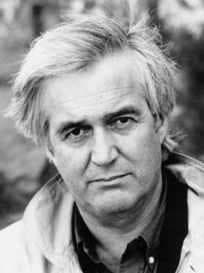
Henning Georg Mankell was a Swedish crime writer, children's author, and dramatist, best known for a series of mystery novels starring his most noted creation, Inspector Kurt Wallander. He also wrote a number of plays and screenplays for television.
Similar books
- Angels & Demons
Dan Brown
3.9 (2.7M) average on GoodreadsThrillerA Harvard symbologist races through Rome's ancient sites, deciphering cryptic clues to unmask the Illuminati and stop a vengeful plot to destroy the Vatican with a stolen antimatter weapon.
- Gone Girl
Gillian Flynn
4.1 (2.3M) average on GoodreadsThrillerA wife's sudden disappearance on her fifth anniversary reveals a web of lies and psychological warfare, exposing the secrets within a seemingly perfect marriage.
- The Girl on the Train
Paula Hawkins
3.9 (2.1M) average on GoodreadsThrillerA woman’s fascination with a seemingly perfect couple she watches from her daily train commute leads her into a dark investigation when she witnesses something that shatters their idyllic image.
- The Da Vinci Code
Dan Brown
3.9 (1.9M) average on GoodreadsThrillerA symbologist and a cryptologist race through European landmarks, deciphering ancient codes and uncovering a conspiracy that could rewrite the foundations of Christianity.
- The Guest List
Lucy Foley
3.8 (1.3M) average on GoodreadsThrillerOn a remote Irish island, a glamorous wedding descends into a deadly whodunnit when a guest is found murdered, trapping everyone with their secrets as a storm rages.
- The Shining
Stephen King
4.2 (1.1M) average on GoodreadsThrillerA recovering alcoholic accepts a caretaking job at a snow-bound, haunted hotel, where his son's psychic abilities reveal the sinister forces that drive him to madness and terrorize his family.






Enjoyed the summary?
A summary gives you the shape of the book. The book itself has the detail, the examples and the voice.
Find Faceless Killers on AmazonAs an Amazon Associate, BookBrief earns from qualifying purchases. How we're funded