

Core Idea
- Difficulty
- Medium
- Read it if
- You are fascinated by true crime narratives that delve deeply into forensic evidence, psychological analysis of perpetrators, and the intricate workings of the American legal system, particularly when a seemingly upstanding individual is accused of horrific crimes.
- Skip it if
- You prefer fictional thrillers over non-fiction true crime, are sensitive to graphic descriptions of violence and crime scenes, or are looking for a quick, light read.
Key Takeaways from Fatal Vision
The Allure of the Golden Boy
How outward perfection can mask profound internal darkness.
Jeffrey MacDonald presented an image of the ideal American male: intelligent, handsome, a Princeton graduate, and a successful physician with a beautiful family. This carefully built facade made his alleged crimes shocking and difficult for many to accept. McGinniss breaks down this image, showing the flaws and contradictions that pointed to a more sinister reality. The book suggests that the very perfection of MacDonald's public persona acted as a psychological shield, making it harder for those around him, and even the initial investigators, to believe he could commit such brutality. This takeaway explores how societal expectations of success and normalcy can hide underlying pathologies, especially when the perpetrator fits those ideals.
“He was a golden boy, destined to have it all, yet beneath the surface lay a capacity for unthinkable violence.”
In the book: MacDonald's background as a Green Beret captain, his medical degree, and his seemingly idyllic family life, contrasted sharply with the gruesome crime scene photos and the prosecution's narrative of a man driven by rage and possibly drugs.
Try this: Be wary of judging individuals solely on their public image or perceived success. Cultivate critical thinking and look beyond superficial appearances, especially when confronted with conflicting evidence, to avoid being swayed by charisma or status.
Related ideas: golden-boy-syndrome, psychological-facade, perception-vs-reality
The Unreliable Narrator
The challenge of discerning truth when the primary source is deeply compromised.
A main idea of 'Fatal Vision' is Jeffrey MacDonald's unreliability as a narrator of his own story. From the moment he reported the murders, his account of events was inconsistent, contradictory, and often self-serving. McGinniss effectively highlights these differences, making the reader constantly question MacDonald's credibility. This takeaway emphasizes the difficulty in criminal investigations and journalistic work when the main witness or subject is either deliberately misleading or genuinely mistaken. The book illustrates how a suspect's changing story can be both important evidence against them and a significant obstacle for investigators trying to find the truth. It shows the importance of corroborating evidence over testimony alone.
“MacDonald's account of the murders shifted and evolved, a testament to his capacity for self-deception or calculated manipulation.”
In the book: MacDonald's initial account of 'hippies' invading his home, contrasted with the lack of forced entry, the specific details of the wounds, and the later prosecution's theory of a domestic dispute escalating into violence.
Try this: When evaluating claims, especially in high-stakes situations, scrutinize the consistency of the narrative. Look for corroborating evidence from independent sources rather than relying solely on a single, potentially biased, account. Be aware of the psychological phenomenon of confabulation or deliberate deception.
Related ideas: unreliable-witness, narrative-inconsistency, truth-discernment
The Power of Forensic Detail
How meticulous scientific investigation can unravel complex crimes.
Despite MacDonald's persistent denials and the initial mistakes by military investigators, the case was ultimately built on solid forensic evidence. McGinniss focuses on the detailed analysis of blood spatter, fiber evidence, and weapon analysis, showing how these scientific findings systematically disproved MacDonald's 'hippie' invasion story. This takeaway shows the critical role of forensic science in modern criminal justice, demonstrating how seemingly minor details—a specific type of fiber, the pattern of a bloodstain—can collectively create a clear picture of events. It shows that while human testimony can be flawed, physical evidence, when interpreted correctly, often provides an objective truth.
“The physical evidence, painstakingly collected and analyzed, told a story that MacDonald's words could not refute.”
In the book: The discovery of a pajama top fragment under one of the children's bodies, matching MacDonald's, which he claimed was used to staunch his own wounds; the absence of fibers from the 'hippies' clothing; the specific tools used for the killings found within the home.
Try this: Appreciate the scientific method and its application in solving complex problems. In any investigative scenario, prioritize objective, verifiable data over subjective accounts. Understand that 'small' details can often hold the key to understanding a larger truth.
Related ideas: forensic-science, physical-evidence, crime-scene-analysis
The Burden of Proof and Reasonable Doubt
Navigating the legal tightrope of conviction in the absence of a confession.
The MacDonald case is a study in the legal principles of burden of proof and reasonable doubt, particularly in a case without a direct witness or confession. McGinniss illustrates the difficult process the prosecution faced in building a narrative solely from circumstantial and forensic evidence, aiming to rule out every other possible explanation. This takeaway highlights the immense pressure on the legal system to achieve justice while protecting the rights of the accused. It shows how a conviction can be secured through a careful collection of facts that, when seen together, lead to a clear conclusion of guilt, even when the defendant maintains innocence. The book makes the reader weigh the evidence and consider what 'reasonable doubt' means to them.
“The prosecution's challenge was to weave a tapestry of circumstantial evidence so compelling that no reasonable doubt could remain.”
In the book: The prosecution's methodical presentation of the timeline of events, the physical impossibility of MacDonald's story given the crime scene, and the expert testimonies that linked MacDonald directly to the murders.
Try this: When evaluating legal cases or making critical decisions, understand the difference between 'possible' and 'probable.' Demand a high standard of evidence and critically assess whether alternative explanations are truly 'reasonable' or merely speculative.
Related ideas: burden-of-proof, reasonable-doubt, circumstantial-evidence
The Ethics of True Crime Reporting
The complex relationship between author and subject, and its impact on objectivity.
'Fatal Vision' became famous for its content and for the controversy surrounding McGinniss's relationship with MacDonald. McGinniss spent years with MacDonald, gaining his trust under the belief that he was writing a book that might clear his name, only to conclude that MacDonald was guilty. This ethical dilemma raises significant questions about journalistic integrity, the manipulation of subjects, and the tension between empathy and objectivity in true crime. This takeaway explores the moral challenges faced by authors who immerse themselves in the lives of controversial figures, and the potential for both deep insight and deep betrayal. It makes readers consider the human cost of such close involvement and the responsibilities of those who report on these stories.
“To truly understand the heart of darkness, one must sometimes walk alongside the devil, a perilous journey for any observer.”
In the book: McGinniss's initial agreement with MacDonald, the letters exchanged, and the subsequent lawsuit filed by MacDonald against McGinniss for fraud after the book's publication revealed his guilt.
Try this: When consuming true crime or biographical narratives, be aware of the author's potential biases, access to information, and the nature of their relationship with the subject. Critically evaluate the author's methodology and consider the ethical implications of their reporting choices. Recognize that even well-intentioned reporting can have unforeseen consequences.
Related ideas: journalistic-ethics, true-crime-controversy, author-subject-relationship
The Labyrinth of the Legal System
The agonizingly slow and often flawed path to justice.
The MacDonald case continued for years, marked by many appeals, reversals, and procedural complexities that highlight the often-frustrating nature of the American legal system. McGinniss details the initial flawed military investigation, the long civilian investigation, and the decades of legal battles that followed MacDonald's conviction. This takeaway emphasizes that justice is rarely a simple process; it can be delayed, sidetracked by technicalities, and influenced by human error or strategic moves. The book is a clear reminder of the resilience needed by victims' families and prosecutors, and the inherent imperfections within a system designed to protect both the innocent and the guilty until proven otherwise.
“Justice, in this case, was not swift, nor was it always clear, but a tortuous path paved with appeals and procedural battles.”
In the book: The initial military Article 32 hearing, the subsequent grand jury indictment, the trial itself, and the extensive post-conviction appeals process, including a Supreme Court review.
Try this: Develop patience and a nuanced understanding of legal processes. Recognize that the pursuit of justice can be a long and arduous journey, and that procedural delays do not necessarily equate to injustice, but rather reflect the system's safeguards and complexities.
Related ideas: legal-process, criminal-justice-system, appeals-process
The Enduring Mystery of Motivation
Unpacking the 'why' behind unthinkable acts, even when the 'who' is known.
While 'Fatal Vision' provides a compelling case for Jeffrey MacDonald's guilt, it never fully answers the unsettling question of his motivation. Was it drug-induced rage, a psychotic break, or a deeply hidden pathology? McGinniss explores various theories but ultimately leaves the reader with a profound sense of the unknowable when it comes to the darkest parts of the human mind. This takeaway reflects on the limits of even the most thorough investigations in fully explaining the 'why' behind extreme violence. It suggests that some acts are so depraved, their origins may defy complete explanation, leaving an unsettling void that continues to intrigue and disturb. The book offers no easy answers, but rather a chilling contemplation of human evil.
“Even after conviction, the chilling question of 'why' can haunt us, a void that facts alone cannot always fill.”
In the book: The prosecution's theories about MacDonald's drug use and marital strife, contrasted with MacDonald's steadfast denial and lack of a clear, universally accepted motive beyond the immediate incident.
Try this: Accept that not all questions have clear answers, especially concerning human motivation for extreme acts. Focus on understanding behaviors and consequences, rather than getting lost in an endless quest for definitive psychological 'whys' that may never be fully revealed.
Related ideas: psychological-motivation, human-evil, unsolvable-mystery
The Echoes of Trauma
The devastating and long-lasting impact of violence on families and communities.
Beyond the legal drama and psychological analysis, 'Fatal Vision' is a poignant reminder of the lasting trauma caused by such terrible crimes. McGinniss touches on the devastating impact on the families involved—Colette and Kristen's grandparents, the community, and even the investigators haunted by the images and details. This takeaway emphasizes that while the focus often stays on the perpetrator and the legal process, the true cost of violence is paid by those left behind. It highlights the long-term psychological and emotional scars that are hard to heal, showing the deep human tragedy in such events. The book, in its stark depiction, shows the destructive power of violence.
“The ripples of this unspeakable act extended far beyond the immediate victims, scarring lives for generations.”
In the book: The detailed accounts of Colette's parents' unwavering belief in MacDonald's guilt and their decades-long fight for justice, and the emotional toll described by various individuals involved in the case.
Try this: Cultivate empathy for victims and their families, understanding that healing from trauma is a lifelong process. Recognize the broader societal impact of violence and support initiatives that address its root causes and provide support for those affected.
Related ideas: victim-trauma, familial-grief, societal-impact-of-crime
Fatal Vision Quotes
“He seemed to be a man who had everything, yet somewhere, deep inside, something was terribly wrong.”
“The truth is often not what we want it to be, or what we expect.”
“Sometimes, the most ordinary people are capable of the most extraordinary evil.”
“The mind, when it breaks, can be a terrifying and unpredictable place.”
“He was a man who lived a carefully constructed lie, and when it began to unravel, the consequences were devastating.”
“The search for justice can be a long and arduous journey, often filled with more questions than answers.”
“Memory is a tricky thing; it can betray us, or it can hold the key to understanding.”
“He presented a polished, confident exterior, but beneath it, there was a void.”
“The most compelling stories are often those that expose the dark underbelly of human nature.”
“To truly understand a crime, one must attempt to understand the criminal, however unsettling that may be.”
“The threads of a lie are woven tightly, but given enough time and scrutiny, they will always begin to fray.”
“He was a man obsessed with control, and when he lost it, the results were catastrophic.”
“The courtroom is a stage where narratives collide, and the most convincing one often prevails, regardless of absolute truth.”
“Sometimes, the most chilling aspect of a crime is not the act itself, but the cold calculation behind it.”
Quiz
10 questions on the main ideas. Each answer comes with a short explanation.
Question 1
What was the initial alibi Dr. Jeffrey MacDonald provided for the murders of his family?
- He claimed a drug dealer he owed money to broke in.
- He stated that four intruders, described as 'hippies,' attacked his family.
- He said his wife had a psychotic break and killed the children.
- He reported a home invasion by a disgruntled former patient.
Show answer
B. He stated that four intruders, described as 'hippies,' attacked his family. MacDonald consistently maintained that four intruders, whom he described as 'hippies' (three men and one woman), broke into their home and committed the murders, attacking him as well.
Question 2
Which of the following pieces of evidence was crucial in undermining MacDonald's alibi regarding the intruders?
- The lack of forced entry into the apartment.
- The discovery of a bloody ice pick that matched wounds.
- The absence of foreign fingerprints or DNA at the scene, despite MacDonald's claims of multiple intruders.
- Eyewitness testimony from a neighbor who saw MacDonald arguing with his wife.
Show answer
C. The absence of foreign fingerprints or DNA at the scene, despite MacDonald's claims of multiple intruders. A significant point against MacDonald's story was the lack of forensic evidence (like foreign fingerprints or blood) that would support the presence of multiple intruders in the small apartment, especially given the violent nature of the alleged attack.
Question 3
What was the primary motive, according to the prosecution, for Jeffrey MacDonald to murder his family?
- Financial difficulties and an impending divorce.
- His desire to escape his family responsibilities and pursue a more hedonistic lifestyle, possibly fueled by drug use.
- A severe psychotic break brought on by stress from his military service.
- Revenge against his wife for an alleged affair.
Show answer
B. His desire to escape his family responsibilities and pursue a more hedonistic lifestyle, possibly fueled by drug use. The prosecution argued that MacDonald, feeling trapped by his family and desiring a life of greater freedom and indulgence, snapped and murdered them. His perceived narcissism and lack of genuine grief were also highlighted.
Question 4
How did Joe McGinniss, the author, initially gain access to Jeffrey MacDonald for the book?
- Through a direct request from the prosecution to document the case.
- MacDonald's defense team invited McGinniss to write a book, believing it would clear his name.
- McGinniss was assigned the story by a major newspaper.
- He attended the trial as an independent journalist and was approached by MacDonald.
Show answer
B. MacDonald's defense team invited McGinniss to write a book, believing it would clear his name. McGinniss was invited by MacDonald and his defense team to write a book that they hoped would portray MacDonald as an innocent man wrongly accused. This initial trust later led to MacDonald's profound sense of betrayal.
Question 5
What was the significance of the pajama top found at the crime scene?
- It contained the DNA of one of the alleged intruders.
- It was used to cover one of the children, suggesting a struggle.
- It had 48 holes, consistent with an ice pick, but no corresponding blood on the material, suggesting it was placed on Colette after she was stabbed.
- It was identified as belonging to one of the alleged female intruders.
Show answer
C. It had 48 holes, consistent with an ice pick, but no corresponding blood on the material, suggesting it was placed on Colette after she was stabbed. The pajama top, found draped over Colette, had 48 ice pick holes but very little blood on it, indicating it was likely placed on her after she had already been stabbed. This detail strongly contradicted MacDonald's account of a chaotic struggle and suggested staging.
Question 6
Which of the following best describes the psychological dynamic between Joe McGinniss and Jeffrey MacDonald during the writing of the book?
- A purely objective, professional relationship with clear boundaries.
- An evolving relationship that started with trust and intimacy, but ultimately ended in profound betrayal from MacDonald's perspective.
- A hostile and confrontational relationship from the outset.
- A relationship where McGinniss consistently doubted MacDonald's innocence from their first meeting.
Show answer
B. An evolving relationship that started with trust and intimacy, but ultimately ended in profound betrayal from MacDonald's perspective. McGinniss spent extensive time with MacDonald, gaining his trust and intimate access to his thoughts and feelings. MacDonald believed McGinniss would write a book proving his innocence. When the book portrayed him as guilty, MacDonald felt deeply betrayed, leading to a famous lawsuit.
Question 7
What was the eventual outcome of the trial against Jeffrey MacDonald?
- He was acquitted due to insufficient evidence.
- He was found guilty of the murders of his wife and two daughters.
- He pleaded guilty to a lesser charge of manslaughter.
- The jury was hung, resulting in a mistrial.
Show answer
B. He was found guilty of the murders of his wife and two daughters. After a lengthy trial, Jeffrey MacDonald was found guilty by a jury for the murders of his pregnant wife, Colette, and their two daughters, Kimberley and Kristen.
Question 8
The book explores the concept of 'narcissism' in relation to MacDonald. How did this trait reportedly manifest in his actions or demeanor?
- His excessive empathy for his victims and their suffering.
- His charming exterior, sense of entitlement, and apparent lack of genuine remorse or self-reflection regarding the tragedy.
- His constant self-deprecating humor and humility.
- His focus on the well-being of others above his own needs.
Show answer
B. His charming exterior, sense of entitlement, and apparent lack of genuine remorse or self-reflection regarding the tragedy. McGinniss portrays MacDonald as a deeply narcissistic individual, characterized by his magnetic personality, a strong sense of his own importance, and an inability to truly acknowledge his role in the tragedy or express genuine remorse, often focusing on how the events impacted him personally.
Question 9
What was one of the key arguments made by the defense regarding the 'intruder' theory that continued to be debated even after the conviction?
- The discovery of an unknown fingerprint belonging to a suspect in the hippie community.
- The testimony of Helena Stoeckley, a known drug user, who claimed to have been present during the murders.
- Physical evidence of forced entry into the apartment that was overlooked.
- A confession from another individual who later recanted.
Show answer
B. The testimony of Helena Stoeckley, a known drug user, who claimed to have been present during the murders. Helena Stoeckley, a drug-addicted woman, repeatedly made and retracted statements claiming she was part of the group of intruders. Her inconsistent testimony, though never fully accepted by the courts as credible, was a central point of contention for MacDonald's appeals.
Question 10
The 'Fatal Vision' title refers to more than just the literal crime. What broader 'fatal vision' might the book imply regarding MacDonald?
- His premonition of his own downfall and capture.
- His inability to see the love and value in his family, leading to their destruction.
- The mistaken initial judgment by investigators that he was innocent.
- The blinding rage that consumed him during the murders.
Show answer
B. His inability to see the love and value in his family, leading to their destruction. Beyond the literal horror, the title can be interpreted as MacDonald's 'fatal vision' – a distorted perception of his own life and desires that led him to destroy his family, unable to see or value what he had, ultimately leading to his own tragic fate.
Fatal Vision FAQ
What is 'Fatal Vision' about?
'Fatal Vision' by Joe McGinniss is the true crime story of Dr. Jeffrey MacDonald, a physician accused and convicted of murdering his pregnant wife and two young daughters. The book delves into the crime, the subsequent investigation, and MacDonald's life, exploring the psychological complexities of the case.
Is 'Fatal Vision' a true story?
Yes, 'Fatal Vision' is a non-fiction book based on the real-life murders of Colette MacDonald and her two daughters in 1970, and the subsequent trial and conviction of her husband, Dr. Jeffrey MacDonald. Joe McGinniss spent extensive time with MacDonald and the legal teams to chronicle the events.
Does Jeffrey MacDonald maintain his innocence?
Throughout the book and in subsequent years, Jeffrey MacDonald has vehemently maintained his innocence, claiming that intruders committed the murders. His consistent denial is a central theme explored in 'Fatal Vision' and has been a point of contention in the legal proceedings.
What is the 'Fatal Vision' controversy?
The controversy surrounding 'Fatal Vision' primarily stems from Jeffrey MacDonald's accusation that author Joe McGinniss betrayed his trust. MacDonald claimed McGinniss initially feigned belief in his innocence to gain access, only to later portray him as guilty in the book, leading to a legal dispute.
How did Joe McGinniss get access to Jeffrey MacDonald for the book?
Joe McGinniss gained extensive access to Jeffrey MacDonald by initially presenting himself as someone who believed in MacDonald's innocence or was at least open to it. This allowed him to spend significant time with MacDonald, his defense team, and gather material for the book, a point that later became central to their dispute.
What is the significance of the 'ice pick' in the MacDonald case?
The 'ice pick' is significant because it was one of the weapons allegedly used in the brutal murders, according to the prosecution's theory. Its presence and use, along with other items like a knife, were crucial in establishing the nature of the crime and the evidence presented against MacDonald.
How does 'Fatal Vision' differ from other true crime books about the MacDonald case?
'Fatal Vision' is unique due to Joe McGinniss's unparalleled access to Jeffrey MacDonald himself, offering an intimate, albeit controversial, look into his perspective and personality. While other books might focus more on the pure legal aspects or evidence, McGinniss delves deeply into the psychological portrait of MacDonald.
Are there any film or TV adaptations of 'Fatal Vision'?
Yes, 'Fatal Vision' was adapted into a two-part television miniseries in 1984, starring Karl Malden as Joe McGinniss and Gary Cole as Jeffrey MacDonald. The miniseries received critical acclaim and further brought the complex story to a wider audience.
What kind of psychological insights does 'Fatal Vision' offer?
'Fatal Vision' offers profound psychological insights by attempting to penetrate the psyche of Jeffrey MacDonald, a man who appeared to be an 'all-American' golden boy yet was accused of horrific crimes. It explores themes of narcissism, denial, and the potential for darkness beneath a polished exterior, leaving readers to grapple with the complexities of human nature.
About the author

Joe McGinniss was an American author and journalist known for his non-fiction works that often explore criminal cases and social issues. His notable book, "Fatal Vision," examines the controversial murder case of Jeffrey MacDonald. McGinniss's investigative approach and narrative style have made significant contributions to the genre of true crime literature.
Similar books
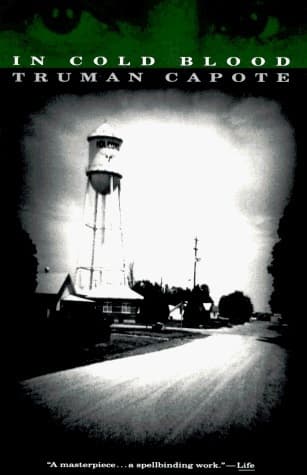
- In Cold Blood
Truman Capote
4.1 (529k) average on GoodreadsThrillerA seminal work of true crime, exploring a horrific murder and its aftermath with deep psychological insight and narrative skill.
- Angels & Demons
Dan Brown
3.9 (2.7M) average on GoodreadsThrillerA Harvard symbologist races through Rome's ancient sites, deciphering cryptic clues to unmask the Illuminati and stop a vengeful plot to destroy the Vatican with a stolen antimatter weapon.
- Gone Girl
Gillian Flynn
4.1 (2.3M) average on GoodreadsThrillerA wife's sudden disappearance on her fifth anniversary reveals a web of lies and psychological warfare, exposing the secrets within a seemingly perfect marriage.
- The Girl on the Train
Paula Hawkins
3.9 (2.1M) average on GoodreadsThrillerA woman’s fascination with a seemingly perfect couple she watches from her daily train commute leads her into a dark investigation when she witnesses something that shatters their idyllic image.
- The Da Vinci Code
Dan Brown
3.9 (1.9M) average on GoodreadsThrillerA symbologist and a cryptologist race through European landmarks, deciphering ancient codes and uncovering a conspiracy that could rewrite the foundations of Christianity.
- The Guest List
Lucy Foley
3.8 (1.3M) average on GoodreadsThrillerOn a remote Irish island, a glamorous wedding descends into a deadly whodunnit when a guest is found murdered, trapping everyone with their secrets as a storm rages.





Enjoyed the summary?
A summary gives you the shape of the book. The book itself has the detail, the examples and the voice.
Find Fatal Vision on AmazonAs an Amazon Associate, BookBrief earns from qualifying purchases. How we're funded