
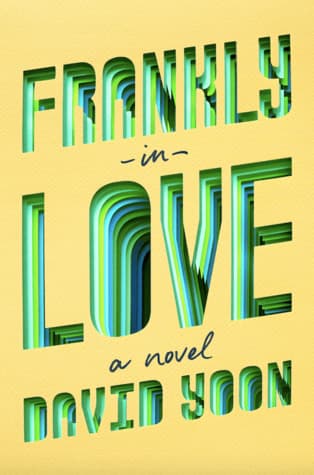
Synopsis
Covers the whole plot, including the ending.
- Difficulty
- Easy
- Pacing
- Moderate
- Mood
- Heartwarming, Humorous, Reflective, Thought-provoking
- Read it if
- You enjoy contemporary YA romance with a focus on cultural identity, family expectations, and coming-of-age themes, and appreciate a story with humor and heartfelt moments.
- Skip it if
- You prefer fantasy or sci-fi, or are looking for a romance without significant family drama and internal conflict.
Frankly in Love Plot Summary
Covers the whole plot, including the ending.
The Limbo Life and Parental Expectations
Frank Li, a high school senior in Southern California, describes 'Limbos' – Korean-American kids caught between their parents' traditional values and American culture. His parents, especially his mother, insist he only date Korean girls, even though they live in a diverse area. Frank spends time with his friends, Q and Joy. He secretly likes Brit Means, a white classmate, knowing his parents would never approve. This conflict sets up his struggles with identity and desire, as he feels pressured to follow his family's rules while wanting a different romantic life.
A Secret Relationship and a Desperate Plan
Despite his parents' rule to 'Date Korean,' Frank begins a secret relationship with Brit Means. Their hidden dates are full of stress and complicated cover-ups, making Frank feel nervous. Meanwhile, Frank's friend Joy Song is in a similar situation, secretly dating a non-Korean boy named Wu. Facing more pressure from their parents to find Korean partners, Frank and Joy come up with a plan: they will pretend to date each other. This fake relationship would make their parents happy, letting them continue their real, secret relationships without suspicion, and allowing them to attend family events as an 'approved' couple.
The Fake Relationship Begins
Frank and Joy start their plan, presenting themselves as a couple to their families. Their parents are delighted, giving them approval and inviting them to family gatherings. The fake dating, however, means Frank and Joy spend much more time together than they did as just friends. They go to Korean church, family dinners, and community events, playing their roles well. This constant closeness and shared secret start to create an unexpected bond between them, blurring the lines of their initial agreement and making Frank question his feelings for Brit and his connection with Joy.
The First Cracks and Parental Struggles
As the fake relationship with Joy continues, Frank's real relationship with Brit begins to suffer. The constant secrecy and Frank's divided attention affect Brit, who feels ignored and suspicious. At the same time, Frank's parents, especially his father, start showing signs of memory loss. This new family problem adds more stress for Frank, making it harder to keep his various deceptions going. His father's condition makes Frank see how fragile his family is and how much his parents love him, even as he resents their cultural expectations.
A Confession and a Revelation
The pressure becomes too much for Frank, and he tells Brit about his fake relationship with Joy. Hurt and feeling betrayed, Brit breaks up with him, leaving Frank sad. Soon after, Frank's parents find out about Joy's real boyfriend, Wu, leading to a big argument. Joy's parents also learn the truth, causing a strong reaction against both Joy and Frank. The detailed plan falls apart completely, revealing the lies and causing much emotional harm to everyone involved, especially Frank and Joy, whose friendship is tested by the consequences of their deception and the pain caused to their families.
The Aftermath and Family Reckoning
After breaking up with Brit and his and Joy's fake dating being exposed, Frank has to deal with the aftermath. He regrets hurting Brit and the trouble he caused. His father's health continues to worsen, eventually leading to an Alzheimer's diagnosis. This news changes Frank's priorities, forcing him to face the reality of his parents getting older and their vulnerability. He spends more time with his father, trying to connect and understand him better, valuing the moments they have left before the disease progresses, and thinking about his own identity within his family.
Reconciliation and New Understandings
After some time apart, Frank and Joy slowly start to mend their friendship. They deal with the hurt and confusion from their fake relationship and its end, finding common ground in their shared experiences as 'Limbos.' Through talks with his mother and seeing his father's illness, Frank begins to understand his parents' viewpoints better. He realizes their strictness was not just about control, but also about wanting to protect him and keep their cultural heritage in a new country. This new understanding helps him see their actions differently, bringing him a sense of peace and acceptance.
Joy's Departure and Frank's Growth
As graduation nears, Joy gets ready for college. Their renewed friendship has changed, with a deeper understanding and appreciation for each other, but without romance. Frank, having learned much about love, honesty, and family, feels more grown up. He thinks about his journey, recognizing the complexities of his Korean-American identity and the challenges of balancing tradition with personal wishes. He accepts the choices he has made and looks forward to his future, ready to define love and happiness on his own terms, outside his parents' strict rules.
Principal Figures
Frank Li
Protagonist
A Korean-American high school senior navigating cultural expectations and first love.
Frank Li is the witty and introspective narrator, a 'Limbo' caught between his traditional Korean parents' expectations and his American upbringing. He struggles with the 'Date Korean' rule, secretly falling for Brit Means. Frank is initially somewhat naive and prone to elaborate schemes, but his experiences force him to mature. His journey is one of self-discovery, learning about love, honesty, and the complexities of family and cultural identity. He's driven by a desire for independence and genuine connection, even if it means defying his parents.
Relationships: Joy Song (Best friend and fake girlfriend, later a deeper, platonic bond); Brit Means (Secret girlfriend, later ex-girlfriend); Q (Qui Nguyen) (Best friend); Mr. and Mrs. Li (Strict, traditional parents)
Joy Song
Supporting
Frank's best friend and co-conspirator in the fake-dating scheme.
Joy Song is Frank's sharp-witted and pragmatic best friend, also a 'Limbo' facing similar parental pressures regarding dating. She is Frank's partner in the fake-dating scheme, initially for practical reasons, but develops a complex bond with him. Joy is intelligent and independent, with a strong sense of self. Her role is crucial in challenging Frank's perceptions of love and friendship, and she serves as a mirror to his own struggles with cultural identity. She dates Wu in secret, highlighting the shared predicament with Frank.
Relationships: Frank Li (Best friend and fake boyfriend, later a deeper, platonic bond); Wu (Secret boyfriend); Mr. and Mrs. Song (Strict parents)
Brit Means
Supporting
Frank's secret white girlfriend, who becomes a catalyst for his internal conflict.
Brit Means is Frank's first serious girlfriend, a kind, intelligent, and understanding white girl. She represents Frank's desire for personal freedom and romantic choice outside of his parents' cultural expectations. Despite her patience, the secrecy and Frank's divided attention eventually strain their relationship. Her heartbreak upon discovering Frank's deception forces Frank to confront the consequences of his actions and the importance of honesty. Brit is a symbol of the 'American' side of Frank's identity that he initially tries to hide.
Relationships: Frank Li (Secret girlfriend, later ex-girlfriend)
Q (Qui Nguyen)
Supporting
Frank's loyal Vietnamese-American best friend and confidante.
Q, whose full name is Qui Nguyen, is Frank's other best friend and a fellow 'Limbo' from a Vietnamese-American background. He is often the voice of reason and support for Frank, offering advice and a listening ear without judgment. Q provides a contrast to Frank's more dramatic schemes, embodying a more balanced approach to navigating cultural identity and teenage life. He is a steady presence in Frank's life, representing the enduring power of friendship and unconditional acceptance. Q's relationship with his own family is more relaxed than Frank's.
Mr. Li (Frank's Father)
Supporting
Frank's traditional Korean father, who suffers from Alzheimer's disease.
Mr. Li is Frank's quiet, hardworking, and traditional Korean father. While initially seeming distant and strictly adhering to cultural norms, his character gains depth as he faces a devastating diagnosis of Alzheimer's disease. His illness becomes a major catalyst for Frank's emotional growth and understanding of his family's sacrifices and love. Through his father's decline, Frank learns to appreciate the unspoken bonds and the complex history that shapes his parents' lives and their expectations for him. His love for his family is deep, expressed through his actions.
Relationships: Frank Li (Son); Mrs. Li (Wife)
Mrs. Li (Frank's Mother)
Supporting
Frank's fiercely traditional and protective Korean mother.
Mrs. Li is Frank's strong-willed and deeply traditional Korean mother, the primary enforcer of the 'Date Korean' rule. Her character is initially presented as somewhat overbearing and rigid, but as the story progresses, her actions are revealed to stem from a profound love for her son and a desire to preserve her cultural heritage and ensure his happiness and stability within her understanding. Her resilience in the face of her husband's illness and her unwavering dedication to her family showcase her strength and the depth of her character, even if her methods are sometimes challenging for Frank.
Relationships: Frank Li (Son); Mr. Li (Husband)
Wu
Mentioned
Joy's secret non-Korean boyfriend.
Wu is Joy Song's secret boyfriend, a non-Korean boy whom she dates in defiance of her parents' rules. He is not a major character, but his existence mirrors Frank's relationship with Brit Means, highlighting the shared predicament and cultural rebellion faced by Frank and Joy. Wu's discovery by Joy's parents contributes to the unraveling of the fake-dating scheme, bringing about consequences for both families involved.
Relationships: Joy Song (Secret boyfriend)
Christian Li
Supporting
Frank's older, seemingly perfect brother.
Christian Li is Frank's older brother, who is already in college and appears to embody the 'perfect Korean son' ideal for their parents. He often serves as a benchmark against whom Frank feels he is being measured. While Christian is not a central figure in the plot, his existence highlights the pressure Frank feels to conform to his parents' expectations and the perceived success of an older sibling who has seemingly navigated the cultural divide more smoothly. He represents the path Frank is expected to follow.
Relationships: Frank Li (Brother); Mr. and Mrs. Li (Son)
Themes & Insights
Identity and Self-Discovery
The novel explores Frank's effort to define his identity as a 'Limbo' – a Korean-American caught between two cultures. He struggles with his parents' traditional expectations versus his own desires, especially in romance. His journey, with secret and fake relationships, makes him confront who he is, what he values, and how to combine his heritage with his American upbringing. This idea is central to Frank's story as he learns to handle his dual identity beyond just his parents' rules.
“I was a Limbo, a Korean-American kid who didn’t quite fit in with Koreans or Americans, and it was a lonely place to be.”
Family Expectations vs. Personal Desires
A main conflict in the book is the tension between Frank's parents' strict cultural expectations, particularly the 'Date Korean' rule, and Frank's desire to choose his own romantic partner. This conflict drives much of the plot, leading to Frank's deceptions. The theme also includes Joy's similar struggles. The story shows the sacrifices and misunderstandings that can come from this clash, but also the love and concern that motivate parental actions, even when they seem misguided.
“My parents’ one rule for dating: Date Korean. My one rule for dating: Date someone I actually like.”
The Nature of Love (Romantic and Familial)
The book explores different kinds of love: the excitement of first romance with Brit, the changing and complex bond with Joy, the deep but often unspoken love within his family, and the love for one's cultural heritage. Frank's fake relationship with Joy makes him question his understanding of love, moving from simple attraction to a deeper appreciation for companionship and honesty. His father's declining health further shows the lasting nature of family love and the importance of valuing those connections.
“Maybe love wasn’t about fireworks, or even about being head over heels. Maybe it was just about showing up.”
Honesty and Deception
Frank's situation is based on lies – first, hiding his relationship with Brit, then creating the fake relationship with Joy. This theme looks at the short-term benefits and long-term consequences of dishonesty, for Frank and everyone else. The discovery of his lies leads to heartbreak, strained friendships, and family conflict, making Frank learn the value of truth and the emotional cost of deception. It also explores how lies meant to be helpful can still cause great pain.
“Lying felt like a full-time job, and I was perpetually on the verge of getting fired.”
Cultural Preservation and Assimilation
The novel discusses the challenges immigrant families face in balancing cultural preservation with fitting into a new society. Frank's parents, especially his mother, strongly support dating within the Korean community to maintain their heritage. Frank, however, feels drawn to broader American culture. The story shows the generational gap in this area, illustrating both the good and bad aspects of tradition, and the struggle to find a personal path that respects one's roots without giving up individual happiness and choice.
“They wanted me to stay Korean, to marry a Korean girl, to have Korean kids, to keep the Korean bloodline going. But I was already American.”
Plot Devices & Literary Techniques
First-Person Narrative (Frank's Voice)
Provides intimate access to Frank's thoughts, humor, and internal conflicts.
The story is told entirely from Frank Li's perspective, allowing readers direct access to his witty observations, anxieties, and emotional journey. This narrative choice immerses the reader in Frank's 'Limbo' experience, making his struggles with identity, parental expectations, and first love deeply personal and relatable. His unique voice, filled with self-deprecating humor and profound insights, shapes the tone and emotional core of the novel, making his growth feel authentic and impactful as he navigates his complex world.
The 'Limbo' Metaphor
Symbolizes the in-between state of Korean-American identity.
Frank's coined term, 'Limbo,' serves as a central metaphor for the experience of being a second-generation Korean-American. It encapsulates the feeling of being caught between two cultures – not fully Korean in the traditional sense, yet not fully accepted as 'American' by his parents. This metaphor effectively communicates the internal conflict and sense of displacement felt by Frank and his friends, highlighting the challenges of navigating dual identities and the constant negotiation between heritage and contemporary life. It gives a name to their specific cultural experience.
Fake-Dating Trope
Drives the plot and explores the complexities of romantic and platonic love.
The classic 'fake-dating' trope is employed as the primary plot device to propel the narrative and create conflict. What begins as a strategic maneuver between Frank and Joy to appease their parents quickly evolves, leading to unexpected emotional intimacy, jealousy, and a blurring of lines between friendship and romance. This device allows the author to explore the nuances of their relationship, challenge Frank's preconceived notions of love, and ultimately expose the flaws in his initial understanding of both romantic attraction and genuine connection. It provides a framework for Frank's learning curve.
The 'Date Korean' Rule
Serves as the central external conflict and catalyst for Frank's deception.
The strict 'Date Korean' rule enforced by Frank's parents is more than just a parental dictate; it is the fundamental external conflict that drives Frank's actions and the entire plot. It symbolizes the immense pressure of cultural expectations and the desire for assimilation versus preservation. This rule directly leads to Frank's secret relationship with Brit and the elaborate fake-dating scheme with Joy, setting in motion the chain of events that forces Frank to confront his identity, his loyalties, and the true meaning of love and family. It represents the generational and cultural divide.
Frankly in Love Quotes
“Being in love with someone is like being in love with a country. You may not like all the people, or all the policies, but you love the country itself.”
“Sometimes you have to break a few rules to find yourself.”
“The hardest part about lying isn't the lying itself, it's remembering the lies.”
“It's funny how you can spend your whole life trying to be one thing, and then suddenly realize you're something else entirely.”
“Maybe love isn't about finding the perfect person, but about seeing an imperfect person perfectly.”
“The world isn't black and white, it's all shades of gray. And sometimes, those grays are beautiful.”
“You can't choose who you fall in love with, but you can choose how you love them.”
“There's a difference between what you want and what you need. And sometimes, what you need is exactly what you didn't know you wanted.”
“Family isn't always blood. It's the people who show up for you, no matter what.”
“Sometimes the bravest thing you can do is admit you're scared.”
“The most important stories are the ones we tell ourselves.”
“It's hard to know who you are when everyone else has already decided for you.”
“Love isn't a straight line. It's a messy, winding road with detours and dead ends, but it's always worth the journey.”
Quiz
10 questions on the plot and the characters. Each answer comes with a short explanation.
Question 1
What is Frank Li's self-coined term for Korean-American kids caught between traditional expectations and American upbringing?
- The In-Betweeners
- Limbos
- The Hybrids
- The Double-Ds
Show answer
B. Limbos Frank Li uses the term 'Limbos' to describe Korean-American teens like himself who feel caught in limbo between their parents' traditional Korean culture and their own Southern California lives.
Question 2
What is the primary rule Frank's parents have regarding his romantic relationships?
- Date someone from a good family.
- Date someone with good grades.
- Date Korean.
- Date someone who is well-mannered.
Show answer
C. Date Korean. Frank's parents are very traditional and insist that he only date other Korean individuals, which becomes a major source of conflict for him.
Question 3
Who is Brit Means?
- Frank's Korean cousin.
- Frank's childhood best friend.
- The white girl Frank falls for.
- Joy Song's secret crush.
Show answer
C. The white girl Frank falls for. Brit Means is the smart, beautiful white girl that Frank falls in love with, complicating his adherence to his parents' 'Date Korean' rule.
Question 4
Why do Frank and Joy Song decide to pretend to date each other?
- They genuinely fall for each other but want to keep it a secret.
- To make their respective crushes jealous.
- To gain freedom from their parents' strict dating rules.
- To win a school competition that requires a couple.
Show answer
C. To gain freedom from their parents' strict dating rules. Frank and Joy, both 'Limbos' facing similar parental pressures to 'Date Korean,' make a pact to fake-date each other. This allows them to appease their parents while secretly pursuing relationships with non-Korean partners.
Question 5
What significant event happens to Frank's family that deeply impacts him?
- His family decides to move back to Korea.
- His mother gets very sick.
- His father loses his job.
- His sister gets engaged.
Show answer
B. His mother gets very sick. Frank's mother falls seriously ill, which becomes a central plot point and forces Frank to confront his relationship with his family, culture, and responsibilities.
Question 6
How does Frank's understanding of love evolve throughout the novel?
- He realizes love is solely about passion and romance.
- He learns that love is less about grand gestures and more about shared experiences and deep connection, sometimes with unexpected people.
- He concludes that parental approval is the most important aspect of love.
- He decides love is too complicated and gives up on it.
Show answer
B. He learns that love is less about grand gestures and more about shared experiences and deep connection, sometimes with unexpected people. Through his relationships with Brit, Joy, and his family, Frank's initial, somewhat naive view of love as a simple romance with Brit transforms. He begins to understand the complexities of love, including its familial, platonic, and cultural dimensions, and that it can grow in unexpected places, particularly with Joy.
Question 7
What role does food play in Frank's family and cultural identity?
- It's a source of constant conflict and disagreement.
- It's largely ignored as his family prefers Western cuisine.
- It serves as a strong connection to his Korean heritage and a way for his parents to express love and culture.
- Frank uses food as a way to rebel against his parents' traditions.
Show answer
C. It serves as a strong connection to his Korean heritage and a way for his parents to express love and culture. Food, particularly Korean dishes prepared by his mother, is a significant element in the book. It represents comfort, tradition, cultural connection, and a tangible way his parents show care and maintain their heritage, especially when his mother becomes ill.
Question 8
How does Frank's relationship with Joy evolve beyond their initial fake-dating pact?
- They become bitter rivals after their plan falls apart.
- They remain strictly platonic friends, never developing deeper feelings.
- They develop genuine romantic feelings for each other, which complicates their original arrangement.
- They decide to date other people but remain best friends.
Show answer
C. They develop genuine romantic feelings for each other, which complicates their original arrangement. While their relationship starts as a pretense, Frank and Joy eventually develop real feelings for each other. The fake dating allows them to spend significant time together, leading to a deeper understanding and unexpected romance.
Question 9
The theme of 'identity' is central to the novel. How does Frank primarily struggle with his identity?
- He struggles with choosing between two different career paths.
- He struggles to reconcile his Korean heritage with his American upbringing and find where he truly belongs.
- He struggles with fitting in with his peers at school.
- He struggles to understand his own personality and interests.
Show answer
B. He struggles to reconcile his Korean heritage with his American upbringing and find where he truly belongs. Frank's struggle with identity is a core theme, encapsulated by his 'Limbo' definition. He grapples with the expectations of his traditional Korean parents versus his own desires and experiences as an American teenager, particularly in his romantic life.
Question 10
By the end of the book, what does Frank realize about his understanding of himself and love?
- He realizes his initial perception of love with Brit was the only true form of it.
- He understands that love is multifaceted, encompasses more than just romantic passion, and that he has grown significantly in understanding his own desires and cultural place.
- He decides that dating is too complicated and he prefers to be alone.
- He regrets all his decisions and wishes he had simply followed his parents' rules.
Show answer
B. He understands that love is multifaceted, encompasses more than just romantic passion, and that he has grown significantly in understanding his own desires and cultural place. The fake-dating scheme and his mother's illness force Frank to mature. He learns that love isn't always what he expected, that it involves sacrifice, family, friendship, and self-discovery. He gains a deeper understanding of himself, his cultural identity, and the various forms love can take.
Frankly in Love FAQ
What is Frankly in Love about?
Frankly in Love tells the story of Frank Li, a Korean-American high school senior navigating the cultural clash between his traditional immigrant parents' 'date Korean' rule and his own desire to date Brit Means, a white classmate he's fallen for. To circumvent his parents' strict expectations, Frank enters a fake-dating pact with fellow Korean-American 'Limbo' Joy Song, who is in a similar situation, leading him on a journey of self-discovery about love, identity, and family.
Why should I read Frankly in Love?
You should read Frankly in Love for its authentic and humorous exploration of identity, family expectations, and first love, particularly from the perspective of a second-generation immigrant. The book offers a fresh take on the fake-dating trope, delving into deeper themes of cultural assimilation, racial identity, and the complexities of filial duty, all while delivering a heartfelt and often funny romance.
What is the background/setting of Frankly in Love?
The story is set in modern-day Southern California, primarily focusing on Frank Li's life as a high school senior in a predominantly white suburb, contrasting with his traditional Korean immigrant home life. This setting highlights the 'Limbo' experience, where Frank and his friends are caught between their parents' heritage and the American culture they grew up in.
What are the most memorable quotes?
One memorable quote is Frank's definition of 'Limbo': 'Korean-American kids who find themselves caught between their parents’ traditional expectations and their own Southern California upbringing.' Another poignant line reflecting his internal conflict is 'Love is not a race. It's not a finish line. It's not a prize.'
What writing style does the author use?
David Yoon employs a contemporary, first-person narrative style, filled with Frank Li's witty, often self-deprecating observations and internal monologues. The language is accessible and engaging, blending humor with moments of profound introspection, making Frank's voice feel authentic and relatable to a young adult audience.
What minor details add significant meaning?
The subtle details about Frank's parents' 'Korean only' dating rule, extending even to the subtle disapproval of Korean-Americans who might be 'too Americanized,' highlight the intense pressure and specific nuances of their cultural expectations. Also, the recurring motif of Frank's fascination with astronomy and the vastness of the universe often serves as a metaphor for his search for meaning and his place in the world.
What are some subtle foreshadowing moments?
Early interactions between Frank and Joy, even during their 'fake' relationship, contain hints of genuine connection and understanding that go beyond their initial agreement, subtly foreshadowing the development of their true feelings. For instance, their shared frustrations and inside jokes often feel more authentic than his interactions with Brit, suggesting a deeper compatibility.
What unexpected character connections exist?
Beyond Frank and Joy's evolving relationship, an unexpected connection forms between Frank and his parents as he begins to understand their sacrifices and perspectives more deeply, particularly after his father's illness. This connection, born out of crisis, allows Frank to see them as more than just strict rule-givers.
What are unspoken character motivations?
Frank's unspoken motivation for initially pursuing Brit so intensely, beyond genuine affection, is a desire for independence and a subtle rebellion against his parents' restrictive rules. Similarly, his initial willingness to engage in the fake-dating scheme with Joy is driven by a strong desire to maintain familial peace while secretly living his own life.
What psychological complexities do characters exhibit?
Frank exhibits significant psychological complexity as he grapples with his dual identity as 'Limbo,' experiencing internal conflict between loyalty to his family's heritage and his personal desires. He struggles with guilt, confusion, and the pressure to conform, leading to moments of self-deception about his true feelings for both Brit and Joy.
What are the major emotional turning points?
A major emotional turning point is Frank's father's illness, which forces Frank to confront the fragility of life and the depth of his family's love, shifting his perspective on his parents' strictness. Another is the moment he realizes his feelings for Joy are genuine, challenging his preconceived notions of love and his own identity.
How do relationship dynamics evolve?
Frank's relationship with Brit evolves from an idealized, passionate first love to a more realistic, flawed connection that ultimately falters under pressure and lack of deep understanding. Crucially, his 'fake' relationship with Joy transforms into a deep, authentic emotional bond built on shared experiences, mutual respect, and genuine affection, becoming the true heart of the story.
Which parts remain ambiguous or open-ended?
While Frank's journey of self-discovery concludes with a clearer understanding of himself and his feelings for Joy, the long-term resolution of his relationship with his parents' traditional expectations remains somewhat open-ended. The book suggests a path toward greater understanding but doesn't offer a definitive 'solution' to the ongoing cultural tension.
What are controversial scenes or decisions?
One potentially controversial aspect is Frank's initial willingness to deceive his parents about his dating life, which some might view as disrespectful, while others might see it as a necessary act of self-preservation given his parents' rigid rules. His handling of the breakup with Brit, particularly his self-absorption, could also be seen as controversial.
Frankly in Love ending explained: how it ends & what it means
The book ends with Frank having broken up with Brit and realizing his deep, genuine love for Joy. He has also gained a profound understanding of his parents' struggles and sacrifices, leading to a more mature and empathetic perspective on his family and heritage. The ending signifies Frank's growth into a more self-aware individual who embraces his 'Limbo' identity, understanding that love, in all its forms, is complex and often found in unexpected places, beyond superficial judgments or expectations.
Similar books
- When Dimple Met Rishi
Sandhya Menon
3.7 (44k) average on GoodreadsYoung AdultExplores cultural expectations, arranged marriage themes, and finding love in a contemporary YA setting.
- The Sun Is Also a Star
Nicola Yoon
4.1 (184k) average on GoodreadsYoung AdultFeatures a whirlwind romance against a backdrop of immigration and cultural identity, with a strong focus on introspection.
- To All the Boys I've Loved Before
Jenny Han
4.2 (490k) average on GoodreadsYoung AdultInvolves a fake relationship that develops into real feelings, coupled with themes of family and sisterhood.
- American Born Chinese
Gene Luen Yang
3.9 (73k) average on GoodreadsFantasyWhile 'American Born Chinese' is a graphic novel and 'Frankly in Love' is prose, both critically examine the pressures of assimilation and the search for identity within the Chinese/Korean American experience. Yang uses allegory and magical realism to explore these themes, often with a more overt fantastical element. Yoon, on the other hand, grounds his narrative firmly in contemporary realism, using a more traditional YA romance framework to explore similar questions of belonging, self-acceptance, and challenging racial stereotypes. Yoon’s approach is less metaphorical and more directly addresses the lived experiences and internal conflicts of a modern Asian American teenager.
- Harry Potter and the Sorcerer's Stone
J.K. Rowling
4.5 (7M) average on GoodreadsFantasyRescued from a miserable life under the stairs, an orphaned boy discovers he's a wizard destined for a magical school, where he uncovers a dangerous secret tied to the dark wizard who murdered his parents.
- The Hunger Games
Suzanne Collins
4.3 (6.4M) average on GoodreadsFantasyIn a future where children fight to the death on live television, Katniss Everdeen volunteers for the arena, turning a death sentence into a fight for survival and a spark of rebellion.




Enjoyed the summary?
A summary gives you the shape of the book. The book itself has the detail, the examples and the voice.
Find Frankly in Love on AmazonAs an Amazon Associate, BookBrief earns from qualifying purchases. How we're funded