
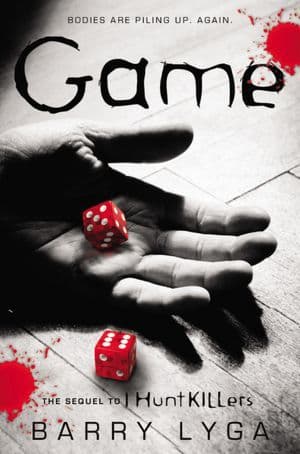
Synopsis
Covers the whole plot, including the ending.
- Difficulty
- Medium
- Pacing
- Fast
- Mood
- Dark, Suspenseful, Gritty, Intense
- Read it if
- You enjoy dark, psychological thrillers with a young adult protagonist and a serial killer theme.
- Skip it if
- You are sensitive to graphic descriptions of violence or prefer lighter, less intense mysteries.
Game Plot Summary
Covers the whole plot, including the ending.
The Hat-Dog Killer Strikes
The story begins with a gruesome discovery in New York City: a victim, brutally murdered and posed with a fedora and a hot dog, leading to the killer being called the "Hat-Dog Killer." Detective G. William "Gibbs" G. of the NYPD, overwhelmed by the killer's cleverness and the rising body count, recognizes the pattern of a true psychopath. Desperate for a lead, Gibbs contacts Sheriff G. William "Bill" G. of Lobo's Nod, a small town known for its past encounters with serial killers. Gibbs asks for help from Jazz Dent, the son of the notorious serial killer Billy Dent, believing Jazz's unique understanding of the criminal mind could be very useful. Jazz, at first hesitant to leave Lobo's Nod and his girlfriend, Connie, ultimately feels he must go to prove he's different from his father.
Arrival in the Big Apple
Jazz and Connie travel to New York City, where Detective Gibbs meets them. Jazz is immediately struck by the city's energy and how different it is from his quiet life in Lobo's Nod. Gibbs introduces them to the task force, where Jazz's reputation as Billy Dent's son precedes him, causing a mix of awe and apprehension among the officers. Jazz, despite his discomfort, quickly gets involved in the case files, looking at crime scene photos and victim profiles. Connie, while supportive, struggles with the intensity of the investigation and the constant reminder of Jazz's dark family history. Their initial look into the investigation shows the Hat-Dog Killer's careful planning and disturbing psychological games, leaving the NYPD puzzled.
A Killer's Game
Jazz starts using his unique perspective, shaped by his father's twisted lessons, on the Hat-Dog Killer's methods. He notices small details in the crime scenes and victim types that the police missed, suggesting the killer is playing a specific, personal game. The killer's taunting messages, left at the scenes, seem to be aimed not just at the police, but at someone specific, perhaps even Jazz himself. As Jazz goes deeper, he feels an unsettling connection to the killer's way of thinking, a connection he both fears and relies on. Connie observes Jazz's increasing intensity, worried about how the investigation is affecting him and if he might go too far.
Billy's Influence
With the investigation stuck, Jazz makes the difficult decision to visit his father, Billy Dent, in the secure mental institution where he is held. Jazz hopes that Billy's unmatched understanding of serial killers might offer a key clue, despite his deep disgust. Billy, always manipulative, enjoys Jazz's situation, offering fragmented, unsettling advice that is more riddle than direct help. He hints at a bigger game, one that involves more than just the current victims. Jazz leaves the encounter disturbed but with a new, if vague, direction for the investigation, further cementing the dark link between his present and his past.
The Clues Unravel
Following a cryptic hint from Billy and Jazz's own deductions, Jazz and Connie focus on the specific details of the victims' lives and the symbolism of the "hat-dog" motif. They discover that the victims, seemingly random, share a subtle connection to a particular institution or a specific historical event. This discovery leads them to a local museum and an obscure exhibit, where they uncover a pattern related to a series of historical assassinations and infamous figures. The Hat-Dog Killer, they realize, is not just killing; they are recreating historical killings, using their victims as stand-ins for historical figures, and the hot dog and fedora as grotesque, symbolic props.
The Killer's Identity Revealed
As Jazz and the team put together the historical connections, they begin to profile a killer obsessed with history, power, and the idea of leaving a lasting mark. The clues point towards someone with access to specific historical knowledge and a careful, almost theatrical, approach to murder. Through careful analysis of the killer's taunts and the recreated crime scenes, Jazz identifies a potential suspect: an unassuming history professor named Dr. Jonathan Kincaid, who has a hidden past and deep resentment. Kincaid's academic background and his seemingly ordinary life make him an unexpected, yet terrifyingly possible, candidate for the Hat-Dog Killer.
The Confrontation
Jazz, Connie, and Detective Gibbs track Dr. Kincaid to a remote, abandoned theater, which Kincaid has carefully transformed into a stage for his final, most elaborate recreation. Kincaid, revealed to be the Hat-Dog Killer, is a disturbed individual driven by a desire for historical notoriety. He has set up traps and psychological challenges, planning to capture and kill Jazz as the ultimate historical figure, the son of a serial killer. A tense cat-and-mouse game unfolds within the theater, with Kincaid taunting Jazz with details about his father and the nature of evil. Connie, using her quick thinking, manages to create a diversion, allowing Jazz to get closer to Kincaid.
The Final Act
Jazz confronts Kincaid, using his knowledge of his father's methods and Kincaid's own psychological weaknesses against him. Jazz understands Kincaid's need for recognition and his warped sense of historical importance. He manipulates Kincaid's ego, drawing him into a verbal battle that distracts from his physical threat. During their struggle, Jazz must use the darker parts of his own nature, the parts he inherited from Billy, to anticipate Kincaid's moves. Connie, meanwhile, alerts Gibbs to their exact location, and the police close in. The confrontation ends in a violent struggle, with Jazz narrowly subduing Kincaid, but not without getting hurt.
Aftermath and Reflection
Dr. Kincaid is arrested, and the Hat-Dog Killer's reign of terror ends. Jazz, though physically wounded, is more deeply affected by the psychological toll of the case. He struggles with the unsettling realization of how easily he could understand Kincaid's twisted logic, reinforcing his constant fear of becoming like his father. Connie offers steady support, helping Jazz process the trauma and reminding him of his inherent goodness. Detective Gibbs expresses deep gratitude for Jazz's help, acknowledging his unique and important contribution. The experience leaves Jazz deeply changed, forcing him to confront who he is and his ongoing struggle against the darkness within him.
Return to Lobo's Nod
Jazz and Connie return to Lobo's Nod, seeking the comfort and familiarity of their small town. The experience in New York, however, has changed them both. Jazz is more thoughtful, constantly questioning his own motives and the line between good and evil. He is more aware of how widespread darkness is, both in the world and possibly within himself. Connie, while relieved to be home, is also more aware of the dangers that constantly surround Jazz because of his family history. Their relationship, tested by the intensity of the case, is strengthened by their shared ordeal, but also burdened by the unspoken understanding of the challenges ahead for Jazz.
Principal Figures
Jazz Dent
Protagonist
The son of a notorious serial killer, constantly fighting his dark inheritance.
Jazz is a complex and deeply conflicted teenager, burdened by the legacy of his father, Billy Dent, one of the most infamous serial killers in history. He possesses an uncanny understanding of the criminal mind, a skill he both fears and utilizes. Driven by an intense desire to prove he is not like his father, Jazz is intelligent, observant, and often cynical, but also deeply caring towards those he loves. He struggles with his identity, constantly battling the dark impulses and knowledge ingrained in him by Billy.
Relationships: Connie (Girlfriend and emotional anchor, providing stability and love.); Billy Dent (Father and a source of both trauma and twisted knowledge, a constant psychological presence.); Detective Gibbs (Professional ally and mentor figure, who sees Jazz's potential.); Howie Gersten (Best friend (mentioned, but not present in NYC plot))
Connie
Supporting
Jazz's steadfast girlfriend, offering emotional support and grounding.
Connie is Jazz's girlfriend and his emotional anchor. She is perceptive, empathetic, and fiercely loyal, often seeing the good in Jazz even when he struggles to see it himself. While not directly involved in the investigative aspects, Connie provides crucial emotional support and a moral compass for Jazz. She is intelligent and resourceful, proving her worth in critical moments, but also struggles with the constant danger and psychological toll that Jazz's life entails. Her presence is a reminder of the normal life Jazz craves.
Relationships: Jazz Dent (Boyfriend, providing love, stability, and a connection to normalcy.)
Detective G. William "Gibbs" G.
Supporting
The determined NYPD detective who enlists Jazz's help.
Detective Gibbs is a seasoned NYPD detective, intelligent and dedicated, but overwhelmed by the Hat-Dog Killer's cunning. He is open-minded enough to seek unconventional help, recognizing Jazz's unique ability to understand the criminal mind. Gibbs is professional and initially skeptical of Jazz, but quickly comes to respect his insights. He acts as a guide and a liaison for Jazz within the police force, navigating the bureaucracy and the skepticism of his colleagues. He represents the traditional law enforcement approach, which is forced to adapt to a new kind of threat.
Relationships: Jazz Dent (Professional ally and mentor, relying on Jazz's unique perspective.); Sheriff G. William G. (Professional acquaintance, through whom Jazz is contacted.)
Billy Dent
Antagonist/Mentioned
Jazz's incarcerated serial killer father, a constant, dark influence.
Billy Dent is Jazz's father and a notorious serial killer, currently imprisoned in a secure mental institution. Though physically absent for most of the story, his presence looms large over Jazz's life, shaping his worldview and providing him with a terrifying, intimate understanding of evil. Billy is a master manipulator, brilliant and utterly devoid of empathy. He delights in psychological games and sees his son as an extension of himself, constantly trying to pull Jazz back into his dark world. His cryptic advice, while sometimes helpful, is always laced with his own twisted agenda.
Relationships: Jazz Dent (Father, a source of trauma, dark knowledge, and a constant psychological battle.)
Dr. Jonathan Kincaid
Antagonist
The Hat-Dog Killer, a history professor obsessed with recreating historical assassinations.
Dr. Jonathan Kincaid is the Hat-Dog Killer, a seemingly unassuming history professor with a profound and dangerous obsession with historical assassinations and the figures who committed them. He believes himself to be an artist, meticulously recreating historical events with his victims as symbolic stand-ins. Kincaid is intelligent, detail-oriented, and profoundly disturbed, driven by a desire for recognition and a warped sense of historical significance. He is arrogant and enjoys playing psychological games with the police, particularly Jazz, whom he sees as a worthy opponent due to his lineage.
Relationships: Jazz Dent (Nemesis, viewing Jazz as a worthy opponent and a symbolic target.)
Sheriff G. William "Bill" G.
Mentioned
The sheriff of Lobo's Nod, who connects Gibbs with Jazz.
Sheriff G. William G. is the sheriff of Lobo's Nod and a trusted figure in Jazz's life. He is the one who recommends Jazz to Detective Gibbs, recognizing Jazz's unique abilities despite his past. While not actively present in the New York investigation, his initial trust in Jazz is crucial to the plot's initiation. He represents the small-town normalcy and the supportive environment Jazz often seeks to return to.
Relationships: Jazz Dent (Mentor/guardian figure, providing guidance and support.); Detective Gibbs (Professional contact, facilitating Jazz's involvement.)
Themes & Insights
Nature vs. Nurture
This theme is central to Jazz's character, as he constantly fears he will become like his serial killer father, Billy Dent. His internal struggle shows in his reluctance to use his natural understanding of psychopaths, even though it's his best asset in solving crimes. The narrative explores whether Jazz's exposure to evil, through his father's 'education' and his own investigations, will corrupt him, or if his choices and relationships, especially with Connie, can define him differently. This is clear when Jazz has to use his darker insights to understand Dr. Kincaid, fearing he might cross a line.
“I am not my father. I am not my father. I am not my father.”
The Burden of Legacy
Jazz's life is entirely shaped by his father, Billy Dent. His identity is tied to being 'the son of a serial killer,' a label that brings both fear and fascination from others. This burden puts Jazz in a unique position where he is both an outsider and a valuable asset. He struggles with expectations, both the public's fear that he will follow his father's path and his own internal pressure to prove them wrong. The case in New York brings this burden to the forefront, as his presence is controversial, and the killer, Dr. Kincaid, seems to know about and even taunt Jazz about his notorious parentage.
“People always see the monster. They never see the boy trying to keep him locked away.”
The Allure and Danger of Darkness
The novel explores the appealing power of understanding evil, and the danger that comes with it. Jazz has an almost natural ability to understand the minds of serial killers, a skill sharpened by his father. While this insight is crucial for catching the Hat-Dog Killer, it also draws Jazz dangerously close to the abyss. He feels an unsettling connection to Kincaid's twisted logic, highlighting the thin line between understanding and giving in. Connie's concern for Jazz's mental health shows that long exposure to darkness can erode one's sense of self and morality, even when used for good.
“Sometimes, to catch a monster, you have to think like one. But sometimes, when you think like one long enough, you start to become one.”
Identity and Self-Definition
Throughout the story, Jazz tries to define himself apart from his father's shadow. He actively makes choices that go against what Billy taught him, choosing to help the innocent rather than harm them. His relationship with Connie is a key part of his self-definition, as she represents the potential for a normal, loving life. The investigation into the Hat-Dog Killer forces Jazz to confront who he is at his core: is he just a product of his upbringing, or can he create his own identity based on his actions and values? The case's resolution, while a victory, leaves Jazz with lingering questions about his true self.
“My choices. That’s what defines me. Not my blood.”
Plot Devices & Literary Techniques
The Unreliable Narrator (Internal Monologue)
Jazz's internal thoughts provide a window into his conflicted mind.
While the narrative is primarily third-person, Jazz's intense internal monologues and observations often color the reader's perception of events. His unique, often dark, perspective on human nature and crime, shaped by Billy Dent, creates a sense of unease and raises questions about his own stability. This device allows the reader to experience Jazz's constant battle against his inherited darkness, making his insights both valuable and unsettling. It also highlights his psychological vulnerability and the constant threat of him succumbing to his father's influence.
The Mentor/Protégé Dynamic (Jazz and Billy Dent)
The twisted, adversarial relationship between Jazz and his serial killer father.
This device is a perversion of the traditional mentor/protégé relationship. Billy Dent, though imprisoned, serves as Jazz's unwilling and malevolent mentor, having 'trained' Jazz in the ways of serial killers. Jazz often recalls Billy's lessons and observations, which provide him with crucial insights into the Hat-Dog Killer's psyche. However, this mentorship is a source of deep trauma and fear for Jazz, as he constantly struggles against becoming like his teacher. The dynamic highlights the psychological scars Billy has left on Jazz and the constant internal battle he faces.
Red Herring
Misleading clues and suspects designed to divert the investigation.
Throughout the Hat-Dog Killer investigation, several clues and potential suspects are introduced that initially seem promising but ultimately lead to dead ends. These red herrings serve to complicate the investigation, test Jazz's deductive skills, and heighten the mystery. They force Jazz and the police to constantly re-evaluate their theories, demonstrating the killer's cunning and the difficulty of the case. For example, early theories about the Hat-Dog Killer's motive or background might point to a specific type of individual before the historical recreation aspect is uncovered.
Symbolism (Hat-Dog Motif)
The recurring imagery of the fedora and hot dog carries deeper meaning.
The 'hat-dog' motif, initially appearing as a bizarre and arbitrary signature, is revealed to be deeply symbolic of the Hat-Dog Killer's warped artistic vision. The fedora, often associated with old-time gangsters or detectives, and the hot dog, a quintessential New York street food, are used by Dr. Kincaid to represent the historical figures and the setting of his recreated assassinations. This symbolism elevates the killer's actions from random violence to a macabre form of performance art, making the murders more disturbing and providing crucial clues to the killer's identity and motive.
Game Quotes
“I was a good kid. I was. And then I met him.”
“There are two kinds of people in the world: those who are the prey, and those who are the hunters. I was learning which one I was.”
“The game was simple. It was always simple. It was just never easy.”
“Fear. It was a weapon. And I was getting good at using it.”
“You don't just watch a train wreck. You feel it. You hear it. You smell it.”
“Every secret has a price. And sometimes, the price is everything.”
“The line between right and wrong was not a line at all, but a smear, a smudge, a constantly shifting gray.”
“He didn't just want to win. He wanted to break you.”
“Sometimes, the only way out is through the darkest parts of yourself.”
“Justice wasn't a blindfolded lady with scales. It was a beast with teeth.”
“The past isn't just behind you. It's inside you.”
“We're all just trying to survive, aren't we? Some of us just have to try a little harder.”
“Trust was a luxury I couldn't afford. Not anymore.”
“You can't unsee what you've seen. You can't unhear what you've heard.”
Quiz
10 questions on the plot and the characters. Each answer comes with a short explanation.
Question 1
Which city does Jazz travel to in 'Game' to help solve a new case?
- Lobo's Nod
- Los Angeles
- New York City
- Chicago
Show answer
C. New York City Jazz and Connie hop on a plane to New York City to help a detective with the Hat-Dog Killer case.
Question 2
What is the name of the new serial killer Jazz is hunting in New York City?
- The Lobo Killer
- The Big Apple Butcher
- The Hat-Dog Killer
- The City Slayer
Show answer
C. The Hat-Dog Killer The killer terrorizing New York City, which Jazz is asked to help with, is known as the Hat-Dog Killer.
Question 3
Who is Jazz's infamous father, mentioned as 'history’s most infamous serial killer'?
- Sheriff G. William
- Billy Dent
- Mr. Hat-Dog
- Dr. Dent
Show answer
B. Billy Dent The book explicitly states that Jazz is 'the son of history’s most infamous serial killer, Billy Dent.'
Question 4
What is Jazz's primary motivation for helping the police solve murder cases, as established in the first book?
- To gain fame and recognition
- To escape his small town of Lobo's Nod
- To prove murder didn’t run in the family
- To impress his girlfriend, Connie
Show answer
C. To prove murder didn’t run in the family The text states, 'In an effort to prove murder didn’t run in the family, Jazz teamed with the police in the small town of Lobo’s Nod to solve a deadly case.'
Question 5
Who accompanies Jazz on his trip to New York City?
- His father, Billy Dent
- A New York City detective
- His girlfriend, Connie
- The Sheriff from Lobo's Nod
Show answer
C. His girlfriend, Connie The summary states that 'Jazz and his girlfriend, Connie, hop on a plane to the big city.'
Question 6
What is the name of the small town where Jazz initially helped the police, as mentioned in the summary?
- New York City
- Lobo's Nod
- Dentville
- Big Apple
Show answer
B. Lobo's Nod Jazz 'teamed with the police in the small town of Lobo’s Nod to solve a deadly case' before going to New York.
Question 7
What specific feeling or state is the Hat-Dog Killer causing in New York City and its police force?
- Excitement
- Amusement
- Running scared
- Confusion
Show answer
C. Running scared The text states, 'The Hat-Dog Killer has the Big Apple–and its police force–running scared.'
Question 8
What is the broader theme or concept introduced in 'I Hunt Killers' that continues to influence Jazz's actions in 'Game'?
- The allure of urban life
- The inherited nature of evil versus free will
- The challenges of long-distance relationships
- The importance of forensic science
Show answer
B. The inherited nature of evil versus free will Jazz's initial motivation to 'prove murder didn’t run in the family' highlights the central theme of whether he is destined to follow in his serial killer father's footsteps, which is a continuous internal conflict.
Question 9
How does the New York City detective initiate contact with Jazz for help?
- Jazz sees a news report and volunteers
- The detective sends an email to Jazz
- A determined New York City detective comes knocking on Jazz’s door
- Jazz's girlfriend, Connie, arranges the meeting
Show answer
C. A determined New York City detective comes knocking on Jazz’s door The text explicitly states, 'And now, when a determined New York City detective comes knocking on Jazz’s door asking for help, he can’t say no.'
Question 10
The phrase 'get swept up in a killer’s murderous game' suggests what about Jazz's involvement in the New York case?
- He remains an objective, detached observer.
- He becomes deeply and personally entangled in the killer's methods and motives.
- He quickly solves the case with minimal effort.
- He is forced to play actual board games with the killer.
Show answer
B. He becomes deeply and personally entangled in the killer's methods and motives. The phrase 'swept up in a killer's murderous game' implies a deep, immersive, and potentially dangerous involvement beyond just assisting with an investigation, suggesting a more personal and intricate challenge.
Game FAQ
What prompts Jazz to leave Lobo's Nod and go to New York City?
Jazz is approached by Detective Audrey Kihn from the NYPD, who is investigating a new serial killer dubbed the 'Hat-Dog Killer.' Kihn seeks Jazz's unique insight due to his father, Billy Dent, being a notorious serial killer, believing Jazz can help anticipate the killer's next moves.
Who is the 'Hat-Dog Killer' and what are their typical methods?
The 'Hat-Dog Killer' is a new serial killer operating in New York City, characterized by leaving a hat and a hot dog at their crime scenes. Their methods involve precise, ritualistic killings, causing widespread fear and baffling the NYPD with their elusive nature.
How does Jazz's relationship with Connie evolve during their time in New York?
Connie accompanies Jazz to New York, and their relationship is tested by the intense pressure and danger of the investigation. Connie's presence provides Jazz with emotional support, but she also struggles with the grim realities of his involvement in such dark cases, leading to moments of strain and deeper understanding.
What role does Billy Dent play in 'Game,' despite being imprisoned?
Billy Dent, Jazz's incarcerated father, continues to exert a psychological influence on Jazz throughout the book. Jazz frequently reflects on his father's teachings and methods, using them to understand the Hat-Dog Killer, while simultaneously battling the fear that he might inherit his father's dark tendencies.
What major twist is revealed about the Hat-Dog Killer's identity or motives?
A significant twist reveals that the Hat-Dog Killer's actions are part of a larger, more intricate game orchestrated by someone deeply connected to Billy Dent's past. This revelation suggests that the killings are not random but are designed to draw Jazz into a specific, personal confrontation, further entangling him in his father's legacy.
Are there any subtle callbacks to events or characters from 'I Hunt Killers'?
Yes, there are subtle callbacks. Jazz often reflects on his experiences in Lobo's Nod, particularly his first case and the lessons learned from Sheriff G. These reflections highlight his growth as a character and provide context for his current struggles with the Hat-Dog Killer, showing how his past informs his present.
Is there a hidden meaning behind the 'hat' and 'hot dog' motifs used by the killer?
The 'hat' and 'hot dog' motifs are not merely random; they are revealed to be symbolic references linked to the killer's personal history or a specific message intended for Jazz. These seemingly innocuous items carry a sinister significance, hinting at the killer's identity and their connection to Jazz's past.
Are there any characters introduced in 'Game' who have a secret agenda or connection to Billy Dent?
Yes, several new characters, particularly those within the criminal underworld or associated with the NYPD investigation, are revealed to have hidden agendas. Some are either unknowingly or knowingly manipulated by the true mastermind, who has a profound and unsettling connection to Billy Dent, making the investigation more complex.
How does Jazz's 'dark passenger' or inherent darkness manifest during the investigation?
Jazz's 'dark passenger' manifests through his chillingly accurate insights into the killer's mind and his occasional enjoyment of the chase. He grapples with the fear that his understanding comes too easily, blurring the line between empathy and potential psychopathy, which deeply disturbs him and Connie.
What psychological toll does the Hat-Dog Killer case take on Jazz?
The Hat-Dog Killer case takes a severe psychological toll on Jazz, forcing him to confront the depths of human depravity in a new city. He struggles with paranoia, self-doubt, and the constant fear of becoming like his father, leading to moments of intense anxiety and emotional isolation despite Connie's presence.
How does Detective Kihn's perspective on Jazz change as they work together?
Initially, Detective Kihn views Jazz with a mixture of skepticism and morbid curiosity due to his lineage. As they collaborate, she comes to respect his unique abilities and insights, but also recognizes the profound psychological scars he carries, shifting her perspective from professional interest to a more empathetic understanding of his burden.
How does Jazz cope with the constant comparisons and expectations based on his father's legacy?
Jazz copes by actively trying to distance himself from Billy Dent's legacy through his actions, dedicating himself to catching killers rather than becoming one. However, the comparisons are relentless, forcing him into a constant internal battle to prove his own morality and worth, leading to moments of profound identity crisis.
Is the ending of 'Game' conclusive, or does it leave room for future installments?
The ending of 'Game' provides a resolution to the immediate Hat-Dog Killer case but leaves several larger plot threads open, particularly concerning the deeper conspiracy hinted at throughout the book. It suggests that Jazz's struggle with his father's legacy and the broader criminal underworld is far from over, paving the way for future installments.
What is the overarching theme 'Game' explores regarding nature versus nurture?
'Game' deeply explores the nature versus nurture debate through Jazz's internal conflict. It questions whether his innate genetic predisposition toward darkness, inherited from Billy Dent, can be overcome by his upbringing and conscious choices to fight evil, presenting a complex and often unsettling look at his identity.
How does the setting of New York City influence the tone and plot of the book compared to Lobo's Nod?
New York City's vastness and anonymity create a more intense and isolated atmosphere for Jazz compared to the small-town familiarity of Lobo's Nod. The urban sprawl allows the Hat-Dog Killer to operate with greater freedom, enhancing the sense of danger and making Jazz feel more exposed and vulnerable in a city that doesn't know his past.
Could the 'game' mentioned in the title refer to something beyond the Hat-Dog Killer's actions?
Yes, the 'game' in the title refers to a much larger, more insidious scheme orchestrated by an unseen puppet master, likely connected to Billy Dent. It implies that the Hat-Dog Killer is merely a pawn in a grander, long-term psychological and physical challenge designed specifically to test, break, or even corrupt Jazz.
What is the significance of the quote, 'We’re gonna have so much fun,' whispered by Billy Dent?
Billy Dent's whispered quote, 'We’re gonna have so much fun,' is deeply significant, foreshadowing the escalating and manipulative nature of the 'game' Jazz is drawn into. It implies Billy's continued, pervasive influence and his twisted enjoyment of the chaos he either directly or indirectly causes, hinting at a larger, darker plan.
About the author

Barry Lyga is a young adult author known for his gritty and suspenseful thrillers. His most notable work, "Game," explores the dark side of obsession and the gaming world, earning critical acclaim for its unflinching portrayal of teenage psychology. Lyga's writing often delves into complex moral issues, making him a distinctive voice in contemporary YA fiction.
Similar books
- The Knife of Never Letting Go
Patrick Ness
4.0 (152k) average on GoodreadsThrillerWhile both books explore difficult themes and feature protagonists in dire circumstances, Ness's work uses a fantastical, dystopian setting and a unique narrative device (the 'Noise') to delve into societal control and masculinity. "Game" is grounded in psychological realism and focuses on the internal battle with inherited evil, making it a more direct psychological thriller.
- Angels & Demons
Dan Brown
3.9 (2.7M) average on GoodreadsThrillerA Harvard symbologist races through Rome's ancient sites, deciphering cryptic clues to unmask the Illuminati and stop a vengeful plot to destroy the Vatican with a stolen antimatter weapon.
- Gone Girl
Gillian Flynn
4.1 (2.3M) average on GoodreadsThrillerA wife's sudden disappearance on her fifth anniversary reveals a web of lies and psychological warfare, exposing the secrets within a seemingly perfect marriage.
- The Girl on the Train
Paula Hawkins
3.9 (2.1M) average on GoodreadsThrillerA woman’s fascination with a seemingly perfect couple she watches from her daily train commute leads her into a dark investigation when she witnesses something that shatters their idyllic image.
- The Da Vinci Code
Dan Brown
3.9 (1.9M) average on GoodreadsThrillerA symbologist and a cryptologist race through European landmarks, deciphering ancient codes and uncovering a conspiracy that could rewrite the foundations of Christianity.
- The Guest List
Lucy Foley
3.8 (1.3M) average on GoodreadsThrillerOn a remote Irish island, a glamorous wedding descends into a deadly whodunnit when a guest is found murdered, trapping everyone with their secrets as a storm rages.





Enjoyed the summary?
A summary gives you the shape of the book. The book itself has the detail, the examples and the voice.
Find Game on AmazonAs an Amazon Associate, BookBrief earns from qualifying purchases. How we're funded