
Synopsis
Covers the whole plot, including the ending.
- Difficulty
- Easy
- Pacing
- Moderate
- Mood
- Heartwarming, melancholic, hopeful, reflective, mysterious
- Read it if
- you enjoy charming, character-driven stories with a touch of mystery, explore themes of family secrets, grief, and unconventional relationships, and appreciate a gentle, reflective narrative.
- Skip it if
- you prefer fast-paced thrillers, dislike stories centered on familial drama and introspection, or are looking for high-stakes adventure.
Gebroken soep Plot Summary
Covers the whole plot, including the ending.
The Missing Photograph
The story starts with Nest, a young girl, getting an old photo from her quirky grandmother, Elin. The photo shows a girl named Molly, who Elin says disappeared years ago. Elin, who often speaks in riddles and has a poor memory, insists Nest is the only one who can find Molly. Nest is unsure at first, feeling a bit overwhelmed by her grandmother's strange request, but Molly's image stays with her. Elin's house is full of odd things and history, and this photo seems to be a key to a long-held secret. Nest feels drawn to the mystery, despite her first doubts, sensing there is more to her grandmother's words than she first thought.
A New Home and a New Friend
Nest's family moves to a new town. Her parents want a fresh start and perhaps a way to handle Elin's growing oddness. The move is a big change for Nest, who feels out of place and struggles to adjust. Soon after arriving, she meets Tolly, a boy who lives nearby. Tolly is a bit of an outsider himself, known for being quiet and having his own family problems. Despite their awkward start, Nest and Tolly quickly become friends, finding common ground in feeling out of place and being observant. Tolly becomes Nest's first real friend in the new town, and his presence offers a needed sense of connection as she deals with her new surroundings.
The First Clues and Elin's Past
Because of her grandmother's strong pleas, Nest starts looking into Molly's disappearance. She studies the photograph, noticing small details. Elin, when she is clear-headed, gives hints about Molly's life and her connection to the family. Nest learns that Molly was once a close friend or even a relative who lived with Elin years ago. The clues are scattered, like puzzle pieces, but they suggest a deeper, more complex history than Nest first imagined. She begins to understand that Elin's seemingly random statements are not just an old woman's ramblings, but glimpses into a past event that deeply affected her grandmother and the family.
Tolly's Involvement and Shared Secrets
As Nest looks deeper into the mystery, she tells Tolly. He is interested in the puzzle and senses Nest's real worry, so he offers to help. His quiet, observant nature helps. While they investigate together, Tolly reveals that his own family has secrets and unspoken histories, which strengthens their bond. He explains that his mother struggles with depression, which has made their home quiet, making him especially understanding of hidden sadness. This shared understanding of family problems makes their friendship stronger and fuels their drive to find out about Molly, as they both realize that buried secrets can have lasting effects.
The Old House and Its Memories
Nest and Tolly decide to explore Elin's old house, a place with many memories and possibly more clues. The house is full of forgotten things, each with a story. They find hidden spots, old letters, and dusty journals. The house feels heavy with the past, and as they sort through its contents, they start to put together a timeline of events around Molly's disappearance. The things they find are not just random items; they are artifacts that speak of a life, a friendship, and a sudden empty space. Each discovery brings them closer to understanding how Molly vanished, making the mystery feel more real and pressing.
The Truth About the Photograph
A key moment happens when Nest and Tolly figure out a series of cryptic notes and old documents. They discover that the girl in the photograph is not Molly, but Elin's own daughter, who died tragically years ago. Elin's grief and memory loss caused her to mix up her lost daughter and a girl named Molly, who was a family friend but not the main focus of her sadness. This discovery changes Nest's first understanding of the mystery, but it also brings a wave of deep sadness and understanding for her grandmother, whose whole life has been shaped by this unresolved grief and confusion. The photograph, once a clue, becomes a symbol of Elin's lasting pain.
Molly's Real Story
With the confusion about the photograph cleared, Nest and Tolly focus their investigation on the real Molly. They learn that Molly did not 'disappear' mysteriously, but rather moved away with her family. This fact was hidden by Elin's fragmented memories and her own tragedy. Molly's leaving was a simple, though sad, part of life, not a dramatic vanishing. The discovery brings a sense of relief, as the sinister feeling of a missing person case is replaced by a more ordinary, yet still moving, story of separation. This helps Nest understand the depth of her grandmother's confusion, where real events and deep personal grief became tangled over time.
Reconciling with Elin
With the full truth, Nest talks to Elin. She gently explains what she and Tolly found: that the girl in the photograph was Elin's daughter, and that Molly simply moved away. Elin's first reaction is a mix of confusion and sadness, but as Nest patiently explains, Elin slowly starts to process the information. The truth, though painful, brings a sense of clarity and a fragile peace to Elin. For years, she had been caught in unresolved grief and distorted memories. Nest's investigation, rather than solving a crime, ultimately helps heal an old wound in her grandmother's heart, allowing Elin to finally acknowledge her loss more clearly.
Family Healing
The discoveries about Elin's past and the true nature of her 'missing girl' greatly affect Nest's entire family. Her parents, who had often dismissed Elin's stories as just old-age ramblings, now understand the deep pain and trauma that shaped their mother/mother-in-law. This new understanding creates deeper empathy and compassion within the family. They begin to talk more openly about Elin's condition and her history, moving past frustration to support. The shared experience of uncovering the truth helps mend some of the long-standing emotional distances within the family, leading to a more connected and understanding unit. Their fractured past slowly begins to mend.
A Stronger Bond
Through their shared journey of discovery, Nest and Tolly's friendship grows much stronger. They have faced a complex mystery together, supported each other through emotional revelations, and learned about family and memory. Their bond is now strong and lasting, built on trust, empathy, and shared experiences. As the mystery of Molly and Elin's past settles, Nest and Tolly gain a deeper understanding of themselves and their world. They look forward to the future, knowing they have a reliable friend in each other, ready to handle whatever challenges come next, carrying the lessons learned from Elin's history.
Principal Figures
Nest
Protagonist
A perceptive young girl tasked with solving a family mystery.
Nest is an observant and empathetic young girl, initially reluctant but ultimately determined to uncover the truth behind her grandmother's cryptic request. She is intelligent and sensitive, often feeling the weight of her family's unspoken histories. Her move to a new town makes her feel like an outsider, but it also sharpens her focus and leads her to form a deep bond with Tolly. Nest possesses a strong sense of justice and a deep love for her grandmother, which motivates her persistent investigation. She is capable of piecing together complex clues and confronting difficult truths.
Relationships: Elin (granddaughter-grandmother); Tolly (friend); Parents (daughter-parents)
Elin
Supporting
Nest's eccentric grandmother, whose fractured memory drives the plot.
Elin is Nest's grandmother, an elderly woman whose memory is fragmented by age and a deep, unresolved grief. She speaks in riddles and is often confused, but her core desire is to resolve the mystery of the 'missing girl.' Her eccentricity masks a profound sorrow stemming from the loss of her own child decades ago, leading her to conflate different events and people. Despite her confusion, Elin possesses moments of surprising clarity and a gentle spirit, making her a sympathetic figure whose past profoundly impacts the present.
Relationships: Nest (grandmother-granddaughter); Molly (real) (friend); Her lost daughter (mother-daughter)
Tolly
Supporting
Nest's new friend, who helps her solve the mystery.
Tolly is a quiet and observant boy who becomes Nest's closest friend in the new town. He is empathetic and understanding, having his own experiences with family struggles and unspoken truths. Tolly is a loyal companion, offering emotional support and practical help in the investigation. He is intelligent and resourceful, often noticing details that Nest might overlook. His own family's history of depression makes him particularly sensitive to hidden pain and secrets, strengthening his bond with Nest and his commitment to helping her.
Relationships: Nest (friend)
Nest's Mother
Supporting
A pragmatic woman who struggles to understand Elin.
Nest's mother is a practical and somewhat overwhelmed woman, trying to manage her own family's move and her mother Elin's increasingly difficult behavior. She loves Elin but struggles to understand her eccentricities, often dismissing her grandmother's stories as mere ramblings. She represents the initial family disconnect and the burden of unspoken history. As the truth about Elin's past comes to light, she undergoes a significant shift in perspective, moving from frustration to deep empathy and understanding for her mother.
Relationships: Nest (mother-daughter); Elin (daughter-mother); Nest's Father (wife-husband)
Nest's Father
Supporting
A supportive but initially detached figure.
Nest's father is a kind and supportive man, though initially somewhat detached from the emotional complexities of Elin's situation. He tries to provide stability for his family amidst the move and Elin's challenges. He is less directly involved in the mystery than Nest or her mother, but his understanding and support are crucial for the family's overall well-being. He represents the quiet strength that holds the family together, and his eventual understanding of Elin's past helps to solidify the family's healing process.
Relationships: Nest (father-daughter); Elin (son-in-law-mother-in-law); Nest's Mother (husband-wife)
Molly (The Real Molly)
Minor
The girl Elin mistakenly identifies as missing.
The real Molly is a girl who was a friend of Elin's family many years ago. She was not the girl in the photograph, nor did she mysteriously disappear. She simply moved away with her family, a common occurrence that became distorted in Elin's grief-stricken memory. Molly serves as a red herring in the initial mystery, her name becoming intertwined with Elin's deeper personal tragedy. Her actual story, when uncovered, highlights the complexities of memory and how ordinary events can be reinterpreted through the lens of profound sorrow.
Relationships: Elin (friend)
Elin's Daughter
Minor
The true subject of the photograph and Elin's grief.
Elin's daughter is the girl truly depicted in the photograph, who died tragically many years before the story begins. Her death is the root cause of Elin's fragmented memory and her lifelong grief, which she projects onto the 'missing Molly' narrative. Although never appearing directly, her presence is central to the emotional core of the story, representing the profound and lasting impact of loss on memory and identity. Her story is the 'broken soup' that Nest ultimately helps to mend.
Relationships: Elin (daughter-mother)
Themes & Insights
The Nature of Memory and Grief
The novel explores how grief can break and distort memory. Elin's inability to tell the difference between her lost daughter and a friend named Molly shows how trauma can change personal history. The 'broken soup' metaphor describes how memories become jumbled, yet still hold strong emotional truth. The story suggests that while facts can be hard to find, the emotional impact of past events remains powerful, affecting current behavior and relationships. Nest's journey is not just about finding facts, but understanding her grandmother's emotional past.
“Sometimes memories are like a broken soup. All the ingredients are there, but they've gotten all mixed up, and you can't quite tell what's what anymore.”
The Power of Empathy and Understanding
Empathy is key to Nest's character and her ability to solve the mystery. Instead of ignoring Elin's ramblings, Nest tries to understand what they mean, driven by love and compassion. Her friendship with Tolly also grows through shared empathy, as they both have experiences with family struggles. The novel shows how understanding and patience, especially toward those with mental or emotional distress, can lead to healing and reconciliation in families. It demonstrates that looking past surface behavior to the root of someone's pain is important for connection.
“It's not just about what people say, Nest. It's about what they can't say, or what they're trying to say without knowing how.”
The Importance of Uncovering Truths
The story highlights that hidden family secrets and unresolved pasts can affect the present for a long time. Nest's search for Molly is, in essence, a search for a truth that has been buried for decades. Bringing these truths to light, even painful ones, is shown as a necessary step for healing and moving forward. The book suggests that ignoring past traumas only makes their negative effects last longer, while confronting them, even gently, can bring clarity and peace to those affected.
“Sometimes you have to break things open to see what's inside, even if it hurts a little.”
Family Bonds and Intergenerational Connection
The novel shows the complex and lasting nature of family bonds, especially between generations. Nest's relationship with Elin is the emotional core, showing a granddaughter's love and dedication to her grandmother. The story illustrates how one generation's past deeply affects the present and future of another. Through Nest's investigation, the entire family learns to understand and support Elin better, strengthening their collective bond. It emphasizes the importance of listening to elders and valuing their stories, even when those stories are fragmented or difficult.
“Families are like old houses, full of strange noises and forgotten rooms, but every brick holds a story.”
Plot Devices & Literary Techniques
The Cryptic Photograph
A faded photo of a girl that kickstarts the mystery.
The photograph of 'Molly' serves as the central inciting incident and a powerful symbol. Initially, it acts as a red herring, misleading Nest and the reader into believing in a traditional missing person case. However, its true significance is revealed to be a symbol of Elin's deepest grief – a picture of her lost daughter. This device effectively drives the plot, introduces the central conflict, and ultimately highlights the theme of distorted memory, as the photo itself holds a truth different from what is initially perceived. It's a tangible link to an intangible past.
Elin's Fragmented Memory
The unreliable narration of an elderly character.
Elin's fractured memory is a key plot device, creating both the mystery and the challenge for Nest. Her cryptic statements, riddles, and conflated stories force Nest to actively interpret and investigate rather than simply being told the facts. This device effectively illustrates the theme of memory's unreliability, making the reader question what is real and what is a product of grief or confusion. It also serves to deepen Nest's empathy and determination, as she seeks to understand her grandmother's subjective reality rather than dismissing it.
The 'Broken Soup' Metaphor
A recurring image symbolizing fragmented memories and family history.
The metaphor of 'broken soup' is introduced early by Elin and becomes a recurring motif throughout the novel. It vividly describes the jumbled, incomplete, yet still potent nature of memories affected by grief and time. This device not only explains Elin's confused state but also symbolizes the fragmented family history and the challenge of piecing together disparate elements into a coherent whole. It provides a tangible image for an abstract concept, making the theme of memory more accessible and poignant for the reader.
The Old House
A setting filled with forgotten objects and clues.
Elin's old house functions as more than just a setting; it is a repository of the past, filled with objects, letters, and journals that serve as physical clues. The exploration of the house by Nest and Tolly is a crucial stage in their investigation. The house itself carries an atmosphere of history and unspoken stories, reflecting the weight of Elin's past. This device allows for the slow revelation of information, building suspense and providing tangible evidence that helps Nest piece together the complex narrative of Elin's life and the truth about the photograph.
Gebroken soep Quotes
“I don't know what the point is, if you're not loved.”
“It's not a question of if you're going to be hurt, but when.”
“Sometimes the only way to get through something is to pretend it's not happening.”
“We are all broken in some way, aren't we?”
“The past is a foreign country; they do things differently there.”
“It's the little things that make the biggest difference.”
“You can't choose who you love, but you can choose to love them.”
“Home isn't a place, it's a feeling.”
“Sometimes the bravest thing you can do is ask for help.”
“The world is full of broken things, but that doesn't mean they're not beautiful.”
“We're all just trying to figure out where we belong.”
“It's the silences that tell you the most.”
“We collect scars like souvenirs.”
“Maybe broken is just another word for beautiful.”
Quiz
10 questions on the plot and the characters. Each answer comes with a short explanation.
Question 1
What is the name of the main character in "Gebroken soep"?
- Leo
- Tess
- Sam
- Mia
Show answer
B. Tess The main character's name is Tess.
Question 2
What is the title of the book in English?
- Broken Soup
- Cracked Soup
- Shattered Soup
- Empty Bowl
Show answer
A. Broken Soup The literal translation of "Gebroken soep" is "Broken Soup".
Question 3
What unusual thing does Tess discover in her soup?
- A toy car
- A button
- A small metal object
- A piece of plastic
Show answer
C. A small metal object Tess finds a small metal object in her soup, which turns out to be a key.
Question 4
Who is the mysterious old man Tess meets at the park?
- Mr. Smith
- Mr. Finch
- Mr. Peterson
- Mr. Davies
Show answer
B. Mr. Finch Tess meets a mysterious old man named Mr. Finch.
Question 5
What does the key found in the soup unlock?
- A diary
- A secret box
- A hidden room
- A locker
Show answer
B. A secret box The key unlocks a secret box that belonged to Tess's mother.
Question 6
What is the relationship between Tess and her father in the book?
- Close and loving
- Distant and strained
- Indifferent
- He is absent
Show answer
B. Distant and strained Tess has a strained relationship with her father, who is often preoccupied.
Question 7
What is the significance of the 'broken soup' itself in the story?
- It represents Tess's sadness.
- It symbolizes a disruption in her normal life and the start of mysteries.
- It's just a random event with no deeper meaning.
- It signifies a lack of nourishment.
Show answer
B. It symbolizes a disruption in her normal life and the start of mysteries. The 'broken soup' is a metaphor for the disruption in Tess's life and the beginning of her journey to uncover secrets.
Question 8
What does Tess learn about her mother from the contents of the secret box?
- Her mother was a spy.
- Her mother had a secret life and hidden talents.
- Her mother was unhappy.
- Her mother was planning to leave them.
Show answer
B. Her mother had a secret life and hidden talents. The box reveals that Tess's mother had a more complex and adventurous life than Tess realized.
Question 9
What is Mr. Finch's role in relation to Tess's mother?
- He was her childhood friend.
- He was her former colleague.
- He was involved in her secret activities.
- He was her therapist.
Show answer
C. He was involved in her secret activities. Mr. Finch was a confidant and partner in some of the secret activities Tess's mother was involved in.
Question 10
What is the overall tone of "Gebroken soep"?
- Purely comedic
- Dark and depressing
- Mysterious and slightly melancholic, with moments of hope
- Action-packed and thrilling
Show answer
C. Mysterious and slightly melancholic, with moments of hope The book blends mystery and a sense of loss with Tess's growing understanding and resilience, creating a tone that is both melancholic and hopeful.
Gebroken soep FAQ
What is the plot of "Gebroken soep"?
"Gebroken soep" (Broken Soup) by Jenny Valentine tells the story of a young girl named Billie who is sent to live with her eccentric aunt and uncle after her mother disappears. She discovers a hidden world and a mystery surrounding her mother's past.
Who are the main characters in "Gebroken soep"?
The main characters are Billie, the protagonist who is trying to understand her mother's disappearance, and her peculiar aunt and uncle, who hold secrets about her family's history. There are also other mysterious figures that Billie encounters.
What themes are explored in "Gebroken soep"?
The book explores themes of family, loss, memory, and the search for identity. It delves into how children cope with the absence of a parent and the often-unseen complexities of adult lives.
Is "Gebroken soep" a children's book or a young adult novel?
"Gebroken soep" is generally considered a young adult novel, though it can be enjoyed by older children as well. It deals with mature themes in a way that resonates with teenagers.
What is the tone of "Gebroken soep"?
The tone of the book is often melancholic and mysterious, but also infused with dark humor and a sense of wonder. It balances the sadness of loss with the excitement of discovery.
What kind of world does Jenny Valentine create in "Gebroken soep"?
Jenny Valentine creates a slightly surreal and atmospheric world where the ordinary blurs with the extraordinary. The setting often reflects Billie's internal state of confusion and her quest for answers.
What makes "Gebroken soep" unique compared to other young adult novels?
Its unique blend of mystery, magical realism, and a focus on psychological depth sets it apart. The unconventional characters and the unsettling yet captivating atmosphere contribute to its distinctiveness.
How does Billie try to find out what happened to her mother?
Billie actively investigates her mother's past by exploring her aunt and uncle's house, uncovering hidden clues, and piecing together fragmented memories and stories. She relies on her own intuition and courage.
Is "Gebroken soep" a sad book?
While "Gebroken soep" deals with themes of loss and absence, it is not solely a sad book. It also contains elements of hope, resilience, and the discovery of inner strength, making it a complex emotional journey.
Where can I buy "Gebroken soep"?
"Gebroken soep" can be purchased from most major online booksellers, as well as independent bookstores. It may also be available in libraries.
Similar books
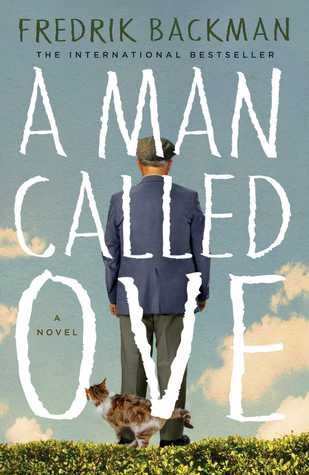
- A Man Called Ove
Fredrik Backman
4.4 (569k) average on GoodreadsFictionExplores heartwarming relationships between quirky characters and themes of grief and community.
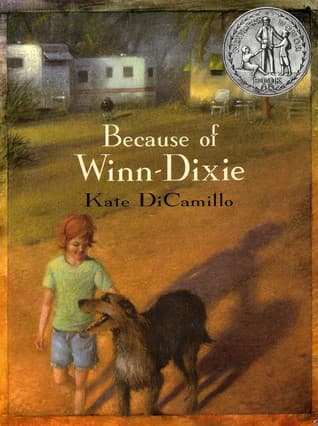
- Because of Winn-Dixie
Kate DiCamillo
4.0 (206k) average on GoodreadsChildren'sA young girl navigates a new town and forms unconventional friendships, dealing with themes of loss and connection.
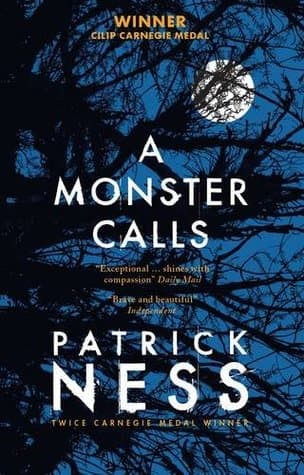
- A Monster Calls
Patrick Ness
4.3 (208k) average on GoodreadsFantasyBoth "Gebroken soep" and "A Monster Calls" tackle the profound grief of a young person. However, "A Monster Calls" uses magical realism and a fantastical element (the monster) to help its protagonist, Conor, confront his emotions and the impending loss of his mother. "Gebroken soep" is firmly rooted in realism, relying solely on Rosa's internal journey and her interactions with the mundane world to process Wee Russell's death. While both are emotionally powerful, "A Monster Calls" offers a more externalized, allegorical path to understanding grief, whereas "Gebroken soep" delves purely into the internal, psychological landscape.
- The Fault in Our Stars
John Green
4.2 (3.6M) average on GoodreadsYoung AdultWhile both novels feature young protagonists grappling with loss and mortality, their approaches differ significantly. "The Fault in Our Stars" centers on the romantic relationship between two terminally ill teenagers, exploring themes of love, life, and death through their witty banter and shared experiences. "Gebroken soep," in contrast, focuses on the aftermath of loss and the solitary, often isolating, journey of grief for a single protagonist. Green's novel often uses humor and philosophical discussions to engage with difficult topics, while Valentine's work is more somber, introspective, and focused on the raw, unadorned emotional experience of bereavement rather than the intellectual or romantic aspects of confronting mortality.
- Harry Potter and the Sorcerer's Stone
J.K. Rowling
4.5 (7M) average on GoodreadsFantasyRescued from a miserable life under the stairs, an orphaned boy discovers he's a wizard destined for a magical school, where he uncovers a dangerous secret tied to the dark wizard who murdered his parents.
- The Hunger Games
Suzanne Collins
4.3 (6.4M) average on GoodreadsFantasyIn a future where children fight to the death on live television, Katniss Everdeen volunteers for the arena, turning a death sentence into a fight for survival and a spark of rebellion.


Enjoyed the summary?
A summary gives you the shape of the book. The book itself has the detail, the examples and the voice.
Find Gebroken soep on AmazonAs an Amazon Associate, BookBrief earns from qualifying purchases. How we're funded