

Synopsis
Covers the whole plot, including the ending.
- Difficulty
- Medium
- Pacing
- Fast
- Mood
- Suspenseful, Romantic, Futuristic, Gritty
- Read it if
- You enjoy futuristic police procedurals with a strong female lead, a dash of romance, and complex mystery.
- Skip it if
- You dislike explicit romance in your mysteries or prefer hard sci-fi over softer, character-driven futurism.
Glory in Death Plot Summary
Covers the whole plot, including the ending.
The First Victim: Leda Louise
In 2058 New York City, Lieutenant Eve Dallas responds to a brutal murder. The victim, Leda Louise, a high-profile 'companion,' is found in an alley, her throat cut and body posed. Eve, known for her sharp instincts and dark past, immediately sees inconsistencies, noting the killing's theatrical nature. Her partner, Detective Delia Peabody, helps with the initial processing. The investigation quickly links Leda to powerful, wealthy men, including Senator Grant, a seemingly honest politician, and the Irish billionaire, Roarke. Eve's first interview with Roarke is tense, marked by an undeniable attraction, even though he is a main suspect.
A Second Murder: Elaine Hofferman
Before Eve can fully process Leda Louise's murder, a second victim appears: Elaine Hofferman, another high-end companion, found dead in her lavish apartment. The killing method is identical—throat cut, body posed, no forced entry. This confirms Eve's suspicion that she is dealing with a serial killer. The media, led by newscaster Nadine Furst, sensationalizes the murders, putting pressure on the police. Eve investigates the victims' lives, finding a pattern of shared clients and a common social circle, which complicates the case and expands the suspect list, still including Roarke.
Roarke's Involvement and Eve's Conflict
As the investigation continues, Roarke's ties to both Leda and Elaine become clear. He admits to past sexual relationships with both women. Eve's professional integrity is tested as her attraction to Roarke grows, creating an internal conflict. Despite her feelings, she maintains her distance, interrogating him thoroughly and having him undergo a brain-scan lie detector test, which he passes. Roarke, intrigued by Eve's strength, begins to involve himself in her life, offering resources and insights, much to Eve's annoyance and reluctant acceptance.
Uncovering Connections and Motives
Eve and Peabody carefully piece together the victims' lives using advanced forensic technology and traditional detective work. They discover that Leda and Elaine were friends who shared secrets and ambitions. Their client list includes a powerful senator, a renowned artist, and other influential figures. Eve focuses on the killer's psychological profile, believing the motive is deeply personal and rooted in a twisted sense of justice. The police profiler, Dr. Charlotte Mira, suggests a killer driven by a need for control and punishment, possibly targeting women who represent a perceived moral failing.
The Senator's Secrets
Senator Grant, initially appearing blameless, becomes a person of interest when Eve uncovers his secret life as a client of both Leda and Elaine. His public image as a family man and moral crusader contrasts sharply with his private affairs. Eve suspects the killer might be connected to Grant, perhaps seeking to expose his hypocrisy. A third potential victim, another high-profile companion named Ursula, is identified. Eve races to protect Ursula, fearing the killer will strike again, increasing pressure on the department and herself. The connections between the victims and their powerful clients become more complex, suggesting a wider conspiracy or shared secret.
A Near Miss and Roarke's Assistance
Eve's efforts to protect Ursula are almost too late. The killer tries to murder Ursula, but Eve's timely arrival saves her. During the struggle, Eve gets a brief look at the killer, confirming her suspicions about their build and method. Roarke, using his network and technology, provides important assistance. He helps Eve analyze data, track connections, and even offers his private jet for urgent travel, becoming an unofficial, valuable consultant. Their working relationship deepens, blurring professional and personal lines, to Peabody's amusement and Eve's continued frustration.
The Killer's Identity Revealed
Through police work, forensic evidence, and Roarke's technology, Eve and her team narrow the suspect list. The killer is Dr. Wilhelm Blalock, a respected psychiatrist who treated both Leda and Elaine and was discreetly connected to Senator Grant. Blalock held a deep misogyny and a warped sense of moral superiority, believing he was cleansing society of 'fallen women.' His motive came from a personal trauma related to his mother and a desire to punish women he deemed immoral, especially those who exposed powerful men's hypocrisy.
The Confrontation
Eve confronts Dr. Blalock, who first pretends innocence but quickly shows his true, chilling nature. The confrontation occurs in Blalock's organized office, where Eve puts together the final pieces of his twisted mind. Blalock, a master manipulator, tries to disarm Eve psychologically, taunting her with murder details and his perceived righteousness. The situation escalates into a dangerous standoff, with Blalock armed and convinced of his moral superiority. Eve, relying on her training and instincts, prepares for a physical fight, knowing she must bring him in, dead or alive.
Justice Served
In a tense, violent struggle, Eve subdues Dr. Blalock. The confrontation is brutal, showing Eve's physical skill and commitment to justice. Blalock is arrested, and the evidence against him is overwhelming due to the thorough investigation. The case closes, bringing relief to the city and police. The media frenzy around the murders begins to fade. Eve feels accomplished but also the exhaustion of facing such darkness. The resolution allows her to process the emotional toll of the case and her intense personal journey.
Aftermath and New Beginnings
With the case closed, Eve thinks about the horrors she witnessed and human nature's complexities. The experience, while difficult, has strengthened her bond with Roarke. Their intense attraction has grown into a deeper connection, marked by trust and mutual respect. Roarke, having shown his loyalty and support, is now a clear presence in her life. Eve, still dealing with her own traumatic past, finds surprising comfort and stability with him. The novel ends with Eve accepting the changes in her life, both professional and personal, ready to face new challenges with Roarke.
Principal Figures
Eve Dallas
Protagonist
A tough, intuitive homicide lieutenant haunted by a traumatic past.
Lieutenant Eve Dallas is a brilliant, driven homicide detective in the NYPSD. Orphaned and abused as a child, she carries deep emotional scars, manifested in her difficulty with intimacy and her relentless pursuit of justice. She is fiercely independent, highly intelligent, and possesses a unique, almost visceral understanding of criminals. Her past fuels her determination but also makes her wary of emotional connection. Despite her tough exterior, she harbors a hidden vulnerability and a strong moral compass. She lives for her work, finding purpose in solving the darkest crimes.
Relationships: Roarke (Lover, later husband; initially a suspect, then a powerful ally and emotional anchor.); Delia Peabody (Partner and trusted friend; her loyalty and humor help ground Eve.); Commander Whitney (Superior officer and mentor; provides professional guidance and support.); Dr. Charlotte Mira (Police psychiatrist; offers professional insight and helps Eve process her emotional struggles.)
Roarke
Love Interest / Supporting
An enigmatic, wealthy Irish billionaire with a mysterious past and powerful connections.
Roarke is an incredibly wealthy, intelligent, and dangerously charismatic Irish businessman with a vast global empire. He is a man of immense power and influence, with a past shrouded in secrecy and rumored illicit dealings. Despite his dark edge, he possesses a strong sense of loyalty and a surprisingly tender side, especially when it comes to Eve. He is drawn to Eve's strength and independence, seeing past her defenses to the vulnerable woman beneath. He often operates outside the law, using his resources to aid Eve in her investigations, sometimes much to her exasperation. He is fiercely protective and possessive.
Relationships: Eve Dallas (Lover, later husband; initially a suspect, then a powerful ally and emotional anchor.); Summerset (His majordomo and surrogate father figure; their relationship is complex, marked by both affection and conflict.)
Delia Peabody
Supporting
Eve's loyal, quirky, and increasingly competent police partner.
Detective Delia Peabody is Eve's partner, initially a nervous but eager rookie. Over the course of the series, and specifically in this book, she grows into a more confident and skilled detective. She brings a much-needed warmth and humor to Eve's often grim world. Peabody is loyal, observant, and sometimes a bit clumsy, but her dedication to Eve and her work is unwavering. She acts as a foil to Eve's intensity, providing a more grounded and relatable perspective. Her fashion sense is often a source of amusement for Eve.
Relationships: Eve Dallas (Partner and trusted friend; her loyalty and humor help ground Eve.); McNab (Future love interest; a tech expert at the NYPSD.)
Dr. Charlotte Mira
Supporting
The police psychiatrist who provides psychological profiles and supports Eve.
Dr. Charlotte Mira is the highly respected police psychiatrist who often consults on Eve's cases. She is insightful, empathetic, and possesses a deep understanding of the human psyche, both criminal and victim. Mira provides valuable psychological profiles of killers, helping Eve understand their motivations and methods. She also serves as a subtle mentor and confidante for Eve, recognizing Eve's past trauma and offering quiet support and guidance without prying. Her calm demeanor and sharp intellect are invaluable to the NYPSD.
Relationships: Eve Dallas (Professional consultant and informal therapist; provides psychological insight and emotional support.)
Commander Whitney
Supporting
Eve's superior officer and a steady hand in the NYPSD.
Commander Whitney is Eve's direct superior at the NYPSD. He is a fair, intelligent, and experienced officer who trusts Eve's abilities implicitly, even when her methods are unconventional. He provides a strong, stable presence in the police department, managing the political pressures and public scrutiny that often accompany high-profile cases. Whitney acts as a mentor and protector for Eve, often running interference for her and ensuring she has the resources she needs. He understands Eve's unique personality and allows her the necessary latitude to do her job effectively.
Relationships: Eve Dallas (Superior officer and mentor; provides professional guidance and support.)
Leda Louise
Victim
The first murder victim, a high-profile companion.
Leda Louise was a beautiful and highly successful 'companion' (legal escort) in New York City's elite circles. She was known for her charm, intelligence, and discretion, catering to powerful and wealthy clients. Her murder sets the entire plot in motion, revealing a darker underbelly to her glamorous life. Through Eve's investigation, Leda is portrayed as more than just a victim; she was a woman with ambitions, secrets, and friendships, whose life intersected with the city's most influential figures. Her death exposes the hypocrisy and hidden lives of those in power.
Relationships: Elaine Hofferman (Friend and fellow companion; they shared clients and secrets.); Senator Grant (Client; their relationship was a source of scandal.)
Elaine Hofferman
Victim
The second murder victim, also a high-profile companion.
Elaine Hofferman was the second victim of the serial killer, mirroring Leda Louise in her profession and social standing. Like Leda, she was a beautiful, successful companion with powerful connections. Her murder confirms to Eve that she is dealing with a serial killer and intensifies the urgency of the investigation. Elaine's life, like Leda's, is meticulously dissected by Eve, revealing shared clients, a close friendship with Leda, and a similar trajectory in her career. Her death further highlights the killer's pattern and psychological motivation.
Relationships: Leda Louise (Friend and fellow companion; they shared clients and secrets.); Senator Grant (Client; their relationship was a source of scandal.)
Senator Grant
Suspect / Mentioned
A powerful, seemingly moral senator with a secret life.
Senator Grant is a prominent political figure, publicly known for his family values and moral uprightness. However, Eve's investigation uncovers his secret life as a client of both Leda Louise and Elaine Hofferman. His hypocrisy makes him a prime suspect, as the killer appears to target those who expose the hidden lives of the powerful. Grant's character represents the hidden corruption and moral compromises within the city's elite. He is initially defensive and evasive but eventually forced to confront his double life.
Relationships: Leda Louise (Client; their affair was kept secret.); Elaine Hofferman (Client; their affair was kept secret.)
Dr. Wilhelm Blalock
Antagonist
The serial killer, a respected psychiatrist with a twisted moral agenda.
Dr. Wilhelm Blalock is the chilling antagonist of the story, initially appearing as a respectable and unassuming psychiatrist who had treated both Leda and Elaine. Beneath his calm exterior lies a deeply misogynistic and morally depraved individual, driven by a warped sense of justice and a desire to 'cleanse' society of women he deems immoral. His motive stems from a childhood trauma involving his mother and a need to control and punish. He is meticulous, manipulative, and believes himself to be superior, viewing his victims as instruments of his twisted mission. He is a master of disguise, blending seamlessly into society.
Relationships: Leda Louise (Patient, then victim.); Elaine Hofferman (Patient, then victim.)
Themes & Insights
Justice vs. Law
This theme explores the conflict between the law's rules and a more intuitive, sometimes morally unclear, sense of justice. Eve Dallas, with her traumatic past, often acts on a basic desire for justice, even if it means bending rules or trusting her gut instead of pure procedure. Roarke, with his shadowy background, embodies a form of justice outside the law, using his resources to achieve outcomes the system might not allow. The killer, Dr. Blalock, also believes he is enacting justice, though a twisted, self-serving kind, showing how this concept can be dangerously perverted. The story constantly asks what true justice means and how it can be achieved.
“There’s the law, and there’s justice, Lieutenant. Sometimes they’re the same, and sometimes they’re not.”
The Nature of Power and Corruption
The novel examines how power, wealth, and influence can both protect and corrupt. The victims, Leda and Elaine, navigate a world of powerful men who seek discretion for their illicit activities. Characters like Senator Grant show the hypocrisy of public figures who maintain a moral facade while leading secret lives. Roarke represents immense power, both legitimate and potentially illegitimate, and how it can be used for good or ill. The killer, Dr. Blalock, uses his position of authority and trust as a psychiatrist to manipulate and harm. The story reveals the dark side of a futuristic society where technology and wealth create new ways to abuse power.
“Money and power don’t buy innocence, Lieutenant. They just buy a better lawyer.”
Trauma and Healing
Eve Dallas's character is shaped by her traumatic childhood, which appears in her emotional barriers, her difficulty with intimacy, and her relentless drive for justice. The murder investigations often trigger her buried memories, forcing her to confront her own darkness. Her growing relationship with Roarke is key to this theme, as he slowly helps her break down her defenses and begin healing. The novel suggests that while past traumas cannot be erased, they can be integrated, and new, healthier relationships can provide a foundation for recovery. Dr. Blalock's actions also come from a twisted response to his own past trauma.
“The past is a part of you, Dallas. But it doesn’t have to define you. Not anymore.”
Identity and Perception
The theme of identity and perception is central, especially regarding the victims and the killer. Leda and Elaine, as 'companions,' are seen by society in a certain way, yet Eve's investigation shows them as complex people with aspirations and friendships beyond their profession. Senator Grant maintains a public identity that strongly contrasts with his private actions. Most notably, Dr. Blalock's identity as a respected psychiatrist hides his true, depraved nature as a serial killer. Eve herself struggles with her public identity as a tough cop versus her private self, haunted by her past, and her changing identity in a relationship with Roarke. The novel explores how easily appearances can deceive and the effort it takes to uncover true identities.
“People see what they want to see, Lieutenant. Especially when it comes to those in power.”
Plot Devices & Literary Techniques
Red Herring
Misleading clues or suspects designed to divert the reader's attention.
The novel effectively uses red herrings, particularly in the character of Roarke. His initial status as a prime suspect, his powerful connections, and his enigmatic past all serve to cast suspicion on him, making the reader question his innocence and Eve's judgment. Senator Grant also acts as a significant red herring, with his secret life and apparent motive for silencing the victims. These diversions keep the reader guessing and build suspense, making the eventual reveal of Dr. Blalock as the killer more surprising and impactful.
Fish-out-of-Water Trope
Placing a character in an unfamiliar or uncomfortable environment.
While Eve Dallas is in her element as a detective, her personal life with Roarke often places her in a 'fish-out-of-water' scenario. She is uncomfortable with his immense wealth, his opulent lifestyle, and the social intricacies of the elite world he inhabits. Her working-class, trauma-scarred background clashes with his world of private jets, personal chefs, and designer clothes. This trope highlights her grounded nature, provides moments of humor and vulnerability, and underscores the vast differences between their worlds, making their burgeoning relationship all the more compelling as they bridge these gaps.
Deus ex Machina (Roarke's Resources)
An unexpected power or event saving a seemingly hopeless situation.
Roarke's vast wealth, technological prowess, and global connections often function as a form of 'deus ex machina.' When Eve hits a roadblock or needs specialized equipment, intel, or even transportation beyond the police department's capabilities, Roarke frequently steps in with a solution. While not always entirely unexpected, his ability to instantly provide resources, such as advanced data analysis or private air travel, can swiftly resolve seemingly insurmountable investigative challenges, moving the plot forward and showcasing his power and influence.
Forensic Science and Technology
Advanced scientific methods and futuristic technology used to solve crimes.
Set in 2058, the novel heavily relies on advanced forensic science and technology as a plot device. This includes sophisticated brain-scan lie detectors, ultra-modern lab equipment, advanced data analysis systems, and futuristic communication devices. These elements are crucial for uncovering clues, processing evidence, and tracking suspects in ways that wouldn't be possible in a contemporary setting. The technology not only enhances the mystery and investigative process but also helps to build the futuristic world, providing both solutions and new challenges for Eve and her team.
Glory in Death Quotes
“Every cop has to have a good cup of coffee. It’s a rule.”
“The dead don't care about your feelings, Dallas. They just care about justice.”
“There are no accidents in murder. Only choices.”
“He brought her coffee. And that, she thought, was love.”
“It wasn't about the money. It was about the kill.”
“You can't save everyone, Dallas. But you can damn well try.”
“The past is a stubborn thing. It clings.”
“She was a cop. He was a criminal. It was a hell of a foundation for a relationship.”
“Grief was a selfish thing. It demanded attention.”
“Sometimes the monster is the one you least suspect.”
“He saw the cracks in her armor, and instead of exploiting them, he tried to mend them.”
“The city never slept. Neither did its darkness.”
“Justice isn't always pretty. But it has to be done.”
“You have a dark side, Lieutenant. And it fascinates me.”
“Some secrets are meant to stay buried. Others demand to be unearthed.”
Quiz
10 questions on the plot and the characters. Each answer comes with a short explanation.
Question 1
What is the name of the protagonist and police lieutenant in 'Glory in Death'?
- Lieutenant Summers
- Lieutenant Dallas
- Lieutenant Roarke
- Lieutenant Peabody
Show answer
B. Lieutenant Dallas The protagonist of the story is Police Lieutenant Eve Dallas.
Question 2
In what year is 'Glory in Death' set?
- 2023
- 2048
- 2058
- 2078
Show answer
C. 2058 The story is set in the year 2058 in New York City.
Question 3
What is the primary connection Lieutenant Dallas finds between the first two murder victims?
- They both worked at the same company.
- They were both beautiful, highly successful women with glamorous lives and loves.
- They were sisters.
- They lived in the same apartment building.
Show answer
B. They were both beautiful, highly successful women with glamorous lives and loves. Eve Dallas notes that both victims were beautiful and highly successful women whose glamorous lives and loves were widely discussed.
Question 4
Who is Eve Dallas's lover, who also becomes a suspect in the murders?
- Mavis
- Feeney
- Roarke
- Summerset
Show answer
C. Roarke Roarke is Eve Dallas's lover and is among the powerful and wealthy men connected to the victims, making him a suspect.
Question 5
What technological advancement mentioned in the book is usually effective in preventing violent crime?
- Advanced surveillance systems
- Genetic testing to weed out violent hereditary traits
- Neural implants for emotional regulation
- Predictive policing algorithms
Show answer
B. Genetic testing to weed out violent hereditary traits The book states that genetic testing usually weeds out any violent hereditary traits, implying a lower incidence of such crimes.
Question 6
Where was the first victim found?
- In her own apartment
- On a sidewalk in the rain
- In a public park
- Inside a luxury vehicle
Show answer
B. On a sidewalk in the rain The first victim was found 'lying on a sidewalk in the rain'.
Question 7
What is the underlying theme suggested by the phrase 'there's only one place to hide a crime of passion-in the heart'?
- Technology makes all crimes easily solvable.
- Emotional motives can be harder to detect and predict than logical ones.
- Love is the ultimate hiding place for criminals.
- Physical evidence is always secondary to psychological profiles.
Show answer
B. Emotional motives can be harder to detect and predict than logical ones. This phrase highlights the theme that despite advanced technology, crimes driven by intense human emotion ('passion') can be uniquely challenging to uncover, as the motive is internal and not always evident in data.
Question 8
Why does Eve Dallas consider men of 'great power and wealth' as suspects?
- They are inherently more violent.
- They have the means to cover up crimes.
- Both victims had intimate relations with such men, providing a motive or connection.
- They are the only ones capable of committing murder in 2058.
Show answer
C. Both victims had intimate relations with such men, providing a motive or connection. The text explicitly states that the victims' 'intimate relations with men of great power and wealth provide Eve with a long list of suspects'.
Question 9
Despite genetic testing, why does murder still happen in this futuristic society, according to the book's premise?
- Genetic testing is flawed and often produces incorrect results.
- The genetic predispositions can be overridden by environmental factors.
- The premise implies that not all violence is purely genetic, and crimes of passion can still occur.
- Only a small percentage of the population undergoes genetic testing.
Show answer
C. The premise implies that not all violence is purely genetic, and crimes of passion can still occur. The text states 'Even in the mid-twenty-first century, during a time when genetic testing usually weeds out any violent hereditary traits before they can take over, murder still happens.' This suggests that not all forms of violence, particularly 'crimes of passion,' are solely attributable to hereditary traits detectable by genetic testing, implying other factors like emotion are at play.
Question 10
What is the significance of the setting being New York City in 2058 for the story's atmosphere?
- It suggests a pastoral, quiet environment for crime.
- It provides a backdrop of advanced technology and urban complexity, contrasting with primal human emotions like passion.
- It implies that New York is the only city where such crimes can occur.
- The futuristic aspect is purely cosmetic and has no bearing on the plot.
Show answer
B. It provides a backdrop of advanced technology and urban complexity, contrasting with primal human emotions like passion. The setting of a technologically advanced New York City in 2058 creates a stark contrast with the 'crime of passion' theme. It emphasizes that even with futuristic tech, human emotions and their dark consequences remain a challenge, making the city a vibrant, complex backdrop for the mystery.
Glory in Death FAQ
What is the central premise of 'Glory in Death'?
'Glory in Death' follows Lieutenant Eve Dallas as she investigates the murders of two beautiful, successful women in 2058 New York City. Both victims had scandalous affairs with powerful men, leading Eve to a long list of high-profile suspects, including her enigmatic lover, Roarke.
Who are the primary victims in the story and what connects them?
The primary victims are Senator DeBlass and Bianca Sissel. They are connected by their beauty, high-profile careers, and their shared intimate relationship with the powerful and wealthy Julian Cross, making him a prime suspect in Eve's investigation.
What role does Roarke play in the initial stages of the investigation?
Roarke is initially a suspect due to his past relationships with both victims and his vast wealth and influence. His presence adds a personal layer of complication for Eve, as she struggles to reconcile her professional duty with her burgeoning feelings for him.
How does the futuristic setting of 2058 New York impact the investigation?
The futuristic setting introduces advanced forensic technology, such as genetic testing and sophisticated data analysis, which Eve utilizes to process crime scenes and track down suspects. However, it also highlights that human emotions like passion and jealousy remain potent motivations for murder, despite technological advancements.
What is the primary conflict Eve faces beyond solving the murders?
Eve's primary internal conflict is her struggle to trust Roarke, given his status as a suspect and his secretive nature. She must navigate her professional ethics and her growing emotional attachment to him, constantly questioning his innocence while falling deeper in love.
Are there any subtle clues about the true killer's identity early in the book that readers might miss?
Early clues include the killer's meticulous planning and the choice of victims who had affairs with Julian Cross, subtly pointing away from Roarke's typical impulsive nature. The absence of a clear 'rage' signature in the initial murders, despite their passionate motivation, also hints at a more calculating perpetrator.
How does the author use technology to mislead or create red herrings?
The author uses advanced data trails and the ubiquity of information to create red herrings, such as easily accessible records of Roarke's affairs, which initially make him appear guilty. The focus on genetic testing also makes readers expect a clear biological link, diverting attention from psychological motives.
What is the significance of the specific murder weapon or method used in the crimes?
The specific method, often involving a precise, almost surgical approach despite the underlying passion, suggests a killer who is both emotionally driven and highly controlled. This contrasts with the expected brutal force of a 'crime of passion,' hinting at a more complex, perhaps even cold-blooded, individual.
Are there any recurring symbols or motifs that contribute to the book's themes?
The motif of 'glory' and public image versus hidden truth is central, reflected in the victims' glamorous lives contrasted with their secret affairs. The rain and darkness of NYC often symbolize the hidden corruption and sorrow beneath the city's glittering surface, mirroring Eve's journey into the shadows.
How does Eve Dallas's past trauma influence her approach to the murder investigation?
Eve's traumatic past as an orphan and victim of abuse makes her fiercely empathetic towards victims and relentless in pursuing justice. It also fuels her distrust of authority and powerful men, initially making her more suspicious of Roarke and others in high society.
What psychological profile can be inferred about the killer from their actions?
The killer exhibits a complex psychological profile: deeply jealous and possessive, driven by a twisted sense of loyalty and a desire for revenge against those who 'wronged' Julian Cross. They are meticulously manipulative and capable of maintaining a facade of normalcy, indicating sociopathic tendencies beneath the emotional outburst.
How does Roarke's character challenge Eve's pre-conceived notions about justice and morality?
Roarke's past as a criminal and his morally ambiguous business dealings force Eve to confront her black-and-white view of justice. He operates outside the law but often for his own brand of 'justice,' making Eve question if rigid adherence to the rules always serves the greater good, especially in a world of powerful elites.
What is the psychological impact of the 'crime of passion' aspect on the investigation?
The 'crime of passion' aspect initially leads Eve to look for overt emotional instability or immediate jealousy, but the killer's calculated actions reveal a more insidious, long-simmering resentment. This forces Eve to delve deeper into the psychological underpinnings of obsessive love and betrayal, rather than just impulsive rage.
How does the relationship between Eve and Roarke evolve through the course of solving the case?
Their relationship evolves from initial suspicion and intense physical attraction to a deeper level of trust and emotional intimacy. As Roarke actively helps Eve, proving his innocence and support, Eve begins to let down her guard, allowing their bond to solidify despite the dangers and uncertainties.
What broader societal commentary does 'Glory in Death' offer about wealth, power, and justice in the future?
The book comments on how wealth and power can create a separate class, almost above the law, where secrets are easily hidden and justice can be manipulated. It suggests that even with advanced technology, human corruption and the abuse of influence persist, making true justice a constant struggle.
Could the killer's motive be interpreted as something other than pure jealousy or revenge?
While jealousy and revenge are primary, the killer's motive could also be interpreted as a distorted form of protecting Julian Cross's image or 'honor,' believing they were rectifying wrongs committed against him. This adds a layer of self-righteousness to their actions, rather than just simple envy.
Is there a specific moment where Eve fully trusts Roarke, and what triggers it?
Eve's full trust in Roarke solidifies when he actively and selflessly puts himself at risk to help her close in on the killer, providing crucial information and support without personal gain. His unwavering belief in her and his willingness to expose his own vulnerabilities cement her faith in him.
How does the ending challenge or reinforce the themes established earlier in the book?
The ending reinforces the theme that passion, in its darkest forms, can drive even seemingly normal individuals to extreme acts, regardless of technological advancement. It also challenges the idea that wealth and status provide ultimate protection, as the killer is ultimately brought to justice, albeit with difficulty.
What is the significance of the title 'Glory in Death'?
The title 'Glory in Death' refers to the victims' glamorous public lives, which were 'glorious,' contrasting sharply with their violent, undignified deaths and the scandalous secrets revealed posthumously. It also hints at the killer's twisted perception of 'glory' in their vengeful acts.
About the author

J.D. Robb is a pseudonym for author Nora Roberts, known for her work in the romance and suspense genres. She is particularly recognized for the "In Death" series, which includes titles such as "Naked in Death," "Glory in Death," "Immortal in Death," "Rapture in Death," "Ceremony in Death," and "Holiday in Death." These novels blend elements of crime fiction with futuristic settings and strong character development.
Similar books
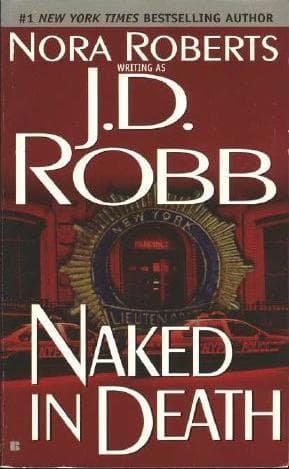
- Naked in Death
J.D. Robb
4.1 (167k) average on GoodreadsThrillerIt is the first book in the same series, featuring the same characters and setting.
- The Sinner
Tess Gerritsen
4.4 (8k) average on GoodreadsFantasyFeatures a strong female detective solving gruesome murders with a medical twist.
- Angels & Demons
Dan Brown
3.9 (2.7M) average on GoodreadsThrillerA Harvard symbologist races through Rome's ancient sites, deciphering cryptic clues to unmask the Illuminati and stop a vengeful plot to destroy the Vatican with a stolen antimatter weapon.
- Gone Girl
Gillian Flynn
4.1 (2.3M) average on GoodreadsThrillerA wife's sudden disappearance on her fifth anniversary reveals a web of lies and psychological warfare, exposing the secrets within a seemingly perfect marriage.
- The Girl on the Train
Paula Hawkins
3.9 (2.1M) average on GoodreadsThrillerA woman’s fascination with a seemingly perfect couple she watches from her daily train commute leads her into a dark investigation when she witnesses something that shatters their idyllic image.
- The Da Vinci Code
Dan Brown
3.9 (1.9M) average on GoodreadsThrillerA symbologist and a cryptologist race through European landmarks, deciphering ancient codes and uncovering a conspiracy that could rewrite the foundations of Christianity.





Enjoyed the summary?
A summary gives you the shape of the book. The book itself has the detail, the examples and the voice.
Find Glory in Death on AmazonAs an Amazon Associate, BookBrief earns from qualifying purchases. How we're funded