
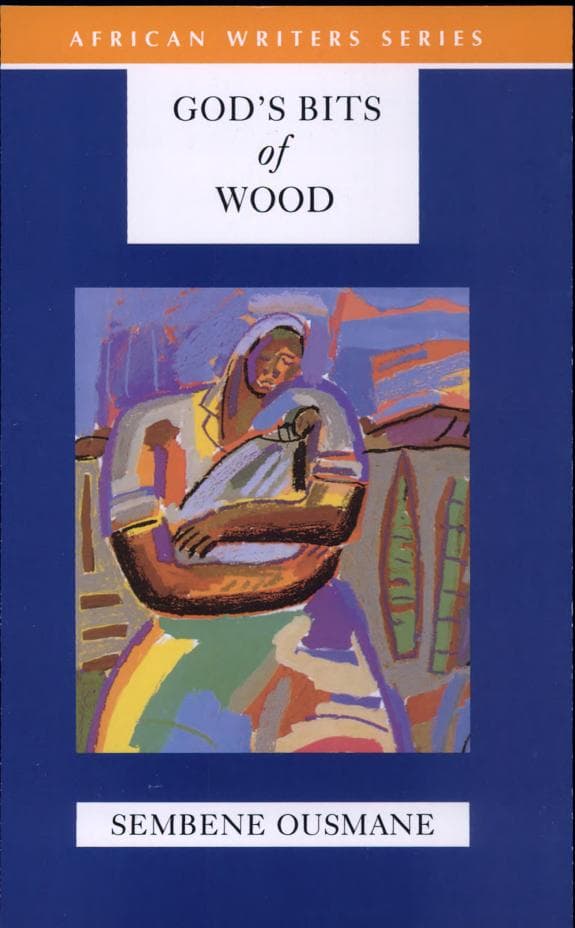
Core Idea
- Difficulty
- Medium
- Read it if
- You are interested in historical fiction about labor movements, anti-colonial struggles, and the empowerment of marginalized communities, particularly women, in the face of oppression. This book offers a powerful depiction of collective resistance and social change.
- Skip it if
- You prefer fast-paced narratives with individualistic heroes. The book focuses on the collective experience and can be dense with character perspectives and the slow, arduous process of social transformation.
Key Takeaways from God's Bits of Wood
The Collective Roar
Individual sacrifice for a unified, powerful voice against oppression.
Sembène shows that against colonial exploitation, real power comes from the group, not from single acts. The Dakar-Niger railway strike is more than a labor dispute; it is when people realize their combined strength. The initial requests for pensions, paid time off, and family money quickly become a fight for basic human respect and self-rule. The novel shows how shared hardship, from hunger to violence, creates a strong bond among the strikers. This bond goes beyond personal complaints and strengthens their will. This unity becomes their strongest weapon against the powerful European colonizers.
“The only way to re-establish the dignity of humanity was to refuse to work.”
In the book: The sustained, widespread nature of the strike across multiple railway towns (Thiès, Bamako, Dakar) despite severe repression and deprivation demonstrates this collective resolve.
Try this: When facing systemic injustice, seek out and organize with others who share your struggle. Individual voices are easily dismissed; a unified collective is much harder to ignore.
Related ideas: collective-action, anti-colonialism, labor-rights
Women's Unsung Revolution
The strike as a catalyst for profound gender role transformation and empowerment.
A key part of Sembène's story is how women's roles change. At first, they are outside the strike's planning, expected to support the men quietly. But as the strike's harsh realities—hunger, no water, and colonial violence—directly affect their homes, the women must act. This change is not just about survival; it is a new definition of their place in society. Women like Ramatoulaye and Mame Sofi become strong leaders, showing great strength, smart thinking, and physical bravery. Their leadership in the march to Dakar, facing armed police and great hardship, is essential to the strike's success. It also changes the old male-dominated structures in their own communities.
“They had not been asked, but they had come. They had not been told, but they had understood.”
In the book: The siege of N'Diayene where women confront and resist the police attempting to arrest Ramatoulaye, culminating in the burning of the village, and the epic march of women to Dakar.
Try this: Recognize and actively challenge traditional gender roles, especially during times of crisis. Empowering marginalized groups to lead can uncover unexpected strengths and solutions.
Related ideas: gender-equality, feminism, social-change
The Weaponization of Basic Needs
Colonial power's brutal strategy of deprivation to break resistance.
Sembène clearly shows the cruelty of colonial power by its deliberate withholding of basic resources. The Europeans do not just refuse to talk; they use hunger and thirst to crush the strike. By cutting off water and food, they aim to break the strikers and their families, making them so desperate that survival comes before unity. This tactic shows the colonizer's disregard for the lives of the colonized, seeing them as tools to keep economic control. It means that for the colonized, the fight is often for existence itself, not just for rights.
“Water was now a luxury, and food a memory.”
In the book: The Europeans' decision to prevent strikers and their families from accessing water, leading to severe suffering and the women's desperate search for resources.
Try this: When evaluating power dynamics, identify how basic needs can be manipulated. Build resilient community networks to mitigate such vulnerabilities.
Related ideas: colonialism, human-rights, economic-warfare
The Innocence of Resistance
Children as both victims and symbols of hope in the struggle for justice.
Children in "God's Bits of Wood" are not just in the background; they suffer from hunger and violence, but they also show a pure spirit of curiosity and fairness. The accidental shooting of young boys by a European, without punishment, shows the harsh disregard for African lives. Ad'jibid'ji is very important. Her constant presence at meetings, her questions, and her strong spirit represent the next generation that will benefit from the strike. She stands for a new awareness, a future where past wrongs will not be accepted. Her involvement suggests a continuing fight for freedom.
“Ad'jibid'ji, a small child, yet she understood more than many adults.”
In the book: The delegate's unpunished murder of playing boys along the tracks; Ad'jibid'ji's persistent interest in the strike meetings and her unique perspective.
Try this: Protect the most vulnerable during conflict, and actively engage younger generations in understanding and shaping a more just future.
Related ideas: childhood-in-conflict, generational-change, social-justice
Breaking the Silence of Oppression
Finding voice and agency through collective action and public protest.
At first, the oppressed African workers and their families suffer quietly under colonial rule. The strike itself is the first major break in this silence, a statement that they will no longer accept their situation. But it is the women's march to Dakar that truly makes this new voice heard. By taking such a public, hard, and dangerous journey, they turn their private suffering into a clear public protest. This group movement and vocal show force the Europeans to see the human cost of their policies. It gets wider sympathy and attention, proving that speaking up is the first step to asking for fairness.
“Silence was no longer possible; the time for action had come.”
In the book: The women's decision to march to Dakar, a highly visible and physically demanding act of protest, which significantly raises the profile and urgency of the strike.
Try this: When facing injustice, find ways to make your struggle visible and vocal. Silence perpetuates oppression; public demonstration forces accountability.
Related ideas: protest, voice-of-the-oppressed, civil-disobedience
The Shifting Scales of Power
Challenging the illusion of absolute colonial dominance through sustained resistance.
Sembène carefully breaks down the idea of unchallenged European power. The colonizers have political power, control resources, and have a monopoly on violence, but the strike shows their basic weakness: they depend on the labor they exploit. The Africans, though without weapons and poor, have a huge numerical advantage and, importantly, the moral high ground. The novel shows a slow but sure shift in power. The Europeans' harsh methods turn away even their own supporters, while the Africans' steady unity and moral belief grow stronger. The strike forces the Europeans to admit, even if unwillingly, the power of the colonized.
“The Europeans had power, but the Africans had the masses.”
In the book: The Europeans' initial dismissive attitude giving way to increasing desperation and eventually, a forced negotiation, despite their use of violence and resource blockade.
Try this: Never underestimate the power of collective non-compliance against oppressive systems. True power often resides with the people, not just those in authority.
Related ideas: power-dynamics, resistance-movement, colonial-decline
The Enduring Scars of Violence
Colonial violence as a tool of control, leaving deep physical and psychological wounds.
Sembène does not avoid showing the harsh truth of colonial violence. From the casual killing of children to beatings, arrests, and the threat of starvation, violence is always present. Europeans use it to make people obey and to break the strike. This violence is not just physical; it leaves deep mental scars on people and communities, causing fear and trauma. But the novel also shows that while violence causes pain, it does not crush the spirit of resistance. Instead, it often makes people fight more, as the shared suffering strengthens unity and the will to fight for a future without such cruelty.
“The whip and the gun were their only arguments.”
In the book: The unpunished killing of the young boys, the police brutality during the N'Diayene siege, and the constant threat of arrest and physical harm faced by strikers and their families.
Try this: Understand how violence is used to maintain power and control. Support non-violent resistance methods, but acknowledge the profound trauma inflicted by state-sanctioned brutality.
Related ideas: state-violence, trauma, post-colonialism
The Birth of a New Identity
The strike forging a unified African identity beyond tribal and regional divisions.
The strike united workers from different ethnic groups and regions along the Dakar-Niger line, which helped create a new pan-African identity. Before the strike, loyalty might have been mostly to specific tribes or villages. But the shared fight against a common oppressor makes these different groups see their basic connection and shared experience as colonized Africans. The novel shows characters from different regions and ethnic groups working together, supporting each other, and finally realizing that their freedom depends on a united front. This goes beyond the divisions often used by colonial powers. This is a big step towards a wider sense of national, or even continental, awareness.
“They were no longer just Wolof or Bambara or Toucouleur; they were Africans.”
In the book: The solidarity demonstrated by workers and their families from various towns along the railway line, such as Thiès, Bamako, and Dakar, despite their different ethnic origins.
Try this: Seek common ground and build alliances across perceived differences when fighting for a shared cause. Unity strengthens movements against oppressive forces.
Related ideas: pan-africanism, identity-formation, unity-in-diversity
The Power of Information Control
Colonial manipulation of news and the counter-narrative of lived experience.
Sembène highlights how controlling information is key to keeping colonial power. The European government tries to control the story, showing the strikers as unruly troublemakers and downplaying the strike's size and seriousness. Their newspapers print false reports that order is back, while the reality on the ground is growing suffering and steady resistance. But the novel shows that real experience and word-of-mouth talk among African communities effectively fight this propaganda. The true story of the strike, its hardships, and its wins spreads through the people, undermining the colonizers' attempts to control public opinion and morale.
“The European newspapers spoke of order restored, while their stomachs spoke of hunger.”
In the book: The contrast between the official European news reports and the actual conditions and events experienced by the strikers and their families.
Try this: Be critical of official narratives, especially during conflict. Seek out diverse sources of information and trust the lived experiences of those directly affected.
Related ideas: propaganda, media-bias, truth-vs-narrative
The Price of Progress
Liberation comes at a profound personal and communal cost.
While the strike eventually reaches its goals, Sembène clearly shows the huge human cost of this progress. The victory is not clean or easy; it comes with hunger, death, violence, and great personal sacrifices. Families are broken, lives are lost, and communities go through terrible hardship. The novel reminds us that freedom and social change rarely happen without great struggle and suffering. The gains made—better pay, pensions, and respect—are hard-won and marked by the memory of those who gave everything. This means that while the result is good, the journey is brutal and leaves lasting marks.
“Freedom was not given; it was taken, piece by painful piece.”
In the book: The deaths of several characters due to starvation or violence, the burning of villages, and the prolonged suffering endured by all strikers and their families throughout the strike.
Try this: Understand that meaningful social change often requires significant sacrifice. Value the hard-won progress and remember the struggles of those who paved the way.
Related ideas: sacrifice, social-cost, liberation-struggle
God's Bits of Wood Quotes
“The strike is a school where we learn to be men.”
“We are not asking for charity, but for justice.”
“The women have shown us the way.”
“Hunger is a weapon, but so is patience.”
“We will walk until our feet bleed, but we will not give in.”
“The machine is nothing without the man who runs it.”
“Our children will inherit this earth, but only if we fight for it.”
“Fear is a chain that binds us; we must break it.”
“Every voice counts, even the smallest.”
“The sun does not rise for one man alone.”
“We are not slaves; we are workers.”
“The road to freedom is paved with stones of sacrifice.”
“Let our actions speak louder than their words.”
“In unity, we find our strength.”
Quiz
10 questions on the main ideas. Each answer comes with a short explanation.
Question 1
What historical event does 'God's Bits of Wood' fictionalize?
- The Algerian War of Independence
- The Dakar-Niger train strikes of the 1940s
- The Mau Mau Uprising in Kenya
- The Sharpeville Massacre in South Africa
Show answer
B. The Dakar-Niger train strikes of the 1940s The novel is based on the real Dakar-Niger railway strikes that occurred in French West Africa during the 1940s, focusing on the political and personal struggles of the strikers and their families.
Question 2
Which character shows early interest in the strike by insisting on attending a meeting with her grandfather?
- Ramatoulaye
- Ad'jibid'ji
- N'Deye Touti
- Maimouna
Show answer
B. Ad'jibid'ji Ad'jibid'ji, a small child, is the only one initially curious about the strike details and demands to go to a meeting with her grandfather, symbolizing early awareness and involvement.
Question 3
What specific demands are the strikers fighting for against the European bosses?
- Higher wages and shorter work hours
- Pensions, annual paid vacations, and family allowances
- Land ownership and voting rights
- Access to education and healthcare
Show answer
B. Pensions, annual paid vacations, and family allowances The strikers aim to secure pensions, annual paid vacations, and family allowances from the European railway company, highlighting their struggle for basic workers' rights and dignity.
Question 4
How do the Europeans exert power over the strikers and their families?
- By offering bribes to strike leaders
- Through political processes and violence, including denying access to water
- By spreading propaganda in local newspapers
- By deporting strike organizers to Europe
Show answer
B. Through political processes and violence, including denying access to water The Europeans use political leverage and violent tactics, such as cutting off water supplies and committing unpunished acts like the shooting of young boys, to suppress the strike.
Question 5
What event leads to the burning down of the village of N'Diayene?
- A riot started by the strikers
- A siege between the women and policemen trying to arrest Ramatoulaye
- An accidental fire during a protest march
- Retaliation by European bosses for sabotage
Show answer
B. A siege between the women and policemen trying to arrest Ramatoulaye The village is burned down during a confrontation between the women of N'Diayene and policemen attempting to arrest Ramatoulaye, showcasing the escalating violence and women's resistance.
Question 6
Why do the women become increasingly involved in the strike as the novel progresses?
- They are forced by the men to participate
- They seek personal fame and recognition
- The strike directly impacts their lives through lack of food and water
- They are inspired by European feminist movements
Show answer
C. The strike directly impacts their lives through lack of food and water Initially sidelined, the women engage more actively because the strike causes severe hardships like starvation and water shortages, pushing them from silent suffering to active protest.
Question 7
What symbolizes the shift of power between the African strikers and European bosses in the novel?
- The strikers gaining powerful allies in their own women
- The Europeans winning legal battles in court
- The strikers securing international support from other colonies
- The Europeans offering concessions to end the strike quickly
Show answer
A. The strikers gaining powerful allies in their own women The mobilization of women as key allies represents a crucial power shift, as their involvement strengthens the strikers' collective resistance and challenges traditional and colonial hierarchies.
Question 8
What incident involving a European delegate highlights the misuse of power and violence?
- The delegate is arrested for embezzling company funds
- The delegate accidentally shoots young boys playing along the tracks and faces no charges
- The delegate leads a peaceful negotiation with strike leaders
- The delegate provides food aid to starving families
Show answer
B. The delegate accidentally shoots young boys playing along the tracks and faces no charges This event underscores the Europeans' reckless use of violence and impunity, as the delegate's actions go unpunished, emphasizing the injustice and brutality faced by the African community.
Question 9
How does the strike contribute to breaking down barriers of inequality in the novel?
- By promoting interracial marriages between Africans and Europeans
- By leading to the establishment of a new political party
- By blurring lines between men and women, and black and white, through shared struggle
- By encouraging economic cooperation between colonizers and colonized
Show answer
C. By blurring lines between men and women, and black and white, through shared struggle The collective hardship and activism during the strike foster unity across gender and racial divides, as seen in women's rising roles and the shared resistance against European oppression.
Question 10
What practical outcome is suggested by the women's march to Dakar?
- It immediately ends the strike with a negotiated settlement
- It demonstrates the women's growing political agency and solidarity in protesting their treatment
- It leads to the women taking over leadership of the strike committee
- It results in the Europeans providing permanent water access
Show answer
B. It demonstrates the women's growing political agency and solidarity in protesting their treatment The march symbolizes the women's transformation from passive supporters to active participants, using collective action to challenge oppression and support the strikers, reflecting broader social change.
God's Bits of Wood FAQ
What is 'God's Bits of Wood' about?
'God's Bits of Wood' is a fictionalized account of the 1940s Dakar-Niger railway strike in colonial French West Africa. The novel explores both the political struggle of African workers demanding pensions, paid vacations, and family allowances from European bosses, and the personal sacrifices made by strikers and their families during the conflict.
Does 'God's Bits of Wood' accurately portray historical events?
Yes, while fictionalized, the novel is based on the real 1947-1948 railway strike along the Dakar-Niger line. Ousmane Sembène draws from historical events to depict the struggle between African workers and colonial authorities, though specific characters and scenes are dramatized for literary effect.
What is the significance of the title 'God's Bits of Wood'?
The title refers to the railway ties that connect the Dakar-Niger railway, symbolizing both the physical infrastructure that binds communities and the human lives ('bits') sacrificed during the strike. It represents the interconnectedness of the workers and their collective struggle against colonial oppression.
How does 'God's Bits of Wood' portray women's roles?
The novel shows women's transformation from passive supporters to active participants in the strike. Initially excluded from decision-making, women become crucial leaders as shortages of food and water directly impact them, culminating in dramatic protests like the march to Dakar and confrontations with police.
What is the theme of power in 'God's Bits of Wood'?
Power is depicted as shifting from colonial authorities (who use political processes and violence) to the collective masses of African workers and women. The novel explores how solidarity and organized resistance can challenge entrenched colonial power structures through non-violent and confrontational means.
How different is 'God's Bits of Wood' from other anti-colonial African literature?
Unlike some anti-colonial works focusing on individual heroes, 'God's Bits of Wood' emphasizes collective action and community solidarity. It uniquely highlights women's mobilization and the intersection of labor rights with gender equality, setting it apart from more male-centric narratives of resistance.
Does the strike in 'God's Bits of Wood' succeed?
While the novel doesn't depict a clear-cut victory, it shows the strike achieving significant moral and organizational triumphs. The workers gain solidarity, women emerge as political actors, and colonial authority is fundamentally challenged, suggesting long-term empowerment despite immediate hardships.
What practical lessons about organizing does 'God's Bits of Wood' offer?
The novel demonstrates that successful movements require broad community involvement, adaptability to changing circumstances (like women taking leadership during crises), and persistence despite repression. It shows how grassroots organizing can challenge even well-established power structures.
How does 'God's Bits of Wood' address violence versus non-violence?
The novel presents a complex view where colonial authorities use violence (like shooting children and denying water) while strikers primarily use non-violent resistance. However, it also shows how desperation can lead to confrontational actions, exploring the moral ambiguities of struggle against oppression.
What is the role of children in 'God's Bits of Wood'?
Children like Ad'jibid'ji represent the future and the transmission of political consciousness. Their presence highlights the strike's impact on families and the intergenerational nature of resistance, with younger characters showing early interest in the movement that their elders are building.
About the author
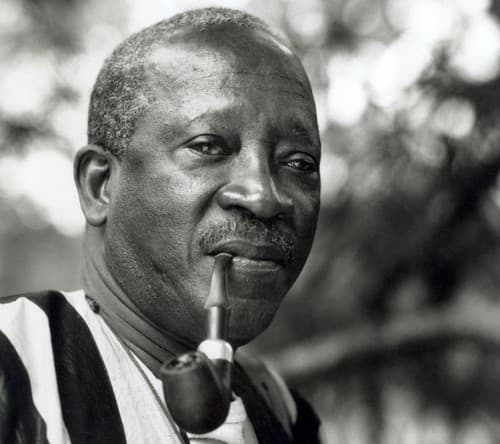
Ousmane Sembène, often credited in the French style as Sembène Ousmane in articles and reference works, was a Senegalese film director, producer and writer. The Los Angeles Times considered him one of the greatest authors of Africa and he has often been called the "father of African film". Descended from a Serer family through his mother from the line of Matar Sène, Ousmane Sembène was particularly drawn to Serer religious festivals especially the Tuur festival.
Similar books
- Things Fall Apart
Chinua Achebe
3.7 (288k) average on GoodreadsHistorical FictionDepicts the impact of colonialism on African society and culture, focusing on the breakdown of traditional structures.
- The Grapes of Wrath
John Steinbeck
4.0 (750k) average on GoodreadsHistorical FictionA classic novel about economic hardship, collective struggle, and the resilience of ordinary people in the face of adversity.
- The Diary of a Young Girl
Anne Frank
4.2 (2.7M) average on GoodreadsBiographyDuring the Nazi occupation, a teenage girl's diary, written from a secret annex, shares observations on humanity, hope, and the wait for freedom.
- Twisted 1. Twisted love
Ana Huang
3.7 (1.7M) average on GoodreadsA quiet billionaire with a difficult past finds his guarded heart opening to the woman he must protect, but their growing passion uncovers dangerous secrets and a shared, traumatic history.
- Eat, Pray, Love
Elizabeth Gilbert
3.6 (1.5M) average on GoodreadsLifestyleA heartbroken writer leaves her conventional life for a year-long global search for pleasure in Italy, spiritual devotion in India, and unexpected love and balance in Bali.
- Night
Elie Wiesel
4.3 (970k) average on GoodreadsBiographyIn the darkness of Auschwitz and Buchenwald, a teenage Elie Wiesel faces the extermination of his family, the loss of his faith, and the lasting scars of humanity's deepest cruelty.





Enjoyed the summary?
A summary gives you the shape of the book. The book itself has the detail, the examples and the voice.
Find God's Bits of Wood on AmazonAs an Amazon Associate, BookBrief earns from qualifying purchases. How we're funded