

Synopsis
Covers the whole plot, including the ending.
- Difficulty
- Easy
- Pacing
- Fast
- Mood
- Suspenseful, Gritty, Cynical, Dangerous
- Read it if
- You enjoy classic, hardboiled detective mysteries with femme fatales, intricate plots, and a strong sense of danger.
- Skip it if
- You prefer modern, character-driven mysteries or shy away from pulpy, fast-paced thrillers with morally ambiguous characters.
Goldfish Have No Hiding Place Plot Summary
Covers the whole plot, including the ending.
The Arrival of the Beautiful Stranger
Steve Harmas, a private investigator known for his no-nonsense approach, is visited at his office by the stunning Sally Fenton. She claims her husband, Paul Fenton, a respectable businessman, has vanished without a trace, taking a substantial sum of money with him. Sally presents herself as a distraught wife, concerned for Paul's safety and the recovery of their funds. She offers Steve a considerable fee, emphasizing the urgency and discretion required. Steve, intrigued by her beauty and the potential reward, agrees to take the case. He immediately senses something complex beneath her polished facade. His initial inquiries into Paul's background reveal a surprisingly clean record, making his disappearance even more perplexing.
Uncovering the First Lies
As Steve begins his investigation, he quickly uncovers the first cracks in Sally's story. He discovers that 'Paul Fenton' is not who he claims to be; his real name is Harry Rade, a man with a shadowy past and a reputation for small-time scams. Furthermore, the 'missing money' is far more substantial than Sally initially let on, hinting at a larger criminal enterprise. Steve confronts Sally with these revelations. While she feigns surprise and distress, he can tell she is holding back crucial information. His suspicions about her involvement deepen. He realizes he's not just looking for a missing husband, but unraveling a potential con. He starts to tail Sally, believing she is more involved than she pretends.
The Body in the Quarry
Steve's investigation takes a dark turn when the body of Harry Rade (Paul Fenton) is discovered in an abandoned quarry. The cause of death is a brutal gunshot wound, confirming Steve's earlier suspicions that this was no simple disappearance. The police, led by Inspector Dawson, are now involved, and Steve finds himself caught between his client and official law enforcement. He realizes that Sally hired him not just to find her husband, but perhaps to find his killer, or even to mislead the investigation. The discovery of the body complicates everything, placing Steve in a precarious position where his own life could be at risk if he doesn't tread carefully. He must now navigate a murder investigation while still working for a client he deeply distrusts.
The Web of Deceit Tightens
With Rade's death, Steve shifts his focus to Rade's criminal associates and past activities. He learns that Rade was involved with a dangerous syndicate, and his disappearance and subsequent murder are linked to a large sum of money or a valuable asset that Rade had stolen or hidden. Steve discovers that Rade had a secret hideout and a network of contacts, all pointing towards a bigger score than initially imagined. Sally's interest in the money becomes clearer, and Steve suspects she is either trying to retrieve it for herself or for other, more dangerous parties. He begins to piece together the syndicate's methods and their ruthless nature. He understands that he is now dealing with professional criminals.
Confronting Sally
Steve confronts Sally again, presenting her with irrefutable evidence of Rade's criminal past and the syndicate's involvement. Under pressure, Sally finally cracks, admitting that she was aware of Rade's illegal activities and that the 'missing money' was a significant haul from a recent heist. She confesses that she was Rade's accomplice and lover, and that she hired Steve to find the money before the syndicate did, not out of concern for Rade. She claims she fears for her own life from the syndicate, who believe she knows the location of the hidden loot. This confession puts Steve in a moral dilemma: continue working with a liar and criminal, or expose her and risk his own life.
The Syndicate's Threat
The syndicate, led by the ruthless and cunning 'The Boss,' becomes aware of Steve's investigation and Sally's involvement. They begin to pressure both of them, using intimidation and violence to try and extract the location of the hidden money. Steve and Sally are forced to go on the run, constantly looking over their shoulders. This shared danger creates an uneasy alliance between them. Sally, genuinely terrified, relies on Steve's cunning and street smarts to survive, while Steve uses her knowledge of Rade's habits and the syndicate's operations to stay one step ahead. They realize that finding the money is their only way out, either to bargain for their lives or to escape entirely.
Following the Clues
Rade, a meticulous planner, had left a series of cryptic clues for Sally, intended to lead her to the hidden loot. Steve, with his sharp analytical mind, begins to decipher these clues, which are often embedded in seemingly innocuous objects or locations Rade frequented. The clues point to various obscure places, requiring Steve and Sally to travel across the city, always under the threat of the syndicate. Each clue solved brings them closer to the prize, but also increases the danger, as the syndicate's enforcers are never far behind. The tension builds as they race against time, knowing that every step they take could be their last.
The Trap is Set
Realizing they cannot outrun the syndicate forever, Steve devises a daring plan to confront them and retrieve the money. He intends to use Sally as bait, knowing her connection to Rade makes her essential to 'The Boss.' The plan is risky and requires precise timing and a deep understanding of the syndicate's ruthless tactics. Steve sets up a meeting point, a seemingly isolated location, where he plans to ambush the syndicate. He carefully orchestrates the scenario, anticipating their every move, and prepares for a violent confrontation. Sally, though terrified, agrees to play her part, understanding it's their only chance at survival.
The Showdown
The trap is sprung, leading to a brutal and intense showdown between Steve, Sally, and 'The Boss' and his armed men. Gunshots echo through the chosen location as Steve, using his combat skills and quick thinking, attempts to neutralize the syndicate members. Sally, despite her fear, plays her role, diverting attention and creating opportunities for Steve. The battle is fierce, with both sides suffering casualties. Steve is pushed to his limits, facing overwhelming odds, but his determination to survive and protect Sally (and the money) drives him forward. The confrontation is a chaotic struggle for dominance, with the fate of the hidden loot and their lives hanging in the balance.
The Reveal of the True Killer
In the chaotic gunfight, a shocking truth is revealed: the true killer of Harry Rade was someone unexpected from within Rade's inner circle, driven by greed or a personal vendetta. This revelation adds a twist to the already complex narrative, exposing another layer of betrayal and deceit. The killer's motive becomes clear, further complicating Steve's already precarious situation. This discovery forces Steve to re-evaluate everything he thought he knew about the case. He must now contend with not only the syndicate but also the newly identified murderer, who poses an immediate threat.
Aftermath and Resolution
Steve, battered but alive, emerges from the confrontation victorious. 'The Boss' and his key enforcers are either dead or apprehended, and the hidden money is secured. The true killer of Rade is also dealt with, bringing justice to the case. Sally, shaken but safe, is left to face the consequences of her actions, potentially facing legal charges for her involvement in Rade's schemes. Steve, having fulfilled his contract and survived the ordeal, reflects on the dangerous world he inhabits. He has recovered the money, but the experience leaves him with cynicism about human nature and the depths of greed. He walks away, leaving the chaos behind him, ready for the next case.
Principal Figures
Steve Harmas
Protagonist
A cynical, resourceful private investigator with a strong moral compass despite his tough exterior.
Steve Harmas is a world-weary private investigator, sharp-witted and pragmatic. He operates with a cynical view of humanity, honed by years of navigating the criminal underworld, yet he possesses an underlying sense of justice. He is meticulous in his work, relying on observation, deduction, and a network of contacts. Physically capable and street-smart, he is not afraid to use force when necessary. Despite his initial distrust of Sally, he finds himself drawn into her dangerous world, compelled to see the case through, even when it puts his life at risk.
Relationships: Sally Fenton (Client, later reluctant ally, love interest (implied)); Inspector Dawson (Police contact, sometimes adversary)
Sally Fenton (aka Maria Lopez)
Client/Antagonist/Love Interest
A beautiful, manipulative woman entangled in a web of crime and deceit.
Sally Fenton is a captivating and enigmatic woman whose beauty masks a calculating and survival-driven nature. Initially presenting herself as a distraught wife, she is revealed to be an accomplice and lover of the deceased criminal, Harry Rade. Driven by greed and fear, she is willing to manipulate others to achieve her goals. Despite her criminal involvement, there's a vulnerability to her that emerges when she is truly in danger, leading to an uneasy alliance with Steve. Her past is shrouded in mystery, and she is a master of deception, making it difficult for Steve to fully trust her.
Relationships: Steve Harmas (Client, later reluctant ally, love interest (implied)); Harry Rade (Lover and criminal accomplice); 'The Boss' (Syndicate leader, antagonist)
Harry Rade (aka Paul Fenton)
Victim/Supporting (posthumous)
A cunning career criminal whose hidden loot sparks the entire plot.
Harry Rade is the catalyst for the entire plot, though he is dead for most of the story. A meticulous and intelligent career criminal, he was involved in high-stakes heists and operated within a dangerous syndicate. He was cunning enough to plan his escape and hide his ill-gotten gains, leaving a trail of cryptic clues. His past actions and connections drive Steve's investigation and the syndicate's pursuit. He is portrayed through the memories and descriptions of others, revealing a man who was both charismatic and ruthless, capable of inspiring both loyalty and deadly betrayal.
Relationships: Sally Fenton (Lover and criminal accomplice); 'The Boss' (Syndicate leader, former associate/rival)
'The Boss'
Antagonist
The ruthless and powerful leader of the criminal syndicate.
'The Boss' is the primary antagonist, a shadowy and formidable figure who controls a vast criminal syndicate. He is utterly ruthless, driven by greed and a desire to maintain his power and wealth. He commands loyalty through fear and intimidation, and will stop at nothing to retrieve what he believes is his – Harry Rade's hidden loot. He operates from the shadows, sending his enforcers to do his dirty work, but is capable of extreme violence himself. His intelligence and strategic thinking make him a formidable opponent for Steve, representing the organized and brutal nature of the criminal underworld.
Relationships: Harry Rade (Former associate/rival); Sally Fenton (Target for information); Steve Harmas (Adversary)
Inspector Dawson
Supporting
A diligent police inspector who sometimes clashes with Steve Harmas.
Inspector Dawson is a seasoned police officer, committed to upholding the law. He is intelligent and persistent, often finding himself on the same case as Steve Harmas, but approaching it from a different angle. He views private investigators with a degree of suspicion but respects Steve's abilities, even if he doesn't always approve of his methods. Dawson represents the official arm of justice, providing a contrast to Steve's more unconventional approach. He is a professional who sticks to the rules, making him a foil to Steve's often rule-bending tactics.
Relationships: Steve Harmas (Professional acquaintance, sometimes rival)
Margo
Mentioned
Steve Harmas's loyal and efficient secretary.
Margo is Steve Harmas's secretary, providing a touch of normalcy and professionalism to his otherwise chaotic life. She is efficient, discreet, and capable of handling the mundane aspects of the detective agency, allowing Steve to focus on his investigations. While not directly involved in the action, her presence grounds Steve and offers a glimpse into his routine. She serves as a reliable point of contact and a sounding board for Steve's initial thoughts on cases, often providing a dose of common sense.
Relationships: Steve Harmas (Employer/employee)
Themes & Insights
Deception and Betrayal
The entire narrative is built on layers of deception and betrayal. Sally Fenton's initial story is a lie, Harry Rade betrayed his syndicate, and even the revelation of Rade's true killer involves a deep betrayal. Characters constantly mislead each other, creating a tangled web where trust is a dangerous commodity. This theme appears in Sally's manipulation of Steve, Rade's double-crossing of 'The Boss', and the shocking reveal of the killer's identity, proving that no one can be truly trusted in this world. The title itself, 'Goldfish Have No Hiding Place,' implies that secrets will inevitably surface.
“In this business, everyone lies. It's just a matter of who lies best.”
Greed and Its Consequences
Greed is the main motivator for almost every character in the story, driving their actions and leading to dire consequences. Harry Rade's greed led him to steal from his syndicate, resulting in his murder. Sally Fenton's greed pushes her to manipulate Steve to find the money for herself. 'The Boss' and his syndicate are driven by a relentless desire to reclaim their stolen loot, resorting to violence and intimidation. The pursuit of wealth corrupts individuals and fuels the cycle of violence and deceit that defines the plot, showing how unchecked avarice can destroy lives.
“Money... it's a disease. And it's usually fatal.”
The Nature of Justice
The novel explores different facets of justice: the official justice pursued by Inspector Dawson, and the more ambiguous, often violent, justice meted out by Steve Harmas. Steve operates in a morally gray area, often bending rules to achieve his goals, which ultimately leads to the apprehension or elimination of criminals. The ending, while resolving the immediate conflict, leaves questions about whether true justice has been served, or if it's simply the most pragmatic outcome. It highlights the contrast between legal justice and a more personal, sometimes brutal, form of retribution in the criminal underworld.
“Sometimes, justice isn't about what's right. It's about what's left.”
Survival in a Dangerous World
The constant threat of violence and death highlights the theme of survival. Steve and Sally are repeatedly targeted by the syndicate, forcing them to rely on their wits and resilience to stay alive. The narrative emphasizes the precariousness of life in the criminal underworld, where one wrong move can be fatal. Characters must constantly adapt, fight, and make difficult choices to ensure their survival, highlighting the brutal reality of their existence. This theme is particularly evident during the intense chase sequences and the final violent showdown, where life and death hang in the balance.
“When you're swimming with sharks, you learn to bite back.”
Plot Devices & Literary Techniques
The MacGuffin (The Hidden Loot)
The central object of desire that drives the plot and motivates most characters.
The hidden money (or valuable asset) stolen by Harry Rade serves as the primary MacGuffin. Its exact nature is less important than its function as the catalyst for all the action. It motivates Sally to hire Steve, drives 'The Boss' and his syndicate to pursue them relentlessly, and ultimately leads to Rade's murder and the subsequent violence. The pursuit of this hidden treasure provides the narrative's forward momentum, uniting the disparate characters in a dangerous race against time.
The Femme Fatale (Sally Fenton)
A beautiful, mysterious, and dangerous woman who ensnares the protagonist.
Sally Fenton embodies the classic femme fatale archetype. Her striking beauty and initial vulnerability draw Steve Harmas into her dangerous world. She is manipulative, deceptive, and has a criminal past, yet she possesses an allure that complicates Steve's professional detachment. She uses her charm to mislead and control, but ultimately becomes a more complex character as her fear and vulnerability are exposed, creating a dynamic where the protagonist is both attracted to and wary of her.
Red Herrings
Misleading clues or characters designed to divert the reader's attention from the truth.
The novel employs several red herrings, particularly in the early stages of the investigation. Sally's initial story about her husband's disappearance and the amount of money involved is a significant red herring, designed to mislead Steve and the reader. Other minor characters or seemingly important clues might also divert attention from the true motives or the real killer, adding layers of complexity and suspense. This device keeps the reader guessing and enhances the mystery aspect of the narrative, making the eventual revelations more impactful.
Cryptic Clues
Symbolic or indirect hints left by a character to guide the protagonist.
Harry Rade, being a meticulous criminal, leaves a series of cryptic clues that Steve and Sally must decipher to locate the hidden loot. These clues are not straightforward but require interpretation, often referencing Rade's personal habits, past haunts, or seemingly insignificant details. This device creates a puzzle-solving element for the protagonist and the reader, building suspense as each clue brings them closer to the truth, while simultaneously increasing the danger from the pursuing syndicate.
Goldfish Have No Hiding Place Quotes
“Goldfish have no hiding place.”
“The trouble with women like you is that you think you're cleverer than you are.”
“There's always a price to pay, one way or another.”
“He had the kind of face that knew all the answers, and none of the questions.”
“Money talks, and sometimes it screams.”
“Fear is a great persuader.”
“You can dig a hole and bury a body, but you can't bury the truth.”
“He knew all about the dark side of human nature, because he lived there.”
“Some men are born unlucky, and some make their own bad luck.”
“The past is a ghost that always comes back to haunt you.”
“He had a smile that promised everything and delivered nothing.”
“Suspicion is a poison that eats away at the soul.”
“When you play with fire, you get burned.”
“The silence in the room was louder than any scream.”
Quiz
10 questions on the plot and the characters. Each answer comes with a short explanation.
Question 1
What is the name of the private investigator hired by Mrs. Esther Koster?
- Frank Terrell
- Frank Farrell
- Frank Tyler
- Frank Taylor
Show answer
B. Frank Farrell Mrs. Koster hires private investigator Frank Farrell to find her missing daughter, Paula.
Question 2
Who is Paula Koster's boyfriend, the one she runs away with?
- Vic Marble
- Vic Malloy
- Vic Marlow
- Vic Mason
Show answer
B. Vic Malloy Paula Koster runs away with her boyfriend, Vic Malloy, a small-time criminal.
Question 3
What is the primary reason Mrs. Koster wants her daughter Paula found?
- She wants to reconcile with Paula and offer her financial support.
- She believes Paula is in grave danger due to her association with Vic Malloy.
- She needs Paula to sign some important legal documents.
- She wants to prevent Paula from inheriting her father's fortune.
Show answer
B. She believes Paula is in grave danger due to her association with Vic Malloy. Mrs. Koster is deeply concerned for Paula's safety, knowing Vic Malloy's criminal background and the dangerous path he's leading her down.
Question 4
What significant item does Frank Farrell find in Paula's abandoned apartment that provides a crucial clue?
- A coded message from Vic Malloy.
- A train ticket to a remote town.
- A photograph showing Paula with a mysterious older man.
- A small, distinctive gold locket.
Show answer
D. A small, distinctive gold locket. Farrell discovers a small gold locket, which later becomes a key identifier and plot point in tracking Paula.
Question 5
What is Vic Malloy's ultimate plan involving Paula?
- To marry her and live a quiet life abroad.
- To use her as an unwitting accomplice in a jewel heist.
- To extort money from her wealthy mother by faking her kidnapping.
- To force her into a life of crime with him.
Show answer
C. To extort money from her wealthy mother by faking her kidnapping. Malloy's true intention is to stage Paula's kidnapping and demand a ransom from her mother, Mrs. Koster.
Question 6
Who is 'The Professor,' a key criminal figure Vic Malloy is involved with?
- A retired academic who provides alibis.
- A master forger who creates fake passports.
- A cunning and ruthless criminal mastermind who orchestrates the larger schemes.
- A corrupt lawyer who handles their legal troubles.
Show answer
C. A cunning and ruthless criminal mastermind who orchestrates the larger schemes. The Professor is a shadowy and dangerous figure who pulls the strings behind many criminal operations, including the one Vic Malloy is involved in.
Question 7
What is the metaphorical significance of the title 'Goldfish Have No Hiding Place' in the context of the novel?
- It refers to an aquarium in one of the character's homes.
- It symbolizes how criminals, despite their efforts, are always exposed and cannot truly hide from justice.
- It's a direct quote from a character lamenting their inability to escape their past.
- It represents the transparency of the police investigation.
Show answer
B. It symbolizes how criminals, despite their efforts, are always exposed and cannot truly hide from justice. The title metaphorically suggests that criminals, like goldfish in a bowl, are always visible and eventually caught, highlighting the theme of inevitable exposure and the futility of hiding from the consequences of one's actions.
Question 8
How does Frank Farrell ultimately locate Paula and Vic Malloy?
- He tails Vic Malloy's known associates until they lead him to their hideout.
- He receives an anonymous tip from someone close to Vic Malloy.
- He deduces their location based on a series of small, seemingly insignificant clues, including the locket and specific travel patterns.
- He uses police wiretaps to intercept their communications.
Show answer
C. He deduces their location based on a series of small, seemingly insignificant clues, including the locket and specific travel patterns. Farrell's success comes from piecing together various small details and observations, demonstrating his keen detective skills rather than relying on a single breakthrough tip.
Question 9
What is the crucial moral dilemma faced by Mrs. Koster regarding the ransom demand?
- Whether to involve the police, potentially endangering Paula further, or to pay the ransom directly.
- Whether to trust Frank Farrell or hire a different investigator.
- Whether to reveal her own past secrets to the police to help the investigation.
- Whether to sacrifice her fortune to save her daughter or protect her financial legacy.
Show answer
A. Whether to involve the police, potentially endangering Paula further, or to pay the ransom directly. Mrs. Koster is torn between the desire to get her daughter back safely by meeting the demands and the fear that involving the authorities might put Paula in more danger, a common theme in kidnapping plots.
Question 10
What is the ultimate fate of Vic Malloy at the end of the novel?
- He successfully escapes with the ransom money and disappears.
- He is arrested by the police and faces a long prison sentence.
- He is killed during a confrontation with Frank Farrell or other criminal elements.
- He manages to convince Paula to run away with him again, evading capture.
Show answer
C. He is killed during a confrontation with Frank Farrell or other criminal elements. In typical Chase fashion, Vic Malloy meets a violent end, often a consequence of his own treacherous actions or the dangerous company he keeps, rather than a peaceful arrest.
Goldfish Have No Hiding Place FAQ
What is the core premise of 'Goldfish Have No Hiding Place'?
The novel revolves around a wealthy and manipulative woman, Paula Denver, who orchestrates her own kidnapping to frame her estranged husband, Frank Denver, for her murder and collect insurance money. However, her elaborate plan quickly unravels, leading to unforeseen complications and betrayals.
Who is Paula Denver and what is her role in the story?
Paula Denver is the central antagonist, a beautiful but utterly ruthless woman who fakes her own death. She is driven by greed and a desire to escape her marriage, meticulously planning a scheme that involves a fake kidnapping and the disappearance of her accomplice, all to secure a large insurance payout.
Who is Frank Denver and how does he become entangled?
Frank Denver is Paula's estranged husband, a struggling writer who is initially framed for her supposed murder. He becomes a prime suspect due to Paula's meticulous planning and their marital troubles, forcing him to investigate her disappearance to clear his own name, leading him deeper into a web of deceit.
Who is Mark and what is his connection to Paula's plan?
Mark is Paula's lover and her primary accomplice in the fake kidnapping scheme. He is deeply involved in the initial stages, helping her stage the abduction and hide. However, Paula double-crosses him, leading to his presumed death and the subsequent complications in her plan.
What is the significance of the title 'Goldfish Have No Hiding Place'?
The title metaphorically suggests that even the most cunning criminals, like goldfish in a bowl, eventually have their secrets exposed and their true nature revealed. It foreshadows Paula's inability to truly escape the consequences of her actions, no matter how elaborate her schemes.
How does the 'disappearance' of Mark impact Paula's long-term plans?
Mark's unexpected survival and reappearance completely derail Paula's carefully constructed plan. She believed he was dead and out of the picture, but his return creates a critical loose end, directly threatening her freedom and the insurance money she so desperately craves, forcing her to improvise violently.
Were there any subtle clues early on that Paula's plan wasn't foolproof?
Yes, the sheer complexity and reliance on multiple variables in Paula's plan hinted at its fragility. Her overconfidence and underestimation of her accomplices, particularly Mark, were subtle indicators that her control was more precarious than she believed, setting the stage for inevitable complications.
What role does the insurance policy play beyond being a motive?
The insurance policy acts as the ultimate prize and the driving force behind Paula's actions, but it also becomes a trap. The waiting period and the scrutiny from the insurance company create a ticking clock and pressure point, forcing Paula to maintain her facade for an extended period, which ultimately contributes to her downfall.
How does Paula Denver exhibit psychopathic tendencies?
Paula demonstrates a profound lack of empathy, a willingness to exploit and discard others (like Mark), and a grandiose sense of self-importance. Her meticulous planning and cold-blooded execution of her scheme, coupled with her complete disregard for the emotional and legal consequences for Frank, are classic indicators of psychopathy.
Analyze Frank Denver's emotional journey throughout the novel.
Frank's journey is one of initial shock and despair, followed by a desperate drive for self-preservation. He transitions from a victim of circumstance to an active investigator, fueled by a desire for justice and to clear his name. His emotional arc highlights resilience in the face of extreme duplicity.
How does the novel explore the theme of trust and betrayal?
The novel is a masterclass in betrayal, with Paula betraying Frank, Mark, and even her own careful planning. It highlights how trust, once broken, leads to a spiral of suspicion and violence, demonstrating that in the pursuit of greed, no relationship or loyalty is sacred.
What psychological factors contribute to Paula's ultimate downfall?
Paula's overconfidence, her inability to adapt when her plan goes awry, and her inherent ruthlessness which alienates potential allies all contribute to her demise. Her belief in her own invincibility blinds her to the growing dangers, making her vulnerable to the very forces she unleashed.
Is Paula Denver a truly 'evil' character, or merely a desperate one?
Paula is unequivocally depicted as evil rather than merely desperate. Her actions are premeditated, calculated, and involve deliberately framing an innocent man and attempting to murder her accomplice. Her motivation is pure greed, not survival, showcasing a deep moral depravity.
Could Frank Denver have acted differently to avoid being framed?
Given Paula's meticulous planning and his estranged relationship with her, it would have been exceedingly difficult for Frank to entirely avoid being framed. Paula had strategically laid traps and created circumstances that inherently implicated him, making him a convenient and believable scapegoat from the outset.
What message does the ending convey about justice in this type of noir thriller?
The ending reinforces a classic noir theme: while criminals may escape for a time, their actions often lead to their own undoing, if not by legal means, then by the very chaos they create. It suggests that true 'hiding places' for deception are fleeting, and justice, in some form, is inevitable.
How does the setting contribute to the novel's atmosphere?
The often isolated or secluded settings where Paula conducts her schemes, combined with the urban backdrop for Frank's desperate investigation, create a tense and claustrophobic atmosphere. The contrast between opulent homes and hidden hideouts emphasizes the deceptive layers of the plot.
Was Mark's return truly a surprise, or hinted at earlier?
While the immediate event of Mark's return is a shock for Paula, the novel subtly hints at the fallibility of her 'perfect' plan. The inherent violence and lack of complete control in her actions, especially regarding the disposal of a body, suggest that such a key element could easily go awry, making his return a logical, if unexpected, twist.
About the author
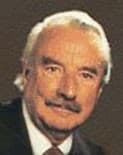
James Hadley Chase was a British author known for his crime and thriller novels. His notable works include "No Orchids for Miss Blandish," "This Way for a Shroud," and "Goldfish Have No Hiding Place," which often explore themes of violence and moral ambiguity. Chase's writing gained popularity in the mid-20th century, particularly in the realm of pulp fiction.
Similar books
- The Big Sleep
Raymond Chandler
4.0 (126k) average on GoodreadsThrillerFeatures a classic private detective navigating a complex web of crime and a seductive, dangerous woman.
- The Maltese Falcon
Dashiell Hammett
3.9 (89k) average on GoodreadsThrillerA hardboiled detective story with a mysterious woman, a valuable object, and double-crosses.
- Angels & Demons
Dan Brown
3.9 (2.7M) average on GoodreadsThrillerA Harvard symbologist races through Rome's ancient sites, deciphering cryptic clues to unmask the Illuminati and stop a vengeful plot to destroy the Vatican with a stolen antimatter weapon.
- Gone Girl
Gillian Flynn
4.1 (2.3M) average on GoodreadsThrillerA wife's sudden disappearance on her fifth anniversary reveals a web of lies and psychological warfare, exposing the secrets within a seemingly perfect marriage.
- The Girl on the Train
Paula Hawkins
3.9 (2.1M) average on GoodreadsThrillerA woman’s fascination with a seemingly perfect couple she watches from her daily train commute leads her into a dark investigation when she witnesses something that shatters their idyllic image.
- The Lovely Bones
Alice Sebold
3.8 (2M) average on GoodreadsFantasyA murdered teenage girl watches from the afterlife as her family struggles with grief and her killer remains free, wanting to bridge the gap between worlds to bring him to justice.






Enjoyed the summary?
A summary gives you the shape of the book. The book itself has the detail, the examples and the voice.
Find Goldfish Have No Hiding Place on AmazonAs an Amazon Associate, BookBrief earns from qualifying purchases. How we're funded