
Synopsis
Covers the whole plot, including the ending.
- Difficulty
- Easy
- Pacing
- Fast
- Mood
- Suspenseful, Gritty, Action-packed, Tense
- Read it if
- You enjoy fast-paced thrillers with a lone wolf protagonist, intricate conspiracies, and a strong sense of justice. Perfect for fans of military-grade action and a hero who lives by his own rules.
- Skip it if
- You prefer character-driven dramas over plot-heavy action, or dislike graphic violence and a morally ambiguous hero.
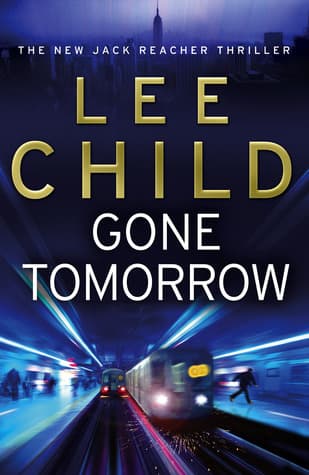
Gone Tomorrow Plot Summary
Covers the whole plot, including the ending.
A Suspicious Encounter on the Subway
At 2 AM on a New York City subway, Jack Reacher watches five other passengers. His sharp eye, trained by years as a military policeman, notices twelve signs of extreme nervousness in one woman. He concludes she is likely a suicide bomber. As the train nears Grand Central, Reacher confronts her, using a specific phrase to show his suspicion. The woman, Susan Mark, confirms his suspicion by her reaction and tries to detonate her device. Reacher disarms and stops her just as the train enters the station, stopping a disaster. He then learns she is a former Army intelligence officer.
Susan Mark's Desperate Plea and Death
After securing Susan Mark and her device, Reacher tries to learn her reasons. She says she was forced into the bombing plot, hinting at a large conspiracy involving a mysterious 'Mr. White' and a list of names. Before she can say more, an assassin, dressed as a transit worker, shoots her in the head through the subway window, killing her instantly. The assassin escapes, leaving Reacher with a dead body, a disarmed bomb, and a quickly growing mystery. Reacher, now a witness and a suspect, must deal with what happens next and the questions from the arriving NYPD.
Interrogation and Unraveling the Conspiracy
The NYPD and then the FBI, led by Agent Taryn Maureen and Agent John J. Boyle, take Reacher in. They are at first suspicious of Reacher but eventually believe his story after confirming Susan Mark's identity and background. Reacher learns that Susan was a highly decorated former military intelligence officer who her brother, Michael Mark, had recently reported missing. The FBI is also investigating several seemingly unrelated disappearances of other former military intelligence personnel, connecting them to Susan's case and suggesting a larger, more sinister plot.
Meeting Michael Mark and the Missing List
Reacher meets Michael Mark, Susan's younger brother, who is a computer programmer. Michael is very upset by his sister's death and wants to know why she was involved and who killed her. He reveals that Susan had been acting strangely, sending him cryptic messages and a partial list of names before she disappeared. This list, which includes former military intelligence officers, becomes an important piece of the puzzle. Reacher and Michael form an uneasy team, both seeking justice and answers for Susan, and begin to investigate the names on the list.
Tracking Down the 'List' and the Threat
Following clues from Susan's list, Reacher and Michael find that everyone on it was part of a secret military intelligence unit. This unit identified and tracked potential terrorists after 9/11. They soon realize that someone is hunting down and killing these former intelligence officers. The conspiracy involves powerful individuals trying to hide their past involvement with certain questionable operations, and the list is a threat to their secrecy. Reacher concludes that the group is trying to silence anyone who could reveal what they did.
The Role of Agent Maureen and Boyle
As Reacher and Michael investigate further, Agents Maureen and Boyle continue their own investigation, often at the same time or crossing paths with Reacher's efforts. Maureen, a smart and determined agent, slowly trusts Reacher more, recognizing his skills. Boyle, however, remains more cautious. It is eventually revealed that both agents have personal connections to the post-9/11 intelligence community, with Maureen having served in the military and Boyle having been involved in early counter-terrorism efforts. Their personal reasons for being involved in the case become clear as the conspiracy unfolds, leading to some disagreement within the FBI.
Confronting 'Mr. White' and the Inner Circle
Reacher and Michael identify 'Mr. White' as Arthur Scorpio, a high-ranking former government official. Scorpio orchestrated the assassinations to protect his reputation and career. Scorpio, along with powerful associates, engaged in illegal surveillance and intelligence gathering after 9/11. The former intelligence officers on Susan's list were witnesses or participants who could expose them. The group is killing anyone with compromising information, including Susan Mark, who tried to expose them by becoming a suicide bomber to draw attention to their plot.
The Deeper Motivation and the Cover-Up
Reacher finds that Scorpio and his associates were not just covering up past wrongdoings, but were actively trying to stop future revelations. They had created a secret network of surveillance and data mining, operating outside legal rules, and used the assassinations to tie up loose ends. The group's cruelty included framing innocent people and manipulating law enforcement to protect their interests. Susan Mark's desperate act was a last effort to expose this secret network, sacrificing herself to bring attention to the injustice and the danger Scorpio's group posed.
The Final Confrontation and Justice
Reacher, with help from Agents Maureen and Boyle, plans to expose Scorpio and his network. He uses their own methods against them, manipulating information and creating diversions to draw them out. The ending involves a tense confrontation where Reacher breaks down Scorpio's operation, stopping the assassins and gathering enough evidence to implicate Scorpio and his associates. The corrupt officials are exposed, and their network is shut down, bringing some justice for Susan Mark and the other victims. Reacher, as always, leaves after the job is done.
Principal Figures
Jack Reacher
Protagonist
Former military policeman, a nomadic vigilante driven by a strong moral code.
Jack Reacher is a highly intelligent and observant former U.S. Army military policeman. He is a drifter, without a fixed address or possessions, driven by a strong sense of justice. Reacher possesses exceptional combat skills, an encyclopedic knowledge of military procedures, and an uncanny ability to read people and situations. In 'Gone Tomorrow,' he is thrust into a complex conspiracy after his intervention on a subway train. He is relentless in pursuing the truth, even when it puts him in direct conflict with powerful figures and law enforcement. His primary motivation is to ensure justice for the wronged, particularly Susan Mark.
Relationships: Susan Mark (Victim he tries to save, then avenges); Michael Mark (Ally and brother of the victim); Agent Taryn Maureen (FBI agent, initially suspicious but eventually an ally); Agent John J. Boyle (FBI agent, initially suspicious and more cautious)
Susan Mark
Victim/Catalyst
Former highly decorated military intelligence officer forced into a bombing plot.
Susan Mark is a former U.S. Army intelligence officer, highly decorated and skilled, who becomes the catalyst for the entire plot. She is identified by Reacher as a potential suicide bomber, but her actions are revealed to be a desperate, self-sacrificing attempt to expose a vast conspiracy. She leaves cryptic clues and a list of names for her brother, Michael, before being assassinated. Her backstory and her desperate act drive Reacher's investigation, as he seeks to understand why such a capable woman would be driven to such an extreme measure and to avenge her death.
Relationships: Jack Reacher (Her rescuer and avenger); Michael Mark (Her brother and confidante)
Michael Mark
Supporting
Susan Mark's computer programmer brother, seeking answers and justice.
Michael Mark is Susan Mark's younger brother, a civilian computer programmer. Initially grieving and confused by his sister's actions and death, he becomes a crucial ally to Reacher. He possesses the partial list of names Susan sent him, which serves as a key piece of evidence. Michael is intelligent and resourceful in his own right, providing technical support and insight into Susan's past. His drive for justice for his sister fuels his determination to work with Reacher, even in dangerous situations, and he represents the emotional core of the investigation for Susan's family.
Relationships: Susan Mark (His sister, whom he seeks to avenge); Jack Reacher (His primary ally in the investigation)
Agent Taryn Maureen
Supporting
Determined FBI agent investigating the disappearances.
Agent Taryn Maureen is an FBI agent assigned to the case of Susan Mark and the related disappearances. She is sharp, professional, and initially skeptical of Reacher's involvement but gradually comes to trust his instincts and abilities. Maureen is dedicated to her job and is deeply invested in uncovering the truth behind the conspiracy, partly due to her own background in military intelligence. She often acts as a bridge between Reacher's vigilante methods and the official law enforcement procedures, providing institutional resources while also bending rules when necessary to achieve justice.
Relationships: Jack Reacher (Initially a suspect, then a reluctant ally); Agent John J. Boyle (Her partner in the FBI investigation)
Agent John J. Boyle
Supporting
Cautious FBI agent, partner to Agent Maureen.
Agent John J. Boyle is Agent Maureen's FBI partner. He is more by-the-book and cautious than Maureen, often expressing skepticism about Reacher's methods and presence. While he is committed to solving the case, he is also concerned with procedure and the potential legal repercussions of working outside established protocols. Boyle's character provides a foil to Maureen's more flexible approach and Reacher's outright disregard for rules. Despite his reservations, he ultimately contributes to the investigation, though often with a more restrained and analytical perspective.
Relationships: Jack Reacher (A figure of suspicion and exasperation); Agent Taryn Maureen (His partner in the FBI investigation)
Arthur Scorpio
Antagonist
High-ranking former government official, mastermind behind the assassinations.
Arthur Scorpio is the primary antagonist, operating under the alias 'Mr. White.' He is a powerful and ruthless former government official who orchestrated a series of assassinations to cover up his illegal activities and a secret, post-9/11 surveillance network. Scorpio is driven by a desire to protect his reputation, career, and the illicit power he has accumulated. He is cold, calculating, and willing to eliminate anyone who poses a threat to his secrets, including former military intelligence officers like Susan Mark. He represents the corrupting influence of unchecked power and secrecy within government structures.
Relationships: Jack Reacher (His ultimate adversary); Susan Mark (One of his victims targeted for elimination)
The Assassin (unnamed)
Mentioned
Professional killer who murders Susan Mark and targets others.
A highly skilled and professional assassin who kills Susan Mark on the subway, preventing her from revealing more information to Reacher. This individual works directly for Arthur Scorpio and is responsible for eliminating other former military intelligence officers on the 'list.' The assassin is cold, efficient, and methodical, representing the direct, deadly threat posed by Scorpio's network. Their actions underscore the ruthlessness and reach of the conspiracy, making the stakes clear for Reacher and Michael.
Relationships: Arthur Scorpio (His employer); Susan Mark (His victim)
The Cabal Members
Mentioned
Powerful individuals associated with Arthur Scorpio in the cover-up.
These are the unnamed but implied powerful individuals who are part of Arthur Scorpio's inner circle. They are equally culpable in the cover-up and the illegal activities, benefiting from the secrecy and contributing to the assassinations. They represent the systemic corruption that Reacher is fighting against, illustrating that Scorpio is not acting alone but is part of a network of influential people protecting their shared interests. Their collective power makes the conspiracy particularly dangerous and difficult to dismantle.
Relationships: Arthur Scorpio (Their leader and co-conspirator)
Themes & Insights
Justice vs. Law
This theme is central to 'Gone Tomorrow,' as Reacher works outside the law to achieve a deeper kind of justice. While the FBI agents, Maureen and Boyle, try to work within legal systems, Reacher's methods are often illegal but morally right. The book explores the idea that sometimes the law itself can be manipulated or not enough to deal with deep corruption, requiring an approach outside the law. Susan Mark's desperate act of becoming a suicide bomber to expose injustice also shows how conventional methods failed to provide a solution, forcing extreme actions.
“They were bad people. They needed to be stopped. That's all I needed to know.”
The Price of Secrecy and Power
The book looks at the dangerous results of unchecked power and government secrecy, especially after 9/11. Arthur Scorpio and his group are powerful individuals willing to commit terrible crimes to keep their past actions and current illegal surveillance network hidden. The systematic killing of former intelligence officers, including Susan Mark, shows how far powerful figures will go to keep their secrets and protect their positions. This highlights how absolute power corrupts and how accountability can disappear.
“Secrets were like cancers. They grew and spread and eventually killed everything around them.”
Duty and Sacrifice
The theme of duty and sacrifice is clearest in Susan Mark. As a former military intelligence officer, she felt a duty to expose the corruption she found, even if it meant sacrificing her own life in a desperate, morally unclear act. Reacher also acts from a sense of duty, though it is one he chose himself, to protect innocent people and bring criminals to justice, often at great personal risk. The book explores the different forms duty can take—from official military service to a personal moral command—and the sacrifices people make for what they believe is right.
“Sometimes, you have to do the wrong thing for the right reasons.”
Vigilance and Observation
Reacher's character shows great vigilance and observation, which is a key theme. The whole plot begins because Reacher notices the 'twelve signs' of a potential suicide bomber. His ability to read subtle clues, quickly analyze situations, and connect seemingly unrelated pieces of information is important for solving the complex conspiracy. The book stresses the importance of paying attention, of seeing more than the obvious, and how sharp observation can be the first defense against hidden threats. It contrasts Reacher's extreme awareness with the general public's lack of it.
“There are twelve things to look for. No one who has worked in law enforcement will ever forget them.”
Plot Devices & Literary Techniques
The Twelve Signs of a Bomber
A list of behavioral cues used by Reacher to identify a threat.
This is a specific, detailed list of twelve psychological and physical tells that Reacher, drawing on his military policing background, uses to identify Susan Mark as a potential suicide bomber. It functions as an immediate plot catalyst, establishing Reacher's extraordinary observational skills and setting the entire story in motion. It also serves as a narrative hook, instantly immersing the reader in Reacher's unique perspective and the high-stakes situation, making the threat tangible and immediate.
The List of Names
A cryptic roster of former intelligence officers, serving as a vital clue.
The list of names, partially sent by Susan Mark to her brother Michael, is a crucial MacGuffin that drives the plot forward. It represents the key to understanding the conspiracy, as each name on the list belongs to a former military intelligence officer targeted by Arthur Scorpio. Reacher and Michael's investigation revolves around deciphering the list's significance and tracking down the individuals on it, revealing the scope and nature of the cover-up. It provides a tangible goal for their investigation and connects the various victims.
The 'Mr. White' Alias
A shadowy pseudonym for the primary antagonist, creating initial mystery.
The alias 'Mr. White' is used by Susan Mark to refer to her coercer and the mastermind of the conspiracy, Arthur Scorpio. This pseudonym initially creates an aura of mystery and anonymity around the true antagonist, making him seem like an untouchable, omnipresent force. It symbolizes the hidden nature of the conspiracy and the difficulty in identifying its true leaders. Reacher's task involves not just stopping the immediate threat but unmasking the person behind the alias, adding a layer of detective work to the action.
The Subway Setting
A confined, public space for the initial, high-stakes confrontation.
The New York City subway at 2 AM serves as a highly effective setting for the opening scene. Its confined space, public nature, and potential for mass casualties immediately establish a sense of urgency and danger. The setting isolates Reacher with the potential bomber, forcing his immediate intervention and highlighting his unique ability to act under pressure. It also allows for the dramatic assassination of Susan Mark, demonstrating the ruthlessness of the antagonists and escalating the stakes from a potential bombing to a murder mystery.
Gone Tomorrow Quotes
“I was alone in a city of eight million people.”
“The only way to be sure is to be sure.”
“Hope for the best, plan for the worst.”
“The dead don't care about justice.”
“In an investigation, details matter. But in a fight, only results matter.”
“Fear is a reaction. Courage is a decision.”
“Sometimes the only way out is through.”
“Trust your gut, but verify with your eyes.”
“The past is a ghost. The future is a dream. All we have is now.”
“In a city this big, you're never more than six feet from a rat.”
“Rules are for people who can't think for themselves.”
“A good plan violently executed now is better than a perfect plan executed next week.”
“The truth doesn't care about your feelings.”
“You don't get to choose your enemies. They choose you.”
Quiz
10 questions on the plot and the characters. Each answer comes with a short explanation.
Question 1
What is the first suspicious behavior Jack Reacher notices about the woman on the subway that triggers his suspicion?
- She is wearing a heavy coat in warm weather
- She keeps checking her watch repeatedly
- She avoids eye contact with everyone
- She is carrying a large backpack
Show answer
A. She is wearing a heavy coat in warm weather Reacher's suspicion begins when he observes a woman wearing a heavy winter coat on a warm night, which matches one of the twelve signs of a potential suicide bomber he learned during his military police career.
Question 2
What organization does Susan Mark work for before her death?
- New York Police Department
- Department of Defense
- Central Intelligence Agency
- Federal Bureau of Investigation
Show answer
B. Department of Defense Susan Mark was a Department of Defense employee whose mysterious death becomes central to the plot after Reacher's subway encounter.
Question 3
What does Jack Reacher find in Susan Mark's apartment that becomes a crucial clue?
- A hidden safe with classified documents
- A photograph of a military unit in Afghanistan
- A list of names with dollar amounts
- A recording of threatening phone calls
Show answer
B. A photograph of a military unit in Afghanistan Reacher discovers a photograph showing Susan Mark's brother's military unit in Afghanistan, which connects to the larger conspiracy involving war crimes.
Question 4
Why do various government agencies become interested in Jack Reacher after the subway incident?
- They believe he was involved in Susan Mark's death
- They want to recruit him for counter-terrorism work
- They think he possesses information Susan Mark was carrying
- They suspect him of being a terrorist sympathizer
Show answer
C. They think he possesses information Susan Mark was carrying Multiple agencies pursue Reacher because they believe Susan Mark passed him sensitive information before her death, though in reality she gave him nothing.
Question 5
What is the primary motivation of the antagonists seeking the information Susan Mark possessed?
- To sell military secrets to foreign governments
- To cover up war crimes committed in Afghanistan
- To expose government corruption for personal gain
- To blackmail high-ranking officials
Show answer
B. To cover up war crimes committed in Afghanistan The conspiracy revolves around covering up atrocities committed by a Special Forces unit in Afghanistan, which Susan Mark's brother witnessed and documented.
Question 6
How does Jack Reacher initially try to verify his suspicions about the woman on the subway?
- He confronts her directly and asks questions
- He discreetly observes her for multiple signs from the list of twelve
- He alerts the subway conductor immediately
- He checks her bags when she isn't looking
Show answer
B. He discreetly observes her for multiple signs from the list of twelve Reacher methodically observes the woman for additional signs from the twelve-point checklist he memorized, confirming multiple indicators before taking action.
Question 7
What critical mistake do the conspirators make that allows Reacher to identify them?
- They use traceable communication methods
- They underestimate Reacher's investigative skills
- They leave physical evidence at crime scenes
- They confess to an undercover agent
Show answer
B. They underestimate Reacher's investigative skills The antagonists repeatedly underestimate Reacher's intelligence, training, and persistence, believing a civilian without resources couldn't uncover their sophisticated conspiracy.
Question 8
What thematic contrast does the book explore through Reacher's subway decision?
- Individual conscience versus bureaucratic procedure
- Urban isolation versus community connection
- Technological surveillance versus human observation
- Legal justice versus vigilante justice
Show answer
A. Individual conscience versus bureaucratic procedure The opening scene establishes the central theme of Reacher's personal moral code conflicting with official protocols, as he must decide whether to act on his training despite potential consequences.
Question 9
What specific detail about Susan Mark's brother's military service becomes key to unraveling the conspiracy?
- He was part of a unit that discovered mineral deposits in Afghanistan
- He witnessed his unit committing atrocities against civilians
- He stole weapons to sell on the black market
- He had secretly switched sides and joined the Taliban
Show answer
B. He witnessed his unit committing atrocities against civilians Susan Mark's brother documented war crimes committed by his Special Forces unit, and this evidence—which Susan possessed—threatens powerful people involved in the cover-up.
Question 10
How does the resolution of the subway situation ultimately connect to the larger conspiracy?
- The woman was a government agent testing Reacher's responses
- The woman's death reveals she was carrying information about the conspiracy
- Reacher finds a clue on the woman's body that leads him to Susan Mark
- The subway incident was staged to frame Reacher for terrorism
Show answer
B. The woman's death reveals she was carrying information about the conspiracy Susan Mark's suicide on the subway—which Reacher tried to prevent—was because she was being coerced over the war crimes evidence, making Reacher a witness and drawing him into the conspiracy.
Gone Tomorrow FAQ
What is 'Gone Tomorrow' about?
'Gone Tomorrow' follows Jack Reacher as he spots a potential suicide bomber on a late-night New York City subway train. The plot revolves around his decision to intervene, which leads him into a complex conspiracy involving government secrets, political cover-ups, and a desperate woman named Susan Mark who is being manipulated into a suicide mission.
Why should I read 'Gone Tomorrow'?
This book offers a tense, real-time thriller that begins with an immediate moral dilemma on a subway car and expands into a high-stakes conspiracy. Lee Child masterfully builds suspense around Reacher's signature analytical skills and physical prowess, while exploring themes of government accountability and personal sacrifice.
What is the background/setting of 'Gone Tomorrow'?
The story is set primarily in New York City, with key scenes unfolding in the subway system, Grand Central Station, and various urban locations. The late-night, gritty atmosphere of the city enhances the tension as Reacher navigates shadowy government operations and dangerous confrontations.
What are the most memorable quotes?
Notable quotes include the opening lines: 'Suicide bombers are easy to spot. They give out all kinds of tell-tale signs. Mostly because they're nervous. By definition they're all first-timers.' Another is Reacher's pragmatic thought: 'Will Reacher intervene, and save lives? Or is he wrong? Will his intervention cost lives—including his own?'
What writing style does the author use?
Lee Child employs a crisp, minimalist prose style with short sentences and precise details, creating a fast-paced, cinematic narrative. The writing is heavily focused on Reacher's internal logic and observational skills, enhancing the thriller's tension and realism.
What minor details add significant meaning?
The 'twelve things to look for' in suicide bombers, mentioned early on, subtly foreshadows the meticulous attention to detail Reacher uses throughout the investigation. Small clues like Susan Mark's nervous behavior and specific items she carries reveal layers of the conspiracy she's entangled in.
What are some subtle foreshadowing moments?
Reacher's initial hesitation on the subway foreshadows the moral complexities he'll face, where intervention might backfire. The mention of 'first-timers' hints at Susan Mark's manipulated inexperience, and references to law enforcement protocols early on set up later revelations about corrupt government agencies.
What unexpected character connections exist?
Susan Mark is revealed to be connected to a deep-seated government secret involving a military unit from the past, which ties back to Reacher's own history as an MP. This link draws Reacher deeper into the conspiracy, blurring lines between personal and professional stakes.
What are unspoken character motivations?
Susan Mark's actions are driven by coercion and fear, as she's blackmailed into the suicide mission due to a hidden secret. Reacher's motivation extends beyond mere heroism to a sense of justice and loyalty to his military past, pushing him to uncover the truth despite personal risk.
What psychological complexities do characters exhibit?
Reacher displays a blend of cold logic and underlying empathy, often calculating risks while feeling compelled to protect the vulnerable. Susan Mark embodies trauma and desperation, manipulated into a suicidal state, highlighting the psychological toll of secrecy and pressure.
What are the major emotional turning points?
Key emotional moments include Reacher's decision to approach Susan on the subway, triggering the chain of events; the revelation of Susan's backstory and coercion; and the climax where Reacher confronts the conspirators, balancing vengeance with the need to prevent further harm.
How do relationship dynamics evolve?
Reacher starts as a detached observer but develops a protective, almost paternal relationship with Susan Mark as he learns her plight. His interactions with government agents shift from suspicion to outright conflict, revealing alliances and betrayals that drive the narrative forward.
Which parts remain ambiguous or open-ended?
The full extent of the government conspiracy is left somewhat ambiguous, with hints of broader corruption beyond the immediate plot. Reacher's ultimate moral stance on intervention is nuanced, leaving readers to ponder the ethics of his actions in gray-area situations.
What are controversial scenes or decisions?
Reacher's initial confrontation with Susan on the subway is controversial, as it risks escalating the situation. Later, his aggressive tactics against government operatives spark debate over vigilante justice versus systemic corruption, challenging typical thriller tropes.
'Gone Tomorrow' ending explained: how it ends & what it means
The ending sees Reacher exposing the conspiracy and neutralizing the threats, but at a cost, with Susan Mark's fate underscoring the tragedy of manipulation. It concludes with Reacher moving on, suggesting that while justice is served, systemic issues persist, leaving a bittersweet tone about individual agency in a corrupt world.
About the author

Lee Child is a British author known for his thriller novels featuring the character Jack Reacher. His notable works include "Killing Floor," "Die Trying," "One Shot," "Gone Tomorrow," "The Affair," and "61 Hours." Child's writing is characterized by suspenseful plots and intricate storytelling, making him a prominent figure in contemporary fiction.
Similar books
- The Bourne Identity
Robert Ludlum
4.0 (397k) average on GoodreadsThrillerFeatures a skilled protagonist caught in a high-stakes conspiracy, similar to Reacher's predicament.
- American Assassin
Vince Flynn
4.2 (75k) average on GoodreadsThrillerBoth books feature lone operatives battling significant threats. However, Mitch Rapp's character is often more overtly political and driven by a strong sense of national duty and government affiliation. Reacher's motivations are more personal, rooted in a broader commitment to justice, and he operates entirely outside official structures, making his actions less about state security and more about individual morality.
- Angels & Demons
Dan Brown
3.9 (2.7M) average on GoodreadsThrillerA Harvard symbologist races through Rome's ancient sites, deciphering cryptic clues to unmask the Illuminati and stop a vengeful plot to destroy the Vatican with a stolen antimatter weapon.
- Gone Girl
Gillian Flynn
4.1 (2.3M) average on GoodreadsThrillerA wife's sudden disappearance on her fifth anniversary reveals a web of lies and psychological warfare, exposing the secrets within a seemingly perfect marriage.
- The Girl on the Train
Paula Hawkins
3.9 (2.1M) average on GoodreadsThrillerA woman’s fascination with a seemingly perfect couple she watches from her daily train commute leads her into a dark investigation when she witnesses something that shatters their idyllic image.
- The Da Vinci Code
Dan Brown
3.9 (1.9M) average on GoodreadsThrillerA symbologist and a cryptologist race through European landmarks, deciphering ancient codes and uncovering a conspiracy that could rewrite the foundations of Christianity.




Enjoyed the summary?
A summary gives you the shape of the book. The book itself has the detail, the examples and the voice.
Find Gone Tomorrow on AmazonAs an Amazon Associate, BookBrief earns from qualifying purchases. How we're funded