
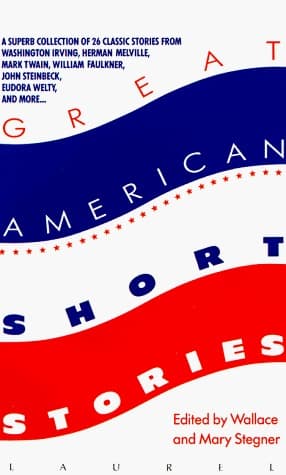
Synopsis
Covers the whole plot, including the ending.
- Difficulty
- Medium
- Pacing
- Variable
- Mood
- Diverse (Humorous, Gothic, Suspenseful, Realistic, Dark, Poignant)
- Read it if
- You want a comprehensive, chronological overview of the American short story's development, featuring many canonical works.
- Skip it if
- You prefer a single, continuous narrative or are looking for contemporary fiction exclusively.
Great American Short Stories Plot Summary
Covers the whole plot, including the ending.
Rip Van Winkle
Rip Van Winkle, a kind but lazy villager in a pre-Revolutionary War Dutch settlement in the Catskill Mountains, is nagged by his wife, Dame Van Winkle. He prefers hunting, fishing, and telling stories at the village inn over farm work. To escape his wife's scolding, he walks into the mountains with his dog, Wolf. There, he meets a mysterious man in old Dutch clothes carrying a keg. Rip helps the man carry the keg to a hollow, where he finds a group of silent men playing ninepins. After drinking some of their strong liquor, Rip falls into a deep sleep and wakes up twenty years later to a world he barely knows.
The Fall of the House of Usher
The unnamed narrator is called to the remote, decaying mansion of his childhood friend, Roderick Usher. Roderick suffers from a mysterious mental illness, made worse by the similar illness of his twin sister, Madeline. Roderick believes the house itself, with its crumbling appearance and dark pond, has a life that affects his family. As the narrator tries to comfort Roderick, Madeline's condition worsens, and she appears to die. They bury her in a vault inside the house, but Roderick's mental state declines further, marked by extreme sensitivity and fear. The narrator observes the oppressive atmosphere, strange art, and unsettling music Roderick creates, all adding to a sense of impending doom.
The Celebrated Jumping Frog of Calaveras County
The narrator, asked by a friend, looks for a Reverend Leonidas W. Smiley in a mining camp. Instead, he hears from Simon Wheeler a long, rambling story about Jim Smiley, a man who loved to gamble on anything, from dogfights to chicken fights. Wheeler's story focuses on Smiley's prized frog, Dan'l Webster, whom Smiley trained to jump higher than any other. Smiley is so sure of Dan'l's skills that he bets a stranger forty dollars on a jumping contest. While Smiley gets a frog for the stranger, the stranger fills Dan'l Webster with quail shot, making him unable to jump. The stranger wins the bet, outsmarting Smiley.
An Occurrence at Owl Creek Bridge
Peyton Farquhar, a civilian planter and Confederate supporter, stands on a railroad bridge in Northern Alabama, a noose around his neck, about to be hanged by Union soldiers. As the soldiers prepare, Farquhar's thoughts race, focusing on his family and a strong wish to escape. The plank beneath him is removed, and he falls. The rope breaks, and he plunges into the water below. He unties his bonds, dodges bullets, and swims to shore, escaping his pursuers. He starts a long, hard journey through a dark, unknown forest, driven by the hope of seeing his wife and children. He reaches his home, greeted by his wife, only for the story to abruptly return to reality.
The Open Boat
Four men—the captain, the oiler (Billie), the cook, and the correspondent—are adrift in a small dinghy off the coast of Florida after their steamship, the Commodore, sinks. The captain is hurt but remains calm and gives orders. The oiler and the correspondent take turns rowing, and the cook bails water. They face huge waves, cold, hunger, and tiredness, constantly looking for a lighthouse or a rescue boat. They bond through their shared experience, feeling a deep connection and understanding nature's indifference. Despite their desperate situation, they hold onto hope, discussing their chances of survival and the irony of their plight as they fight the sea.
A White Heron
Sylvia, a shy nine-year-old girl, lives with her grandmother in a remote New England forest, far from city life. She spends her days herding a cow named Mistress Moolly and exploring the woods, growing close to nature. One evening, she meets a charming young ornithologist looking for a rare white heron for his collection. He offers Sylvia ten dollars if she can lead him to the bird's nest. Sylvia is drawn to the hunter and the money, but she also feels a strong need to protect the wild creatures she knows. She finds the heron's nest high in a pine tree, but after a night of thought, she makes a silent choice.
To Build a Fire
A confident but inexperienced man travels alone through the brutal, sub-zero Yukon wilderness, with only his husky for company. He ignores an old-timer's warnings about traveling alone in such conditions. His goal is to reach a mining camp by six o'clock. The man is most concerned about the extreme cold, which he underestimates, relying on his practical skills rather than instinct. He falls through ice, getting his feet wet, and needs a fire to prevent frostbite. His first attempts to build a fire fail when a branch dumps snow on his small flames. As the cold gets worse, his fingers freeze, making it impossible to light matches or gather kindling, leading to a desperate fight for survival against nature.
The Gift of the Magi
Della and Jim Dillingham Young are a young couple in love but struggling financially, living in a small New York City apartment. With Christmas coming, Della wants to buy Jim a good present but only has $1.87. She has one treasure: her long, beautiful hair, which reaches below her knees. Jim owns a cherished gold watch, a family heirloom, but lacks a chain for it. In a selfless act, Della sells her hair to a wig maker for twenty dollars to buy Jim a platinum fob chain for his watch. When Jim comes home, he reveals his own sacrifice: he sold his watch to buy Della a set of ornate combs for her beautiful hair, leaving them both with useless gifts but a deep understanding of their love.
A Rose for Emily
The story tells of the life and death of Emily Grierson, a reclusive spinster from a prominent Southern family, from the townspeople's view. After her father dies, Emily becomes even more isolated. She starts a relationship with Homer Barron, a Northern foreman, but he mysteriously vanishes. The town notices a terrible smell from her house, but nothing is done. Emily becomes a complete recluse, refusing to pay taxes and eventually dying in her old, decaying mansion. After her funeral, the townspeople break down a locked door in her house and find Homer Barron's decaying body in a bed, next to an impression on a pillow and a single strand of Emily's gray hair.
The Lottery
In a small, seemingly perfect American village, the annual lottery is a long-held tradition, looked forward to by the community. On a summer morning, the villagers gather in the town square, children playing, adults chatting. Mr. Summers, the lottery official, arrives with the black wooden box holding the slips of paper. The head of each household draws a slip. Bill Hutchinson draws the marked slip, meaning his family will be in the second stage. Then, each member of the Hutchinson family—Bill, his wife Tessie, and their three children—draws a slip. Tessie Hutchinson protests, saying the drawing was unfair, but her pleas are ignored. She draws the slip with the black spot, and the villagers, including her own family, stone her to death, keeping their brutal tradition.
Barn Burning
Sarty Snopes, a ten-year-old boy, sees his sharecropper father, Abner Snopes, accused of barn burning in a justice-of-the-peace court. Abner is a bitter, violent man who feels constantly wronged by the wealthy landowners he works for, showing his anger through arson. Sarty is torn between his wish for truth and justice and his strong, fearful loyalty to his family. After Abner is told to leave the county, the family moves to another farm. Abner immediately ruins a rug in the new landlord's house and is charged to pay for it. He plans to burn down Major de Spain's barn. Sarty, unable to stand his father's destructive acts any longer, warns de Spain and then runs into the night, hearing gunshots behind him, signaling a clear break from his family.
A Good Man Is Hard to Find
A grandmother, her son Bailey, his wife, and their three children (June Star, John Wesley, and the baby) start a road trip from Georgia to Florida. The grandmother, a meddling and self-righteous woman, tries to convince Bailey to visit an old plantation she remembers in Tennessee instead. She secretly brings her cat, which causes a car accident when it escapes its basket. Stranded on a dirt road, the family is approached by three men, led by The Misfit, a famous escaped convict. The Misfit and his henchmen murder the family one by one. The grandmother tries to appeal to The Misfit's sense of decency and religion, believing she can save them, but her pleas fail. In her last moments, she has a brief, unclear moment of grace before being shot.
Great American Short Stories Characters
Rip Van Winkle
Protagonist
A lazy but good-natured villager who sleeps through a revolution.
Rip is a good-humored, easygoing man, beloved by the children and dogs of his village, but scorned by his wife for his aversion to work. He prefers to spend his time fishing, hunting, and telling stories rather than tending to his farm. He is a symbol of pre-Revolutionary American innocence and a character who finds freedom from domestic tyranny, albeit through supernatural means. His innocence and detachment from worldly concerns allow him to adapt, if bewilderedly, to a drastically changed society.
Relationships: Dame Van Winkle (nagging wife, source of his domestic misery); Wolf (loyal dog and companion); The villagers (initially his friends, later his bewildered audience)
Roderick Usher
Protagonist/Antagonist (to himself)
The last male descendant of the Usher line, suffering from extreme physical and mental decay.
Roderick is an artist, musician, and scholar, but also a hypochondriac and a man afflicted by a profound, inherited nervous disorder. He is acutely sensitive to light, sound, and taste, and believes his ancestral home possesses a sentience that mirrors and influences his own deteriorating mental state. He is a tragic figure, trapped by his lineage, his environment, and his own psychological torment. His artistic expressions, though morbid, are his only outlet.
Relationships: Madeline Usher (twin sister, deeply connected in a symbiotic and unsettling way); The Narrator (childhood friend, confidant, and witness to his downfall)
Jim Smiley
Supporting/Central Figure of the Anecdote
A compulsive gambler with an unusual talent for training animals.
Jim Smiley is a character defined by his insatiable passion for betting. He's an eccentric figure, always ready to wager on anything and everything, from dogfights to the most mundane occurrences. He's shrewd and confident in his abilities to train animals, particularly his jumping frog, Dan'l Webster. Despite his cleverness, he ultimately falls victim to an even craftier stranger, highlighting his own hubris. He embodies a certain frontier spirit of enterprise and risk-taking, albeit in an unconventional manner.
Relationships: Simon Wheeler (the storyteller of Smiley's exploits); Dan'l Webster (his prized, trained jumping frog)
Peyton Farquhar
Protagonist
A Confederate sympathizer whose execution sparks a vivid, desperate fantasy of escape.
Peyton Farquhar is a wealthy planter from Alabama, a civilian who yearns for military glory and actively supports the Confederate cause. He is depicted as a romantic idealist, willing to take risks for his beliefs, which ultimately leads to his capture and condemnation. His story delves into the psychological experience of facing death, where the mind creates an elaborate illusion of freedom to escape the grim reality. He is a man driven by a desire for honor and a deep love for his family, making his ultimate fate all the more tragic.
Relationships: His Wife (the object of his desire and motivation for escape); Union Soldiers (his captors and executioners)
The Correspondent
Protagonist/Narrator
A cynical but resilient shipwreck survivor who observes and reflects on their predicament.
The Correspondent is one of the four men in the dinghy, and often serves as the story's focalizing consciousness. He is intelligent and reflective, constantly pondering the indifference of nature and the meaning of their struggle. Initially cynical about human existence, his ordeal at sea fosters a deep sense of camaraderie and a new appreciation for life and shared human experience. He is a keen observer of human behavior under duress and the vast, impartial power of the ocean. His internal monologue provides much of the story's philosophical depth.
Relationships: The Captain (leader and source of calm authority); The Oiler (Billie) (fellow oarsman and hardworking companion); The Cook (fellow survivor, often less capable but present)
Sylvia
Protagonist
A young, innocent girl deeply connected to nature, facing a moral dilemma.
Sylvia is a nine-year-old girl who lives with her grandmother in the remote countryside, having moved from a crowded factory town. She has a profound, almost spiritual, connection to the natural world, spending her days exploring the woods and observing its creatures. She is shy, sensitive, and possesses a strong moral compass. Her encounter with the hunter forces her to confront the conflict between the allure of human connection and material reward, and her deep-seated loyalty to the wild. She represents innocence and the unspoiled beauty of nature.
Relationships: Her Grandmother (loving guardian); The Hunter (charming but morally conflicting suitor/tempter); Mistress Moolly (her cow, a constant companion)
The Man (in 'To Build a Fire')
Protagonist
An overconfident, inexperienced traveler battling the unforgiving Yukon wilderness.
The Man is a newcomer to the Yukon, lacking the imagination and respect for the brutal cold that is essential for survival in such an extreme environment. He is confident in his own abilities and dismisses the wisdom of experienced locals. His journey is driven by a simple, practical goal, but he fails to comprehend the true scale of the danger he faces. He represents the hubris of humanity against the indifference of nature, relying on intellect and technique rather than instinct and humility. His struggle is a stark depiction of man's vulnerability.
Relationships: The Dog (his loyal but instinctively wiser companion); The Old-Timer (a source of unheeded wisdom)
Della Dillingham Young
Protagonist
A loving wife who sacrifices her most prized possession for her husband's Christmas gift.
Della is a young, devoted wife living in poverty but rich in love for her husband, Jim. She is resourceful and deeply selfless, willing to part with her beautiful, long hair—her most cherished physical attribute—to buy Jim a meaningful Christmas present. Her actions are driven by pure, unconditional love and a desire to show her appreciation for her husband. She embodies the spirit of sacrificial love and the true meaning of giving, even when faced with extreme financial hardship.
Relationships: Jim Dillingham Young (her beloved husband, the recipient of her sacrifice)
Emily Grierson
Protagonist/Central Figure
A reclusive Southern spinster whose life and death become a town's morbid fascination.
Emily Grierson is the last scion of a once-prominent Southern family, a figure of both pity and fear for the townspeople. She is a symbol of the Old South's decaying aristocracy, clinging to outdated traditions and resistant to change. Her life is marked by isolation, a domineering father, and a tragic, possessive love. She is an enigma, her motivations and actions shrouded in mystery and the town's collective speculation. Her reclusiveness and refusal to conform make her a haunting figure, embodying decay, stubbornness, and a desperate grasp on the past.
Relationships: Her Father (domineering figure who shaped her isolation); Homer Barron (her lover, tragically killed and kept by her); The Townspeople (her observers, judges, and chroniclers)
Tessie Hutchinson
Protagonist/Victim
A villager who initially enjoys the lottery but becomes its unwilling victim.
Tessie Hutchinson is initially portrayed as a somewhat boisterous, latecomer to the lottery gathering, seemingly unconcerned with the proceedings. Her character shifts dramatically once her family draws the marked slip, and then again when she draws the final black-spotted paper. She transforms from a casual participant into a desperate, vocal protestor, pleading for fairness and attempting to deflect the outcome. She represents the individual's desperate struggle against a cruel, unthinking collective, and the horrifying reality of tradition when taken to its extreme. Her fate highlights the story's brutal critique of blind adherence to custom.
Relationships: Bill Hutchinson (her husband, who participates in her stoning); Her Children (who also participate in the stoning); The Villagers (her community, who turn on her)
Sarty Snopes
Protagonist
A young boy torn between loyalty to his family and his innate sense of justice.
Sarty is a ten-year-old boy, the son of Abner Snopes. He is small and frail but possesses a strong moral compass and an intuitive understanding of right and wrong, which clashes with his father's destructive nature. He struggles with the powerful pull of blood loyalty versus his own conscience. He is a sensitive observer, internalizing the fear and shame caused by his father's actions. His journey is one of moral awakening and the difficult choice to break free from a cycle of violence and injustice, even if it means betraying his own kin.
Relationships: Abner Snopes (his abusive, arsonist father); Lennie Snopes (his mother, who tries to protect him); Major de Spain (the landlord his father intends to harm)
The Grandmother (in 'A Good Man Is Hard to Find')
Protagonist
A manipulative, self-righteous woman who believes herself to be a 'lady' and a moral authority.
The Grandmother is a complex character, initially portrayed as selfish, manipulative, and hypocritical. She is obsessed with appearances, her own past, and what she perceives as 'goodness,' often using religion as a tool for moral superiority. She is a source of conflict and irritation for her family. However, when faced with The Misfit, she undergoes a profound, albeit ambiguous, transformation. In her final moments, she experiences a moment of genuine human connection and grace, blurring the lines between her earlier self-righteousness and a deeper understanding of universal humanity. She embodies the struggle for redemption.
Relationships: Bailey (her long-suffering son); The Misfit (her murderer, with whom she has a profound theological and existential debate)
Great American Short Stories Themes
Man vs. Nature/Indifference of the Universe
This theme looks at how humans struggle against nature's powerful, often uncaring forces. In 'The Open Boat,' the four men fight the sea, which is shown as beautiful but indifferent to their survival. They learn that nature is neither good nor bad, just unconcerned. Similarly, in 'To Build a Fire,' the Yukon wilderness acts as an opponent, its extreme cold slowly taking the man's life, highlighting his overconfidence in underestimating its power. Both stories show how small and vulnerable humans are when facing vast natural forces, suggesting that survival often needs humility and understanding one's place in nature.
“When it occurs to a man that nature does not regard him as important, and that she feels she would not lose her time breaking the small living thing by hand, it is a poignant discovery.”
The Weight of the Past and Tradition
This theme explores how the past—personal, family, or societal—deeply affects characters and communities. In 'A Rose for Emily,' Emily Grierson is trapped by her family's aristocratic past and the decaying traditions of the Old South, leading to her isolation and morbid secret. Her refusal to accept change and her literal clinging to the past (Homer Barron's body) are central. 'The Lottery' is a chilling example of the harm caused by blindly following tradition, where an old, brutal ritual is kept simply because 'it's always been done.' The villagers hold onto the lottery despite its horrific outcome, showing how tradition can override reason and morality. 'Rip Van Winkle' also shows the deep impact of a changed past, as Rip struggles to match his memories with a new, post-revolutionary America.
“The people had done it so many times that they only half listened to the directions; they all knew the ritual.”
The Nature of Good and Evil/Redemption
This theme looks at the complex moral nature of humans and their capacity for both bad acts and moments of grace. In 'A Good Man Is Hard to Find,' the Grandmother, initially self-centered and hypocritical, has a brief, unclear moment of grace just before her death by The Misfit. Her thought that 'He might have been one of my own children' suggests a break from her judgmental nature and a glimpse of universal love. The Misfit, a chilling example of nihilism, struggles with the idea of Jesus and the lack of clear moral lines. This story questions simple ideas of good and evil, suggesting that even in extreme depravity, a moment of spiritual awakening can occur. 'Barn Burning' also explores this through Sarty's moral fight against his father's destructive evil.
“She was a good woman, ... if it had been somebody there to shoot her every minute of her life.”
Isolation and Alienation
This theme explores the psychological and social distances that separate individuals from others and from society. In 'The Fall of the House of Usher,' Roderick and Madeline Usher are completely isolated in their decaying mansion. Their physical and mental decline is made worse by their seclusion and the oppressive atmosphere of their ancestral home. Their isolation is both a symptom and a cause of their madness. Emily Grierson in 'A Rose for Emily' shows extreme social isolation, living as a recluse after her father's death and Homer Barron's disappearance. Her resistance to change and her refusal to interact with the modern town lead to her deep loneliness and the shocking secret she keeps. These stories show how isolation can cause psychological decay, unusual behaviors, and a desperate clinging to one's own reality, however distorted.
“I was forced to fall back upon the primitive images of the family, and to remember that the Usher race, for several generations, had always been noted for a peculiar sensibility of temperament, displaying itself, at length, in a long line of an ancestry of high intellectual power, coupled with an almost morbid acuteness of the senses.”
The American Dream and Its Discontents
This theme explores the hopes and realities of American life, often showing the failures, struggles, and darker sides of seeking happiness and wealth. While not all stories are explicitly about the 'dream,' many touch on the disappointment or harsh realities faced by ordinary people. 'The Gift of the Magi,' though heartwarming, is set against poverty in New York City, where a young couple struggles to live, showing the economic challenges many face. 'Barn Burning' clearly portrays the exploitation of sharecroppers and the class conflict in seeking land and stability, with Abner Snopes's anger leading to destructive acts. These stories often reveal the gap between idealized American values and the often grim, unequal experiences of its citizens.
“One dollar and eighty-seven cents. That was all. And sixty cents of it was in pennies. Pennies saved one and two at a time by bulldozing the grocer and the vegetable man and the butcher until one’s cheeks burned with the silent imputation of parsimony that such close dealing implied. Three times Della counted it. One dollar and eighty-seven cents. And the next day would be Christmas.”
Plot Devices & Literary Techniques
Frame Story
A story within a story, often used to introduce a narrator or set a specific tone.
This device involves a narrative that encloses or 'frames' one or more other narratives. In 'The Celebrated Jumping Frog of Calaveras County,' the narrator's quest for information about Reverend Leonidas W. Smiley serves as the frame for Simon Wheeler's long, rambling anecdote about Jim Smiley and his frog. This allows for a distinct shift in voice and perspective, moving from the educated, somewhat detached narrator to Wheeler's folksy, colloquial storytelling. The frame story also highlights the humor in the narrator's frustration and the unexpected digression, making the central tale more engaging and character-driven.
Unreliable Narrator
A narrator whose credibility is compromised, intentionally or unintentionally.
An unreliable narrator casts doubt on the veracity of the events being recounted, forcing the reader to question what is real. In 'An Occurrence at Owl Creek Bridge,' the narrative seemingly depicts Peyton Farquhar's miraculous escape from hanging, only to reveal in the final paragraph that the entire escape was a vivid, desperate hallucination occurring in the instant before his death. This device creates a powerful twist, emphasizing the psychological intensity of the moment of death and the mind's capacity for self-deception. It plays with the reader's trust, making the ultimate truth more impactful and horrifying.
Foreshadowing
Hints or clues about future events in the story.
Foreshadowing subtly prepares the reader for later developments, building suspense and dramatic irony. In 'The Lottery,' early descriptions of the black box being 'shabby' and 'splintered,' and the children gathering stones, hint at the darker nature of the ritual, even amidst the cheerful atmosphere. Tessie Hutchinson's late arrival and her initial jovial attitude also subtly foreshadow her later, desperate protests. In 'To Build a Fire,' the old-timer's warning about not traveling alone in extreme cold directly foreshadows the man's fatal mistake. This device creates a sense of impending doom and makes the shocking climaxes more impactful.
Symbolism
The use of objects, people, or ideas to represent something else.
Symbolism imbues elements of a story with deeper meaning, enriching its themes. In 'The Fall of the House of Usher,' the decaying mansion itself symbolizes the Usher family's physical and psychological deterioration, with its fissure mirroring their own internal cracks. The black tarn reflects the house, suggesting a dark, subconscious connection. In 'A Rose for Emily,' Emily's decaying house symbolizes the crumbling aristocracy of the Old South and her own resistance to change, while the strand of gray hair found at the end symbolizes her morbid attachment to the past and the passage of time. These symbols amplify the stories' themes of decay, isolation, and the weight of history.
Great American Short Stories Quotes
“All of them, all of the living and all of the dead, were in a box, a box of darkness, a box of eternity.”
“No man is an island, entire of itself; every man is a piece of the continent, a part of the main.”
“The past is never dead. It's not even past.”
“It was a dark and stormy night.”
“I was born in a cross-fire hurricane.”
“So we beat on, boats against the current, borne back ceaselessly into the past.”
“Man is a creature of hope and invention, both of which can be extinguished by fear.”
“He knew that he was going to die, and he knew that he was going to die soon.”
“The world breaks everyone, and afterward, some are strong at the broken places.”
“It is a truth universally acknowledged, that a single man in possession of a good fortune, must be in want of a wife.”
“Death is the mother of beauty.”
“I could not stop for Death – He kindly stopped for me – The Carriage held but just Ourselves – And Immortality.”
“We are all in the gutter, but some of us are looking at the stars.”
“You never really understand a person until you consider things from his point of view… until you climb into his skin and walk around in it.”
Quiz
10 questions on the plot and the characters. Each answer comes with a short explanation.
Question 1
In Washington Irving's 'Rip Van Winkle,' what is the primary reason Rip falls asleep for twenty years?
- He was cursed by a local witch.
- He drank a powerful liquor offered by strange, old men in the mountains.
- He was trying to escape his nagging wife and found a secluded spot.
- He suffered from a rare sleeping sickness prevalent in the Catskill Mountains.
Show answer
B. He drank a powerful liquor offered by strange, old men in the mountains. Rip Van Winkle falls into his long slumber after drinking from a keg of potent liquor offered by Hendrick Hudson's ghostly crew in the Catskill Mountains.
Question 2
Which recurring theme is most prominent in Nathaniel Hawthorne's 'Young Goodman Brown'?
- The triumph of good over evil.
- The deceptive nature of appearances and the hidden sinfulness of humanity.
- The beauty and solace found in nature.
- The importance of community and collective faith.
Show answer
B. The deceptive nature of appearances and the hidden sinfulness of humanity. 'Young Goodman Brown' explores the idea that even seemingly pious individuals harbor hidden sins, leading Brown to a life of cynicism and distrust after his encounter in the forest.
Question 3
In Edgar Allan Poe's 'The Fall of the House of Usher,' what is the physical manifestation of Roderick Usher's deteriorating mental state?
- He develops a severe stammer and can no longer speak clearly.
- He becomes intensely sensitive to sensory input, such as light, sound, and touch.
- He suffers from periodic paralysis, losing control of his limbs.
- He develops a compulsive need to draw morbid and disturbing images.
Show answer
B. He becomes intensely sensitive to sensory input, such as light, sound, and touch. Roderick Usher's hyperesthesia, an extreme sensitivity to all sensory stimuli, is a key symptom of his mental and physical decay, mirroring the decay of his house and lineage.
Question 4
What is the primary conflict faced by the narrator in Charlotte Perkins Gilman's 'The Yellow Wallpaper'?
- Her struggle to escape an abusive marriage.
- Her battle against a physical illness that her husband refuses to acknowledge.
- Her descent into madness due to isolation and the oppressive 'rest cure' prescribed by her physician husband.
- Her desire to pursue a career as a writer against societal expectations.
Show answer
C. Her descent into madness due to isolation and the oppressive 'rest cure' prescribed by her physician husband. The narrator's 'rest cure' and forced inactivity, combined with her husband's dismissive attitude towards her mental state, directly contribute to her psychological breakdown and obsession with the wallpaper.
Question 5
In Stephen Crane's 'The Open Boat,' what is the significance of the correspondent's recurring thought about the oiler and the 'large picture of a life-boat man'?
- It highlights the correspondent's admiration for heroic figures.
- It emphasizes the arbitrary nature of survival and the indifference of nature.
- It suggests the correspondent has a premonition of the oiler's death.
- It symbolizes the oiler's superior strength and experience.
Show answer
B. It emphasizes the arbitrary nature of survival and the indifference of nature. The correspondent's memory of the 'large picture of a life-boat man' and the oiler's eventual death underscores the story's theme that nature is indifferent to human effort and strength, and fate can be arbitrary.
Question 6
What specific detail about the setting is crucial to the plot's resolution in Ambrose Bierce's 'An Occurrence at Owl Creek Bridge'?
- The bridge is made of wood, making it easily flammable.
- The bridge is guarded by a single, inexperienced sentry.
- The bridge is located far from any major towns, making escape difficult.
- The protagonist's entire escape and journey home occur only in his mind during the brief moments of his hanging.
Show answer
D. The protagonist's entire escape and journey home occur only in his mind during the brief moments of his hanging. The true nature of the setting is revealed at the end: the protagonist, Peyton Farquhar, never truly escapes. His elaborate journey is a hallucination in the instant of his death by hanging from Owl Creek Bridge.
Question 7
In Ernest Hemingway's 'A Clean, Well-Lighted Place,' what do the two waiters and the old man seek in the cafe?
- A place for lively conversation and social interaction.
- A temporary refuge from loneliness, despair, and the void of nothingness.
- A place to plan their daily activities and business ventures.
- A source of strong coffee to stay awake and productive.
Show answer
B. A temporary refuge from loneliness, despair, and the void of nothingness. The clean, well-lighted cafe serves as a sanctuary for the characters, offering a brief respite from the 'nada' (nothingness) and existential despair that pervades their lives, particularly for the old man and the older waiter.
Question 8
What is the primary reason the woman in Eudora Welty's 'A Worn Path' makes her arduous journey to town?
- To sell the produce she gathered from her farm.
- To visit her sick grandson and obtain medicine for him.
- To attend a special religious service.
- To escape the isolation of her rural life and interact with others.
Show answer
B. To visit her sick grandson and obtain medicine for him. Phoenix Jackson, despite her age and frailty, undertakes the challenging journey to Natchez to get medicine for her ailing grandson, demonstrating her profound love and dedication.
Question 9
In Flannery O'Connor's 'A Good Man Is Hard to Find,' what is the Misfit's philosophy regarding good and evil?
- He believes that good always triumphs over evil in the end.
- He argues that all actions are morally neutral, and labels of good or evil are arbitrary.
- He believes that if Jesus truly resurrected, then nothing else matters, and life has no real purpose or distinction between good and evil.
- He asserts that good deeds are merely a disguise for selfish motives.
Show answer
C. He believes that if Jesus truly resurrected, then nothing else matters, and life has no real purpose or distinction between good and evil. The Misfit expresses a nihilistic worldview, particularly regarding faith. He suggests that if Jesus did not truly resurrect, then there's no real distinction between good and evil, and therefore, 'no pleasure but meanness.'
Question 10
Which detail about the setting in William Faulkner's 'A Rose for Emily' helps to establish the decay and stagnation of both Emily and the Old South?
- The modern grocery store that opens across the street from her house.
- The fact that her house is the only one on the street that continues to pay taxes.
- Her large, decaying house, which emits a foul smell and is untouched by modern conveniences.
- The new asphalt sidewalks that are laid around her property.
Show answer
C. Her large, decaying house, which emits a foul smell and is untouched by modern conveniences. Emily's house, described as 'a big, squarish frame house that had once been white, decorated with cupolas and spires and scrolled balconies in the heavily lightsome style of the seventies,' stands as a monument of decay, resisting modernization and mirroring Emily's own stagnation and the lingering, decaying traditions of the Old South.
Great American Short Stories FAQ
What is the overarching theme or purpose of Wallace Stegner's "Great American Short Stories"?
Wallace Stegner's collection aims to chronicle the evolution of the American short story, showcasing its growth from early humorous legends and regional anecdotes to more complex, psychologically driven contemporary fiction. He curates stories that exemplify significant stylistic and thematic shifts, illustrating how the genre matured alongside the nation's literary identity. The collection serves as both an anthology and a historical survey of the form.
How does Stegner define or categorize 'greatness' in the context of these American short stories?
Stegner's definition of 'greatness' appears to encompass both historical significance and enduring literary quality. He selects stories that either pioneered new techniques, captured a particular era's zeitgeist, or achieved a timeless resonance through their character development and thematic depth. The collection implies that 'greatness' often involves a story's ability to reflect or shape the national consciousness.
Are there specific regional or historical periods that Stegner emphasizes more heavily in this collection?
The collection broadly covers the span of American literary history, moving from 19th-century frontier tales to mid-20th-century urban and suburban narratives. While not strictly confined to regions, stories often reflect their geographical origins, such as Southern Gothic, New England realism, or Western expansion narratives. The historical progression is a key organizing principle, demonstrating the genre's adaptation to different eras.
What kind of introduction or commentary does Stegner provide for the stories?
Stegner provides insightful introductions to the collection as a whole and often brief, illuminating notes for individual stories or sections. These commentaries typically contextualize the author and their work within the broader historical and literary landscape, highlighting their contributions to the short story form and offering critical perspectives that guide the reader's understanding. He acts as both curator and literary critic.
Does Stegner include any of his own short stories in this anthology?
While Stegner himself was an accomplished short story writer, this particular collection, "Great American Short Stories," is curated by him and focuses on the works of other notable American authors. His role is that of editor and commentator, not a contributor of his own fiction within the main body of the anthology. His own stories would be found in separate collections of his work.
How does the inclusion of early humorous legends like those by Mark Twain or Bret Harte set the stage for later, more complex works?
The early humorous legends, often characterized by colloquial language and regional eccentricities, establish a distinctively American voice and a focus on character-driven narrative, even if simplistic. They introduce themes of individualism and the American experience, which are later explored with greater psychological depth and moral ambiguity by authors like Hemingway or Faulkner. This progression showcases the evolution from anecdote to nuanced art.
What recurring motifs or symbols can be observed across different eras of stories in the collection?
Recurring motifs often include the struggle between individual freedom and societal constraints, the search for identity in a vast landscape, the disillusionment with the American Dream, and the impact of nature on human psychology. Symbols like the frontier, the isolated homestead, the bustling city, and specific regional flora or fauna often appear, adapting their meaning to the evolving historical context. The journey, both physical and metaphorical, is also a constant.
How do the character archetypes evolve from the 19th-century 'rugged individual' to the 20th-century 'alienated urbanite'?
The 19th-century 'rugged individual' often embodies self-reliance, resourcefulness, and a connection to nature, facing external challenges with pragmatic grit. As the collection progresses, characters become more introspective and internally conflicted. The 'alienated urbanite' frequently struggles with existential angst, social isolation, and a sense of disconnection from traditional values, reflecting the complexities and anxieties of modern industrial society. This shift highlights a move from external conflict to internal psychological drama.
Are there subtle stylistic connections between authors from different periods that Stegner hints at?
Stegner often implicitly or explicitly draws connections between authors by highlighting their shared thematic concerns or narrative innovations. For instance, he might note how a certain realism developed by a 19th-century writer laid groundwork for the more stark verisimilitude of a 20th-century author, or how a focus on dialect evolved into sophisticated interior monologue. These connections reveal a continuous thread of literary experimentation and influence across generations.
How does the psychological depth of characters change from earlier to later stories in the anthology?
Early stories often present characters with clear motivations and external conflicts, their psychology largely inferred from their actions. As the anthology progresses, authors delve into complex interior monologues, unreliable narration, and nuanced emotional states, revealing characters' subconscious drives, anxieties, and moral ambiguities. This shift reflects a growing literary interest in Freudian concepts and the complexities of human consciousness, moving beyond simple heroism or villainy.
What psychological impact do the settings (e.g., frontier, small town, city) have on the characters across different stories?
Settings profoundly shape character psychology. The frontier often fosters resilience, self-reliance, and sometimes loneliness or paranoia due to isolation. The small town can induce claustrophobia, conformity, or a deep sense of community and tradition, influencing characters' moral frameworks. The city frequently breeds anonymity, alienation, ambition, and a sense of being overwhelmed, leading to existential crises or a search for meaning in a vast, indifferent landscape. Each setting acts as a psychological crucible.
How do themes of trauma or disillusionment manifest psychologically in the characters of the post-WWI/WWII stories?
In post-WWI/WWII stories, characters often exhibit profound psychological scars, manifesting as nihilism, cynicism, or a pervasive sense of loss and meaninglessness. Veterans like those in Hemingway's stories might display emotional detachment, an inability to reconnect with civilian life, or a reliance on ritual to cope with trauma. Women characters often grapple with societal expectations, personal grief, and a yearning for agency in a changed world, reflecting widespread societal disillusionment.
Are there examples where a character's internal monologue or stream of consciousness significantly alters the reader's psychological understanding?
Yes, particularly in stories from the early to mid-20th century. Authors like William Faulkner or Virginia Woolf (if an American contemporary is included) utilize stream of consciousness to immerse the reader directly into a character's fragmented thoughts, memories, and perceptions. This technique reveals deep-seated anxieties, unspoken desires, and the often-irrational workings of the mind, providing a far more intricate psychological portrait than external description alone could achieve. It challenges the reader to piece together meaning.
Which story, or type of story, might be considered the most 'American' in its themes and why?
While subjective, a strong case could be made for stories that explore themes of individualism, the frontier spirit, the pursuit of the American Dream (and its failures), or the clash between nature and civilization. Stories featuring characters like those in Jack London's wilderness tales or Flannery O'Connor's explorations of Southern religious fervor deeply embed themselves in distinct American cultural landscapes and philosophical debates, making them quintessentially 'American' in their resonance. The stories that grapple with the nation's identity and contradictions often feel most 'American'.
How does Stegner's selection implicitly argue for the short story's importance over the novel in certain periods?
Stegner's emphasis on the short story's evolution suggests that it was often the primary vehicle for literary experimentation and capturing immediate social shifts, especially in the 19th and early 20th centuries. Its brevity allowed for focused psychological studies, sharp social critiques, and the rapid dissemination of new narrative styles, sometimes making it more agile than the longer, more structurally demanding novel. He implies the short story was a vital laboratory for American literary identity.
Is there a 'missing' type of American short story that one might expect to see but isn't prominently featured in Stegner's collection?
Given the collection's publication era, one might argue for a less prominent representation of diverse voices that gained more recognition later in the 20th century, such as a broader range of African American authors beyond the Harlem Renaissance, or a stronger emphasis on Native American or Asian American narratives. While Stegner aimed for a historical survey, later anthologies often expand the definition of 'American' to include a wider spectrum of cultural experiences. His selection reflects the prevailing literary canon of his time.
How might a contemporary reader's interpretation of these stories differ from that of a reader when the anthology was first published?
A contemporary reader might bring a more critical lens to issues of race, gender, and class, questioning narrative perspectives that were once considered normative. They might also interpret psychological motivations through a modern understanding of trauma or mental health, or analyze environmental themes with greater urgency. Earlier readers might have focused more on moral lessons or historical realism, while today's readers might prioritize deconstruction and intersectionality, leading to different insights and critiques of the same text.
What is Stegner's ultimate message or insight about the 'American character' as revealed through these stories?
Stegner's collection ultimately suggests that the 'American character' is multifaceted and constantly evolving, marked by a tension between fierce individualism and a yearning for community, a pragmatic resilience, and a deep-seated idealism often tempered by disillusionment. He reveals a character shaped by vast landscapes, historical upheavals, and an ongoing quest for identity and meaning, often finding truth in the everyday struggles and triumphs of ordinary people. The stories collectively paint a portrait of a nation in perpetual self-discovery.
Does the collection lean more towards optimistic or pessimistic views of the American experience?
The collection presents a nuanced, rather than strictly optimistic or pessimistic, view. While early stories might contain elements of frontier optimism and a belief in progress, later stories often delve into profound disillusionment, social critique, and the darker aspects of human nature. Stegner provides a realistic portrayal that encompasses both the triumphs and the significant failures, the hopes and the despairs, reflecting a complex and often contradictory American experience. It's a journey from simpler certainties to modern ambiguities.
About the author
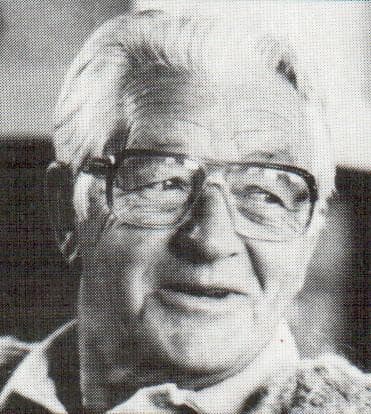
Wallace Earle Stegner was an American novelist, short story writer, environmentalist, and historian, often called "The Dean of Western Writers". He won the Pulitzer Prize in 1972 and the U.S. National Book Award in 1977.
Similar books
- Nineteen Eighty-Four
George Orwell
4.2 (5.5M) average on GoodreadsFictionWinston Smith dreams of truth and rebellion in a world where Big Brother watches all, but he confronts the terrifying power of a regime that controls not just actions, but thoughts.
- The Frozen River
Ariel Lawhon
4.4 (600k) average on GoodreadsFictionIn 1789 Maine, a heroic midwife's diary helps her expose a murder and get justice in a town that wants to silence her.
- A Man Called Ove
Fredrik Backman
4.4 (569k) average on GoodreadsFictionA stubborn widower, who lives by strict rules, finds his quiet world changed by a lively new family next door, making him face his past and find happiness in human connection.
- The Art of Racing in the Rain
Garth Stein
4.2 (452k) average on GoodreadsFictionThrough the eyes of Enzo, a wise and observant dog, a race car driver's family navigates a journey of love, loss, and resilience, learning that life's most important lessons often come in the curves, not just on the straightaways.
- The Colour of Magic
Terry Pratchett
4.0 (425k) average on GoodreadsFictionOn a discworld hurtling through space on the back of a giant turtle, an inept wizard and his naive, walking-luggage-toting tourist embark on a chaotic, belief-fueled journey to the very edge of their flat planet, encountering dragons that only exist if you believe in them.
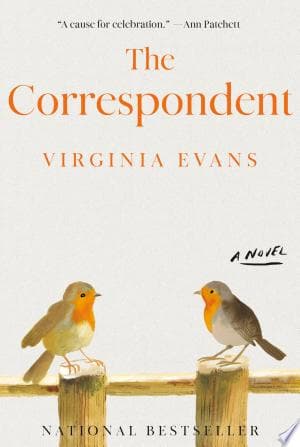
- The Correspondent
Virginia Evans
4.5 (391k) average on GoodreadsFictionA distinguished lawyer's life of carefully written letters, both sent and unsent, reveals a past heartbreak, making her confront forgiveness and the power of written words.





Enjoyed the summary?
A summary gives you the shape of the book. The book itself has the detail, the examples and the voice.
Find Great American Short Stories on AmazonAs an Amazon Associate, BookBrief earns from qualifying purchases. How we're funded