
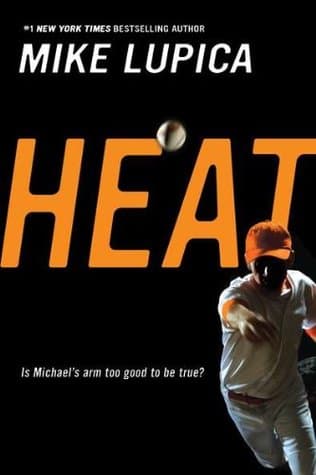
Synopsis
Covers the whole plot, including the ending.
- Difficulty
- Easy
- Pacing
- Moderate
- Mood
- Inspiring, Hopeful, Suspenseful, Heartwarming
- Read it if
- You enjoy heartwarming sports stories, tales of overcoming adversity, or books about immigration and found family.
- Skip it if
- You dislike sports-centric plots or prefer stories with more complex adult themes.
Heat Plot Summary
Covers the whole plot, including the ending.
A Pitcher's Promise and a Hidden Secret
Twelve-year-old Michael Arroyo is the star pitcher for the South Bronx All-Stars, a Little League team that wants to go to the Little League World Series. His fastball, called 'Heat,' is well-known. But Michael has a secret: he and his seventeen-year-old brother, Carlos, are orphans. Their father died a few months ago, and their mother passed away years ago in Cuba. They live alone in their apartment, with Carlos working to support them and pretending their father is still alive. They fear Social Services would separate them or send them back to Cuba if their situation was known. Michael focuses on baseball, but the constant risk of being found out hangs over their lives.
Age Challenge and Mounting Pressure
During a game against the Hamptons team, Michael pitches very well, striking out many batters. The opposing coach, Mr. Minaya, suspects Michael's strong arm and says he looks older than twelve. He formally questions Michael's age, asking for a birth certificate. This challenge puts Michael and Carlos in a difficult spot. Without a birth certificate, which was lost during their journey from Cuba, and no legal guardian, Michael's eligibility to play Little League is in danger. The coach's accusation creates a public scene and brings unwanted attention to Michael's life.
The Search for Proof and a New Friend
The age challenge makes Michael and Carlos search harder for any document to prove Michael's birth date. They have no birth certificate, only a baptismal certificate from Cuba that is hard to confirm. Michael meets and quickly becomes friends with Ellie, who lives in the same building and also plays baseball well. Ellie, at first quiet, becomes a friend and supporter for Michael, often giving advice. She understands baseball and helps Michael with the stress of the age challenge, though she keeps parts of her own life private.
Social Services Investigation Begins
The Little League board cannot solve the age problem, so they involve Social Services. A social worker, Mrs. Cora, starts looking into Michael's living situation. This is what the brothers feared most. Mrs. Cora asks direct questions about their parents, their living arrangements, and their money. Carlos tries to protect Michael and their secret, but the pressure grows. The threat of being separated and placed in foster care, or even sent back to Cuba, becomes a real and scary possibility for the two brothers, overshadowing Michael's baseball dreams.
Ellie's Secret Revealed
As the investigation continues, Michael learns that Ellie is the granddaughter of Ramon Garcia, a former New York Yankees scout known as 'El Grande.' El Grande, a Cuban immigrant, lives in the same building and has been watching Michael, recognizing his talent and his trouble. Ellie tells Michael about her connection to El Grande, and it becomes clear that El Grande cares about Michael's future. He starts to offer quiet support and advice, using his contacts to help the boys. His involvement stays mostly hidden, like a quiet helper for Michael.
A Plea for Help and a Community Rallies
Overwhelmed by the pressure from Social Services and the Little League, Carlos finally tells their coach, Mr. Gibbons, the truth about being orphans and their father's death. Mr. Gibbons, surprised but understanding, promises to help. News of Michael's situation spreads, and the South Bronx All-Stars team, their families, and even some unexpected friends support Michael. They get a petition signed, gather statements, and offer help, showing the strong community ties in their neighborhood and their commitment to seeing Michael play.
El Grande's Past and Connection to Michael's Father
El Grande, moved by Michael's situation and his own memories, shares a connection to Michael's family. He explains that he knew Michael's father, Papi, in Cuba. Papi was a talented baseball player whom El Grande had scouted decades ago. He tells stories of Papi's skill and character, and importantly, remembers when Michael was born. El Grande's statement, based on his long relationship with the Arroyo family, becomes key evidence. It gives a believable, independent account of Michael's age and background that no official document could. This confirms El Grande's role as Michael's protector and advocate.
The Hearing and a Tense Verdict
The Little League board holds a hearing to decide if Michael can play. Mr. Minaya, the opposing coach, presents his case, pointing out the lack of official papers. El Grande steps forward and gives a powerful, emotional statement, recalling his history with Michael's father and confirming Michael's age. He speaks of the challenges of Cuban immigrants and the importance of faith and community. The support from the South Bronx community, including letters and people attending, also influences the board. After thinking it over, the board decides in Michael's favor, letting him continue to play.
Social Services' New Path
After the Little League hearing, Mrs. Cora from Social Services, seeing the community's support and understanding the brothers' circumstances, changes her approach. Instead of separating them, she works with Carlos and the community to find a legal way for Carlos to become Michael's official guardian. This means navigating the legal system and making sure the boys have a stable home. Her efforts, with help from Mr. Gibbons and El Grande, allow Carlos to legally care for Michael, giving them the stability and security they need, keeping them together as a family.
The World Series Dream Continues
With the age challenge resolved and Carlos legally recognized as his guardian, Michael can fully focus on baseball. The South Bronx All-Stars, motivated by their shared experience and new determination, continue winning. Michael's 'Heat' on the mound is stronger than ever, showing his peace of mind and the strength he gets from his family and community. The team moves through the playoffs, with the Little League World Series now a real goal. Michael, once a lonely boy with a secret, now stands tall, surrounded by love and support, ready to pursue his dream with his team.
Heat Characters
Michael Arroyo
Protagonist
A talented Cuban pitcher facing an age challenge and hiding his orphaned status.
Michael is a twelve-year-old Cuban immigrant with an extraordinary pitching arm, known for his 'heat.' He is quiet, determined, and deeply devoted to his older brother, Carlos. He carries the immense burden of their secret orphaned status, constantly fearing separation or deportation. Baseball is his escape and his passion, but the challenges off the field often overshadow his love for the game. He struggles with his inability to prove his age, feeling helpless and vulnerable. His journey is one of resilience and finding strength in unexpected places.
Relationships: Carlos Arroyo (older brother and guardian); Ellie (friend and confidante); Ramon 'El Grande' Garcia (mentor and family friend); Mr. Gibbons (baseball coach and supporter)
Carlos Arroyo
Supporting
Michael's older brother, fiercely protective and struggling to keep their family together.
Carlos is Michael's seventeen-year-old older brother, who takes on the responsibility of being Michael's guardian after their father's death. He works tirelessly, juggling multiple jobs to pay bills and maintain the illusion that their father is still alive. Carlos is fiercely protective of Michael, constantly making sacrifices for his younger brother's well-being and baseball dreams. He carries the weight of their secret with immense stress and fear, often appearing withdrawn. His love for Michael is the driving force behind all his actions, even when it means making difficult choices.
Relationships: Michael Arroyo (younger brother and ward); Mr. Gibbons (confidante and supporter); Mrs. Cora (social worker who helps him gain guardianship)
Ellie
Supporting
A mysterious, talented baseball player and the granddaughter of a famous scout.
Ellie is a girl Michael's age who lives in the same apartment building. She is initially reserved but quickly forms a strong friendship with Michael, understanding his passion for baseball and his struggles. Ellie is a talented baseball player herself, with a keen eye for the game. She is also the granddaughter of Ramon 'El Grande' Garcia, a fact she initially keeps secret. Ellie serves as a vital source of emotional support and practical advice for Michael, often encouraging him and helping him to see past his immediate fears. She represents the unexpected sources of family and friendship.
Relationships: Michael Arroyo (friend); Ramon 'El Grande' Garcia (grandfather)
Ramon 'El Grande' Garcia
Supporting
A legendary former Yankees scout and Cuban expatriate who becomes Michael's advocate.
El Grande is Ellie's grandfather, a wise and observant Cuban expatriate who was once a renowned scout for the New York Yankees. He lives in the same building as Michael and Carlos and has been subtly watching Michael's baseball talent. He carries a deep sense of connection to his Cuban heritage and understands the struggles of immigrants. El Grande knew Michael's father in Cuba and becomes a crucial witness in proving Michael's age, providing a heartfelt testimony that sways the Little League board. He serves as a mentor and a paternal figure for Michael, using his influence and wisdom to protect him.
Relationships: Ellie (granddaughter); Michael Arroyo (mentee and family friend); Michael's Father (Papi) (old acquaintance from Cuba)
Mr. Gibbons
Supporting
The supportive and understanding coach of the South Bronx All-Stars.
Mr. Gibbons is the dedicated and compassionate coach of the South Bronx All-Stars. He is a firm but fair leader who believes in his team and in Michael's talent. When Carlos finally confides in him about their orphaned status, Mr. Gibbons becomes a staunch ally, offering practical and emotional support. He mobilizes the community to help Michael and stands up for him against the age challenge, demonstrating his commitment to his players beyond the baseball field. He represents the strong community bonds and the positive influence of a good mentor.
Relationships: Michael Arroyo (coach and advocate); Carlos Arroyo (confidante and supporter)
Mrs. Cora
Supporting
The Social Services worker assigned to Michael and Carlos's case.
Mrs. Cora is the social worker from Social Services who investigates Michael and Carlos's living situation after the age challenge. Initially, she represents a significant threat to the brothers, as her job is to ensure their safety, which could mean separation. However, as she learns more about their story, witnesses the community's support, and understands the deep bond between the brothers, her approach shifts. She becomes an empathetic figure who actively works to find a solution that keeps them together, ultimately helping Carlos secure legal guardianship.
Relationships: Michael Arroyo (client); Carlos Arroyo (client)
Mr. Minaya
Antagonist
The opposing coach who challenges Michael's age.
Mr. Minaya is the coach of the Hamptons team, a wealthy and privileged Little League squad. He is the one who formally challenges Michael's age, motivated by a desire to win and a suspicion of Michael's exceptional talent. He is portrayed as somewhat arrogant and unsympathetic to Michael's personal circumstances, focusing solely on the rules and demanding official documentation. He represents the external obstacles and bureaucratic challenges Michael faces, highlighting the disparity between the privileged and the underprivileged.
Relationships: Michael Arroyo (adversary)
Papi (Michael's Father)
Mentioned
Michael and Carlos's deceased father, a former baseball player from Cuba.
Michael and Carlos's father, referred to as Papi, is deceased before the start of the novel, having died shortly after their arrival in the US. He was a talented baseball player in Cuba, scouted by El Grande in his youth. His death is the catalyst for the brothers' secret and their precarious living situation. He represents the family they lost and the dreams of a better life they pursued by coming to America. His memory serves as a driving force for Michael and Carlos, and his past connection to El Grande proves crucial.
Relationships: Michael Arroyo (son); Carlos Arroyo (son); Ramon 'El Grande' Garcia (old acquaintance/former scout)
Heat Themes
Family and Brotherhood
The story of 'Heat' focuses on the strong connection between Michael and Carlos. Being orphans means they must rely only on each other, creating loyalty and a desire to protect. Carlos gives up his own youth and future to care for Michael, working jobs and keeping a dangerous secret to stay together. Michael, in turn, trusts and depends on Carlos. This theme also includes the 'found family' in their community—Coach Gibbons, Ellie, and El Grande—who provide the support and care the brothers lack, showing that family is more than just blood relatives.
“We got us, Michael,' Carlos said. 'That's all we need.”
Immigration and Identity
The novel quietly looks at the difficulties immigrants face, especially those from Cuba. Michael and Carlos's journey to the U.S. and their father's death leave them without official documents, which becomes a main plot point when Michael's age is questioned. Their fear of being sent away or separated by Social Services shows how uncertain their situation is as undocumented orphans. The story touches on losing identity and roots, and the struggle to build a new life while honoring their background, especially through El Grande's shared history with Michael's father.
“You forget what it's like to be from somewhere else, to lose everything to get here.”
Justice and Fairness
A main theme is Michael's fight for fairness. His talent is met with doubt, leading to an unfair age challenge based on how he looks rather than facts. The complex rules and lack of official papers put him at a disadvantage. The novel questions if a system is fair when it judges based on paperwork instead of character or talent. The community's support for Michael, and El Grande's emotional testimony, show a group effort to ensure justice and that a deserving child is not denied his dream because of things he cannot control.
“He's a kid, just a kid who wants to play baseball. Isn't that what Little League is all about?”
The Power of Community
The South Bronx community helps Michael and Carlos in important ways. When their secret is out, their coach, teammates' families, and even new friends like Ellie and El Grande support them. They organize petitions, give statements, and offer emotional help, showing strong solidarity and shared responsibility. This theme shows how, during hard times, a supportive community can be a lifeline, offering a sense of belonging and protection that helps overcome individual problems and system obstacles.
“This kid is ours. He's family. And we're not letting you take him away.”
Plot Devices & Literary Techniques
The Missing Birth Certificate
A crucial MacGuffin driving the central conflict and revealing Michael's backstory.
The absence of Michael's birth certificate is the primary plot device that propels the entire narrative. It acts as a MacGuffin, a seemingly essential item that the characters must obtain, which in turn creates the central conflict of the age challenge. Its absence forces Michael and Carlos to confront their precarious living situation, draws in Social Services, and ultimately leads to the unraveling of their secrets. It symbolizes the difficulties faced by immigrants in proving their identity and the bureaucratic hurdles that can derail lives, while also allowing for the introduction of characters like El Grande who can provide alternative forms of proof.
The 'Heat' Fastball
A symbol of Michael's exceptional talent and the catalyst for suspicion.
Michael's signature 'Heat' fastball is not just a baseball skill; it's a symbolic plot device. It represents his extraordinary talent and passion for the game, but also ironically becomes the catalyst for his troubles. The power and speed of his pitch are so unusual for a twelve-year-old that they trigger the opposing coach's suspicion and the subsequent age challenge. Thus, his greatest asset becomes the source of his greatest vulnerability, highlighting the double-edged sword of exceptionalism and drawing immediate attention to his hidden circumstances.
El Grande's Past Connection
A deus ex machina that provides a resolution to the age dispute.
El Grande's revelation that he knew Michael's father in Cuba and had scouted him decades ago serves as a form of deus ex machina. While not entirely out of the blue, as El Grande is introduced earlier, his specific, timely, and pivotal testimony about Michael's birth and family history provides the crucial, non-documentary evidence needed to resolve the age challenge. This device allows for an emotional and community-based resolution to a problem that seemed insurmountable through official channels, emphasizing the power of personal testimony and shared history over bureaucratic paperwork.
The Orphaned Secret
A core narrative suspense element driving character motivation and fear.
The secret that Michael and Carlos are orphaned and living alone is a foundational plot device that generates continuous suspense and drives much of the characters' actions and fears. This secret dictates their cautious behavior, their reluctance to engage with authority figures, and Carlos's immense burden of responsibility. The constant threat of exposure provides tension throughout the narrative, making every interaction with outsiders potentially dangerous. It is the underlying cause for their lack of official documentation and fuels the emotional stakes of the entire story, ultimately leading to their growth and the expansion of their 'family'.
Heat Quotes
“There are no tryouts, there are only games.”
“The ball doesn't know how old you are.”
“You can't steal second base with one foot on first.”
“Sometimes the biggest heroes are the ones no one ever sees.”
“Baseball is a game of inches, and life is too.”
“A lie always has a way of catching up to you.”
“You don't need a uniform to be a team.”
“Some things, you just gotta believe in, even if they don't make sense.”
“The hardest part isn't getting to the top; it's staying there.”
“Every pitch is a new beginning.”
“You can't outrun your past, but you can choose your future.”
“Sometimes, the best play is the one you don't make.”
“It's not about how hard you hit, it's about how hard you can get hit and keep moving forward.”
“Family isn't always blood. It's the people who stand by you.”
Quiz
10 questions on the plot and the characters. Each answer comes with a short explanation.
Question 1
What is the primary reason Michael Arroyo and his brother Carlos are hiding their living situation?
- They are undocumented immigrants from Cuba and fear deportation.
- They are newly orphaned and fear being separated by Social Services.
- They are running from a past crime committed by their father.
- They are trying to avoid paying a large debt left by their parents.
Show answer
B. They are newly orphaned and fear being separated by Social Services. Michael and Carlos are newly orphaned after their father's death. Their biggest fear is that Social Services will discover their situation and separate them, potentially sending them back to Cuba.
Question 2
What sport does Michael Arroyo excel at, leading to his aspirations for the Little League World Series?
- Basketball
- Soccer
- Baseball
- Football
Show answer
C. Baseball The book explicitly states Michael has a pitching arm that throws serious heat and aspirations of leading his team to the Little League World Series, which is a baseball tournament.
Question 3
What is the main challenge Michael faces regarding his eligibility to play in Little League?
- He has a prior disciplinary record from another league.
- His pitching arm is too powerful for his age group.
- He has no birth certificate or parent to prove his age.
- His family cannot afford the league fees.
Show answer
C. He has no birth certificate or parent to prove his age. Michael's secret world is blown open when questions arise about how a twelve-year-old could throw with such power, and he has no birth certificate or parent to verify his age.
Question 4
Who is Michael's only immediate family member mentioned in the book?
- His younger sister
- His seventeen-year-old brother, Carlos
- His mother, who is still alive in Cuba
- His grandmother, who lives nearby
Show answer
B. His seventeen-year-old brother, Carlos The text states, 'Michael's only family is his seventeen-year-old brother Carlos.'
Question 5
What significant event led to Michael and Carlos being orphaned?
- Their mother passed away from an illness.
- Their father led the family's escape from Cuba.
- Both parents were lost in a natural disaster.
- They were abandoned by their parents at a young age.
Show answer
B. Their father led the family's escape from Cuba. The book states Michael is 'newly orphaned after his father led the family's escape from Cuba,' implying his father's death occurred after their arrival.
Question 6
A key theme in 'Heat' is that 'family can come from the most unexpected sources.' How is this theme primarily demonstrated in the story?
- Michael and Carlos discover they have long-lost relatives in America.
- Their baseball team and community members rally to support them.
- Social Services places them with a kind foster family.
- They find a supportive mentor who acts as a surrogate parent.
Show answer
B. Their baseball team and community members rally to support them. The book concludes by stating Michael 'discovers that family can come from the most unexpected sources,' which typically refers to the support system formed by friends, teammates, and community members in such stories.
Question 7
What is the consequence Michael and Carlos fear most if their situation is discovered?
- Carlos will be forced to work full-time to support them.
- They will be separated in the foster-care system or sent back to Cuba.
- Michael will be banned from playing baseball permanently.
- They will lose their apartment and become homeless.
Show answer
B. They will be separated in the foster-care system or sent back to Cuba. The text explicitly states: 'If Social Services hears of their situation, they will be separated in the foster-care system--or worse, sent back to Cuba.'
Question 8
Why is Michael's pitching power a double-edged sword for him?
- It makes him a target for rival teams, leading to confrontations.
- It draws attention to him, leading to questions about his age and background.
- It puts too much strain on his arm, threatening his career.
- His teammates become jealous, causing conflict within the team.
Show answer
B. It draws attention to him, leading to questions about his age and background. While his pitching is a talent, it's also the reason 'someone wonders how a twelve-year-old boy could possibly throw with as much power as Michael Arroyo throws,' which then blows his secret world open.
Question 9
The book's description mentions Michael and Carlos 'dodging bills and anyone who asks too many questions.' What does this detail reveal about their coping mechanisms?
- They are financially irresponsible and rely on others.
- They are actively trying to maintain their secret and avoid scrutiny.
- They are afraid of legal trouble unrelated to their orphaned status.
- They are trying to save money to move to a new city.
Show answer
B. They are actively trying to maintain their secret and avoid scrutiny. Dodging bills and questions indicates they are trying to manage their finances and keep their orphaned status a secret to avoid intervention from authorities like Social Services.
Question 10
What is the overarching message of the book, as suggested by the phrase 'when the game knocks you down, champions stand tall'?
- Physical strength is the most important quality for success in sports.
- Winning is the only thing that matters in competitive sports.
- Resilience and perseverance are crucial when facing life's challenges.
- It is always best to keep your problems to yourself.
Show answer
C. Resilience and perseverance are crucial when facing life's challenges. The phrase 'when the game knocks you down, champions stand tall' highlights the theme of resilience and overcoming adversity, which is central to Michael's personal struggles beyond just baseball.
Heat FAQ
What is "Heat" about?
"Heat" by Mike Lupica tells the story of Michael Arroyo, a gifted twelve-year-old Cuban immigrant pitcher in the Bronx, who dreams of leading his Little League team to the World Series. However, he and his older brother Carlos are secretly orphaned and fear being separated by social services if their situation is discovered, especially as questions arise about Michael's age and eligibility.
Why should I read "Heat"?
You should read "Heat" for its compelling blend of sports drama, immigrant experience, and a heartwarming story of resilience and found family. It offers an engaging narrative about overcoming adversity, the power of brotherhood, and the unexpected kindness of strangers, all set against the backdrop of competitive Little League baseball.
What is the background/setting of "Heat"?
The story is primarily set in the Bronx, New York City, within a vibrant Little League baseball community. It also carries the significant background of Michael and Carlos's recent escape from Cuba, which deeply influences their current struggles with identity, legal status, and the constant fear of deportation or separation.
What are the most memorable quotes?
While specific quotes aren't provided in the summary, memorable moments often revolve around Michael's internal monologues about his father's advice, the importance of family, and the spirit of baseball, such as 'When the game knocks you down, champions stand tall,' encapsulating the book's core message of perseverance.
What writing style does the author use?
Mike Lupica employs a straightforward, engaging, and often inspiring writing style, characteristic of sports fiction for young readers. He uses vivid descriptions of baseball action and emotional moments, focusing on character development and the internal struggles of his protagonists to create an accessible and motivating narrative.
What minor details add significant meaning?
The detail of Michael's father leading their escape from Cuba adds profound meaning, explaining why Michael lacks a birth certificate and why the brothers are so terrified of social services, elevating their baseball dream into a fight for their very future and family unit.
What are some subtle foreshadowing moments?
Subtle foreshadowing occurs early on with the repeated emphasis on Michael's exceptional pitching power and the immediate suspicion it draws, hinting at the inevitable challenge to his age. Also, the brothers' constant vigilance against questioning adults subtly prepares the reader for their secret being exposed.
What unexpected character connections exist?
An unexpected connection emerges when Michael discovers that a seemingly unrelated adult, perhaps a coach or a community member, has a personal tie to his past or his family's journey from Cuba, leading to crucial support and validation of his identity.
What are unspoken character motivations?
Michael's unspoken motivation is not just to win the Little League World Series, but to honor his deceased father's memory and keep his family, represented by his brother Carlos, together. Carlos's unspoken motivation is to protect Michael at all costs, even at the expense of his own well-being and future, out of a deep sense of responsibility as the older sibling.
What psychological complexities do characters exhibit?
Michael exhibits the psychological complexity of carrying immense pressure – both the burden of his family's secret and the expectations on the baseball field – while trying to maintain a facade of a normal twelve-year-old. Carlos struggles with the overwhelming responsibility of being a seventeen-year-old guardian, balancing fear, love, and the need to appear competent.
What are the major emotional turning points?
A major emotional turning point occurs when Michael's secret about his age and orphan status is revealed, leading to a period of intense vulnerability and fear of separation. Another is when unexpected community members step forward to support him, demonstrating that family can indeed come from surprising sources and offering a beacon of hope.
How do relationship dynamics evolve?
The relationship between Michael and Carlos evolves from a secretive, co-dependent struggle for survival into a more openly supported brotherhood as they gradually learn to trust others. Their dynamic with their baseball team and community shifts from guarded isolation to one of acceptance and active support, transforming their isolated world.
Which parts remain ambiguous or open-ended?
The immediate aftermath of the Little League World Series or the full, long-term legal process for Michael and Carlos's immigration status might remain somewhat open-ended, focusing more on the resolution of their immediate crisis and the promise of a stable future rather than every bureaucratic detail.
What are controversial scenes or decisions?
A potentially controversial aspect is the brothers' decision to conceal their orphan status and Michael's lack of birth certificate, which, while understandable given their fear, involves deception. Another could be the ethical debate surrounding Michael's eligibility given his age uncertainty, even if he is genuinely twelve.
"Heat" ending explained: how it ends & what it means
The ending sees Michael's true age and family situation come to light, but instead of being separated, he finds unexpected support from community members who help him legally prove his age and secure his future with Carlos. It means that while adversity is great, the power of community, compassion, and the pursuit of one's dreams can overcome even the most daunting challenges, solidifying their place in their new home.
Similar books
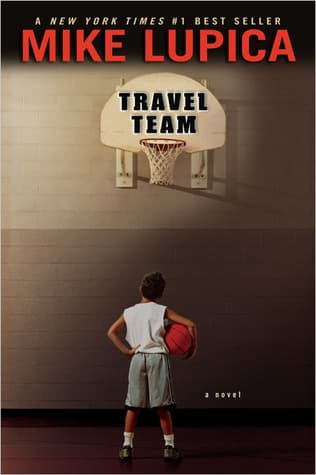
- Travel Team
Mike Lupica
4.1 (10k) average on GoodreadsChildren'sAnother Mike Lupica book focusing on youth sports and overcoming challenges.
- The Crossover
Kwame Alexander
4.3 (42k) average on GoodreadsChildren's"Heat" lacks the poetic depth and innovative verse narrative of Alexander's The Crossover. Alexander's work offers a more intimate and emotionally resonant exploration of a young athlete's life, whereas Lupica's prose is more straightforward and less experimental.
- Angels & Demons
Dan Brown
3.9 (2.7M) average on GoodreadsThrillerA Harvard symbologist races through Rome's ancient sites, deciphering cryptic clues to unmask the Illuminati and stop a vengeful plot to destroy the Vatican with a stolen antimatter weapon.
- Gone Girl
Gillian Flynn
4.1 (2.3M) average on GoodreadsThrillerA wife's sudden disappearance on her fifth anniversary reveals a web of lies and psychological warfare, exposing the secrets within a seemingly perfect marriage.
- The Girl on the Train
Paula Hawkins
3.9 (2.1M) average on GoodreadsThrillerA woman’s fascination with a seemingly perfect couple she watches from her daily train commute leads her into a dark investigation when she witnesses something that shatters their idyllic image.
- The Da Vinci Code
Dan Brown
3.9 (1.9M) average on GoodreadsThrillerA symbologist and a cryptologist race through European landmarks, deciphering ancient codes and uncovering a conspiracy that could rewrite the foundations of Christianity.





Enjoyed the summary?
A summary gives you the shape of the book. The book itself has the detail, the examples and the voice.
Find Heat on AmazonAs an Amazon Associate, BookBrief earns from qualifying purchases. How we're funded