

Synopsis
Covers the whole plot, including the ending.
- Difficulty
- Medium
- Pacing
- Moderate
- Mood
- Gritty, Suspenseful, Brooding, Cynical
- Read it if
- You enjoy gritty, character-driven mysteries with a cynical, world-weary detective.
- Skip it if
- You prefer fast-paced action thrillers over methodical investigative work and psychological depth.
Hope to Die Plot Summary
Covers the whole plot, including the ending.
The Hollander Murders
The novel opens with the discovery of Byrne and Susan Hollander, a seemingly perfect upscale couple, murdered in their luxurious brownstone. The scene is violent, suggesting a home invasion or targeted attack. Police, led by Lieutenant Jimmy Faber, quickly arrive, starting a high-profile investigation that immediately draws the city's attention. The initial focus is on finding perpetrators and understanding the motive for such a brutal act against a respected couple, as the community deals with the horror. A careful look at the scene shows a struggle, but few immediate clues, leaving investigators with a complex puzzle.
The Killers Found Dead
Days after the Hollander murders, a break in the case happens when two men, identified as the likely killers—a low-level thug named Eddie and his partner—are found dead in a Brooklyn apartment. The official police theory, quickly accepted by Lieutenant Faber and the department, is that Eddie killed his partner and then committed suicide, closing the Hollander case. The scene is presented as a murder-suicide, with the door locked from the inside, supporting the idea that no one else was involved. This quick resolution brings relief to the police and public, eager to move past the crime.
Matthew Scudder's Unease
Despite the official closure of the Hollander case, Matthew Scudder, a former NYPD detective now an unlicensed private investigator, feels uneasy. He reads newspaper accounts and police reports, but something about the neatness of the Brooklyn murder-suicide doesn't seem right. He questions the convenience of the killers being found dead so quickly, and how they died. Scudder's intuition, sharpened by years on the force and observing human nature, tells him there's a missing piece, a hidden hand. He suspects a 'third man' planned everything, manipulating the two thugs and then killing them.
Initial Investigations and Skepticism
Driven by his suspicion, Scudder starts his own investigation. He visits the Hollander brownstone, the Brooklyn apartment where the killers were found, and talks to people connected to the case, using his network and ability to blend in. His questions are met with resistance and skepticism, especially from Lieutenant Faber, who is satisfied with the official resolution and sees Scudder's involvement as an annoyance. Scudder understands he is working against the official story, and that proving his theory of a third man will be hard, requiring him to find evidence no one else is looking for.
Unraveling the Hollander's Past
Scudder shifts his focus from the crime scenes to the victims, Byrne and Susan Hollander. He investigates their backgrounds, finances, and relationships, suspecting the murder motive might be deeper than a random home invasion. He uncovers details about Byrne Hollander's business dealings, which, while seemingly legitimate, suggest a ruthless ambition and perhaps unsavory connections. Susan Hollander's life also reveals complexities beneath her perfect socialite image. Scudder believes that understanding the Hollanders' true lives will reveal the identity and motive of the 'puppet master' he suspects.
The 'Third Man' Hypothesis
As Scudder gathers information, his 'third man' idea becomes stronger. He believes this person, the true mastermind, carefully planned the Hollander murders, hired Eddie and his partner to do them, and then killed them to cover his tracks. This mastermind, Scudder believes, is cunning, cold, and ruthless. The motive, he suspects, is not random but deeply personal or financial, connected to the Hollanders' lives in a way the police missed. Scudder realizes he is dealing with a very intelligent and dangerous person who operates in secret.
Uncovering the Mastermind's Motive
Scudder's investigation leads him to uncover complex financial dealings and personal betrayals involving Byrne Hollander. He discovers that Hollander had made powerful enemies through his business, and that one person, a mysterious figure named Walter Penn, had a strong motive for revenge or profit. Penn, a seemingly respectable businessman, had been wronged by Hollander in the past. Scudder begins to see how Penn could have planned the entire plot, using the two street thugs as expendable pawns to achieve his goal of eliminating the Hollanders and covering his tracks.
Confrontation and Danger
As Scudder gets closer to Walter Penn, the danger grows. Penn, realizing he is being investigated, tries to intimidate Scudder, first subtly, then more directly. Scudder faces threats to his own life and to those he cares about. He knows he is dealing with a man who has already shown he will kill to protect his secrets. The stakes become very high, and Scudder must navigate a dangerous path, knowing one wrong move could cost him everything. He is alone in his pursuit, as the police still refuse to acknowledge his findings, leaving him to face Penn alone.
The Final Confrontation
The novel ends in a tense and dangerous confrontation between Matthew Scudder and Walter Penn. Scudder, having gathered enough circumstantial evidence and insight into Penn's methods, corners him, not necessarily with legal proof, but with the chilling truth of his actions. Penn, a man of cold calculation, tries to outmaneuver Scudder, using his intelligence and resources to escape justice. The confrontation is not a simple shootout but a battle of wits and wills, where Scudder must rely on his experience, his understanding of human depravity, and his moral compass to expose Penn's crimes and bring a form of justice to the Hollanders' deaths.
Aftermath and Unresolved Justice
Afterward, Walter Penn's role as the mastermind is exposed, though the exact legal consequences may remain unclear, reflecting the often-imperfect nature of justice. Scudder's relentless pursuit brings understanding and closure, even if it doesn't always result in a clear victory in the eyes of the law. The novel concludes with Scudder thinking about the darkness he has uncovered, the insidious nature of evil, and the constant struggle to find truth and meaning in a morally ambiguous world. He is left with the weight of his discoveries, confirming his role as an outsider seeking justice where official channels fail.
Principal Figures
Matthew Scudder
Protagonist
A former NYPD detective turned unlicensed private investigator.
Matthew Scudder is a complex and introspective character, a recovering alcoholic haunted by past mistakes, particularly the accidental shooting of a child during his time as a cop. He operates outside the law, taking cases that often involve the morally ambiguous and the forgotten. Driven by a deep-seated, albeit often weary, sense of justice, Scudder possesses an acute understanding of human nature and the darker currents of New York City. He is a keen observer, relying on intuition and a network of street-level contacts rather than official police procedures. His personal demons fuel his empathy for victims and his relentless pursuit of truth.
Relationships: Elaine Mardell (Long-term girlfriend, source of stability and emotional support.); TJ (Young, street-smart associate who sometimes aids Scudder in his investigations.); Lieutenant Jimmy Faber (Former colleague, now a skeptical and often antagonistic police contact.)
Walter Penn
Antagonist
The cold, calculating mastermind behind the Hollander murders.
Walter Penn is the 'puppet master' Scudder seeks, a seemingly respectable businessman with a brilliant, albeit twisted, mind. He is intelligent, meticulous, and utterly ruthless, capable of planning and executing complex schemes without emotional attachment. Penn is driven by a deep-seated grievance against Byrne Hollander, fueled by past financial betrayals, and seeks not just revenge but also to protect his own interests. He views others, including his hired killers, as disposable pawns in his elaborate plans, demonstrating a chilling lack of empathy. His calm demeanor belies a profoundly dangerous and manipulative personality.
Relationships: Byrne Hollander (Business rival and victim, target of Penn's elaborate revenge/scheme.); Eddie and his partner (Hired killers, manipulated and then eliminated by Penn.)
Lieutenant Jimmy Faber
Supporting
NYPD Lieutenant, initially resistant to Scudder's theories.
Lieutenant Jimmy Faber represents the official police establishment. He is competent and dedicated but also pragmatic and prone to accepting the most straightforward explanation for a crime. Having closed the Hollander case with the murder-suicide theory, he is initially dismissive and even annoyed by Scudder's persistent inquiries, viewing them as unnecessary interference in a solved case. Faber values efficiency and public perception, making him reluctant to reopen a complex investigation. Despite his resistance, he respects Scudder's past abilities, creating a dynamic of grudging tolerance rather than outright hostility.
Relationships: Matthew Scudder (Former colleague, now a reluctant source of information and an irritant.)
Byrne Hollander
Mentioned/Victim
Wealthy businessman and one of the murder victims.
Byrne Hollander is one of the two murder victims whose death sets the plot in motion. Initially presented as a successful and respected figure, Scudder's investigation gradually reveals a more complex and morally ambiguous past. Hollander was a shrewd and ambitious businessman, whose dealings likely created enemies and resentment. His past actions, particularly towards Walter Penn, become the key to understanding the motive behind his brutal murder. He is the catalyst for the entire story, even in death, as Scudder uncovers the dark undercurrents of his life.
Relationships: Susan Hollander (Wife and co-victim.); Walter Penn (Former business associate, now his killer.)
Susan Hollander
Mentioned/Victim
Byrne Hollander's wife and co-victim in the brutal home invasion.
Susan Hollander is the other victim of the brutal double murder. Like her husband, she is initially presented as part of an affluent and respectable couple. While less is revealed about her individual past compared to Byrne, her death is equally shocking and contributes to the public's demand for justice. Her role in the narrative is primarily as a victim, serving to highlight the senseless violence and the depth of the crime. Scudder's investigation touches upon her life to understand the full scope of the Hollanders' world, but her individual character is less explored than Byrne's.
Relationships: Byrne Hollander (Husband and co-victim.)
Eddie (and his partner)
Supporting/Victims
The two thugs initially blamed for the Hollander murders.
Eddie and his unnamed partner are the street-level criminals who are quickly identified as the Hollander's killers and then conveniently found dead in a murder-suicide. They are depicted as petty thugs, easily manipulated and disposable. Their deaths are crucial to Walter Penn's plan to cover his tracks. While they carry out the initial violence, their true role is that of pawns, highlighting the mastermind's callousness and efficiency. Their brief appearance and rapid elimination serve to misdirect the police and underscore Scudder's suspicion of a larger conspiracy.
Relationships: Walter Penn (Their manipulator and ultimate killer.)
Elaine Mardell
Supporting
Scudder's girlfriend, providing emotional support and a touchstone to a normal life.
Elaine Mardell is Matthew Scudder's long-term girlfriend and a significant presence in his life. She offers him emotional stability, understanding, and a connection to a more conventional existence that Scudder often struggles with. While not directly involved in his investigations, her presence provides a grounding force for Scudder, reminding him of the personal stakes and the possibility of a life beyond the darkness he constantly confronts. She is a source of comfort and quiet support, accepting Scudder for who he is, flaws and all.
Relationships: Matthew Scudder (Long-term romantic partner.)
Themes & Insights
Justice vs. Law
This theme explores the difference between legal justice, represented by the police, and a more personal, often outside-the-law justice Scudder pursues. The police are content to close the Hollander case with a convenient murder-suicide, prioritizing efficiency and public perception over deeper truth. Scudder, however, wants to uncover the true perpetrator, even if it means operating outside the law. This shows the novel's doubt about official systems and supports the individual's role in seeking actual justice, regardless of its legal standing. For example, Scudder's pursuit of Walter Penn is about exposing the truth, not getting a conviction.
“Sometimes the law gets it wrong. Sometimes the law just doesn't go deep enough.”
The Nature of Evil
The novel looks at the subtle nature of evil, especially through Walter Penn. Unlike the crude violence of the initial killers, Penn shows a more chilling, intellectual evil—a cold, calculating manipulation that sees human lives as disposable. This theme contrasts obvious, street-level crime with the more insidious evil that can hide behind a respectable appearance. Scudder's journey confronts this deeper, more dangerous depravity, suggesting that the most dangerous criminals are not always those who fit a stereotype, but those who operate with cunning and detachment.
“The evil wasn't in the blood or the violence. It was in the mind that planned it, the mind that saw other people as pieces on a chessboard.”
Consequences of the Past
The past drives the story, both for the victims and the main character. Byrne Hollander's past business dealings and betrayals directly lead to his murder, as Walter Penn's motive comes from old grievances. Similarly, Scudder's own past as a police officer, marked by a tragic accidental shooting, still affects him and shapes his approach to justice. The novel suggests that actions, good or bad, have lasting effects that eventually catch up with people, showing how the past influences the present and future.
“The dead don't stay buried, not really. They leave echoes, and sometimes those echoes are loud enough to kill.”
Isolation and Connection
Scudder's journey is often one of isolation, as he operates outside the official system and is frequently alone in his suspicions. He struggles with his own problems and often feels disconnected from the world. However, the novel also explores the importance of fragile connections—his relationship with Elaine, his interactions with TJ, and even his difficult rapport with Faber. These connections provide brief moments of relief and humanity in a dark world, showing that even in solitary pursuits, human bonds offer a vital anchor. Scudder's isolation highlights the difficulty of his work, but his connections remind him of what he is fighting for.
“He was a man alone, chasing ghosts, but sometimes even ghosts needed a witness.”
Plot Devices & Literary Techniques
The 'Third Man' Hypothesis
Scudder's intuitive theory that a hidden mastermind orchestrated the crimes.
This device serves as the central mystery and driving force of the plot. From the moment the initial killers are found dead, Scudder's intuition tells him a 'third man' is involved, a puppet master pulling the strings. This hypothesis immediately sets him apart from the official police investigation and creates narrative tension. It allows the author to explore themes of manipulation, hidden evil, and the inadequacy of superficial conclusions. Scudder's relentless pursuit of this unseen figure is what propels the story forward, transforming a seemingly closed case into a complex psychological thriller.
Red Herring
The apparent murder-suicide of the initial killers, designed to mislead investigators.
The discovery of Eddie and his partner dead in a locked room, staged as a murder-suicide, functions as a classic red herring. It's a plausible, convenient explanation that satisfies the police and public, allowing the official case to be closed quickly. This device highlights the cunning of the true antagonist, Walter Penn, who expertly manipulates the scene to divert suspicion. For Scudder, however, it acts as a catalyst for his deeper investigation, as the very neatness of the red herring raises his suspicions, forcing him to look beyond the obvious and uncover the hidden truth.
The Outsider Detective
Matthew Scudder's role as a private, unlicensed investigator operating outside official channels.
This device positions Scudder as an outsider, giving him unique perspectives and freedoms that official police officers lack. His lack of formal authority means he can bend rules, pursue unconventional leads, and interact with characters who wouldn't speak to the police. It also creates narrative tension as he constantly clashes with the official investigation, highlighting the limitations and biases of institutional justice. Scudder's outsider status reinforces the theme of individual justice and allows for a more nuanced exploration of the city's underbelly, free from bureaucratic constraints.
Hope to Die Quotes
“There are no solutions, only trade-offs.”
“The past is a foreign country; they do things differently there.”
“Every man is a mystery, even to himself.”
“Hope is a dangerous thing. It can drive a man insane.”
“Sometimes the only way to find out what's true is to look at what people are trying to hide.”
“The city never sleeps, and neither do its secrets.”
“Guilt is a heavy burden, but sometimes it’s the only thing that keeps you honest.”
“You can't outrun your past, no matter how fast you run.”
“Death is not the end, but a different kind of beginning.”
“There’s a thin line between obsession and dedication, and sometimes it’s impossible to tell the difference.”
“Every life is a story, and every death is an untold chapter.”
“The truth is rarely simple, and never convenient.”
“Sometimes the monster is not under the bed, but in the mirror.”
“You learn more about people from what they don't say than from what they do.”
Quiz
10 questions on the plot and the characters. Each answer comes with a short explanation.
Question 1
What was the initial crime that set the events of 'Hope to Die' in motion?
- A bank robbery gone wrong
- The brutal slaughter of Byrne and Susan Hollander in a home invasion
- The kidnapping of a prominent businessman
- A series of arsons in Brooklyn
Show answer
B. The brutal slaughter of Byrne and Susan Hollander in a home invasion The book begins with the murder of the Hollander couple, which is the central mystery Matthew Scudder investigates.
Question 2
How did the initial police investigation conclude regarding the killers of the Hollanders?
- They were never found.
- They were arrested and confessed to the crime.
- They were found dead, one apparently killed by the other who then committed suicide.
- They fled the country and were never apprehended.
Show answer
C. They were found dead, one apparently killed by the other who then committed suicide. The synopsis states that the killers themselves turned up dead, one by the other, who then took his own life, leading the cops to quickly close the case.
Question 3
What is Matthew Scudder's primary suspicion that drives him to investigate further?
- He believes the Hollanders faked their own deaths.
- He suspects a third, manipulative individual is involved who orchestrated the entire crime.
- He thinks the two dead killers were innocent.
- He believes the home invasion was actually a robbery that went wrong.
Show answer
B. He suspects a third, manipulative individual is involved who orchestrated the entire crime. Scudder suspects a 'cold, diabolical puppet master' who manipulated and then eliminated the two accomplices.
Question 4
Where were the two killers found dead after the Hollander murders?
- In a deserted warehouse in Queens
- Behind the locked door of a Brooklyn hellhole
- In a car submerged in the Hudson River
- At a motel just outside the city limits
Show answer
B. Behind the locked door of a Brooklyn hellhole The synopsis specifies they were found 'behind the locked door of a Brooklyn hellhole'.
Question 5
Why did the police eagerly close the case of the Hollander murders and the subsequent deaths of the killers?
- They ran out of leads and resources.
- They believed the killers were dead and the case was resolved.
- A higher authority ordered them to cease investigation.
- They found a confession letter from one of the killers.
Show answer
B. They believed the killers were dead and the case was resolved. With the apparent deaths of the two direct perpetrators, the police saw no reason to continue investigating and 'eagerly closed' the case.
Question 6
What is Matthew Scudder's greatest fear regarding the potential 'puppet master'?
- That the puppet master will escape justice entirely.
- That the puppet master is just getting started with more crimes.
- That he will be blamed for the puppet master's actions.
- That the puppet master will target him next.
Show answer
B. That the puppet master is just getting started with more crimes. The synopsis explicitly states Scudder's 'worst fear is that the guy is just getting started'.
Question 7
What kind of couple were Byrne and Susan Hollander described as?
- A reclusive, elderly couple
- A struggling, working-class couple
- An upscale couple
- A newlywed couple
Show answer
C. An upscale couple The synopsis describes them as an 'upscale couple', indicating their social or economic standing.
Question 8
What is the primary characteristic Scudder attributes to the 'third man' he suspects?
- He is a desperate man seeking revenge.
- He is a brilliant but unstable genius.
- He is a cold, diabolical puppet master.
- He is an accidental accomplice trying to cover his tracks.
Show answer
C. He is a cold, diabolical puppet master. Scudder's suspicion is of a 'cold, diabolical puppet master who manipulates his two accomplices, then cuts their strings'.
Question 9
Why is Scudder's involvement in the case significant, given the police stance?
- He is a former police chief with jurisdiction.
- He is the only one who suspects a deeper conspiracy, while the police have closed the case.
- He was a personal friend of the Hollanders.
- He has a personal vendetta against one of the deceased killers.
Show answer
B. He is the only one who suspects a deeper conspiracy, while the police have closed the case. The synopsis emphasizes that 'No one but Scudder even suspects he exists' (the third man), contrasting with the police's quick closure of the case.
Question 10
What specific detail about the killers' deaths makes the police eager to close the case?
- They left a suicide note confessing everything.
- They were found in a locked room, suggesting no outside involvement in their deaths.
- Their bodies were found with the stolen goods from the Hollander residence.
- One of them was a known criminal with a history of violence.
Show answer
B. They were found in a locked room, suggesting no outside involvement in their deaths. The detail 'behind the locked door' implies a self-contained incident, further reinforcing the police's conclusion that it was a murder-suicide without external perpetrators.
Hope to Die FAQ
What is the central mystery Matthew Scudder investigates in 'Hope to Die'?
Scudder investigates the brutal murder of Byrne and Susan Hollander, and the subsequent deaths of their apparent killers, suspecting a third, unseen mastermind who orchestrated both sets of killings. He believes the two 'killers' found dead were merely pawns, eliminated to cover the real perpetrator's tracks.
Who are Byrne and Susan Hollander, and what happens to them?
Byrne and Susan Hollander are an affluent, upscale couple who are brutally murdered in a home invasion. Their deaths kick off the entire investigation, as their high-profile status and the savagery of their demise shock the city.
How do the initial 'killers' die, and why is this suspicious?
The two men initially identified as the Hollanders' killers are found dead behind a locked door in a Brooklyn apartment; one appears to have been murdered by the other, who then committed suicide. This tidy, self-contained resolution strikes Scudder as too convenient and engineered, pointing to a third party's involvement.
What is Matthew Scudder's primary motivation for taking on this case?
Scudder is drawn to the case by a deep-seated unease and a 'nagging suspicion' that the official story of the killers dying by their own hand isn't true. He feels a moral imperative to uncover the truth, especially if a more dangerous individual is still at large and potentially planning more crimes.
Who is the 'cold, diabolical puppet master' Scudder suspects?
The 'cold, diabolical puppet master' is an unnamed, unseen individual Scudder believes orchestrated the Hollander murders and then manipulated the two apparent killers into eliminating each other. This mastermind is the true antagonist Scudder seeks, a meticulous planner who leaves no direct evidence.
How does Scudder typically gather information when the police have closed a case?
Scudder relies on his network of contacts in the criminal underworld, his street-level observations, and his keen psychological insights into human behavior. He often interviews peripheral figures, reconstructs timelines, and looks for discrepancies or motives that the official investigation might overlook.
Are there any subtle clues in the initial crime scene that hint at a third party's presence?
While the police quickly dismiss the idea, Scudder might notice small inconsistencies, such as the specific manner of death of the 'killers', or the lack of certain defensive wounds or struggles that would be expected in a genuine murder-suicide scenario. These subtle details fuel his suspicion.
Does Scudder face resistance from the police or other authorities during his investigation?
Yes, Scudder likely faces significant resistance, as the police have already closed the case and are eager to move on. They would view his continued investigation as meddling, potentially undermining their work, and could actively discourage or obstruct his efforts.
What psychological traits does Scudder attribute to the 'puppet master'?
Scudder perceives the puppet master as highly intelligent, manipulative, detached, and utterly ruthless, someone capable of planning intricate schemes and viewing others as disposable tools. This individual likely exhibits psychopathic tendencies, lacking empathy and remorse.
How does Scudder's own past or personal philosophy influence his pursuit of this particular type of killer?
Scudder's own past as an ex-cop and recovering alcoholic, coupled with his deep moral compass, makes him uniquely sensitive to injustice and hidden evil. He is driven by a need for truth and a sense of responsibility to the victims, especially when the system fails them.
What psychological impact does the 'locked room' aspect of the 'killers'' deaths have on Scudder?
The locked room scenario reinforces Scudder's belief in a hidden manipulator, as it suggests a calculated effort to create an airtight, self-contained narrative. It speaks to a level of control and precision that goes beyond spontaneous criminal acts, hinting at a cold, calculating mind.
How does Scudder cope with the isolation of being the only one who suspects the truth?
Scudder likely relies on his own internal conviction and the support of a very small, trusted circle, if any. His coping mechanisms might involve meticulous note-taking, revisiting crime scenes, and persistent questioning, fueled by an unwavering belief in his own instincts despite external skepticism.
Is the 'puppet master's' motive ever explicitly revealed, or is it left open to interpretation?
The book could go either way; it might ultimately reveal a clear motive for the Hollander murders, or it could leave the puppet master's ultimate motivations ambiguous, emphasizing their psychopathic nature rather than a specific understandable reason. The ambiguity could heighten the horror.
Does the title 'Hope to Die' have a literal or metaphorical meaning in the context of the story?
The title likely has a metaphorical meaning, possibly referring to the desperate hope Scudder holds for justice, or the 'death' of hope for the victims and their families. It could also allude to a deadly oath or the finality of the mastermind's actions, leaving no witnesses.
How does the book explore themes of justice versus official closure?
The book starkly contrasts the police's desire for official closure (closing the case quickly) with Scudder's relentless pursuit of true justice. It questions whether a convenient narrative, even if accepted by authorities, constitutes real justice when a more sinister truth lurks beneath the surface.
What is the significance of the 'Brooklyn hellhole' where the 'killers' are found dead?
The 'Brooklyn hellhole' likely symbolizes the degradation and sordid underbelly of the city, a stark contrast to the upscale Hollander residence. It represents the environment where the puppet master's pawns operate and are ultimately discarded, highlighting the class divide and the anonymity of urban crime.
Is the ending of 'Hope to Die' typically conclusive, or does it leave room for ongoing psychological impact on Scudder?
While Scudder may apprehend or expose the mastermind, the ending often leaves a lasting psychological impact on him, reinforcing the grim realities of evil in the world. Even with a resolution, the experience of confronting such calculated malice can be profoundly scarring.
How does the author, Lawrence Block, typically use the setting of New York City in his Scudder novels?
Block often uses New York City as a character itself, portraying its gritty, often unforgiving atmosphere as a backdrop for Scudder's investigations. The city's diverse neighborhoods, hidden corners, and transient populations provide both obstacles and resources for Scudder, reflecting the moral ambiguity he navigates.
About the author

Lawrence Block is an American author known for his contributions to the mystery and crime fiction genres. His notable works include "A Walk Among the Tombstones," which follows a private investigator as he navigates a dark underworld, and "Hope to Die," a gripping tale of suspense and moral dilemmas. Block's writing often explores complex characters and intricate plots.
Similar books
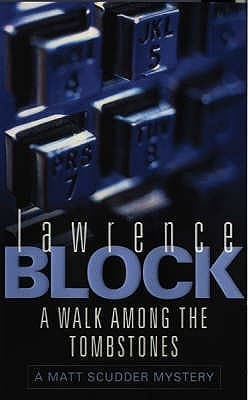
- A Walk Among the Tombstones
Lawrence Block
3.9 (5k) average on GoodreadsThrillerFeatures the same detective, Matthew Scudder, with a similar dark, investigative style.
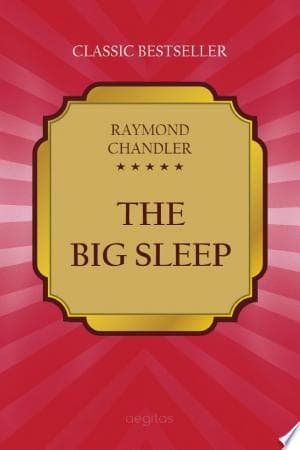
- The Big Sleep
Raymond Chandler
4.0 (126k) average on GoodreadsThrillerClassic hardboiled detective fiction with a complex plot and a morally ambiguous protagonist.
- Angels & Demons
Dan Brown
3.9 (2.7M) average on GoodreadsThrillerA Harvard symbologist races through Rome's ancient sites, deciphering cryptic clues to unmask the Illuminati and stop a vengeful plot to destroy the Vatican with a stolen antimatter weapon.
- Gone Girl
Gillian Flynn
4.1 (2.3M) average on GoodreadsThrillerA wife's sudden disappearance on her fifth anniversary reveals a web of lies and psychological warfare, exposing the secrets within a seemingly perfect marriage.
- The Girl on the Train
Paula Hawkins
3.9 (2.1M) average on GoodreadsThrillerA woman’s fascination with a seemingly perfect couple she watches from her daily train commute leads her into a dark investigation when she witnesses something that shatters their idyllic image.
- The Da Vinci Code
Dan Brown
3.9 (1.9M) average on GoodreadsThrillerA symbologist and a cryptologist race through European landmarks, deciphering ancient codes and uncovering a conspiracy that could rewrite the foundations of Christianity.




Enjoyed the summary?
A summary gives you the shape of the book. The book itself has the detail, the examples and the voice.
Find Hope to Die on AmazonAs an Amazon Associate, BookBrief earns from qualifying purchases. How we're funded