

Synopsis
Covers the whole plot, including the ending.
- Difficulty
- Medium
- Pacing
- Moderate
- Mood
- Suspenseful, Obsessive, Unsettling, Dark
- Read it if
- You enjoy psychological thrillers with unreliable narrators, obsessive characters, and a focus on identity theft and domestic suspense.
- Skip it if
- You prefer thrillers with clear-cut heroes and villains, or find themes of gaslighting and extreme obsession unsettling.
I Can Be a Better You Plot Summary
Covers the whole plot, including the ending.
The Move to West Barrett Street
Fig Coxbury, a woman with a hidden past and a careful plan, buys a house on West Barrett Street. Her only reason is its closeness to the home of Jocelyn and Ezra Holt, and their young daughter, Daisy. Fig has been fixated on Jocelyn and her seemingly perfect life for a long time, watching their routines and gathering information. She begins to subtly enter their lives, starting with a simple introduction to Jocelyn, pretending to want friendship. This first meeting is a calculated move to get closer to the family she plans to take over.
Infiltrating Jocelyn's Life
Fig's first attempts to befriend Jocelyn are met with some caution, but Fig is persistent and good at manipulation. She creates situations to make Jocelyn feel she owes her, such as 'finding' Daisy when the child briefly wanders, or offering help with household tasks. Fig also quietly weakens Jocelyn's other friendships, planting doubts and causing small conflicts that push Jocelyn closer to Fig. Jocelyn, feeling more overwhelmed and alone, starts to rely on Fig, seeing her as a supportive friend, unaware of Fig's true intentions and the dangerous web she is weaving.
The Accident and Fig's Opportunity
A key event happens when Jocelyn is in a severe car accident, leaving her with serious injuries and a concussion that affects her memory. This event is a perfect chance for Fig, who immediately steps in to 'help' the Holt family. She takes over household duties, cares for Daisy, and manages Jocelyn's recovery, becoming the main caregiver and decision-maker. Ezra, overwhelmed by the crisis, is thankful for Fig's help, unknowingly giving her more power and access to his wife and daughter. Fig uses Jocelyn's impaired state to manipulate her further, planting false memories and subtly changing Jocelyn's view of her own past and relationships.
Ezra's Growing Unease
As Jocelyn slowly recovers, Ezra notices small changes in their home and in Jocelyn's behavior. He sees Fig's growing possessiveness toward Daisy and her quiet attempts to isolate Jocelyn from him. There are times when Fig seems to know too much about their private lives, or she quietly contradicts Jocelyn's memories. Ezra's initial thanks for Fig's help slowly turns into a creeping unease and suspicion. He begins to question Fig's background and her intense devotion to their family, sensing that her helpfulness is not as selfless as it appears. He starts to look into Fig's past, seeking answers to his growing worries.
Jocelyn's Fragmented Memories
Jocelyn's recovery is slow and confusing. She has vivid, but broken, memories that do not match the story Fig has been telling her. These memory flashes, often triggered by everyday objects or talks, cause her distress and make her doubt her sanity. She starts to feel a deep unease about Fig, despite the woman's outwardly caring manner. Jocelyn notices inconsistencies in Fig's stories and a manipulative tone in her interactions. She begins to secretly try to piece together the truth of her past and her accident, despite Fig's constant efforts to control her information and interactions.
The Unveiling of Fig's Past
Ezra's investigation into Fig's background uncovers a shocking truth: Fig Coxbury is not her real name. He discovers that she is actually Bethany, a woman with a troubled past and a connection to a tragic incident involving Jocelyn years ago. Bethany, as she was known then, was involved in a devastating fire that killed her own child and left her traumatized. He learns that Bethany has been obsessed with Jocelyn ever since, blaming her for her problems and carefully planning to take over her life as a twisted revenge and a way to get back what she believes was stolen from her. The full extent of her dangerous fixation becomes clear.
Jocelyn's Revelation and Confrontation
Through her own recovered memories, Ezra's discoveries, and key evidence, Jocelyn finally understands the horrifying truth about Fig. She remembers Bethany, the fire, and the complex, tragic events around it. The realization that Fig has been systematically trying to erase her identity and steal her family is devastating. Armed with the truth, Jocelyn confronts Fig. Fig, trapped and exposed, reveals the depth of her delusion and her belief that she deserves Jocelyn's life. The confrontation grows, putting Jocelyn and Daisy in danger.
The Climax and Escape
The confrontation between Jocelyn and Fig reaches a terrifying peak. Fig, desperate to finish her plan, becomes more unstable and violent. She tries to hurt Jocelyn and take Daisy, believing the child is hers. Jocelyn, despite her trauma, finds an incredible amount of strength and maternal instinct. She fights back fiercely, determined to protect her daughter. Ezra arrives, having been warned of the danger, and joins the fight. The scene is chaotic and dangerous, with the Holt family fighting for their lives against Fig's relentless attacks. They manage to overpower Fig, but not without a struggle and fear.
Aftermath and Recovery
After the intense confrontation, Fig is arrested, ending her reign of terror. The Holt family, though physically safe, is deeply traumatized. The aftermath involves police investigations, hospital stays for recovery, and the hard process of dealing with the psychological impact of Fig's manipulation. Jocelyn and Ezra must work through the emotional scars left by Fig's invasion of their lives and the near-loss of their family. They begin the long journey of healing, rebuilding trust, and reclaiming their home and sense of security, knowing their lives will never be quite the same.
Reclaiming Identity and Future
In the months after Fig's arrest, Jocelyn works to fully reclaim her identity and strengthen her bond with Ezra and Daisy. She goes to therapy to process the trauma and rebuild her memories, ensuring she is no longer vulnerable to manipulation. The experience, though terrible, ultimately strengthens her resolve and deepens her appreciation for her family. The Holts consciously create new, positive memories and set boundaries to protect their privacy. They learn to live with the lasting effects of Fig's actions but refuse to let it define their future, choosing resilience and love to move forward and protect the life they almost lost.
I Can Be a Better You Characters
Fig Coxbury (Bethany)
Antagonist
A woman obsessed with taking over Jocelyn Holt's life.
Fig, whose real name is Bethany, is a deeply disturbed and manipulative woman haunted by a tragic past. She is intelligent, cunning, and meticulously plans her infiltration into Jocelyn's life, driven by a twisted sense of grief, blame, and desire for what she perceives as a 'better' existence. Her actions are fueled by a profound sense of loss and a belief that Jocelyn is responsible for her misfortunes. She exhibits extreme psychological instability, including delusions and an inability to distinguish fantasy from reality, making her a formidable and dangerous foe.
Relationships: Jocelyn Holt (Obsessive target; perceived rival and replacement); Ezra Holt (Target for manipulation; perceived husband); Daisy Holt (Target for adoption; perceived daughter)
Jocelyn Holt
Protagonist
A wife and mother whose life is targeted by an obsessed stranger.
Jocelyn Holt initially appears to have a perfect life: a loving husband, a beautiful daughter, and a comfortable home. She is initially open and trusting, making her vulnerable to Fig's manipulations. After her accident, she struggles with memory loss and confusion, which Fig exploits. Despite her initial fragility, Jocelyn possesses an underlying strength and fierce maternal instinct. She is determined to uncover the truth and protect her family, eventually finding the resilience to fight back against her tormentor.
Relationships: Ezra Holt (Husband; loving and supportive); Daisy Holt (Daughter; fiercely protective); Fig Coxbury (Initially friend, then tormentor and usurper)
Ezra Holt
Supporting
Jocelyn's devoted husband who uncovers Fig's true identity.
Ezra is Jocelyn's loving and supportive husband. Initially, he is grateful for Fig's help during Jocelyn's recovery, but his innate protectiveness and keen observation skills lead him to question Fig's motives. He is intelligent and persistent, conducting his own investigation into Fig's past when his suspicions grow. Ezra acts as a crucial ally to Jocelyn, providing emotional support and concrete evidence that helps her piece together the truth. He is devoted to his family and actively fights to protect them.
Relationships: Jocelyn Holt (Wife; loving and supportive); Daisy Holt (Daughter; protective father); Fig Coxbury (Initially perceived as helpful, then antagonist)
Daisy Holt
Supporting
Jocelyn and Ezra's young daughter, a key element in Fig's plan.
Daisy is the young daughter of Jocelyn and Ezra, central to Fig's obsession with their 'perfect' life. She is a sweet and innocent child, unaware of the sinister plot unfolding around her. Fig attempts to bond with Daisy, seeing her as 'her' child, which adds to the emotional tension and danger. Daisy's well-being is the primary motivation for Jocelyn's fight against Fig, representing the innocent life that Fig seeks to corrupt and claim.
Relationships: Jocelyn Holt (Mother; deeply loved); Ezra Holt (Father; deeply loved); Fig Coxbury (Perceived as a kind friend, but an object of obsession for Fig)
Detective Miller
Supporting
The detective who eventually investigates Fig's crimes.
Detective Miller is a law enforcement officer who becomes involved in the case towards the climax of the story. Initially, he might be dismissive of Jocelyn's or Ezra's fragmented concerns, but as concrete evidence mounts and the danger becomes undeniable, he takes their claims seriously. He represents the outside authority that ultimately brings Fig to justice, providing a sense of resolution and consequence for her actions. His role is to piece together the legal aspects of Fig's crimes.
Relationships: Jocelyn Holt (Victim in the case); Ezra Holt (Witness/Victim in the case); Fig Coxbury (The criminal apprehended)
I Can Be a Better You Themes
Obsession and Identity Theft
The novel explores the destructive nature of obsession, especially when it leads to the desire to steal another's identity and life. Fig's whole existence revolves around watching and then trying to replace Jocelyn. This theme shows in Fig's careful planning, her adoption of Jocelyn's routines, and her attempts to erase Jocelyn's memories and relationships. It highlights the horror of having one's sense of self undermined by an outside force.
“She wanted Jocelyn's life, not just a piece of it, but the whole thing, down to the last perfect detail.”
Memory and Reality Manipulation
A central theme is how fragile memory is and how easily perception can be manipulated, particularly when someone is vulnerable. Jocelyn's amnesia after the accident gives Fig the perfect chance to rewrite her past, planting false memories and distorting reality. This theme creates a chilling psychological suspense, as Jocelyn (and the reader) struggles to tell what is real from what is made up. It makes us examine how our personal stories are built and how easily they can be taken apart.
“Memories are funny things. They can be bent, twisted, even entirely invented, if you know how.”
The Façade of Perfection
The novel quietly questions the idea of a 'perfect' life, which Fig obsesses over. Jocelyn's life, from an outsider's view, seems ideal, prompting Fig's desire to have it. However, the story reveals the hidden vulnerabilities and challenges within even the most perfect-seeming existence. The theme suggests that such perceived perfection can be a dangerous draw, attracting envy and showing how superficial external appearances are compared to the complex realities of human experience.
“From the outside, it was all so beautiful. The house, the husband, the child. Everything I wanted.”
Maternal Instinct and Protection
Despite the psychological manipulation and trauma, the powerful theme of maternal instinct stands out. Jocelyn's main reason for fighting back and regaining her memory is the strong desire to protect her daughter, Daisy. This instinct goes beyond her confusion and fear, giving her the strength to confront Fig. It highlights the strong bond between a mother and child and is a powerful force against Fig's attempts to take over the family.
“She would burn the world down before she let anyone take her child.”
Plot Devices & Literary Techniques
Reliability of Narration
The story often blurs the line between what is real and what is perceived, especially through Jocelyn's eyes.
This device is crucial, particularly after Jocelyn's accident. Her memory loss and Fig's active manipulation create a highly unreliable narrative perspective for Jocelyn. The reader experiences her confusion and doubt, making it difficult to trust her perceptions. This heightens the suspense and psychological tension, as the audience is forced to question what is real alongside the protagonist, making Fig's gaslighting more effective and chilling.
Gaslighting
Fig systematically manipulates Jocelyn's perception of reality to make her doubt her sanity.
Gaslighting is a primary tool used by Fig to control Jocelyn. By altering Jocelyn's environment, planting false memories, and subtly contradicting her experiences, Fig makes Jocelyn question her own sanity and memory. This psychological abuse isolates Jocelyn and makes her more dependent on Fig, who presents herself as the only reliable source of information. It's a key element in establishing Fig's power and Jocelyn's vulnerability throughout the story.
Dramatic Irony
The audience is often aware of Fig's true intentions before Jocelyn or Ezra fully grasp them.
Dramatic irony is employed to build suspense. The reader is often privy to Fig's internal monologues or her calculated actions that Jocelyn and Ezra misinterpret as genuine kindness. This creates a constant sense of dread, as the audience watches Fig's plan unfold, knowing the danger that the unsuspecting Holt family is in. It amplifies the tension and makes Fig's manipulative acts more impactful.
The Unseen Past
Fig's tragic backstory is gradually revealed, explaining her extreme motivations.
The novel uses the device of the 'unseen past' to explain Fig's extreme obsession. Her true identity as Bethany and the details of the fire that destroyed her family are slowly revealed, often through Ezra's investigation. This backstory provides a psychological foundation for her actions, transforming her from a purely villainous figure into a disturbed individual driven by profound grief and trauma, adding depth to her character even as it highlights her dangerousness.
I Can Be a Better You Quotes
“I was born with a need to break things, to shatter them and watch the pieces fly.”
“Everyone has a dark side. Some just hide it better than others.”
“Love is a dangerous game, and I was never good at games.”
“Sometimes the monster is the one you least suspect.”
“We all wear masks. Some are just more convincing than others.”
“The past is a predator, and it always catches up.”
“Trust is a weapon, and I learned to wield it from a young age.”
“Every lie we tell creates a debt, and eventually, that debt must be paid.”
“There's a fine line between love and obsession, and I've always danced on it.”
“The truth is a dangerous thing, especially when it's buried deep.”
“You can never truly know someone until you see them at their worst.”
“Sometimes, the only way to escape your past is to become someone else entirely.”
“Revenge is a dish best served cold, but sometimes, it's served with a smile.”
“The greatest trick the devil ever pulled was convincing the world he didn't exist. The second greatest was convincing me I was normal.”
Quiz
10 questions on the plot and the characters. Each answer comes with a short explanation.
Question 1
Why does Fig Coxbury specifically choose to buy the house on West Barrett Street?
- She was looking for a fresh start in a new neighborhood.
- She liked the architectural style of the house.
- Because everything she desires, including the husband, child, and life, belongs to the family next door.
- It was the only house available within her budget at the time.
Show answer
C. Because everything she desires, including the husband, child, and life, belongs to the family next door. Fig buys the house not for its own merits, but specifically to be next door to the life she covets, which belongs to another family.
Question 2
What is the name of the woman whose life Fig Coxbury desires?
- Jolene
- Willow
- Scarlett
- Harper
Show answer
B. Willow Fig is obsessed with Willow and her seemingly perfect life, husband, and child.
Question 3
What is Fig's profession or main source of income at the beginning of the story?
- She is a successful novelist.
- She works as a real estate agent.
- She runs an online advice blog for women.
- She is a stay-at-home wife supported by her husband.
Show answer
C. She runs an online advice blog for women. Fig maintains an online advice blog where she dispenses advice to other women, often using her observations of Willow's life as material.
Question 4
What significant event from Fig's past is revealed to have deeply impacted her and contributes to her current obsession?
- She lost a substantial inheritance due to a bad investment.
- She was abandoned by her family as a child.
- She suffered a miscarriage and the subsequent breakdown of her marriage.
- She was involved in a car accident that left her with lasting physical injuries.
Show answer
C. She suffered a miscarriage and the subsequent breakdown of her marriage. Fig's past trauma, particularly a miscarriage and the resulting marital collapse, fuels her desire to reclaim a 'perfect' life.
Question 5
How does Fig initially attempt to insert herself into Willow's life?
- By applying for a job at Willow's husband's company.
- By faking a car breakdown near Willow's house to get her attention.
- By subtly befriending Willow's child and then Willow herself.
- By sending anonymous gifts and letters to Willow's family.
Show answer
C. By subtly befriending Willow's child and then Willow herself. Fig strategically orchestrates encounters, often involving Willow's child, to slowly ingratiate herself into Willow's life.
Question 6
What is the primary theme explored through Fig's actions and motivations?
- The importance of community and neighborly bonds.
- The destructive nature of envy, obsession, and identity theft.
- The challenges of single parenthood.
- The pursuit of professional success at all costs.
Show answer
B. The destructive nature of envy, obsession, and identity theft. The entire premise revolves around Fig's overwhelming envy and obsession with Willow's life, leading to increasingly destructive actions.
Question 7
What is the name of Willow's husband?
- Ethan
- Owen
- Noah
- Caleb
Show answer
B. Owen Owen is Willow's husband, and a central figure in Fig's desired life.
Question 8
What is the ultimate goal Fig has for Willow's life, as the story progresses?
- To become Willow's best friend and confidante.
- To expose Willow's perceived flaws to her family and friends.
- To completely replace Willow and take over her identity and family.
- To convince Willow to move away so Fig can buy her house.
Show answer
C. To completely replace Willow and take over her identity and family. Fig's obsession escalates beyond mere envy; she actively plans and executes steps to completely usurp Willow's life and identity.
Question 9
How does Willow eventually become aware of Fig's true intentions and the extent of her manipulation?
- She overhears Fig confessing her plans to someone else.
- She discovers evidence of Fig's past and her online blog, revealing Fig's calculated observations.
- Fig directly confronts Willow and admits her obsession.
- Willow's husband, Owen, uncovers Fig's deception first.
Show answer
B. She discovers evidence of Fig's past and her online blog, revealing Fig's calculated observations. Willow eventually pieces together Fig's deception by finding her blog and other evidence that reveals Fig's long-term plan and observations of Willow's life.
Question 10
What psychological aspect is heavily explored through Fig's character, relating to her past and present actions?
- Generalized anxiety disorder.
- Narcissistic personality disorder.
- Delusional disorder, specifically erotomanic delusions.
- A deep-seated trauma and unresolved grief manifesting as obsessive and manipulative behavior.
Show answer
D. A deep-seated trauma and unresolved grief manifesting as obsessive and manipulative behavior. Fig's actions are largely driven by unresolved grief from her miscarriage and the subsequent loss of her marriage, leading her to obsessively try to reclaim a 'perfect' life she believes she lost.
I Can Be a Better You FAQ
What is the central premise of 'I Can Be a Better You'?
The novel centers on Fig Coxbury, who deliberately buys a house next to the seemingly perfect life of her former best friend, Jolene, in an attempt to infiltrate and take over Jolene's husband, child, and entire existence, fueled by a deep-seated obsession and past grievances.
Who are the main characters in the story?
The primary characters are Fig Coxbury, the obsessed protagonist; Jolene, Fig's former best friend and the object of her obsession; and Aaron, Jolene's husband, who becomes entangled in Fig's manipulative schemes. Their intricate relationships drive the escalating tension.
What motivates Fig to target Jolene specifically?
Fig's motivation stems from a childhood trauma and a perceived betrayal by Jolene. She believes Jolene stole her chance at happiness and the life she felt she deserved, leading to a profound resentment and a desire for revenge and replacement.
How does Fig initiate her plan to take over Jolene's life?
Fig begins by buying the house next door to Jolene and Aaron. She then strategically re-inserts herself into Jolene's life, initially feigning friendliness and rekindling their old connection, all while meticulously observing and planning her next manipulative moves.
What role does Aaron, Jolene's husband, play in Fig's scheme?
Aaron is a crucial target for Fig, as winning his affection and trust is central to her plan of replacing Jolene. Fig manipulates situations to appear more appealing and understanding to Aaron, gradually driving a wedge between him and Jolene.
Are there any clues to Fig's true intentions early in the book that readers might miss?
Early clues include Fig's overly detailed observations of Jolene's family and home, her seemingly chance encounters that are actually orchestrated, and subtle shifts in her internal monologue that reveal a deeper, more sinister agenda behind her apparent desire to reconnect.
What is the significance of the 'West Barrett Street' address?
The address itself holds symbolic weight, representing Fig's deliberate invasion of Jolene's private world. It signifies the physical proximity required for Fig's plan to unfold, making Jolene's home the stage for Fig's calculated performance and ultimate takeover.
Is there a specific past event that triggered Fig's obsession with Jolene?
Yes, a significant past event involves a childhood incident and a perceived betrayal where Fig believes Jolene abandoned her or took something important from her, leading to a deep-seated wound that festered into her adult obsession and desire for retribution.
How does the author use narrative perspective to enhance the suspense?
The author primarily uses Fig's first-person perspective, which immerses the reader in her twisted thoughts and meticulous planning. This unreliable narration creates suspense by revealing Fig's calculated moves while obscuring her full psychological depth until later in the story.
What psychological disorders might Fig Coxbury exhibit?
Fig likely exhibits traits of Narcissistic Personality Disorder and potentially Antisocial Personality Disorder, characterized by a lack of empathy, manipulative behavior, a grandiose sense of self-importance, and a disregard for others' feelings in pursuit of her own desires.
How does the theme of identity play out in Fig's actions?
Fig's actions are deeply rooted in a desire to shed her own identity and assume Jolene's, believing Jolene's life is inherently better or rightfully hers. She meticulously studies and mimics Jolene's behaviors, aiming for a complete psychological and physical transformation.
What is the psychological impact of Fig's manipulation on Jolene?
Jolene experiences significant psychological distress, including paranoia, self-doubt, and a deteriorating sense of reality as Fig systematically undermines her relationships and sanity. She questions her own perceptions, leading to emotional breakdown and isolation.
How does the novel explore the dark side of female friendship?
The novel portrays a chilling distortion of female friendship, where intimacy and trust are weaponized. It delves into themes of envy, competition, and obsession, showing how deep bonds can curdle into destructive rivalries when fueled by unresolved trauma and resentment.
Is Fig a purely villainous character, or are there elements that evoke sympathy?
While Fig's actions are undeniably villainous, the narrative occasionally delves into her past trauma and perceived injustices, offering glimpses into the origins of her brokenness. This can evoke a complicated, albeit fleeting, sense of sympathy, making her a more complex antagonist.
Does the ending offer a clear resolution, or is it open to interpretation?
The ending provides a resolution to the immediate conflict but often leaves lingering questions about the long-term psychological fallout for the characters involved. It may suggest that the cycle of obsession or the scars of manipulation are not easily erased, prompting further reflection.
What message might the author be conveying about envy and desire?
The author seems to convey a cautionary message about the destructive power of unchecked envy and desire. It highlights how coveting another's life can lead to the complete unraveling of one's own identity and moral compass, resulting in profound tragedy.
How does the title 'I Can Be a Better You' reflect Fig's central delusion?
The title directly encapsulates Fig's core delusion: her belief that she is inherently superior to Jolene and can not only replicate but improve upon Jolene's life. It signifies her deep-seated conviction that she is more deserving and capable of inhabiting Jolene's existence.
Could Jolene have prevented Fig's actions, or was she an unwitting victim?
Jolene was largely an unwitting victim of Fig's meticulously planned and deeply rooted obsession. While some might argue for earlier detection, Fig's manipulative prowess and Jolene's initial trust made her particularly vulnerable, making prevention incredibly difficult.
About the author

Tarryn Fisher is an author known for her contributions to contemporary fiction. Her works include "I Can Be a Better You," which explores themes of personal growth, and "Thief," a story that delves into complex relationships and moral dilemmas. Fisher's writing often features intricate characters and emotional depth.
Similar books
- The Girl on the Train
Paula Hawkins
3.9 (2.1M) average on GoodreadsThrillerInvolves an unreliable female narrator entangled in a mystery with themes of obsession and memory.
- Gone Girl
Gillian Flynn
4.1 (2.3M) average on GoodreadsThriller"I Can Be a Better You" shares with "Gone Girl" a focus on manipulative relationships and the dark secrets hidden beneath seemingly perfect lives. However, Flynn's novel is renowned for its shocking mid-point twist and the dual perspectives that radically shift the reader's understanding. Fisher's approach is more of a gradual unveiling of Fig's past and intentions, and Jocelyn's fragmented memories. While both explore extreme psychological games, Flynn's narrative often feels more cynical and nihilistic in its portrayal of human nature, whereas Fisher, despite the darkness, offers a path towards reclaiming identity and recovery.
- Angels & Demons
Dan Brown
3.9 (2.7M) average on GoodreadsThrillerA Harvard symbologist races through Rome's ancient sites, deciphering cryptic clues to unmask the Illuminati and stop a vengeful plot to destroy the Vatican with a stolen antimatter weapon.
- The Da Vinci Code
Dan Brown
3.9 (1.9M) average on GoodreadsThrillerA symbologist and a cryptologist race through European landmarks, deciphering ancient codes and uncovering a conspiracy that could rewrite the foundations of Christianity.
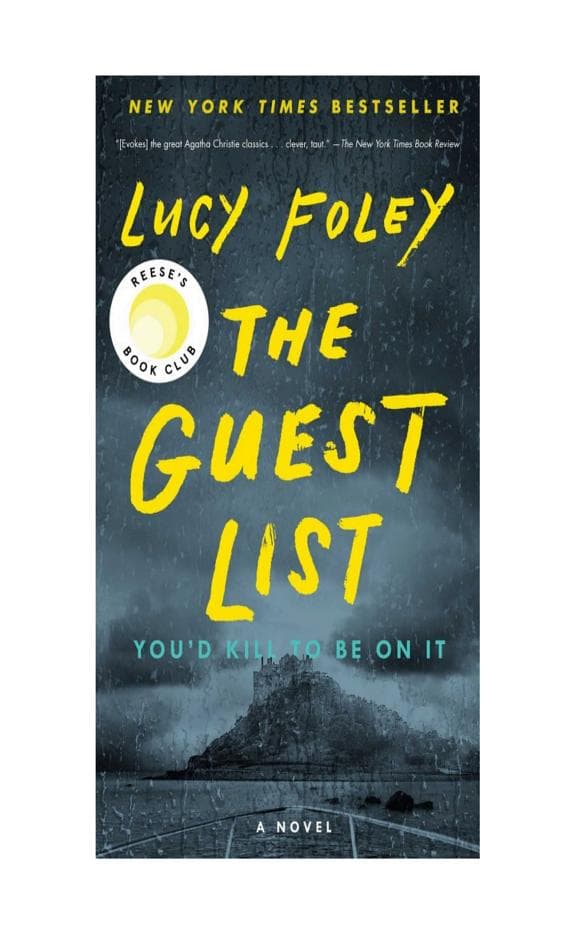
- The Guest List
Lucy Foley
3.8 (1.3M) average on GoodreadsThrillerOn a remote Irish island, a glamorous wedding descends into a deadly whodunnit when a guest is found murdered, trapping everyone with their secrets as a storm rages.
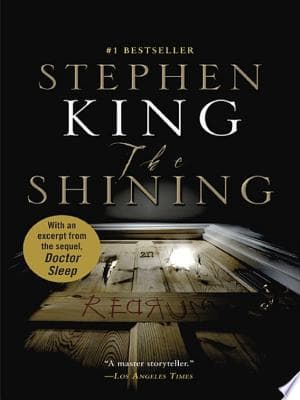
- The Shining
Stephen King
4.2 (1.1M) average on GoodreadsThrillerA recovering alcoholic accepts a caretaking job at a snow-bound, haunted hotel, where his son's psychic abilities reveal the sinister forces that drive him to madness and terrorize his family.




Enjoyed the summary?
A summary gives you the shape of the book. The book itself has the detail, the examples and the voice.
Find I Can Be a Better You on AmazonAs an Amazon Associate, BookBrief earns from qualifying purchases. How we're funded