
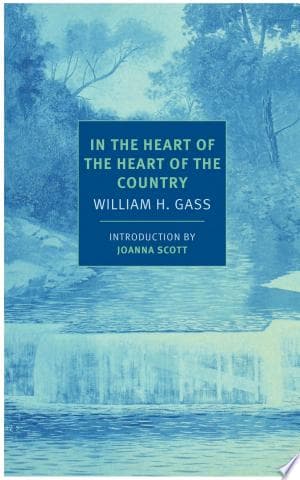
Synopsis
Covers the whole plot, including the ending.
- Difficulty
- Hard
- Pacing
- Slow
- Mood
- Introspective, Philosophical, Melancholy, Atmospheric, Lyrical
- Read it if
- You appreciate experimental literary fiction, highly descriptive prose, and deep dives into character consciousness rather than fast-paced plots. You enjoy exploring the philosophical underpinnings of everyday life and the power of language.
- Skip it if
- You prefer strong, linear narratives, clear resolutions, and easily digestible prose. You might find the lack of traditional plot and the dense, introspective style challenging.
In the heart of the heart of the country Plot Summary
Covers the whole plot, including the ending.
The Pederson Kid
The story begins with a nameless young boy, "the Pederson kid," running through a harsh, snow-covered rural area. He is fleeing after likely killing his parents, though the act is only hinted at through his broken, guilty thoughts. He carries a rifle and a little food, his mind a mix of fear, cold, and a desperate need for warmth and safety. He finds a frozen stream, an empty house, and the quiet of the winter night. His journey is marked by growing desperation and the threat of being found or dying from the cold. His inner thoughts reveal deep loneliness and a troubled past.
In the Heart of the Heart of the Country
This section, which names the collection, is a series of broken, stream-of-consciousness observations from an unnamed poet living in a small, isolated Indiana town. He thinks about the everyday details of life — his neighbors, the weather, buildings, local gossip — mixing these with philosophical ideas about language, memory, desire, and reality. The poet's relationship with his wife, Martha, appears often, shown with affection, frustration, and intellectual distance. The story is non-linear, moving between current experiences, past memories, and abstract ideas, creating a rich picture of a mind dealing with its surroundings and its own existence.
Mrs. Mean
This story gives a clear, direct picture of Mrs. Mean, an elderly woman living a life of quiet despair and physical decline. The story focuses on the small details of her daily life, her failing body, her strained relationship with her husband, and her inner thoughts, which are often bitter. Gass uses strong, almost disturbing, images to describe her physical problems and her messy home. Her isolation and the slow loss of her dignity are central themes. The story looks at the harsh realities of aging and the often-hidden suffering that can come with it, showing a life without joy or real connection.
Icicles
The narrator of 'Icicles' is a man consumed by suspicion and jealousy about his wife, whom he believes is having an affair. His inner thoughts are a frantic, spiraling dive into paranoia. He watches her every move, looking for clues and imagining scenarios. The "icicles" in the title represent the cold, fragile state of his marriage and his own weakening mind. He moves between rage, despair, and a desperate need for certainty, his thoughts becoming more broken and obsessive. The story explores the destructive power of suspicion and the subjective nature of truth in a failing relationship.
Order of Insects
This story follows a suburban housewife who finds a collection of dead insects, carefully arranged, in the attic of her new home. At first disgusted, she slowly becomes fascinated by them, seeing in their preserved forms a reflection of life, death, and order. She starts spending her days studying them, creating detailed backstories and philosophical ideas for each one. Her husband and children mostly ignore her private obsession, which becomes a way for her to escape her everyday life and face bigger questions about meaning and decay. The insects become a strange source of intellectual interest and a mirror for her own inner world.
The Boy and the Man
This story explores the complex relationship between a young boy and an older man, possibly his father or a mentor, in a rural setting. The boy deals with his growing identity, watching the man's quiet strength and the harshness of farm life. The story looks at lost innocence, the passing down of knowledge and values, and the silent expectations placed on the boy to fit traditional male roles. The interactions often have little dialogue but are rich in unspoken meaning, showing the emotional distance and underlying bonds between them. The boy's inner world is a mix of curiosity, fear, and a new understanding of his place.
Life Among the Cows
This piece, often seen as a mix of essay and fiction, features a narrator who deeply observes and thinks about the lives of cows. He explores their calm existence, their seemingly simple needs, and the sharp difference between their world and the complexities of human thought. The narrator projects human emotions and philosophical ideas onto the cows, using them to examine themes of awareness, suffering, purpose, and being. It is a thoughtful, almost spiritual, look at animals and what they show about humanity, blurring the lines between objective observation and personal interpretation.
The Tunnel
'The Tunnel' follows William Frederick Kohler, a history professor at a Midwestern university, who is supposedly writing a major work on Nazism. Instead, he is consumed by a secret, large project: digging a tunnel in his basement. This physical act mirrors his internal digging into his own past, his failures, his worries, and his involvement in a morally flawed world. His inner thoughts are dense, broken, and filled with intellectual references, self-criticism, and a deep sense of disgust with himself and humanity. His marriage is failing, his academic life is a pretense, and the tunnel symbolizes his retreat from reality and his fall into a personal hell.
The Sunday Morning Drive
This story shows a seemingly ordinary Sunday morning drive taken by a family. The story focuses on the inner thoughts and observations of the father, who is sharply aware of how boring their lives are and the unspoken tensions within his family. He watches his wife and children, thinking about their individual lives and the collective emptiness he feels. The drive itself, through unremarkable suburban areas, becomes a symbol for the repetitive, unfulfilling nature of their lives. Gass uses precise, vivid language to show the father's psychological state, highlighting disillusionment, the search for meaning in the mundane, and the quiet despair that can exist under a normal surface.
Music for Piano and Two Voices
This narrative looks into the psychological complexities of a three-person relationship involving two men and one woman. The story is told through changing viewpoints and broken dialogues, exploring the power dynamics, jealousies, and intellectual games between the characters. Desire, artistic expression, and the search for real connection are central themes, often shown through the metaphor of music. The characters engage in intellectual arguments and emotional manipulation. Their interactions reveal the fragile lines between love, obsession, and control. The story is dense and challenging, reflecting the complicated and often conflicting nature of human relationships.
Willie Masters' Lonesome Wife
This novella-length piece is a highly experimental, metafictional work presented as the "lonesome wife" of Willie Masters. It is a dense, self-referential text that blurs the lines between narrator, character, and author. The "wife" (who is also the text itself) directly talks to the reader, discussing language, reading, writing, and pornography. She examines her own existence as a literary construct, exploring desire, emptiness, and the limits and possibilities of words. The story uses varied fonts, visual elements, and philosophical side notes to create a challenging and layered experience, questioning the very nature of fiction.
The State of Iowa
This piece takes the form of a pseudo-official report on the "State of Iowa," but quickly turns into a very personal, satirical, and philosophical reflection on the American Midwest. The narrator uses the framework of a sociological study to explore identity, geography, boredom, and the perceived emptiness of rural life. Gass uses his typical dense writing and intellectual playfulness to dissect cultural stereotypes and the human condition. It is less a conventional story and more an essay that uses the "state report" as a starting point for broader thoughts on language, perception, and how reality is built.
In the heart of the heart of the country Characters
The Pederson Kid
Protagonist
A young, nameless boy fleeing a violent past.
The Pederson Kid is a young, unnamed boy, likely in his early teens, who is on the run after committing a violent act, heavily implied to be the murder of his parents. He is driven by primal fear, the cold, and a desperate search for warmth and safety. His internal world is fragmented, marked by guilt, confusion, and a profound sense of isolation. He is largely passive, reacting to his environment rather than actively shaping it, and his lack of a name emphasizes his universal vulnerability and anonymity in the face of his dire circumstances.
The Poet (In the Heart of the Heart of the Country)
Protagonist/Narrator
An unnamed intellectual observing and reflecting on small-town life.
The unnamed poet is the intellectual and philosophical center of the titular story. He is a keen observer of human behavior and his rural Indiana surroundings, but his primary engagement is with language and ideas. He is driven by a desire to understand and articulate the complexities of existence, often through abstract and fragmented musings. His relationship with his wife, Martha, is central, revealing a man who is simultaneously connected and detached, seeking meaning in both the mundane and the profound, often through the lens of his own rich inner world.
Relationships: Martha (Wife, subject of affection, frustration, and intellectual contemplation.)
Mrs. Mean
Protagonist
An elderly woman experiencing physical and emotional decay.
Mrs. Mean is an elderly woman defined by her physical ailments, emotional bitterness, and profound isolation. She is driven by a desire for comfort and perhaps a lingering resentment over her unfulfilled life. Her world is small, confined to her home and her failing body. She is largely a victim of circumstance and time, her character serving as a stark portrayal of the indignities of aging and the quiet suffering that can accompany it. Her interactions are minimal, emphasizing her self-imposed and external solitude.
Relationships: Mr. Mean (Husband; a distant, largely silent presence in her life.)
The Narrator (Icicles)
Protagonist
A man consumed by obsessive jealousy and paranoia.
This unnamed narrator is a man whose mind is a maelstrom of suspicion and insecurity. He is driven by a crippling jealousy of his wife, whom he believes is unfaithful, and a desperate need for certainty that only feeds his paranoia. His internal world is characterized by meticulous observation, frantic speculation, and a spiraling loss of control. He is largely isolated by his own thoughts, unable to communicate effectively or trust. His character embodies the destructive power of unchecked suspicion and the subjective, often distorted, nature of perceived reality.
Relationships: His Wife (Object of his obsessive jealousy and suspicion.)
The Housewife (Order of Insects)
Protagonist
A suburban woman who develops a macabre fascination with dead insects.
This unnamed housewife is initially a typical suburban figure, but she is gradually drawn into a profound and unsettling obsession. She is driven by a subconscious desire for meaning and intellectual stimulation, which she finds in the meticulously arranged dead insects in her attic. Her fascination grows from revulsion to a philosophical engagement, allowing her to escape the mundane and confront deeper existential questions. She is largely isolated in her obsession, her family remaining oblivious, highlighting her internal world as a refuge and a source of unique insight.
Relationships: Her Husband (Distant and largely unaware of her inner life.); Her Children (Minor, background figures in her life.)
William Frederick Kohler (The Tunnel)
Protagonist
A history professor consumed by guilt and a secret, destructive project.
William Frederick Kohler is a history professor burdened by intellectual pretension, moral compromise, and profound self-loathing. He is driven by a complex mix of guilt, a desire for authenticity (even if it's destructive), and an overwhelming need to excavate his past and his own complicity in the world's horrors. His primary conflict is internal, as he uses the physical act of digging a tunnel in his basement to mirror his psychological descent. He is an unreliable narrator, his thoughts dense, fragmented, and often contradictory, making him a deeply complex and unsettling character.
Relationships: His Wife (Strained and failing; a symbol of his external life's disintegration.); His Colleagues/Students (Figures he despises and feels superior to, despite his own failings.)
Willie Masters' Lonesome Wife (The Wife/Text)
Protagonist/Narrator
A metafictional character embodying the text itself, exploring language and desire.
This 'wife' is not a conventional character but a metafictional construct, embodying the text of the novella itself. She is driven by a self-aware exploration of language, authorship, and the nature of fiction and pornography. Her 'lonesomeness' stems from her existence as a textual entity, constantly seeking to define herself and her relationship with the reader and her absent 'husband,' Willie Masters. She is highly analytical, provocative, and self-referential, challenging the reader to consider the very act of reading and the construction of meaning.
Relationships: Willie Masters (Her absent, perhaps fictional, husband; a catalyst for her existence.); The Reader (Directly addressed and engaged in an intimate, challenging relationship.)
In the heart of the heart of the country Themes
The Isolation of the Individual
Gass often explores the deep isolation his characters feel, often within their own minds, even when others are around. This theme appears in 'The Pederson Kid,' where the boy's flight through the snow highlights his complete solitude and inner struggle. Mrs. Mean is physically and emotionally isolated, her decline a private pain. The poet in 'In the Heart of the Heart of the Country' observes his surroundings but remains intellectually separate, his true life happening in his thoughts. Kohler in 'The Tunnel' retreats into his basement and his own guilty mind, building a physical barrier against the world. This isolation is often a source of suffering but also, at times, a space for intense intellectual or personal discovery.
“For the most part, solitude is a place, and not a state of soul at all. It is a place, and I am in it.”
The Nature of Language and Reality
Gass is deeply interested in how language shapes and twists our view of reality, and how reality itself is often a personal creation. This is most openly explored in 'Willie Masters' Lonesome Wife,' where the text itself is a character, dissecting its own existence and the limits and potential of words to convey truth or desire. The poet in 'In the Heart of the Heart of the Country' constantly tries to find the exact words to capture his observations and philosophical insights. Kohler in 'The Tunnel' uses language as a weapon, a shield, and a tool for self-deception, showing its power to both reveal and hide. Gass often shows that reality is not fixed, but rather something changed and created through language and mental processes.
“I am a text. I am a thing of words. I am a book you hold.”
Decay and Decline (Physical and Moral)
A common theme throughout the collection is decay, both physical and moral. 'Mrs. Mean' offers a clear, almost scientific, look at physical decline and the indignities of aging, with vivid descriptions of her failing body and messy surroundings. In 'The Tunnel,' William Frederick Kohler's physical act of digging a tunnel mirrors his moral and psychological decay, as his life falls apart amid guilt and self-loathing. 'Order of Insects' shows a woman's fascination with preserved death, reflecting on the stopped state of decay. This theme highlights life's fragility, the certainty of deterioration, and often, the related moral compromises or spiritual emptiness.
“I am growing old and it is a disgusting process. The skin sags. The bones ache. The mind forgets.”
The Mundane and the Metaphysical
Gass consistently turns the ordinary details of everyday life into chances for deep philosophical and metaphysical thought. In 'In the Heart of the Heart of the Country,' the poet's observations of small-town life, local gossip, and weather become starting points for thoughts on existence, time, and consciousness. The housewife in 'Order of Insects' finds a world of meaning in dead bugs, turning a domestic find into an exploration of existence. Even the 'Sunday Morning Drive' becomes a way to examine unspoken tensions and existential boredom within a family. Gass shows that the deepest questions about life, death, and meaning can be found not in grand acts, but in the overlooked parts of normal experience.
“The cows are philosophical animals. They know the secrets of the grass.”
The Burden of Consciousness and Intellect
Many of Gass's characters are highly intellectual, and their sharp awareness often causes suffering and separation. The poet in 'In the Heart of the Heart of the Country' is constantly analyzing, reflecting, and trying to express himself, a process that can be both enriching and isolating. William Frederick Kohler in 'The Tunnel' is a history professor whose vast knowledge and intelligence are twisted into tools for self-punishment and justifying his own moral failures. The narrator of 'Icicles' is trapped by his own obsessive thoughts, his intellect fueling his paranoia instead of giving clarity. For Gass, consciousness is a double-edged sword, capable of deep insight but also leading to intense inner conflict and a separation from simpler ways of being.
“My mind is a cage of words, and I am the bird inside, beating my wings against the bars.”
Plot Devices & Literary Techniques
Stream of Consciousness
Narrative technique mimicking the unfiltered flow of a character's thoughts.
Gass extensively employs stream of consciousness, particularly in 'In the Heart of the Heart of the Country,' 'Icicles,' and 'The Tunnel.' This technique allows the reader direct access to the characters' fragmented thoughts, memories, philosophical musings, and sensory perceptions, often without traditional punctuation or logical transitions. It creates an intimate, immersive, and often disorienting experience, reflecting the chaotic and non-linear nature of human thought. This device blurs the line between internal monologue and external reality, making the characters' subjective experiences the primary focus of the narrative.
Metafiction
Fiction that self-consciously draws attention to its own status as an artifact.
Metafiction is a prominent device, most notably in 'Willie Masters' Lonesome Wife,' where the text itself is personified as a character that discusses its own construction, its relationship to the reader, and the nature of language and narrative. This device serves to deconstruct the traditional boundaries between author, reader, and text, inviting the reader to critically examine the conventions of storytelling. It questions the illusion of reality in fiction and highlights the artificiality of literary creation, making the act of reading and writing part of the story's subject matter.
Unreliable Narrator
A narrator whose credibility has been seriously compromised.
Gass frequently uses unreliable narrators, challenging the reader to discern truth from subjective bias, delusion, or self-deception. The narrator in 'Icicles,' consumed by paranoia, presents a distorted view of his wife's actions and his own sanity. William Frederick Kohler in 'The Tunnel' offers a highly intellectualized, often contradictory, and self-serving account of his life and motivations. This device forces the reader into an active role of interpretation and judgment, highlighting the subjective nature of perception and the difficulty of accessing objective truth, especially when filtered through a damaged or biased consciousness.
Symbolism and Metaphor
The use of objects or ideas to represent deeper meanings.
Gass's prose is rich with symbolism and metaphor, imbuing ordinary objects or concepts with profound significance. The 'icicles' in the story of the same name symbolize the cold, brittle state of a failing marriage and the narrator's fragile mind. The 'tunnel' in Kohler's basement is a powerful metaphor for his psychological excavation of his past, his retreat from the world, and his descent into self-loathing. The meticulously arranged 'insects' in 'Order of Insects' become symbols of order, death, and the woman's internal search for meaning. These literary devices deepen the thematic resonance of the stories, allowing for multiple layers of interpretation.
In the heart of the heart of the country Quotes
“And the country, for all its beauty, has its own special kind of desolation, its own way of making you feel small and forgotten.”
“Words, words, words. They are the only things that last, the only things that can transcend the flesh.”
“The past is never dead. It's not even past.”
“We are all dying, you know. It's just a matter of how slowly.”
“There is no escape from the self, only a deeper immersion.”
“Love is a kind of attention, and attention is a kind of love.”
“To be a writer is to be a failure in the eyes of the world, and a success only in one's own private hell.”
“The world is full of things that disappear, and we are the witnesses to their vanishing.”
“Memory is a kind of editing, a selection of what to keep and what to discard.”
“The quiet desperation of ordinary lives, that's what interests me.”
“Beauty, after all, is just a promise of happiness.”
“We live in a language, not in a world.”
“The weight of all that is unsaid, the burden of silence.”
“What is real? Whatever gives us pain.”
Quiz
10 questions on the plot and the characters. Each answer comes with a short explanation.
Question 1
In the story 'In the Heart of the Heart of the Country,' what is the narrator's profession?
- Farmer
- Schoolteacher
- Librarian
- Preacher
Show answer
B. Schoolteacher The narrator explicitly states he is a schoolteacher, often reflecting on his students and the nature of his profession in the small town.
Question 2
Which of these is NOT a recurring image or motif in the story 'In the Heart of the Heart of the Country'?
- The color blue
- The narrator's wife's beauty
- A bustling city street
- The small town's isolation
Show answer
C. A bustling city street The story is characterized by its focus on the rural, isolated setting and the narrator's internal world, not a bustling city street.
Question 3
What is the primary emotional state conveyed by the narrator throughout 'In the Heart of the Heart of the Country'?
- Joyful contentment
- Frustration and anger
- Melancholy and existential reflection
- Hopeful optimism
Show answer
C. Melancholy and existential reflection The narrator's tone is consistently reflective, often tinged with sadness, loneliness, and deep contemplation about life, love, and the nature of his existence.
Question 4
What does the narrator frequently observe and describe in detail about the town and its inhabitants?
- Their political affiliations and debates
- Their physical appearances, habits, and mundane routines
- Their religious practices and church attendance
- Their economic struggles and successes
Show answer
B. Their physical appearances, habits, and mundane routines Gass's prose is highly descriptive, with the narrator meticulously detailing the physical characteristics of people and places, and the repetitive nature of small-town life.
Question 5
The narrator often uses highly figurative language and extensive metaphors. What effect does this have on the reader's understanding of the setting?
- It makes the setting feel immediately realistic and tangible.
- It blurs the line between the physical setting and the narrator's internal psychological landscape.
- It creates a sense of detachment and objectivity.
- It emphasizes the simple, uncomplicated nature of rural life.
Show answer
B. It blurs the line between the physical setting and the narrator's internal psychological landscape. Gass's style merges external description with internal thought, making the setting a projection of the narrator's mind and feelings, rather than a purely objective reality.
Question 6
What is the narrator's relationship with his wife like, as depicted in the story?
- They have a passionate, openly communicative relationship.
- It is characterized by a deep, unspoken intimacy mixed with a sense of distance and idealization.
- They are estranged and rarely interact.
- She is a source of constant irritation and conflict for him.
Show answer
B. It is characterized by a deep, unspoken intimacy mixed with a sense of distance and idealization. The narrator often idealizes his wife and reflects on their shared history and physical intimacy, but there's also an underlying sense of internal distance and his own complex projections onto her.
Question 7
The story often juxtaposes the narrator's intellectual thoughts and philosophical musings with what aspect of his immediate environment?
- The sophisticated urban culture he left behind.
- The raw, unadorned, and sometimes vulgar realities of rural life.
- The profound spiritual insights of the local church.
- The academic discourse of his fellow teachers.
Show answer
B. The raw, unadorned, and sometimes vulgar realities of rural life. A key tension in the story is the narrator's highly cerebral interior world clashing with the often crude, simple, or unrefined physical and social realities of his small-town existence.
Question 8
How does the structure of 'In the Heart of the Heart of the Country' contribute to its overall meaning?
- It follows a strict linear plot, emphasizing cause and effect.
- It uses a fragmented, stream-of-consciousness style, mirroring the narrator's associative thoughts.
- It is divided into distinct, self-contained chapters, each with a clear narrative arc.
- It employs multiple narrators to offer different perspectives on the town.
Show answer
B. It uses a fragmented, stream-of-consciousness style, mirroring the narrator's associative thoughts. The story is highly experimental, lacking a traditional plot and instead presenting a collage of observations, memories, and philosophical reflections, reflecting the narrator's internal, non-linear thought process.
Question 9
The title 'In the Heart of the Heart of the Country' suggests what about the story's focus?
- It is a patriotic celebration of American rural life.
- It delves into the deepest, most internal aspects of a seemingly ordinary place and person.
- It aims to expose the hidden corruption within small-town politics.
- It describes the geographical center of the United States.
Show answer
B. It delves into the deepest, most internal aspects of a seemingly ordinary place and person. The layered 'heart of the heart' points to an exploration of the profound interiority of both the physical location and the narrator's consciousness, moving beyond superficial appearances.
Question 10
What role does the concept of language itself play in the narrator's perceptions and descriptions?
- He sees language as a transparent tool for conveying objective reality.
- He struggles with language, finding it inadequate to express his complex thoughts.
- He is keenly aware of language's power to shape, distort, and create reality, often playing with its sounds and meanings.
- He believes language is primarily for practical communication, not artistic expression.
Show answer
C. He is keenly aware of language's power to shape, distort, and create reality, often playing with its sounds and meanings. Gass is a highly self-conscious stylist, and the narrator's intricate prose reflects an intense awareness of language as a medium that actively constructs meaning, rather than merely reflecting it. He frequently plays with words, sounds, and the boundaries of expression.
In the heart of the heart of the country FAQ
What is the central premise of 'In the Heart of the Heart of the Country'?
The book is a collection of five short stories, each exploring themes of isolation, the nature of language, and the mundane yet profound internal lives of characters in rural American settings. The titular story, in particular, delves into the fragmented thoughts and observations of an unnamed narrator, a poet, living in a small Indiana town.
Who is the narrator of the titular story 'In the Heart of the Heart of the Country' and what is his profession?
The narrator of the titular story is an unnamed poet, a man deeply immersed in his own thoughts and observations of his surroundings. He struggles with his craft, his relationships, and the pervasive sense of ennui and intellectual isolation within the small town.
What role does the town of B stand for in the titular story?
The town of B, often implied to be a stand-in for Lafayette, Indiana, serves as a suffocating backdrop for the narrator's existential musings. It represents the provincial, the uncultured, and the antithesis of the vibrant intellectual life the narrator craves, fueling his sense of entrapment and despair.
Can you describe the main character in 'The Pedersen Kid'?
The main character in 'The Pedersen Kid' is Big Fella, a gruff, practical, and somewhat violent farmer. He embodies a stark, almost primal masculinity, reacting to the mysterious arrival of the freezing Pedersen Kid with a mix of suspicion, resentment, and a strange, almost paternalistic cruelty.
What is the significance of the character of Martha in the titular story?
Martha is the narrator's long-suffering wife in the titular story, often reduced to a symbol of his domestic entrapment and emotional distance. She represents the tangible reality he simultaneously yearns for and resents, her presence highlighting his inability to truly connect or find solace in his personal life.
How does the structure of the titular story reflect the narrator's mental state?
The titular story is highly fragmented, using numbered sections and non-linear observations, mirroring the narrator's scattered thoughts and internal monologues. This disjointed structure emphasizes his inability to form coherent narratives or find meaning, reflecting his psychological disarray and intellectual isolation.
Are there any subtle allusions to other literary works or philosophical ideas in Gass's writing here?
Gass's work is rich with subtle philosophical allusions, particularly to Wittgenstein's ideas on language and its limitations, and existentialist themes of alienation. The narrator's obsession with words and their inadequacy to capture reality echoes these philosophical concerns, making the text a meta-commentary on writing itself.
What is the symbolic meaning of the ice in 'The Pedersen Kid'?
The pervasive ice and snow in 'The Pedersen Kid' symbolize a harsh, unforgiving environment and the characters' emotional frigidity. It represents the isolation and lack of warmth in their lives, both literally in the landscape and metaphorically in their interpersonal relationships and brutal actions.
How does Gass use sensory details to evoke the rural setting in these stories?
Gass employs incredibly vivid and often visceral sensory details, from the smell of manure and stale beer to the texture of cracked earth and the biting cold of winter. These details immerse the reader in the tangible, often unpleasant realities of the rural settings, grounding the abstract philosophical musings in a stark physical world.
How does the narrator's self-loathing manifest in the titular story?
The narrator's self-loathing is evident in his constant critical assessment of his own failures as a poet, a husband, and an intellectual. He views himself as trapped and inadequate, his internal monologues filled with deprecation and a keen awareness of his own hypocrisy and inability to escape his circumstances.
Discuss the psychological impact of isolation on the characters in these stories.
Isolation profoundly impacts the characters, leading to introspection, paranoia, and often a retreat into internal worlds. In the titular story, it fuels the narrator's intellectual despair, while in 'The Pedersen Kid,' it contributes to the characters' brutal and insular behaviors, stripping away social graces and empathy.
What psychological defense mechanisms do characters like Big Fella exhibit?
Big Fella exhibits primitive psychological defense mechanisms such as denial, projection, and aggression. He denies the humanity of the Pedersen Kid, projecting his own fears and resentments onto the boy, and resorting to physical violence as a primary means of control and expression.
How does Gass explore the theme of identity through his characters' internal monologues?
Gass explores identity as fluid and fragmented, particularly through the narrator's internal monologues in the titular story. The narrator constantly questions who he is, caught between his aspirations as a poet and the mundane reality of his life, demonstrating identity as a construct shaped by language and perception rather than a fixed state.
Is the narrator of 'In the Heart of the Heart of the Country' meant to be a sympathetic character?
The narrator is intentionally complex and often unsympathetic, marked by intellectual arrogance, emotional detachment, and self-pity. Gass challenges the reader to grapple with his flaws and internal struggles, rather than offering an easily likable protagonist, forcing a more nuanced interpretation of his plight.
What is Gass's overall message about rural life in America through this collection?
Gass presents a bleak and unsentimental view of rural life, portraying it as a breeding ground for intellectual stagnation, emotional repression, and often brutal pragmatism. He suggests that while it may offer a certain authenticity, it also stifles creativity and human connection, highlighting its isolating rather than communal aspects.
To what extent is 'In the Heart of the Heart of the Country' a critique of language itself?
'In the Heart of the Heart of the Country' is a profound critique of language, often portraying it as inadequate and deceptive. The narrator's struggle to articulate his experiences and the inherent limitations of words to capture reality are central themes, suggesting that language can both illuminate and obscure truth.
How does the collection challenge traditional notions of plot and character development?
The collection consistently challenges traditional notions of plot by prioritizing internal monologue, fragmented narratives, and philosophical digressions over conventional story arcs. Character development is often static or cyclical, focusing more on the exploration of psychological states and philosophical ideas than on linear progression or resolution.
Is there any hope or redemption offered to the characters in these stories?
Hope and redemption are largely absent from Gass's world in this collection. The stories often conclude with characters remaining trapped in their circumstances or internal struggles, emphasizing the enduring nature of their psychological and existential predicaments rather than offering easy solace or resolution.
About the author

William Howard Gass was an American novelist, short story writer, essayist, critic, and philosophy professor. He wrote three novels, three collections of short stories, a collection of novellas, and seven volumes of essays, three of which won National Book Critics Circle Award prizes and one of which, A Temple of Texts (2006), won the Truman Capote Award for Literary Criticism. His 1995 novel The Tunnel received the American Book Award. His 2013 novel Middle C won the 2015 William Dean Howells Medal.
Similar books
- Dubliners
James Joyce
3.9 (123k) average on GoodreadsLiterary FictionExplores the psychological landscapes of characters in a specific locale with a focus on interiority and a sense of stasis.
- Pastoralia
George Saunders
4.1 (18k) average on GoodreadsLiterary FictionWhile more satirical, Saunders also uses a distinctive voice and focuses on the absurdities and struggles of American life in a collection of stories.
- Nineteen Eighty-Four
George Orwell
4.2 (5.5M) average on GoodreadsFictionWinston Smith dreams of truth and rebellion in a world where Big Brother watches all, but he confronts the terrifying power of a regime that controls not just actions, but thoughts.
- The Frozen River
Ariel Lawhon
4.4 (600k) average on GoodreadsFictionIn 1789 Maine, a heroic midwife's diary helps her expose a murder and get justice in a town that wants to silence her.
- A Man Called Ove
Fredrik Backman
4.4 (569k) average on GoodreadsFictionA stubborn widower, who lives by strict rules, finds his quiet world changed by a lively new family next door, making him face his past and find happiness in human connection.
- The Art of Racing in the Rain
Garth Stein
4.2 (452k) average on GoodreadsFictionThrough the eyes of Enzo, a wise and observant dog, a race car driver's family navigates a journey of love, loss, and resilience, learning that life's most important lessons often come in the curves, not just on the straightaways.




Enjoyed the summary?
A summary gives you the shape of the book. The book itself has the detail, the examples and the voice.
Find In the heart of the heart of the country on AmazonAs an Amazon Associate, BookBrief earns from qualifying purchases. How we're funded