
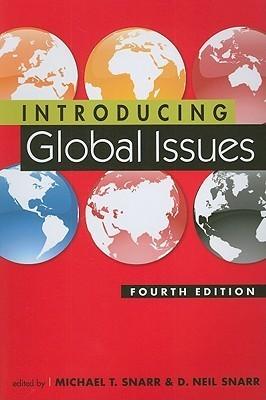
Core Idea
- Difficulty
- Easy
- Read it if
- You are a student or general reader seeking a foundational understanding of major global challenges and their interconnectedness, presented in an accessible and structured manner. It's ideal for introductory courses on international relations, global studies, or current events.
- Skip it if
- You are looking for an in-depth, specialized analysis of a single global issue or a highly theoretical academic text. This book serves as an introduction, not an advanced treatise.
Key Takeaways from Introducing Global Issues
Interconnectedness as the Core Reality
Global issues are not isolated problems but deeply interwoven challenges that defy national borders.
Snarr's main point is that to understand global issues, we must stop looking at them in isolation. He shows how climate change, for example, is not just an environmental problem; it worsens resource scarcity, causes migration, and fuels conflict. This demonstrates a complex chain of events. Because of this interconnectedness, solutions must also be global and involve many different approaches, often requiring cooperation between countries and other groups. The book consistently highlights that treating problems separately is not only ineffective but can make other issues worse. A complete view is therefore essential for good policy and analysis. This is arguably the book's strongest idea, offering the necessary perspective for examining all other issues.
“The world is increasingly interdependent, meaning that events and decisions in one part of the globe can have profound and often unforeseen consequences elsewhere.”
In the book: The intertwining of environmental degradation with economic instability and political conflict, as seen in regions experiencing desertification and subsequent resource wars.
Try this: When analyzing any global problem, map out its connections to at least three other global issues (e.g., poverty, health, security) to understand its full scope and potential leverage points.
Related ideas: globalization, interdependence, systems-thinking
The State Still Matters, But Less Absolutely
While states remain central actors, their sovereignty is increasingly challenged and complemented by non-state actors and international institutions.
Snarr clearly explains how the role of the state is changing in a globalized world. He recognizes that states still have significant power—they control territory, raise armies, and collect taxes—but argues that their complete independence is an old idea. The rise of multinational corporations, international non-governmental organizations (like Doctors Without Borders), terrorist groups, and intergovernmental organizations (like the UN) means that states now share influence and often give up some authority. This shift makes traditional international relations theory more complex, requiring a more detailed understanding of how power works. The book uses examples like the global financial crisis or pandemic responses to show how no single state can effectively handle these issues alone, emphasizing the need for governance at many levels.
“The state remains the primary actor in international relations, but its capacity to act unilaterally and its exclusive control over territory are increasingly eroded by transnational forces and non-state actors.”
In the book: The influence of Amnesty International on human rights policy, or the role of the World Health Organization in global health initiatives, often challenging or complementing national governments.
Try this: When evaluating a global policy, identify the key state actors and then list at least three non-state actors (NGOs, corporations, IGOs) whose influence is crucial to its success or failure.
Related ideas: state-sovereignty, non-state-actors, global-governance
Development as a Contested Concept
What constitutes 'development' is not universally agreed upon, leading to diverse and often conflicting approaches to poverty reduction and progress.
This argument is particularly insightful because it challenges simple ideas about 'progress.' Snarr points out that development is not just about economic growth; it includes human well-being, sustainability, and fairness. He compares different development models, from modernization theory focused on industrialization to dependency theory emphasizing structural inequalities caused by global capitalism, and human development approaches that prioritize health and education. The book criticizes the limits of purely economic measures, noting that high GDP can exist alongside great inequality or environmental damage. This detailed view is important for understanding why development efforts often fail or have unexpected negative results, as different groups have very different ideas about what 'success' means.
“There is no single, universally accepted definition of development; rather, it is a contested concept reflecting different values, priorities, and theoretical perspectives.”
In the book: The debate between economic growth-centric development (e.g., World Bank's historical focus) versus human development indicators (e.g., UNDP's Human Development Index) that include literacy and life expectancy.
Try this: Before supporting a development project, identify which definition of 'development' it implicitly or explicitly uses, and consider who benefits most under that definition.
Related ideas: human-development, sustainable-development, dependency-theory
The Looming Shadow of Environmental Degradation
Environmental issues are not peripheral concerns but fundamental threats that underpin and exacerbate nearly all other global problems.
Snarr puts environmental issues—climate change, species loss, resource depletion—at the forefront of global challenges. He argues they are not just one problem among many, but a fundamental crisis that intensifies others. He shows how environmental stress leads to food and water insecurity, causes forced migration, and can even start conflicts over shrinking resources. The book clearly illustrates the cycles: poverty can lead to unsustainable resource use, which then deepens poverty. This argument is powerful, moving environmental concerns from a small topic to a central part of global stability. While the specific data might be old since the book was published in 2012, the main ideas remain very relevant and even more urgent today.
“Environmental degradation is not merely an 'environmental' problem; it is a development problem, a security problem, and a human rights problem.”
In the book: The link between prolonged droughts in regions like the Sahel contributing to food crises and population displacement, thereby increasing political instability.
Try this: When proposing solutions to economic or social problems, always conduct an 'environmental impact assessment' to ensure the solution doesn't inadvertently worsen ecological health.
Related ideas: climate-change, resource-scarcity, environmental-security
Security Redefined: Beyond Military Might
Traditional state-centric military security is insufficient; human security, encompassing well-being and freedom from fear and want, is the modern imperative.
This is an important change in how we understand global security. Snarr argues that while military threats still exist, the daily insecurities people face—lack of food, access to clean water, disease, human rights abuses—are just as, if not more, urgent. He introduces 'human security,' which puts the safety and well-being of individuals ahead of the territorial integrity of states. This broader definition allows for a more complete way to resolve conflicts and build peace, recognizing that poverty, inequality, and lack of basic services can be as destabilizing as armed aggression. The limits of a purely military approach are clear in ongoing conflicts where underlying human insecurities are not addressed.
“True security in the 21st century extends far beyond military defense; it encompasses economic security, food security, health security, environmental security, personal security, community security, and political security.”
In the book: The concept of 'human security' promoted by the UN Development Programme, which broadened the understanding of security to include threats to human life and dignity.
Try this: When evaluating a national security budget, advocate for a portion to be reallocated to address human security issues like public health, education, or disaster preparedness.
Related ideas: human-security, conflict-prevention, non-traditional-threats
The Persistent Challenge of Inequality
Both within and between nations, vast inequalities in wealth, power, and opportunity remain a fundamental driver of global instability and injustice.
Snarr consistently highlights inequality as a widespread and damaging force. He explains how the historical effects of colonialism and current global economic structures maintain differences between the Global North and South. He also acknowledges the increasing inequality within nations, even developed ones, which leads to social unrest and political division. This is not just about fairness; extreme inequality harms social cohesion, slows economic development, and makes global cooperation harder. The book suggests that addressing issues like poverty, health, and even climate change cannot work without confronting the underlying systems of unequal distribution of resources and power. This focus on structural inequality corrects individual explanations of poverty.
“Global issues are often exacerbated by the profound and growing inequalities in wealth and power, both between the global North and South, and within individual countries.”
In the book: The Gini coefficient showing increasing income disparity in many countries, and the stark wealth gap between the richest 1% and the rest of the world population.
Try this: When evaluating any policy, ask: 'Who benefits most from this policy, and who bears the greatest cost? Does it exacerbate or alleviate existing inequalities?'
Related ideas: global-north-south, income-inequality, social-justice
Health as a Global Public Good
Global health challenges like pandemics and chronic diseases transcend borders, necessitating collective action and equitable access to care.
Snarr points out that health is not just a personal or national concern but a global public good. He uses examples like HIV/AIDS and new infectious diseases to show how pathogens can quickly spread across continents, making national containment strategies insufficient. The book also discusses the unequal distribution of healthcare resources and the impact of non-communicable diseases, highlighting how health outcomes are closely linked with poverty and inequality. This view emphasizes the ethical need for universal health access and the practical need for international cooperation in disease tracking, vaccine development, and building health infrastructure. Published in 2012, the book came before the COVID-19 pandemic, but its arguments on global health interdependence were ahead of their time.
“Disease knows no borders, and threats to global health anywhere are potential threats to health everywhere.”
In the book: The rapid global spread of SARS or H1N1 influenza, demonstrating the interconnectedness of global health and the need for international responses.
Try this: Support initiatives that promote equitable access to vaccines and medical technologies globally, recognizing that local health crises can quickly become global threats.
Related ideas: global-health, pandemics, health-equity
The Power of Non-State Actors and Civil Society
Beyond states, NGOs, corporations, and social movements wield significant influence, shaping global norms and driving change.
This idea builds on the concept of reduced state independence, specifically focusing on the growing power of non-state actors. Snarr details how NGOs advocate for human rights and environmental protection, multinational corporations influence global trade and labor practices, and social movements organize public opinion across borders. These groups often fill gaps left by states, provide essential services, or challenge existing power structures. While their influence can be positive (e.g., humanitarian aid), it can also be problematic (e.g., corporate lobbying overriding public interest). The book argues that understanding global issues requires analyzing this complex network of actors and their varied motivations and abilities.
“The landscape of global politics is increasingly populated by a diverse array of non-state actors, whose influence can rival or even surpass that of some states on specific issues.”
In the book: The successful advocacy campaigns by Greenpeace on environmental issues or the humanitarian work of Médecins Sans Frontières in conflict zones.
Try this: When seeking to influence global policy, identify key non-state allies or opponents and understand their strategies for leveraging influence.
Related ideas: civil-society, transnational-advocacy-networks, multinational-corporations
The Ethical Imperative of Global Citizenship
Addressing global challenges requires a shift in individual and collective consciousness towards shared responsibility and a sense of belonging to a global community.
While much of the book focuses on structural issues and institutional responses, Snarr concludes with a strong argument for global citizenship. He suggests that purely nationalistic or self-interested approaches are not enough to solve problems that cross borders. This involves recognizing shared humanity, understanding different perspectives, and acting with a sense of collective responsibility for the planet and its people. This ethical part is important because it provides the moral basis for international cooperation and solidarity, without which many proposed solutions would lack political will or public support. This argument is a call to action, reminding readers that individual choices and attitudes contribute to the larger global situation.
“Ultimately, tackling global issues requires not just new policies and institutions, but a fundamental shift in how individuals perceive their place in the world and their responsibility to others.”
In the book: The growth of global advocacy movements and ethical consumerism, reflecting a growing awareness and desire for individuals to contribute to global solutions.
Try this: Actively seek out diverse global news sources, engage in cross-cultural dialogue, and support organizations that promote human rights and environmental sustainability worldwide.
Related ideas: global-citizenship, cosmopolitanism, shared-responsibility
No Easy Answers: Complexity and Trade-offs
Global issues are characterized by inherent complexity, conflicting interests, and the necessity of difficult trade-offs in pursuit of solutions.
Snarr consistently avoids simple solutions, which is a strength of the book. He emphasizes that global issues are 'wicked problems'—highly connected, hard to define, and without clear answers. Solving one problem often has unexpected effects on another, and different groups (states, corporations, NGOs, local communities) have conflicting interests and priorities. For example, economic development might conflict with environmental protection, or national independence might clash with human rights interventions. This argument provides a healthy dose of realism, preparing the reader for the frustrations and compromises inherent in solving global problems. It stresses that effective involvement requires critical thinking, adaptability, and a willingness to negotiate difficult trade-offs.
“There are rarely simple solutions to complex global problems; instead, policymakers often face difficult choices involving trade-offs between competing values and interests.”
In the book: The ongoing debates at UN climate conferences, where the economic interests of developing nations often clash with the environmental demands of developed nations.
Try this: When analyzing a proposed solution, identify at least two potential negative externalities or trade-offs that might arise, and consider how they could be mitigated.
Related ideas: wicked-problems, policy-tradeoffs, stakeholder-conflict
Introducing Global Issues Quotes
“Global issues are complex and interconnected, demanding a holistic approach to understanding and addressing them.”
“Poverty is not merely a lack of income; it is a deprivation of basic capabilities and opportunities.”
“Environmental degradation is a shared responsibility and requires global cooperation for sustainable solutions.”
“Human rights are universal and indivisible, forming the foundation for a just and equitable world.”
“Conflict is often rooted in competition for scarce resources and the unequal distribution of power.”
“Globalization has brought both opportunities and challenges, intensifying inequalities while fostering new forms of connection.”
“Health is a global issue, as infectious diseases know no borders and require coordinated international responses.”
“Migration is a complex phenomenon driven by a multitude of factors, including economic disparities, political instability, and environmental pressures.”
“Food security is a fundamental human right and a critical component of global stability.”
“Technological advancements have the potential to address many global issues, but they also create new challenges and exacerbate existing ones.”
“Education is a powerful tool for empowerment and a key driver of sustainable development.”
“Addressing global issues requires active citizen engagement and a commitment to collective action.”
“The pursuit of peace is an ongoing process that involves diplomacy, conflict resolution, and the promotion of understanding.”
“Sustainable development seeks to balance economic growth, social equity, and environmental protection for present and future generations.”
Quiz
10 questions on the main ideas. Each answer comes with a short explanation.
Question 1
What is the primary focus of the book "Introducing Global Issues"?
- The history of ancient civilizations.
- Contemporary global challenges and their interconnectedness.
- The economic theories of Adam Smith.
- The development of modern art.
Show answer
B. Contemporary global challenges and their interconnectedness. The book is designed to introduce readers to the complex and interconnected nature of current global issues.
Question 2
Which of the following is often cited as a major global issue discussed in the book?
- The decline of the Roman Empire.
- The Industrial Revolution's impact on England.
- Climate change and environmental degradation.
- The invention of the printing press.
Show answer
C. Climate change and environmental degradation. Climate change is a prominent and pressing global issue that significantly impacts the planet and its inhabitants, and is a key topic in discussions of global issues.
Question 3
The book likely emphasizes the importance of understanding global issues from multiple perspectives. Which discipline is LEAST likely to be a primary focus when analyzing these issues?
- Sociology.
- Political Science.
- Economics.
- Classical Music History.
Show answer
D. Classical Music History. While classical music history is a valid academic field, it is not typically considered a primary lens through which to analyze contemporary global issues like poverty, conflict, or environmental challenges.
Question 4
The concept of 'globalization' is central to understanding many global issues. What does globalization generally refer to?
- The process of countries becoming more isolated.
- The increasing interconnectedness and interdependence of the world's economies, cultures, and populations.
- The establishment of a single world government.
- The spread of a single dominant culture globally.
Show answer
B. The increasing interconnectedness and interdependence of the world's economies, cultures, and populations. Globalization describes the complex web of interactions that increase interdependence across national borders, affecting economies, cultures, and societies.
Question 5
When discussing issues like poverty and inequality, the book likely explores the role of international organizations. Which of the following is an example of such an organization?
- The National Rifle Association (NRA).
- The World Health Organization (WHO).
- The American Medical Association (AMA).
- The Local Chamber of Commerce.
Show answer
B. The World Health Organization (WHO). The WHO is a specialized agency of the United Nations responsible for international public health, addressing global health issues and inequalities.
Question 6
The book might touch upon the challenges of sustainable development. Which of the following best defines sustainable development?
- Economic growth at any cost, regardless of environmental impact.
- Meeting the needs of the present without compromising the ability of future generations to meet their own needs.
- Focusing solely on environmental protection, ignoring economic needs.
- Prioritizing short-term economic gains over long-term societal well-being.
Show answer
B. Meeting the needs of the present without compromising the ability of future generations to meet their own needs. Sustainable development is a framework that balances economic, social, and environmental considerations to ensure a viable future for all.
Question 7
Conflict and security are often discussed as global issues. The book might explore the causes of conflict. Which of these is a common root cause of conflict discussed in international relations?
- Overabundance of resources.
- Shared cultural values.
- Competition for scarce resources and power imbalances.
- Universal agreement on political ideologies.
Show answer
C. Competition for scarce resources and power imbalances. Competition for limited resources (like water or oil) and significant disparities in power are frequently identified as major drivers of conflict between and within nations.
Question 8
The book likely addresses the issue of human rights. Which of these is considered a fundamental human right?
- The right to own a private jet.
- The right to freedom of speech and expression.
- The right to unlimited wealth accumulation.
- The right to discriminate against others.
Show answer
B. The right to freedom of speech and expression. Freedom of speech and expression is a widely recognized fundamental human right, enshrined in international declarations.
Question 9
When analyzing global issues, the concept of 'interdependence' is crucial. What does interdependence imply in a global context?
- That nations act entirely independently and are unaffected by others.
- That actions and events in one part of the world can have significant consequences for other parts of the world.
- That all nations have equal power and influence.
- That global problems are easily solved through individual national efforts.
Show answer
B. That actions and events in one part of the world can have significant consequences for other parts of the world. Interdependence highlights how interconnected nations are, meaning that events, policies, or crises in one country can ripple outwards and affect others.
Question 10
The book might discuss the role of non-governmental organizations (NGOs) in addressing global issues. Which of the following best describes the typical role of an NGO?
- To represent the official interests of a national government.
- To primarily focus on profit generation for shareholders.
- To advocate for specific causes, provide humanitarian aid, or monitor human rights, independent of government control.
- To enforce international laws and treaties.
Show answer
C. To advocate for specific causes, provide humanitarian aid, or monitor human rights, independent of government control. NGOs are typically non-profit organizations that operate independently of governments, often working on specific social, environmental, or humanitarian issues.
Introducing Global Issues FAQ
What is the main focus of 'Introducing Global Issues'?
'Introducing Global Issues' provides a comprehensive overview of the major challenges and problems facing the world today. It explores interconnectedness and the complexities of addressing these issues on a global scale.
What kind of topics are covered in the book?
The book covers a wide range of critical global issues, including environmental degradation, poverty and inequality, human rights, conflict and security, and globalization.
Who is the intended audience for this book?
This book is primarily designed for undergraduate students studying international relations, global studies, or related fields. It's also suitable for anyone seeking a foundational understanding of global challenges.
How does 'Introducing Global Issues' explain the interconnectedness of global problems?
The book emphasizes how various global issues are linked and influence one another. For example, it might show how environmental problems can exacerbate poverty or lead to conflict.
What are some key concepts discussed in the book?
Key concepts include globalization, sustainable development, human security, international cooperation, and the role of various actors like states, NGOs, and international organizations.
Does the book offer solutions to global issues?
While it thoroughly analyzes the problems, the book also explores potential solutions and strategies for addressing global issues, often highlighting the challenges in implementing them effectively.
How does 'Introducing Global Issues' compare to other introductory texts on global affairs?
This book distinguishes itself through its clear structure, accessible language, and balanced coverage of both traditional and emerging global challenges, providing a solid foundation for further study.
Is the book up-to-date with current global events?
The book aims to provide a timeless framework for understanding global issues, but readers should supplement it with current events to grasp the latest developments and nuances.
What is the author's perspective on global issues?
Michael T. Snarr presents a balanced and analytical perspective, encouraging critical thinking about the complexities and diverse viewpoints surrounding each global issue.
What are the benefits of studying global issues from this book?
Studying global issues from this book enhances your understanding of the world, develops critical thinking skills, and prepares you to engage thoughtfully with complex international challenges.
Enjoyed the summary?
A summary gives you the shape of the book. The book itself has the detail, the examples and the voice.
Find Introducing Global Issues on AmazonAs an Amazon Associate, BookBrief earns from qualifying purchases. How we're funded