
Synopsis
Covers the whole plot, including the ending.
- Difficulty
- Medium
- Pacing
- Slow
- Mood
- Atmospheric, Melancholic, Reflective, Subtle
- Read it if
- You appreciate literary short story collections that offer deep psychological insights and a rich sense of place, even if the themes are often melancholic.
- Skip it if
- You prefer fast-paced plots, clear-cut resolutions, or optimistic narratives; the stories are often subtle and focused on internal states.
James Joyce's Dubliners Plot Summary
Covers the whole plot, including the ending.
The Sisters
The narrator, a young boy, learns of Father Flynn's death. The old, paralyzed priest had been a significant, unsettling person in his life. The boy remembers the priest's odd habits, his 'simoniac' smile, and his interest in theology and Latin. He visits the priest's house with his aunt, where they talk with Nannie and Eliza, Father Flynn's sisters. Eliza reveals that Father Flynn had mental breakdowns, dropping a chalice during mass and laughing to himself in the confessional. The boy feels a mix of relief, fear, and a strange freedom after the priest's death, haunted by the priest's smile and the sisters' quiet revelations, which suggest a deeper, unspoken corruption.
An Encounter
Two schoolboys, the narrator and Mahony, skip school to go to the Pigeon House, a power station on Dublin Bay. Their initial excitement fades as Mahony gets distracted by cats and wanders off. The narrator meets an older, well-dressed man who talks to him. The man's conversation becomes unsettling, showing an interest in punishing boys, self-harm, and a strange, perverse interest in young boys' relationships. The narrator becomes increasingly uncomfortable. When Mahony returns, they leave the man, disturbed by the encounter and the man's hidden perversions.
Araby
A young boy, in love with Mangan's sister, promises to buy her a gift from Araby, an exotic market. His infatuation fills his ordinary life with wonder. He struggles to get money from his uncle, who comes home late and drunk. When he finally reaches Araby, it is late, many stalls are closed, and the place is not the magical dream he imagined. He overhears a mundane conversation between a young woman and two English gentlemen, which shatters his romantic ideas. He realizes his quest was pointless and his own vanity, standing alone in the dark, filled with anguish and self-reproach.
Eveline
Eveline, a young woman, sits by her window, thinking about her life in Dublin and a chance to escape with Frank, a sailor who wants to take her to Buenos Aires. She reviews her hard life: an abusive father, caring for her younger siblings after her mother's death, and her dull job. She remembers Frank's charm and their happy courtship. However, a promise she made to her dying mother to keep the family together, along with her deep fear of the unknown and the familiar comfort of her routine, stops her. At the last moment, on the quay with Frank, she cannot board the ship, remaining frozen and unresponsive, unable to take her chance at freedom.
After the Race
Jimmy Doyle, a young Dubliner from a new money family, races through Ireland with his wealthy European friends: Villona, a Hungarian nobleman; Rivière, a Frenchman; and Charles Séguin, a wealthy Englishman. After the race, they celebrate in a lavish restaurant and later play cards on Séguin's yacht. Jimmy, eager to impress and fit into their sophisticated world, gambles carelessly and loses a lot of money. The story shows Jimmy's superficiality, his desire for social acceptance, and his awareness of his more provincial background. He tries to keep up with his more established and rich companions, ultimately feeling the sting of his financial loss and perhaps his own inadequacy.
Two Gallants
Lenehan and Corley, two poor Dublin 'gentlemen' who live by their wits, walk through the city discussing women and their latest plans. Corley tells of his plan to use a servant girl he is seeing, hoping she will give him money or a meal. Lenehan, at first doubtful, waits for Corley while he meets the girl. When Corley returns, he proudly shows a small gold coin the girl gave him, a sign of their successful, though morally questionable, exploitation. The story reveals the parasitic nature of their lives and the desperation that drives them, highlighting the bleakness and moral squalor beneath the city's surface.
The Boarding House
Mrs. Mooney, a strong woman who runs a boarding house, decides it is time to marry off her daughter, Polly. Polly has been having an affair with Mr. Doran, a respectable clerk who is a lodger. Mrs. Mooney, knowing about the affair, lets it continue until Mr. Doran feels he must propose. She arranges a confrontation, calling Mr. Doran to her sitting-room to discuss the 'situation.' Mr. Doran, full of guilt and fear of social ruin, reluctantly agrees to marry Polly, giving in to Mrs. Mooney's calculated pressure and his own sense of duty and shame.
A Little Cloud
Little Chandler, a timid aspiring poet, meets his old friend Ignatius Gallaher, who has become a successful journalist in London. Gallaher, confident and worldly, boasts of his travels and experiences, while Chandler feels more and more inadequate and stuck in his ordinary life as a clerk, married with a child. Chandler envies Gallaher's freedom and success, regretting his own unfulfilled writing dreams. He returns home feeling bitter towards his wife, Annie, and his crying child, whom he harshly scolds, only to be immediately filled with remorse and self-pity, recognizing his own smallness and failure.
Counterparts
Farrington, a clerk, has a frustrating and humiliating day at work, hounded by his demanding boss, Mr. Alleyne, for not finishing a task. He tries repeatedly to get a drink, only to be caught and scolded. His anger builds throughout the day. After work, he drinks with friends, growing more frustrated when he cannot find a woman or win an arm-wrestling match. He returns home drunk and furious, taking out his pent-up rage on his young son, Tom, beating him for not making his supper, showing his own powerlessness and displaced aggression.
Clay
Maria, a small, kind, unmarried laundress, prepares to visit Joe Donnelly's family, a man she nursed as a child. It is Halloween, and she brings cakes for the children. On the tram, a drunken gentleman treats her kindly. At Joe's house, a warm family celebration takes place. During a game of 'snap-apple,' Maria is blindfolded and accidentally picks a piece of clay, symbolizing death or a monastic life, instead of a ring (marriage) or water (travel). The family quickly covers up the mistake. Maria, unaware, sings a song but leaves out a verse, highlighting her innocence and the subtle, unspoken sadness of her unfulfilled life.
A Painful Case
Mr. James Duffy, a solitary and precise bank clerk, lives a life of strict routine and intellectual isolation. He forms an unusual platonic friendship with Mrs. Sinico, a married woman who shares his intellectual interests. Their bond grows, but when Mrs. Sinico, feeling a deeper emotional connection, touches his hand, Mr. Duffy pulls back, fearing intimacy and commitment. He ends the relationship, retreating further into his solitude. Four years later, he reads in a newspaper that Mrs. Sinico has died of heart failure, made worse by alcohol. He realizes that by rejecting her, he condemned her to loneliness and, in doing so, condemned himself to an even greater, irreparable isolation, feeling a deep sense of regret and the cold emptiness of his own existence.
Ivy Day in the Committee Room
A group of political campaigners gathers in a dimly lit committee room on Ivy Day, the anniversary of Charles Stewart Parnell's death. They discuss the upcoming municipal elections, their small pay, and Parnell's controversial past. The room feels stagnant and decaying, mirroring Irish politics. The characters, including Joe Hynes, a poet, and Mr. Crofton, a conservative, show their cynicism, opportunism, and lack of real political belief. Hynes recites a poem praising Parnell, briefly bringing forth a sense of national pride and loss, but the moment is quickly overshadowed by the men's petty concerns and personal complaints, showing the corruption and moral inaction within Dublin's political world.
A Mother
Mrs. Kearney, a very ambitious and socially aware woman, carefully plans her daughter Kathleen's singing career, aiming to raise their family's social standing. Kathleen is set to perform at a series of concerts organized by the Eire Abu Society, a new nationalist group. However, the concerts are poorly managed, and payments are delayed. Mrs. Kearney, focused on proper behavior and her daughter's status, insists on full payment for Kathleen's appearances. Her constant demands and self-important manner cause conflict and embarrassment, leading to a public argument. Ultimately, Kathleen is fired, and Mrs. Kearney's attempts at social climbing end in humiliation and failure.
Grace
Mr. Tom Kernan, a Protestant and heavy drinker, falls down stairs in a pub, biting off part of his tongue. His friends, led by the religious Mr. Power, see this as a chance for his spiritual 'reformation' and decide to convince him to attend a Catholic retreat. They visit him at home, where his wife, a Catholic, is happy with their efforts. The men discuss religious matters and the importance of faith, though their understanding is often superficial and self-serving. They succeed in convincing Kernan to attend the retreat, but the story quietly questions the sincerity of their faith and the true potential for Kernan's change, suggesting their efforts are more about social conformity than real spiritual awakening.
The Dead
Gabriel Conroy attends his aunts' annual Christmas party, a lively event with music, food, and talk. He navigates various social interactions, from a superior exchange with Miss Ivors about his Irish identity to a dance with a charming young woman. Throughout the evening, Gabriel feels a mix of intellectual superiority and social awkwardness. Later, in their hotel room, his wife Gretta is deeply moved by a song, 'The Lass of Aughrim,' which reminds her of a young man named Michael Furey who loved her and died for her when she was young. Gabriel, at first jealous, has a profound realization. He sees the shallowness of his own love and life compared to Michael's passionate devotion, confronting his own death and the vast, unifying power of death and human connection, as snow falls silently over all of Ireland.
Principal Figures
Gabriel Conroy
Protagonist
An intellectual and somewhat pompous university professor.
Gabriel Conroy is a well-educated and self-conscious man, a university professor and literary critic who often feels superior to those around him. He is sensitive to criticism and preoccupied with his public image, often feeling out of place in social situations despite his efforts to appear sophisticated. His relationship with his wife, Gretta, is loving but somewhat detached, marked by his intellectual pride. He represents the educated, middle-class Dubliner grappling with his identity and place in the world.
Relationships: Gretta Conroy (Wife, initially perceived as somewhat naive, later becomes the catalyst for his epiphany.); Kate and Julia Morkan (Aunts, hosts of the annual Christmas party, to whom he feels a mix of affection and obligation.); Miss Ivors (Colleague and nationalist, who challenges his perceived lack of Irish identity.)
Eveline Hill
Protagonist
A young woman trapped by duty and fear in her squalid Dublin home.
Eveline is a young woman burdened by the responsibility of her family and the memory of her deceased mother. She lives a monotonous life, working in a shop and enduring her abusive father. She yearns for escape and a better life, symbolized by her suitor, Frank, and the promise of a new life in Buenos Aires. However, her deep-seated fear of the unknown, coupled with a sense of duty and the pervasive influence of her past, renders her paralyzed and unable to act, embodying the theme of paralysis.
Relationships: Frank (Her suitor, a sailor who offers her a chance at escape.); Eveline's Father (Abusive and demanding, a source of fear and obligation.); Eveline's Mother (Deceased, her memory and deathbed promise heavily influence Eveline's decisions.)
Father James Flynn
Supporting/Symbolic
A deceased, disturbed priest whose influence lingers.
Father Flynn is a former priest who dies at the beginning of 'The Sisters.' Though deceased, his presence dominates the first story. He was a complex, unsettling figure, prone to mental breakdowns and peculiar obsessions with theological intricacies, often smiling a 'simoniac' smile. His paralysis, both physical and spiritual, is a central symbol of the moral and intellectual decay that Joyce portrays in Dublin. His ambiguous character suggests a deeper corruption or unholy influence that continues to disturb the young narrator.
Relationships: The Narrator (The Sisters) (His former student, deeply affected by his unsettling presence and death.); Nannie and Eliza Flynn (His sisters, who reveal details of his mental decline and strange behavior.)
Little Chandler
Protagonist
A timid clerk with unfulfilled literary aspirations.
Little Chandler is a small, timid man working as a clerk, secretly harboring ambitions of becoming a poet. He is insecure and easily intimidated, especially when confronted with the success and worldliness of his old friend, Gallaher. His life is characterized by mediocrity and a sense of being trapped by his marriage and domestic responsibilities. He embodies the frustration of unfulfilled dreams and the resentment that can fester in a life of quiet desperation, ultimately lashing out at his family in a moment of self-ploathing.
Relationships: Ignatius Gallaher (His old friend, a successful journalist whose achievements highlight Chandler's failures.); Annie Chandler (His wife, whom he resents for her perceived commonness and for tying him down.); His Son (A symbol of his domestic entrapment, whom he abuses in a moment of rage.)
Maria
Protagonist
A kind, innocent old maid working as a laundress.
Maria is a small, gentle, and somewhat naive unmarried woman, working in a laundry. She is characterized by her kindness, her meticulous habits, and her innocent cheerfulness, despite her unfulfilled life. She represents a certain type of Dublin woman—pious, diligent, and outwardly content, yet subtly marked by loneliness and the quiet tragedy of an unlived life. Her experience at the Halloween party, particularly the 'clay' incident, subtly underscores her lack of prospects and the underlying sadness of her existence.
Relationships: Joe Donnelly and his family (Her former charge and his family, to whom she feels a deep, almost maternal affection.); The Gentlemen on the Tram (Brief, kindly interactions that highlight her harmlessness and vulnerability.)
Mr. James Duffy
Protagonist
A solitary and fastidious man who deliberately isolates himself.
Mr. Duffy is a meticulous, intellectual, and deeply solitary man who lives a life of rigid routine and emotional detachment. He prides himself on his independence and his rejection of conventional society, carefully cultivating his isolation. His friendship with Mrs. Sinico is his only foray into human connection, which he ultimately terminates when it becomes too emotionally intimate. He embodies extreme paralysis, not just of action but of feeling, leading him to a profound and agonizing realization of his own loneliness.
Relationships: Mrs. Sinico (His intellectual companion, whose emotional needs he rejects, leading to her demise and his own regret.)
Corley
Protagonist
A petty swindler who lives by exploiting women.
Corley is one of the 'two gallants,' a young man who embodies the petty opportunism and moral squalor of a segment of Dublin society. He is confident in his ability to manipulate women for his own gain, whether for money or a meal. He is a 'gallant' in a superficial sense, dressing well but lacking any genuine substance or moral compass. His actions with the servant girl highlight the exploitative nature of his existence and the bleakness of his world.
Relationships: Lenehan (His companion and fellow swindler, who is more reflective but equally complicit.); The Servant Girl (His victim, whom he exploits for a small coin.)
Mrs. Mooney
Supporting/Antagonist
A shrewd and determined boarding house owner.
Mrs. Mooney is a formidable and pragmatic woman, the proprietress of a Dublin boarding house. Having separated from her abusive husband, she has learned to be self-sufficient and ruthless in protecting her interests and those of her family. She is a master manipulator, orchestrating her daughter Polly's affair with Mr. Doran to secure a marriage that will ensure her daughter's future and uphold the family's respectability. She represents the practical, often calculating, side of survival in a difficult urban environment.
Relationships: Polly Mooney (Her daughter, whose future she meticulously plans and manipulates.); Mr. Doran (Her lodger, whom she corners into marrying Polly.); Mr. Mooney (Her estranged, abusive husband, whose failures hardened her.)
Michael Furey
Mentioned/Symbolic
Gretta Conroy's deceased childhood love.
Michael Furey is a young man from Gretta Conroy's past, who died of consumption after standing out in the rain beneath her window, seemingly out of love for her. Though he never appears directly, his memory profoundly impacts Gretta and, through her, Gabriel. He symbolizes passionate, selfless, and ultimately tragic love, contrasting sharply with Gabriel's more detached and intellectual affection. His story serves as a catalyst for Gabriel's epiphany, representing a deeper, more elemental connection to life and death that Gabriel has suppressed.
Relationships: Gretta Conroy (Her first, passionate love, whose memory still moves her deeply.)
Themes & Insights
Paralysis
The main idea of *Dubliners*, paralysis, shows as a spiritual, emotional, and physical inability to act, escape, or change. Characters are often stuck by their situations, social rules, fear, or their own psychological limits. Father Flynn's physical paralysis in 'The Sisters' sets the mood, while Eveline's inability to board the ship in 'Eveline' is a clear example of emotional paralysis. Mr. Duffy's self-chosen isolation in 'A Painful Case' leads to deep spiritual paralysis, leaving him utterly alone. This theme highlights Dublin as a stagnant city that stifles its residents.
“His soul had been a long time dead.”
Escape and Failure
Many characters want to escape Dublin's ordinary, oppressive, or morally decaying environment, but these attempts always fail. Eveline's chance to leave with Frank is stopped by her own fear and sense of duty. The boy in 'Araby' seeks an exotic escape through the market, only to find it a mundane and disappointing experience. Little Chandler dreams of a literary escape in 'A Little Cloud' but remains stuck in his mediocre life. These failures emphasize the widespread paralysis and the difficulty of breaking free from the city's hold, suggesting that escape is either impossible or leads to more disappointment.
“Her eyes had been dimmed by tears and she saw the seamen's caps and tried to hear him calling her name. But the white face of the quay wall still confronted her and the white face of him still stared into her eyes.”
Epiphany and Disillusionment
Joyce uses 'epiphany'—a sudden spiritual insight or revelation—often leading to disappointment. Characters experience moments of deep understanding, but these rarely lead to positive change. Instead, they often show how bleak their situation is or their own moral flaws. The boy in 'Araby' has an epiphany about how pointless his quest was. Gabriel Conroy's revelation in 'The Dead' about Michael Furey's love and his own shallow life is perhaps the most important, though it leaves him with a deep sense of loss and insignificance. These epiphanies show the characters' entrapment and the widespread gloom.
“He saw himself as a ludicrous figure, an anguished animal, a worthless thing, a mere speck in the universe.”
The Decay of Irish Society
Joyce shows Dublin as a city in decline, suffering from moral, spiritual, and political decay. This idea is clear in the petty corruption of the political campaigners in 'Ivy Day in the Committee Room,' the exploitation in 'Two Gallants,' and the general sense of stagnation and unfulfilled potential that fills many characters' lives. The church, once a pillar of society, is also shown to be tainted, as suggested by Father Flynn's disturbed state. This decay is not just external but internal, infecting the souls of the Dubliners and adding to their paralysis.
“Ireland, they say, is the sow that eats her farrow.”
Childhood Innocence and Loss
The early stories, especially 'The Sisters,' 'An Encounter,' and 'Araby,' focus on young boys dealing with the loss of innocence and the harsh realities of the adult world. The narrator in 'The Sisters' learns about Father Flynn's ambiguous corruption, while the boys in 'An Encounter' face a disturbing perversion. The boy in 'Araby' loses his romantic ideas about love and exoticism. These experiences mark a shift from naive idealism to a growing awareness of the world's complexities and often unpleasant truths, highlighting the vulnerability of youth in a decaying environment.
“Gazing up into the darkness I saw myself as a creature driven and derided by vanity; and my eyes burned with anguish and anger.”
Plot Devices & Literary Techniques
Epiphany
A sudden, profound moment of realization for a character.
Joyce's concept of epiphany is central to *Dubliners*. It refers to a sudden spiritual manifestation, whether in a trivial gesture, word, or scene, through which the meaning of an event or character's life is suddenly illuminated. These moments are often fleeting and do not necessarily lead to positive change, but rather to a deeper understanding, often of a character's own paralysis or disillusionment. Examples include the boy's realization at the end of 'Araby' and Gabriel Conroy's profound insight into his own life and mortality at the conclusion of 'The Dead'.
Symbolism
Objects, colors, or weather representing deeper meanings.
*Dubliners* is rich in symbolism, often used to reinforce the themes of paralysis and decay. The white face of the quay in 'Eveline' symbolizes her entrapment. The snow falling 'all over Ireland' in 'The Dead' represents both a unifying force of mortality and a chilling blanket over life. Father Flynn's chalice, his paralysis, and his 'simoniac' smile are symbols of moral and spiritual decay. These symbols subtly enhance the stories' atmosphere and thematic depth, often leaving the reader with a sense of unease or melancholy.
Free Indirect Discourse
Narrative technique blending narrator's and character's voices.
Joyce frequently employs free indirect discourse, allowing the narrator's voice to blend seamlessly with a character's thoughts and feelings without explicit markers like 'he thought' or 'she felt.' This technique gives the reader intimate access to the characters' inner lives and perspectives, blurring the line between objective narration and subjective experience. It contributes to the psychological depth of the stories, allowing the reader to experience the characters' frustrations, hopes, and disillusionments more directly, as seen in the thoughts of Little Chandler in 'A Little Cloud' or Eveline's internal monologue.
Motifs of Stagnation and Decay
Recurring images and descriptions that evoke a sense of lifelessness.
Throughout *Dubliners*, Joyce uses recurring motifs to emphasize the theme of paralysis and the moral decay of the city. These include descriptions of dusty rooms, dim lighting, stagnant water, and characters who are physically or emotionally inert. The smell of decay pervades Father Flynn's room in 'The Sisters,' and the 'dead' atmosphere of the committee room in 'Ivy Day' mirrors the political stagnation. These repeated images create a pervasive atmosphere of gloom and hopelessness, reinforcing the idea that Dublin is a place where life struggles to thrive.
James Joyce's Dubliners Quotes
“His soul had approached that region where dwell the vast hosts of the dead.”
“She stood up in a sudden impulse of terror. A cry nearer than any she had heard yet nearly escaped her lips. She addressed her prayer to the Blessed Virgin.”
“One by one they were all becoming shades. Better pass away in the full glory of some passion, than fade and wither dismally with age.”
“He waited, listening, for a moment. This veronica of the great world was a smudge of ashtray or a stray hair.”
“He had a slight flush on his cheek and he looked with vague wonder at the two figures in front of him and at the unfurnished room.”
“Every night as I gazed up at the window I said softly to myself the word paralysis.”
“His heart was full of a vague unrest. He knew nothing of the world. He knew nothing of his own heart.”
“His soul swooned slowly as he heard the snow falling faintly through the universe and faintly falling, like the descent of their last end, upon all the living and the dead.”
“The air of the room chilled his blood.”
“He thought of the dark, uncomely houses of the street, of the dark, uncomely lives which were being led in them.”
“She had to struggle with a sense of inarticulate resistance.”
“The grey warm air hung heavy in the room, and the clock ticked on the mantelpiece with a solemn monotony.”
“No, there was no hope for him: he was a prisoner for life.”
“He saw himself as a trivial object, a mere speck in the immensity of the world.”
Quiz
10 questions on the plot and the characters. Each answer comes with a short explanation.
Question 1
In 'The Sisters,' what object does Father Flynn accidentally break while sitting in his armchair?
- A teacup
- A chalice
- A prayer book
- A crucifix
Show answer
B. A chalice Eliza recounts how Father Flynn, while sitting in his armchair, had let fall a chalice and it had broken, an incident she interprets as a sign of his peculiar state of mind.
Question 2
What is the name of the protagonist in 'Araby'?
- Frank
- Gabriel
- The narrator is unnamed
- Little Chandler
Show answer
C. The narrator is unnamed The young boy who narrates 'Araby' is never given a specific name in the story, which is common for many of the child protagonists in Dubliners.
Question 3
In 'Eveline,' what is the name of the sailor with whom Eveline plans to elope?
- Ignatius Gallaher
- Frank
- Farrington
- Mr. Duffy
Show answer
B. Frank Eveline's suitor and the man she almost runs away with to Buenos Ayres is named Frank, a kind sailor who promises her a new life.
Question 4
Which of the following characters is a literary critic who dreams of becoming a poet in 'A Little Cloud'?
- Mr. Kernan
- Lenehan
- Little Chandler
- Corley
Show answer
C. Little Chandler Little Chandler, in 'A Little Cloud,' is depicted as a timid clerk who secretly harbors ambitions of becoming a great poet, contrasting sharply with his old friend Gallaher.
Question 5
What is the primary theme explored through the character of Mr. Duffy in 'A Painful Case'?
- The joy of human connection
- The paralysis of isolation and emotional repression
- The pursuit of artistic freedom
- The corruption of political power
Show answer
B. The paralysis of isolation and emotional repression Mr. Duffy's meticulously ordered and emotionally detached life, and his eventual realization of the profound loneliness caused by his refusal to engage emotionally, highlights the theme of paralysis through isolation.
Question 6
In 'Counterparts,' what does Farrington desperately try to pawn to buy more drinks?
- His watch
- His overcoat
- His wedding ring
- His work tools
Show answer
B. His overcoat Farrington attempts to pawn his overcoat to continue drinking, showcasing his desperation and the cycle of frustration and escapism.
Question 7
What significant event occurs during the Morkan sisters' annual dance in 'The Dead'?
- A political argument breaks out among the guests.
- Gabriel Conroy delivers a controversial speech.
- Greta Conroy hears a song that reminds her of a deceased former lover.
- A guest proposes marriage to one of the Morkan sisters.
Show answer
C. Greta Conroy hears a song that reminds her of a deceased former lover. As the party winds down, Greta hears Bartell D'Arcy sing 'The Lass of Aughrim,' which brings back memories of Michael Furey, a young man who died for her love, profoundly affecting her and Gabriel.
Question 8
What is the name of the young boy who observes the funeral procession of Father Flynn in 'The Sisters'?
- Leopold Bloom
- Stephen Dedalus
- The narrator of 'The Sisters' is unnamed
- Jimmy Doyle
Show answer
C. The narrator of 'The Sisters' is unnamed Similar to 'Araby,' the young narrator in 'The Sisters' is not given a name, allowing for a more universal experience of childhood observation and confusion.
Question 9
Which story features a character named Mr. Alleyne, a demanding and abusive boss?
- 'A Mother'
- 'Two Gallants'
- 'Counterparts'
- 'Grace'
Show answer
C. 'Counterparts' Mr. Alleyne is Farrington's overbearing boss in 'Counterparts,' contributing to Farrington's frustration and eventual violent outburst at home.
Question 10
The collection 'Dubliners' is often considered to explore the theme of 'paralysis.' Which of the following best describes this theme within the context of the book?
- The physical inability of characters to move or act.
- The emotional, spiritual, and intellectual stagnation of the city and its inhabitants.
- The political gridlock in early 20th-century Ireland.
- The inability of characters to escape poverty.
Show answer
B. The emotional, spiritual, and intellectual stagnation of the city and its inhabitants. Joyce's concept of 'paralysis' in Dubliners refers to the pervasive sense of stagnation and inability to escape one's circumstances, whether societal, emotional, or spiritual, that afflicts many of the characters in Dublin.
James Joyce's Dubliners FAQ
What is the overarching theme that connects the fifteen stories in 'Dubliners'?
The stories are primarily linked by the theme of 'paralysis,' a spiritual and emotional stasis afflicting the inhabitants of Dublin. This paralysis manifests as an inability to escape mundane routines, oppressive social conventions, or personal failures, trapping characters in cycles of unfulfilled desires and quiet desperation.
Which story is considered the climactic and most complex in the collection?
'The Dead' is widely regarded as the masterpiece of the collection and its emotional climax. It explores themes of love, memory, mortality, and the ephemerality of life through the internal journey of Gabriel Conroy at a Christmas party, culminating in his profound epiphany about his own life and connection to others.
How does the setting of turn-of-the-century Dublin influence the characters and their predicaments?
Gaslit, turn-of-the-century Dublin is not merely a backdrop but an active force shaping the characters' lives. Its social customs, religious conservatism, political stagnation, and economic struggles create an environment of constraint and disillusionment, contributing directly to the pervasive sense of paralysis experienced by the inhabitants.
What is the significance of the recurring motif of 'epiphany' in the stories?
An 'epiphany' in Dubliners refers to a sudden spiritual manifestation or a moment of profound insight, often revealing a character's true nature or the bleak reality of their situation. While these moments offer clarity, they frequently lead to further paralysis rather than liberation, as characters often fail to act upon their revelations.
How do childhood stories like 'The Sisters' and 'Araby' set the tone for the collection?
These early stories establish a tone of disillusionment and the loss of innocence. In 'The Sisters,' the narrator's encounter with the death of Father Flynn hints at a corrupt spiritual authority, while 'Araby' depicts a young boy's romantic idealism crashing against the mundane reality of Dublin, foreshadowing the pervasive paralysis of adulthood.
Are there any characters that appear in multiple stories, connecting the narratives?
While most characters are unique to their stories, there are subtle connections. For instance, Corley and Lenehan from 'Two Gallants' are mentioned in 'A Little Cloud,' and characters like Mr. Power from 'Grace' might be seen interacting with others. These reappearances reinforce the sense of a shared, claustrophobic Dublin community.
What is the symbolic meaning of the dead priest, Father Flynn, in 'The Sisters'?
Father Flynn symbolizes the spiritual decay and moral corruption within the Church and Dublin society. His paralysis, hinted at by his broken chalice and strange laughter, reflects a broader failure of spiritual guidance, leaving the young narrator and the community in a state of moral uncertainty.
How does the recurring imagery of dust and decay contribute to the overall mood?
The imagery of dust, decay, and stagnant air, particularly in stories like 'The Sisters' and 'A Little Cloud,' powerfully conveys the atmosphere of spiritual and emotional stagnation. It suggests a city and its inhabitants slowly crumbling, unable to renew themselves or escape their confines, reinforcing the theme of paralysis.
What is the significance of the unreliable narration often present in the stories?
Joyce frequently employs focalized narration, presenting events through the limited and often biased perspectives of his characters. This unreliability forces the reader to actively interpret events and discern the hidden truths beneath the characters' self-deceptions, deepening the psychological complexity of their predicaments.
How does Gabriel Conroy's internal conflict in 'The Dead' reflect a broader psychological struggle in Dubliners?
Gabriel Conroy's struggle between intellectual vanity, social anxiety, and his eventual confrontation with his own emotional inadequacy mirrors the psychological paralysis affecting many characters. His fear of genuine connection and his eventual humbling by Gretta's memory of Michael Furey exemplify the pervasive self-deception and unfulfilled emotional lives within the city.
Analyze the psychological state of Eveline in her eponymous story.
Eveline is psychologically trapped by a combination of filial duty, fear of the unknown, and the paralyzing grip of her past. Her memories of her mother's suffering and her father's aggression hold her captive, preventing her from escaping with Frank, despite her longing for a new life, ultimately leading to a profound moment of emotional paralysis on the docks.
What psychological defense mechanisms are evident in characters like Little Chandler in 'A Little Cloud'?
Little Chandler exhibits significant psychological defense mechanisms, primarily escapism through fantasy and rationalization. He dreams of literary success and a more exciting life, but his fear of change and his self-doubt prevent him from pursuing these ambitions, leading him to rationalize his mediocrity and lash out at his wife and child.
How does the theme of unfulfilled desire manifest psychologically in characters like Maria in 'Clay'?
Maria, in 'Clay,' embodies the psychological impact of unfulfilled desire and social isolation. Her quiet longing for companionship and a meaningful life is palpable, yet her passivity and the societal expectations placed upon her prevent her from achieving these desires. Her 'blindness' in the game of fortunes symbolizes her inability to perceive her own potential or escape her limited circumstances.
Is 'Dubliners' ultimately a pessimistic or optimistic collection of stories?
While the collection is often characterized by its pervasive sense of paralysis and disillusionment, leading many to view it as pessimistic, the very act of revealing these conditions could be seen as a form of critical hope. Joyce exposes the maladies of Dublin, perhaps implying that recognition is the first step towards change, even if his characters rarely achieve it.
How does Joyce's use of 'scrupulous meanness' in his writing style contribute to the book's impact?
Joyce's 'scrupulous meanness' refers to his precise, unsentimental, and often detached narrative style, which avoids overt judgment or emotional excess. This stylistic choice forces readers to confront the stark realities of the characters' lives without authorial interference, enhancing the sense of authenticity and making the moments of paralysis and epiphany more impactful.
To what extent is 'Dubliners' a critique of Irish nationalism and the Catholic Church?
The stories offer a significant critique of both institutions. The Catholic Church is often depicted as corrupt or spiritually barren (e.g., Father Flynn), while Irish nationalism is shown to be largely ineffective or hypocritical, failing to inspire genuine change or liberation among the populace, as seen in the empty rhetoric in 'Ivy Day in the Committee Room.'
How can the 'timeless circular novel' description be interpreted for 'Dubliners'?
The description suggests that while the stories are distinct, they are interconnected thematically and emotionally, forming a complete cycle of human experience within Dublin. The 'circular' nature implies a continuous return to the themes of paralysis, disillusionment, and unfulfilled potential, creating a comprehensive portrait of the city's soul across different ages and social strata.
What is the significance of the snow falling 'all over Ireland' at the end of 'The Dead'?
The snow falling 'all over Ireland' in the final lines of 'The Dead' is a powerful symbol of universal mortality, shared experience, and perhaps a unifying sense of paralysis that extends beyond Dublin. It suggests that the spiritual and emotional stasis experienced by the characters is not confined to the city but is a broader human condition, encompassing both the living and the dead.
About the author
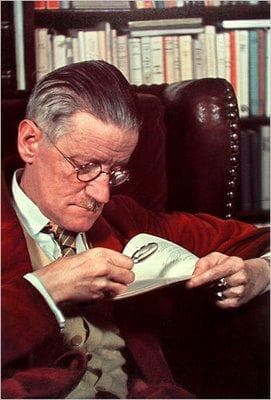
James Augustine Aloysius Joyce was an Irish novelist, poet, and literary critic. He contributed to the modernist avant-garde movement and is regarded as one of the most influential and important writers of the 20th century. Joyce's novel Ulysses (1922) is a landmark in which the episodes of Homer's Odyssey are paralleled in a variety of literary styles, particularly stream of consciousness. Other well-known works are the short-story collection Dubliners (1914), and the novels A Portrait of the Artist as a Young Man (1916) and Finnegans Wake (1939). His other writings include three books of poetry, a play, letters, and occasional journalism.
Similar books
- A Portrait of the Artist as a Young Man
James Joyce
3.6 (128k) average on GoodreadsLiterary FictionExplores similar themes of Irish identity and paralysis, and features Joyce's distinctive prose style.
- Pastoralia
George Saunders
4.1 (18k) average on GoodreadsLiterary FictionWhile contemporary, it uses short stories to critique societal norms and human foibles with a keen, often satirical, eye.
- Nineteen Eighty-Four
George Orwell
4.2 (5.5M) average on GoodreadsFictionWinston Smith dreams of truth and rebellion in a world where Big Brother watches all, but he confronts the terrifying power of a regime that controls not just actions, but thoughts.
- The Frozen River
Ariel Lawhon
4.4 (600k) average on GoodreadsFictionIn 1789 Maine, a heroic midwife's diary helps her expose a murder and get justice in a town that wants to silence her.
- A Man Called Ove
Fredrik Backman
4.4 (569k) average on GoodreadsFictionA stubborn widower, who lives by strict rules, finds his quiet world changed by a lively new family next door, making him face his past and find happiness in human connection.
- The Art of Racing in the Rain
Garth Stein
4.2 (452k) average on GoodreadsFictionThrough the eyes of Enzo, a wise and observant dog, a race car driver's family navigates a journey of love, loss, and resilience, learning that life's most important lessons often come in the curves, not just on the straightaways.




Enjoyed the summary?
A summary gives you the shape of the book. The book itself has the detail, the examples and the voice.
Find James Joyce's Dubliners on AmazonAs an Amazon Associate, BookBrief earns from qualifying purchases. How we're funded