
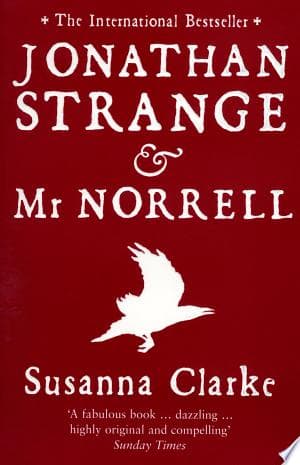
Synopsis
Covers the whole plot, including the ending.
- Difficulty
- Hard
- Pacing
- Slow
- Mood
- Atmospheric, Witty, Scholarly, Darkly Magical, Introspective
- Read it if
- You enjoy richly detailed historical fantasy, complex characters, and a slow-burn narrative with a deep dive into the nature of magic and its return to a rational world.
- Skip it if
- You prefer fast-paced plots, simple magic systems, or don't have the patience for a very long book with extensive historical and magical world-building.
Jonathan Strange and Mr Norrell Plot Summary
Covers the whole plot, including the ending.
The Rise of Mr Norrell
In 1806, English magic is a subject of academic study, not practice. Societies of theoretical magicians, like the York Society, debate practical magic's existence. Mr. Gilbert Norrell, a reclusive magician from Hurtfew Abbey, performs actual magic, making statues in York Minster speak. He announces his plan to restore English magic, believing only he has the necessary knowledge and caution. Norrell then goes to London, offering his services to the government in the war against Napoleon, stressing secrecy and his unique position as the only practicing magician.
Norrell's Interventions and Lady Pole's Resurrection
In London, Mr. Norrell demonstrates his power by creating phantom ships to harass the French navy and by moving an entire road. His most significant act, however, involves resurrecting Lady Pole, Sir Walter Pole's fiancée, who had died suddenly. Norrell performs this with a mysterious faerie, later revealed as the gentleman with the thistle-down hair, who demands a price. Lady Pole returns to life, but she is changed, speaking strangely and seeming melancholic, suggesting the faerie took part of her soul.
The Emergence of Jonathan Strange
Jonathan Strange, a wealthy amateur from Shropshire, initially has no interest in magic. However, a street magician's prophecy to his servant, John Childermass, and then to Strange himself, reveals he will be a great magician. Strange's fiancée, Arabella, encourages him. He studies magic alone, quickly showing an intuitive and powerful grasp of the art, far beyond others' academic understanding. Strange's approach to magic is more adventurous and less rigid than Norrell's, focusing on the wilder, ancient aspects, especially those of the Raven King.
The Two Magicians Meet
Mr. Norrell, learning of Strange's talent, sends Childermass to invite Strange to London. Strange agrees, and the two magicians meet, forming an uneasy alliance. Norrell, cautious, plans to mentor Strange, teaching him only what Norrell considers safe. However, Strange's natural brilliance and independent spirit lead him to question Norrell's restrictive views, especially Norrell's suppression of knowledge about the legendary Raven King. Their collaboration has mutual respect but growing philosophical disagreement, setting the stage for their eventual split.
Strange's War Service and Growing Independent Study
Jonathan Strange volunteers as a military magician in the Peninsular War, using his magic to create roads, transport troops, and make a forest attack the French. His battlefield experiences show him war's brutal reality and magic's darker, destructive potential. Away from Norrell, Strange explores forbidden texts and experiments, especially those related to the Raven King, whose magic is said to be wilder and more powerful. He begins to use a more daring, less controlled form of magic, diverging further from Norrell's conservative approach.
The Faerie's Influence and Lady Pole's Plight
The gentleman with the thistle-down hair, the faerie who helped Norrell with Lady Pole's resurrection, continues to meddle. He holds Lady Pole captive in an illusion, forcing her to dance endlessly at his faerie ball, even as her physical body in England becomes distressed and withdrawn. He also takes an interest in Stephen Black, Sir Walter Pole's black butler, promising him a kingdom. The faerie's manipulative presence and the suffering he causes highlight the dangers of dealing with ancient, amoral magic and the hidden costs of Norrell's initial intervention.
The Rift Between Strange and Norrell
The philosophical differences between Jonathan Strange and Mr. Norrell grow into open conflict. Strange advocates for a return to the wild, ancient magic of the Raven King, believing it the true source of English magic, while Norrell denounces it as dangerous and chaotic. Norrell tries to discredit Strange and restrict his access to magical texts, fearing Strange's recklessness. Their disagreements become public, dividing the magical community. The final break happens when Strange publishes a book on the Raven King, directly challenging Norrell's authority and his careful narrative of magic.
Arabella's Disappearance and Strange's Desperation
Tragedy strikes when Arabella, Jonathan Strange's wife, falls ill and disappears, seemingly taken by the gentleman with the thistle-down hair. Devastated, Strange believes Arabella is trapped in the faerie realm. He dedicates himself to finding a way to rescue her, using increasingly dangerous and morally ambiguous magical practices, including necromancy and dark arts. His desperation leads him to use the wild magic he had only studied, pushing him further into the unknown and closer to the Raven King's dangerous power.
The Curse of the Invisible Cities
In his frantic attempts to find Arabella, Jonathan Strange tries to summon a powerful spirit, but instead inadvertently traps himself and Norrell within an 'Invisible City' – a magical curse that makes them visible only to each other, isolating them from the rest of the world. This curse shows their escalating magical conflict and their dabbling with forces beyond their understanding. They become linked, forced to confront each other while cut off from everyone else, trapped in a shared magical prison that reflects their intertwined destinies.
Stephen Black's Ascendancy and the Faerie's Downfall
Stephen Black, through his association with the gentleman with the thistle-down hair, learns the faerie's true nature and cruelty. Empowered by the faerie's promises and his own understanding of faerie magic, Stephen eventually turns against his tormentor. He plans to trap and destroy the gentleman with the thistle-down hair, freeing Lady Pole and other victims. Stephen's journey from subservient butler to a figure of power and vengeance offers a counter-narrative to the magicians' struggles, showing the agency of those often overlooked.
The Raven King's Return and the Breaking of the Spell
As the magical conflict intensifies, the spirit of the Raven King, the legendary king of English magic, begins to stir. His presence is felt through various magical events and prophecies. Ultimately, Strange and Norrell's combined efforts, inadvertently helped by the faerie's downfall and Stephen Black's actions, break the Invisible City curse. The Raven King's return signals a new era of English magic, one that includes both ancient, wild power and a more structured, cautious approach, suggesting a possible blend of the two magicians' philosophies.
Aftermath and Uncertain Futures
With the curse broken and the Raven King's magic re-established, the world changes. Lady Pole and Arabella are freed from the faerie's influence, though their experiences leave lasting scars. Jonathan Strange and Mr. Norrell, now visible again, are forever changed by their ordeal and their confrontation with the Raven King. Their future, and the future of English magic, remains unclear. The novel ends with a sense of unresolved potential, hinting at the vast, untamed power unleashed and the ongoing journey of discovery for both magicians, who, despite their differences, are now linked to England's revitalized magical landscape.
Jonathan Strange and Mr Norrell Characters
Mr. Gilbert Norrell
Protagonist
The reclusive, cautious magician who reintroduces practical magic to England.
Mr. Norrell is a meticulous, reclusive, and immensely learned magician who believes himself to be the sole rightful practitioner of English magic. He is characterized by his caution, his obsession with order, and his fear of the wild, ancient magic associated with the Raven King. Norrell's primary motivation is to restore magic to England, but on his own terms, carefully controlled and purged of what he perceives as dangerous influences. He views the Raven King's magic as chaotic and destructive, leading him to hoard books and suppress knowledge that contradicts his worldview. His fastidiousness and social awkwardness often mask a deep-seated insecurity about his own magical abilities when faced with the unknown.
Relationships: Jonathan Strange (rival, reluctant mentor, later co-prisoner); John Childermass (loyal, long-suffering servant and agent); Lady Pole (patient, victim of his initial magical intervention)
Jonathan Strange
Protagonist
The brilliant, impetuous magician who challenges Norrell's conservative views.
Jonathan Strange is a natural and intuitive magician, initially a reluctant dilettante who quickly surpasses Norrell in his understanding and application of magic. He is handsome, charming, and daring, with a strong romantic streak. Unlike Norrell, Strange is drawn to the wilder, more ancient aspects of magic, particularly those associated with the Raven King, believing them to be the true essence of English magic. His motivations are often driven by curiosity and a desire for greater power and knowledge, which sometimes leads him to make reckless decisions. His love for his wife, Arabella, is a central driving force, pushing him to extreme magical lengths.
Relationships: Mr. Norrell (rival, initial student, later co-prisoner); Arabella Strange (beloved wife); Childermass (respectful acquaintance, later aide)
Arabella Strange
Supporting
Jonathan Strange's supportive wife, who becomes a victim of faerie magic.
Arabella Strange is Jonathan's intelligent, affectionate, and steadfast wife. She is initially hesitant about his magical pursuits but becomes his most ardent supporter, encouraging his studies and providing a grounding presence in his life. Arabella represents the human connection and normalcy that Strange risks losing as he delves deeper into magic. Her abduction by the gentleman with the thistle-down hair serves as a major catalyst for Strange's increasingly desperate and dangerous magical endeavors, highlighting the personal cost of magic.
Relationships: Jonathan Strange (beloved wife); The Gentleman with the Thistle-down Hair (captor)
John Childermass
Supporting
Mr. Norrell's enigmatic, loyal, and often critical chief servant.
John Childermass is Mr. Norrell's long-suffering, fiercely loyal, and highly capable chief servant. He possesses a mysterious air, with a scarred face and a deep understanding of magical history and politics, often knowing more than he lets on. Childermass acts as Norrell's enforcer, confidante, and sometimes his moral compass, though he is not above using his own subtle influence to guide events. He is pragmatic and cynical, often providing a sardonic commentary on the magicians' follies. Despite his loyalty to Norrell, he harbors a respect for Strange's talent and the wilder magic Norrell disdains.
Relationships: Mr. Norrell (loyal servant and confidante); Jonathan Strange (respectful and cautious observer)
The Gentleman with the Thistle-down Hair
Antagonist
A powerful, capricious faerie who manipulates humans for his own amusement.
The gentleman with the thistle-down hair is a powerful, ancient faerie, characterized by his pale skin, red eyes, and a crown of thistle-down. He is the novel's primary antagonist, driven by a capricious and amoral desire to amuse himself by interfering in human lives. He sees humans as playthings, reveling in their suffering and manipulating them with false promises. His magic is ancient, powerful, and utterly devoid of human morality, making him a dangerous and unpredictable force. He is responsible for Lady Pole's torment and Arabella Strange's abduction, embodying the perilous allure and cruelty of the faerie world.
Relationships: Lady Pole (tormentor and captor); Stephen Black (manipulative master, later victim); Arabella Strange (captor)
Lady Pole
Supporting
A woman resurrected by Norrell, becoming a faerie's victim.
Lady Pole is Sir Walter Pole's wife, resurrected by Mr. Norrell with the assistance of the gentleman with the thistle-down hair. Her resurrection comes at a terrible price: a part of her soul is taken, leaving her with disjointed speech and a melancholic, withdrawn demeanor. She is magically compelled to attend the faerie's endless ball, suffering psychological torment while her physical body wastes away. Lady Pole serves as a stark reminder of the dangers of dabbling with ancient magic and the true cost of Norrell's seemingly benevolent act.
Relationships: Mr. Norrell (resurrector); The Gentleman with the Thistle-down Hair (tormentor and captor); Sir Walter Pole (husband)
Stephen Black
Supporting
Sir Walter Pole's black butler, promised a kingdom by the faerie.
Stephen Black is Sir Walter Pole's intelligent and dignified black butler, who becomes entangled with the gentleman with the thistle-down hair. The faerie promises Stephen a kingdom, playing upon his hidden desires and the societal limitations placed upon him due to his race. Stephen initially serves as a pawn in the faerie's games, but his keen observation, resilience, and growing understanding of faerie nature allow him to develop his own agency. He represents the overlooked and marginalized, who possess a strength and wisdom that ultimately proves crucial in confronting the faerie's power.
Relationships: The Gentleman with the Thistle-down Hair (manipulated subject, later adversary); Lady Pole (sympathetic observer and eventual liberator)
Vinculus
Supporting
A mad street magician and prophet of the Raven King.
Vinculus is a ragged, seemingly mad street magician and prophet who delivers the initial prophecy of two magicians to Jonathan Strange and Childermass. He possesses a deep, if eccentric, understanding of ancient magic and the Raven King's prophecy, which he carries in a tattooed book on his own body. Vinculus serves as a conduit for the Raven King's will and a catalyst for Strange's magical awakening. Despite his disheveled appearance, he holds a profound significance, linking the present-day magicians to the ancient, forgotten past of English magic.
Relationships: Jonathan Strange (prophet and catalyst); Childermass (recipient of prophecy)
The Raven King
Mentioned
The legendary, powerful founder of English magic.
The Raven King is the mythical figure who founded English magic centuries ago. He is revered by some as a god-like entity and feared by others as a chaotic force. His magic is wild, powerful, and inextricably linked to the land itself. Though never appearing directly in the narrative, his influence is pervasive, driving the philosophical divide between Norrell and Strange. Strange seeks to revive his magic, while Norrell attempts to suppress all knowledge of him. The Raven King represents the untamed, ancient heart of English magic that Norrell tries to control but ultimately cannot.
Jonathan Strange and Mr Norrell Themes
The Nature of English Magic
The novel explores magic's many sides, contrasting Mr. Norrell's cautious, academic, and controlled approach with Jonathan Strange's intuitive, wild, and ancient understanding. Norrell believes magic should be orderly, serve the state, and avoid the Raven King's 'dangerous' influence. Strange, conversely, seeks to revive the raw, powerful, and sometimes terrifying magic of the Raven King, believing it to be the true heart of English magic. This core disagreement drives much of the plot, showing how magic can be both a tool for order and a force of chaos, reflecting England's own history. The novel suggests that true English magic includes both aspects.
“For English magic to be restored, England must remember what it has forgotten.”
Power and Control
Power and control appear in many ways throughout the story. Mr. Norrell is obsessed with controlling magic, hoarding books, and dictating how it should be practiced, fearing its potential for chaos. He seeks to control magic's very story. Jonathan Strange, while powerful, struggles with controlling his own abilities and their consequences. The gentleman with the thistle-down hair shows pure, amoral power and control over others, manipulating humans for his amusement. The novel examines power's corrupting influence, its responsibilities, and the dangers of trying to fully control forces beyond human understanding.
“He knew that magic was not a game. It was a terrible, powerful force, and it must be handled with the utmost caution.”
The Price of Magic
The novel consistently shows that magic, while powerful, always has a price. Lady Pole's resurrection by Norrell, for instance, leads to her torment by the faerie. Strange's desperate search for Arabella drives him to increasingly dark and self-destructive magical practices, ending in the 'Invisible Cities' curse. The gentleman with the thistle-down hair's actions always demand a cost, often human suffering or servitude. This theme highlights magic's ethical dilemmas, suggesting that even seemingly good acts can have unforeseen and devastating consequences, emphasizing the old saying that 'magic must always be paid for.'
“All magic is a bargain. You pay for what you get.”
Loss and Grief
Loss and grief are central to the story's emotional core, especially through Jonathan Strange's journey. His deep love for Arabella makes her abduction by the faerie an unbearable loss, driving him to increasingly desperate and dangerous magical acts. This grief fuels his quest and pushes him beyond conventional magic, forcing him to confront the magical world's darkest aspects. Lady Pole's existence is a constant state of loss — loss of self, sanity, and freedom. The novel explores how individuals cope with immense sorrow, and how it can both destroy and motivate, shaping their choices and destinies in a magical world.
“What is the good of magic, if it cannot mend a broken heart?”
Identity and Otherness
The novel explores identity through characters like Stephen Black, who struggles with his place as a black butler in Regency England, and whose identity is complicated by the faerie's promises. Lady Pole loses her identity through magical torment, becoming a shadow of her former self. The magicians themselves, Norrell and Strange, grapple with their identities as practitioners of a forgotten art, defining themselves against each other and against the Raven King's historical legacy. The faerie, as an 'other,' highlights the alien and amoral nature of non-human beings, forcing humans to confront their own definitions of self and morality when faced with such difference. It questions who truly belongs in England's magical landscape.
“There are no ordinary people. Everyone is extraordinary in some way.”
Plot Devices & Literary Techniques
The Raven King's Prophecy
A series of ancient prophecies foretelling the return of English magic and two great magicians.
The Raven King's prophecy, delivered through figures like Vinculus and recorded in ancient texts, serves as a foundational plot device. It foretells the coming of two magicians who will restore English magic, acting as a destiny that both Norrell and Strange, in their own ways, strive to fulfill or defy. This prophecy creates dramatic irony, as the characters often act in ways that inadvertently bring about the very events they are trying to prevent or control. It also provides a sense of epic scale and historical inevitability, linking the present-day events to a grand, magical past.
The Gentleman with the Thistle-down Hair
A capricious faerie whose magical interventions drive much of the human suffering.
This faerie serves as a catalyst for many of the novel's tragic events and a representation of the amoral, dangerous side of magic. His initial 'help' in resurrecting Lady Pole, and his subsequent torment of her and abduction of Arabella, directly propels Jonathan Strange's desperate quest. The faerie's arbitrary cruelty and manipulation highlight the perils of dealing with ancient, non-human forces and underscore the 'price' of magic. He is a primary antagonist whose actions force the protagonists to confront the darker consequences of their magical pursuits and the limits of their control.
The Invisible Cities Curse
A magical curse that traps Strange and Norrell, making them visible only to each other.
The 'Invisible Cities' curse is a powerful plot device that symbolizes the inextricable link and mutual destruction of Strange and Norrell's magical rivalry. By rendering them invisible to everyone else but each other, it forces them into a direct, inescapable confrontation. This magical prison represents the culmination of their escalating conflict and their shared dabbling with dangerous magic. It also serves to isolate them, stripping away their external support and forcing them to rely on their own resources and, eventually, each other to break free, thus advancing their individual character arcs and their complex relationship.
The Lost Roads of England
Ancient magical roads, once part of the Raven King's domain, that Norrell manipulates.
The Lost Roads are ancient magical thoroughfares, remnants of the Raven King's era, which Mr. Norrell uses to demonstrate his power early in the novel by moving one to Scotland. This device highlights Norrell's ability to manipulate existing magic but also his preference for controlling and containing it. The roads serve as a physical manifestation of England's magical history and the Raven King's pervasive, though dormant, influence. Their existence hints at a larger, wilder magical landscape that Norrell tries to suppress, foreshadowing Strange's eventual embrace of that very magic.
Jonathan Strange and Mr Norrell Quotes
“Mr Norrell was a practical magician, which is to say he was an educated, wealthy, and singular gentleman who had spent the greater part of his life in the pursuit of a single, rather obscure branch of knowledge, and who had become so accustomed to the loneliness and eccentricity of his chosen path that he had ceased to notice it.”
“A gentleman's library, they say, is a mirror of his soul. Mr Norrell's library was a very dark, very dusty mirror, in which one might glimpse the shadow of a very old, very particular soul indeed.”
“The English are a nation of shopkeepers, and they are also a nation of magicians. Or rather, they were once, and they might be again.”
“Magic, in England, was a thing like a long-neglected garden, overgrown with weeds and brambles, and here and there a few hardy, wild roses still pushing through.”
“He knew that the world was full of magic, but he also knew that it was full of people who would never believe it, no matter how plainly it was shown to them.”
“The Raven King was not a man, not a god, not a devil. He was a force of nature, a principle, a fact, a truth.”
“The trouble with magic was that it was a thing that happened to you, not a thing you did.”
“There is a great deal of difference between a man who knows a great deal about magic, and a man who can perform it.”
“He had always been told that magic was a thing of the past, a childish fantasy. And now, here it was, in the present, doing real things.”
“The greatest magicians, he had always maintained, were not those who could summon the most impressive spirits, but those who could best control the spirits they had already summoned.”
“It is not enough to be clever. You must also be wise.”
“The fairies, it seemed, were not the pretty, harmless creatures of nursery rhymes, but something altogether older, wilder, and more dangerous.”
“The world was not a simple place, and magic was not a simple thing. It was full of shadows and echoes, of things half-seen and half-understood.”
“Some men are born to be great magicians; some acquire magic through study; and some have magic thrust upon them.”
Quiz
10 questions on the plot and the characters. Each answer comes with a short explanation.
Question 1
What is Mr Norrell's primary goal when he first comes to London?
- To establish a new magical academy.
- To offer his magical services to the government in the war against France.
- To find and mentor another practical magician.
- To publish his complete history of English magic.
Show answer
B. To offer his magical services to the government in the war against France. Mr Norrell's initial purpose in London is to convince the government that practical magic can be useful in the ongoing war with France, hoping to restore magic's place in society.
Question 2
What significant magical feat does Mr Norrell perform that initially gains him recognition in London?
- He makes a fleet of French ships disappear.
- He raises Lady Pole from the dead.
- He conjures a talking raven.
- He creates a magical portal to another realm.
Show answer
B. He raises Lady Pole from the dead. Mr Norrell's most famous early act of magic in London, which establishes his reputation, is successfully raising Lady Pole from the dead after she had died of consumption.
Question 3
What is the primary difference in magical philosophy between Mr Norrell and Jonathan Strange?
- Norrell believes magic should be public; Strange believes it should be secret.
- Norrell believes magic should be practical and controlled; Strange believes it should be wild and intuitive.
- Norrell believes magic comes from ancient texts; Strange believes it comes from natural spirits.
- Norrell believes magic is for warfare; Strange believes it is for domestic use.
Show answer
B. Norrell believes magic should be practical and controlled; Strange believes it should be wild and intuitive. Norrell is highly conservative, believing magic should be studied from books and performed precisely. Strange, however, advocates for a more daring, intuitive, and wild approach to magic, often experimenting beyond established methods.
Question 4
Who is the 'gentleman with the thistle-down hair'?
- A rival magician from France.
- A powerful and manipulative fairy.
- A scholar who advises Mr Norrell.
- A member of the English government.
Show answer
B. A powerful and manipulative fairy. The 'gentleman with the thistle-down hair' is a significant antagonist, a powerful and capricious fairy who interferes with the lives of several human characters, including Lady Pole and Stephen Black.
Question 5
What is the consequence of Mr Norrell's magic in raising Lady Pole from the dead?
- She gains a new magical ability.
- She is bound to the service of the gentleman with the thistle-down hair.
- She becomes immortal and ageless.
- She loses her memory of her past life.
Show answer
B. She is bound to the service of the gentleman with the thistle-down hair. When Mr Norrell resurrects Lady Pole, he does so with the unwitting assistance of the gentleman with the thistle-down hair, who then claims a part of her life, making her dance eternally at night in his fairy realm.
Question 6
What historical war serves as a backdrop to the magical events in the novel?
- The American Revolutionary War.
- The Napoleonic Wars.
- The War of the Roses.
- The Crimean War.
Show answer
B. The Napoleonic Wars. The novel is set during the early 19th century, specifically during the Napoleonic Wars, with magic being applied to aid the British efforts against the French.
Question 7
What is the name of the ancient and powerful King of English Magic who is a central figure in the magicians' studies?
- King Arthur.
- The Raven King.
- King George III.
- The Star-King.
Show answer
B. The Raven King. The Raven King is the legendary figure of English magic, whose history and methods are intensely studied by both Norrell and Strange, and whose return is a central theme.
Question 8
What is the ultimate fate of Vinculus?
- He becomes a powerful magician himself.
- He is killed by the gentleman with the thistle-down hair.
- He is revealed to be the Raven King, or his prophet/successor.
- He retires to a quiet life as a bookseller.
Show answer
C. He is revealed to be the Raven King, or his prophet/successor. Vinculus, the street magician and prophet, is eventually revealed to be a key figure in the prophecy of the Raven King, essentially acting as the Raven King's messenger and, arguably, the King himself in a new form, carrying the magic forward.
Question 9
What is the 'Nameless Dread' that afflicts the characters who have dealings with the gentleman with the thistle-down hair?
- A physical illness that causes paralysis.
- A magical curse that prevents them from speaking about fairies.
- A profound and inexplicable melancholia and despair.
- A recurring nightmare about the Raven King.
Show answer
C. A profound and inexplicable melancholia and despair. The 'Nameless Dread' is a pervasive, crushing despair and melancholia that affects individuals like Lady Pole and Stephen Black, stemming from their entanglement with the gentleman with the thistle-down hair and the fairy realm, often preventing them from articulate their suffering.
Question 10
What is the ultimate consequence of Jonathan Strange's dabbling with 'the Old Ways' and his pursuit of the Raven King's magic?
- He successfully restores magic to its former glory and becomes a celebrated hero.
- He becomes trapped in a magical darkness with Mr Norrell, effectively removing both from the world.
- He loses all his magical abilities and retires from magic.
- He accidentally unleashes a destructive magical plague upon England.
Show answer
B. He becomes trapped in a magical darkness with Mr Norrell, effectively removing both from the world. Jonathan Strange's increasingly reckless pursuit of the Raven King's more ancient and wild magic, combined with Norrell's attempts to contain him, ultimately leads to both magicians being trapped together in an eternal, magical darkness, effectively removing them from the normal world.
Jonathan Strange and Mr Norrell FAQ
What is the central premise of 'Jonathan Strange & Mr Norrell'?
The novel explores an alternate 19th-century England where magic once existed but has largely vanished, becoming a subject of academic study rather than practice. It chronicles the re-emergence of practical magic through two distinct magicians, the reclusive Mr Norrell and the dashing Jonathan Strange, and their complex, often adversarial, relationship as they bring magic back into the world.
Who is Mr Norrell and what is his approach to magic?
Mr Norrell is a reclusive, conservative scholar from Hurtfew Abbey who believes magic should be orderly, controlled, and primarily for the benefit of England's government and elite. He meticulously studies ancient texts and practices a cautious, scholarly form of magic, often focusing on historical precedent and defensive spells, initially disdaining any wilder, more faerie-influenced forms.
Who is Jonathan Strange and how does his magical philosophy differ from Norrell's?
Jonathan Strange is a young, wealthy gentleman who initially takes up magic out of boredom, quickly discovering a natural aptitude. He is more intuitive, daring, and drawn to the ancient, wilder forms of magic, including those involving faeries, which Norrell strictly forbids. Strange seeks to understand and wield magic for personal discovery and to restore its 'true' nature, often clashing with Norrell's restrictive views.
What role do the Napoleonic Wars play in the story?
The Napoleonic Wars provide the historical backdrop and initial justification for the reintroduction of magic into English society. Mr Norrell offers his services to the government, using magic to create illusory fleets and transport armies, while Jonathan Strange serves on Wellington's staff, using his abilities for more practical, battlefield-oriented tasks like creating roads and confusing enemy forces. The war highlights the practical applications and limitations of their magic.
Who is the Gentleman with the Thistle-down Hair and what is his significance?
The Gentleman with the Thistle-down Hair is a powerful, ancient faerie who becomes a major antagonist. He is drawn to England by Norrell's magic and later by Strange's, and he abducts Lady Pole and Stephen Black, placing them under enchantments. His unpredictable, often cruel, and capricious nature embodies the wild, dangerous aspect of magic that Norrell fears and Strange eventually confronts.
What is the 'Raven King' and why is he so important to the history of English magic?
The Raven King, John Uskglass, was a mortal king who learned magic from the faeries and ruled a magical kingdom in England centuries ago. He is revered as the greatest English magician, a figure of myth and power. Both Norrell and Strange are fascinated by him, though Norrell seeks to avoid his methods, while Strange becomes increasingly obsessed with reviving his wild, ancient magic, believing it to be the true path.
What is the significance of the 'Invisible Roads' and their connection to the faerie realm?
The Invisible Roads are magical pathways that allow travel between England and the faerie realm. They are initially a hidden detail, rediscovered by Strange. Their existence symbolizes the permeable boundary between the human and faerie worlds, and their use by Strange, often unknowingly, draws him deeper into faerie influence and the machinations of the Gentleman with the Thistle-down Hair, ultimately leading to unforeseen consequences.
How does Stephen Black's story intertwine with the magicians and the faerie world?
Stephen Black, a black butler, is a central figure in the faerie's schemes. He is enchanted by the Gentleman with the Thistle-down Hair, forced to attend his nightly balls, and falls in love with the faerie princess, Flora Greysteel. His servitude and eventual rebellion against the faerie highlight the insidious nature of faerie magic and his unique position as a bridge between the human and magical societies, often overlooked by the magicians.
What is the 'Nameless Dread' and how does it manifest in the narrative?
The 'Nameless Dread' is a pervasive sense of unease and a subtle, unsettling magical influence that begins to affect England, particularly after Norrell's and Strange's more ambitious magic. It manifests as a general malaise, strange weather, and a feeling that something is fundamentally wrong with the world, a consequence of magic being reawakened without proper understanding or control, often linked to the faerie incursions.
How does Mr Norrell's reclusiveness and fear of 'wild' magic shape his character arc?
Norrell's reclusiveness stems from a deep-seated fear of the unpredictable and dangerous aspects of magic, particularly faerie magic, leading him to suppress and hoard magical knowledge. This fear makes him rigid, possessive, and ultimately unable to adapt, hindering his own growth and driving him to make morally questionable decisions, such as imprisoning Vinculus and trying to discredit Strange, ultimately isolating him further.
Analyze Jonathan Strange's psychological journey from dilettante to obsessive magician.
Strange begins as a bored gentleman seeking novelty, but his innate talent and intellectual curiosity quickly transform him into an obsessive seeker of 'true' magic. His journey is marked by a growing disregard for societal norms and personal relationships, particularly with Arabella, as he delves deeper into the Raven King's forbidden lore, driven by a desire to understand and master magic, even at great personal cost.
How does the relationship between Strange and Arabella evolve, and what does it reveal about the cost of magic?
Strange and Arabella initially share a loving, conventional marriage, but as Strange's magical pursuits intensify, their relationship strains. Arabella feels increasingly isolated and neglected, and her eventual abduction and enchantment by the Gentleman with the Thistle-down Hair directly result from Strange's dabblings. Their fractured relationship highlights the personal sacrifices and the emotional toll that the pursuit of powerful magic exacts on those involved.
What psychological impact does the Gentleman with the Thistle-down Hair have on his victims, particularly Lady Pole and Stephen Black?
The Gentleman with the Thistle-down Hair exerts a profound psychological impact through his enchantments, trapping his victims in a state of perpetual forced gaiety and servitude. Lady Pole is rendered unable to speak coherently about her ordeal, driven to madness and social ostracism. Stephen Black, while outwardly composed, is internally tortured by his dual existence and the emotional manipulation, demonstrating the faerie's insidious control over their minds and wills.
Is the ending of the novel a victory, a tragedy, or something in between for the two magicians?
The ending is ambiguous, leaning towards a bittersweet tragedy with elements of shared fate. Both Norrell and Strange are trapped together in the 'eternal darkness,' a magical void, a consequence of their combined hubris and powerful spell. While they are reunited and perhaps find a strange camaraderie, they are also permanently removed from the world, leaving their legacy and the future of English magic uncertain, without a clear resolution to their personal conflicts.
What is the novel's commentary on the nature of 'progress' versus 'tradition' in society and magic?
The novel subtly critiques both rigid adherence to tradition and reckless pursuit of progress. Norrell embodies tradition, stifling magic's potential through excessive caution and control, while Strange represents a more progressive, albeit dangerous, approach. The narrative suggests that true progress in magic, or any field, requires a balance, acknowledging the past while embracing new, often unsettling, possibilities without succumbing to either extreme.
How does the novel use the historical setting to comment on English identity and colonialism?
The novel uses the Napoleonic Wars and the figure of Stephen Black to subtly comment on English identity and colonialism. Norrell's magic is often deployed to serve English national interests, reinforcing a sense of exceptionalism. Stephen Black's experiences as a black man in a white society, particularly his interactions with the faerie, hint at the marginalized voices within the empire and the complex power dynamics at play, even within a fantastical setting.
Discuss the significance of the 'magician's curse' and its role in the narrative.
The 'magician's curse' is a powerful, self-inflicted enchantment that both Norrell and Strange use, binding them to a magical fate. It signifies their ultimate commitment to magic, but also their hubris and willingness to sacrifice everything. It's a symbolic representation of the dangerous game they play, illustrating that the most potent magic often comes with the most severe, inescapable consequences, dictating their final shared destiny.
What does the ultimate fate of Lady Pole and Stephen Black suggest about liberation and freedom?
Lady Pole's eventual liberation, though slow and painful, and Stephen Black's decisive act of defiance against the faerie, suggest that true freedom often comes at a great personal cost and through active resistance. Their stories highlight the insidious nature of enchantment and the struggle for agency against powerful, manipulative forces, implying that liberation is a hard-won battle, not merely a gift, and that healing from trauma is a long process.
About the author
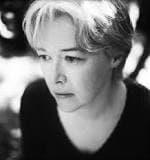
Susanna Mary Clarke is an English author known for her debut novel Jonathan Strange & Mr Norrell (2004), a Hugo Award-winning alternative history. Clarke began Jonathan Strange in 1993 and worked on it during her spare time. For the next decade, she published short stories from the Strange universe, but it was not until 2003 that Bloomsbury bought her manuscript and began work on its publication. The novel became a best-seller.
Similar books
- The Name of the Wind
Patrick Rothfuss
4.5 (716k) average on GoodreadsFantasyFeatures a detailed magic system and a deep dive into the life of a gifted magician.
- Piranesi
Susanna Clarke
4.4 (10k) average on GoodreadsLiterary FictionShares Clarke's unique prose style and exploration of mysterious, other-worldly spaces.
- A Wizard of Earthsea
Ursula K. Le Guin
4.0 (241k) average on GoodreadsFantasyExplores the responsibilities and dangers of magic, and the journey of a powerful wizard.
- Nineteen Eighty-Four
George Orwell
4.2 (5.5M) average on GoodreadsFictionWinston Smith dreams of truth and rebellion in a world where Big Brother watches all, but he confronts the terrifying power of a regime that controls not just actions, but thoughts.
- The Frozen River
Ariel Lawhon
4.4 (600k) average on GoodreadsFictionIn 1789 Maine, a heroic midwife's diary helps her expose a murder and get justice in a town that wants to silence her.
- A Man Called Ove
Fredrik Backman
4.4 (569k) average on GoodreadsFictionA stubborn widower, who lives by strict rules, finds his quiet world changed by a lively new family next door, making him face his past and find happiness in human connection.




Enjoyed the summary?
A summary gives you the shape of the book. The book itself has the detail, the examples and the voice.
Find Jonathan Strange and Mr Norrell on AmazonAs an Amazon Associate, BookBrief earns from qualifying purchases. How we're funded