
Synopsis
Covers the whole plot, including the ending.
- Difficulty
- Medium
- Pacing
- Variable
- Mood
- Dark, Cynical, Gritty, Epic, Violent
- Read it if
- You enjoy grimdark fantasy with morally ambiguous characters, intricate political maneuvering, and brutal, realistic combat.
- Skip it if
- You prefer traditional heroic fantasy, clear-cut good vs. evil narratives, or are averse to violence and bleak themes.
Last Argument of Kings Plot Summary
Covers the whole plot, including the ending.
The North Rises
Logen Ninefingers, after traveling with Bayaz, Ferro, and Jezal, returns to the North. Bayaz sends him to kill Bethod, Logen's old friend and now King of the Northmen. Logen, unwilling but bound by Bayaz, gets caught in the growing conflict. Meanwhile, Prince Ladisla, the Union's chosen general, struggles to lead his forces, showing his lack of skill. Dogman, Logen's former companion, leads a group of Free Northmen fighting Bethod. He is wary of Logen's return, remembering his violent past as the Bloody-Nine. The Union forces, led by Lord Marshal Burr, march north to defeat Bethod's rebellion and secure the Union's borders, setting the stage for a large battle.
Intrigue in Adua
In Adua, Superior Glokta is deeply involved in the politics around the dying King Guslav the Fifth. Bayaz tasks him with making sure Archlector Sult, the manipulative head of the Inquisition, does not gain too much power, while also watching the ambitious Grand Duke Orso. Glokta uncovers plots and counter-plots, using his network of informers, torture, and blackmail to keep a balance. He manipulates figures like Practical Vitari and his own torturers, Frost and Severard, to get information and carry out his orders. The city is tense, with the King's death near, and various groups competing for control of the Union, each with their own secret plans.
Jezal's Burden
Jezal dan Luthar, now a general in the Union army, finds war very different from the glory he once imagined. He is disappointed by Prince Ladisla's incompetence and the harshness of combat. His heart remains with Ardee West, whom he left in Adua, and he often dreams of leaving his military duties for a simple life with her. Despite his personal desires, Jezal must take part in the campaign against Bethod, seeing the horrors of war and the sacrifices of common soldiers. His inner struggle between duty and personal happiness grows, leaving him increasingly sad and questioning his path.
The Battle of the High Places
The Union army, led by Lord Marshal Burr, fights Bethod's Northmen in a series of harsh battles called the Battle of the High Places. The fighting is fierce, with many deaths on both sides. Jezal, despite his unwillingness, finds himself on the front lines, experiencing the chaos and fear of battle. Logen, fighting with the Free Northmen and sometimes the Union forces, unleashes the Bloody-Nine to try to change the outcome. The battle ends in a large fight, with both sides suffering huge losses. The Union eventually wins, but at a great cost, leaving the land scarred and many lives lost.
Confrontation in the North
After the Union's victory, Logen Ninefingers finally faces Bethod in a duel. After a brutal fight, Logen, as the Bloody-Nine, kills Bethod, fulfilling Bayaz's order. However, Bayaz then shows his true, darker plan: he never meant for the Union to just defeat Bethod, but to crush the Northmen and take their lands, securing the valuable mines in the mountains. He uses a destructive force on the remaining Northmen, ensuring their control. Logen is horrified by Bayaz's ruthless ambition and how much he was manipulated, realizing he was just a tool in a larger, more sinister game. Ferro also sees Bayaz's power and cruelty, making her distrust the First of the Magi even more.
A King is Chosen
With King Guslav the Fifth dead, the succession crisis in Adua reaches its peak. Bayaz, back from the North, arranges a takeover. He uses Glokta's information and his own great influence to sideline Grand Duke Orso and Archlector Sult. To everyone's surprise, especially Jezal's, Bayaz declares Jezal dan Luthar the new King of the Union. Jezal, who only wanted a quiet life with Ardee West, is forced onto the throne against his will. His coronation is grand but empty, as he realizes he is merely a puppet king, controlled by Bayaz. His dreams of freedom and love are broken by this unexpected and unwanted burden of power.
The Gurkish Threat
Just as the Union believes it has secured its borders and crowned a new king, the Gurkish Empire launches a sudden, devastating attack on Adua. Their large fleet and army surround the capital, catching the Union off guard. The city falls into chaos, with widespread destruction and panic. Glokta, despite his cynicism, works with the remaining Union command to organize a defense, using his knowledge of the city's defenses and his harsh practicality. The Gurkish, led by their Emperor, seem unstoppable, and the Union's existence is threatened by this new, powerful enemy, set in motion by Khalul, Bayaz's old enemy.
Bayaz's Counter-Attack
As Adua faces collapse, Bayaz reveals the full extent of his ancient power and knowledge. He gets the Seed, a powerful artifact from the Old Time, from a hidden vault under the city. Using the Seed, he unleashes a devastating magical attack against the Gurkish forces, destroying their fleet and much of their army. The sheer destructive power is terrifying, showing Bayaz's command of forbidden magic and his willingness to use it. This act saves Adua and the Union from destruction, but it also reveals the dark, dangerous nature of the First of the Magi, solidifying his control over the new King Jezal and the entire Union.
Loose Ends and Departures
After the Gurkish invasion, the characters deal with their futures. Logen, disgusted by Bayaz's methods and the Bloody-Nine's constant call, decides to leave the Union and return to the wilds, embracing his nature as a survivor, but forever troubled by his past. Ferro, having seen Bayaz's power, also leaves, determined to find Khalul and get her revenge, now with a better understanding of the world's ancient conflicts. Glokta, having secured his position as Bayaz's main enforcer, finds himself caught in a life of endless manipulation and cruelty. His cynical view is confirmed, and his dreams of peace are forever out of reach. He is now married to Ardee West, a marriage Bayaz arranged.
Jezal's Golden Cage
Jezal dan Luthar, now King of the Union, is completely broken by the events. He is married to Terez, a woman Bayaz chose for him, further showing his lack of control. He understands that his crown is a gilded cage, and he is just a figurehead, with Bayaz holding the real power. His dreams of a simple life with Ardee West are shattered, and he must play the part of a kind ruler while Bayaz pulls the strings. The final scene shows Jezal, a shadow of his former self, accepting his fate, forever under the First of the Magi's control, a king without real power or freedom.
Last Argument of Kings Characters
Logen Ninefingers
Protagonist
A notorious Northman warrior haunted by his violent past.
Logen is a complex figure, constantly battling his inner demon, the 'Bloody-Nine,' a berserker persona that emerges in moments of extreme violence. He yearns for peace and a simpler life, but his past and his nature as a warrior continually drag him back into conflict. Despite his fearsome reputation, he possesses a surprising amount of wisdom and a desire to do good, often acting as a reluctant mentor or protector. He struggles with the consequences of his actions and the legacy of bloodshed he leaves behind.
Relationships: Bayaz (Master and unwilling servant); Ferro Maljinn (Companions, mutual respect, unacknowledged attraction); Jezal dan Luthar (Reluctant companions, mentor figure); Dogman (Old friend, complicated loyalty); Bethod (Former friend, now bitter enemy)
Sand dan Glokta
Protagonist
A crippled former torturer, now a powerful and cynical Inquisitor.
Glokta is a sharp-witted, cynical, and utterly pragmatic man, broken by years of torture but still possessing an indomitable will and a keen intellect. He is a master manipulator, using fear, blackmail, and his network of informants to navigate the treacherous political landscape of Adua. Despite his cruel profession, he often displays flashes of self-awareness and even a twisted sense of morality, recognizing the corruption around him. His internal monologue is filled with dark humor and a profound sense of weariness.
Relationships: Bayaz (Master and enforcer); Archlector Sult (Rival and superior, manipulated by Glokta); Practical Vitari (Subordinate and confidante); Ardee West (Forced marriage, complicated relationship)
Jezal dan Luthar
Protagonist
A vain, spoiled nobleman thrust into the role of king.
Jezal begins as a shallow, self-centered fop, more concerned with his appearance and fencing prowess than with genuine substance. Through his journey, he is exposed to the harsh realities of war and politics, maturing significantly. He longs for a simple life and genuine love, particularly with Ardee West, but his destiny is manipulated by powerful forces. He is fundamentally a good person beneath his superficiality, but lacks the strength of will to resist the machinations of Bayaz, making him a tragic figure.
Relationships: Bayaz (Manipulator and master); Logen Ninefingers (Reluctant companion, begrudging respect); Ferro Maljinn (Companions, often bickering); Ardee West (Love interest, tragically separated)
Bayaz, the First of the Magi
Antagonist/Mastermind
An ancient, powerful, and ruthless sorcerer with a grand agenda.
Bayaz is an ancient and immensely powerful sorcerer, the 'First of the Magi,' and a figure of immense influence. He presents himself as a benevolent protector of the Union, but his true nature is ruthless, manipulative, and utterly self-serving. He will stop at nothing to achieve his goals, which involve maintaining his power and influence over the Union and defeating his ancient rival, Khalul. He views others as tools to be used and discarded, possessing a chilling disregard for human life and suffering. His wisdom is vast, but his morality is profoundly twisted.
Relationships: Logen Ninefingers (Pawn, reluctant weapon); Glokta (Chief enforcer, trusted operative); Jezal dan Luthar (Puppet king); Ferro Maljinn (Tool for revenge); Khalul (Ancient rival, mortal enemy)
Ferro Maljinn
Supporting
A vengeful Eaters-blooded warrior seeking retribution.
Ferro is a fierce, driven warrior from the South, consumed by a burning desire for revenge against the Gurkish, who enslaved and tortured her people. She possesses a unique, almost supernatural strength and speed due to her Eaters-blood. Despite her hardened exterior and distrust of everyone, she occasionally shows flickers of vulnerability and a longing for connection. She is pragmatic and brutal in combat, and her singular focus on revenge often blinds her to other considerations, making her a dangerous but effective ally.
Relationships: Bayaz (Temporary ally, object of suspicion); Logen Ninefingers (Companions, mutual respect, unacknowledged attraction); Jezal dan Luthar (Companions, often bickering)
Dogman
Supporting
A loyal Northman leader and old friend of Logen.
Dogman is a pragmatic and honorable Northman, a skilled tracker and leader. He embodies the best qualities of the Free Northmen, valuing loyalty, courage, and a strong sense of community. He is wary of Logen's violent past as the Bloody-Nine but still holds a deep affection for his old friend. He struggles with the moral compromises required in wartime and tries to protect his people while navigating the larger conflicts between Bethod and the Union.
Relationships: Logen Ninefingers (Old friend, complicated loyalty); Black Dow (Fellow Northman, uneasy alliance); Harding Grim (Loyal companion)
Ardee West
Supporting
A spirited, intelligent woman caught in the political games of Adua.
Ardee is sharp-witted, independent, and often cynical, particularly about the superficiality of Adua's upper class. She is intelligent and observant, not easily fooled by appearances. She longs for genuine connection and a life free from the constraints of societal expectations. Her relationship with Jezal is a source of both hope and heartbreak. Despite her resilience, she is ultimately a victim of the powerful forces at play, forced into a marriage that ensures her misery.
Relationships: Jezal dan Luthar (Love interest, tragically separated); Glokta (Forced marriage, complicated relationship); Brother Longfoot (Brother)
Bethod
Antagonist
The ambitious and ruthless King of the Northmen.
Bethod is a powerful and charismatic leader who united the Northmen, but his ambition and ruthlessness know no bounds. He was once a friend and mentor to Logen, but their paths diverged dramatically, leading to a deep-seated animosity. He seeks to expand his dominion and challenge the Union, believing himself destined for greatness. He is a formidable warrior and a cunning strategist, but his pride and cruelty ultimately lead to his downfall.
Relationships: Logen Ninefingers (Former friend, now bitter enemy)
Archlector Sult
Supporting
The cunning and ambitious head of the Inquisition.
Sult is a master of political maneuvering and a ruthless operator. He wields immense power within the Inquisition and seeks to expand his influence over the Union, particularly in the succession crisis. He is intelligent and calculating, but his ambition often makes him predictable to someone as shrewd as Glokta. He represents the entrenched corruption and self-interest within the Union's institutions.
Relationships: Glokta (Superior, rival, manipulated by Glokta); Bayaz (Manipulated by)
Khalul
Mentioned/Antagonist
Bayaz's ancient rival and the master of the Eaters.
Khalul is Bayaz's ancient rival, another of the First of the Magi's apprentices, who chose a different path, creating the monstrous Eaters. He is a shadowy figure, rarely seen but constantly influencing events through his agents, especially the Gurkish Empire. He represents a dark, forbidden knowledge and a different form of power compared to Bayaz. His ultimate goals are unclear, but they are directly opposed to Bayaz's, setting up a cosmic conflict.
Relationships: Bayaz (Ancient rival, mortal enemy); Ferro Maljinn (Target of revenge)
Last Argument of Kings Themes
The Corrupting Nature of Power
The novel explores how power, especially absolute power, corrupts. Bayaz, the First of the Magi, is the main example, using his ancient knowledge and magic not for good but for manipulation and control. This is clear when he arranges Jezal's kingship and destroys the Gurkish with the Seed. Glokta, though crippled, uses great power through torture and blackmail, becoming more morally compromised. Even Logen, despite wanting peace, is repeatedly pulled back into the 'Bloody-Nine' persona, a sign of his own destructive power. The theme suggests that power changes people, often for the worse, turning them into tools of control and violence.
“Once you've got a task to do, it's better to do it than live with the fear of it.”
The Illusion of Choice and Free Will
Throughout the story, characters think they are making their own choices, only to find they are pieces in a larger game set up by Bayaz. Jezal dreams of a simple life but is forced onto the throne. Logen seeks peace but must kill Bethod. Glokta, despite his cleverness, is ultimately Bayaz's tool. The climax, with Bayaz showing his control over Jezal's rise to power and his ancient abilities, clearly shows that individual choice is often an illusion against strong, hidden forces. This theme makes characters, and readers, question how much anyone truly controls their own life.
“There are no easy choices. Only hard choices.”
The Futility of War and Glory
The novel shows the brutal, pointless reality of war, removing any romantic ideas of glory. Jezal, initially looking for glory, is horrified by the death and incompetence he sees in the North. The Battle of the High Places is shown as a bloody, costly event with much suffering and little true heroism. Logen's experiences highlight the repeating nature of violence and its effect on people. The 'victories' often come at a terrible price, leaving behind death, destruction, and moral compromise, rather than real triumph. The story suggests that war is a tool for the powerful, not a path to honor.
“Why do we fight? For money? For power? For glory? We fight because we're told to. We fight because we're good at it. We fight because we have no choice.”
The Cycle of Violence and Revenge
Many characters are driven by cycles of violence and revenge, continuing conflict instead of ending it. Ferro is consumed by her desire for revenge against the Gurkish. Logen's past is a continuous cycle of fighting, killing, and running. The conflict between Bayaz and Khalul is an ancient, endless vendetta that causes much of the world's suffering. The novel suggests that while revenge can be a strong motivator, it rarely brings true satisfaction or peace. Instead, it traps individuals and societies in an endless loop of retribution and bloodshed.
“Say one thing for Logen Ninefingers, say he's a survivor.”
The Nature of Good and Evil
The book blurs the lines between good and evil, showing characters with complex moral questions. Bayaz, while saving the Union, does so through manipulation and destruction, making him an antagonist despite his 'heroic' act. Logen, the 'Bloody-Nine,' is capable of both monstrous violence and surprising kindness. Glokta, a torturer, often acts to prevent greater evils, but his methods are cruel. The story avoids clear heroes and villains, instead presenting a world where motivations are mixed, and even the most 'noble' actions can have dark sides, challenging traditional fantasy ideas.
“You can never have too many knives.”
Plot Devices & Literary Techniques
The Seed
An ancient, powerful artifact of immense destructive potential.
The Seed is a relic from the Old Time, a source of immense magical power capable of devastating entire armies and cities. It functions as a classic MacGuffin throughout the trilogy, driving Bayaz's quest. In 'Last Argument of Kings,' it is ultimately revealed and used by Bayaz to repel the Gurkish invasion of Adua. Its use highlights Bayaz's ruthless nature and the forbidden, destructive capabilities of the Old Ways, serving as a powerful demonstration of his ultimate control and willingness to employ any means necessary.
The Bloody-Nine
Logen's berserker alter-ego, a manifestation of his violent past.
The Bloody-Nine is Logen's uncontrollable, savage persona that emerges in moments of extreme danger or rage. It acts as a metaphor for Logen's internal struggle with his violent nature and the legacy of his past. This device allows Logen to perform incredible feats of brutality, but at the cost of his own humanity and self-control. It represents the inherent darkness within him, a force he constantly tries to suppress but ultimately cannot escape, demonstrating the lasting impact of violence on an individual's psyche.
Bayaz's Manipulation
The First of the Magi's overarching control of events and characters.
Bayaz's manipulation is a central plot device that underpins nearly every major event and character arc. He orchestrates the Northman war, Jezal's ascension to the throne, and Glokta's political machinations. This device highlights the theme of the illusion of free will, as characters believe they are making their own choices, only to discover they are pawns in Bayaz's grand, millennia-long game. His subtle and overt control reveals him as the ultimate puppet master, shaping the destiny of the Union and its inhabitants to suit his own ends.
Internal Monologue
Extensive use of characters' inner thoughts to reveal their true nature.
Abercrombie heavily utilizes internal monologues, particularly for Glokta, Jezal, and Logen. This device provides deep insight into their motivations, fears, and moral struggles, often contrasting sharply with their outward actions or words. Glokta's cynical and self-deprecating thoughts, Jezal's vain and later disillusioned reflections, and Logen's battle with the Bloody-Nine are all explored through this technique. It allows the reader to understand the characters' complex inner lives, making them more relatable and morally ambiguous, and often providing dark humor or tragic irony.
Last Argument of Kings Quotes
“Say one thing for Logen Ninefingers, say he's a survivor.”
“You can never have too many knives.”
“Once you've got a task to do, it's better to do it than to live with the fear of it.”
“The problem with being a hero is that it's a lot like being a princess: one day you're going to have to kiss a lot of frogs.”
“The world is what it is. It's a hard place, and the only way to survive is to be harder.”
“It is not the man who has too little, but the man who craves more, that is poor.”
“The only thing a man can ever truly change is himself.”
“Power is a game. And in a game, you play to win. You don't play to be fair. You play to win.”
“It's all right to be afraid. You just don't let it stop you.”
“Some men are born to rule, some are born to serve. The trick is to know which one you are.”
“The past is just a story we tell ourselves.”
“No one ever really changes. Not fundamentally. They just get better at hiding it.”
“A man must have a code.”
“It is always the way of things, is it not? The great men of the world are seldom those who do the greatest good.”
“The difference between a hero and a villain is all in who is telling the story.”
Quiz
10 questions on the plot and the characters. Each answer comes with a short explanation.
Question 1
What is Bayaz's ultimate goal for the Union and the Northmen, which he reveals to Jezal?
- To establish a democratic council ruling both the Union and the North.
- To have Jezal become King of the Union and ally with the North to fight the Gurkish.
- To unite all the Northern tribes under one banner against the Union.
- To destroy the Gurkish Empire and then retire to the Old Empire.
Show answer
B. To have Jezal become King of the Union and ally with the North to fight the Gurkish. Bayaz reveals his grand plan to Jezal: he intends for Jezal to become King of the Union and for the Union to forge an alliance with the Northmen to wage war against the Gurkish.
Question 2
What happens to West at the end of the novel?
- He is promoted to Lord Marshal and leads the Union armies.
- He dies from a fever after being wounded in battle.
- He marries Ardee and becomes a successful merchant.
- He retires from military service and becomes a farmer.
Show answer
B. He dies from a fever after being wounded in battle. After sustaining a wound during the war in the North, West succumbs to a fever and dies, leaving a significant void in the Union's command.
Question 3
What is the ultimate fate of Logen Ninefingers after the final confrontation with Bethod?
- He becomes the new King of the Northmen.
- He settles down with Ferro and lives a peaceful life.
- He is last seen falling off a cliff, presumed dead by his companions.
- He joins Bayaz's service as a personal bodyguard.
Show answer
C. He is last seen falling off a cliff, presumed dead by his companions. After defeating Bethod, Logen is betrayed by Bayaz and pushed off a cliff by a Shanka, leaving his fate ambiguous but presumed dead by those who witnessed it.
Question 4
What role does Glokta ultimately play in Jezal becoming King?
- He actively campaigns for Jezal's election among the Closed Council.
- He manipulates the votes and blackmails key figures to ensure Jezal's coronation.
- He discovers a hidden royal lineage for Jezal, making him the rightful heir.
- He convinces the King's Guard to declare Jezal their new sovereign.
Show answer
B. He manipulates the votes and blackmails key figures to ensure Jezal's coronation. Glokta, under Bayaz's direction, masterfully uses blackmail and manipulation to ensure that Jezal is elected King of the Union, despite other contenders.
Question 5
What is the First Law that Bayaz is willing to break?
- Never take a life.
- Never speak to spirits.
- Never eat the heart of man.
- Never consort with demons.
Show answer
C. Never eat the heart of man. The First Law, as established by Juvens, states 'Never eat the heart of man.' Bayaz breaks this law to gain knowledge and power, a dark secret he holds.
Question 6
What is the primary reason for the peasant revolt in the South?
- A demand for equal rights and representation in government.
- Severe famine and oppressive taxes.
- Religious persecution by the Union authorities.
- A desire to install a new king from a different noble house.
Show answer
B. Severe famine and oppressive taxes. The widespread peasant revolt is primarily fueled by severe famine and the heavy burden of taxes imposed by the Union, leading to widespread suffering and desperation.
Question 7
Who ultimately kills Bethod, the King of the Northmen?
- Logen Ninefingers, in a duel.
- Black Dow, seeking revenge.
- Prince Valint, leading the Union forces.
- Shivers, in a surprise attack.
Show answer
A. Logen Ninefingers, in a duel. Logen Ninefingers confronts and ultimately kills Bethod, his former friend and current enemy, in a brutal duel, fulfilling the prophecy of the Bloody-Nine.
Question 8
What is the true nature of Bayaz's relationship with the other Magi, particularly Khalul?
- They are long-standing allies working towards a common goal.
- They are bitter rivals, each seeking to dominate the world.
- They are neutral parties who rarely interact with each other.
- They are former apprentices of Bayaz who have gone rogue.
Show answer
B. They are bitter rivals, each seeking to dominate the world. Bayaz and Khalul are revealed to be ancient, bitter rivals, each believing their path is the correct one for the world, leading to a long-standing conflict.
Question 9
What is Jezal's reaction to becoming King of the Union?
- He is overjoyed and embraces his new power with enthusiasm.
- He feels trapped and miserable, realizing he is merely a puppet.
- He immediately begins implementing reforms to help the common people.
- He dedicates himself to military strategy and leading the Union's armies.
Show answer
B. He feels trapped and miserable, realizing he is merely a puppet. Jezal, after initially dreaming of glory, quickly realizes that his kingship is a gilded cage, and he is merely a figurehead controlled by Bayaz and Glokta, leaving him deeply unhappy.
Question 10
What is the fate of the House of the Maker, the ancient structure Bayaz sought?
- It is successfully repaired and becomes a new Union stronghold.
- It collapses completely, burying many beneath its ruins.
- It is seized by the Gurkish and used as a base of operations.
- It remains intact but is deemed too dangerous to enter.
Show answer
B. It collapses completely, burying many beneath its ruins. During the final confrontation within the House of the Maker, the ancient structure, already unstable, collapses, burying many of Bayaz's enemies and treasures beneath its rubble.
Last Argument of Kings FAQ
What is the central conflict driving the plot in 'Last Argument of Kings'?
The central conflict revolves around the war between the Union and the Northmen, led by Bethod, while simultaneously dealing with internal strife within the Union itself, including a peasant rebellion and a succession crisis for the crown. All these threads are manipulated by Bayaz and Glokta for their own ends, aiming to secure the Union's future and Bayaz's ancient feud.
How does Logen Ninefingers' journey conclude in this final book of the trilogy?
Logen returns to the North, confronting his past and eventually facing Bethod in a duel. He seemingly reclaims his old life, becoming the King of the Northmen, but ultimately chooses to leave it behind once more after a final, brutal encounter with Bayaz, hinting at a cyclical, unresolved fate.
What role does Superior Glokta play in the political machinations of the Union?
Glokta is instrumental in securing the succession of Jezal dan Luthar to the throne, manipulating the Closed Council, eliminating rivals, and quashing the rebellion in Adua through ruthless methods. He becomes the Arch Lector, effectively the power behind the throne, executing Bayaz's will and his own cynical agenda.
How does Jezal dan Luthar's character arc conclude, particularly concerning his personal desires versus his forced destiny?
Jezal is forcibly made King of the Union by Bayaz and Glokta, despite his desire for a simple life with Ardee West. He becomes a puppet monarch, stripped of his personal agency and forced to endure a loveless marriage for political stability, illustrating the tragic cost of 'glory' and power.
What is the significance of the 'First Law' and how is it broken in the book?
The First Law forbids touching the 'Other Side' or communicating with demons. Bayaz breaks it by using the Seed, an ancient artifact of immense power derived from the Other Side, to destroy the city of High Places and defeat the Gurkish, demonstrating his willingness to sacrifice ancient prohibitions for his objectives.
What is the true nature of Bayaz's long-term plan regarding the Union and the Gurkish Empire?
Bayaz's plan is to consolidate the Union's power and decisively defeat the Gurkish Empire, not for peace, but to maintain his own ancient feud with Khalul and secure his dominance over the world. He manipulates all major players to achieve this, ensuring the Union remains his instrument.
How do Ferro Maljinn's actions contribute to the climactic events, and what is her ultimate fate?
Ferro is crucial in the journey to the Edge of the World to retrieve the Seed, demonstrating her combat skills and hatred for the Gurkish. After Bayaz uses the Seed, she leaves his service, still consumed by her desire for revenge against Khalul, suggesting her vendetta remains unresolved.
What is the implied connection between the Bloody-Nine and Bayaz's manipulation of Logen?
Bayaz seems to recognize and perhaps even encourage the Bloody-Nine persona, understanding its utility as a weapon. He subtly pushes Logen into situations where the Bloody-Nine emerges, using Logen's violent alter-ego as a tool to achieve his political and military objectives in the North.
What is the significance of the 'Seed' artifact and its origin in the broader lore?
The Seed is one of the ancient artifacts created by Euz, the First Man, to fight against the demons from the Other Side. It represents immense destructive power, capable of leveling cities, and its use by Bayaz marks a profound violation of the First Law and a shift in the balance of magical power.
How does Logen's cyclical nature of violence and regret inform his character development?
Logen consistently tries to escape his violent past and the Bloody-Nine, but circumstances and his own nature always pull him back. His regret is genuine, but he seems incapable of truly breaking the cycle, suggesting that some aspects of a person's character are inescapable, regardless of their intentions.
Analyze Glokta's motivation for his ruthless actions, particularly his choice to serve Bayaz.
Glokta is driven by a profound cynicism and a desire for control and survival in a world that has irrevocably broken him. He serves Bayaz not out of loyalty, but because it offers him power and a clear path to manipulate events from the shadows, satisfying his need for agency and revenge against a cruel world.
Discuss Jezal's psychological transformation from a vain fop to a powerless king.
Jezal's transformation is one of forced maturity and profound disillusionment. He begins as self-centered and oblivious, but through suffering and the loss of his freedom, he gains a bitter understanding of power's true cost, becoming a melancholic figure trapped by his crown and Bayaz's will.
How does Ardee West's journey reflect the limited agency of women in this society?
Ardee, despite her intelligence and strength, is repeatedly subjected to the whims of powerful men. Her relationships with Jezal and Glokta are dictated by circumstance and societal expectations, ultimately leading to a forced marriage and a life she did not choose, highlighting the constraints placed upon women.
Is Bayaz a benevolent protector of humanity or a self-serving tyrant in disguise?
Bayaz is largely depicted as a self-serving tyrant. While he claims to protect the Union, his methods are ruthless, manipulative, and driven by ancient grudges rather than genuine concern for the common good. He views people as tools and is willing to sacrifice countless lives for his own power and feud with Khalul.
How does the ending challenge traditional fantasy tropes of heroism and justice?
The ending subverts traditional tropes by showing that heroes like Logen often return to their violent cycles, and 'justice' is often merely the will of the powerful. The 'good guys' (the Union) achieve victory through morally reprehensible means, and the 'king' (Jezal) is a miserable puppet, presenting a cynical view of power and heroism.
What is the ultimate message about power and its corrupting influence presented in the book?
The book strongly suggests that power is inherently corrupting and that those who wield it, regardless of their initial intentions, often become ruthless and self-serving. Bayaz, Glokta, and even Jezal in his limited capacity, demonstrate how power distorts morality and sacrifices individual happiness for its maintenance.
Does Logen truly change by the end, or is he destined to repeat his past?
Logen's ending implies a cyclical destiny. Despite his attempts to be a 'better man,' he ultimately embraces the Bloody-Nine again and is left alone, seemingly falling into the sea. This suggests he is trapped in a loop of violence and escape, never truly breaking free from the person he has always been.
How does the author use the character of Glokta to comment on the nature of 'justice' and 'order'?
Glokta embodies a cynical view of justice and order, demonstrating that they are often maintained through torture, fear, and manipulation rather than fairness or truth. His actions reveal the brutal machinery behind state power, where expediency and control trump moral considerations, making 'justice' a tool of the powerful.
About the author

Joe Abercrombie is a British author known for his works in the fantasy genre. His notable books include "The Blade Itself," "Before They Are Hanged," and "Last Argument of Kings," which comprise "The First Law Trilogy," as well as "Best Served Cold." Abercrombie's writing is characterized by its complex characters and gritty narratives.
Similar books
- A Game of Thrones
George R.R. Martin
4.5 (2M) average on GoodreadsFantasyFeatures political intrigue, morally grey characters, and a sprawling, brutal fantasy world.
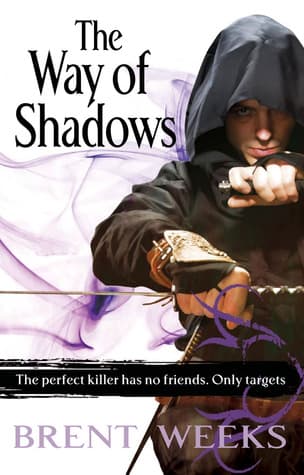
- The Way of Shadows
Brent Weeks
4.1 (149k) average on GoodreadsFantasyDark fantasy with complex characters, assassins, and a focus on the gritty underbelly of a fantasy world.
- A Storm of Swords
George R.R. Martin
4.5 (666k) average on GoodreadsFantasyBoth Last Argument of Kings and A Storm of Swords excel in grimdark themes, political intrigue, and morally grey characters. Abercrombie's prose is often more direct and visceral, focusing intensely on character psychology, whereas Martin's narrative is more expansive, with a broader cast and more intricate world-building details. While both deconstruct heroism, Abercrombie's conclusion often leans more towards nihilism regarding power's corrupting influence.
- The Hero of Ages
Brandon Sanderson
4.5 (266k) average on GoodreadsFantasyThe Hero of Ages concludes Sanderson's Mistborn trilogy, sharing with Abercrombie's work a focus on intricate plots and character development within a fantasy setting. However, Sanderson typically offers a more hopeful, if hard-won, resolution for his protagonists, emphasizing themes of sacrifice and redemption. Abercrombie, by contrast, provides a far more cynical and disillusioning ending, where power corrupts absolutely and true heroism is rare.
- Harry Potter and the Sorcerer's Stone
J.K. Rowling
4.5 (7M) average on GoodreadsFantasyRescued from a miserable life under the stairs, an orphaned boy discovers he's a wizard destined for a magical school, where he uncovers a dangerous secret tied to the dark wizard who murdered his parents.
- The Hunger Games
Suzanne Collins
4.3 (6.4M) average on GoodreadsFantasyIn a future where children fight to the death on live television, Katniss Everdeen volunteers for the arena, turning a death sentence into a fight for survival and a spark of rebellion.





Enjoyed the summary?
A summary gives you the shape of the book. The book itself has the detail, the examples and the voice.
Find Last Argument of Kings on AmazonAs an Amazon Associate, BookBrief earns from qualifying purchases. How we're funded