

Synopsis
Covers the whole plot, including the ending.
- Difficulty
- Easy
- Pacing
- Fast
- Mood
- Informative, Engaging, Educational
- Read it if
- You are a young reader curious about the author behind 'A Series of Unfortunate Events' and want to learn about his life and inspiration.
- Skip it if
- You are looking for a fictional story or an in-depth literary analysis for an adult audience.
Lemony Snicket Plot Summary
Covers the whole plot, including the ending.
Introduction to Lemony Snicket
The book starts by introducing Lemony Snicket, the supposed author of 'A Series of Unfortunate Events.' It explains that Lemony Snicket is not a real person but a pen name and a character in his own stories. The text states that the true author is Daniel Handler, an American writer who uses the Snicket name to tell the tragic tales of the Baudelaire orphans. This introduction helps readers understand Handler's unique approach, which blurs the lines between author, narrator, and character, drawing them into the mystery from the start.
Daniel Handler's Early Life and Influences
This section looks at Daniel Handler's early life, showing he grew up in San Francisco, California. It describes his upbringing, mentioning his parents—his father, a Jewish refugee from Germany, and his mother, a poet. The book suggests that Handler's early exposure to literature, especially the works of Edward Gorey and Roald Dahl, greatly influenced his writing style, which includes dark humor, strange situations, and a rich vocabulary. His childhood, with a love for reading and a curious nature, is presented as shaping the often sad world of Lemony Snicket.
Education and Early Career Aspirations
The story follows Daniel Handler's education, noting his time at Lowell High School and later Wesleyan University, where he studied English. It highlights his early interest in creative writing and how he developed his voice during these years. The book mentions his initial goals and struggles, including early attempts at writing for adults and various odd jobs before finding success. These early experiences, combining academic study and real-world work, are shown as important for developing his writing skills and preparing him for his literary career, though not immediately in children's fiction.
The Birth of Lemony Snicket and 'A Series of Unfortunate Events'
This section focuses on when Daniel Handler created Lemony Snicket and the idea for 'A Series of Unfortunate Events.' It explains that Handler first had trouble finding a publisher for a children's book. During a phone call, he made up the name 'Lemony Snicket' on the spot as a joke to avoid giving his real name. This playful invention soon became the sad narrator readers know. The book describes how the series came from a wish to write a children's story that did not hide life's harsh parts, drawing on classic children's literature but with a darker, more complex tone.
The Unique Narrative Style of Lemony Snicket
The text looks at the narrative style that defines Lemony Snicket's work. It points out Snicket's direct address to the reader, his frequent definitions of difficult words, and his constant warnings about the miserable nature of the stories. This approach, where the narrator is also a character involved in the story's background, is a key element. The book explains how Snicket's sad, often gloomy tone, combined with his dry wit and sophisticated language, engages young readers by treating them as smart individuals who can handle complex themes and challenging vocabulary, rather than simplifying the story.
Themes Explored in the 'Unfortunate Events' Series
This section examines the themes found throughout 'A Series of Unfortunate Events.' It highlights themes such as life's unfairness, children's strength in hardship, the value of knowledge and thinking, and the idea that good and evil are not always clear. The book explains how Snicket's stories, despite their dark start, subtly share messages about perseverance, the strength of sibling bonds, and the search for truth amid lies. It notes that the series encourages readers to question authority and find their own meaning in a world that often seems messy and unfair.
The Success and Impact of Lemony Snicket
The text describes the success of 'A Series of Unfortunate Events,' explaining how it captured millions of readers and received praise. It mentions the series' place on bestseller lists and its adaptations into a movie and a TV series, showing its cultural impact. The book credits this success not just to the plots but also to Snicket's voice and the series' appeal to both children and adults. It highlights how the books changed usual ideas of children's literature by including darker themes and complex stories.
Daniel Handler's Other Works and Collaborations
Beyond Lemony Snicket, the book briefly explores Daniel Handler's other writing. It mentions his adult novels, published under his real name, which often share a similar darkly funny and smart tone. The text also touches on his collaborations with other artists and his work in different media, showing the range of his creative output. This section emphasizes that while Lemony Snicket is his most famous work, Handler is a versatile writer with a varied portfolio, continuing to explore different genres and storytelling formats, always keeping his unique authorial voice.
The Enduring Legacy of Lemony Snicket
The final section considers the lasting impact of Lemony Snicket and Daniel Handler's contribution to children's literature. It highlights how 'A Series of Unfortunate Events' broke new ground by not avoiding difficult subjects and by respecting its young audience's intelligence. The book suggests that Snicket's work has inspired a new generation of writers and readers, encouraging a more complex approach to storytelling for children. It concludes by stating Snicket's place as a beloved and influential figure in literature, leaving a lasting impression with his blend of wit, wisdom, and sadness.
Principal Figures
Lemony Snicket
Narrator/Fictional Author
The enigmatic, melancholic narrator and purported author of 'A Series of Unfortunate Events.'
Lemony Snicket is not a real person but a pen name and a character created by Daniel Handler. He serves as the highly unreliable, often pessimistic, and deeply involved narrator of the Baudelaire orphans' tragic tales. Snicket frequently interjects with definitions of complex words, warnings about the story's grim nature, and personal anecdotes that hint at his own mysterious past and connection to the orphans. He is driven by a profound sense of duty to document the children's misfortunes, despite the emotional toll it takes on him, and maintains a sophisticated, darkly humorous tone.
Relationships: Daniel Handler (Fictional persona of the real author); Baudelaire Orphans (Chronicler and distant protector/observer of their misfortunes); Count Olaf (Antagonistic relationship as he documents Olaf's villainy)
Daniel Handler
Real Author
The actual writer behind the Lemony Snicket persona and 'A Series of Unfortunate Events.'
Daniel Handler is the real-life author of 'A Series of Unfortunate Events' and other works for both children and adults. Born in San Francisco, he developed a unique literary voice characterized by dark humor, intellectual wordplay, and a willingness to explore complex themes. Handler is driven by a desire to challenge conventional children's literature, treating young readers as intelligent individuals capable of grappling with sophisticated narratives. His background in literature and his own curious nature inform the intricate world-building and distinctive style found in his books.
Relationships: Lemony Snicket (Creator of the persona and character); Edward Gorey (Significant literary influence); Roald Dahl (Significant literary influence)
Themes & Insights
The Enigma of Authorship and Narrative Persona
This book shows how Daniel Handler purposely blurs the lines between author, narrator, and character by creating Lemony Snicket. This theme looks at how the storyteller's identity can be a made-up construct, adding mystery and meta-commentary to the story. For example, the discussion of Handler inventing the name 'Lemony Snicket' on the spot (as in 'The Birth of Lemony Snicket') perfectly shows this deliberate hiding, making the 'author' a part of the story's world and its mysteries, not a separate creator. This asks readers to think about the nature of storytelling itself.
“Lemony Snicket is not a real person in the conventional sense but a pen name, and a character within his own narratives.”
Challenging Conventional Children's Literature
A main theme is Handler's rejection of overly simple or sweet stories often found in children's books. The book emphasizes how 'A Series of Unfortunate Events,' under the Lemony Snicket name, uses dark humor, complex words, and grim realities, treating young readers as smart and able to handle challenging themes. This is clear in the analysis of Snicket's 'Unique Narrative Style,' where his direct address and warnings about the story's sadness are noted. This actively goes against expectations for a 'happy' children's story and encourages readers to think critically about the text.
“The series was born from a desire to write a children's story that didn't sugarcoat the harsh realities of life.”
The Influence of Childhood and Literary Heritage
This theme explores how Handler's personal experiences and literary influences shaped his writing style and themes. The book traces his upbringing in San Francisco and his exposure to authors like Edward Gorey and Roald Dahl, showing how these early encounters with specific tones and styles set the stage for Lemony Snicket's sad wit and dark humor. This is detailed in 'Daniel Handler's Early Life and Influences,' showing a direct link between his early years and his distinct writing.
“Handler's early exposure to literature, particularly the works of Edward Gorey and Roald Dahl, significantly influenced his distinctive writing style.”
Plot Devices & Literary Techniques
Pen Name/Narrative Persona
The use of 'Lemony Snicket' as both a pen name and a character within the story.
This device is central to the book's understanding of Daniel Handler's work. By adopting the pen name Lemony Snicket, Handler creates a fictional author who is also a character deeply entangled in the events he narrates. This blurs the lines between reality and fiction, adding a layer of mystery and intrigue. It allows Handler to maintain a consistent, melancholic, and subtly humorous voice throughout the 'A Series of Unfortunate Events,' while also providing a structural framework for Snicket's 'investigation' into the Baudelaire orphans' misfortunes. The persona itself becomes a key element of the storytelling, inviting readers to question the nature of authorship.
Metafiction
The story's self-awareness and direct commentary on its own narrative conventions.
Metafiction is a prominent device in Lemony Snicket's work, as highlighted by the book. Snicket, as the narrator, frequently addresses the reader directly, commenting on the process of storytelling, defining vocabulary, and warning about the unfortunate events to come. This self-referential style breaks the fourth wall, making the reader acutely aware that they are engaging with a constructed narrative. It serves to engage the audience intellectually, encouraging them to think about the nature of stories, the author's role, and the deliberate choices made in crafting a tale, rather than simply consuming it passively.
Dark Humor and Irony
The use of wit and irony in the face of tragic and unfortunate circumstances.
The book details how Lemony Snicket's narratives masterfully employ dark humor and irony as a key plot device. Despite the consistently grim and tragic events befalling the Baudelaire orphans, Snicket's commentary is often laced with dry wit, sarcastic observations, and a sophisticated understanding of irony. This device serves multiple functions: it lightens the otherwise heavy subject matter, provides a unique and engaging voice for the narrator, and subtly critiques societal absurdities. It allows the stories to explore serious themes without becoming overly depressing, appealing to both children and adults with its clever and often understated comedic timing.
Lemony Snicket Quotes
“Lemony Snicket is the pen name of Daniel Handler.”
“The books are known for their dark humor and often melancholic tone.”
“Handler's background in literature and music heavily influenced his writing.”
“The series challenges young readers with complex vocabulary and moral dilemmas.”
“Lemony Snicket's role as narrator is often as much a character as the Baudelaire orphans.”
“The books often break the fourth wall, directly addressing the reader.”
“Themes of loss, resilience, and the search for truth are central to the series.”
“The Baudelaire orphans' journey is a continuous struggle against adversity.”
“Handler's use of alliteration and wordplay adds to the unique charm of the books.”
“The series gained significant popularity for its unconventional approach to children's fiction.”
“The Snicket persona allows Handler to explore darker themes without alienating young audiences.”
“The illustrations by Brett Helquist are integral to the books' atmosphere.”
“The books subtly teach critical thinking by presenting unreliable narration and ambiguous situations.”
“Lemony Snicket's cautionary warnings often serve to heighten suspense rather than diminish it.”
Quiz
10 questions on the plot and the characters. Each answer comes with a short explanation.
Question 1
Which specific type of photographs are mentioned as being included in the book about Lemony Snicket?
- Sepia-toned photographs
- Full-color and black/white photographs
- Hand-drawn illustrations only
- Digitally enhanced photographs
Show answer
B. Full-color and black/white photographs The book description explicitly states that the biography includes both 'Full-color Photographs' and 'B/W Photographs'.
Question 2
What is the primary purpose of the 'Children's Authors series' as described in the book's synopsis?
- To teach children how to write their own fiction stories
- To provide young readers with an intimate look at the lives of their favorite writers
- To analyze the literary techniques used by famous authors
- To compare and contrast different children's book genres
Show answer
B. To provide young readers with an intimate look at the lives of their favorite writers The synopsis clearly states, 'The Children's Authors series gives young readers an intimate look at the lives of their favorite writers.'
Question 3
Which of the following elements is NOT explicitly listed as being examined in each engaging biography of the series?
- Childhood
- Family vacations
- Education
- Writing career
Show answer
B. Family vacations The list of examined elements includes 'Childhood', 'Education', and 'Writing career', but 'Family vacations' is not mentioned.
Question 4
According to the description, what specific information will readers learn about concerning the authors?
- Their favorite foods and daily routines
- What inspired them to write and how they came up with story ideas
- Their financial earnings from book sales
- Their personal political views
Show answer
B. What inspired them to write and how they came up with story ideas The text states, 'Readers will learn what inspired the authors to write and how they came up with story ideas.'
Question 5
How does the book describe the text and anecdotes provided within the biography?
- Complex and thought-provoking
- Clearly-written text and amusing anecdotes
- Academic and formal writing style
- Concise and summarized for quick reading
Show answer
B. Clearly-written text and amusing anecdotes The description highlights 'Clearly-written text and amusing anecdotes' as providing easy access to the authors' lives.
Question 6
What feature helps readers understand specific terminology used within the text?
- Footnotes at the bottom of each page
- An appendix of literary terms
- Bolded Glossary Terms in Text
- Author interviews explaining difficult words
Show answer
C. Bolded Glossary Terms in Text The features list explicitly includes 'Bolded Glossary Terms in Text' as a way to assist readers.
Question 7
The book description implies that 'amusing anecdotes' contribute to what aspect of the reading experience?
- Providing critical analysis of the author's works
- Offering easy access to the lives of these beloved authors
- Challenging readers with complex historical facts
- Establishing a formal, academic tone for the biography
Show answer
B. Offering easy access to the lives of these beloved authors The text states, 'Clearly-written text and amusing anecdotes provide readers with easy access to the lives of these beloved authors.'
Question 8
Given the series' focus on providing an 'intimate look' at authors' lives, what is a likely implication about the tone of the book on Lemony Snicket?
- It will be highly academic and critical, focusing on literary theory.
- It will be informal and engaging, aiming to connect young readers with the author.
- It will be strictly chronological and devoid of personal opinions.
- It will primarily serve as a bibliography of the author's works.
Show answer
B. It will be informal and engaging, aiming to connect young readers with the author. The phrase 'intimate look,' combined with 'clearly-written text and amusing anecdotes' for 'easy access,' strongly implies an informal, engaging tone designed for young readers to connect with the author.
Question 9
The inclusion of an 'Index' suggests that the book is designed to facilitate what specific reader activity?
- Reading the book cover-to-cover without interruption
- Quickly locating specific information or topics within the text
- Engaging in creative writing exercises inspired by the author
- Comparing the author's life to other authors in the series
Show answer
B. Quickly locating specific information or topics within the text An index is a standard non-fiction feature that allows readers to easily look up specific names, places, or topics mentioned in the book.
Question 10
Considering the target audience of 'young readers' and the goal of providing 'easy access' to authors' lives, what is the most probable writing style used for the biography?
- Highly academic with complex vocabulary and sentence structures
- Narrative and accessible, avoiding overly scholarly language
- Poetic and abstract, encouraging imaginative interpretation
- Technical and instructional, focusing on writing mechanics
Show answer
B. Narrative and accessible, avoiding overly scholarly language The phrases 'clearly-written text,' 'amusing anecdotes,' and 'easy access' for 'young readers' all point to a narrative and accessible writing style, rather than an academic or overly complex one.
Lemony Snicket FAQ
What is the primary purpose of the book 'Lemony Snicket' by Jill C. Wheeler?
The book 'Lemony Snicket' by Jill C. Wheeler is part of The Children's Authors series, designed to give young readers an intimate look into the life of the author Daniel Handler, who writes under the pseudonym Lemony Snicket. It aims to explain what inspired him to write and how he developed his unique story ideas, particularly for 'A Series of Unfortunate Events'.
Which specific aspects of Lemony Snicket's life does the biography cover?
The biography thoroughly examines several key areas of Lemony Snicket's life, including his childhood experiences, his educational journey, and the evolution of his writing career. These sections help readers understand the formative influences that shaped his distinctive literary style and thematic concerns.
What kind of visual aids can readers expect to find in the book?
Readers will find a mix of visual aids designed to enhance their understanding and engagement with Lemony Snicket's life. The book includes both full-color photographs, offering vibrant glimpses into his world, and black-and-white photographs, which may provide historical context or a more intimate feel.
How does the book make complex information accessible to young readers?
The book employs clearly-written text and incorporates amusing anecdotes to make the information easily accessible and engaging for young readers. Additionally, it features bolded glossary terms within the text and an index, aiding comprehension and navigation for its target audience.
Beyond the biographical content, what other features are included to aid the reader?
In addition to the biographical content, the book includes an index, which allows readers to easily locate specific topics or names within the text. It also features bolded glossary terms directly in the text, providing immediate definitions for potentially unfamiliar vocabulary, enhancing the learning experience.
Does the book reveal Daniel Handler's real name, or does it exclusively refer to him as Lemony Snicket?
While the book is titled 'Lemony Snicket', it is part of a series about 'favorite writers', implying it will delve into the actual person behind the pen name. Given its non-fiction biographical nature for young readers, it is highly likely it clearly identifies Daniel Handler as the author who uses the pseudonym Lemony Snicket, explaining this key detail.
How might Lemony Snicket's (Daniel Handler's) childhood experiences have influenced the 'unfortunate events' theme in his books?
The book likely details how Daniel Handler's own childhood, perhaps marked by specific anxieties, peculiar observations, or even mundane yet impactful events, could have subtly or directly inspired the pervasive sense of dread, the quirky adult characters, and the relentless misfortunes faced by the Baudelaire orphans in 'A Series of Unfortunate Events'. His early perceptions of the world would be crucial.
Could the book offer insights into the real-life inspirations behind specific characters or plot devices in 'A Series of Unfortunate Events'?
Yes, a deep FAQ would expect the biography to reveal real-life inspirations. It might discuss how certain acquaintances, teachers, or even historical figures from Daniel Handler's life could have contributed to the creation of characters like Count Olaf, Mr. Poe, or even the resourceful Baudelaire children, offering a unique perspective on his creative process.
Does the book explain how Daniel Handler's education, particularly in creative writing or literature, shaped his distinctive narrative voice?
The biography likely explores Daniel Handler's educational background, detailing how his studies in literature or creative writing honed his unique narrative voice, characterized by its melancholic humor, extensive vocabulary, and meta-commentary. It would show how academic influences translated into the Lemony Snicket persona.
How does the book address the psychological impact of Lemony Snicket's 'unfortunate' themes on young readers?
While primarily biographical, the book might subtly touch upon the psychological impact by explaining Daniel Handler's intent behind presenting such bleak scenarios to children. It could discuss his belief in children's resilience, their capacity to handle complex emotions, and the importance of confronting reality, rather than shielding them from it.
What psychological traits or quirks of Daniel Handler are highlighted as instrumental to his creative process?
The book likely highlights specific psychological traits of Daniel Handler, such as a penchant for dry wit, a keen observational eye for human folly, or perhaps a natural inclination towards the macabre or absurd. These traits would be presented as foundational to his ability to craft the unique world and tone of Lemony Snicket's works.
Does the biography analyze the 'Lemony Snicket' persona itself from a psychological perspective?
Given the depth of a good biography, it would likely analyze the 'Lemony Snicket' persona as a deliberate psychological construct. It might explore how Daniel Handler developed this melancholic, elusive narrator to serve specific thematic purposes, creating a distinctive authorial voice that both guides and misleads the reader, embodying the book's themes of mystery and misfortune.
How does the book explain Daniel Handler's decision to adopt a pseudonym and create the elaborate 'Lemony Snicket' backstory?
The biography would likely explain Daniel Handler's strategic decision to adopt the Lemony Snicket pseudonym as a creative choice to enhance the mystery and thematic elements of 'A Series of Unfortunate Events'. It would detail how this elaborate backstory and the 'author's' constant 'investigation' blurred the lines between fiction and reality, deeply engaging readers.
What is the book's interpretation of Lemony Snicket's often pessimistic worldview, and how does it reconcile with writing for children?
The book would likely interpret Lemony Snicket's pessimistic worldview not as genuinely despairing, but as a realistic acknowledgment of life's hardships, especially for children. It would explain how Daniel Handler believes in empowering young readers by presenting challenges and demonstrating that even in dire circumstances, intelligence, resilience, and love can offer solace and agency.
Does the book offer any insights into common misinterpretations of Lemony Snicket's work by critics or readers?
A comprehensive biography might touch upon common misinterpretations, such as the idea that his books are 'too dark' for children. It could provide Daniel Handler's perspective, explaining how he views his stories as fostering critical thinking and emotional literacy, rather than simply instilling fear, thereby clarifying his artistic intentions.
How does the book address the debate surrounding the 'unhappy endings' in Lemony Snicket's stories?
The book would likely address the debate around Lemony Snicket's 'unhappy endings' by explaining Daniel Handler's philosophy that life doesn't always offer neat resolutions. He aims to teach children that not all problems are perfectly solved, encouraging them to find meaning and hope in ongoing struggles and the complexity of human experience, rather than expecting simplistic closure.
Does the biography discuss the literary influences that shaped Daniel Handler's unique writing style and thematic choices?
Yes, the biography would likely discuss the literary influences that shaped Daniel Handler's distinctive style, such as the works of Edward Gorey, Roald Dahl, or even classic gothic literature. It would show how these influences contributed to his blend of dark humor, intricate vocabulary, and the overarching themes of mystery and misfortune that define Lemony Snicket's narratives.
How does the book position Lemony Snicket (Daniel Handler) within the broader landscape of children's literature?
The book would likely position Lemony Snicket as a groundbreaking and influential figure in children's literature, challenging traditional notions of what children's books should be. It would highlight his role in popularizing a more complex, self-aware, and often melancholic style, which has since opened doors for other authors to explore more mature and nuanced themes for young audiences.
Similar books
- Salt
Nayyirah Waheed
4.3 (19k) average on GoodreadsNon-FictionNayyirah Waheed's 'Salt' is a stark, minimalist poetry collection that reveals the truths of Black womanhood, identity, and resilience through short, strong verses.
- Teaching My Mother How to Give Birth
Warsan Shire
4.3 (14k) average on GoodreadsNon-FictionWarsan Shire's first collection reclaims silenced sensuality and truths within Islamic narratives, striking the heart with its unsettling brilliance and clear language.
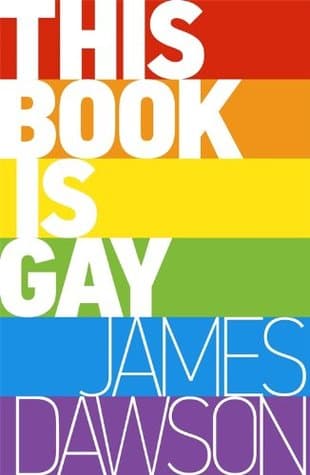
- This Book is Gay
James Dawson
3.9 (6k) average on GoodreadsNon-FictionThis direct and often funny guide explains the queer experience, from coming out and sex to navigating stereotypes, helping every LGBT+ reader feel understood and informed.
- Idle Thoughts of an Idle Fellow
Jerome K. Jerome
3.9 (2k) average on GoodreadsNon-FictionAn 'idle fellow' charmingly admits his book offers only humorous, purposeless relief from 'improving' literature.
- The Whitsun Weddings
Philip Larkin
4.0 (2k) average on GoodreadsNon-FictionPhilip Larkin's 'The Whitsun Weddings' takes readers on a journey through post-war England, capturing everyday life with tender observation and melancholic wit.
- Catullus
Catullus
4.2 (150) average on GoodreadsNon-FictionThis book explores Catullus, the Roman poet. His witty and erotic verses, once seen as spontaneous, are shown to be sophisticated and artfully constructed. He was a modernist ahead of his time.



Enjoyed the summary?
A summary gives you the shape of the book. The book itself has the detail, the examples and the voice.
Find Lemony Snicket on AmazonAs an Amazon Associate, BookBrief earns from qualifying purchases. How we're funded