
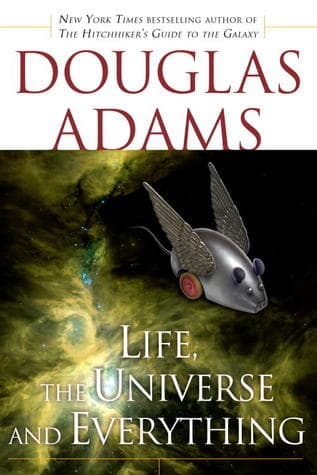
Synopsis
Covers the whole plot, including the ending.
- Difficulty
- Medium
- Pacing
- Variable
- Mood
- Witty, Absurdist, Humorous, Philosophical, Lighthearted
- Read it if
- You love absurd British humor, philosophical musings disguised as jokes, and a story where the plot is secondary to the witty dialogue and bizarre situations.
- Skip it if
- You prefer serious science fiction, a coherent plot with logical progression, or dislike surrealism and non-sequiturs.
Life, the Universe and Everything Plot Summary
Covers the whole plot, including the ending.
Lord's Cricket Ground and the Campaign for Real Time
Arthur Dent, still recovering from events on Brontitall, finds himself at Lord's Cricket Ground in London, seemingly moved through time and space. He meets Slartibartfast from Magrathea, who reveals a serious threat to the universe. Slartibartfast explains that the planet Krikkit, a world of pure white, lived in isolation until a spaceship crashed, showing them the rest of the universe. Upset by the 'mess' of stars, the Krikkiters began a mission to destroy everything that is not Krikkit. Slartibartfast, representing the Campaign for Real Time, needs Arthur's help to stop the Krikkiters from reassembling the Wikkit Gate and using a superweapon. He reveals that the Key to the Wikkit Gate is hidden within the Ashes of cricket.
Ford Prefect and the Infinite Improbability Drive
Ford Prefect, having somehow escaped the previous dimension, crashes into Lord's Cricket Ground in a sofa, using a localized Infinite Improbability Drive. He is surprised to find Arthur and Slartibartfast there. Slartibartfast explains the Krikkit threat to Ford, saying the Krikkiters were imprisoned in a 'fast-time' bubble, but their release is near. The trio realize they must get the Ashes, which are a part of the Wikkit Gate, before the Krikkiters or their robots do. Their journey begins, powered by Slartibartfast's ship, which runs on illogical behavior. Their destination is Krikkit itself, or rather, where the Wikkit Gate parts are scattered across the universe.
Zaphod Beeblebrox and the Heart of Gold
Meanwhile, Zaphod Beeblebrox, Trillian, and the sad robot Marvin are on the Heart of Gold. Zaphod is having a deep personal crisis, made worse by his two heads constantly arguing. Trillian tries to handle his wild behavior while dealing with her own worries about the universe. Marvin, as always, is very unhappy. They get strange messages and are pulled into the growing crisis. Zaphod, despite his current state, still has a knack for getting into important events and a strange link to the Krikkit problem, though he does not fully understand it yet. Their path will cross with Arthur, Ford, and Slartibartfast as the Krikkit threat grows.
The Search for the Wikkit Gate Components
Arthur, Ford, and Slartibartfast start their risky journey across the universe to find the five parts of the Wikkit Gate. These parts are disguised as ordinary objects and hidden in odd places, protected by old spells and traps. Their first stop is a planet where they must find a 'silver thingy' that is part of a complex puzzle. They meet various strange alien species and navigate dangerous places, all while being chased by Krikkit robots, who are also set on reassembling the Gate. The race against time is on, with the universe's fate at stake. Arthur, still trying to understand the craziness of it all, finds himself more and more involved in the quest.
Encountering the Thunder God
Trillian, separated from Zaphod for a time, is chased by Thor, the Norse God of Thunder. Thor is a loud, somewhat proud god who believes Trillian is meant to be his. Trillian, while a bit flattered, finds his advances annoying and his personality overwhelming. This side story adds a comedic break from the main plot, showing Trillian's independence and her dislike of typical ideas of heroism or romance. Thor's presence also shows a glimpse into the more mythical parts of the universe, expanding the scope of Adams's comedic cosmic story. Her interactions with Thor ultimately confirm her decision to rejoin Zaphod and the others.
Arthur's Flying Lessons and the Planet of the Hairdressers
Arthur, frustrated by his lack of control, decides to learn to fly by falling and missing. This absurd effort, while not immediately successful, slowly develops his character as he deals with the impossible. Later, the group lands on a planet inhabited only by hairdressers, a civilization focused entirely on hair styling. This meeting is a typical Adamsian digression, offering comic relief and exploring the strange extremes of alien cultures. They manage to get another Wikkit Gate part from this planet, hidden among old styling tools, further showing the unexpected nature of their quest and the universe's absurdity.
The War Games of the Krikkiters
The heroes, now with Zaphod, Trillian, and Marvin, watch a Krikkit war game. This simulation shows the Krikkiters' chillingly effective and ruthless way of destroying the universe. They are not just destructive; they are systematically taking apart the universe, atom by atom, with a horrifying lack of regret or understanding of beauty. This scene highlights the true seriousness of the threat and the Krikkiters' single-minded, almost childish, resolve to create an empty cosmos. It strengthens the heroes' determination, even Zaphod's, to prevent the Wikkit Gate's reassembly and stop the Krikkiters' destructive mission.
The Planet of the Great Cirrus of Betelgeuse
The quest takes the group to a planet that is a giant cloud, the Great Cirrus of Betelgeuse. Navigating this ethereal place is hard, and they meet strange, gaseous lifeforms. Another Wikkit Gate part is hidden in this cloudy world, requiring them to use their cleverness and some improbable luck to find it. This part emphasizes the diverse and unpredictable nature of the universe and the increasingly surreal challenges the heroes face. Marvin, despite his usual sadness, sometimes offers a surprisingly insightful, though still miserable, comment that helps them.
The Final Component and the Wikkit Gate
With four parts found, the race for the final piece becomes more intense. The Krikkit robots are closing in, and the Krikkiters' full release from their time-bubble prison is near. The last part leads them to a desolate, ancient planet, where they must face a Krikkit robot guardian. After a wild fight, they get the last piece. They then must transport all the parts to the Wikkit Gate itself, a huge, imposing structure that has been inactive for ages, waiting to be turned on. Tension rises as they realize the Krikkiters are only moments away from their goal.
Confrontation at the Wikkit Gate
The heroes arrive at the Wikkit Gate, finding themselves in a desperate fight with the Krikkiters and their leader, a figure of chilling, innocent evil. The Krikkiters are about to activate the Gate, which is a superweapon that can destroy stars. A chaotic battle follows, mixing improbable gadgets, philosophical arguments, and slapstick. Arthur, surprisingly, plays a key role, using his decency and some accidental cleverness to disrupt the Krikkiters' plans. The universe's fate is at stake as the heroes try to stop the ultimate act of cosmic destruction.
The Resolution and the Ashes
Through quick thinking, improbable luck, and Slartibartfast's strategy, the Wikkit Gate is disarmed, stopping the Krikkiters from using their weapon. The Krikkiters are again contained, though the chance of their return remains. The 'Ashes' of cricket are not just a part, but a symbol of the universe's strength and life's absurdity. The heroes, tired but successful, think about their adventure. Arthur, though still confused, has a deeper, though still puzzled, understanding of the universe's complexities and its inherent strangeness. The immediate crisis is over, but the universe remains a confusing and dangerous place.
Arthur's Continued Journey
Afterward, the heroes go their separate ways, for now. Arthur Dent is left to think about the meaning of the universe, Krikkit, and why he still cannot get a good cup of tea. He has been changed by his travels, growing from a simple Earthman into a reluctant space adventurer, though he still misses the ordinary comforts of his old life. The story leaves him with a sense of an ongoing journey, forever caught in the unpredictable flow of time and space, forever looking for answers in a universe that refuses to give them in any clear form. His search for understanding, and perhaps a good drink, continues.
Principal Figures
Arthur Dent
Protagonist
The last surviving human from Earth, perpetually bewildered by the universe.
Arthur Dent is an ordinary Englishman, thrust into extraordinary cosmic adventures. He is characterized by his love for routine, his inability to grasp the absurdities of space travel, and his persistent desire for a good cup of tea. Despite his mild-mannered nature, he possesses an underlying resilience and a surprising knack for survival. He often serves as the audience's surrogate, reacting to the bizarre events with relatable confusion and exasperation.
Relationships: Ford Prefect (Best friend and primary companion); Slartibartfast (Mentor figure and guide in the Krikkit crisis); Trillian (Fellow Earthling and occasional companion)
Ford Prefect
Supporting
A roving researcher for 'The Hitchhiker's Guide to the Galaxy' and Arthur's best friend.
Ford Prefect is a charismatic, eccentric, and occasionally reckless alien from Betelgeuse. He is a 'Hitchhiker's Guide' researcher, always seeking out new experiences and information, often with little regard for personal safety or the feelings of others. He is fiercely loyal to Arthur, despite frequently dragging him into dangerous situations. Ford thrives on chaos and unpredictability, making him a perfect foil for Arthur's grounded nature.
Relationships: Arthur Dent (Best friend and travel companion); Zaphod Beeblebrox (Semi-cousin and old acquaintance)
Slartibartfast
Supporting
A Magrathean planet designer and member of the Campaign for Real Time.
Slartibartfast is an ancient, wise, and somewhat melancholic Magrathean, known for designing fjords. He is a key figure in the Campaign for Real Time, dedicated to preventing the Krikkiters from destroying the universe. He possesses vast knowledge of cosmic history and a calm, methodical approach to crisis, often contrasting with the frantic energy of the other characters. He serves as a guide and explainer of the larger galactic stakes.
Relationships: Arthur Dent (Guide and partner in the Krikkit quest); Ford Prefect (Fellow adventurer in the Krikkit quest)
Zaphod Beeblebrox
Supporting
The two-headed, three-armed ex-President of the Galaxy, currently in an existential crisis.
Zaphod Beeblebrox is a flamboyant, self-obsessed, and often unreliable character. He has two heads and three arms, a result of his unique physiology and questionable surgical choices. In this book, he is grappling with a profound existential crisis, making him more introspective and less outwardly boisterous, though still prone to erratic behavior. Despite his flaws, Zaphod often stumbles into important situations and possesses an odd knack for survival.
Relationships: Trillian (Romantic interest and travel companion); Marvin (Long-suffering robotic companion); Ford Prefect (Semi-cousin and old acquaintance)
Trillian (Tricia McMillan)
Supporting
A brilliant astrophysicist and the only other human survivor from Earth.
Trillian is intelligent, resourceful, and often the most grounded member of the group, despite her extraordinary circumstances. She left Earth with Zaphod Beeblebrox before its destruction and has since adapted to life in space. She maintains a pragmatic outlook amidst the chaos and frequently provides a voice of reason. She is often torn between her scientific curiosity and the emotional demands of her companions, particularly Zaphod.
Relationships: Zaphod Beeblebrox (Romantic interest and travel companion); Arthur Dent (Fellow Earthling and occasional companion); Marvin (Travel companion)
Marvin the Paranoid Android
Supporting
A highly intelligent, perpetually depressed robot.
Marvin is a prototype robot with a 'Genuine People Personality' that has gone horribly wrong, leaving him with chronic depression and a profound sense of boredom with the universe. Despite his misery, he possesses immense intelligence and often solves complex problems with ease, though he will never admit to enjoying it. His constant complaints and existential despair provide a darkly comedic element to the narrative.
Relationships: Zaphod Beeblebrox (Owner (often abandoned)); Trillian (Travel companion)
Krikkiters
Antagonists
A race of pure white beings determined to destroy the entire universe.
The Krikkiters are the primary antagonists. Hailing from a planet of pure white, they lived in blissful ignorance until a crashed spaceship revealed the existence of the 'cluttered' and 'dirty' universe. Driven by a simplistic, yet absolute, philosophy of purity, they embarked on a genocidal crusade to destroy everything that isn't Krikkit. They are represented by their highly efficient, emotionless robots and their almost childlike, yet terrifying, conviction.
Thor
Mentioned
The Norse God of Thunder, who develops an interest in Trillian.
Thor is depicted as a boisterous, somewhat arrogant, but ultimately well-meaning deity from Norse mythology. He is a minor character who primarily interacts with Trillian, attempting to woo her. His presence highlights the blending of mythical and scientific elements in Adams's universe, and he serves as a comedic distraction and a brief romantic interest for Trillian, though she does not reciprocate his feelings.
Relationships: Trillian (Romantic pursuer)
Themes & Insights
The Absurdity of Existence
This theme is key to the series, and in 'Life, the Universe and Everything,' it shows in the Krikkiters' reason to destroy the universe simply because they find it messy. Arthur Dent's constant confusion and the bizarre, illogical solutions to cosmic problems (like a ship powered by irrational behavior) highlight that life and the universe defy logical explanation. The universe is shown as chaotic and without inherent meaning, yet characters like Arthur still try to find personal meaning within it. The idea of 'flying by throwing yourself at the ground and missing' perfectly captures this absurdity.
“There is an art to flying, or rather a knack. The knack lies in learning how to throw yourself at the ground and miss.”
The Nature of War and Genocide
The Krikkiters' war against the universe examines the reasons behind conflict and genocide. Their wish for a 'pure' white universe, free from the 'clutter' of stars, reflects real-world historical atrocities driven by extreme ideas of purity and elimination. The book explores how such destructive urges can come from seemingly harmless beginnings (a desire for simplicity) and grow into universal threats. The casual, almost childlike, way the Krikkiters plan to destroy everything comments on the commonness of evil.
“The Krikkiters were not evil, they were just very, very stupid.”
Existential Crisis and Meaninglessness
Zaphod Beeblebrox's deep personal crisis directly explores this theme. Despite his power and past successes, he feels a deep sense of emptiness and lack of purpose. This reflects a broader struggle to find meaning in a vast, indifferent universe. Marvin's constant depression also shows this, as his great intelligence only makes him more aware of everything's futility. The characters constantly face the overwhelming scale of existence and the smallness of individual lives, leading to questions about purpose.
“I've been trying to work out what I want to do with my life, and I still haven't come up with anything.”
The Fragility and Resilience of Life
Despite constant threats of universal destruction, life in its many forms continues. The Campaign for Real Time actively works to save the universe, showing the inherent value placed on existence, no matter how absurd. The heroes, despite their personal flaws and comedic incompetence, eventually save the universe, highlighting the unexpected strength of even the most unlikely characters. The act of living, of experiencing new things and forming relationships, is shown as a defiant act against the forces of decay and destruction, even if Arthur often struggles to find a good cup of tea amidst it all.
“There are some who say that life is a waste of time, and some who say that life is a waste of space. But there are still some who say that life is just a waste of time and space, and that's just fine.”
Plot Devices & Literary Techniques
The Infinite Improbability Drive
A propulsion system that allows instantaneous travel by passing through every conceivable point in the universe simultaneously.
The Infinite Improbability Drive is a key plot device that allows for instantaneous travel across unimaginable distances. Its function is based on the concept of infinite improbability, meaning that any event, no matter how unlikely, becomes possible. This allows for both convenient plot advancement (characters appearing in random places) and comedic situations (like a sofa appearing at Lord's Cricket Ground). It essentially enables the narrative to jump between disparate locations and scenarios without logical constraint, perfectly fitting the absurd tone of the series.
The Wikkit Gate and the Ashes
A superweapon capable of destroying stars, with its key hidden within the 'Ashes' of cricket.
The Wikkit Gate is the central MacGuffin and the primary threat driving the plot. It's a powerful ancient weapon that the Krikkiters seek to reassemble to achieve their goal of universal destruction. The 'Ashes' of cricket, a mundane Earth object, are cleverly revealed to be a crucial component of this gate, adding a layer of cosmic irony. This device provides a concrete objective for the heroes, giving their otherwise chaotic journey a clear purpose: to find and secure the components before the antagonists can.
The Campaign for Real Time
An organization dedicated to preserving the universe from the Krikkiters' destructive plans.
The Campaign for Real Time is an organization introduced by Slartibartfast. It serves as the primary force opposing the Krikkiters and provides the narrative with a sense of urgency and a larger cosmic framework. This device allows for exposition about the Krikkiters' history and the stakes involved. It also gives Slartibartfast a formal role and authority, making his involvement in recruiting Arthur and Ford more plausible within the story's absurd logic, and justifying the heroes' mission to save the universe.
Marvin's Depression and Intelligence
A perpetually miserable robot whose immense intelligence often provides unexpected solutions.
Marvin's unique combination of debilitating depression and unparalleled intelligence functions as a recurring plot device. His misery provides consistent comedic relief, but his vast processing power and ability to see through complex problems often lead to crucial breakthroughs or provide essential information when the other characters are stumped. He acts as a reluctant deus ex machina, solving problems despite his utter lack of enthusiasm, thereby both advancing the plot and reinforcing the series' darkly humorous tone.
Life, the Universe and Everything Quotes
“The only thing anyone can be sure of is that the impossible is what nobody can believe can happen and that the improbable is what people who are not as good at arithmetic as they should be, think won't happen.”
“There is a theory which states that if ever anyone discovers exactly what the Universe is for and why it is here, it will instantly disappear and be replaced by something even more bizarre and inexplicable. There is another theory which states that this has already happened.”
“The ships hung in the sky in much the same way that bricks don't.”
“Arthur was a man who had not yet found his place in the Universe. He was, in fact, still trying to find his pyjamas.”
“It is a well known fact that those people who most want to rule people are, ipso facto, those least suited to do it.”
“The history of every major Galactic Civilization tends to pass through three distinct and recognizable phases, those of Survival, Inquiry and Sophistication, otherwise known as the How, Why, and Where phases.”
“He knew that at every stage of the Universe's development, the laws of physics had been different.”
“The more he did of it, the more he realised that there was an awful lot that he didn't know.”
“He was a man who had discovered that the world was a much more confusing and dangerous place than he had ever imagined, and he was beginning to enjoy it.”
“Human beings, who are almost unique in having the ability to learn from the experience of others, are also remarkable for their apparent disinclination to do so.”
“The fact that nobody was doing anything about it was, to Arthur, one of the most interesting things about the whole affair.”
“It's a terrible thing, the way people just don't care anymore.”
“The purpose of a planet is to be a planet. It's not to be anything else.”
“The point of travelling, as far as Arthur was concerned, was to get from A to B as comfortably as possible.”
Quiz
10 questions on the plot and the characters. Each answer comes with a short explanation.
Question 1
What is the primary goal of the Krikkit people?
- To colonize new planets throughout the galaxy.
- To destroy the entire universe.
- To find a cure for their planet's unhappiness.
- To build the ultimate superweapon.
Show answer
B. To destroy the entire universe. The Krikkit people are described as being 'sick of looking at the night sky' and plan to 'destroy the universe'.
Question 2
Which character attempts to learn how to fly by throwing himself at the ground and missing?
- Ford Prefect
- Zaphod Beeblebrox
- Arthur Dent
- Slartibartfast
Show answer
C. Arthur Dent Arthur Dent is specifically described as 'a mild-mannered space and time traveler who tries to learn how to fly by throwing himself at the ground and missing'.
Question 3
What powers Slartibartfast's ship?
- Dark matter energy
- A highly advanced antimatter reactor
- Irrational behavior
- The collective consciousness of sentient beings
Show answer
C. Irrational behavior Slartibartfast 'travels in a ship powered by irrational behavior'.
Question 4
What is Ford Prefect's unusual decision related to his mental state?
- To attempt to achieve pure enlightenment.
- To go insane to see if he likes it.
- To completely erase his memories.
- To become a master of psychic abilities.
Show answer
B. To go insane to see if he likes it. Ford Prefect 'decides to go insane to see if he likes it'.
Question 5
Which character is described as having two heads and three arms?
- Arthur Dent
- Ford Prefect
- Zaphod Beeblebrox
- Slartibartfast
Show answer
C. Zaphod Beeblebrox Zaphod Beeblebrox is identified as 'the two-headed, three-armed ex-president of the galaxy'.
Question 6
What is Slartibartfast's role in the 'Campaign for Real Time'?
- He is the chief strategist.
- He is the vice president.
- He is the founder.
- He is a general operative.
Show answer
B. He is the vice president. Slartibartfast is described as the 'indomitable vice president of the Campaign for Real Time'.
Question 7
What emotional state is Zaphod Beeblebrox experiencing, according to the description of Trillian's dilemma?
- Elated
- Aggressive
- Depressed
- Confused
Show answer
C. Depressed Trillian is 'torn between a persistent Thunder God and a very depressed Beeblebrox', indicating Zaphod's emotional state.
Question 8
What specific characteristic makes the Krikkit people unhappy with their situation?
- Their planet's unstable orbit.
- The constant threat of meteor showers.
- Looking at the night sky above their heads.
- A lack of advanced technology.
Show answer
C. Looking at the night sky above their heads. The 'unhappy inhabitants of planet Krikkit are sick of looking at the night sky above their heads'.
Question 9
The story sets up a conflict where five individuals stand against the Krikkit robots. What is the ultimate consequence they are trying to avert?
- The collapse of intergalactic trade routes.
- A 'universal' Armageddon and total annihilation.
- The subjugation of all sentient life forms.
- The destruction of a single, important planet.
Show answer
B. A 'universal' Armageddon and total annihilation. The crew tries to 'avert “universal” Armageddon and save life as we know it–and don’t know it!' from the Krikkit's goal of 'total annihilation'.
Question 10
Trillian's character is presented with a choice between two male characters. Who are they?
- Arthur Dent and Ford Prefect
- Slartibartfast and a Thunder God
- A persistent Thunder God and a very depressed Beeblebrox
- Zaphod Beeblebrox and Arthur Dent
Show answer
C. A persistent Thunder God and a very depressed Beeblebrox Trillian is described as 'torn between a persistent Thunder God and a very depressed Beeblebrox'.
Life, the Universe and Everything FAQ
What is the central conflict driving the plot of 'Life, the Universe and Everything'?
The central conflict revolves around the Krikkitmen, a race from the planet Krikkit, who, upon discovering the vastness of the universe beyond their dust cloud, are so appalled that they decide to destroy it entirely. Their goal is universal annihilation, and the protagonists must stop them from assembling the pieces of the Wikkit Gate, which would unleash this destruction.
Who are the primary protagonists tasked with stopping the Krikkitmen?
The primary protagonists are Arthur Dent, who inadvertently gets caught up in the quest after falling through time; Ford Prefect, his eccentric best friend and researcher for The Hitchhiker's Guide to the Galaxy; Slartibartfast, the planetary designer who initially informs them of the Krikkit threat; and eventually Zaphod Beeblebrox and Trillian, who join the adventure, often quite unwillingly.
What is the significance of the game of cricket in the context of the Krikkit War?
The game of cricket is deeply significant as it's revealed to be a metaphor and a ritualistic representation of the Krikkit War itself. The Krikkitmen's original plan was to build a machine, the Wikkit Gate, which was designed to destroy the universe, and the pieces of this gate were disguised as the components of a cricket set, including the Silver Bail.
What role does the character of Slartibartfast play in the narrative?
Slartibartfast, a Magrathean planetary designer, serves as the primary expositor of the Krikkit War's history and its current threat. He recruits Arthur and Ford to help prevent the Krikkitmen from reassembling the Wikkit Gate, guiding them through time and space in his ship, the Starship Bistromath.
How does Arthur Dent's personal journey evolve throughout the story?
Arthur's journey in this book is largely driven by his accidental involvement and his desire to understand the universe, often struggling with its absurdities. He finds himself in various bizarre situations, from being stranded on ancient Earth to encountering the legendary Silver Bail, all while grappling with his identity and purpose in a chaotic cosmos.
What is the true nature and origin of the Krikkitmen's xenophobia?
The Krikkitmen's xenophobia stems from their initial isolation within a dust cloud. When they finally saw the universe, they were so overwhelmed and disgusted by its vastness and complexity that they concluded it must be destroyed. Their violent reaction is a tragic consequence of their sheltered existence and inability to cope with the unknown.
What is the 'Silver Bail' and why is it so crucial to the plot?
The 'Silver Bail' is the final, crucial component required to complete the Wikkit Gate, the Krikkitmen's ultimate weapon of universal destruction. It is a legendary artifact, the most sought-after piece of the cricket set, and its retrieval by the protagonists is essential to prevent the Krikkitmen from achieving their genocidal goal.
How does the concept of 'Bistromathics' relate to Slartibartfast's ship and its capabilities?
Bistromathics is a highly irrational form of mathematics that dictates the behavior of queues in restaurants and the movement of Slartibartfast's ship. It operates on the principle that numbers behave differently in different situations, particularly when observed, allowing the ship to travel through space and time based on the perceived irrationality of the universe.
What is the significance of the character Agrajag and his repeated deaths at Arthur's hands?
Agrajag is a being who claims to be repeatedly reincarnated and subsequently killed by Arthur Dent throughout various points in space and time. He represents a meta-commentary on causality and coincidence, as well as a humorous exaggeration of Arthur's unwitting destructive impact on the universe, leading to Agrajag's ultimate desire for revenge.
How does Ford Prefect's decision to 'go insane' reflect his coping mechanisms?
Ford's decision to 'go insane' is a characteristic coping mechanism for dealing with overwhelming situations, typical of his unpredictable and often reckless nature. It reflects his tendency to embrace chaos and absurdity rather than resist it, using a form of controlled madness to navigate the illogical universe and perhaps maintain a semblance of control.
Analyze the psychological motivations behind the Krikkitmen's desire for universal annihilation.
The Krikkitmen's desire for annihilation stems from a profound psychological shock and an inability to process the infinite. Their initial isolation created a fragile worldview, and upon encountering the vastness of the universe, their minds defaulted to an extreme form of defensive aggression, perceiving all that is unknown as a threat that must be eliminated.
What does Zaphod Beeblebrox's internal conflict and depression reveal about his character?
Zaphod's internal conflict and depression, despite his outward bravado, reveal a deeper vulnerability and self-doubt. His two heads often argue, symbolizing his fragmented identity and the burden of his past actions. This depression suggests that even the most outwardly flamboyant and seemingly carefree characters can struggle with profound existential angst.
How does Trillian's choice between Zaphod and the Thunder God reflect her personal desires and struggles?
Trillian's dilemma between Zaphod and the Thunder God (Thor) symbolizes her struggle between chaotic excitement and a more stable, albeit perhaps less thrilling, existence. Zaphod represents the unpredictable, often frustrating, but never boring life she's grown accustomed to, while Thor offers a more traditional, powerful, and potentially reliable companionship, reflecting her desire for both adventure and emotional security.
How does the book satirize religious extremism through the Krikkitmen's actions?
The book satirizes religious extremism by portraying the Krikkitmen's genocidal quest as an absolute, unquestioning dogma born from a singular, traumatic revelation. Their 'faith' in destruction is presented as illogical and devastating, mirroring how extreme belief systems can lead to uncritical adherence to violent objectives, all in the name of a 'greater' perceived truth.
What philosophical statement does the concept of 'Life, the Universe and Everything' make about existence?
The title itself, and the book's narrative, suggest that 'Life, the Universe and Everything' is fundamentally absurd and often meaningless in a grand cosmic sense. It implies that while grand questions exist, the answers are often elusive, silly, or simply '42,' encouraging readers to find their own meaning amidst the chaos rather than expecting profound, universal truths.
Discuss the book's commentary on the dangers of isolation and limited perspectives.
The Krikkitmen serve as a powerful commentary on the dangers of isolation and limited perspectives. Their initial confinement led to an inability to cope with the vastness and diversity of the universe, demonstrating how a narrow worldview can breed fear, intolerance, and ultimately, a destructive desire to eliminate anything that challenges one's preconceived notions.
In what ways does the narrative challenge traditional notions of heroism and leadership?
The narrative consistently challenges traditional heroism by presenting its protagonists as reluctant, flawed, and often incompetent. Arthur is a bewildered everyman, Ford is chaotic, Zaphod is self-serving, and even Slartibartfast is a bureaucrat. Their 'leadership' is more a series of accidental successes and fortunate blunders, subverting the idea of a singular, heroic figure saving the day.
How does the recurring motif of 'flying by throwing yourself at the ground and missing' encapsulate the book's humor and philosophy?
This motif perfectly encapsulates the book's absurd humor and its underlying philosophy that the universe often operates on illogic. It's a literal interpretation of 'thinking outside the box,' suggesting that sometimes the most impossible feats can be achieved by simply redefining the rules or ignoring common sense, highlighting the arbitrary nature of reality in Adams' universe.
About the author
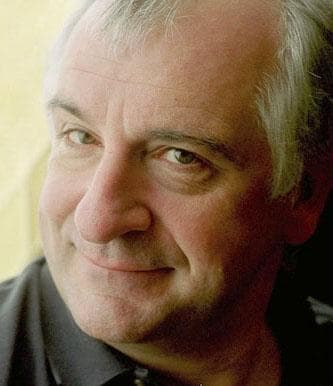
Douglas Noël Adams was an English author, humorist, and screenwriter, best known for The Hitchhiker's Guide to the Galaxy. Originally a 1978 BBC radio comedy, The Hitchhiker's Guide to the Galaxy developed into a "trilogy" of five books that sold more than 15 million copies in his lifetime. It was further developed into a television series, several stage plays, comics, a video game, and a 2005 feature film. Adams's contribution to UK radio is commemorated in The Radio Academy's Hall of Fame.
Similar books
- The Hitchhiker's Guide to the Galaxy
Douglas Adams
4.2 (1.4M) average on GoodreadsFantasyDirect sequel, shares the same unique humor and characters.
- Dirk Gently's Holistic Detective Agency
Douglas Adams
4.0 (121k) average on GoodreadsFantasyFeatures similar British absurdist humor and a quirky, interconnected plot.
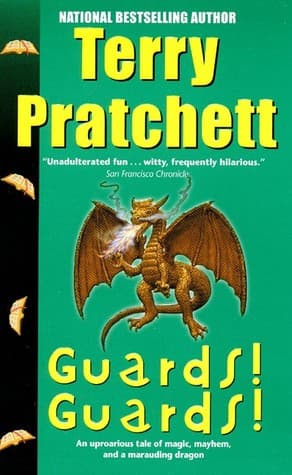
- Guards! Guards!
Terry Pratchett
4.3 (165k) average on GoodreadsFantasyWhile both Adams and Pratchett excel in comedic fantasy/sci-fi, Pratchett's Discworld series (e.g., Guards! Guards!) often grounds its humor in more direct, consistent societal parody within its fantastical setting. Adams's humor is frequently more surreal, dadaist, and less tied to a rigid internal logic, making his satire broader and more existential, whereas Pratchett's is often a more pointed commentary on specific human institutions and follies within a more structured world.
- Dune
Frank Herbert
4.2 (766k) average on GoodreadsFantasyBoth books involve grand, universe-spanning adventures, but Dune represents a traditional epic science fiction narrative with a focus on prophecy, destiny, and the rise of a chosen hero. Adams's Life, the Universe and Everything fundamentally subverts these tropes, presenting protagonists who are often reluctant, accidental participants in cosmic events, driven by chaos and absurdity rather than a clear, heroic destiny. Herbert's world-building is meticulously serious and detailed, while Adams's is deliberately whimsical and often self-deprecating.
- Harry Potter and the Sorcerer's Stone
J.K. Rowling
4.5 (7M) average on GoodreadsFantasyRescued from a miserable life under the stairs, an orphaned boy discovers he's a wizard destined for a magical school, where he uncovers a dangerous secret tied to the dark wizard who murdered his parents.
- The Hunger Games
Suzanne Collins
4.3 (6.4M) average on GoodreadsFantasyIn a future where children fight to the death on live television, Katniss Everdeen volunteers for the arena, turning a death sentence into a fight for survival and a spark of rebellion.





Enjoyed the summary?
A summary gives you the shape of the book. The book itself has the detail, the examples and the voice.
Find Life, the Universe and Everything on AmazonAs an Amazon Associate, BookBrief earns from qualifying purchases. How we're funded