

Synopsis
Covers the whole plot, including the ending.
- Difficulty
- Easy
- Pacing
- Fast
- Mood
- Intriguing, Suspenseful, Glamorous, Snarky
- Read it if
- You enjoy YA mysteries with a strong female lead, a 'fish-out-of-water' trope, and a glamorous, high-society setting filled with secrets and intrigue.
- Skip it if
- You prefer gritty, realistic thrillers or dislike YA tropes, as the mystery relies on some convenient plot points and a somewhat predictable reveal.
Little White Lies Plot Summary
Covers the whole plot, including the ending.
A Mysterious Invitation and a Life-Altering Offer
Eighteen-year-old Sawyer Taft, a skilled auto mechanic living a modest life with her mother, Lily, receives an unexpected visit from her wealthy, estranged grandmother, Lillian Taft. Lillian, whom Sawyer has never met, offers her a six-figure sum to participate in the prestigious debutante season in exchange for a trust fund and a chance to uncover the identity of her father. Sawyer, initially hesitant about the high-society world, is intrigued by the possibility of finally learning about her paternal lineage, a secret her mother has always guarded fiercely. Despite her mother's strong disapproval and warnings about Lillian's manipulative nature, Sawyer decides to accept the offer, driven by a deep curiosity about her past and a desire for financial independence.
Entering a World of Privilege and Secrets
Sawyer moves into Lillian Taft's opulent mansion, a stark contrast to her previous life. She immediately clashes with the superficial expectations of debutante culture, struggling with etiquette lessons, fashion fittings, and the snobbish attitudes of some of the other debutantes. Lillian assigns a personal assistant, Victoria, to help Sawyer navigate this new world, but Sawyer remains wary. She quickly learns that the debutante season is not just about social graces; it is a complex web of alliances, rivalries, and unspoken rules. Her primary goal remains uncovering clues about her father, and she starts by subtly questioning Lillian and observing the interactions within her grandmother's social circle, realizing that the Taft family history is more complicated than she imagined.
Forming Unlikely Alliances
Despite her initial skepticism, Sawyer begins to form connections with a few other debutantes. She becomes particularly close to Sadie, a sweet and naive girl, and Olivia, a sharp-witted and pragmatic young woman. There is also Penelope, who is initially hostile but later reveals a more vulnerable side. Sawyer discovers that these girls, despite their privileged backgrounds, are also grappling with their own family pressures and hidden struggles. They form an unlikely bond, finding solidarity in their shared experiences within the restrictive debutante world. This newfound camaraderie provides Sawyer with a support system and a different perspective on the social dynamics, but also introduces her to a wider network of secrets.
First Clues and Shifting Suspicions
Sawyer's investigation begins to yield results. Through old photographs, overheard conversations, and subtle prodding, she learns that her father was likely someone from Lillian's generation, involved in a specific social circle. She identifies a few key figures who were prominent during that time and had connections to Lillian, including Judge Hayes, a powerful and respected figure, and Mr. Carmichael, a seemingly jovial but mysterious man. As she looks deeper, she realizes that her mother's past with Lillian is far more intertwined than she let on, and that the secret of her father's identity is not just a personal matter but potentially linked to a larger, more scandalous history within their community. Each new piece of information only deepens the mystery.
A Dangerous Discovery and Escalating Threats
While exploring the Taft mansion, Sawyer discovers a hidden compartment containing a cryptic letter and an old locket. The letter, written by her mother, Lily, to an unknown recipient, contains a veiled warning about the dangers of revealing a certain truth and mentions a specific code word or phrase. This discovery confirms Sawyer's suspicion that her father's identity is not just a family secret but a potentially dangerous one. The more she investigates, the more pushback she receives, from subtle warnings from Lillian to more overt threats. Someone does not want her digging into the past, and Sawyer realizes that her search for the truth is putting her, and possibly others, at risk.
Unraveling the Truth About Lily's Past
Sawyer confronts her mother, Lily, with the hidden letter and the locket. Lily is visibly shaken and finally begins to reveal fragments of the past. She admits that she and Lillian had a much closer, more complex relationship than Sawyer ever knew, and that Lily herself was once a debutante under Lillian's wing. Lily confesses that the secret of Sawyer's father's identity is tied to a scandal that could ruin powerful people and that she fled to protect Sawyer. She reveals that the letter was a warning to her father, meant to keep him away and safe. This conversation recontextualizes everything Sawyer thought she knew about her mother and grandmother, deepening the mystery and the stakes.
The Debutante Ball and a Confrontation
At the debutante ball, the culmination of the season, Sawyer finally pieces together the last fragments of the puzzle. Through overheard conversations, a final confrontation with Lillian, and a crucial interaction with Judge Hayes, the truth is revealed: Judge Hayes is her father. However, the secret runs deeper. Hayes and Lily were in love, but Lillian, protective of her family's reputation and disapproving of Lily's lower social standing, manipulated the situation, making Hayes believe Lily had betrayed him and forcing Lily to leave. The 'scandal' was not about an affair, but about Lillian's ruthless control and the lengths she went to maintain her family's social standing.
The Full Revelation and Lillian's Manipulation
Sawyer learns that Lillian did not just separate her parents; she orchestrated the entire debutante season as a way to control Sawyer and, ironically, bring her father back into the fold under her terms. Lillian had always intended for Sawyer to discover the truth, but on Lillian's timeline and in a way that would ultimately benefit the Taft legacy. Lillian wanted to 'fix' the past and reunite her family, but only if she remained in control. Sawyer realizes that her grandmother's love is conditional and manipulative, always serving her own agenda. The six-figure offer and the debutante season were merely elaborate tools in Lillian's long-game strategy.
Justice and Forgiveness
With the truth exposed, Sawyer, Lily, and Judge Hayes have an emotional reunion. Judge Hayes is devastated by Lillian's deception and the years of lost time with Lily and Sawyer. Lily, though still hurt, begins to find peace in the truth being out. Sawyer, empowered by her discoveries, confronts Lillian, refusing to be a pawn in her grandmother's games. She asserts her independence and her right to define her own family. While not fully forgiving Lillian, Sawyer understands the complex motivations behind her actions. The three of them decide to build a new family dynamic, free from Lillian's manipulative influence, focusing on healing and reconnecting.
A New Beginning for Sawyer
Sawyer decides to use the trust fund for her education and to open her own auto shop, embracing her skills and passion. She maintains her friendships with Sadie, Olivia, and Penelope, who have also grown through their own experiences during the debutante season. Her relationship with her mother, Lily, deepens, built on honesty and mutual respect. While the world of debutantes and high society is not her permanent home, Sawyer has gained valuable experience, discovered her identity, and forged strong bonds. She leaves the Taft mansion with a clear sense of self, a loving family, and the knowledge that she can navigate any challenge, having uncovered the 'little white lies' that shaped her past.
Little White Lies Characters
Sawyer Taft
Protagonist
An eighteen-year-old auto mechanic seeking her father's identity amidst high society.
Sawyer is intelligent, observant, and fiercely independent, with a pragmatic and cynical view of the privileged world she's thrust into. She's a skilled mechanic, comfortable with grease and engines, which contrasts sharply with the debutante world's emphasis on superficiality. Her primary motivation is to uncover the identity of her father, a secret her mother has guarded for years. Despite her initial reluctance, she proves to be adaptable and resilient, forming unexpected friendships and using her sharp wit to navigate complex social dynamics. She values honesty and authenticity above all else.
Relationships: Lily Taft (Mother, initially estranged by secrets, later reconciled); Lillian Taft (Estranged grandmother, manipulative but with complex motivations); Judge Hayes (Biological father, previously unknown); Sadie (Friend, fellow debutante); Olivia (Friend, fellow debutante); Penelope (Initial rival, later friend, fellow debutante)
Lily Taft
Supporting
Sawyer's mother, who fled high society to protect her daughter and a secret.
Lily is fiercely protective of Sawyer and has lived a quiet, modest life, deliberately distancing herself from her wealthy past. She carries deep emotional scars from her history with Lillian and Judge Hayes, leading her to guard the truth about Sawyer's father for years. Despite her initial resistance to Sawyer joining the debutante season, her love for her daughter ultimately compels her to reveal the truth, even if painful. She is kind and loving but has been shaped by past betrayals and the desire to shield Sawyer from the same fate.
Relationships: Sawyer Taft (Daughter, primary concern); Lillian Taft (Former mentor/mother figure, source of pain and betrayal); Judge Hayes (Sawyer's father, her past love)
Lillian Taft
Antagonist/Supporting
Sawyer's wealthy, manipulative grandmother, orchestrating events from behind the scenes.
Lillian is a formidable and calculating matriarch, deeply ingrained in high society and obsessed with reputation and control. She is the embodiment of privilege and manipulation, using her wealth and influence to orchestrate events, including Sawyer's debutante season, for her own ends. While her actions are often self-serving and damaging, she also exhibits a complex desire to 'fix' her family and legacy, even if it means causing pain. She is a master of veiled threats and subtle psychological warfare, always seeming to be two steps ahead.
Relationships: Sawyer Taft (Granddaughter, a pawn in her schemes but also a source of complex affection); Lily Taft (Former protegé, whom she betrayed); Judge Hayes (Object of her manipulation, prevented from marrying Lily)
Judge Hayes
Supporting
A powerful and respected judge, revealed to be Sawyer's biological father.
Judge Hayes is a prominent and seemingly upright figure in the community, known for his integrity and influence. He was once deeply in love with Lily Taft but was tricked into believing she had abandoned him, leading to a lifetime of regret and unfulfilled love. He is kind and honorable, and his discovery of Sawyer's existence and Lillian's deception brings both immense pain and a chance for closure and connection. He represents the innocent party in Lillian's manipulative schemes, a man whose life was significantly altered by her actions.
Relationships: Sawyer Taft (Daughter); Lily Taft (Sawyer's mother, his past love); Lillian Taft (The manipulator who separated him from Lily)
Sadie
Supporting
A sweet and seemingly naive debutante who becomes Sawyer's friend.
Sadie is initially portrayed as a somewhat sheltered and overly eager debutante, prone to gushing and a little bit ditzy. However, beneath her saccharine exterior lies a keen observation and a surprising resilience. She genuinely cares for Sawyer and the other girls, and her loyalty is unwavering. She acts as a foil to Sawyer's cynicism, bringing a touch of warmth and innocence to the group, but also reveals her own vulnerabilities and struggles with family expectations.
Relationships: Sawyer Taft (Close friend, fellow debutante); Olivia (Friend, fellow debutante); Penelope (Friend, fellow debutante)
Olivia
Supporting
A sharp-witted and pragmatic debutante who befriends Sawyer.
Olivia is intelligent, sarcastic, and pragmatic, often providing a grounded perspective amidst the debutante drama. She is quick to analyze situations and offers insightful, if sometimes cutting, commentary. She initially views Sawyer with a degree of skepticism but quickly comes to respect her authenticity and intelligence. Olivia is fiercely loyal to her friends and proves to be a valuable ally in Sawyer's quest, offering practical advice and support. She also has her own family issues, particularly concerning her demanding parents.
Relationships: Sawyer Taft (Close friend, fellow debutante); Sadie (Friend, fellow debutante); Penelope (Friend, fellow debutante)
Penelope
Supporting
An initially hostile debutante who later reveals her vulnerabilities and befriends Sawyer.
Penelope initially presents as a snobbish and competitive debutante, often clashing with Sawyer due to their differing social backgrounds. She is a product of her environment, burdened by high expectations and pressures from her influential family. However, as the story progresses, Penelope reveals a more vulnerable side, showing that her hostility is often a defense mechanism. She eventually forms a genuine friendship with Sawyer, recognizing a shared struggle and finding solace in their camaraderie. She represents the internal conflicts faced by many in the debutante world.
Relationships: Sawyer Taft (Initial rival, later friend, fellow debutante); Sadie (Friend, fellow debutante); Olivia (Friend, fellow debutante)
Victoria
Supporting
Lillian's personal assistant, tasked with guiding Sawyer through debutante season.
Victoria is Lillian Taft's meticulously organized and seemingly unflappable personal assistant. She is responsible for managing Sawyer's schedule, wardrobe, and etiquette lessons, acting as Lillian's direct representative. While she appears composed and professional, she is clearly under Lillian's strict control and seems to have a deep understanding of the family's secrets, though she rarely reveals anything directly. She serves as a gatekeeper and a source of subtle information, often conveying Lillian's directives without emotion.
Relationships: Lillian Taft (Employer); Sawyer Taft (Charge/client, whom she assists)
Little White Lies Themes
Identity and Self-Discovery
Sawyer's primary motivation is to discover her father's identity, which is linked to her own sense of self. Throughout the debutante season, she grapples with who she is: an auto mechanic, a Taft, a debutante. She ultimately realizes that her identity is not defined by her family name or social status, but by her integrity, intelligence, and chosen connections. Her journey leads her to understand her origins and to confidently forge her own path, distinct from the expectations of her grandmother's world. This is shown when she decides to open her own auto shop with the trust fund money.
“I was Sawyer Taft, grease under my fingernails and a wrench in my hand. I was also Lillian Taft's granddaughter, and whatever that meant, it wasn't going to change who I was.”
Secrets and Deception
The entire plot hinges on a central secret: the identity of Sawyer's father and the circumstances surrounding her parents' separation. Lillian Taft's world is built on 'little white lies' and deceptions designed to maintain social standing and control. Characters like Lily and Lillian have kept secrets for decades, impacting multiple lives. Sawyer's role is to peel back these layers of deceit, revealing the manipulative tactics employed by the powerful and the hidden truths that threaten to unravel carefully constructed facades. The uncovering of the hidden letter and the true story of Lily and Judge Hayes are prime examples.
“Sometimes, the biggest lies aren't the ones you tell, but the ones you live.”
Family, Chosen and Biological
The novel explores the complexities of family bonds, contrasting biological ties with the families people choose. Sawyer's estranged relationship with her grandmother, Lillian, and her initially guarded relationship with her mother, Lily, show the dysfunction within her biological family. However, she also forms a strong, supportive 'chosen family' with Sadie, Olivia, and Penelope, who offer genuine friendship and understanding. Ultimately, Sawyer works to mend the broken pieces of her biological family, embracing her father and rebuilding trust with her mother, but she does so on her own terms, valuing authenticity over lineage.
“Family wasn't always blood. Sometimes it was the people who stood by you when everyone else was too busy judging.”
Social Class and Privilege
The stark contrast between Sawyer's working-class background as an auto mechanic and the opulent, exclusive world of debutantes and old money is a central theme. The novel critiques the superficiality, snobbery, and biases of high society, where reputation and appearances often outweigh genuine character and morality. Lillian Taft shows the corrupting influence of unchecked privilege, willing to sacrifice personal happiness and truth for social standing. Sawyer's 'fish out of water' experience shows the absurdity and often cruelty of a system built on inherited wealth and social hierarchy, but also shows how some individuals within it, like her debutante friends, struggle under its pressures.
“In their world, money bought silence, and silence bought power.”
Plot Devices & Literary Techniques
Fish-Out-of-Water Narrative
Sawyer's introduction to the unfamiliar world of debutante society.
This device places the protagonist, Sawyer, in an environment completely alien to her upbringing and values. Her background as an auto mechanic sharply contrasts with the opulent, etiquette-driven world of debutantes, highlighting the absurdities and hypocrisies of high society through her fresh, cynical eyes. This allows for both comedic moments and sharp social commentary, as Sawyer's genuine nature clashes with the superficiality around her, making her observations more potent and relatable to the reader. It also fuels her drive to uncover the truth, as she has no vested interest in preserving the status quo.
The Hidden Letter/Locket
Physical objects serving as key clues to the central mystery.
The discovery of a hidden compartment containing a cryptic letter from Lily and an old locket serves as a crucial plot device. These tangible objects are not just symbolic; they are direct evidence that propels Sawyer's investigation forward, providing concrete clues about her mother's past and the dangerous nature of the secret surrounding her father. They act as a catalyst for Sawyer's confrontation with Lily, forcing the truth to begin unraveling, and provide a direct link to the emotional heart of the mystery, connecting past and present events.
The Debutante Season Itself
A structured, high-stakes social event serving as the backdrop and timeline for the mystery.
The debutante season is more than just a setting; it's a structural device that provides a clear timeline and a series of high-stakes social events (balls, teas, gatherings) where characters interact, secrets are subtly revealed, and tensions escalate. It creates a confined environment where Sawyer is forced to engage with the key players, and the pressure of public scrutiny amplifies the internal and external conflicts. The season culminates in the final ball, which serves as the perfect stage for the ultimate revelation and confrontation, bringing all the threads of the mystery together.
The Manipulative Matriarch (Lillian Taft)
A character archetype driving much of the conflict and deception.
Lillian Taft embodies the archetype of the powerful, manipulative matriarch. Her character is a central plot device, as her actions, past and present, are the primary cause of the central conflict and the decades-long secret. She actively orchestrates events, including Sawyer's invitation to the debutante season, to achieve her own goals, making her a formidable and unpredictable antagonist. Her calculated moves and subtle psychological warfare keep both Sawyer and the reader guessing, constantly shifting suspicions and revealing the extent of her influence and control over her family's narrative.
Little White Lies Quotes
“The truth is a fragile thing, easily broken by the smallest of lies.”
“In a world of secrets, the only way to survive is to become a better liar.”
“Family isn't always about blood; it's about who you're willing to bleed for.”
“Sometimes the most dangerous lies are the ones we tell ourselves.”
“Trust is a luxury we can't afford in this game.”
“Every secret has a price, and I'm tired of paying it.”
“The past doesn't stay buried; it claws its way back to the surface.”
“In the end, we're all just stories waiting to be told.”
“Fear is a weapon, and I've learned how to wield it.”
“The line between right and wrong blurs when you're fighting for survival.”
“Some truths are better left unsaid, but silence can be just as deadly.”
“We're all actors in our own tragedies, playing parts we never auditioned for.”
“The heart sees what the eyes refuse to acknowledge.”
Quiz
10 questions on the plot and the characters. Each answer comes with a short explanation.
Question 1
What is the primary reason Sawyer Taft agrees to participate in the debutante season?
- To escape her life as an auto mechanic
- To discover the identity of her father
- To make new friends in high society
- To inherit her grandmother's fortune
Show answer
B. To discover the identity of her father Sawyer accepts her grandmother's six-figure contract because she believes immersing herself in debutante society might help her uncover the mystery of her father's identity, which is described as 'the biggest mystery of her life' in the book summary.
Question 2
What is Sawyer's profession at the beginning of the book?
- Debutante coach
- Fashion designer
- Auto mechanic
- Private investigator
Show answer
C. Auto mechanic The summary explicitly states that eighteen-year-old Sawyer Taft is an auto mechanic when her grandmother first approaches her with the debutante contract offer.
Question 3
What unexpected element does Sawyer discover among the debutantes she meets?
- They all want to become auto mechanics
- They have scandalous, dangerous secrets
Show answer
B. They have scandalous, dangerous secrets As Sawyer is drawn into the debutante world, she finds that the other debutantes have 'scandalous, dangerous secrets of their own,' which adds layers to the mystery beyond just her personal search for her father.
Question 4
How does Sawyer's grandmother initially convince her to join debutante season?
- By threatening to disinherit her
- By offering her a six-figure contract
- By revealing her father's identity
- By promising her a college scholarship
Show answer
B. By offering her a six-figure contract Sawyer's estranged grandmother shows up at her apartment and offers 'a six-figure contract to participate in debutante season,' which is the initial financial incentive before Sawyer realizes the potential to discover her father's identity.
Question 5
What metaphor does the book use to describe the hidden truths in high society?
- Broken mirrors
- Skeletons in their closet
- Cracks in the foundation
- Wolves in sheep's clothing
Show answer
B. Skeletons in their closet The summary states that Sawyer discovers 'her family isn't the only mainstay of high society with skeletons in their closet,' using this common metaphor to indicate hidden scandals or secrets.
Question 6
What aspect of the debutante world does Sawyer NOT expect to encounter according to the summary?
- Makeovers and big dresses
- People not being what they appear
- Friendship
- Powerful parents with twisted relationships
Show answer
C. Friendship The summary specifically notes that 'the one thing she doesn't expect to find is friendship,' making this an unexpected element amidst the glamour and mystery of debutante society.
Question 7
What literary combination does the book summary claim 'Little White Lies' achieves?
- Romance and science fiction
- Historical fiction and fantasy
- A charming setting, fish-out-of-water story, and layered mystery
- Political thriller and coming-of-age drama
Show answer
C. A charming setting, fish-out-of-water story, and layered mystery The summary concludes by stating that the book 'combines a charming setting, a classic fish-out-of-water story, and the sort of layered mystery only author Jennifer Lynn Barnes can pull off.'
Question 8
What reaction does Sawyer encounter when she begins investigating the past?
- Everyone is eager to help her
- No one wants her poking her nose into the past
- She receives anonymous threats immediately
- Her grandmother openly supports her investigation
Show answer
B. No one wants her poking her nose into the past The summary explicitly states that 'no one wants Sawyer poking her nose into the past,' indicating resistance from those in her grandmother's world who have secrets to protect.
Question 9
Which of the following best describes the narrative perspective suggested by the opening quote?
- First-person narration by Sawyer
- Third-person omniscient narration
- Dialogue from an unknown character about Sawyer
- Sawyer's internal monologue
Show answer
C. Dialogue from an unknown character about Sawyer The opening quote ('I'm not saying this is Sawyer's fault,' the prim and proper one said delicately. 'But.') is dialogue from an unidentified 'prim and proper' character discussing Sawyer, suggesting the story includes multiple perspectives and that Sawyer's actions have consequences observed by others.
Question 10
What does Sawyer's search for truth about her origins ultimately represent in the broader context of the story?
- The only mystery in the book
- Just the beginning of deeper revelations
- A subplot that is quickly resolved
- A metaphor for economic mobility
Show answer
B. Just the beginning of deeper revelations The summary states that 'Sawyer's search for the truth about her own origins is just the beginning,' indicating that her personal mystery serves as an entry point into uncovering the larger secrets and scandals within high society.
Little White Lies FAQ
What is 'Little White Lies' about?
Eighteen-year-old auto mechanic Sawyer Taft accepts her estranged grandmother's six-figure offer to participate in debutante season, hoping to uncover the identity of her father. As she navigates high society, she befriends debutantes with dangerous secrets and discovers that powerful families have skeletons in their closets, leading her into a layered mystery beyond her own origins.
Why should I read 'Little White Lies'?
This book offers a unique blend of a fish-out-of-water story set in the glamorous yet cutthroat world of debutante balls, combined with a gripping mystery. Sawyer's journey from mechanic to debutante reveals dark family secrets and complex friendships, making it a compelling read for fans of thrillers and character-driven plots.
What is the background/setting of 'Little White Lies'?
The story is set in the high-society world of debutante balls, grand estates, and rolling green hills, contrasting Sawyer's blue-collar background with the glittering yet deceptive environment of Southern aristocracy. This setting amplifies the themes of hidden truths and social manipulation.
What are the most memorable quotes?
Key quotes include the opening line, 'I'm not saying this is Sawyer's fault,' which sets the tone of blame and secrecy, and references to 'bless your heart' highlighting Southern politeness masking hostility. Sawyer's reflections on her mechanic skills versus debutante expectations also underscore her outsider perspective.
What writing style does the author use?
Jennifer Lynn Barnes employs a fast-paced, first-person narrative from Sawyer's viewpoint, blending witty observations with tense mystery elements. The style mixes Southern charm with sharp dialogue to reveal the dark underbelly of high society.
What minor details add significant meaning?
Sawyer's auto mechanic background symbolizes her practicality and outsider status, contrasting with the superficiality of debutante life. The six-figure contract represents her grandmother's manipulation, while small gestures like 'bless your heart' hint at underlying threats and social codes.
What are some subtle foreshadowing moments?
Early mentions of 'skeletons in their closet' foreshadow the dark secrets Sawyer uncovers. Her grandmother's abrupt offer hints at ulterior motives, and the debutantes' initial friendliness masks their own scandals, setting up later revelations about danger and betrayal.
What unexpected character connections exist?
Sawyer discovers that her new debutante friends are linked to her family's past, with their parents possibly involved in covering up her father's identity. These connections reveal a web of intergenerational secrets that tie the high-society families together in unexpected ways.
What are unspoken character motivations?
Sawyer's grandmother is motivated by a desire to control family narratives and protect her social standing, not just reunite with Sawyer. The debutantes seek Sawyer's help to expose their own family secrets while hiding their vulnerabilities, driven by a mix of self-preservation and rebellion.
What psychological complexities do characters exhibit?
Sawyer grapples with identity issues, torn between her gritty past and newfound society life. The debutantes display dual personas—outwardly polished but internally conflicted by their dangerous secrets. This complexity highlights themes of deception and self-discovery.
What are the major emotional turning points?
Key moments include Sawyer's decision to accept the contract, driven by hope to find her father; her realization that her grandmother's world is more dangerous than glamorous; and the climax where friendships are tested as secrets unravel, forcing her to confront betrayal and truth.
How do relationship dynamics evolve?
Sawyer's relationship with her grandmother shifts from distrust to a tense alliance as secrets emerge. Her bonds with the debutantes deepen from superficial connections to genuine friendships, but are strained by mutual deceptions and the risks of exposing their families' pasts.
Which parts remain ambiguous or open-ended?
The full extent of the cover-ups involving Sawyer's father and the debutantes' families may not be fully resolved, leaving room for interpretation about who knew what. Some character loyalties and the long-term impact of the revelations on Sawyer's identity are left subtly open.
What are controversial scenes or decisions?
Sawyer's choice to trade her independence for a high-stakes contract sparks debate on morality and desperation. Scenes where she infiltrates elite circles, risking her safety to uncover truths, raise questions about the ethics of deception in pursuit of justice.
'Little White Lies' ending explained: how it ends & what it means
The ending likely resolves Sawyer's search for her father's identity while exposing broader conspiracies among the elite. It suggests that truth comes at a cost, with Sawyer gaining closure but also facing the consequences of disrupting powerful families, emphasizing themes of sacrifice and resilience.
Similar books
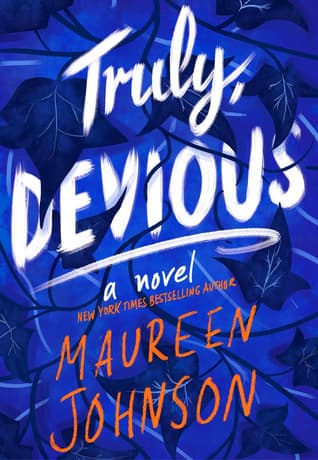
- Truly Devious
Maureen Johnson
4.0 (51k) average on GoodreadsThrillerA boarding school setting with a historical mystery and a clever, observant protagonist.
- One of Us Is Lying
Karen M. McManus
4.0 (216k) average on GoodreadsThriller"Little White Lies" shares the ensemble mystery structure and high stakes, but Barnes's novel prioritizes atmospheric tension and deep-seated generational secrets over the immediate aftermath of a single crime. McManus focuses more on the immediate suspects and their secrets, while Barnes delves into a family's historical darkness.
- Angels & Demons
Dan Brown
3.9 (2.7M) average on GoodreadsThrillerA Harvard symbologist races through Rome's ancient sites, deciphering cryptic clues to unmask the Illuminati and stop a vengeful plot to destroy the Vatican with a stolen antimatter weapon.
- Gone Girl
Gillian Flynn
4.1 (2.3M) average on GoodreadsThrillerA wife's sudden disappearance on her fifth anniversary reveals a web of lies and psychological warfare, exposing the secrets within a seemingly perfect marriage.
- The Girl on the Train
Paula Hawkins
3.9 (2.1M) average on GoodreadsThrillerA woman’s fascination with a seemingly perfect couple she watches from her daily train commute leads her into a dark investigation when she witnesses something that shatters their idyllic image.
- The Da Vinci Code
Dan Brown
3.9 (1.9M) average on GoodreadsThrillerA symbologist and a cryptologist race through European landmarks, deciphering ancient codes and uncovering a conspiracy that could rewrite the foundations of Christianity.





Enjoyed the summary?
A summary gives you the shape of the book. The book itself has the detail, the examples and the voice.
Find Little White Lies on AmazonAs an Amazon Associate, BookBrief earns from qualifying purchases. How we're funded